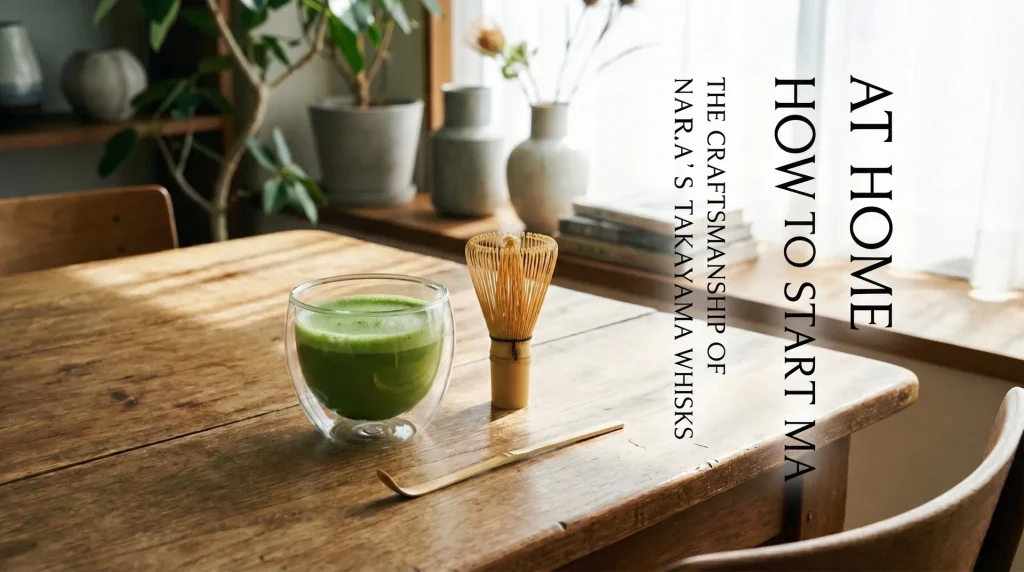
You want to make the kind of beautifully foamed matcha latte you get at a specialty café — but at home, without
studying tea ceremony.
Good news: you don't need a tearoom, a kimono, or years of training. What you need is one proper tool and a small
piece of knowledge about water temperature.
The single most important key to perfect matcha is the Takayama Chasen (高山茶筌) — a hand-crafted bamboo whisk
made in Takayama, Nara Prefecture. Unlike the cheap plastic or imported bamboo versions found in gift shops, an
authentic Takayama chasen made by a traditional craftsman has extraordinary resilience: even a beginner with no
technique can produce a rich, cappuccino-like foam on the first try.
Matcha is also a genuine superfood — because you consume the entire tea leaf as a fine powder rather than discarding
the steeped leaves, you absorb two to three times more catechins and L-theanine than you would from
regular green tea. This guide covers the science behind 80°C whisking, the 500-year legacy of the Takayama chasen,
and the beautiful Japanese tools that make a daily matcha ritual worth building.
Quick Reference: Matcha Grades at a Glance
| Grade | Flavor Profile | Price Range | Best For |
|---|---|---|---|
| Usucha — Standard | Balanced aroma, easy to drink | 30g: $7–$15 | Daily drinking, matcha lattes |
| Usucha — Premium | Vivid green, mellow umami | 30g: $15–$30 | Tea practice, guests |
| Koicha (thick tea) | Deep, rich, complex umami | 30g: $30+ | Formal tea ceremony, special occasions |
| Culinary Grade | Strong color, heat-stable | 100g: $5–$15 | Baking, ice cream, sweets |
1. Whole-Leaf Nutrition | 2–3× the Catechins of Regular Green Tea
The global "Matcha" boom is not just about flavor. There is solid scientific and medical evidence that matcha is genuinely one of the most nutrient-dense beverages in the world.
Absorbing the 70% That Regular Tea Leaves Behind
When you brew regular green tea (sencha), you pour out the liquid and discard the leaves — which means roughly 70%
of the tea's nutrients (vitamins, dietary fiber, fat-soluble compounds) never enter your body.
Matcha takes a fundamentally different approach. The specially shade-grown leaves (tencha) are stone-ground into an
ultra-fine powder, and you whisk that powder directly into water and drink the entire thing — leaves and all.
This means you absorb both water-soluble and insoluble nutrients, making matcha's effective nutrient
delivery approximately two to three times greater than brewed sencha.
Catechins and L-Theanine: The Health Science Behind the Hype
Two compounds stand out in particular:
- [Catechins (Polyphenols)]: Powerful antioxidants that neutralize free radicals linked to aging and cellular damage. Multiple studies document their role in supporting fat metabolism and moderating blood sugar spikes after meals. (Matcha contains roughly twice the catechins of regular green tea.)
- [L-Theanine (Amino Acid)]: The compound responsible for matcha's characteristic sweetness and umami. L-theanine activates the parasympathetic nervous system, producing a state of calm alertness — reduced stress, improved sleep quality — without the jitteriness associated with caffeine alone. Clinical research has also found measurable improvements in cognitive function (memory, judgment) among older adults who consumed matcha regularly.
2. A 500-Year Secret. Why the Takayama Chasen (Nara) Changes Everything
There is one tool in home matcha preparation where quality matters so much that compromising on it makes everything
else harder.
That tool is the Takayama Chasen (bamboo whisk) made in Takayama district, Ikoma City, Nara Prefecture. Over 90% of
all chasen produced in Japan come from this one small village — and behind that fact lies an extraordinary history
of craft and secrecy stretching back to the Muromachi period.
A Commission from the Father of Wabi-Cha, and an Emperor's Approval
The story begins in the mid-Muromachi period (roughly 500 years ago). Murata Juko — the founder of wabi-cha, the
austere style of tea that became the root of all Japanese tea ceremony — asked the second son of the lord of
Takayama Castle, a man known as Takayama Sossetsu, to create a new implement for whisking tea.
The finished tool was presented to Emperor Gotsuchimikado, who was so moved by its exquisite craftsmanship that he
named it "Takaho." Sossetsu, deeply honored, dedicated himself to refining the craft and declared its production
method a family secret — passed down orally to a single heir in each generation. (The place name is said to have
been changed from Takayama to reflect the imperial gift.) Through sixteen artisan families, this hand-skill has been
carried into the present day — one of Japan's most intact living craft lineages.
The "Flavor Shaving" Technique No Machine Can Replicate
The cheap chasen found in gift shops and 100-yen stores are mass-produced by machine — the tines are thin,
brittle, and lack the spring to properly aerate matcha.
A Takayama chasen is different. Each artisan uses a small knife to perform a delicate process called
aji-kezuri (flavor shaving): removing the soft inner flesh of the bamboo tine while leaving the hard
outer skin as thin as a strand of hair. This creates tines with exceptional flex and resilience — they
bend deeply and spring back without breaking.
That engineered elasticity is why even a beginner with no technique can produce a smooth, cappuccino-level foam
by simply moving the chasen back and forth. The tool does the work.
3. The Three Things You Need to Start | Matcha Essentials
You do not need a kettle, ladle, water jar, or tearoom. Three tools — whisk, scoop, bowl — are all it takes to start today on a kitchen counter or living-room table.
Takayama Chasen "Kazuho" or "Shin-kazuho"
The right first chasen. The standard style — easiest to foam with.
"Kazuho" refers to a chasen with approximately 70 tines — the standard count for thin tea (usucha). Fewer
tines are used for thick tea (koicha).
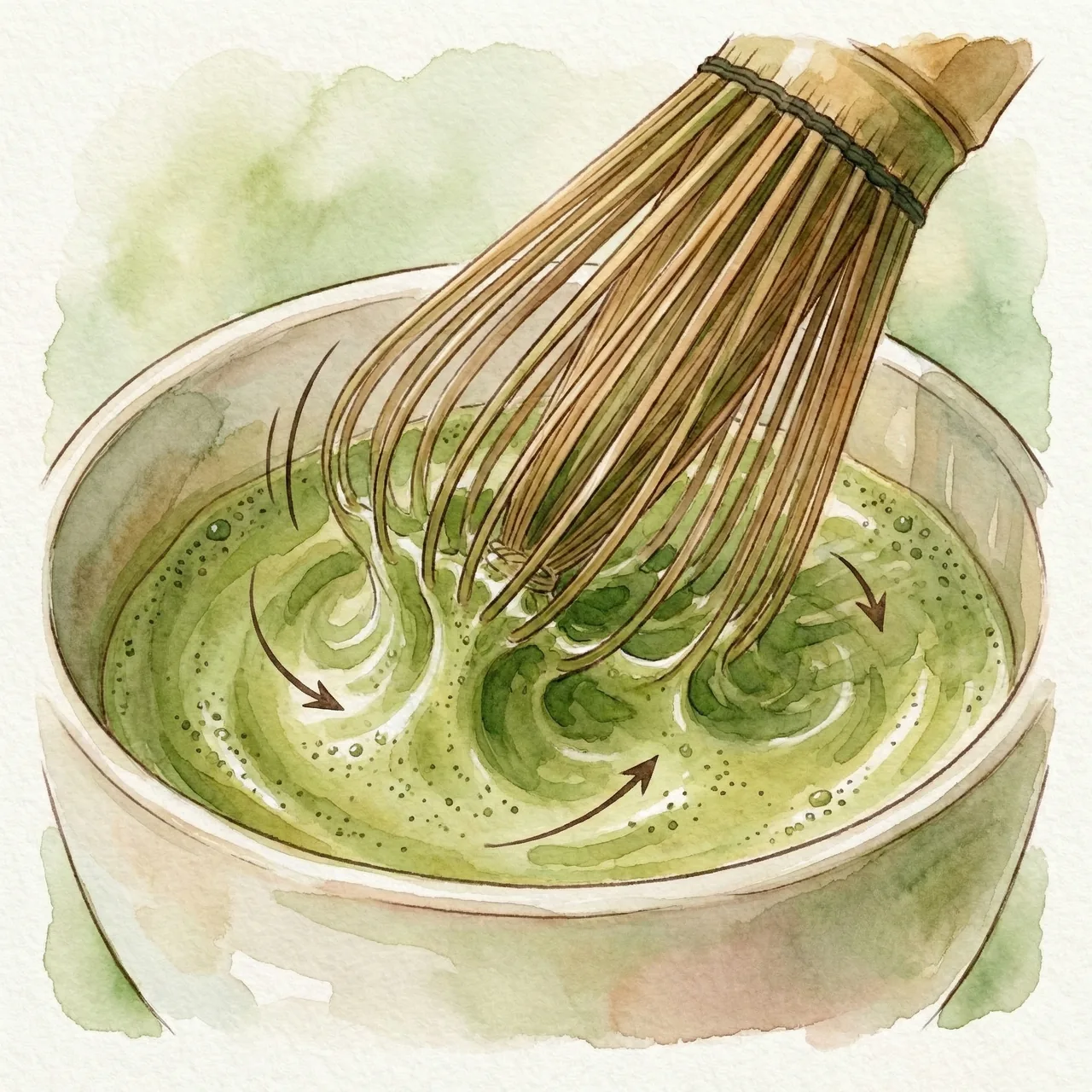
More tines means more air intake: simply move the chasen back and forth briskly and a velvety foam appears
almost effortlessly.
Chasen made by certified traditional craftsmen — such as those from Chikumeido Sabun — have a remarkable shape
memory: after each use, the tines spring back to their original curved form rather than splaying outward.
View Chikumeido Takayama Chasen Details
Chazoku Takayama Chasen — Kazuho 100-Prong Bamboo Whisk
Hand-crafted in Takayama, Nara Prefecture using the aji-kezuri technique. 100-tine Kazuho style for usucha — produces fine, stable foam even for beginners.
View on AmazonBamboo Chashaku (Tea Scoop)
More accurate than a teaspoon. One scoop = the right amount, every time.
The ideal amount of matcha for thin tea is 1.5–2g, but measuring by scale every time is impractical. A bamboo
chashaku solves this elegantly: one heaped scoop delivers approximately the right amount — reliably, every
time.
Metal teaspoons create static that scatters the powder and can scratch the bowl surface. A bamboo scoop costs
almost nothing and makes the process cleaner and more pleasant. Get one alongside your chasen.
Bamboo Chashaku — Japanese Matcha Tea Scoop
Traditional bamboo tea scoop for measuring matcha powder. One heaped scoop delivers an accurate 1.5–2g portion without static or scratching your bowl.
View on AmazonSAKUZAN (Sakuzan-gama) — Mino Ware Matcha Bowl
Doubles as a café au lait bowl and soup bowl. Modern matcha for everyday life.
If you've ever thought "a traditional matcha bowl would only get used for matcha" — SAKUZAN from Gifu
Prefecture's Mino ware tradition has the answer.
These bowls have a smooth matte surface and modern pastel colors, with a round form that fits warmly in both
hands. Most importantly, the broad, flat base gives a beginner plenty of space to move the chasen freely
without hitting the sides — making beautiful foam far easier to achieve.
On non-matcha days, it works perfectly as a café au lait bowl or soup bowl. A genuinely versatile object for
the modern kitchen.
SAKUZAN Mino Ware Matcha Bowl
Modern matcha bowl from Gifu's Mino ware tradition. Matte pastel finish, wide flat base for easy whisking — doubles as a café au lait or soup bowl on non-matcha days. Browse the full collection on the official site.
Visit Official Site4. Modern Matcha Bowls for Everyday Life
There are no strict rules about which material a matcha bowl must be made from — that's a matter for formal tea
school, not home practice.
If you're whisking matcha casually at home, exploring glass or contemporary designs adds a seasonal dimension to the
ritual.
Tsugaru Vidro (Aomori) — Heat-Resistant Glass Matcha Bowl
Breathtaking hand-blown glass from Aomori — and it handles boiling water.
You might assume that a glass matcha bowl would only work in summer, or would shatter with hot water. Tsugaru
Vidro, a traditional craft of Aomori Prefecture, addresses both concerns.
This matcha bowl is made from rare heat-resistant glass (suitable for boiling water),
hand-blown by skilled artisans. Pour in water at 80°C or even hotter, and it holds without cracking — meaning
you can drink warm matcha in winter and iced matcha latte in summer from the same bowl.
The thick, handmade glass has a beautiful irregularity that catches the light. Watching the vivid green matcha
through the glass is simply magnificent — it is, in every sense, a piece to display as much as to use.
Tsugaru Vidro — Heat-Resistant Glass Matcha Bowl
Hand-blown heat-resistant glass matcha bowl from Aomori Prefecture. Safe for hot water year-round — watch the vivid green matcha through the thick, artisan glass walls. Browse the full lineup on the official site.
Visit Official Site5. Frequently Asked Questions | The Science of 80°C Water
Why 80°C? What happens if you use boiling water?
Boiling water (100°C) is a mistake. Always cool your water to around 80°C before whisking.
There is clear science behind this. Catechins and caffeine — the compounds responsible for matcha's bitterness and
astringency — dissolve rapidly and in large quantities at temperatures above 90°C. Use boiling water and your
matcha will be unpleasantly bitter.
L-theanine (the sweet, umami compound) extracts efficiently at temperatures as low as 50–80°C, while catechins
extract in more moderate quantities. The 80°C window hits the golden ratio — enough umami to balance the
bitterness — and also preserves the vivid green chlorophyll color. Simply let freshly boiled water rest for 30
seconds to a minute before whisking.
What is the biggest nutritional difference between matcha and sencha?
The difference in how much of the leaf you actually consume.
When you brew sencha, roughly 70% of its nutrients — vitamin A, dietary fiber, insoluble compounds — remain in the
discarded leaves and never reach your body.
Because matcha is the whole leaf in powder form, you absorb everything: catechins, L-theanine, vitamins, and fiber
together — no waste. Catechin content alone is approximately two to three times higher than in brewed sencha.
My matcha always ends up lumpy. How do I fix it?
Sift your matcha immediately before adding water — every single time.
Matcha powder is so fine that static electricity and even slight humidity cause the particles to clump into tiny
balls. Once clumped, no amount of whisking will break them down in hot water — you end up with bitter powder lumps
at the bottom of your bowl.
Use a fine-mesh sieve or a dedicated matcha sifter over the bowl before adding water. This one step makes the
difference between smooth, evenly foamed matcha and a lumpy, uneven cup.
Does matcha expire? How should I store it?
Yes — matcha is highly perishable and extremely sensitive to oxygen, light, and moisture.
Sealed, it stays fresh until the printed date (typically several months). But once opened and exposed to air,
oxidation sets in quickly: the vivid green fades to a dull brownish color and the aroma dissipates. Treat
opened matcha as a one-month product.
Store in an airtight tin or sealed bag in the refrigerator (or freezer for longer storage). Always bring it to
room temperature before opening to prevent condensation.
Can I wash my chasen with dish soap?
Never use detergent on a chasen — rinse with warm water only.
Natural bamboo has countless microscopic channels that absorb liquids powerfully through capillary action.
Detergent residue drawn into the tines will impart a soapy taste and destroy the subtle aroma of your next bowl of
matcha.
After each use, fill a bowl with warm water, immerse the chasen, and swirl gently to rinse out the matcha. That is
all that is needed.
My new chasen tines are curled inward — is that normal?
Completely normal. The curl straightens after the first use in hot water.
A new Takayama chasen arrives with the tines curled gracefully inward — the result of the artisan's precise
hand-shaping. Once immersed in hot water for the first time, the bamboo absorbs moisture and heat and straightens
permanently. It will not return to the curled shape — this is a natural property of bamboo, not a defect.
(Before your first use, briefly soaking the tines in warm water — a practice called chasen-toshi —
softens the bamboo and reduces the risk of breakage.)
Editor's Note: Whisking as Mindfulness
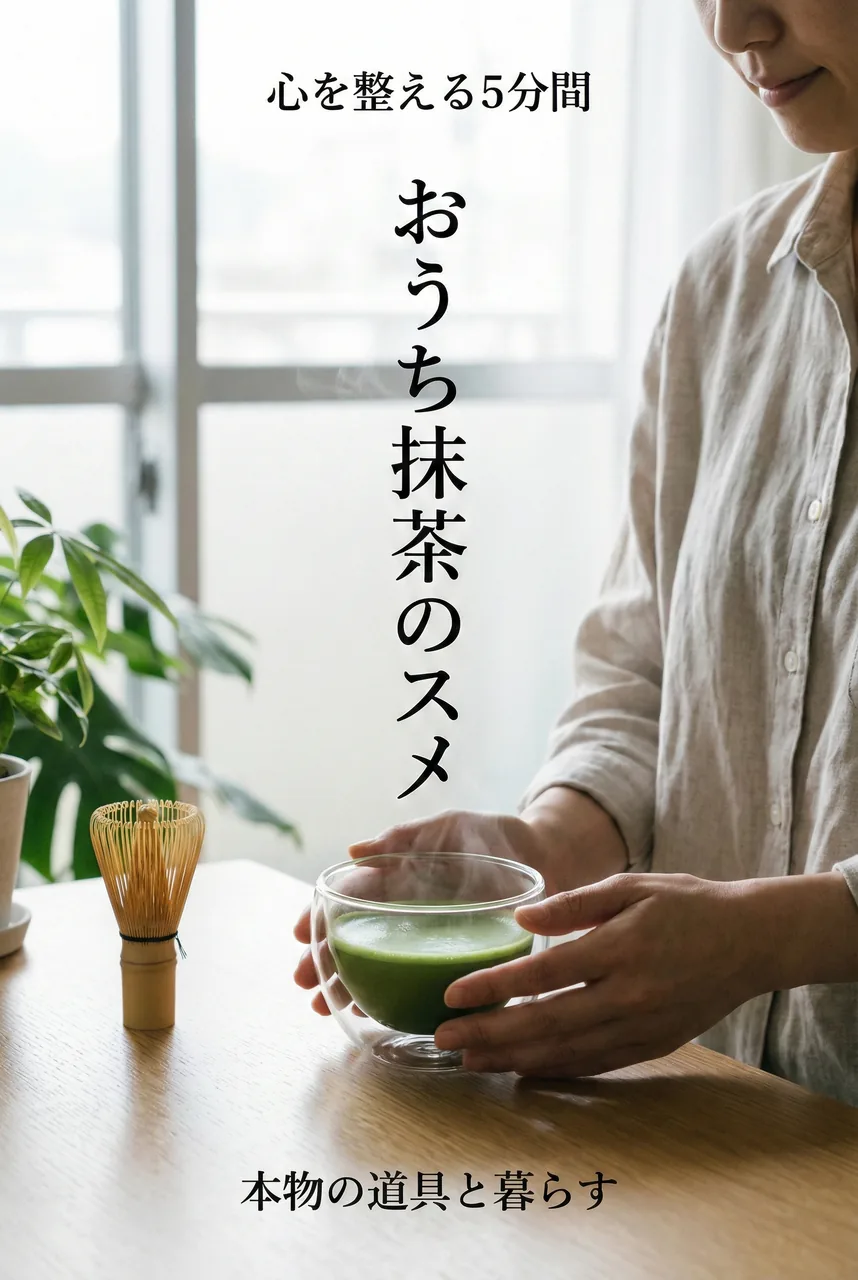
Let the water cool slowly. Warm the bowl. Sift the powder. Sit up straight, and move the chasen back and forth
in a steady rhythm until the foam rises.
It takes only a few minutes — but during those minutes, something interesting happens. The phone notifications
don't disappear, but you stop caring about them. Your attention narrows to a single task: raising a green,
beautiful foam.
This is what the Japanese call "tate-suru jikan" — the time of whisking. It is perhaps the most accessible and
physically beneficial form of mindfulness available to anyone with a kitchen and five minutes to spare.
One authentic Takayama chasen — a tool with no equal in a cheap alternatives — is all it takes to create a quiet
place in a busy day. Consider starting your home matcha practice this weekend.
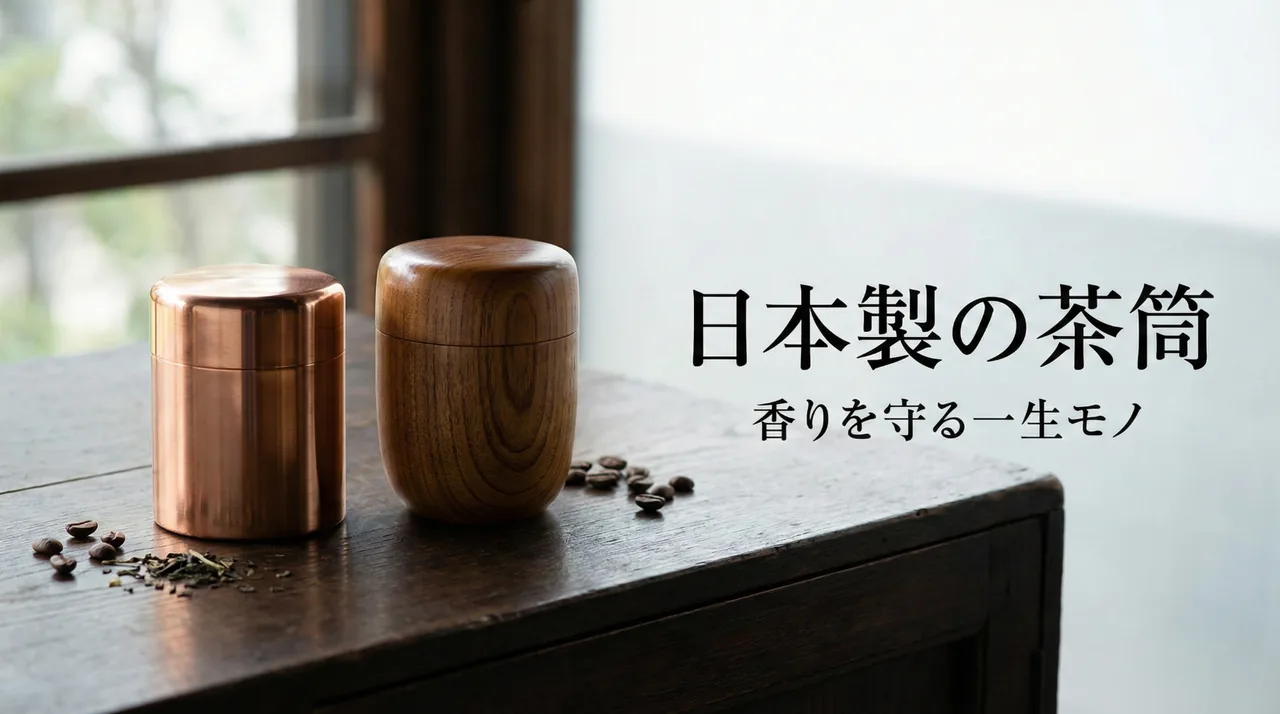
Japanese Tea Canister Guide | Kaikado & Paulownia Boxes That Preserve Aroma
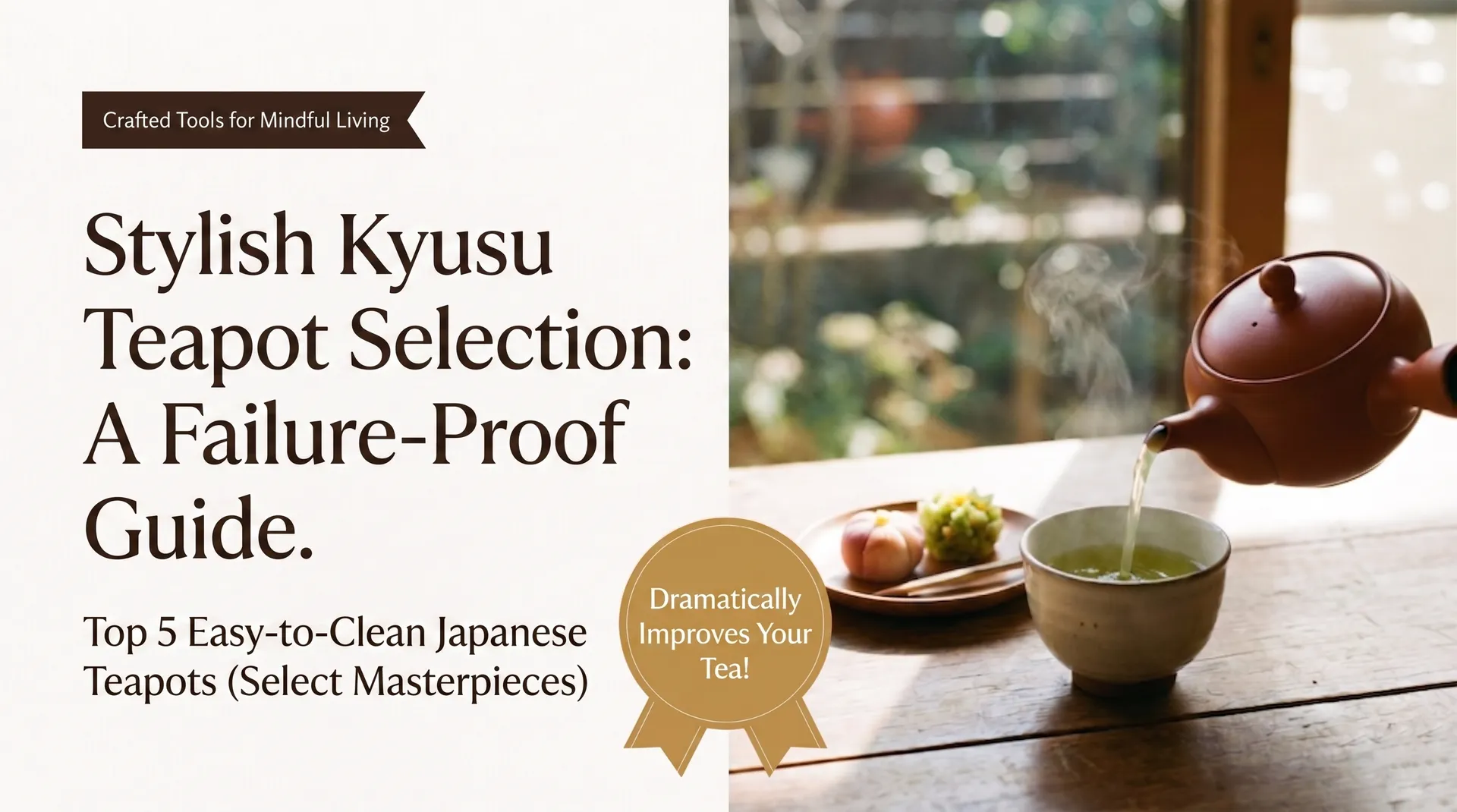
Japanese Kyusu Teapot Guide | Tokoname, Banko & Mashiko Compared
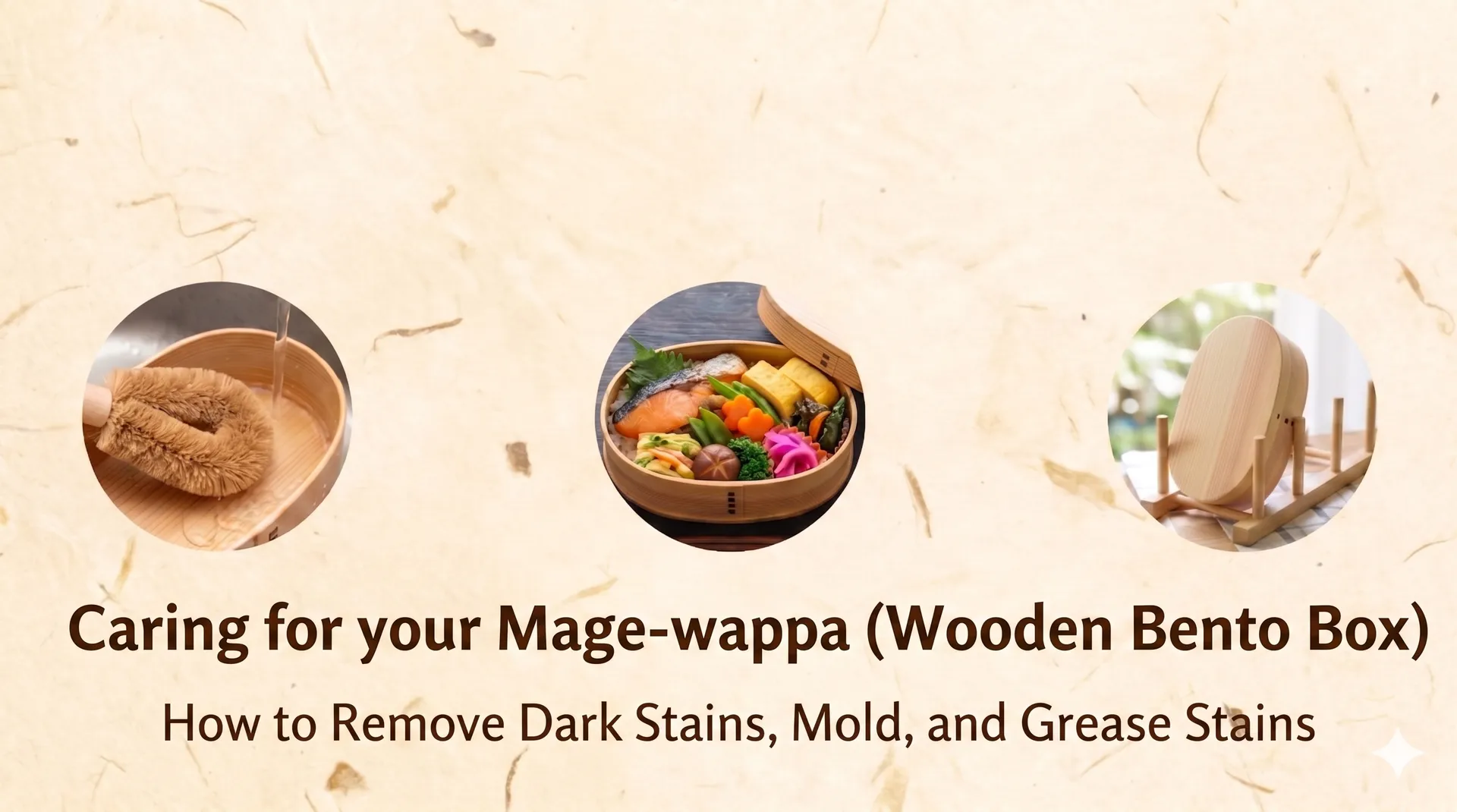
Magewappa Bento Box Guide | The Bent-Wood Lunch Box That Keeps Rice Warm