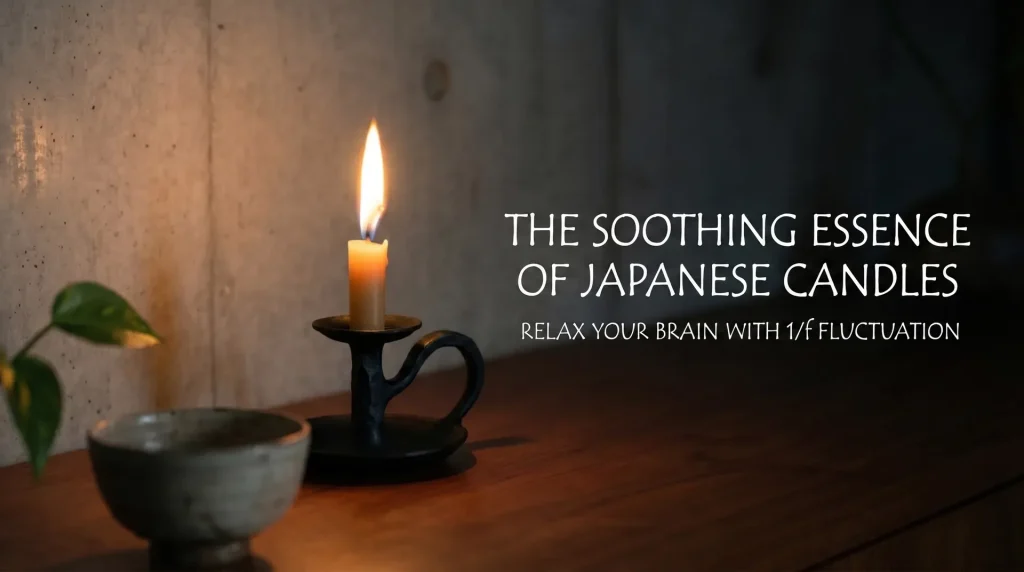
You've been staring at screens all day — phone, laptop, tablet — and now it's late and your mind won't slow
down.
You've tried aromatherapy candles, but the synthetic scents or black soot trails are a turn-off.
What you need is a wa-rosoku
(和ろうそく) — Japan's traditional candle, and one of the most effective tools for unwinding that
you've probably never heard of.
Unlike Western paraffin candles, wa-rosoku are made entirely from plant materials with a hollow wick. They burn with
a tall, powerful flame that flickers to the rhythm of 1/f noise — the same natural pattern found in
flowing streams, rustling leaves, and the human heartbeat. Scientists link this rhythm to alpha-wave brain activity:
the state of deep, effortless calm.
This guide covers beginner-friendly rice-wax candles, beautiful design options for the home, and the simple Japanese
ritual of wick trimming that turns lighting a candle into a mindful practice.
Quick Reference: Candle Types at a Glance
| Type | Material | Burn Time | Characteristics |
|---|---|---|---|
| Wa-Rosoku (plant wax) | Haze berry / rice bran | 30 min – 2 hrs | Large flame, minimal soot, eco-friendly |
| Western Candle (paraffin) | Petroleum-derived paraffin | 1 – 4 hrs | Affordable, widely available, clean white look |
| Soy Wax | Soybean oil | 2 – 5 hrs | Natural, burns cool, pairs well with fragrance |
| Beeswax | Honeybee wax | 3 – 6 hrs | Honey scent, very hard, long burn time |
1. The Calming Science of Wa-Rosoku | 1/f Flame Rhythm
There is a scientific reason why firelight — whether a bonfire or a candle — naturally draws your attention and quiets your thoughts.
The Natural Pattern That Induces Alpha Brainwaves: 1/f Noise
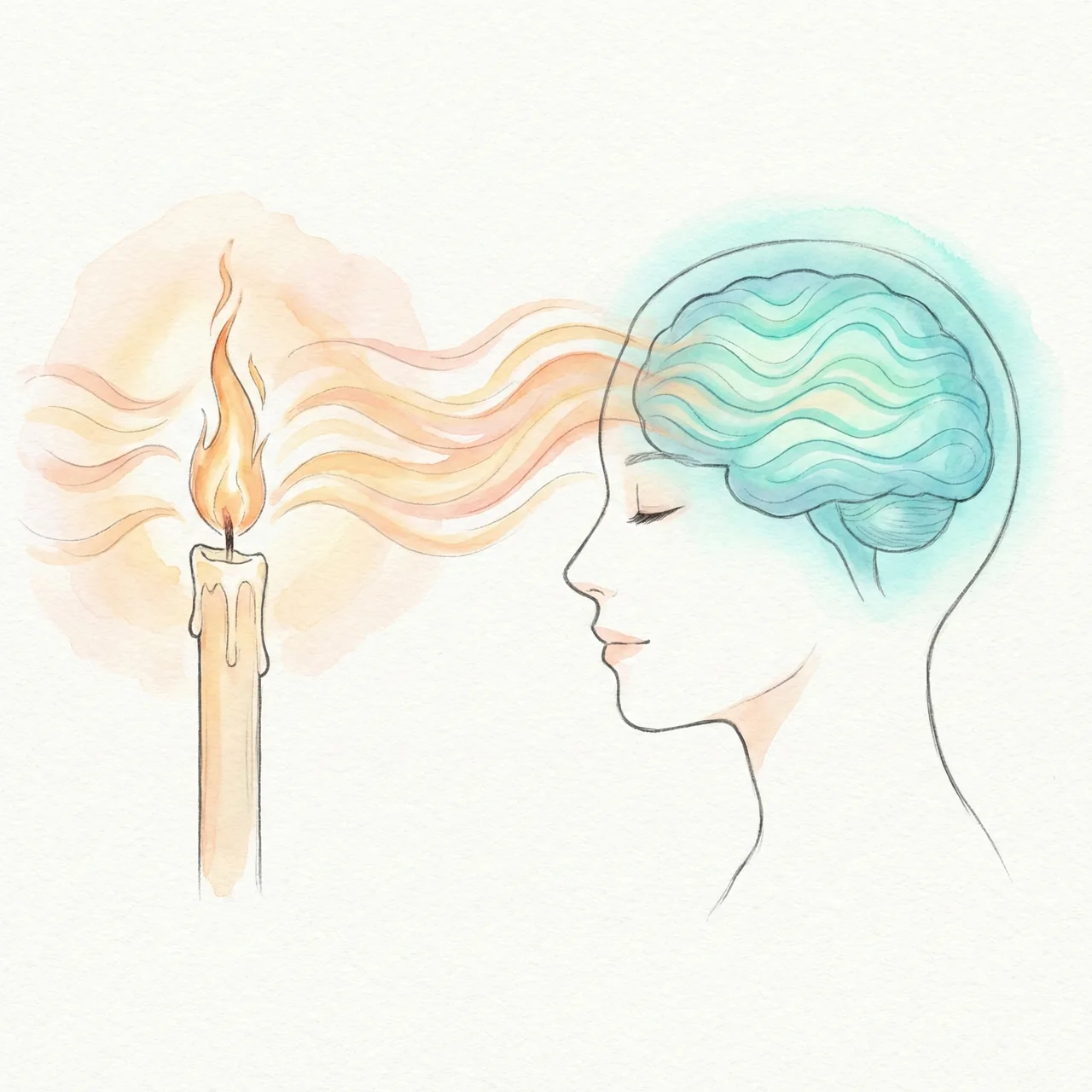
The way a wa-rosoku flame flickers follows the same rhythm as a babbling stream, dappled sunlight through
leaves, or a human heartbeat — a pattern called 1/f noise (one-over-f fluctuation).
When this irregular, unpredictable rhythm enters the brain through the eyes, research suggests it shifts
brainwave activity toward alpha waves — the state associated with calm alertness, reduced stress, and balanced
autonomic nervous function.
A steady LED light cannot produce this effect. Only flame can.
A Taller Flame Than Western Candles — Thanks to the Thick Hollow Wick
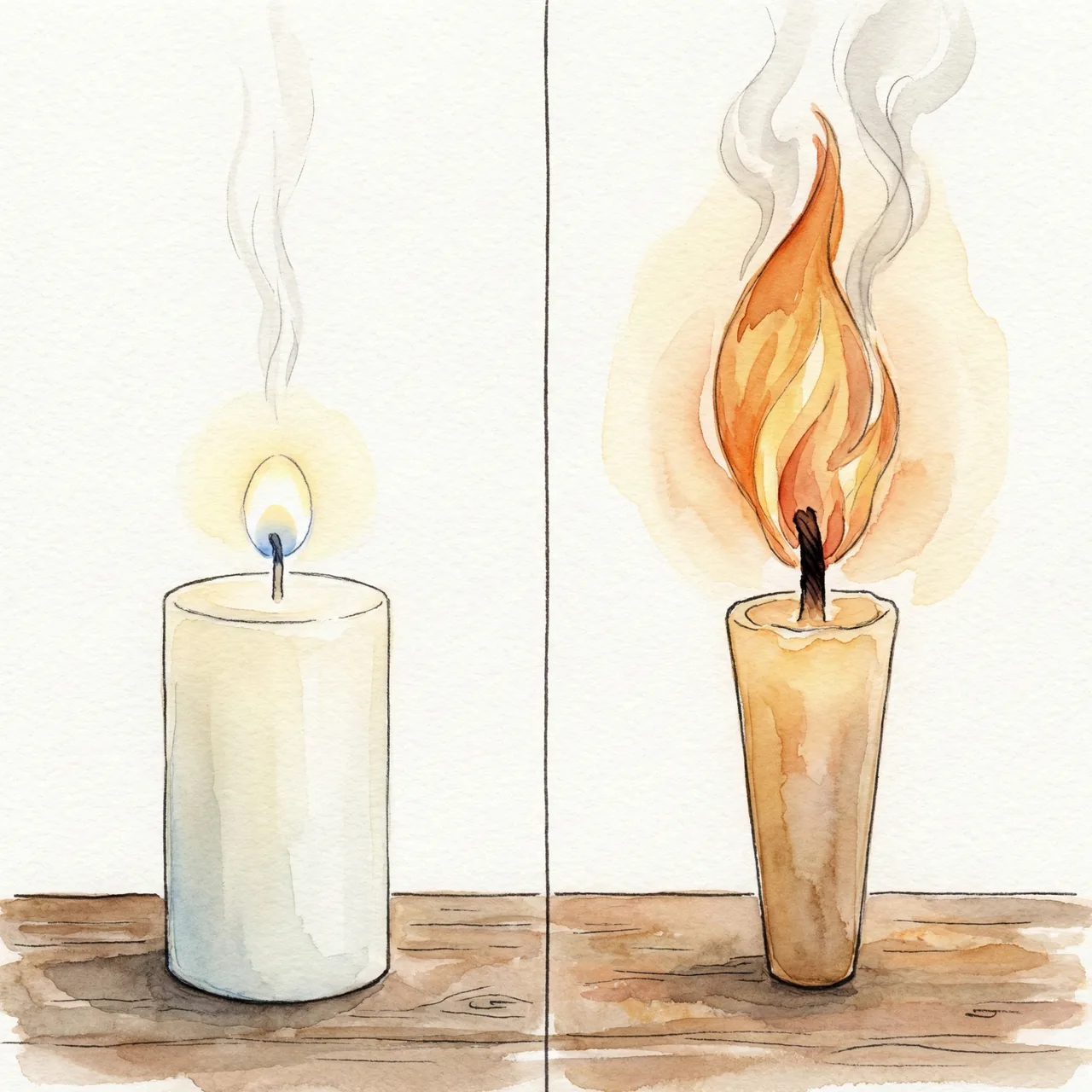
Compared to a standard aromatherapy candle, the flame of a wa-rosoku is dramatically larger — tall, vertical,
and full of presence.
This is because wa-rosoku use a thick, hollow wick made by wrapping rush pith around washi
paper. This wick draws up wax in generous amounts, feeding a powerful, living flame.
The result can transform the atmosphere of a room in moments — something no electric candle can replicate.
2. What Wa-Rosoku Is Made From | 100% Plant-Based Wax
The defining quality of wa-rosoku is that they contain zero petroleum-derived paraffin — every ingredient comes from plants.
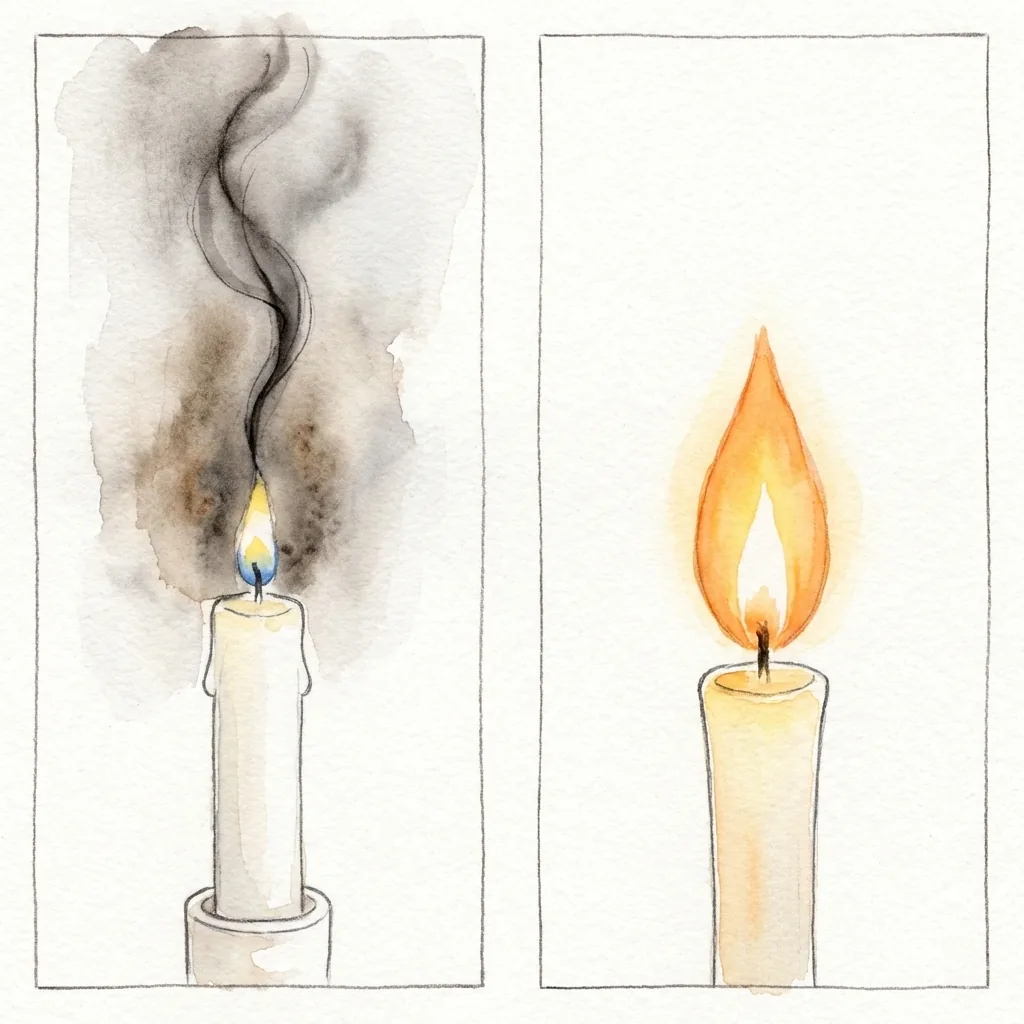
Far Less Soot Than Paraffin Candles
Cheap candles made from petroleum wax can produce black soot and a faint oily smell when burned. Over time, this
soot can discolor walls and furnishings.
Plant-based wa-rosoku produce far less smoke. Any soot that does form is fine and powdery — easy to wipe
away.
This makes them safe and pleasant to use indoors, whether on a dining table or in a traditional household altar.
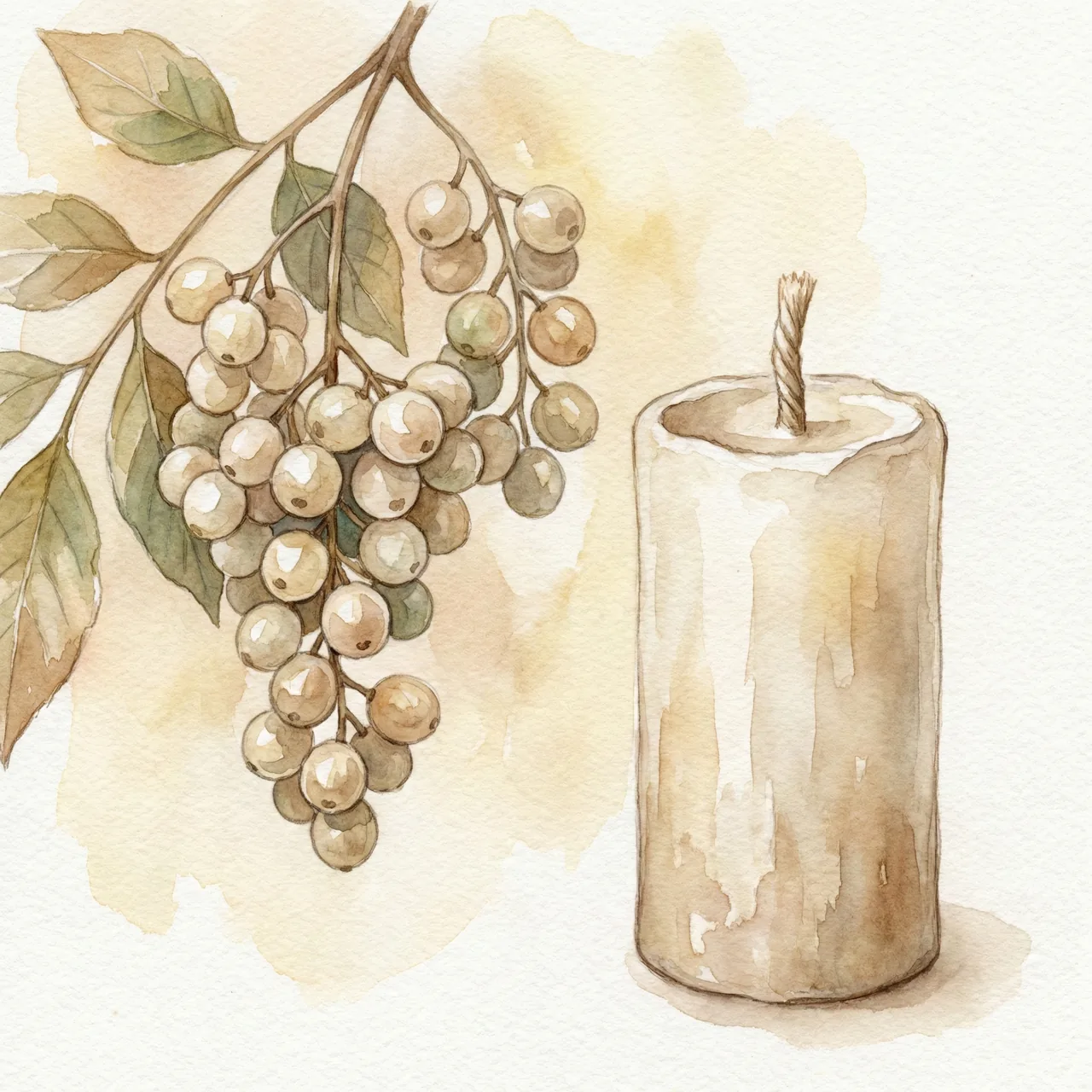
Haze Berry Wax | Japan's Finest Traditional Material
Wax pressed from the berries of the haze tree (a relative of the lacquer tree) has been used in Japanese
candle-making since the Edo period. It is the original, most traditional wa-rosoku material.
Haze wax is viscous and slow to melt — the flame is hard to extinguish and lasts well. Domestic haze is now
extremely rare, making candles made with it a luxury item.
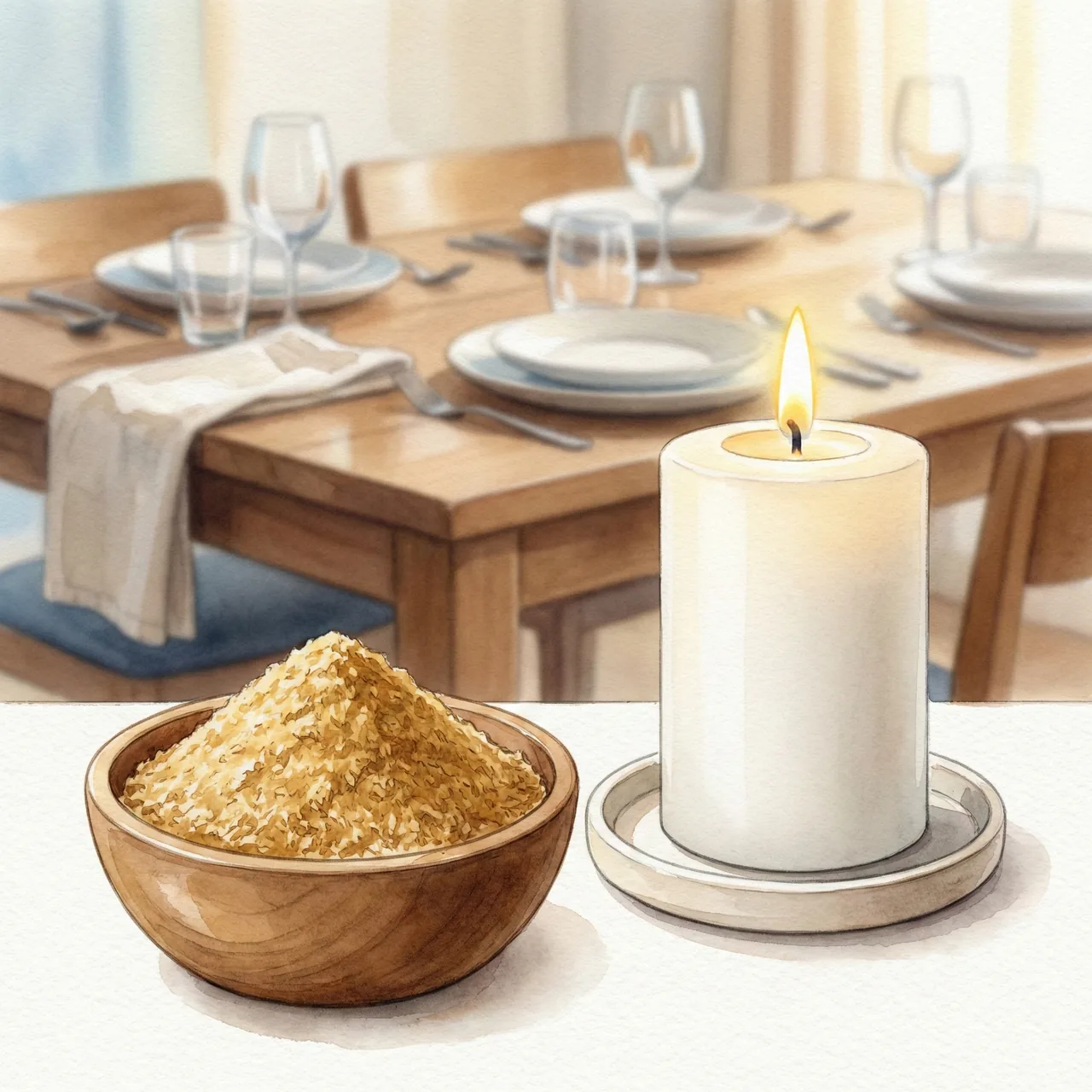
Rice Bran Wax | The Modern Choice for Everyday Use
A newer type of wa-rosoku made from wax refined from rice bran — a byproduct of Japanese rice milling.
Rice bran wax is notably hard: it barely drips as it burns, making it exceptionally clean and easy to use at the
dinner table.
The scent is nearly neutral, so it won't interfere with food aromas — making it ideal for candlelit meals.
3. Artisan Craft | Hand-Layered vs. Mold-Cast Methods
Wa-rosoku are made either by hand-layering wax by skilled artisans, or by pouring wax into molds. Both approaches have their merits.
Hand-Layered Method | Building Annual Rings of Wax
The traditional technique: an artisan coats the wick with hot wax by hand, allows it to set, then applies
another layer. This is repeated many times, building up rings like a cross-section of a tree.
Known in Japanese as tegake (hand-applied), this method traps tiny air pockets between the
layers, improving combustion and producing the most beautiful, expressive flame flicker.
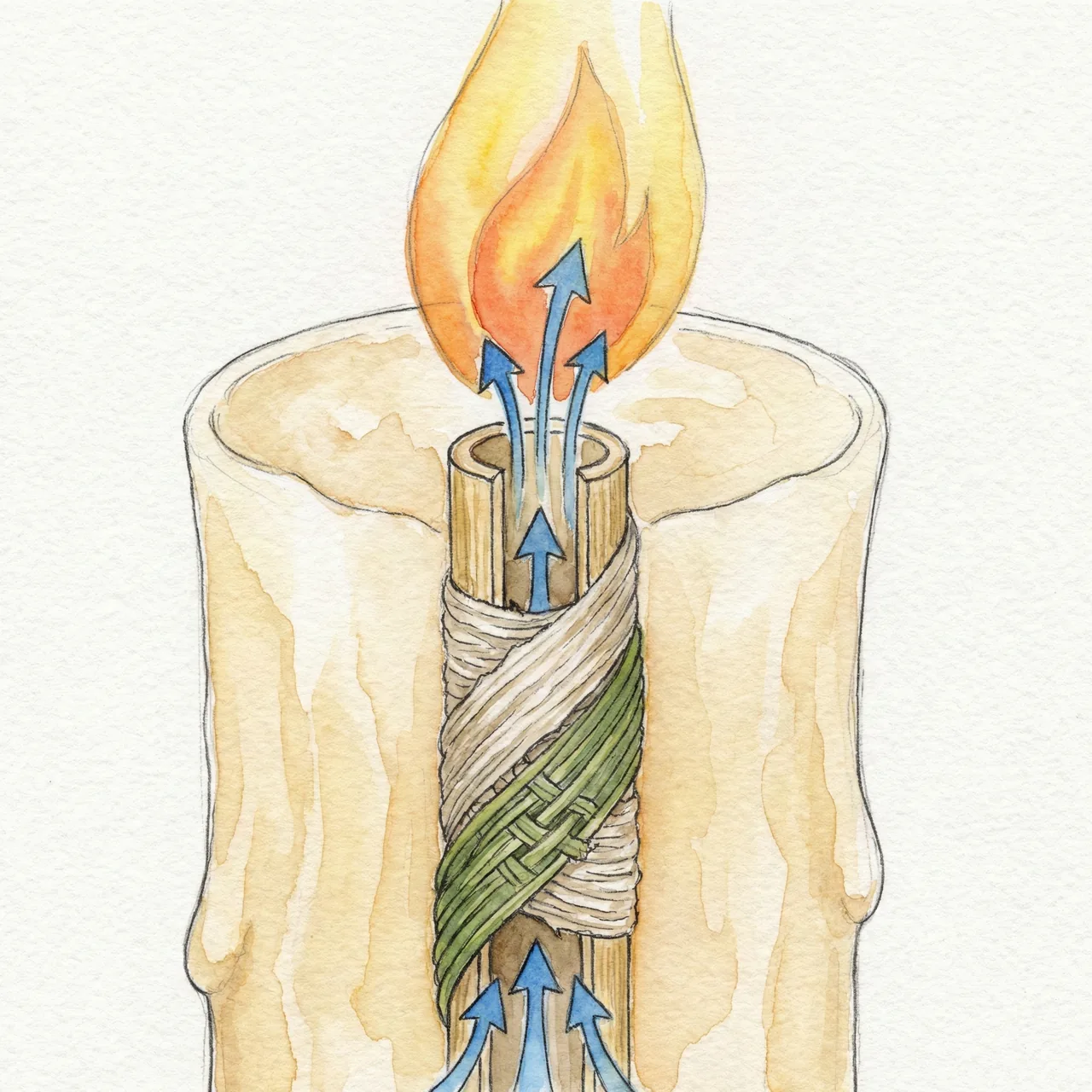
The Hollow Wick That Breathes
A wa-rosoku wick is made by wrapping rush pith (igusa) in a spiral around washi paper, leaving a hollow channel
at the center — like a drinking straw.
This chimney structure continuously draws fresh air up through the wick, feeding the flame from below. It is the
primary reason wa-rosoku burns so large and so steadily.
4. How to Use Wa-Rosoku | The Ritual of Wick Trimming
Getting the most from a wa-rosoku involves a couple of dedicated tools and one small ritual worth knowing.
You Need a Dedicated Candlestick (Shokudai)
Wa-rosoku have a hollow base and are held upright by impaling them on a spike (pin). They cannot simply sit on a
flat surface like Western candles.
You will need a Japanese candlestick (shokudai) fitted with a spike holder. Heavy styles — such as those made
from Nanbu tekki ironware — offer excellent stability and all but eliminate tipping risk.
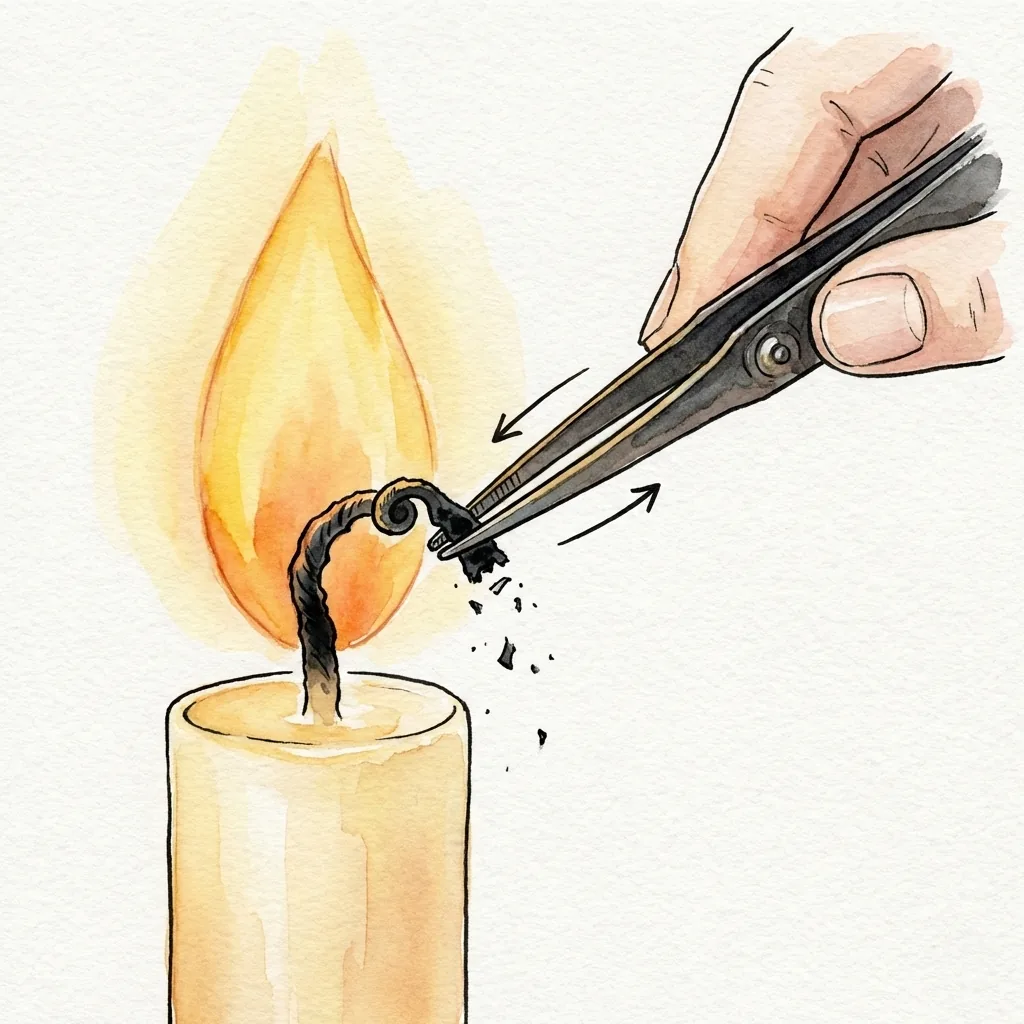
When the Flame Grows Too Large: Wick Trimming (Shinkiri)
During a long burn, the wick gradually chars and the carbonized tip builds up. When this happens, the flame
grows unusually large and can produce more soot.
Use a pair of wick scissors or tweezers to pinch off the blackened tip. This practice — called shinkiri
— is an important ritual in Japanese candle culture, one that keeps the flame elegant and the burn clean.
5. Top 3 Japanese Wa-Rosoku Brands
Three carefully selected brands — each approachable for first-timers and beautiful enough to display.
Daiyo (Shiga) — Okome no Rosoku (Rice Candle)
Good Design Award winner. The perfect modern entry into wa-rosoku.
A venerable maker from Takashima City, Shiga Prefecture, with over 100 years of history.
Made from 100% rice bran wax, these candles barely drip and burn almost scentlessly — ideal for dinner-table
candlelight evenings. The packaging is beautifully designed, making them an excellent gift or a clean, elegant
starter set for wa-rosoku beginners.
Daiyo Handmade Japanese Rice-Wax Candles (20 pcs)
Good Design Award-winning Japanese candles made from 100% rice bran wax. Minimal drip, nearly scentless, and beautifully packaged — the ideal introduction to wa-rosoku.
View on AmazonTakazawa Candle (Ishikawa) — Nanao Series
Sculptural shapes inspired by nature. A candle that's also a piece of art.
A maker from Nanao City, Ishikawa Prefecture, founded in 1892.
The "Nanao" series uses exclusively plant-derived materials and comes in unique silhouettes inspired by
acorns, pinecones, and other natural forms. Every element — including the wick shape — is considered for the
quality of light it casts: when lit, these candles create strikingly beautiful shadows and contours. An
equally impressive decorative object whether burning or not.
Takazawa Candle — Nanao Series
Plant-based wa-rosoku in sculptural natural forms — acorns, pinecones — from a maker established in 1892. Artistically designed to create beautiful light and shadow when lit.
Visit Official SiteMatsui Hon Warosoku Kobo (Aichi) — Hand-Painted E-Rosoku
Entirely handmade. A winter tradition of painting flowers onto candlelight.
Crafted by a certified traditional artisan in Okazaki City, Aichi Prefecture, using the authentic hand-layered
(tegake) method.
The surface of each candle is painted with delicate seasonal flowers — a tradition that originated in
snow-country Buddhist households that couldn't offer fresh flowers to the altar in winter. The poignant beauty
of watching the painted flowers slowly melt as the candle burns is itself a small lesson in impermanence —
pure Japanese aesthetics.
Matsui Hon Warosoku Kobo — Hand-Painted E-Rosoku
Authentic hand-layered wa-rosoku with hand-painted seasonal flowers — a certified traditional craft from Aichi. Equally beautiful as a gift or a decorative object.
Shop International Store6. Frequently Asked Questions
How long does a wa-rosoku burn?
For a standard size, approximately 30 minutes to 1 hour.
Wa-rosoku are measured in Japanese units called "monme." A 1-monme candle (about 7 cm tall) burns for roughly 30
minutes; a 2-monme candle lasts around 50 minutes.
Matching the candle size to your relaxation session is a good way to choose.
How do I extinguish the flame?
Do not blow it out with a sharp breath.
Because the wick is thick and the wax pool is large, a forceful puff can send hot liquid wax flying — a genuine
burn risk.
Instead, fan the flame gently with your hand, or use a dedicated candle snuffer placed over the flame. Safe,
quiet, and fitting for the mood you've created.
Can I use a regular candle holder?
Flat-bottomed holders without a spike are not safe for wa-rosoku.
Wa-rosoku have a hollow base designed to be mounted on a metal spike — they are not stable on a flat surface.
Always use a Japanese-style shokudai (candlestick) fitted with a spike holder designed for this purpose.
Where can I buy wa-rosoku outside Japan?
Online shops are the most accessible option internationally.
Well-known makers such as Daiyo (Shiga), Takazawa Candle (Ishikawa), and Matsui Kobo (Aichi) ship internationally
or are available through Amazon.
Gift sets — often in beautiful paulownia boxes — are available for special occasions, and introductory sets
designed for first-timers are also easy to find.
What safety precautions should I follow?
Never leave a burning candle unattended, and keep it away from flammable materials.
Beyond basic fire safety, the key wa-rosoku-specific practice is wick trimming (shinkiri): removing the charred
tip from the wick during a long burn.
An untrimmed wick produces a flame that is too large and smokier than normal. Use wick scissors or tweezers to
trim it periodically.
Burn in a calm, still room — strong drafts will cause the flame to gutter and produce more soot.
What makes a good wa-rosoku gift?
Hand-painted e-rosoku (picture candles) are visually stunning and universally appreciated.
Candles decorated with seasonal flowers look beautiful on display even before they're lit — making them work as
both a decorative object and an experience.
Paulownia wood box sets convey a sense of occasion and are especially appropriate for celebratory or memorial
gifts.
Consider the intended use — meditation, dinner table, or home altar — and choose the size and style accordingly.
Final Thoughts: Turn Off the Lights, and Let the Flame Do the Rest
In an age of constant information, carving out time to do nothing is harder than it sounds.
But something interesting happens when you light a wa-rosoku: you find yourself setting your phone down without
being told to.
The tall, living flame — flickering in that ancient 1/f rhythm — does something gentle to an overworked brain.
It offers no notifications, no demands, no bright blue light.
Tonight, try dimming the lights a little earlier than usual and spending some time in the company of that
flame.
The stillness you find there will carry into tomorrow.
Japanese Flower Vase Guide | A Single Stem Can Transform a Room
Japanese Incense Guide | Bringing the Art of Scent into Your Home