"I leave the AC running all night and wake up exhausted — but turning it off means waking up drenched."
"My cooling blanket feels great at first, then becomes unbearable by 4am."
Japan's muggy summers make restful sleep genuinely difficult. But if you're serious about improving sleep quality, adjusting the thermostat matters far less than rethinking what's touching your skin. The real solution is a towel-ket or gauze-ket — Japan's purpose-built summer blankets.
High-quality Japanese cotton bedding functions like an automatic humidity regulator: it absorbs the moisture your body produces during sleep and releases it before it builds up into discomfort. This guide explains how Imabari and Senshu towel-kets differ, why multi-layer gauze improves with every wash, and which brands have made the best versions of each.
Quick Reference: Blanket Materials at a Glance
| Material | Warmth | Weight | Washing |
|---|---|---|---|
| Wool | ◎ Excellent insulation | △ Somewhat heavy | Hand wash recommended |
| Cashmere | ◎ Light and warm | ◎ Very light | Hand wash only |
| Silk | ○ Excellent temperature regulation | ◎ Very light | Hand wash recommended |
| Cotton | ○ Comfortable year-round | △ Somewhat heavy | Machine washable |
1. Choosing a Summer Blanket: The Humidity Control Imperative
Why does a synthetic cooling blanket feel fresh for an hour and then oppressive by morning? One word: absorbency.
The ideal sleeping microclimate: 33°C / 50% relative humidity
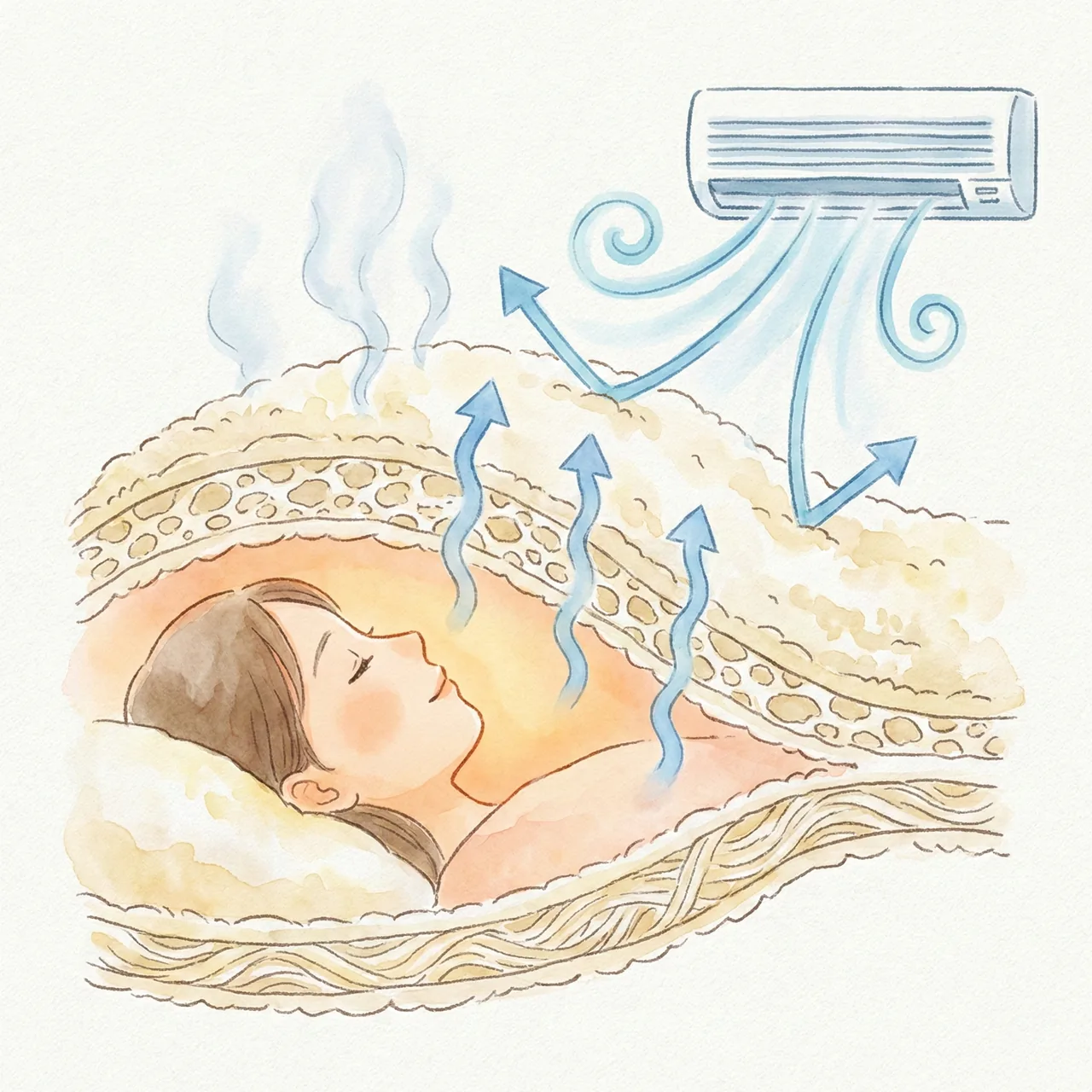
Sleep research identifies 33°C (91°F) air temperature and 50% relative humidity as the conditions for deepest sleep. Japanese researchers call this the shindai-nai kishō (bed-internal climate).
The problem is that the human body produces the equivalent of a glass of water in perspiration during an average night's sleep. If that moisture can't escape the blanket system quickly, humidity climbs past 60%, 70%, and beyond — creating the sauna-like discomfort that wakes you at 3am.
Natural cotton acts as a climate buffer — synthetic "cooling" fabric doesn't
Cotton and linen absorb moisture before it saturates the air in the bed, then release it gradually through the blanket's surface. This keeps bed humidity stable through the night.
Japanese-made towel-kets and gauze-kets are specifically designed to perform this function while simultaneously insulating against cold air-conditioning drafts. They regulate in both directions — that's the key difference from any synthetic alternative.
2. Towel-ket vs. Gauze-ket: Which Texture Is Right for You?
Both are cotton, both regulate moisture — but the feel against your skin is completely different.
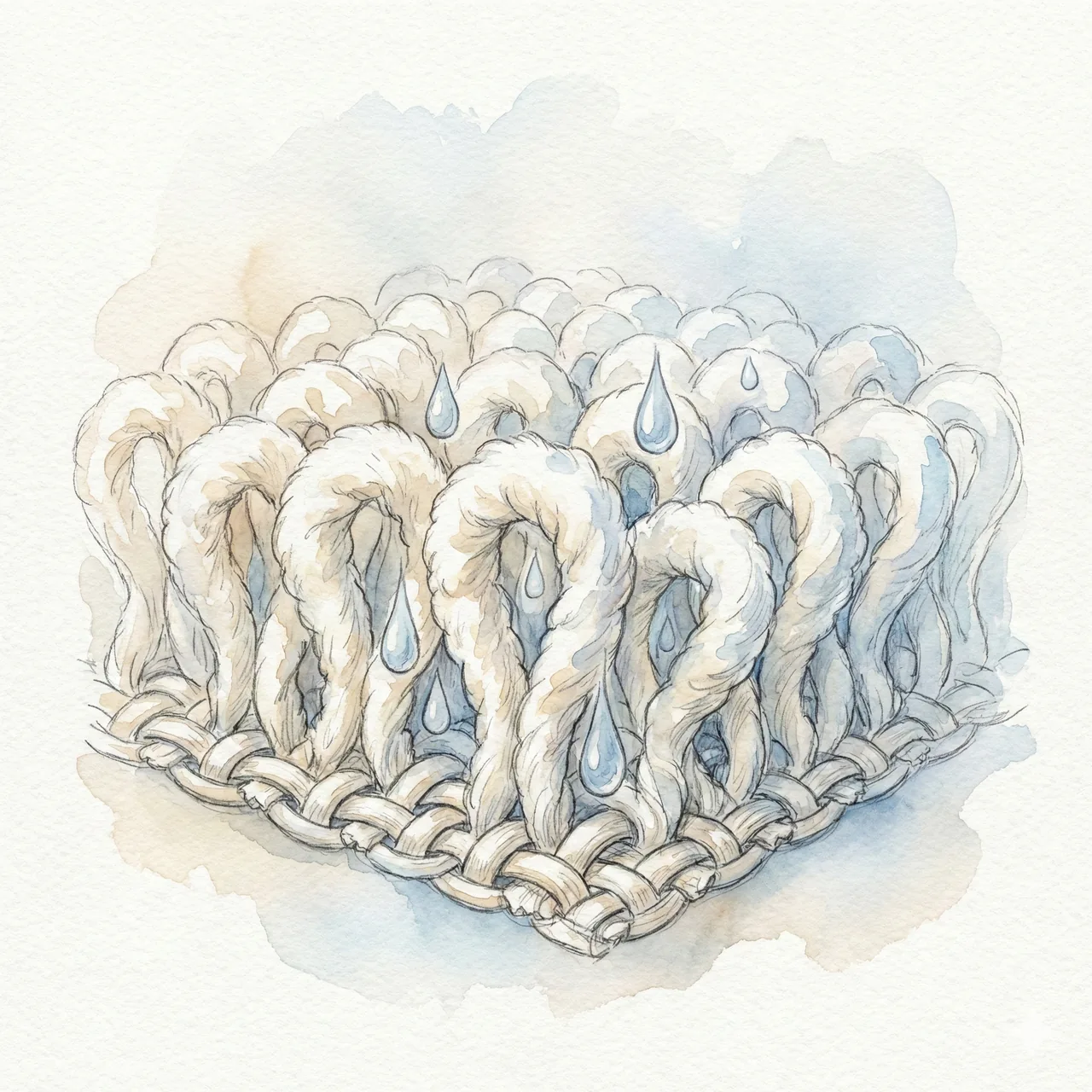
Towel-ket (pile weave): high absorbency and a comforting weight
Key character: looped pile, moderate weight, plush
If you love the feeling of a freshly laundered bath towel after a shower, a towel-ket is your category. The pile surface provides a large contact area that absorbs sweat quickly, and the moderate weight gives a sense of security that many people find psychologically calming at bedtime.
Better suited to sleepers who run cold or keep the AC at lower temperatures.
Gauze-ket (layered plain weave): airflow and a softness that grows with washing
Key character: stacked gauze layers, feather-light, smooth
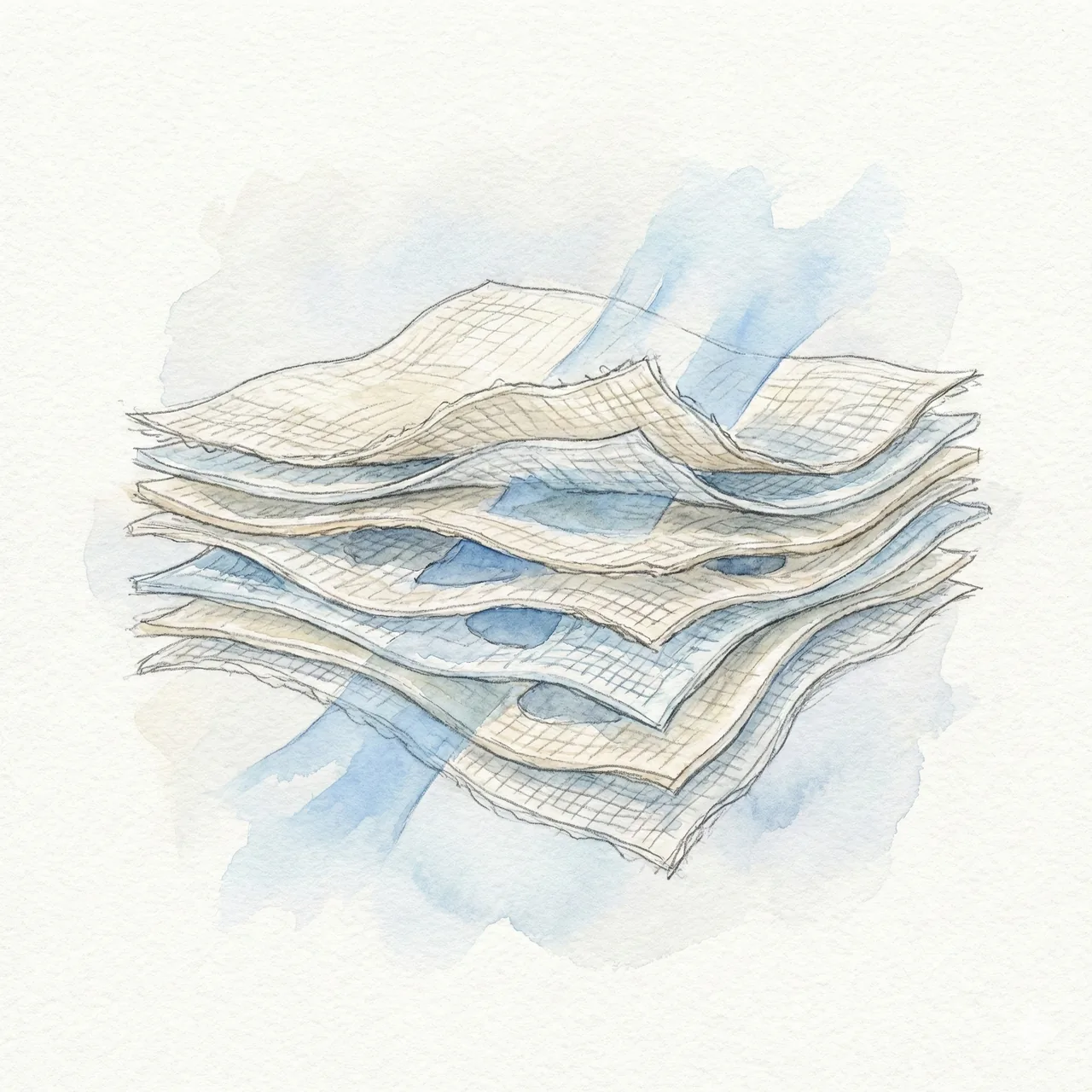
If you hate the feeling of fabric clinging to your body, a gauze-ket is your answer. Five or six layers of loosely woven gauze trap air between each layer — insulating without creating a sealed, suffocating sensation.
Ventilation is outstanding, it dries in a fraction of the time a towel-ket takes, and it has an unusual quality: it gets softer and more comfortable with every wash. A gauze-ket owned for five years is a different — and better — object than a gauze-ket owned for one month.
3. Imabari vs. Senshu: Japan's Two Great Towel Traditions
When choosing a towel-ket, knowing the difference between these two production regions helps you choose with confidence.
Imabari towel-ket (Ehime Prefecture): pre-bleached yarn, legendary loft
Japan's largest towel production region, Imabari uses a saki-sarashi (pre-bleaching) method: yarn is washed and dyed before weaving. This preserves the natural softness of the cotton fiber and produces the characteristic fluffy, high-pile loft Imabari is famous for.
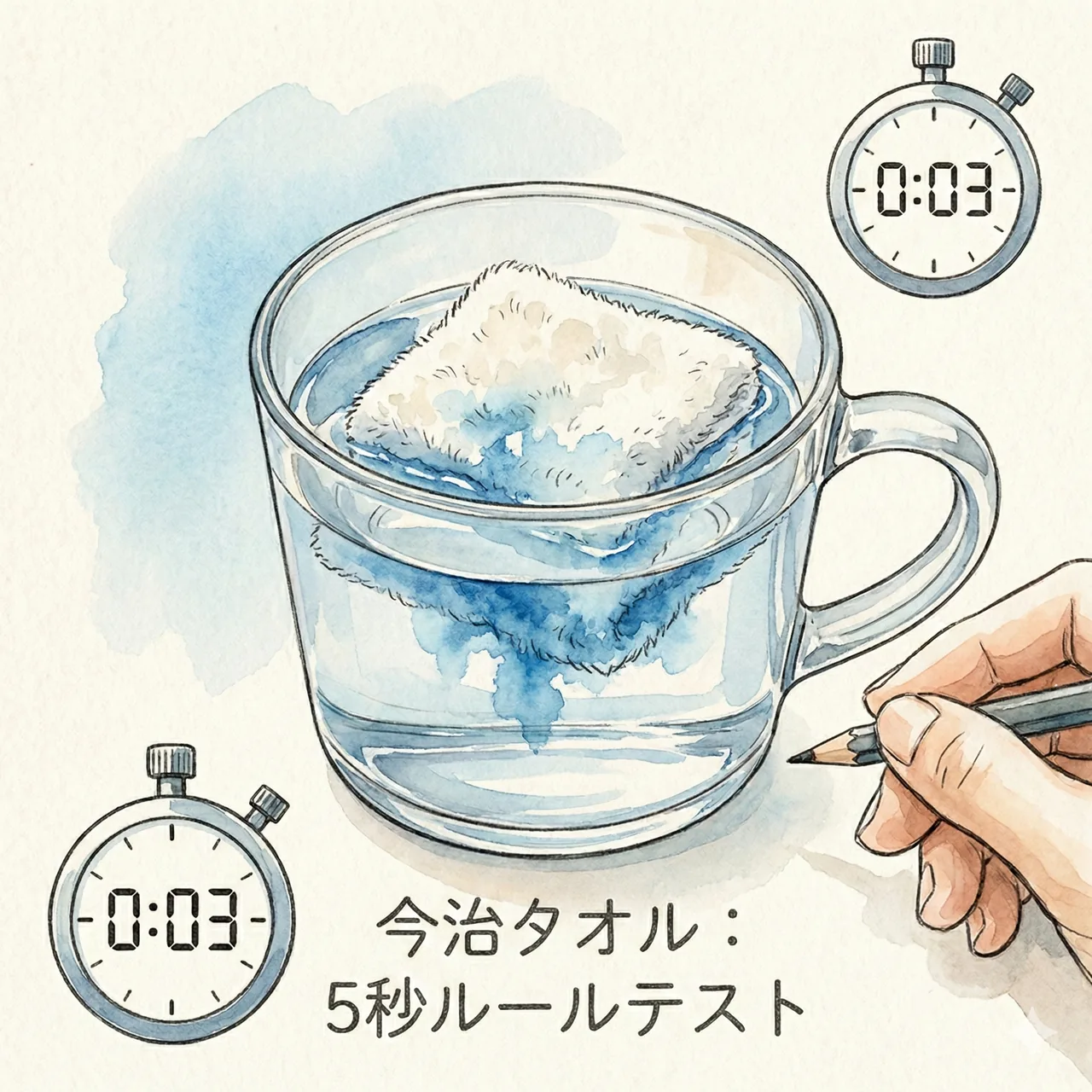
The regional quality standard requires that a test swatch sink within 5 seconds when placed on water — a surprisingly rigorous measure of absorbency that weed out inferior products. The red-and-blue Imabari certification tag is a reliable indicator of quality for gifts and personal purchases alike.
Senshu towel-ket (Osaka Prefecture): post-bleached construction, immediate absorbency
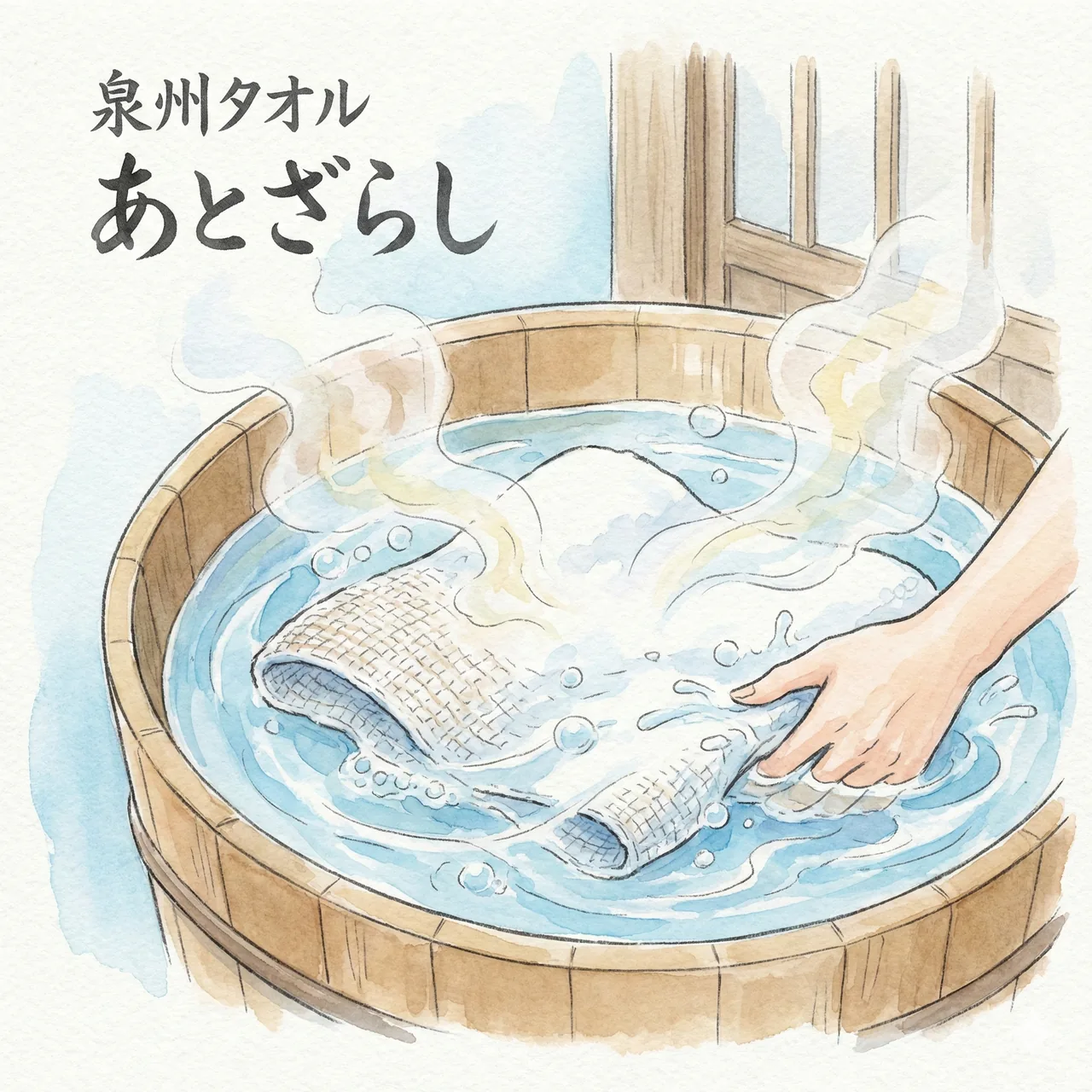
Japan's oldest towel region and the place where Japanese towel-making originated. Senshu uses ato-zarashi (post-bleaching): the towel is woven first, then thoroughly washed to remove all sizing agents, oils, and impurities.
The result is a towel that absorbs water aggressively right out of the packaging — no break-in period required. The texture is slightly less voluminous than Imabari but more compact, which means it dries faster. Senshu towel-kets are a practical first choice for daily use.
4. Care & Washing: Protecting Your Towel-ket's Absorbency
A few small habits can significantly extend the life and performance of your bedding.
Fabric softener: use sparingly, or skip it entirely
Fabric softener coats fibers with a thin layer of lubricant — which is exactly what makes it feel soft, and exactly what blocks absorbency. Using it with every wash will gradually degrade performance and make pile loops more likely to pull free.
The best practice: use fabric softener only occasionally — roughly once every ten washes — when the fabric feels noticeably stiff after drying. The rest of the time, the cotton will soften naturally with regular use.
A pulled thread: cut it at the base, don't pull it
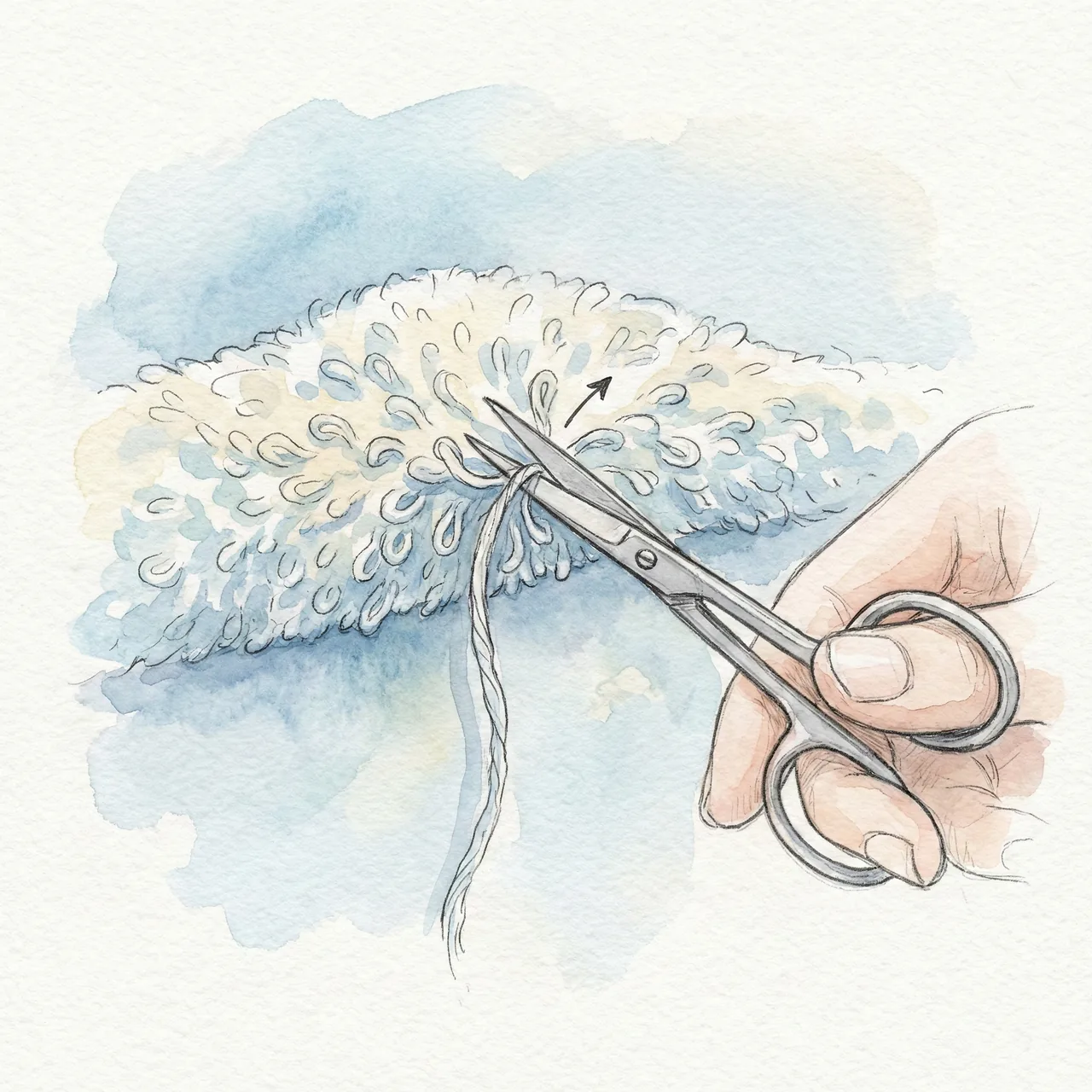
When a loop catches on a fingernail or zipper and pulls free, resist every instinct to tug on it. Towel-kets are woven structures, not knitted — cutting the exposed thread at its base with scissors will not cause unraveling or holes. Pulling it, however, distorts the surrounding weave. Cut without hesitation and the blanket remains perfectly intact.
5. 3 Recommended Japanese Summer Blankets
Pasima (パシーマ) — Quilted Gauze Blanket
A cult following, a miraculous structure, and a blanket that gets better forever.
Made in Ukiha City, Fukuoka Prefecture, Pasima has the kind of devoted fans who describe it as "the last blanket I'll ever need to buy." The concept is simple: medical-grade absorbent cotton (dassimen) is sandwiched between layers of fine gauze and quilted together.
What makes it extraordinary is how it behaves with washing: each cycle causes the inner batting to expand, creating progressively more insulating air pockets. A five-year-old Pasima is warmer than a new one.
Absorbency several times that of standard toweling. Equally at home in summer (instant sweat absorption) and winter (excellent insulation from the trapped air). Many owners use it every night, year-round.
Imabari-certified Towel-ket (Maruyama Towel)
Cloud-like pile density and a heritage quality mark you can trust for gifts.
The red-and-blue Imabari Towel certification label represents verified absorbency and construction standards — a useful guarantee when buying bedding without the ability to touch it first.
Maruyama Towel's certified towel-kets use dense pile that produces the plush, hotel-grade sensation Imabari is known for — genuinely luxurious against the face and arms. The moderate weight makes them appropriate for those who prefer something substantial over them while sleeping, and the presentation is gift-ready as a standalone purchase.
Matsunamiki (松並木) — Additive-Free Wazarashi Gauze Blanket
The cleanest gauze in Japan — no sizing, no bleaching agents, no compromises.
Standard industrial gauze is processed in roughly 40 minutes. Matsunamiki's wazarashi method takes four days, simmering the fabric slowly in traditional kettles to remove impurities without chemical shortcuts. No sizing agents, no optical brighteners, no finishing treatments of any kind.
The result is cotton that performs at the full measure of what the fiber is capable of — softer, more absorbent, and freer of any residual processing chemicals than almost anything else available. Safe enough for infants' faces; gentle enough for the most reactive skin. A rare, quietly exceptional product.
6. Frequently Asked Questions
Can I use these in winter too?
Yes — as an inner layer between your body and a duvet, they're excellent year-round.
In winter, place a towel-ket or gauze-ket directly against your skin, with the duvet on top. It prevents the initial cold shock when you first get into bed, absorbs the moisture your body produces overnight, and keeps the duvet from becoming humid and heavy. Many users find they need a thinner duvet once they add this layer, because the blanket captures so much of the body's warmth.
I'm worried about nails or pet claws catching on the pile.
For households with pets or young children, consider shearing-finished towel-kets or a gauze-ket instead.
Shearing (cutting the tops of the pile loops) produces a velvet-like surface with no exposed loops to snag. Gauze-kets have no pile at all, so they're inherently snag-free. Both remain cotton and retain the moisture-management qualities described above.
Is a gauze-ket suitable for newborns?
Ideal — especially the additive-free varieties.
Babies run warm and sweat constantly; gauze absorbs quickly and releases moisture fast, preventing the skin irritation that synthetic fabrics cause. Brands like Pasima and Matsunamiki, which use no dyes or finishing chemicals, are particularly well-suited for infant use — and both dry quickly enough to survive the washing frequency that comes with a newborn.
Which produces less lint — towel-ket or gauze-ket?
Gauze-kets shed significantly less fiber.
Pile fabrics can release thread fragments as loops wear with friction — especially in early washes. Gauze has a tighter, more compact weave with no exposed loops, so fiber shedding is minimal from the outset.
Natural cotton also carries far less static charge than synthetic fabrics, meaning it doesn't attract ambient dust from the room — a secondary benefit for allergy sufferers.
When should I replace a towel-ket?
Replace when absorbency drops or the texture becomes rough and stiff.
After a few years, pile fibers collapse and lose their structure — the blanket feels flat and scratchy rather than plush. Absorbency also decreases as fibers degrade. Two to three years is a reasonable replacement cycle for a towel-ket used year-round.
Gauze-kets, by contrast, often last ten or more years because the material becomes more comfortable (not less) with age — a genuine long-term investment.
Imabari or Senshu — which should I choose?
For a luxurious feeling and gift presentation: Imabari. For fast-drying daily practicality: Senshu.
Imabari's pre-bleached construction gives it outstanding loft and a soft, plush feel that reads as premium from first touch. Senshu's post-bleached construction strips the fabric bare before it reaches you — it absorbs maximally right from the start, dries faster, and stays compact.
Both regions produce Japan's finest cotton bedding. Using both side by side is the most honest way to learn your preference.
Final Thoughts: The Fabric You Fall Asleep Touching
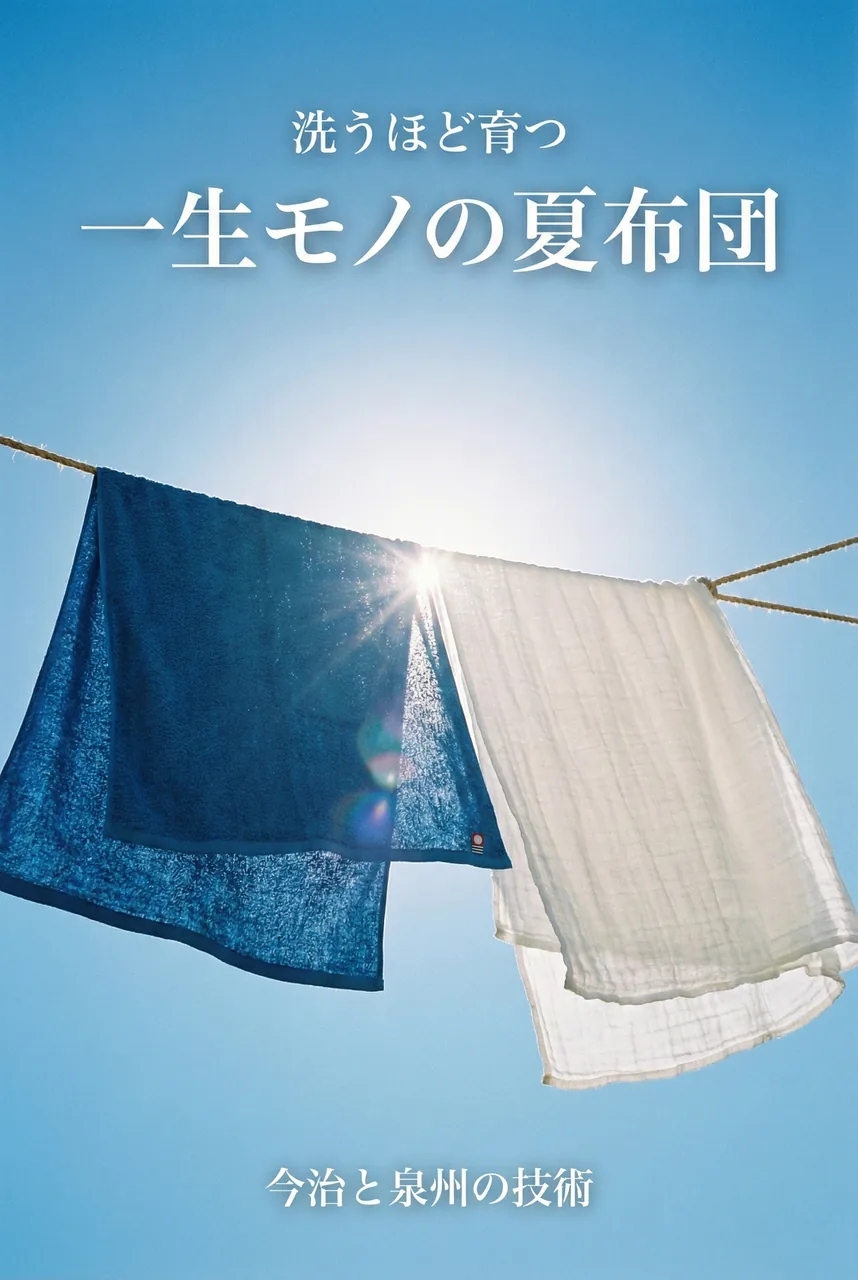
A third of your life is spent in contact with your bedding. It makes sense that the material touching your skin for those eight hours should be something genuinely worth choosing.
The Imabari pile against a cheek at the end of a long day. The gauze-ket that seems to get softer every month, adapting slowly to the shape of your life.
Japanese cotton bedding isn't merely about staying cool in summer — it's about the quiet, daily comfort of sleeping in something made with care. Find the right one for you, and the nights will be different.

Japanese Blankets & Duvets: Izumiotsu Mayer Wool and the Ultimate Winter Bedding
Japanese Pillows: Buckwheat, Pipe & Foam for Neck Pain Relief