Japanese curry is not an Indian curry, and the route it took is unusually well
documented. Britain took curry from India and anglicised it — thicker, more vegetables,
built on pre-mixed curry powder rather than freshly ground spices. The Royal Navy fed it
to sailors.
Japanese naval officers met it there. Japan was looking for a cheap way to get
vitamin B1 into its sailors and stop beriberi, asked the Royal Navy what they served, and adopted
curry. Then Japan added a French-style roux, and the thick, mild, slightly sweet
stew that resulted is now a national dish.
It also travels perfectly, which is more than most of the food on this site
manages.
Quick Reference: Not the Curry You Know
| Japanese curry | Indian curry | |
|---|---|---|
| Thickened with | A flour-and-fat roux | Reduction, onion, dairy, nuts |
| Spicing | Blended powder, mild, sweet notes | Fresh whole spices, region-specific |
| Texture | Stew — large chunks of veg | Varies enormously |
| Eaten with | Rice, from a spoon | Bread or rice, often by hand |
| Arrived from | Britain, in the Meiji era | — |
| If you are expecting heat and complexity, recalibrate. Japanese curry is closer to a beef stew with curry powder in it — and it is very good at being that. | ||
India, Britain, Japan — and Beriberi
The chain has three countries in it and each one changed the dish.
Britain took curry from India and made it into something else. The version the
Royal Navy fed its sailors was thicker than an Indian curry, heavy with vegetables and meat, and
built on a pre-mixed curry powder rather than the fresh, ground, regionally
specific spice blends it came from.
That anglicised version is what reached Japan — not the original.
And Japan adopted it as a health measure
Beriberi — vitamin B1 deficiency — was devastating the Japanese navy. A diet built on polished white rice was the cause, though that was not understood at the time.
The government wanted a cheap way to broaden what sailors ate, and asked the Royal Navy what it served. Curry was on the list: one dish containing meat, vegetables and wheat flour, cooked in bulk, that men would actually eat every week.
So Japanese curry began life as a public health intervention. It entered the
navy, moved to the army, and from there into schools and homes as conscripts went back to
civilian life having eaten it weekly for years.
That is why it is a national dish rather than a foreign one — an entire
generation learned it in uniform.
The roux is the Japanese contribution
The thickening is French. Japan added a roux — flour cooked in fat — which is what gives Japanese curry its glossy, heavy, almost gravy-like consistency, quite unlike anything in Indian cooking.
It is also why Japanese curry is sold as a block. The supermarket curry roux cube, which is essentially a solidified roux with spices in it, is a Japanese invention that makes the dish reproducible by anyone.
Why Japanese — The World's First Retort Pouch, 1968
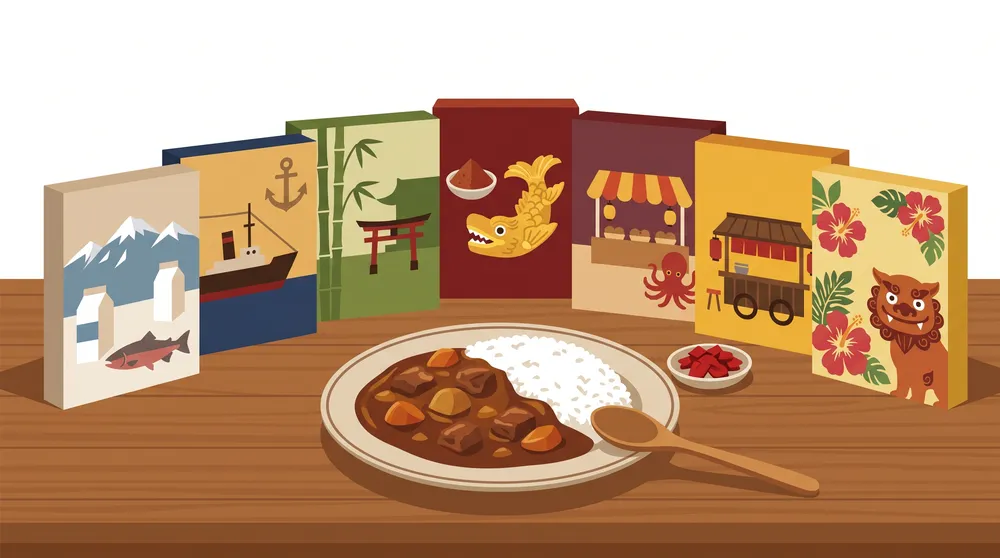
On 12 February 1968, a Japanese company launched the world's first commercially available retort pouch food — a curry. It is still sold, and it holds a Guinness World Record as the longest-selling retort-pouch curry brand.
The engineering problem was pressure. Sterilising food inside a sealed pouch means heating it well past boiling, at which point the contents expand and the pouch wants to burst. The solution was to apply counter-pressure in the retort vessel, balancing the two — and getting that balance right took a great many ruined batches.
That technology is now everywhere — every ready meal in a pouch, every
shelf-stable rice packet, every camping meal descends from it.
It is a genuine case of Japan going first, and one that almost nobody outside
Japan knows about, because the product it launched with looks like the most ordinary thing on a
supermarket shelf.
And it produced an absurd amount of variety
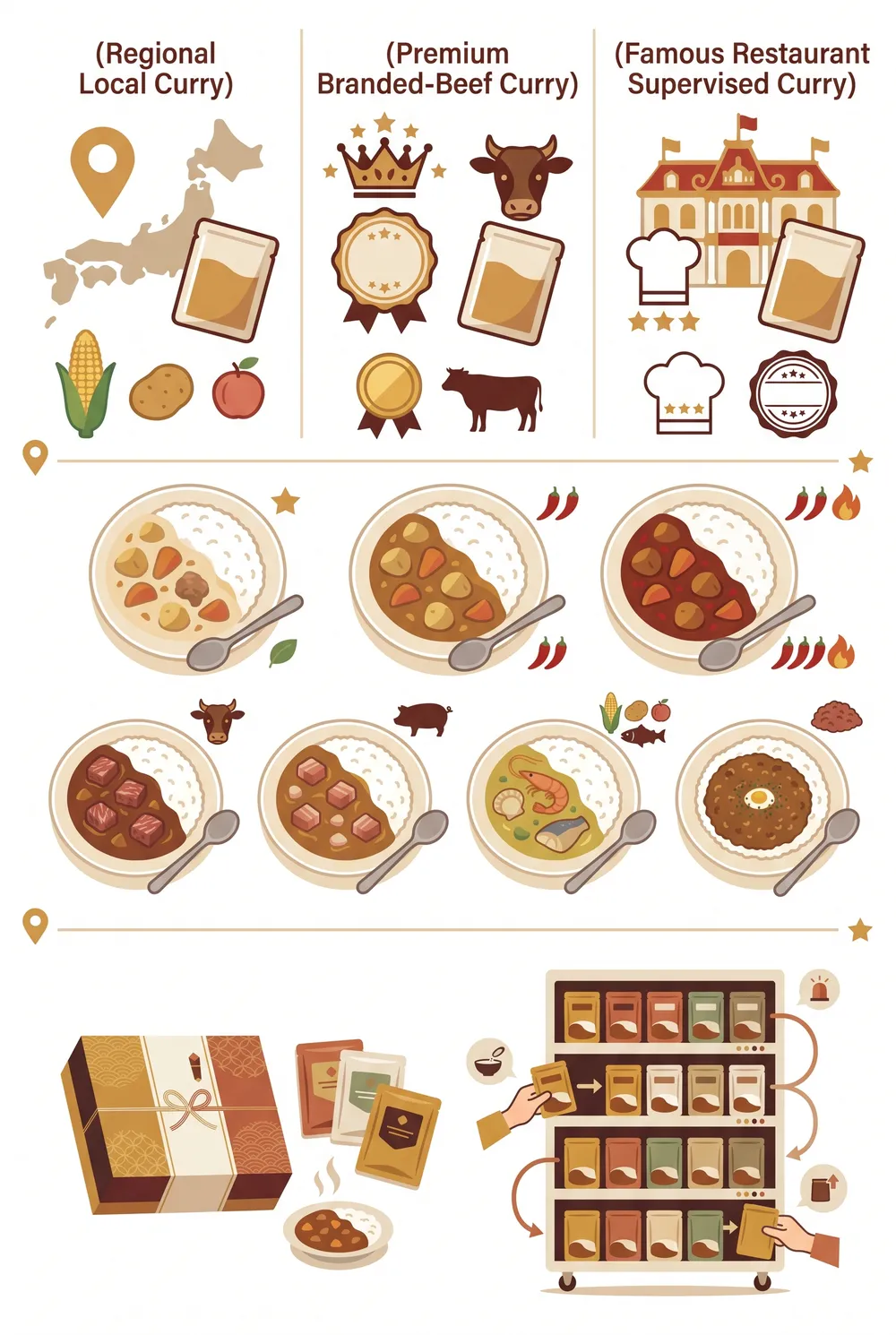
There are said to be more than 320 different gotōchi — regional speciality — retort curries in Japan. Persimmon curry from Sado. Squid ink curry from Niigata. Curries built around a single prefecture's beef, or its crab, or its onions.
They exist because the pouch made small-batch production viable. A regional maker can produce a curry, seal it, and sell it as a souvenir with a two-year shelf life — which is why every station gift shop in Japan has a wall of them.
No Preservatives, and Why That Is Not a Contradiction
Shelf-stable food is widely assumed to be full of preservatives. For retort pouches that assumption is simply wrong, and the reason is worth understanding.
The food is sealed into the pouch first, and then sterilised inside it — under heat and pressure, exactly like canning. Nothing living survives the process, and the sealed pouch means nothing can get back in.
So there is nothing to preserve against. Two years at room temperature and an ingredients list with no preservatives on it are not in tension; the second follows from the process that produces the first.
This also explains why it tastes better than you expect. A curry is a stew, and
stews improve with time — the pouch is effectively holding a finished stew in
suspension rather than preserving something that was never meant to sit.
Read the ingredients if you want to check. Good retort curry lists food, and
that is genuinely all it needs to.
Choosing: Heat, Region, and What Is In It
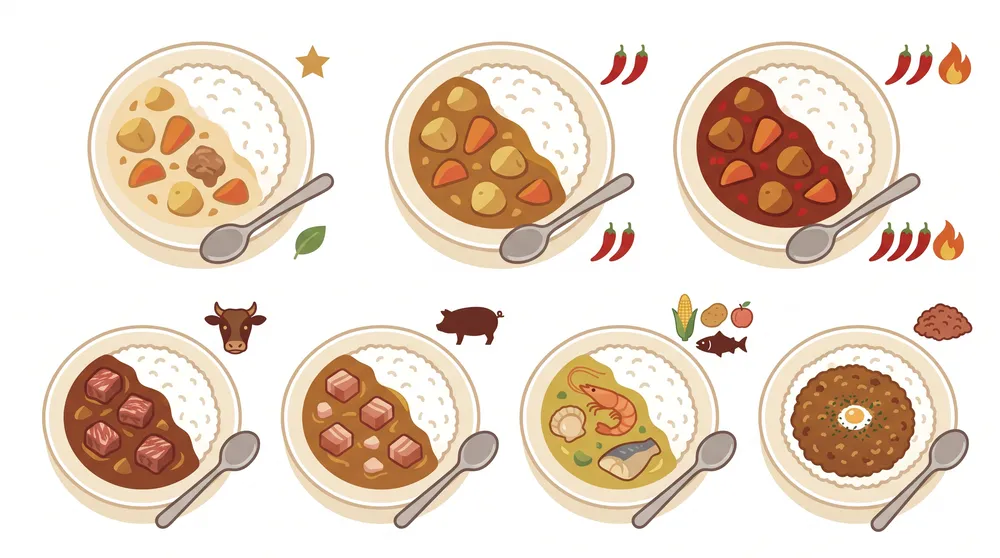
- Heat is graded and the scale is not yours. Japanese "hot" (karakuchi) is roughly a mild-to-medium elsewhere. "Mild" (amakuchi) is genuinely sweet and made for children. Start one step up from what you would normally choose.
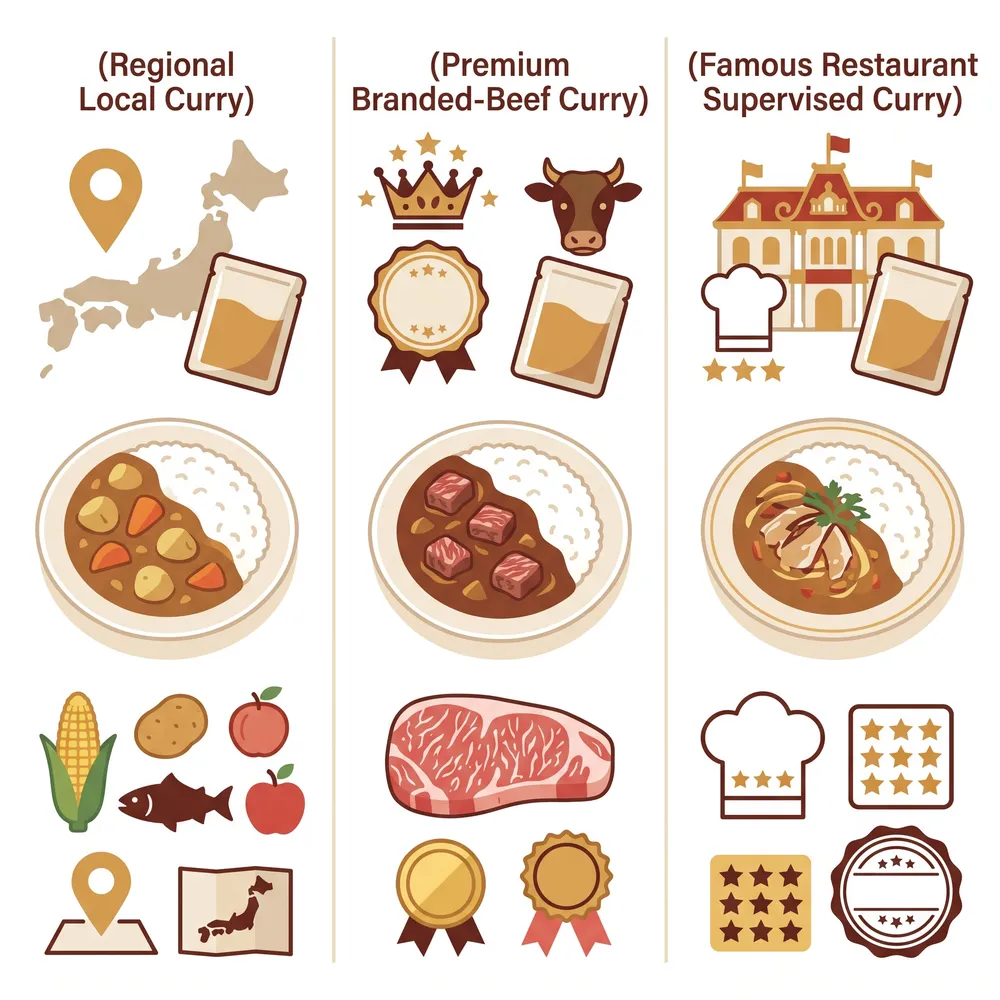
- Three broad categories. Regional curries are for tasting your way around Japan; branded-beef curries are the gift tier, built on a named wagyu; chef-supervised versions carry a restaurant's name and recipe.
- Check whether there is anything in it. Some pouches are sauce only, designed to be poured over your own rice and vegetables. Others contain substantial chunks of meat and potato. The price difference usually tells you which.
- European-style (ōfū) curry is a distinct sub-genre — darker, richer, longer-cooked, closer to a demi-glace. Worth trying if the standard version feels too sweet.
What to Buy
Unlike almost everything else in this batch, there is no shipping problem here.
Retort curry is shelf-stable, unbreakable, light, and already stocked by ordinary
retailers.
You do not need a specialist importer — which makes it one of the easiest
Japanese foods to try properly.
A standard ready-made curry, in a multipack
Sauce with vegetables already in it — potato and carrot — so heating the pouch and
pouring it over rice is the whole recipe. This is the everyday Japanese
version rather than a gift item, and it is the right starting point.
Buy a multipack and buy mild first if you have never had Japanese curry.
You can always go hotter; recalibrating downward after finding it fierier than expected is
harder.
- Contains
- Sauce plus vegetables
- Heat
- Mild or medium-hot
- Prep
- Heat the pouch in hot water. That is all
- Keeps
- Around two years, room temperature
The regional ones are a Japan purchase
The 320-plus gotōchi curries are the interesting end of this category,
and we could not find an English-language route to a mixed regional set.
They are trivially easy to buy in Japan — station shops, motorway services,
department store food halls — and they are close to the perfect souvenir: flat,
unbreakable, two-year shelf life, and each one is a place.
Making It Better, and Keeping It

- Heat the sealed pouch in simmering water rather than decanting it into a pan. It heats evenly and there is nothing to wash.
- Add something with fat. A knob of butter stirred in at the end, or a spoonful of milk, rounds out the edges that a shelf-stable sauce inevitably has.
- A fried egg on top is standard, and a breaded cutlet on the side makes it katsu curry — which is what most people outside Japan have actually eaten.
- Fukujinzuke — the red pickled relish — is not optional in Japan. It cuts the richness, and its absence is why home-made Japanese curry often feels heavy.
- Rice matters more than you would think. Short-grain Japanese rice holds the sauce; long-grain lets it run off the plate.
Rolling stock: the Japanese approach to emergency food
Japanese households keep retort curry as earthquake stock, using a system called rolling
stock: buy more than you need, eat the oldest, replace it.
Nothing expires unused and nothing tastes like emergency rations, because it is
simply the food you already eat, kept a few packets deep. It works for any household in
any country, and it is a better plan than a box of survival biscuits you will never
open.
Frequently Asked Questions
Is retort curry full of preservatives?
No — and it does not need to be. The food is sealed into the pouch and then
sterilised inside it under heat and pressure, in the same way food is canned.
Nothing survives and nothing can get in, so a two-year shelf life and a
preservative-free ingredients list are perfectly consistent.
How is Japanese curry different from Indian curry?
It is thickened with a flour-and-fat roux, mildly spiced from a blended powder,
slightly sweet, and served as a stew over rice.
It came to Japan from Britain rather than India, already anglicised — so it is
better understood as a British naval stew that Japan then refined.
How hot is "hot"?
Milder than you expect. Japanese karakuchi ("hot") sits around a mild
to medium elsewhere, and amakuchi ("mild") is genuinely sweet and aimed at children.
Buy one level up from your usual if you like heat, and mild if you are cooking
for a family.
Can I eat it without heating it?
Yes, safely — it is fully cooked and sterile in the pouch. This is why it works
as emergency food when there is no power.
It will taste flat and the fat will be solid, so heat it whenever you can. Cold
is a fallback, not an option.
Does it make a good gift?
Unusually good. Flat, light, unbreakable, no refrigeration, around two years of
shelf life, and cheap enough to send several.
A mixed set of regional curries is the version to give — each pouch is a
different place, which turns a food parcel into something to talk about.
What actually goes with it?
Short-grain rice, a fried egg, and fukujinzuke pickle. The pickle is
the one people skip and the one that matters — it cuts a rich sauce.
A breaded pork or chicken cutlet turns it into katsu curry, which is the version
most restaurants abroad serve.
Final Thoughts: A Naval Ration That Became a National Dish
India to Britain to Japan, adopted to stop sailors getting beriberi, thickened with a French roux, and then sealed into the world's first retort pouch in 1968. Very few supermarket products have a story that specific.
And unlike most Japanese food, there is nothing standing between you and it. No frozen chain, no shelf-life arithmetic, no specialist importer.
Buy a multipack, put an egg on it, and do not skip the red pickle.
Ramen by Post: What Actually Crosses a Border

Japan's 7 Best Brand Rice Varieties: A Mail-Order Guide