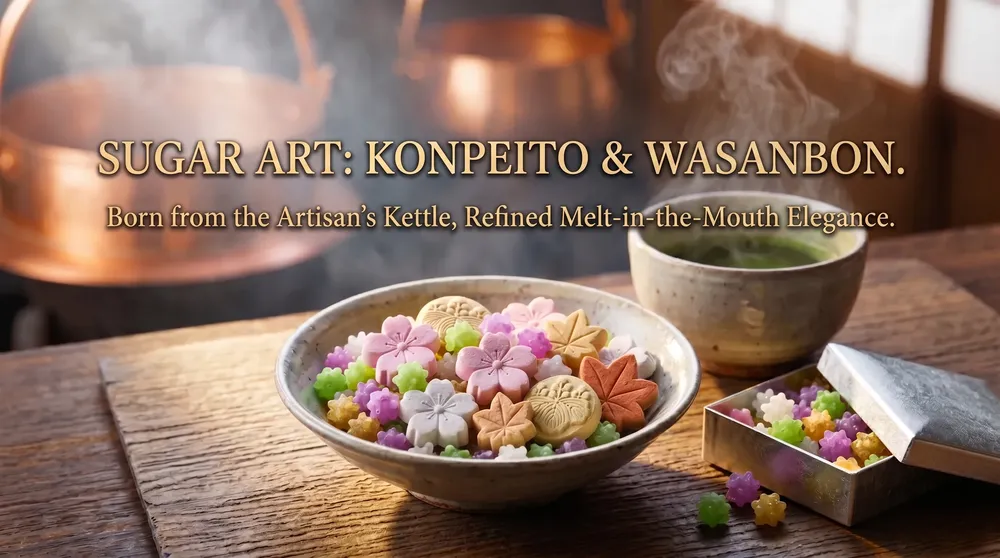
A single konpeito is grown, not made. It starts as one poppy seed in a heated
rotating copper pan, and an artisan sprays sugar syrup over it — building the crystal up a layer at
a time, for one to two weeks, until the points of the star appear on their own.
Nobody designs those spikes. They emerge from the physics of syrup drying on a
tumbling grain, and the artisan's job is to keep the conditions right for long enough that they
form.
Wasanbon is the other half of this story — a pressed sugar so fine it dissolves
on contact, made from one narrow cane variety in two neighbouring prefectures that produce
noticeably different results.
Quick Reference: Two Different Sugars
| Konpeito | Wasanbon | |
|---|---|---|
| What it is | Grown sugar crystals | Pressed refined sugar |
| Time to make | 7–14 days, up to 20 traditionally | Repeated kneading and pressing |
| Texture | Hard, crunches, then dissolves | Collapses instantly on the tongue |
| Eaten | Loose, or dropped into tea | Pressed into moulded shapes |
| Keeps | Over a year, dry and dark | Months — it takes up moisture |
| Both are sugar and nothing else. There is no flour, no fat and no filling — which is why the making takes so long and why the difference between good and bad is so obvious. | ||
Konpeito: A Crystal Grown by Sound
Konpeito arrived with the Portuguese in the mid-sixteenth century, as part of the nanban trade — the name is a corruption of confeito. The documented moment is 1569, when the Jesuit missionary Luís Fróis presented Oda Nobunaga with a glass bottle of it in Kyoto.
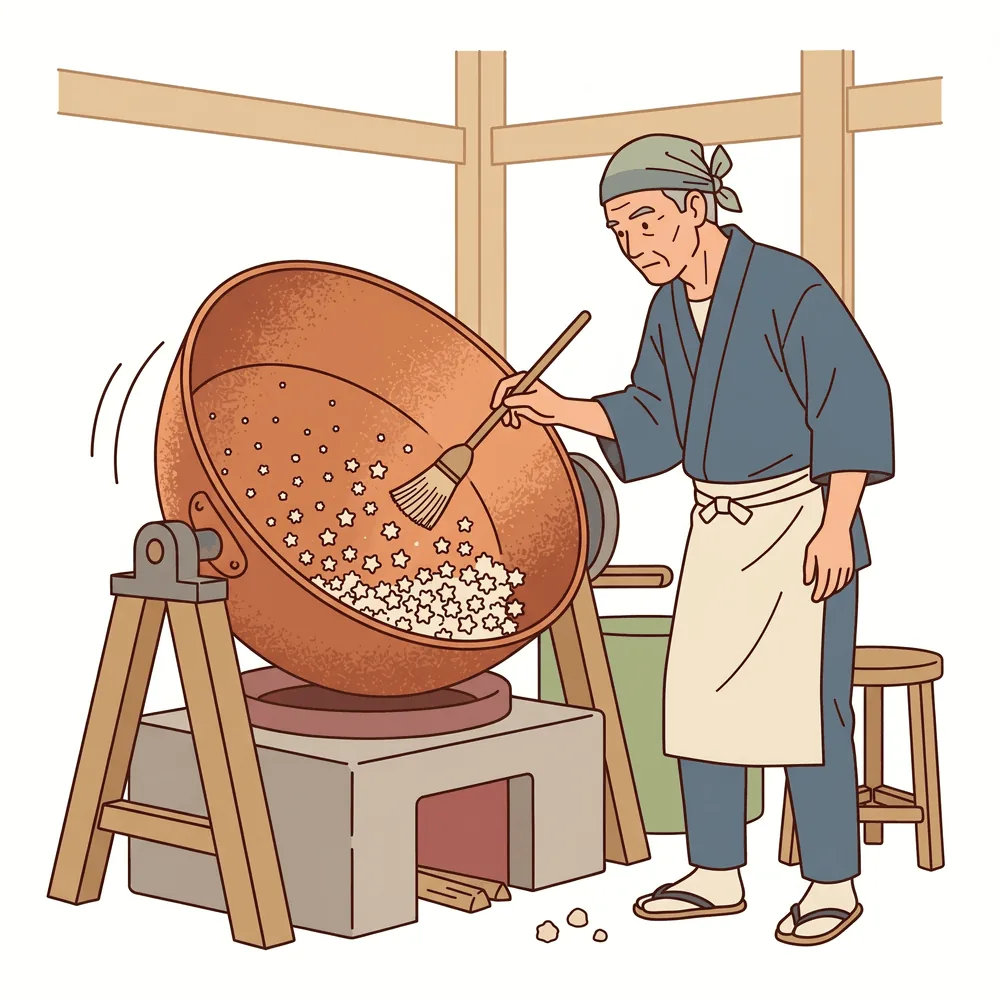
There is no recipe. The process is a single poppy seed placed in a heated, tilted, rotating copper pan called a dora, over which the artisan sprays sugar syrup while the seeds tumble.
Each pass adds a fraction of a millimetre. Modern methods take seven to fourteen days; traditional ones run to sixteen or twenty, and in the era of charcoal fires a single batch could take two months.
The artisan is listening, not looking
The heat and the syrup rate are adjusted by the sound of the sugar tumbling in the
pan. Too wet and the grains stick together; too dry and no new layer forms.
Nobody carves the points. They arise on their own from the way syrup dries
unevenly on a rolling grain — which is why every konpeito is a slightly different
shape, and why a perfectly uniform "konpeito" was made in a machine.
Flavouring it is genuinely difficult. Fruit juice, alcohol or tea introduce water and acid that disrupt crystal formation, and the sugar collapses instead of building. A handful of makers have solved this, which is why flavoured konpeito costs what it does.
Why Japanese — Wasanbon, and Two Rival Prefectures
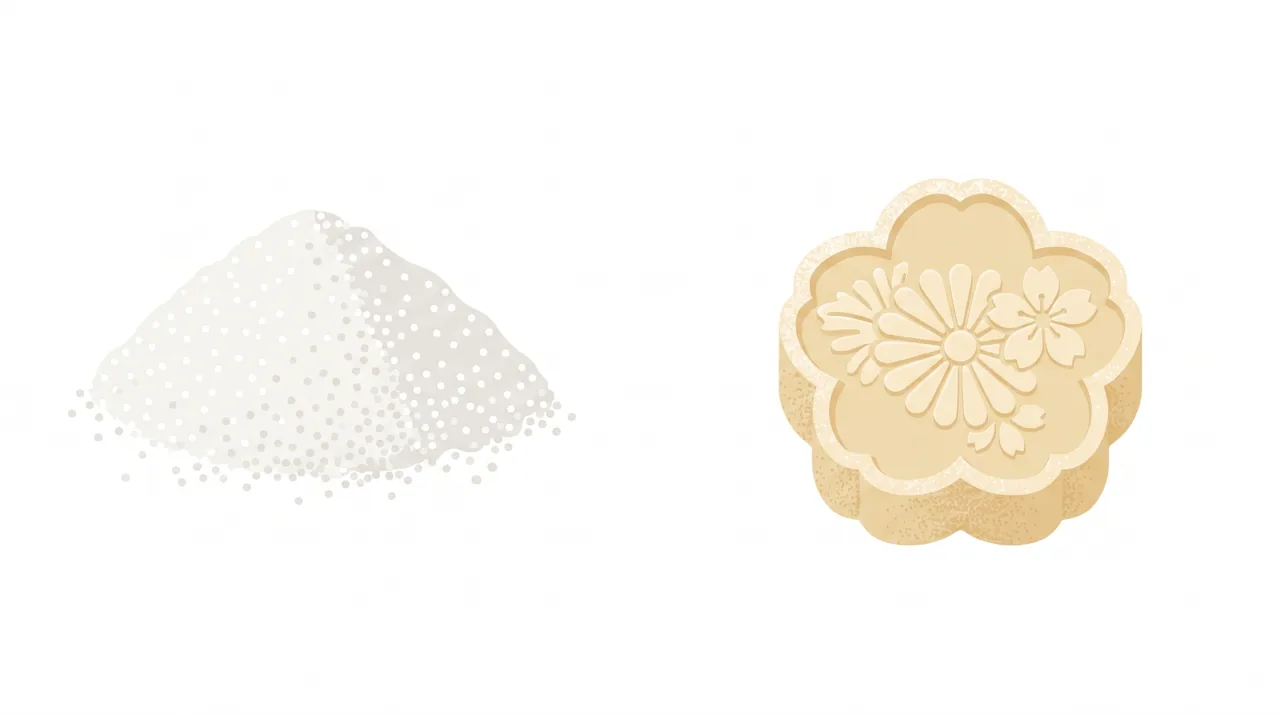
Wasanbon starts with one cane. Take-tō is a thin native variety grown in a small area of Shikoku, and it is not interchangeable with the industrial sugarcane grown everywhere else.
The distinctive step is called togi — "sharpening". The raw sugar is kneaded by hand with a little water, packed into a press, and squeezed to drive out the molasses. Then it is kneaded and pressed again, and again.
That repetition is what produces the particle size, and the particle size is
the entire product. Wasanbon is so finely divided that it does not feel granular at
all — it collapses the moment it meets moisture, which is why a piece placed on the
tongue is gone in seconds.
And the molasses is only partly removed on purpose. What is left gives wasanbon
its pale gold colour and the faint, almost savoury depth that white sugar does not have.
Awa or Sanuki — the choice nobody explains
Wasanbon is made in two adjacent prefectures and the results are different enough to choose between, which almost no English-language description mentions.
| Awa (Tokushima) | Sanuki (Kagawa) | |
|---|---|---|
| Colour | Browner | Paler |
| Moisture | Moister | Drier |
| Flavour | Rich, close to raw sugar | Lighter, cleaner, more refreshing |
Neither is better. Awa suits anyone who likes the character of unrefined sugar; Sanuki suits anyone who wants the sweetness to disappear cleanly and leave the tea in charge. If you are buying one to eat with matcha, Sanuki is the conventional pairing.
The Imperial Bonbonnière
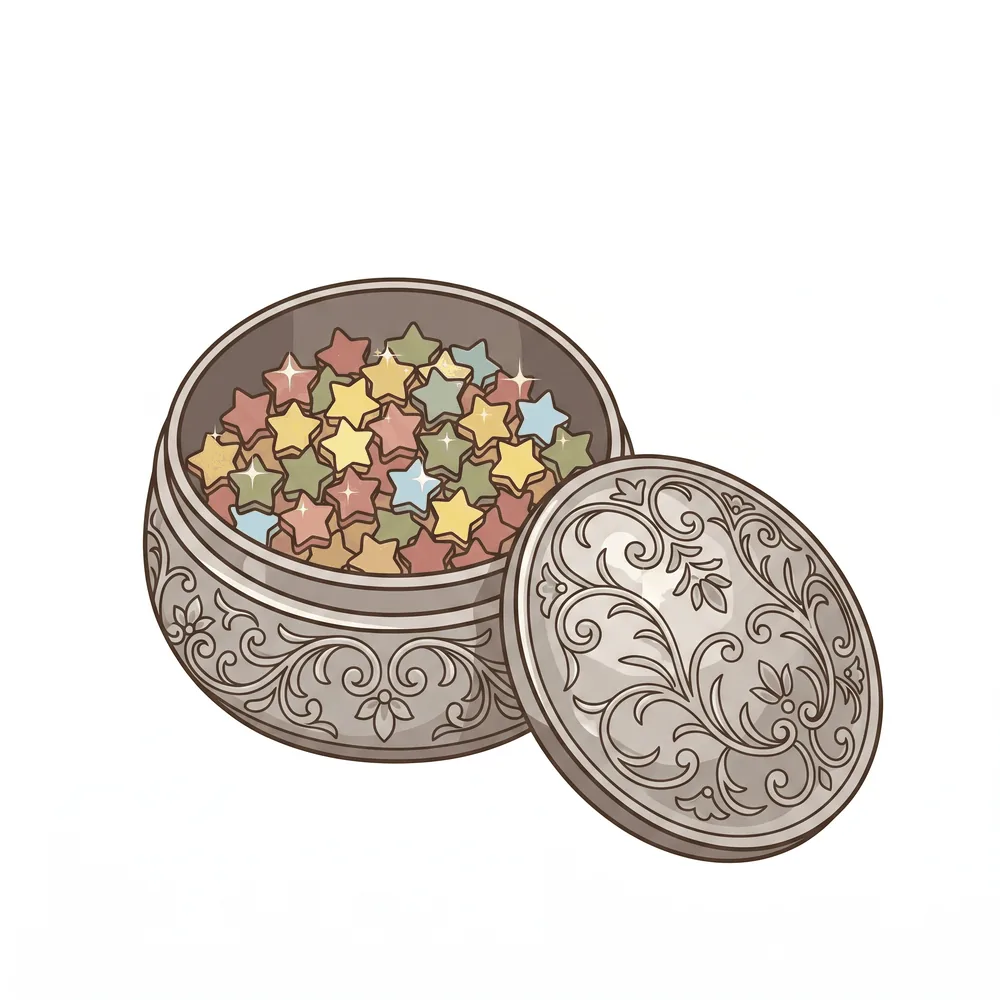
Since the Meiji era the Japanese Imperial Household has given konpeito as a parting gift at weddings and state banquets, in a small ornamented silver box called a bonbonnière — a French word for a French object, filled with a Portuguese sweet, given by a Japanese court.
The symbolism is the making rather than the sweet. A konpeito is built up over a fortnight, one thin layer at a time, and cannot be hurried — which is a reasonably pointed thing to hand somebody at a wedding.
The box is kept. The bonbonnière is a collectable object in its own right, and guests keep them long after the sweets are gone.
What to Buy
Sanuki wasanbon — the one to start with
Paler, drier and cleaner-tasting, and the style conventionally served with
matcha. It is sold both as loose sugar and pressed into moulded shapes —
seasonal flowers, leaves, and small geometric forms — using hand-carved
wooden moulds.
Buy the moulded pieces first. Loose wasanbon is excellent in baking and in
coffee, but the pressed pieces are how you experience what it actually does on the tongue.
- Region
- Kagawa (Sanuki)
- Cane
- Take-tō, a thin native variety
- Character
- Light, clean, dissolves instantly
- Best with
- Matcha or strong black coffee
Awa wasanbon — richer, and closer to raw sugar
Browner and moister, with more of the molasses character left in. If you
like muscovado or panela you will recognise the direction, though the texture is nothing
like either.
Sold in larger bags for cooking as well as in gift boxes, which makes it the
better choice if you actually want to bake with it rather than eat it as a sweet.
- Region
- Tokushima (Awa)
- Character
- Rich, deeper colour, moister
- Use
- Baking, coffee, and eating neat
Konpeito: a Kyoto shop, and why we are not linking it
Ryokujuan Shimizu in Kyoto has sold konpeito and nothing else since 1847 —
roughly 180 years of a single product — and it is the maker that solved the flavouring problem,
producing versions with sake, roasted tea and brandy. Its top pieces have famously long
waiting lists.
We could not confirm an international shipping route, so we are not sending you
to a search that will return souvenir bags instead. It is a shop to visit.
Plain konpeito is widely sold abroad in Japanese grocers and is perfectly good
— just be aware that the inexpensive machine-made kind is a different product from the thing
described above.
How to Eat Them
- Do not chew wasanbon. Put one piece on your tongue and press it lightly to the roof of your mouth. It should vanish in a few seconds with no residue — that absence of stickiness is the whole point, and chewing removes it.
- Wasanbon with matcha is the classic pairing, and it is a genuine one: the sugar is eaten first, and the bitterness of thick matcha arrives into a sweetened mouth.
- Konpeito in hot tea works — it dissolves slowly and looks good doing it. Plain stars only; flavoured ones are wasted this way.
- Both are surprisingly good with black coffee, eaten separately rather than stirred in. Wasanbon in particular behaves like an edible sugar cube.
- Wasanbon is excellent in baking, where its fineness means it dissolves without creaming. Buy loose sugar rather than moulded pieces for that.
Storage matters more for wasanbon than for konpeito. Konpeito is hard crystal
and keeps over a year in a dry dark cupboard.
Wasanbon takes up moisture from the air and clumps, and moulded pieces lose
their edges. Keep it sealed, away from steam, and treat a few months as the
useful window.
Frequently Asked Questions
Why does konpeito take two weeks?
Because each pass of syrup adds only a fraction of a millimetre. The crystal is
built up layer by layer around a single poppy seed in a rotating heated pan.
Modern methods take seven to fourteen days and traditional ones up to twenty —
and the artisan adjusts heat and syrup by the sound of the sugar tumbling, not by a recipe.
Where do the star points come from?
They form on their own. Syrup dries unevenly on a tumbling grain, small bumps
collect slightly more on the next pass, and the difference compounds over hundreds of passes.
Nobody shapes them — which is why no two are identical, and why perfectly
uniform stars indicate a machine.
What is the difference between Awa and Sanuki wasanbon?
Awa, from Tokushima, is browner, moister and richer — closer in character to raw
sugar. Sanuki, from Kagawa, is paler, drier and cleaner-tasting.
Sanuki is the conventional partner for matcha; Awa is the more interesting one
to cook with.
Is wasanbon healthier than white sugar?
It is less refined, and it is still sugar. Some of the molasses is left in
deliberately, which is where the colour and the deeper flavour come from.
Treat it as a better-tasting sugar rather than a better-for-you one. The reason
to buy it is what it does on your tongue.
How long do they keep?
Konpeito: over a year if kept dry and out of sunlight, which makes it a good
thing to post.
Wasanbon: a few months. It absorbs moisture from the air, clumps, and moulded
pieces soften at the edges — keep it sealed.
Why is konpeito given at Japanese weddings?
Because it cannot be hurried. The Imperial Household has given it as a parting
gift since the Meiji era, in a small silver bonbonnière.
Something built one thin layer at a time over a fortnight is a fairly direct
metaphor to hand a couple on their wedding day.
Final Thoughts: Sugar and Nothing Else
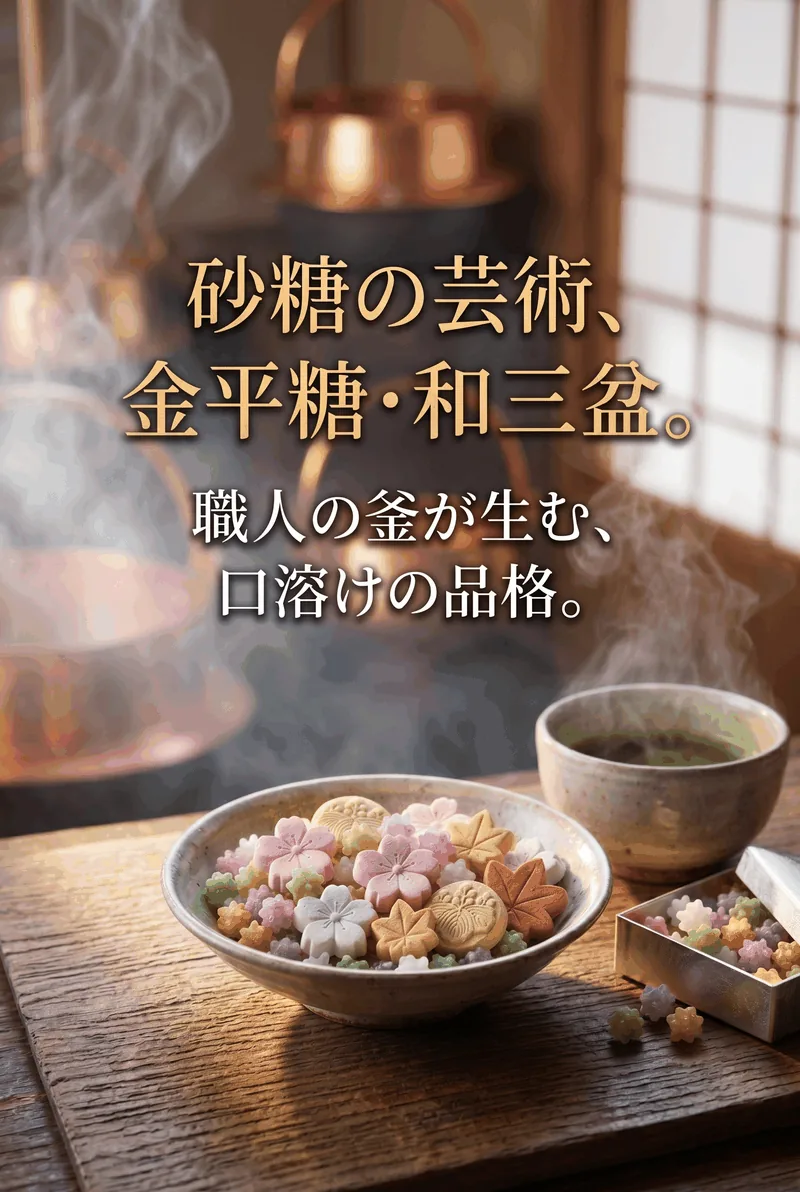
There is nothing in either of these but sugar — no flour, no fat, no filling and nowhere to hide. Everything that distinguishes a good one is process.
Konpeito is a crystal grown a layer a day for a fortnight, by someone listening to a pan. Wasanbon is the same sugar kneaded and pressed until the particles are too small to feel.
Buy Sanuki wasanbon in moulded pieces, put one on your tongue, and do not chew it. That is the shortest route to understanding why either of these exists.

Yokan: Japan's 500-Year-Old Energy Bar
Castella: The Crunch at the Bottom Is Deliberate