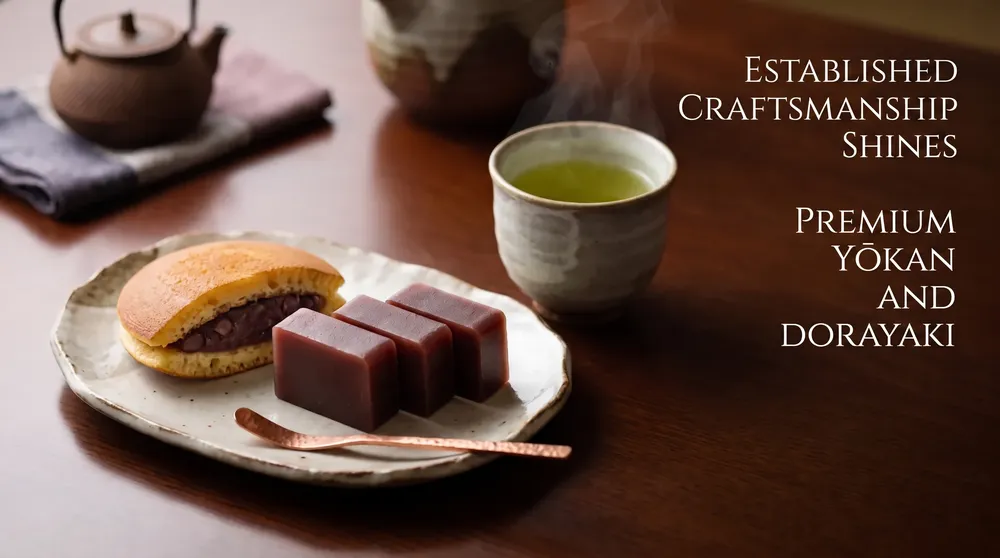
When Toraya opened in Paris in 1980, customers mistook the yokan for bars of black
soap.
It is a fair mistake. A block of yokan is a dense, dark, glossy slab that arrives
wrapped like something expensive and looks like nothing you would put in your mouth. There is no
Western food shaped like it.
What it actually is: azuki beans, sugar and agar, cooked down over three days into
something with the density of marzipan and none of the almond. It keeps for about a year
without refrigeration, which is why it is one of the very few Japanese confections that can
survive being posted to your country — and why Japanese climbers put it in their packs.
Quick Reference: Yokan and Dorayaki at a Glance
| Yokan | Dorayaki | |
|---|---|---|
| What it is | Dense set bean jelly | Two pancakes, bean paste between |
| Keeps for | About a year, unrefrigerated | Days to two weeks |
| Can you get it abroad? | Yes — including Toraya | Factory-made only |
| Tastes like | Concentrated, clean, not cloying | A sweet, eggy pancake sandwich |
| If you are ordering from outside Japan, order yokan. The good dorayaki is a fresh pastry and does not travel — that is not a supply problem anyone can fix. | ||
What Ships, and What Does Not
These two confections are usually sold together and are opposites in the one way that matters to you.
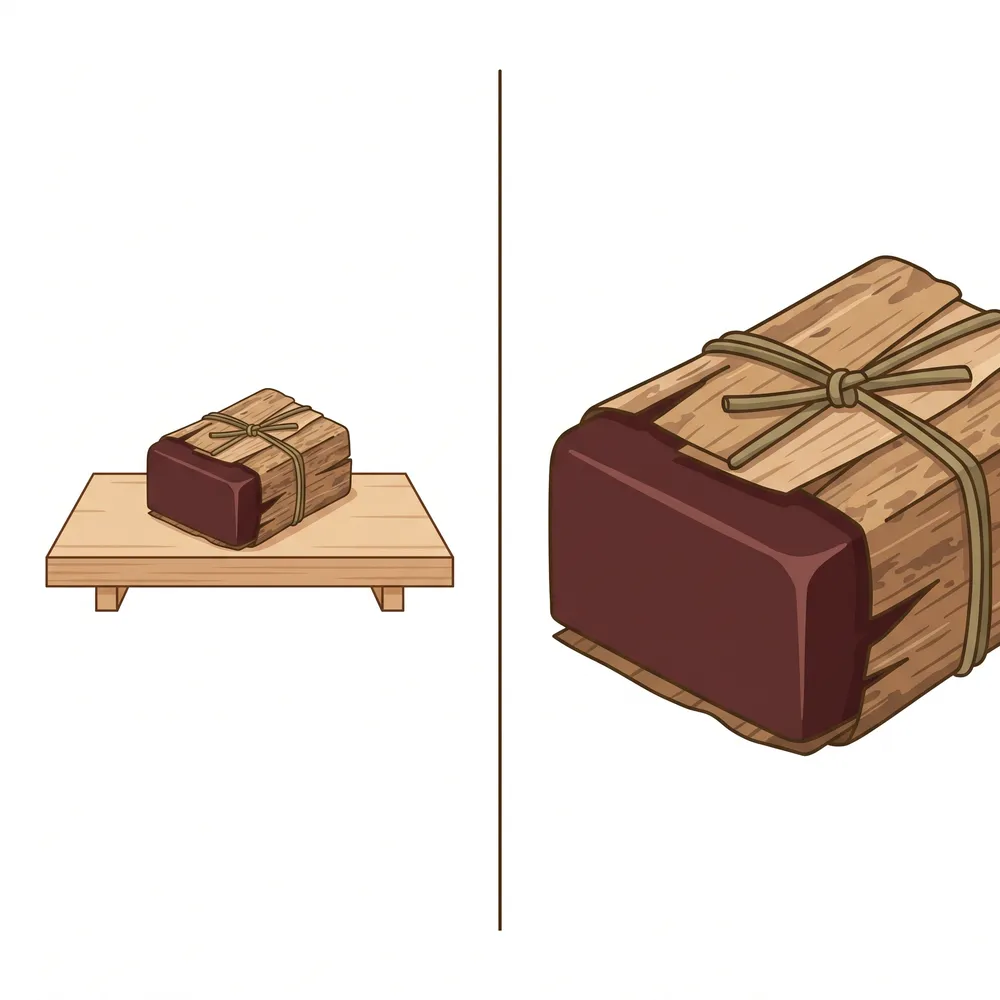
Yokan was engineered for shelf life 500 years early
The sugar concentration is high enough that there is not enough free water left for
anything to grow in. That is the same principle as jam or candied fruit, taken
further.
The result keeps about a year at room temperature, needs no refrigeration,
does not melt in a hot post van, and requires no water to eat. It is close to an
ideal object to mail across the world, which is not something you can say about most
pastry.
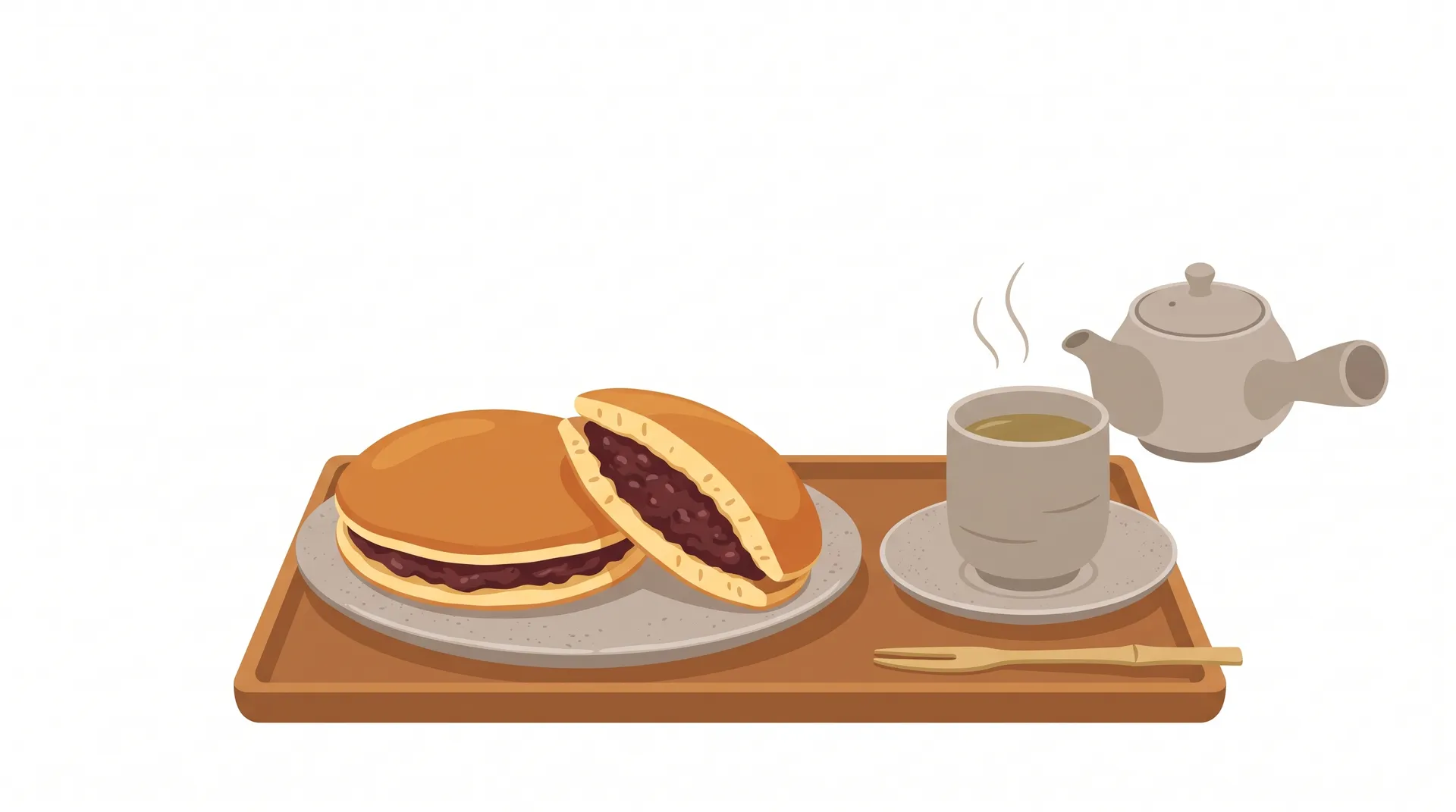
Dorayaki is the opposite, and better dorayaki is worse
Dorayaki is a fresh pastry — two small pancakes with bean paste between them — and the pancake holds moisture. Confectioners who use no preservatives end up with a shelf life of a few days, and the very best shops are the shortest of all.
You can buy dorayaki abroad, but not that dorayaki. Factory-made versions from
large manufacturers are formulated to sit on a shelf and are stocked by Japanese grocers
internationally. They are perfectly nice.
The version from a hundred-year-old shop in Nagoya, eaten the day it was made, is not
available to you unless you go — and no amount of paying more changes that.
It is worth knowing which thing you are buying.
Why Japanese — Toraya, and Five Centuries of One Recipe
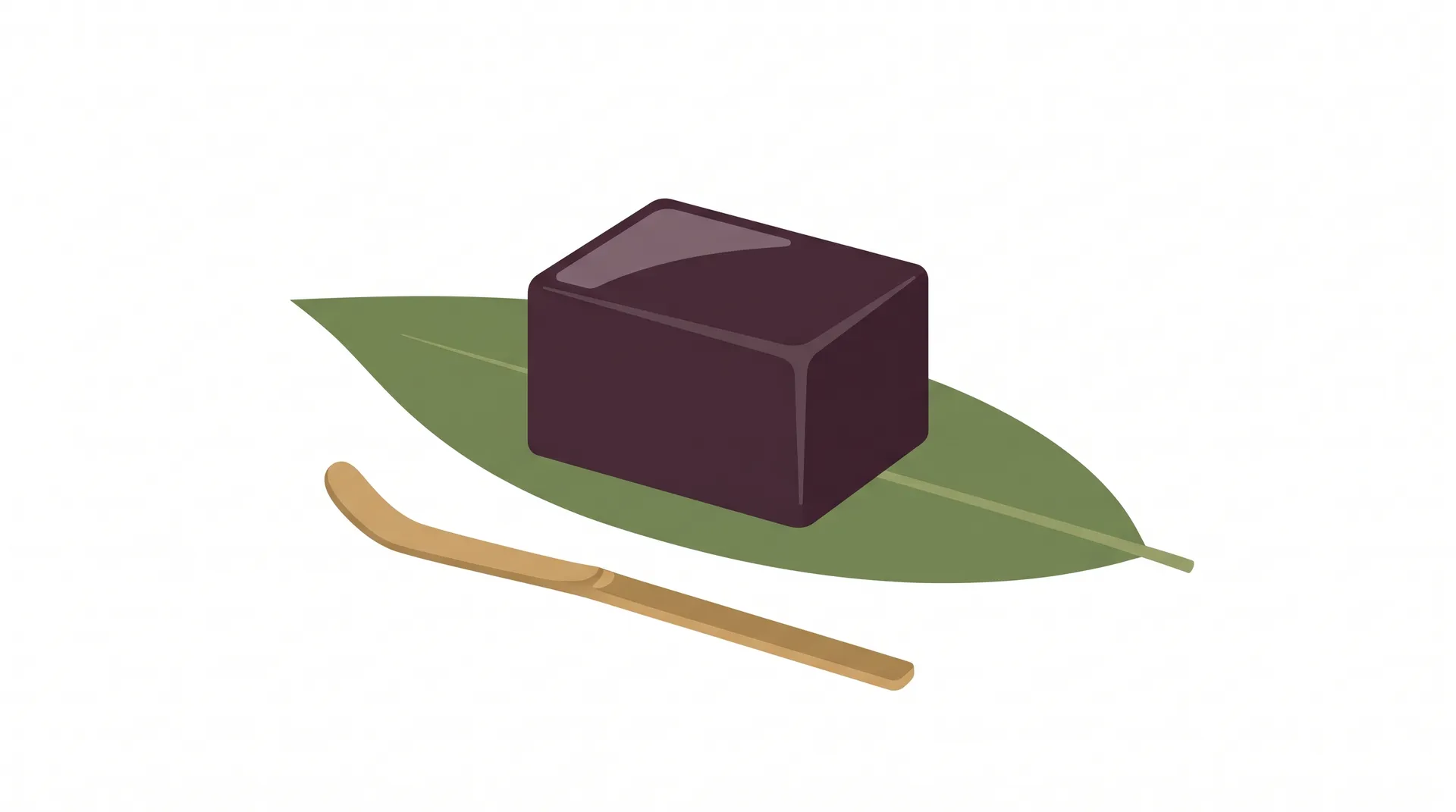
Toraya was founded in Kyoto in the early 16th century and has supplied confections to the Imperial household since the reign of Emperor Go-Yōzei (1586–1611). It still does. That makes it one of the oldest continuously family-run businesses anywhere.
The signature is "Yoru no Ume" — Plum Blossoms at Night. The cut face shows whole azuki beans scattered through the dark paste, and the name reads them as white plum blossoms against a night sky. You cannot see the beans until you cut it, so the name is only earned at the moment of serving, which is a very Japanese piece of design.
The ingredient list is three items long — Hokkaido azuki, high-purity shirozarato sugar, and agar from seaweed — and it takes three days of kneading over heat. There is nowhere to hide in a recipe with three ingredients, which is roughly the whole argument for buying the expensive one.
Toraya has had a shop in Paris since 1980 — the one where the yokan were taken for soap. It is still there, and it is the easiest place in Europe to try the real thing before committing to a box of it.
The Part Nobody Mentions: It Is Endurance Food
Japanese climbers, trail runners and cyclists carry yokan, and there is a whole product category built around it. This almost never appears in English writing about wagashi, which treats it purely as a delicate teatime sweet.
The reasons are entirely practical. It is dense in calories for its weight, needs no water, holds its shape in heat and in cold, and comes in a sealed bar you can open with one hand. Which is a description of an energy gel, arrived at four centuries earlier by accident.
Imuraya make a purpose-built "sports yokan" in a squeeze pouch, formulated with
both fast-acting carbohydrate and slower-releasing Palatinose so the energy arrives over a
longer window.
Runners who dislike the texture of gels tend to like it, because it is food
rather than a gel — you chew it, and it tastes like a bean sweet instead of like sweetened
syrup.
And it is a genuine emergency ration
Imuraya's eiyokan keeps for five and a half years — extended from
three and a half without changing the recipe — and is formulated free of all 28
allergens designated in Japan, which for a ration handed out to a mixed population
matters enormously.
It sits in emergency kits across Japan, and the reasoning is not only
nutritional: after a disaster, something sweet that tastes familiar does a job that a ration
biscuit does not.
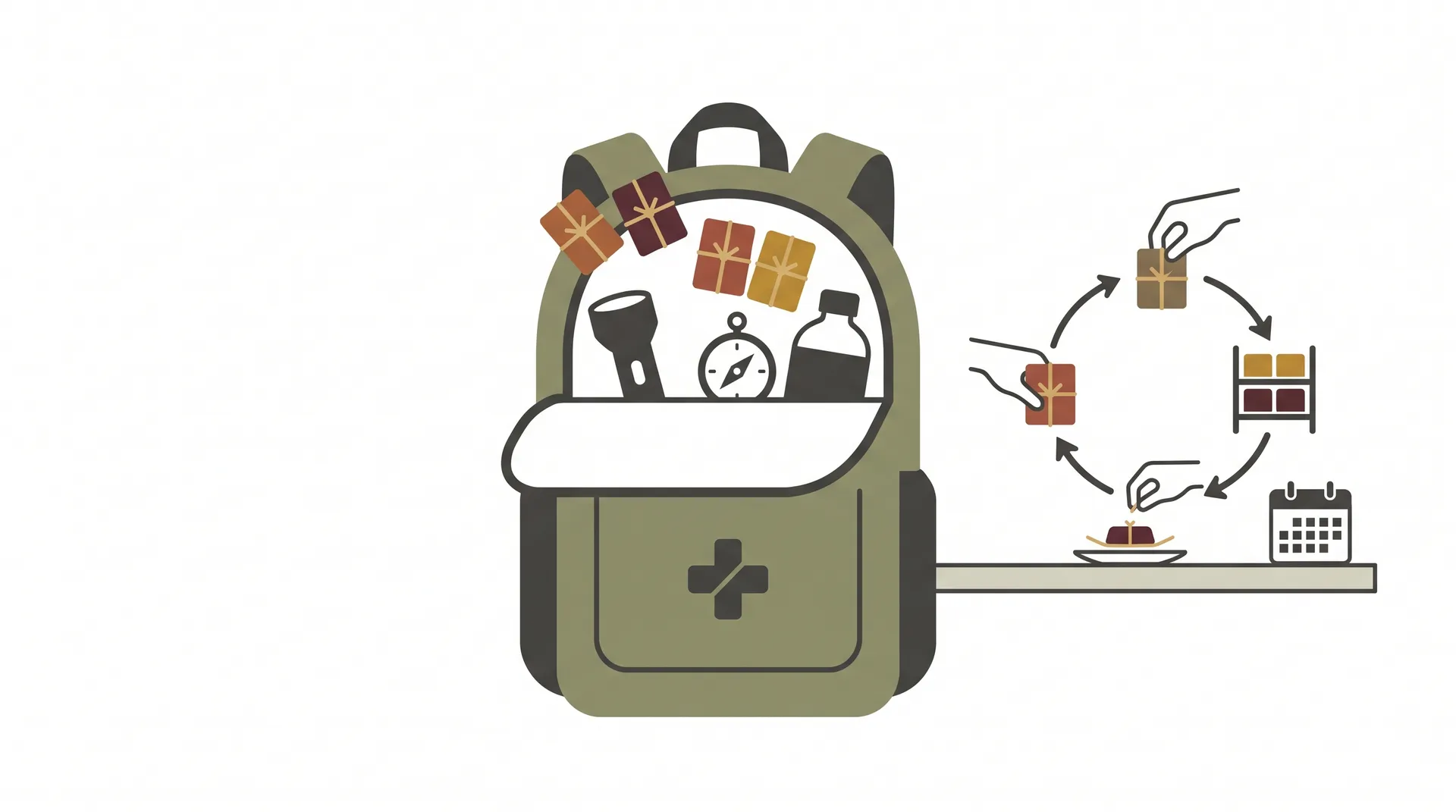
If you keep an emergency kit, this is a better item than most of what goes in one, for the simple reason that you will happily eat it before it expires and buy another.
What It Means in Japan — Including at an Apology
In Japan yokan is a formal gift, and the specifics are worth knowing if you ever receive one.
Its whole advantage as a gift is that it imposes nothing on the recipient. A cake demands refrigerator space and a deadline; a bar of yokan can sit in a cupboard until whenever suits. The gift says "at your convenience", and in a culture organised around not burdening people, that is the point rather than a side benefit.
There is a business folklore about apologies
Turning up to apologise with Toraya yokan is a real convention, and the
reasoning given for it is layered.
The bar is physically heavy, and weight reads as seriousness. It does
not rush the recipient, which would be presumptuous in the circumstances. And
cutting it is said to signify cutting the matter off rather than letting it
drag on.
The wrapping is kept plain for this — a decorative one would be reading the
room badly.
What to Buy
Toraya yokan — the one to try first
Start with the medium bars rather than a single large one. A full-size
bamboo-wrapped bar is the traditional format and is a serious quantity of a very
concentrated sweet if you are not yet sure you like it.
Toraya also make small single-serving bars, which are the easiest
introduction of all and come in assortments — matcha and brown sugar alongside the classic
azuki.
- Keeps
- About a year, unrefrigerated
- Ingredients
- Azuki, sugar, agar
- Founded
- Kyoto, early 16th century
- Serve with
- Green tea, or dark black coffee
Toraya's own English shop lists gift boxes from about ¥2,300 to ¥5,800. Check its delivery list for your country before you fill a basket — we could not confirm which destinations it covers.
Imuraya eiyokan — the five-year bar
Not a luxury item and not pretending to be one — this is the emergency and
hiking bar, sold in packs of five, and it is very good at that job.
Free of all 28 allergens designated in Japan, which makes it unusually easy
to hand to someone whose requirements you do not know. There is a chocolate version as well
as the plain azuki.
- Keeps
- 5.5 years
- Format
- Single-serving bars, 5 per pack
- Allergens
- None of Japan's 28 designated
- Best for
- Emergency kits, hiking, long rides
Dorayaki: buy the factory version, or wait until you visit
Shelf-stable dorayaki from the large Japanese confectioners is genuinely available abroad through Japanese grocers and international specialists, in boxes of ten. It is a good, mild, everyday version.
The famous ones cannot come to you. Taneya in Shiga and Ryoguchiya Korekiyo in
Nagoya — the latter founded in 1634, its dorayaki branded with Toyotomi Hideyoshi's gourd
crest — sell a fresh pastry with a few days of life, and we could not find any
English-language route to either.
We are not going to point you at a search that returns something else. If you
are travelling, they are worth a detour; if you are not, the factory version is the honest
answer.
How to Cut It, and Why Not to Refrigerate It
- Warm the knife first. Dip it in hot water and dry it, or wipe it with a well-wrung damp cloth. Wipe the blade between every cut — that, and nothing else, is what produces a clean face.
- Cut it thinner than you think. It is far more concentrated than it looks; a 1 cm slice with tea is a portion.
- Do not refrigerate it. Cold makes the sugar crystallise and the texture turns grainy, losing the smoothness you paid for. A cool dark cupboard is correct.
- Once opened, it dries out. Wrap the cut face and finish it within a few days — the year-long life belongs to the sealed bar.
- Try it with black coffee. It is conventionally served with green tea, and it works, but the sweetness stands up to a dark roast unusually well.
Frequently Asked Questions
What does yokan actually taste like?
Clean, deep and less sweet than it looks — azuki has a faint chestnut and
cocoa character that comes through once the sugar settles.
The texture is the surprise: firm and smooth, cutting like a very dense jelly,
nothing like the paste it is made from.
Can I get real dorayaki outside Japan?
Factory-made, yes. From the celebrated shops, no. Those use no preservatives and
have a few days of shelf life, which no shipping arrangement solves.
The mass-produced boxes are a fair version of the thing, and they are what
Japanese grocers abroad stock.
What is the difference between yokan and mizu-yokan?
Water content. The standard neri-yokan is kneaded down until it is
dense, keeps about a year and is eaten at room temperature.
Mizu-yokan holds far more water, is served chilled in summer, and has a
correspondingly short life. It is not the one to order from abroad.
Is it really usable as sports nutrition?
Yes, and there are versions made specifically for it — squeeze pouches with a
mix of fast and slower-releasing carbohydrate, used by Japanese runners and cyclists.
Ordinary yokan works too, being dense, stable in heat and cold, and edible
without water. It is simply less convenient to open mid-stride.
Does it really keep for a year?
Sealed, yes — the sugar concentration leaves too little free water for spoilage.
Some emergency versions are rated to five and a half years.
Flavour drifts slowly even so, so the date on the box is about it being at its
best rather than about safety. Once cut, that changes entirely and you have a
few days.
Is yokan vegan?
Traditional neri-yokan is — beans, sugar and agar, with agar being
seaweed rather than gelatine. Toraya describe their yokan as made from plant-based ingredients.
Check anything flavoured, and dorayaki is not vegan: the pancake contains egg
and usually honey.
Final Thoughts: The Sweet That Was Built to Travel
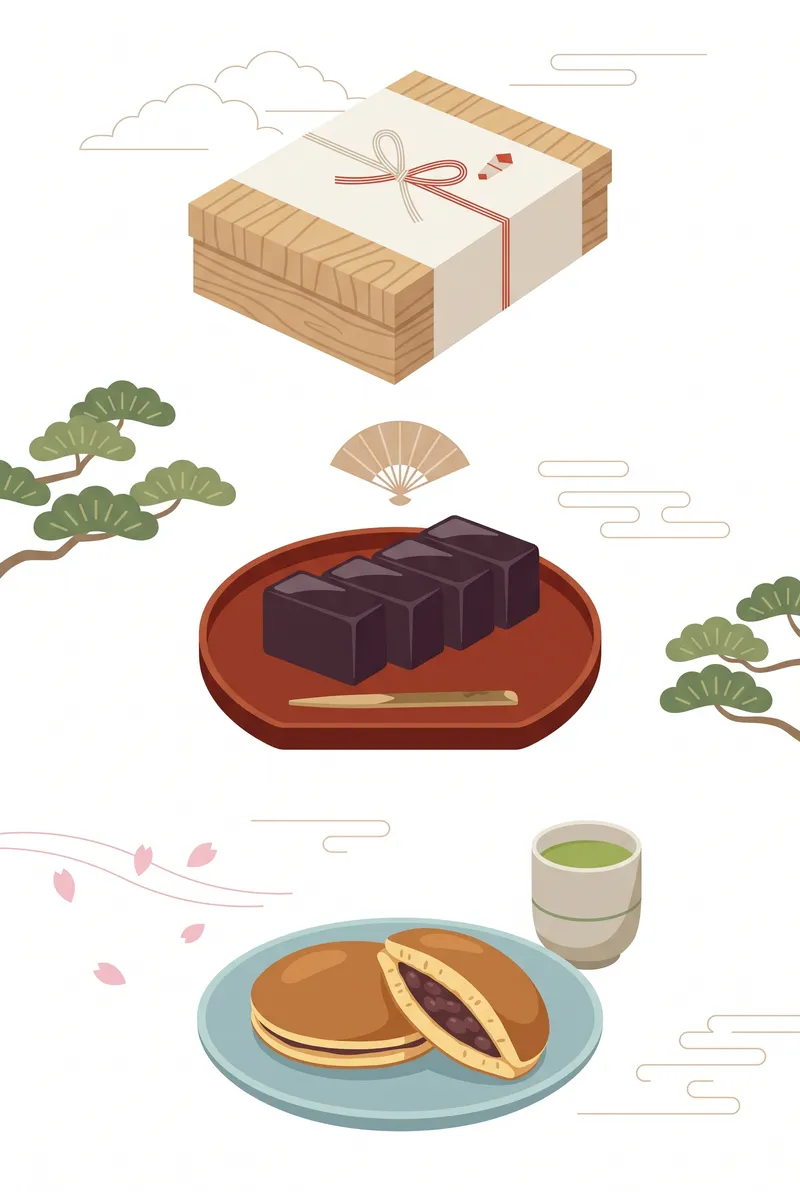
Almost everything good in Japanese confectionery is made to be eaten the same day. Yokan is the exception, and that is the whole reason you can have it.
It is a formal gift, a mountaineering ration and a five-year emergency supply, and it is the same object in all three cases. Very little else manages that.
Buy a small assortment, cut it thin, and do not put it in the fridge. And if it still looks like a bar of soap to you, you are in good company — so did Paris, in 1980.
Edible Jewels: Premium Japanese Konpeito and Wasanbon

Matcha Sweets by Mail: Terrine, Daifuku & Ice Cream from Kyoto