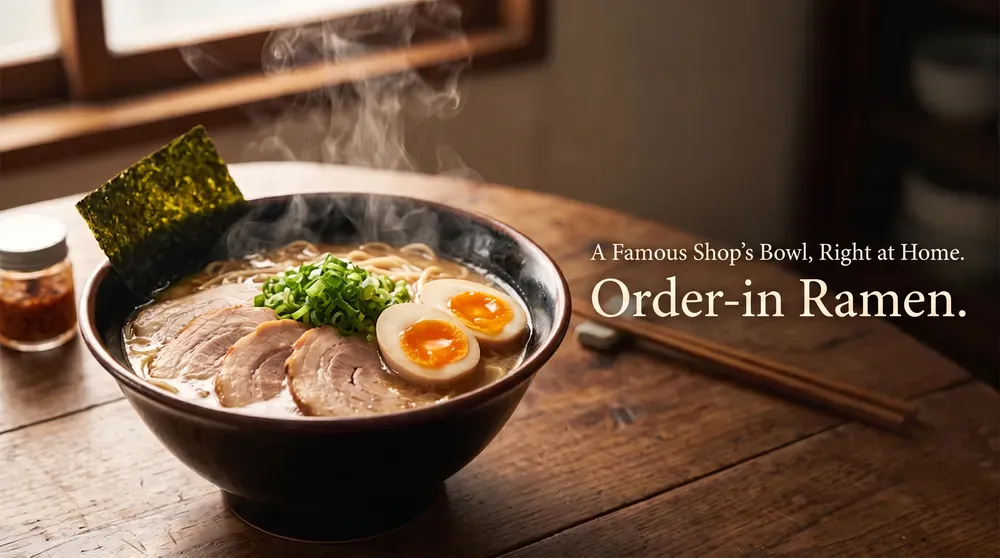
The best ramen you can order by post in Japan arrives frozen — noodles, broth and
toppings, packed by a named shop, and genuinely close to eating there.
None of it is coming to you. Frozen food does not travel in consumer post across
borders, and fresh noodles have a few days of life. The entire premium end of this
category is domestic-only, and no amount of paying more changes it.
What does travel is dried ramen — and it is much better than you think. The
reason is a single ingredient that most people who eat ramen weekly have never heard of.
Quick Reference: What Ships
| Format | Quality | Reaches you? |
|---|---|---|
| Frozen, from a named shop | Closest to the real thing | No |
| Fresh noodles with liquid broth | Very good | No — days of shelf life |
| Dried "stick" ramen, non-fried | Surprisingly good | Yes |
| Shelf-stable packs from famous chains | Good, recognisable | Yes |
| Buy non-fried dried noodles. Fried instant noodles are a different product — the frying is what gives supermarket instant ramen its characteristic flavour, and its limits. | ||
The Best Version Is Frozen, and Frozen Stays Home
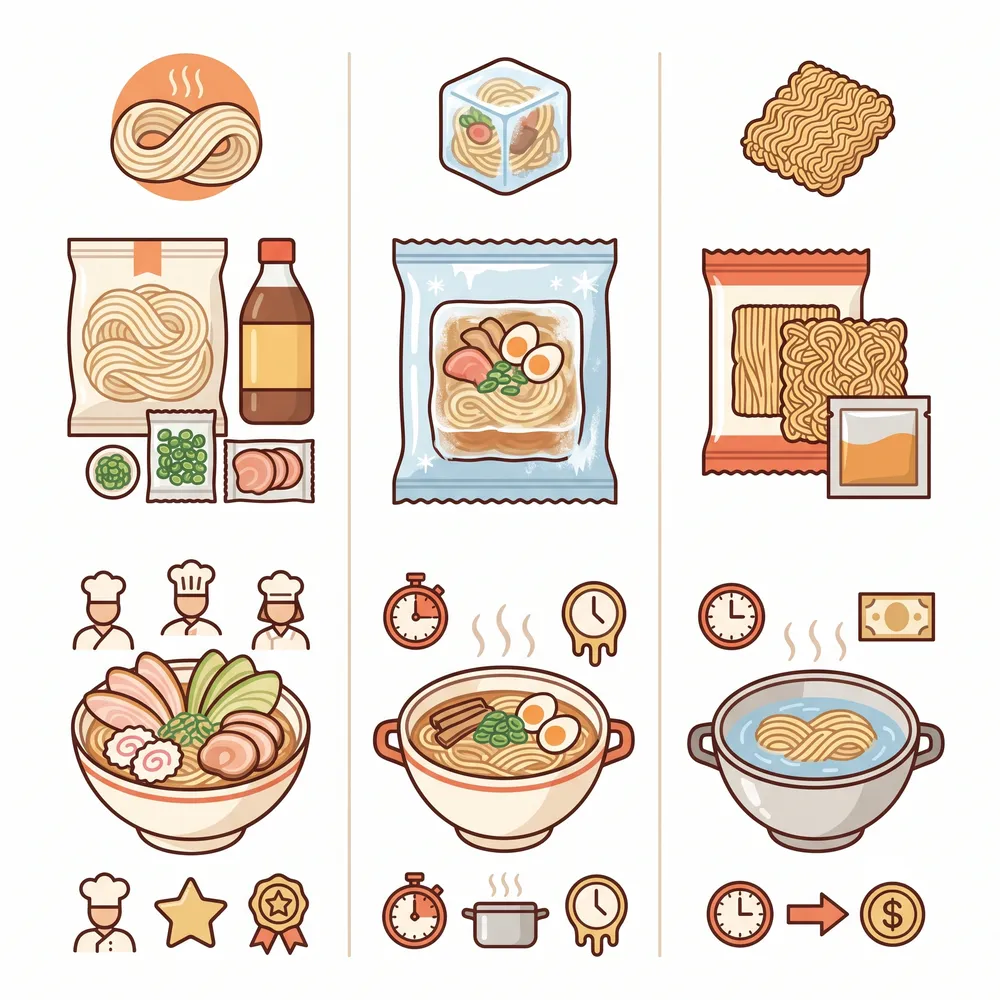
Japan's mail-order ramen market is enormous and mostly frozen. A famous shop freezes its own broth and noodles, you reheat them, and the result is startlingly close to sitting at the counter.
Frozen goods do not move in international consumer post. Fresh noodles with a liquid broth pouch are the next tier down and have days rather than weeks of life, which the journey consumes entirely.
So the honest position is that the top of this category is not available to you, and any listing promising otherwise deserves a careful look at the delivery estimate.
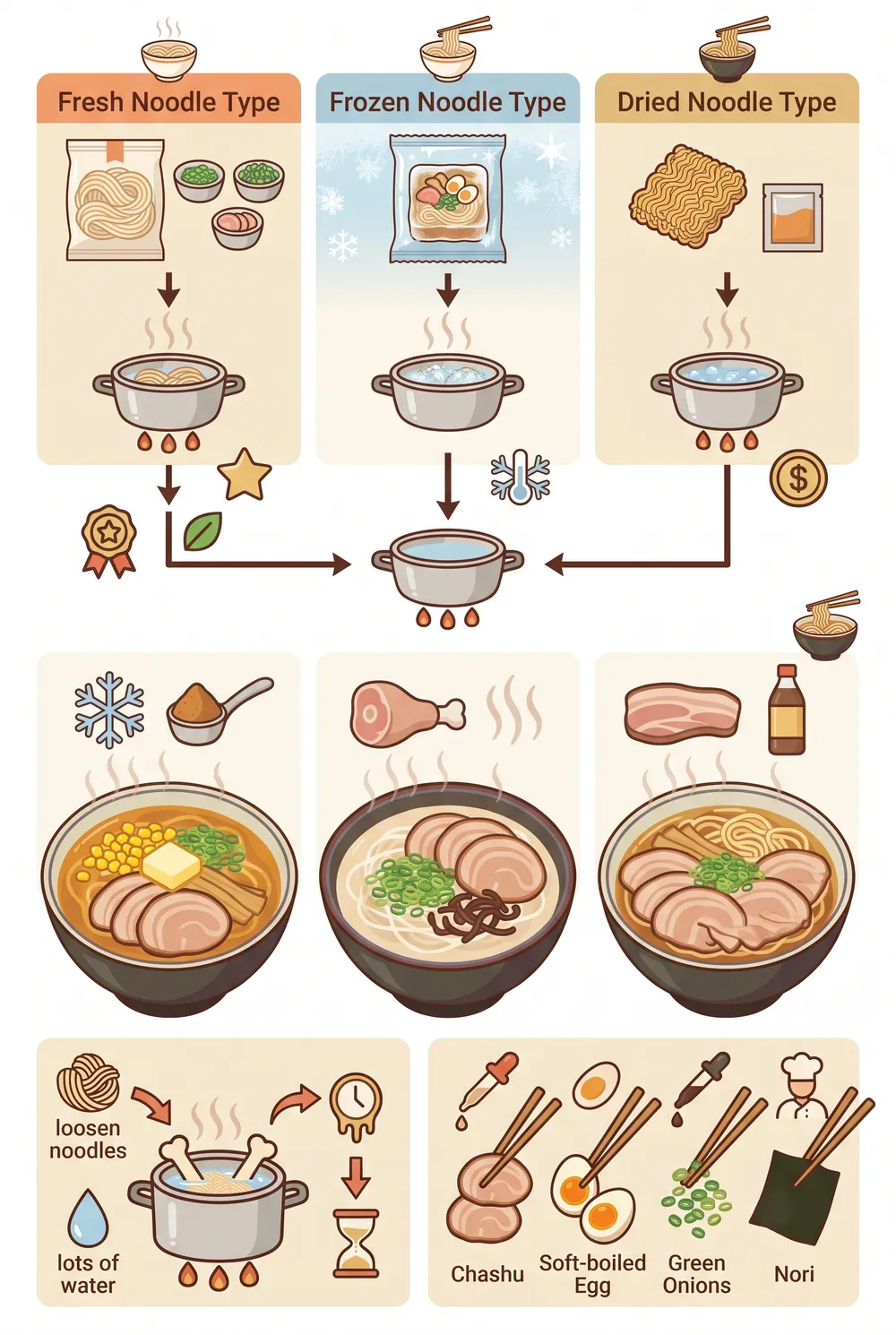
What travels: bō-ramen, the stick noodle
Dried ramen sold in straight bundles like spaghetti — bō-ramen, literally
"stick ramen" — is a Kyushu speciality and it posts anywhere.
Crucially, the good ones are non-fried. Supermarket instant noodles are
flash-fried to dry them, which is what gives them their particular taste and their ceiling.
Air-dried noodles keep far more of the elasticity and the wheat aroma, and
cook into something you would not be embarrassed to serve.
The other thing that travels is the shelf-stable retail pack that big ramen chains sell in their own shops and abroad. It is not the counter experience, but it is made by the people who run the counter, and it is honest about what it is.
Why Japanese — Kansui, and Why Ramen Survives Broth
Here is a question most ramen eaters have never asked: why does a bowl of ramen not turn to mush? Spaghetti sitting in hot soup would be ruined in three minutes. Ramen noodles sit in near-boiling broth and stay springy.
The answer is kansui — an alkaline solution worked into the dough. It is the single ingredient that separates a ramen noodle from any other wheat noodle, and it is not optional: without it, what you have is pasta in soup.
What it actually does
- It strengthens the gluten network. A high pH promotes stronger disulfide bonds between gluten strands, producing a tighter, more elastic protein structure — which is what stops the noodle dissolving in hot liquid.
- It turns the noodle yellow, and there is no dye involved. Wheat flour contains flavonoid pigments that are colourless at neutral pH and convert to a yellow form in alkaline conditions. The colour is a pH indicator.
- It creates the smell. That particular ramen-noodle aroma, distinct from any other pasta, comes from the alkalinity.
This is also a buying check. A "ramen-style" noodle sold without kansui — and they exist — will be pale, will not smell right, and will go soft in your bowl while you are eating from it. Look for kansui or an alkaline agent on the ingredients list.
It is why dried ramen works so well by post. The structural property that lets the noodle survive a bowl of broth is built into the dough, not into freshness — so a dried noodle rehydrates into something with real bite in a way dried pasta never quite manages.
Regional Styles, Briefly
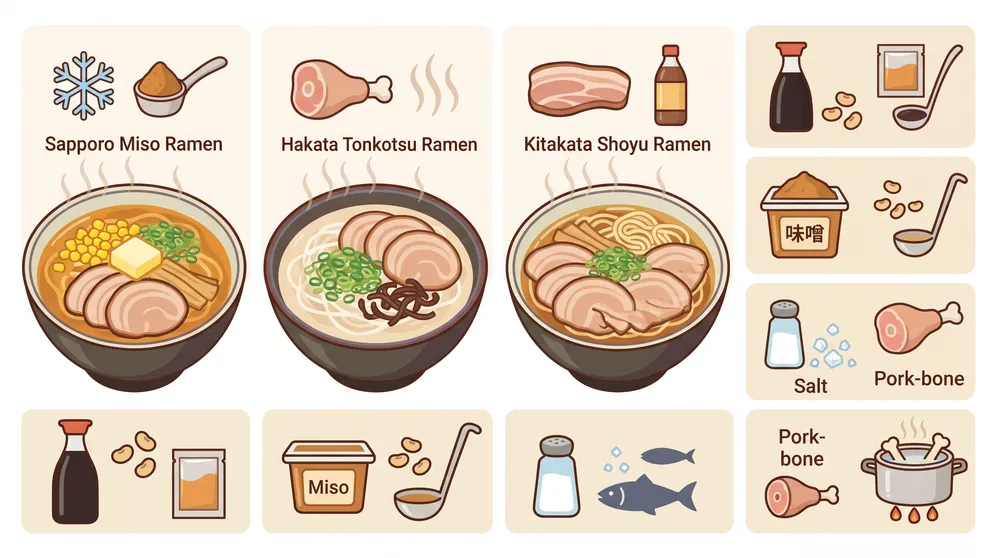
Every region has its own, and the noodle is matched to the broth rather than chosen independently. Three cover most of what you will find dried:
- Tonkotsu — Kyushu. Pork bone broth boiled until it emulsifies into something opaque and rich. The noodles are very thin and low-hydration, because a heavy broth needs a noodle that will not soak it up and collapse. This is what most bō-ramen is.
- Miso — Hokkaido. Fermented soybean paste in the broth, usually with lard on top to hold the heat in a cold climate. Thick, curly, high-hydration noodles that stand up to a robust soup.
- Shoyu — the older mainstream. Soy-based, clearer, lighter, and the style closest to what ramen was before the modern rich-broth era. Medium noodles, usually curly.
If you are buying dried, you will mostly be buying tonkotsu — the thin Kyushu noodle dries and rehydrates better than a thick curly one, which is why that region's makers dominate the format.
What to Buy
Kyushu bō-ramen — the format that actually works by post
Straight bundles of non-fried dried noodles with a broth concentrate, from a Kyushu
maker who has been doing this for decades. The non-fried process is the important
part — it preserves the elasticity and wheat aroma that frying destroys.
Buy a variety pack. The regional broths are the interesting bit, and a
mixed box lets you find out whether you actually prefer tonkotsu to shoyu before committing
to a case of one.
- Noodle
- Non-fried, air-dried, with kansui
- Style
- Mostly Kyushu tonkotsu
- Keeps
- Months. Posts anywhere
- Includes
- Broth concentrate; toppings are on you
The famous chains sell shelf-stable packs too
The large tonkotsu chains produce retail versions of their own bowl, and those
do reach international shops.
Manage your expectations and they are good. They are made by the company whose
broth you are trying to approximate, which is a stronger claim than most instant noodles can
make — and they are not pretending to be the shop.
Be sceptical of anything sold as "frozen ramen, shipped from Japan". Frozen
goods face customs handling that consumer post is not set up for, and the failure mode is a box
of thawed broth.
If a listing offers frozen ramen internationally, check the delivery estimate
before anything else. Dried is not the compromise here; it is the format that works.
Cooking It — and Do Not Rinse
Everything this site says about rinsing Japanese noodles is reversed here. Soba, udon and somen all get washed in cold water to strip the surface starch. Ramen does not.
The starch is wanted. It emulsifies into the broth and helps it cling to the noodle — which is exactly what a dipping sauce does not want and a bowl of soup does.
Drain and go straight into the bowl. Any delay and the noodles keep cooking in their own heat.
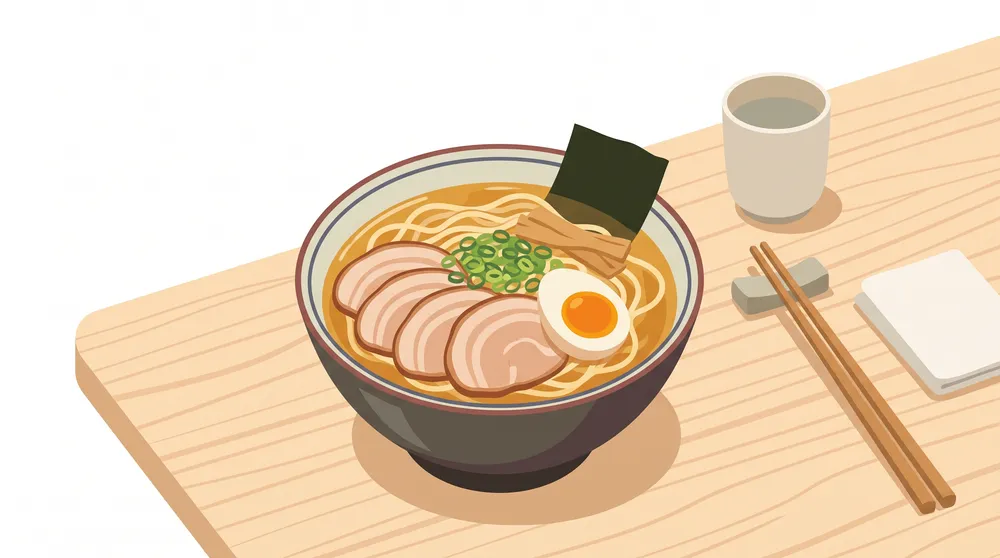
- Boil the noodles in one pan and make the broth in another. Never cook the noodles in the soup — the starch will thicken it into something claggy.
- Warm the bowl first. A cold bowl drops the broth several degrees immediately, and ramen is served very hot for a reason.
- Undercook the noodles slightly. They carry on softening in the broth while you eat — barigata, "hard", is a legitimate order in Kyushu for exactly this reason.
- Toppings are your job. Dried packs give you noodles and broth; a soft-boiled egg, spring onion and a sheet of nori take five minutes and change the bowl completely.
- Do not dilute the broth concentrate by eye. Measure it. Ramen broth is balanced to a specific dilution and guessing makes it either flat or undrinkable.
Frequently Asked Questions
Can I get frozen ramen from Japan shipped to me?
Realistically, no. Frozen goods do not move through consumer international post,
and fresh noodle sets have only days of shelf life.
The premium end of Japan's mail-order ramen is a domestic product — buy dried
instead, which is a good format rather than a consolation.
What is kansui?
An alkaline solution worked into ramen dough, and the thing that makes a ramen
noodle a ramen noodle. It strengthens the gluten network so the noodle does not dissolve in hot
broth.
It also turns the noodle yellow — not with dye, but by converting colourless
flavonoids in the flour into a yellow form at high pH.
Should I rinse ramen noodles after boiling?
No — and this is the opposite of soba, udon and somen. Those are rinsed to strip
the surface starch before dipping.
In ramen the starch is useful: it emulsifies into the broth and helps it coat
the noodle. Drain and go straight into the bowl.
Non-fried or fried dried noodles?
Non-fried, if you have the choice. Flash-frying is how supermarket instant
noodles are dried, and it gives them their distinctive taste and their limits.
Air-dried noodles keep much more elasticity and wheat aroma and rehydrate into
something noticeably closer to fresh.
Why is most dried ramen tonkotsu?
Because the noodle suits the format. Kyushu tonkotsu uses very thin,
low-hydration noodles, which dry and rehydrate far better than the thick curly noodles used with
miso broths.
The style and the format grew up together, which is why Kyushu makers dominate
stick ramen.
How do I make it taste more like a shop?
Measure the broth dilution, warm the bowl, and undercook the noodles slightly.
Those three cost nothing and account for most of the gap.
After that it is toppings — a soft egg, spring onion, and something with fat in
it. The broth concentrate is doing its job; the bowl around it is doing yours.
Final Thoughts: The Chemistry Travels
The frozen bowls stay in Japan and there is no way around that. Saying so is more useful than pretending otherwise, and it narrows the question to something answerable.
What crosses a border is the part that matters most anyway. Kansui is built into the dough, so a dried ramen noodle rehydrates with real bite — which is why this format works when dried pasta in soup would not.
Buy non-fried stick ramen in a mixed box, measure the broth, and do not rinse the noodles. Then put an egg on it.
Japanese Udon: Two Methods, Two Different Noodles
Japanese Jidori Hot Pot: Best Farm-Direct Sets to Order