
The single most important rule for magewappa (Japanese bentwood bento box) care is: dry it completely after every use.
Beyond that, how you wash it depends entirely on whether your box is unfinished wood (shiraki) or lacquered (urushi/urethane).
① Unfinished wood (shiraki): no soap, scrub with a tawashi brush, rinse with hot water
② Lacquered (urethane or urushi): mild dish soap OK, soft sponge, gentle wash
Worried about black stains? They are often not mold at all — the dark marks in the corners of unfinished wood boxes are usually tannin oxidation, a harmless chemical reaction between the wood and food.
This guide walks you through care by type, how to handle black stains and real mold, and what to avoid so your magewappa lasts for years.
1. Unfinished or Lacquered? Identify Your Magewappa First
Getting the care wrong for your type of magewappa — soap on bare wood, or a harsh scrub on lacquer — will shorten its life dramatically.
Take a moment to confirm which type you have before you start.
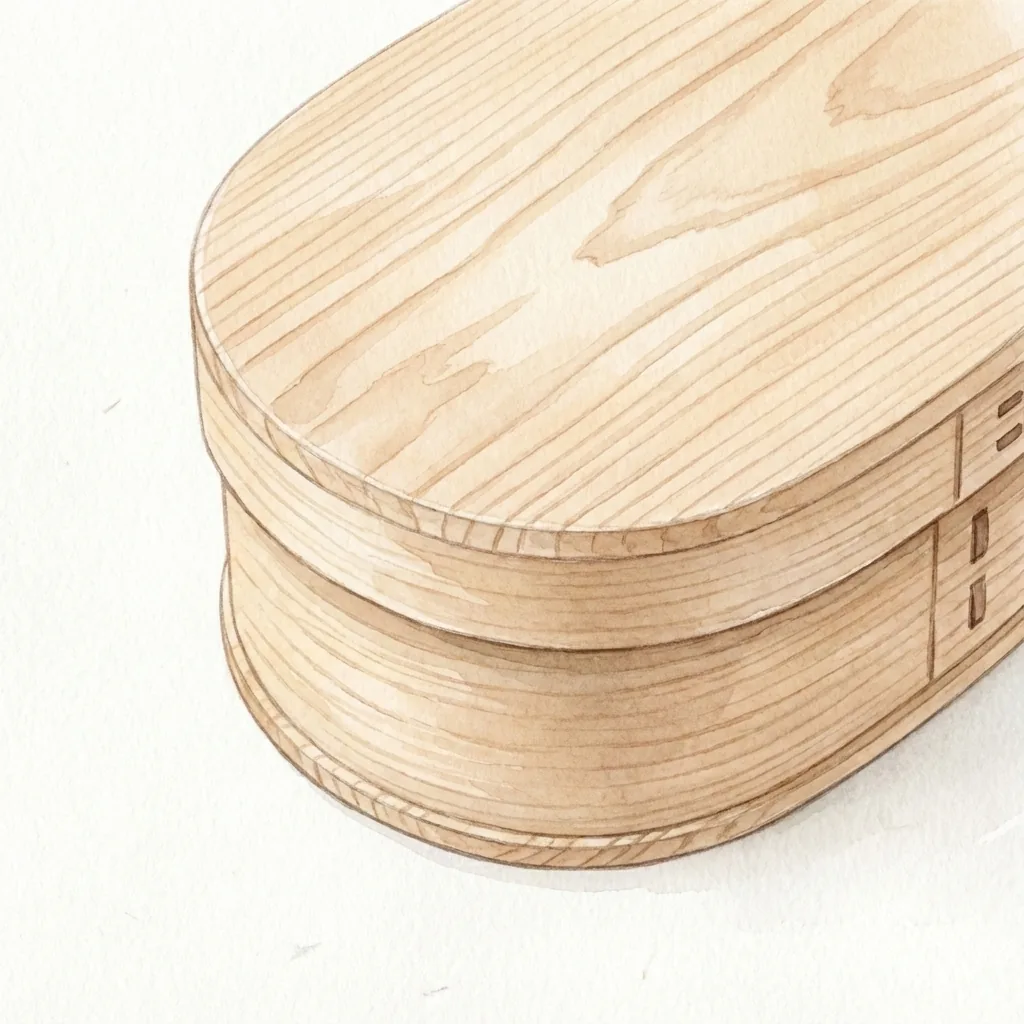
Type 1 — Unfinished (shiraki)
The most traditional style — raw cedar with no surface coating.
What to look for:
· A faint cedar fragrance
· The wood visibly absorbs water when wet
· Matte, natural grain with no sheen
Care takes a little more effort, but the quality of rice it keeps is unmatched — it absorbs excess moisture like an ohitsu rice chest.
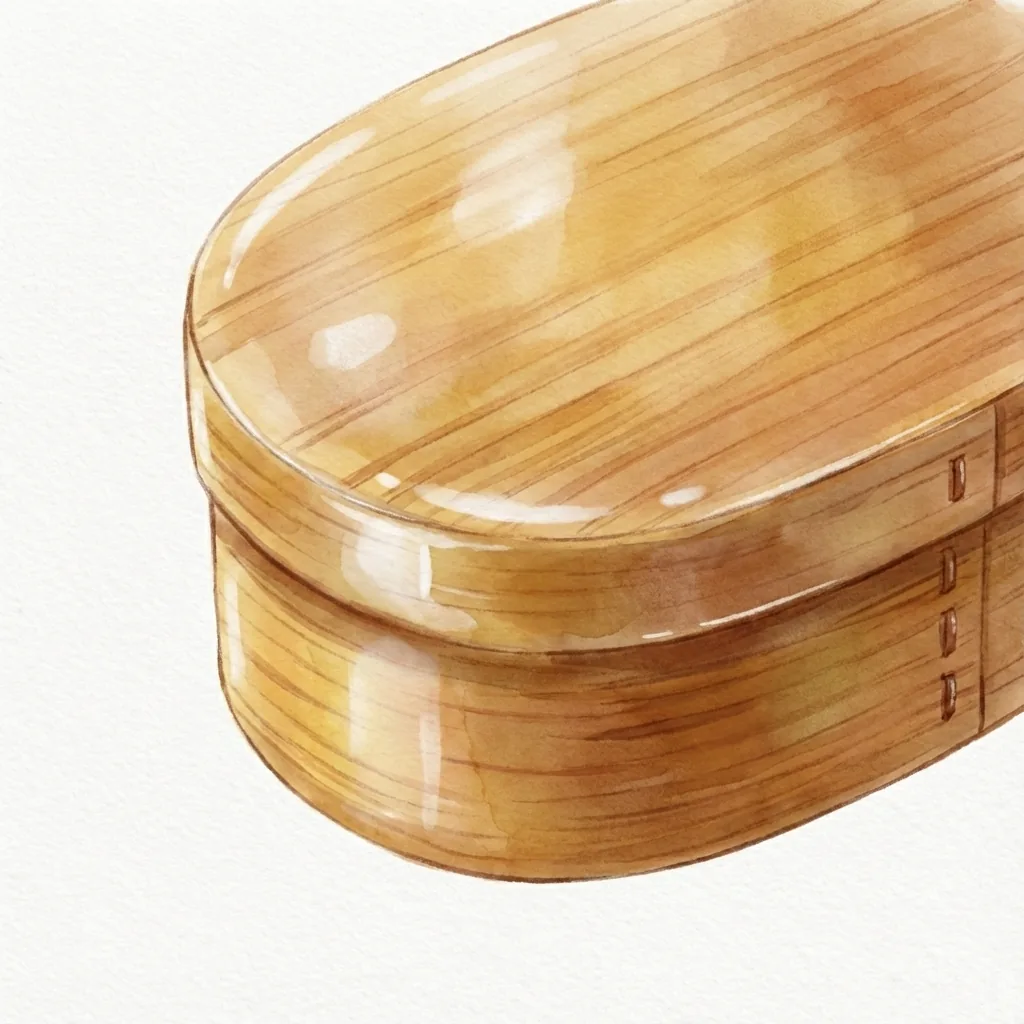
Type 2 — Lacquered (urethane or urushi)
The surface is sealed with a coating — urethane (transparent gloss) or urushi (amber to dark brown).
What to look for:
· A visible sheen on the surface
· Water beads rather than soaking in
· Often more uniform in color
Care is almost as easy as a plastic lunchbox, making this the practical everyday choice.
2. Unfinished Wood Care: Tawashi, Hot Water, No Soap
Unfinished magewappa absorbs soap along with water, leaving detergent residue inside the wood grain. The traditional solution — and the right one — is hot water and a tawashi scrubbing brush.
It sounds low-tech, but it works surprisingly well.
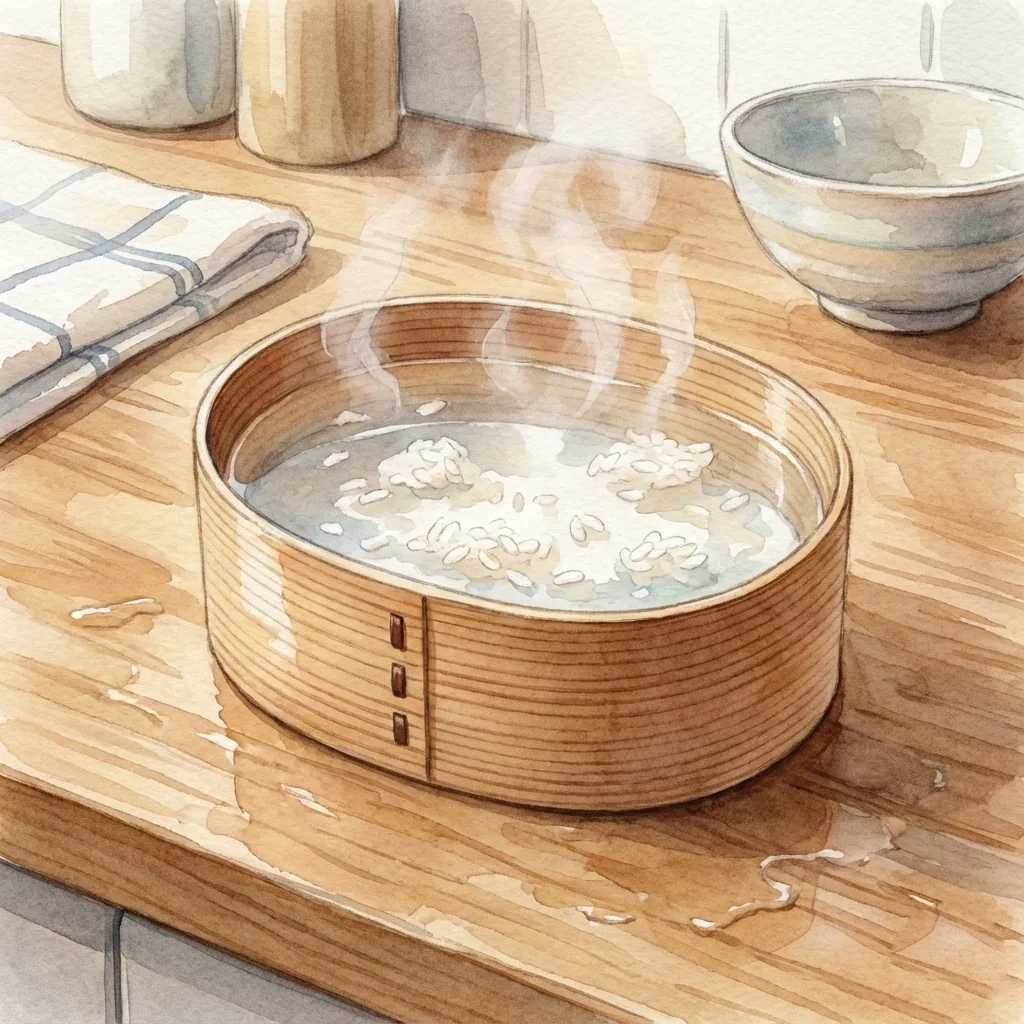
Step 1 — Soak briefly in warm water to loosen residue
After eating, fill the box with warm water and let it sit for 10–15 minutes to loosen any stuck rice.
(Do not leave it soaking for hours or overnight — the wood will absorb too much water and warp.)
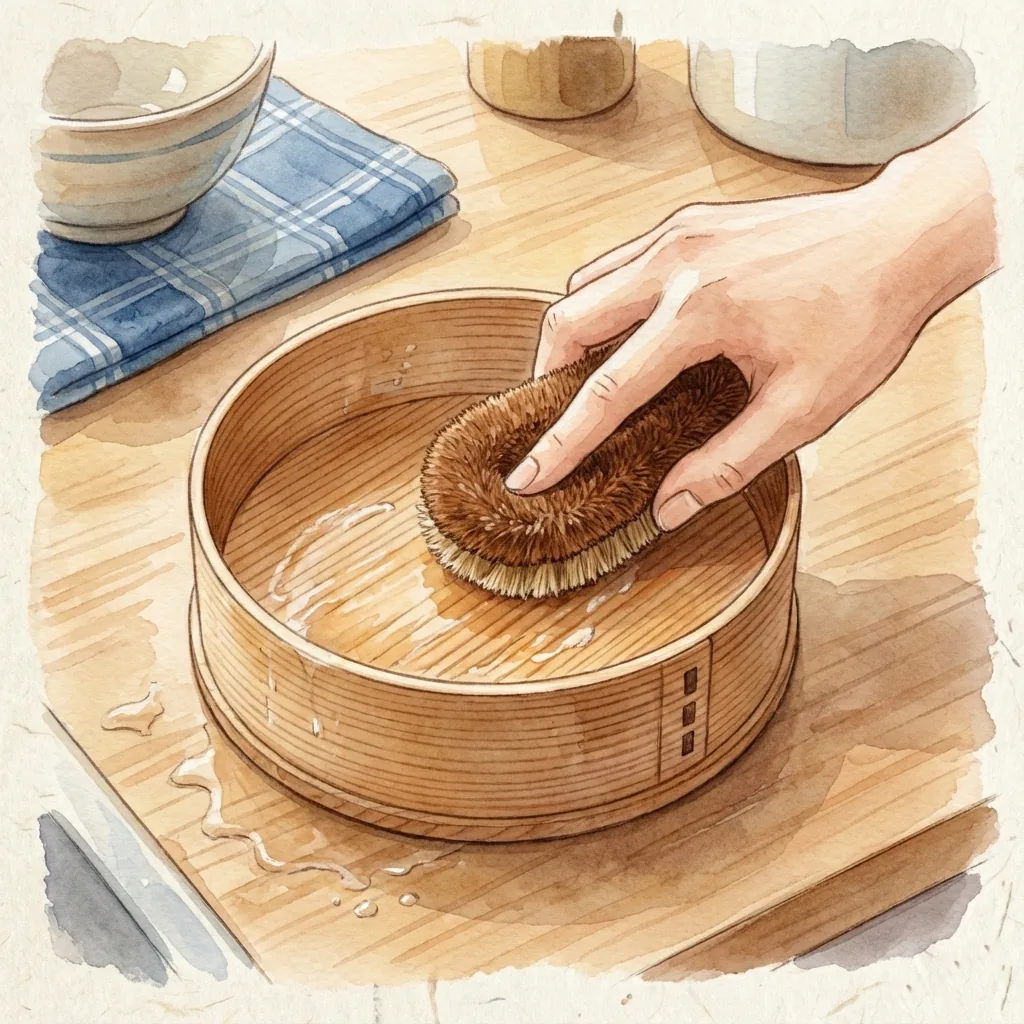
Step 2 — Scrub along the grain with a tawashi brush
This is the key step. Use a tawashi (natural fiber scrubbing brush) rather than a sponge.
Scrub firmly along the wood grain — the stiff fibers reach into the grain and pull out residue a sponge cannot touch.
If there is heavy oil residue, a small amount of powdered cleanser is the traditional fix — not liquid soap.
Step 3 — Rinse with hot water and air-dry opening-up
Rinse thoroughly with hot water, then wipe off excess moisture with a cloth.
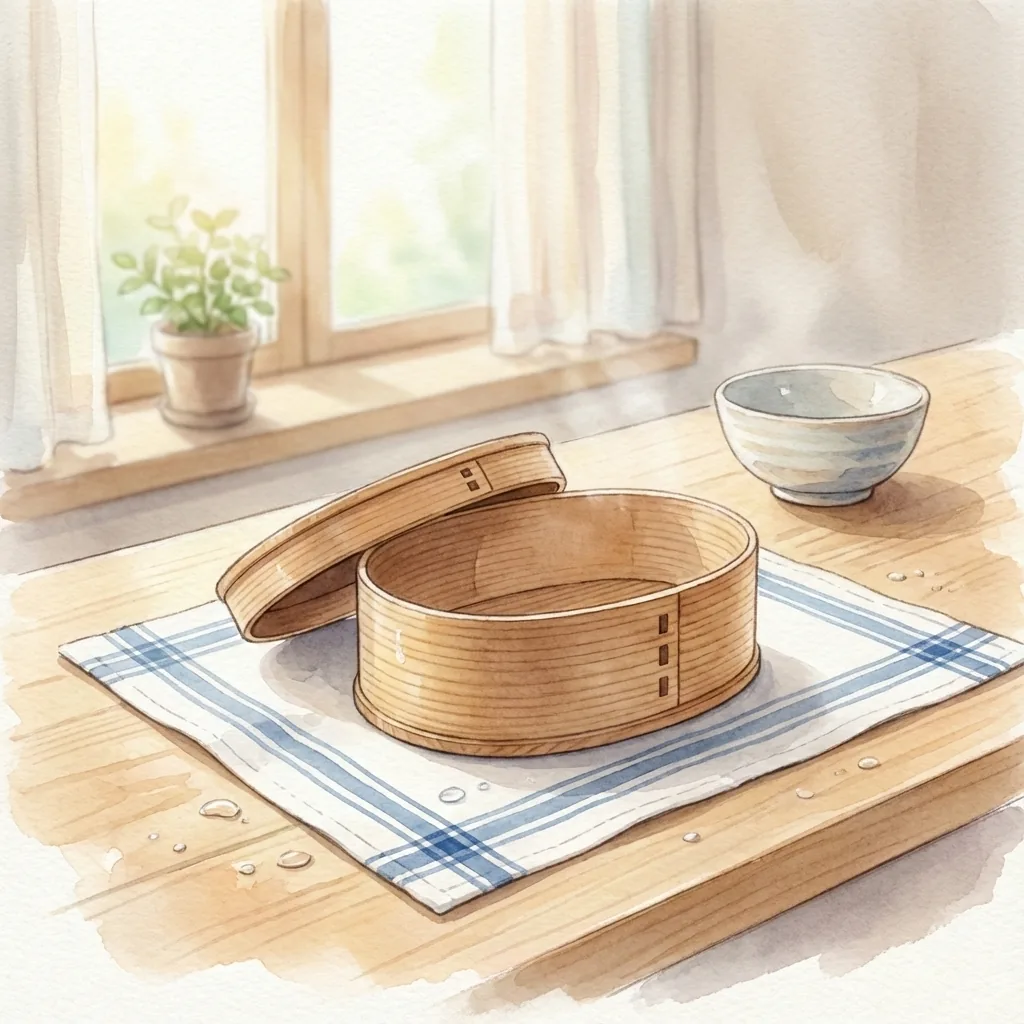
Stand the box opening-side up to dry.
If you dry it face-down, moisture is trapped inside and mold forms on the inner walls.
Leave it to air-dry for at least one night — ideally a full 24 hours before using again.
3. Lacquered Magewappa Care: Mild Soap and a Soft Sponge
Lacquered magewappa can be washed almost like regular dishes.
There are a few things to avoid, but the daily routine is simple.
Use mild dish soap and a soft sponge
Standard mild dish soap and a soft sponge work perfectly.
Avoid abrasive sponges (the scrubby side) and hard tawashi brushes — they will scratch the lacquer coating.
Once the coating is scratched, water can penetrate the wood and cause rot. Always wash gently.
Drying is just as important — same rule as unfinished
Even with a lacquer coating, the underlying material is still wood.
After washing, wipe off water immediately with a dry cloth and stand the box opening-up in a ventilated spot to dry.
Dishwashers and dryers are off limits — the high heat and strong water pressure will damage the coating (unless the manufacturer explicitly states dishwasher-safe).
4. 3 Things You Should Never Do to a Magewappa
Some common habits that feel sensible will actually shorten the life of your magewappa significantly.
These three are the most damaging — and also the most common.
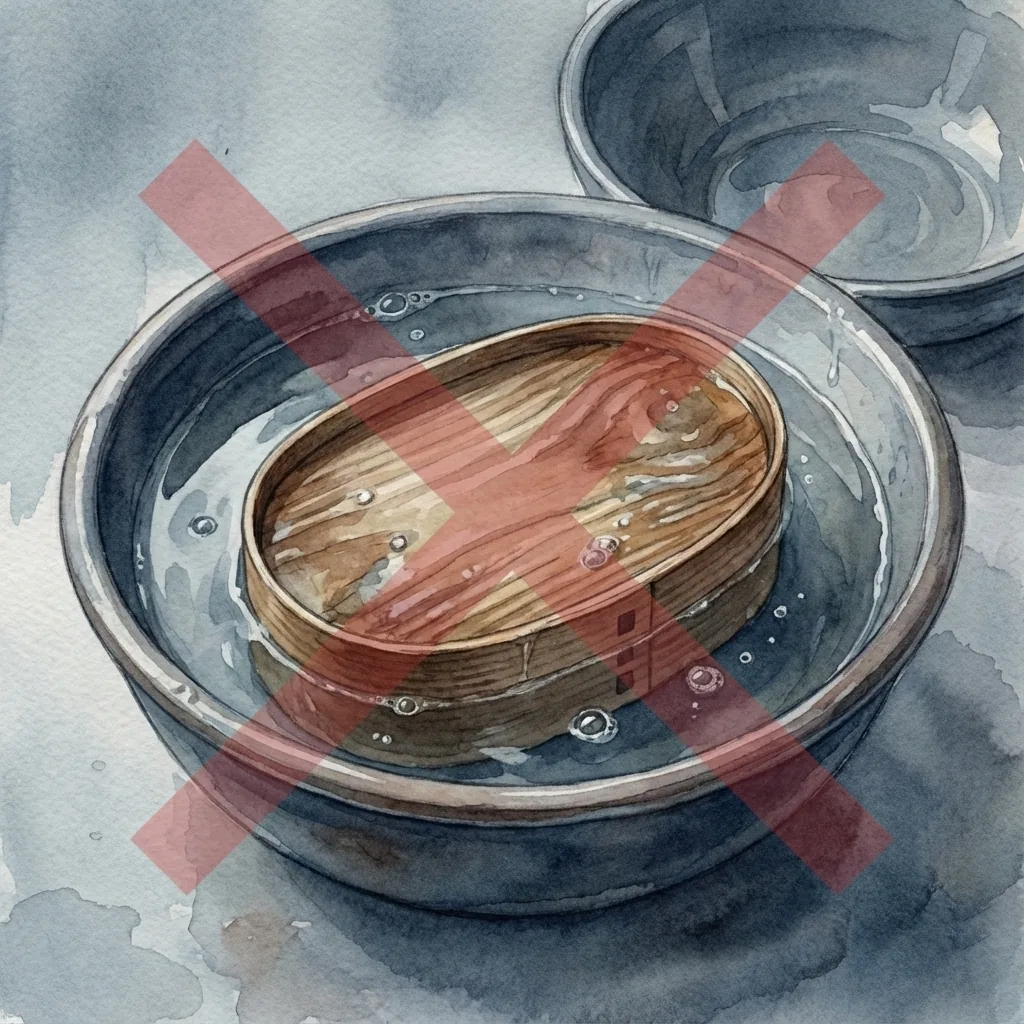
NG #1 — Extended soaking in water
A short soak to loosen rice (10–15 minutes) is fine, but leaving it submerged overnight is dangerous.
The wood absorbs water, swells, and the hoops can come loose. The box may warp or split.
Dirty water also soaks deep into the wood grain, becoming a source of mold.
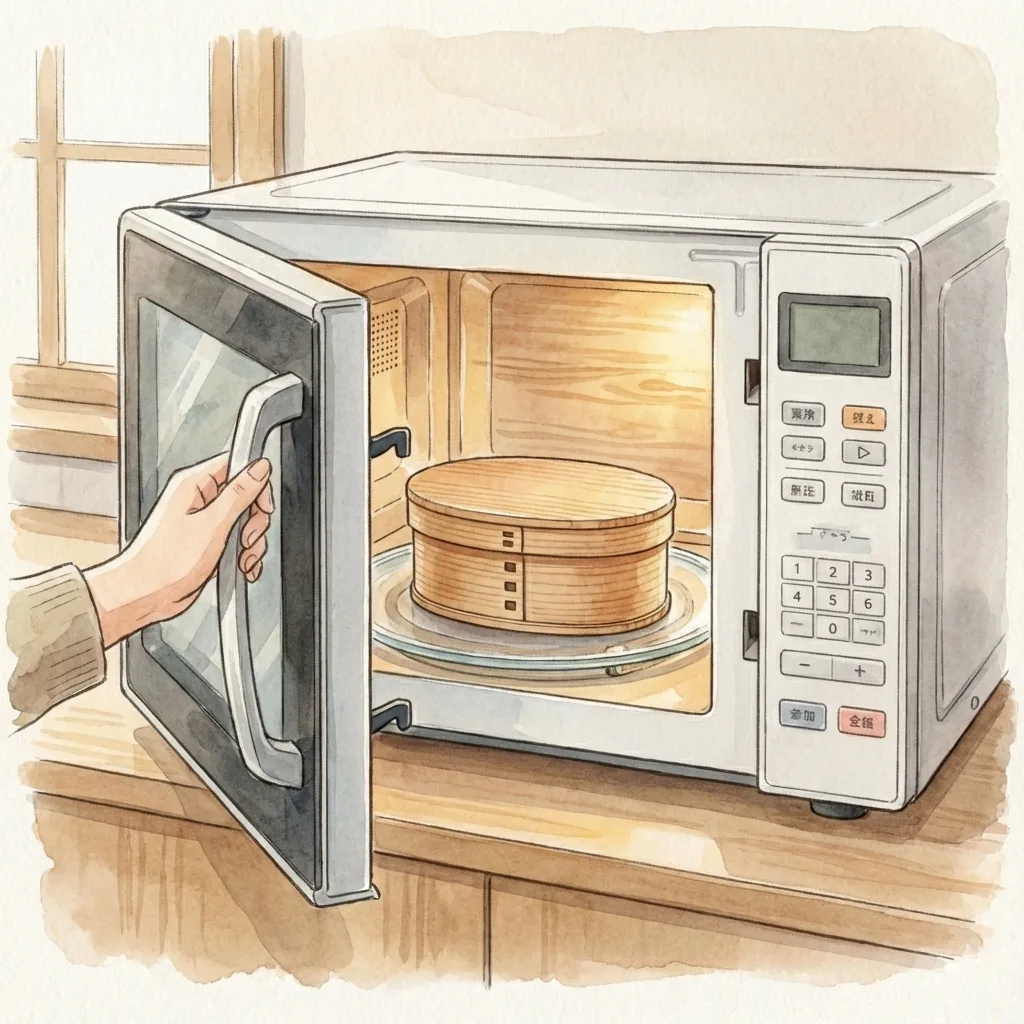
NG #2 — Microwaving (unless labeled microwave-safe)
Microwaving heats the moisture inside the wood rapidly, causing warping, scorching, and potentially fire.
Do not put your magewappa in a microwave unless it has been specifically manufactured and labeled as microwave-safe.
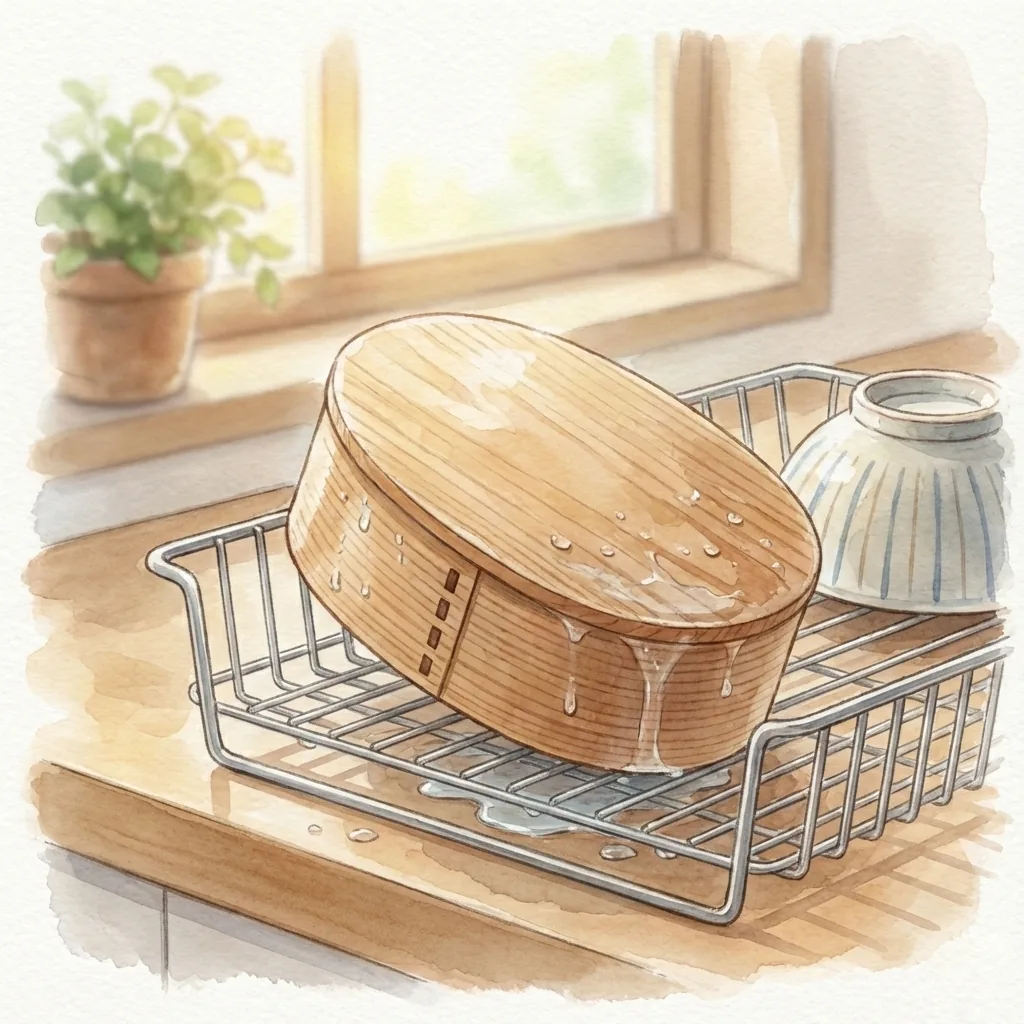
NG #3 — Drying face-down
Setting the box face-down in a drying rack blocks airflow to the interior, trapping moisture inside.
The inner walls stay damp for hours — exactly the environment mold loves.
Always stand it opening-up so air can circulate freely through the box.
5. Black Stains & Mold: Causes and Fixes
Even with careful use, long-term ownership brings discoloration.
The key is knowing whether what you see is harmless darkening or actual mold — the treatment is different.
Black stains in the corners? It might be tannin, not mold
Darkening in the corners of an unfinished magewappa is often caused by iron tannate — a reaction between the tannins in the cedar and trace iron from food. This is harmless and not mold.
If the appearance bothers you, try soaking the stained area in a 1:1 mixture of water and rice vinegar for about 30 minutes, then scrub. The stain may lighten.
If actual mold appears (unfinished wood only)
Visible spotty mold — caught early — can sometimes be treated in unfinished wood (lacquered boxes should be replaced if mold appears inside the coating).
1. Pour boiling water over the affected area to sterilize.
2. Let the box dry completely.
3. Sand the mold away with fine-grit sandpaper.
※ Mold that has grown deep into the wood cannot be fully removed. At that point, accept it as part of the patina — or replace the box.
Bleach (chlorine-based) is not recommended: it damages wood fibers and leaves chemical residue in contact with food.
6. 3 Years with an Unfinished Magewappa: What I Learned
I put off buying one for years — "too much hassle to maintain." Then I bought an unfinished Odate magewappa and used it every day for three years. Here is my honest take.
Verdict: the rice is so much better that the extra care feels worth it
Opening the lid at lunchtime — that cedar scent, and rice that is still soft and slightly warm even hours later. A plastic box cannot come close.
My daily routine:
Get home → fill box with warm water to soak → change clothes → scrub with tawashi (2 minutes) → rinse with hot water → wipe dry → stand opening-up on top of the dish cabinet overnight.
Three years in: no mold, and the interior has developed a beautiful amber patina.
The worry about "will it smell without soap?" turned out to be nothing — hot water and a tawashi leaves the box cleaner and less slimy than soap ever did.
7. Frequently Asked Questions
Can I pack fried food or oily dishes in a magewappa?
Yes — with a little preparation for unfinished wood.
Line the bottom with wax paper, a shiso leaf, or a piece of lettuce before placing fried food. This prevents oil from soaking directly into the wood.
Lacquered magewappa handle oily food without issue — just wash as usual.
How long does it take to dry?
Ideally, a full 24 hours.
If you use your magewappa every day, the practical solution is to own two boxes and rotate them — one in use, one drying. Letting the wood rest fully between uses dramatically extends its lifespan.
Which tawashi brush do you recommend?
For unfinished magewappa, a shuro (Japanese palm fiber) tawashi is ideal — the fibers are soft enough to avoid scratching but firm enough to lift residue from the grain.
Choose a small size that can reach into the corners of a bento box.
8. Final Thoughts: Proper Care Keeps the Rice Cold but Delicious

Magewappa care is not complicated once you know the rules.
Follow the right method for your type and always dry it completely, and this box will last you a decade or more.
Key rules at a glance:
· Unfinished: tawashi + hot water, no soap
· Lacquered: mild soap + soft sponge
· Both: no soaking, no microwave, always dry opening-up
The effort you put in comes back to you every lunchtime — in the cedar scent, the just-right rice, and the quiet pleasure of a tool that ages beautifully.