
Two things surprise people about a Japanese teacup. It has no handle, and it holds
about 80 to 120 ml — roughly a third of the mug you are probably drinking from.
Both follow from the same fact: Japanese green tea is not brewed with boiling water.
Sencha goes in at around 70–80°C and gyokuro lower still. At those temperatures a ceramic
cup is comfortable to hold, so there is nothing for a handle to solve.
Which makes the cup a thermometer. If a yunomi is too hot to pick up,
the problem is not the cup — you brewed the tea too hot, and it is going to taste bitter.
Quick Reference: Yunomi vs a Western Mug
| Yunomi | Mug | |
|---|---|---|
| Capacity | 80–120 ml | 300–350 ml |
| Handle | None | Yes |
| Tea temperature | 50–80°C | Near boiling |
| How you hold it | Both hands — fingers on the rim, palm under the foot | One finger |
| Stacks? | Yes — nothing sticking out | Badly |
| Do not buy one expecting a small mug. It is a different object for a different drink, and the size is deliberate: sencha and gyokuro are meant to be drunk in small quantities while they are at their best. | ||
Why There Is No Handle
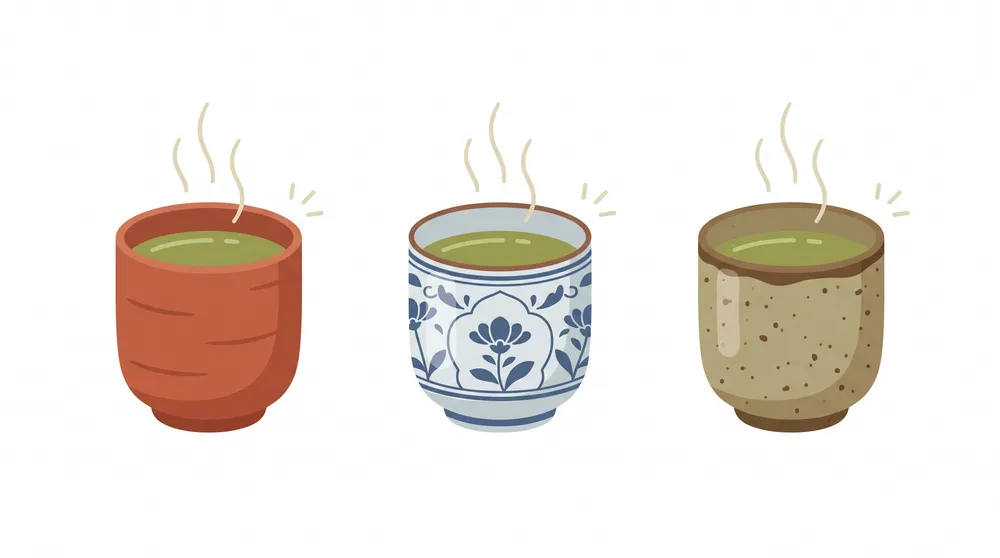
The handle on a Western teacup is a heat solution. Black tea and coffee are served at or near boiling, a cup at that temperature cannot be held, so a handle was added. It is engineering, not decoration.
Japanese green tea is brewed cooler on purpose, because the amino acids that give sencha and gyokuro their sweetness come out at low temperatures while the bitter catechins come out at high ones. Boiling water makes green tea bitter. So it is not used.
Which means the cup does a job a handled cup cannot: it tells you the temperature.
Pick up a yunomi and you know immediately whether the tea is right. Comfortable
to hold, comfortable to drink. Too hot to hold, and you have made a mistake that the tea will
confirm in a moment. A handle hides that information from you.
Two more reasons, both practical
You hold it in both hands — fingers around the rim, the other palm under the foot ring, which lifts the hottest part of the cup off your skin. That grip slows you down, which for a small cup of good tea is the point rather than an inconvenience.
And they stack. A cupboard of handleless cups takes a fraction of the space of a cupboard of mugs, which matters in a Japanese kitchen and turns out to matter in most kitchens.
The form came from China, where tea has also long been served below boiling — the handle is a specifically European response to a specifically European way of making tea.
Why Japanese — Shape, Size and the Rim
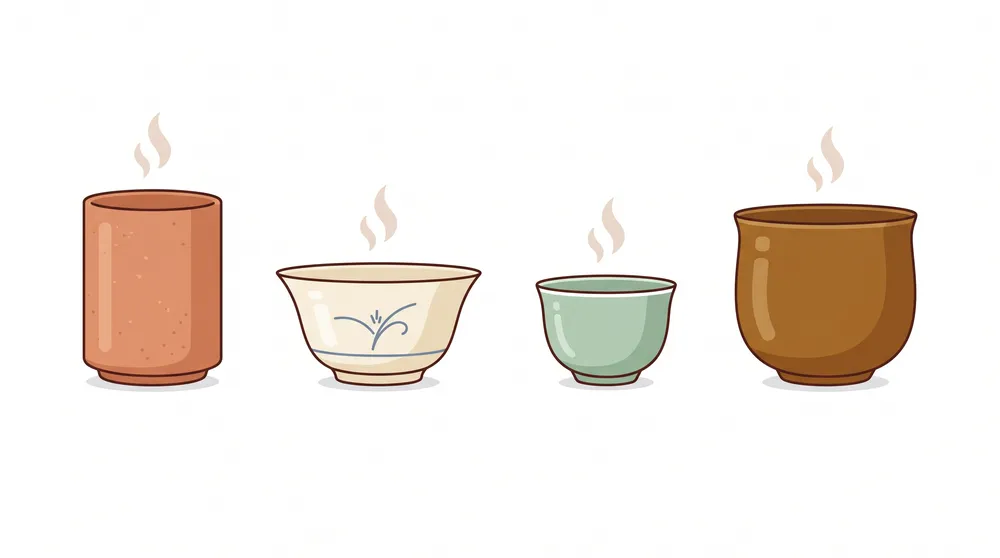
There are two shapes and they are not interchangeable.
The tall cylinder is the everyday cup — your own, used daily, taller than it is wide so the tea keeps its heat while you work through it.
The kumidashi is low and wide, and it is for guests. Shallow enough that the tea cools quickly and can be drunk without waiting, and it sits on a saucer (chataku). Serving a visitor from your tall daily cup would read as careless in a way that has no English equivalent.
Size follows the tea
| Tea | Cup | Why |
|---|---|---|
| Gyokuro, high-grade sencha | Small — 80 ml or less | Intense and expensive; drunk in sips |
| Everyday sencha | Around 100–150 ml | The default |
| Bancha, hojicha | Large | Drunk in quantity, often with meals |
And the rim changes the taste
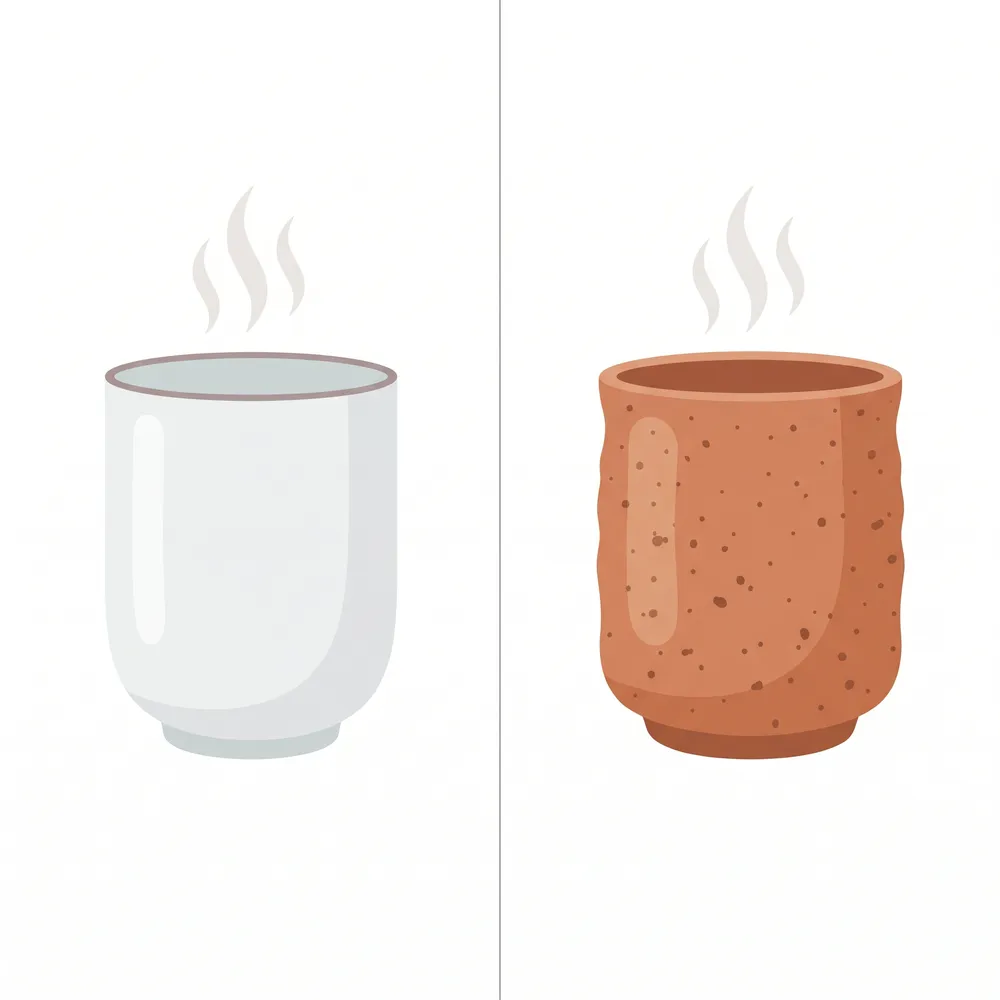
A thin rim delivers the tea in a narrow stream onto the front of your tongue, which reads as sharp and aromatic. A thick rim spreads it, which reads as rounder and softer.
This is not mysticism, it is where the liquid lands. The same tea genuinely tastes different from a thin porcelain cup and a thick stoneware one, and you can test it in an afternoon.
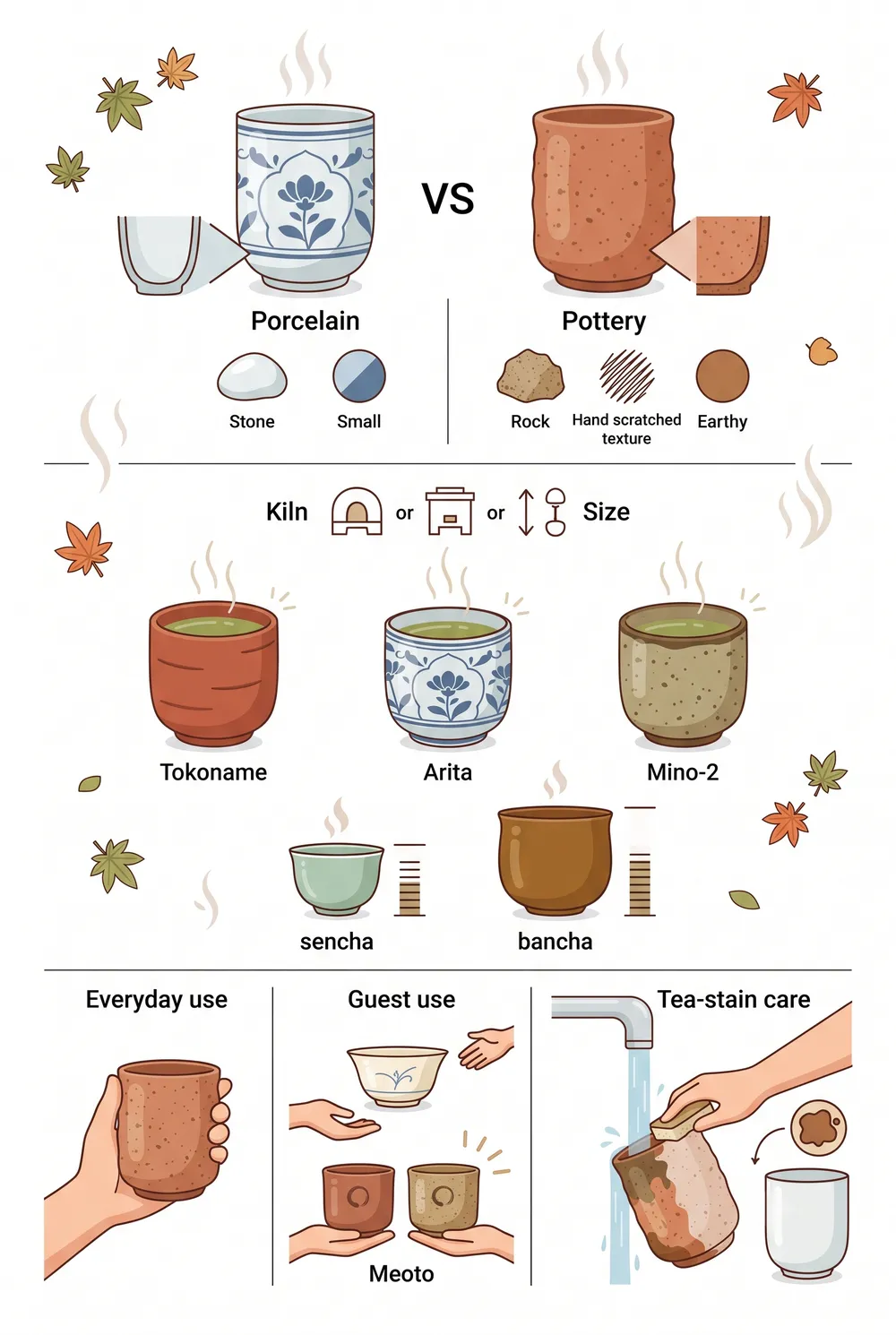
Porcelain is thin, hard and sharp; stoneware is thick, warm and softening, and it keeps the tea hot longer. Which to choose is a question about the tea you drink, not about quality.
Pouring for More Than One
If you are filling several cups from one teapot, do not fill them one at a time. This is the single most useful thing in Japanese tea practice and almost nobody outside Japan does it.
The tea in a pot is not uniform. What comes out first is weak; what comes out
last is far stronger, because the leaf has kept extracting the whole time.
So you pour a little into each cup, then go back along the row, and repeat until
all of them are full. Everyone gets the same tea instead of one weak cup and one
stewed one.
Then empty the pot completely — down to the last drop. Liquid left sitting on
the leaf keeps extracting and turns the second infusion bitter.
It is the same reasoning as splitting an espresso across two cups, and once you have done it a few times, filling one cup at a time starts to look obviously wrong.
One more habit worth stealing: warm the cups first. A splash of hot water into each, tipped out before you pour. It stops a cold cup dropping the tea's temperature — which matters far more when the tea started at 70°C than when it started at 100°C.
The Pair, and the Guest Cup
A meoto-yunomi is a matched pair of cups in two sizes, usually the same design and glaze, sold in one box. It is a standard wedding present in Japan and a common gift to parents.
Conventionally the larger cup is the husband's and the smaller the wife's — that is the tradition as it stands, and it is worth knowing if you receive a set. In practice most people now simply take whichever fits their hand, and makers increasingly sell pairs in matched sizes.
The appeal is the matching, not the sizing. Two cups from one kiln, one glaze, used daily by two people — that is the whole idea, and it survives whatever you do about which is whose.
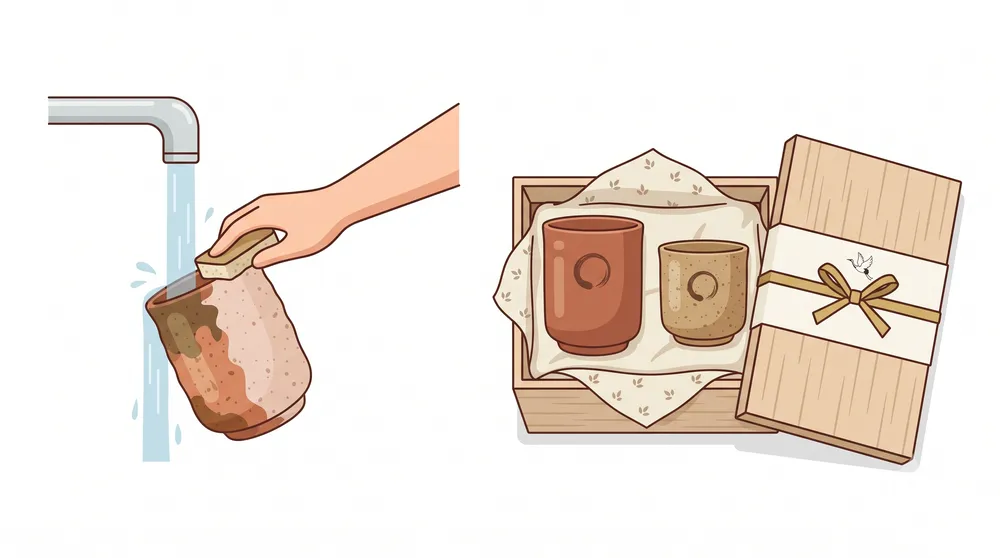
A kumidashi set is the other classic gift — five low, wide guest cups,
usually with saucers, in a paulownia box.
Five, not six. Japanese sets of tableware come in fives, and a set of five is
not a mistake or a missing piece — it is simply how they are sold.
Care: Pre-Soaking and Tea Stains
The one trick nobody tells you: soak it before use
Unglazed and porous stoneware — Hagi ware in particular — absorbs liquid. Pour
tea into a bone-dry one and the tannin goes straight into the clay and stains it permanently.
Dip it in clean water first and let it take up water, and there is far less room
for the tea to soak in. Thirty seconds, every time, and the cup stays clean for
years.
With Hagi ware some of that staining is the point. The glaze is finely crazed, and over years of use the tea works into the cracks and changes the colour — a transformation Japanese collectors call the "seven changes of Hagi" and consider the reason to own one. Pre-soaking slows it; nothing stops it, and nothing should.
- Wash by hand with a soft sponge. Much porcelain is dishwasher and microwave safe and will say so; assume stoneware is neither.
- Tea stains: baking soda or salt on a damp sponge, worked gently. Both are mild abrasives that lift the film without scratching the glaze.
- Never a metal scourer. It scratches glaze permanently, and scratched glaze then stains faster — you make the problem worse.
- Dry it properly before putting it away, especially porous stoneware. A damp cup in a closed cupboard develops a smell.
- Do not take a cold cup straight to hot tea if it is stoneware. Warm it with tepid water first — thermal shock is what cracks a foot ring.
What to Buy
A thin porcelain yunomi — the sensible first one
White porcelain from Saga or Gifu, thin-walled, around 80–120 ml, and inexpensive.
Hard, non-porous, needs no pre-soaking, and usually dishwasher safe.
It also shows you the tea. A white interior makes the colour of a good sencha
visible, which a dark stoneware cup hides — genuinely useful while you are learning to brew.
- Capacity
- 80–120 ml
- Material
- Porcelain — non-porous
- Care
- No pre-soaking needed
- Price
- From about ¥1,700
Perfect for: A first yunomi, and for sencha and gyokuro specifically.
Yunomi.life ships to over 100 countries by DHL, FedEx, UPS or post, with delivery guaranteed. Prices are quoted in yen.
A stoneware yunomi — for hojicha, bancha and cold hands
Thicker walls, a softer rim, and it holds heat much longer. Better for the
teas you drink hot and in quantity, and better in winter for the obvious reason that it warms
your hands.
Tokoname's red clay is the classic choice for tea drinkers, and Hagi is the
one that changes colour with use. Both are porous — pre-soak them.
- Material
- Stoneware — porous
- Heat
- Holds it far longer than porcelain
- Care
- Pre-soak; hand wash only
- Ages
- Yes — Hagi visibly so
Perfect for: Hojicha, bancha, wakoucha, and anyone who wants the cup to change over time.
Buy the cup after you have decided what you drink, not before. A thin porcelain
cup makes gyokuro sing and makes hojicha feel thin; a thick Tokoname cup does the reverse.
And they are cheap enough to own both — this is one of the few categories where
the honest advice is to buy two rather than agonise over one.
Frequently Asked Questions
Won't it burn my hands?
Not if the tea is brewed correctly. Japanese green tea goes in at 50–80°C, and a
cup at that temperature is comfortable to hold.
If it is too hot to pick up, the water was too hot — which will also have made
the tea bitter. The cup is telling you something useful.
Can I use a yunomi for coffee or black tea?
You can, and you will find out why handles exist. Coffee and Western black tea
are served near boiling, and a handleless cup at that temperature is genuinely unpleasant.
Japanese black tea is the interesting exception — it is often drunk cooler and
works well in a stoneware yunomi.
What is the difference between a yunomi and a rice bowl?
A yunomi is tall and narrow; a rice bowl is wide and open, sized to be held in
the palm while you eat from it.
They are both called chawan in some contexts, which causes confusion —
but they are not interchangeable, and neither is the tea-ceremony bowl, which is wider again.
How do I get the brown stains out?
Baking soda or salt on a damp sponge, gently. Both are mild abrasives that lift
the tannin film without damaging glaze.
Never use a metal scourer — it scratches the glaze, and a scratched glaze stains
faster afterwards.
What is a kumidashi?
The low, wide cup used for guests, usually served on a small saucer. Being
shallow, the tea cools fast enough to drink without an awkward wait.
Sets come in fives, which is the standard number for Japanese tableware.
Is a paired set a good wedding gift?
It is one of the standard ones in Japan — two cups from the same kiln in the
same glaze, boxed, given at weddings and to parents.
The two sizes are traditionally different, though matched-size pairs are widely
sold now and nobody will mind either way.
Final Thoughts: A Cup That Tells You Something
The missing handle is not a stylistic choice or an oversight. It is what happens when a culture brews tea below boiling for four hundred years: the problem the handle solves simply never arises.
And it leaves you with feedback. A cup you cannot hold is a cup of tea you have ruined, and you know it before you taste it.
Buy a thin porcelain one first, pour a little into each cup in turn, and soak the stoneware before you use it. Three small things, and your tea gets better without buying better tea.

Japanese Kyusu Teapots: 5 Best Picks — Tokoname, Nanbu Tekki & More
Hasami vs Arita: Japanese Porcelain Compared