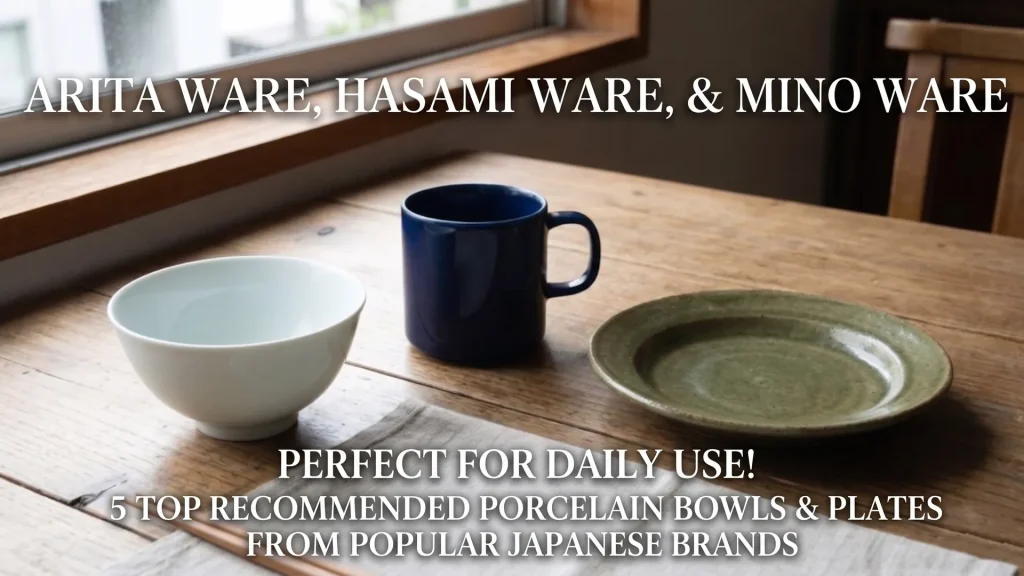
Japanese ceramics bring beauty and warmth to the everyday table. At the heart of Japanese tableware are two distinct
categories: stoneware (earthenware), which has a rustic, earthy character, and
porcelain, which is hard, smooth, and highly practical for daily use.
Porcelain — known in Japan as jiki, or "stone ware" — stands out for its translucent white finish and
glass-like surface. It resists stains, doesn't absorb odors, and most pieces are safe for both the microwave and
dishwasher, making it the ideal choice for busy households looking for stylish tableware that can handle
everyday use.
"What's the difference between Arita-yaki and Hasami-yaki?" "I want dishes that are both tough and good-looking —
something I can use every day without worrying."
To answer those questions, this guide explains the key differences between Japan's three major ceramic-producing
regions: Hasami (Nagasaki), Arita (Saga), and Mino (Gifu).
We also highlight five popular Japanese tableware brands that strike the perfect balance of
functional design and everyday durability — to help you find pieces you'll reach for year after year.
Quick Reference: Japan's Three Major Porcelain Regions at a Glance
| Feature | Arita-yaki (Saga) | Hasami-yaki (Nagasaki) | Mino-yaki (Gifu) |
|---|---|---|---|
| Strength | Prestige & white porcelain beauty | Practicality & lightweight durability | Versatility & affordability |
| Dishwasher / Microwave | Gold-gilded: No. Plain designs: mostly Yes | ◎ Almost always safe | ○ Varies by piece |
| Common Items | Guest tableware & formal gifts | Rice bowls, mugs, everyday plates | Small bowls, Japanese-Western fusion dishes |
| Price Range | Mid to high | Affordable to mid | Affordable to mid |
| Best For | Gifts & formal dining | Daily use, minimalist taste | Wide selection, budget-conscious buyers |
1. Pottery vs. Porcelain: The Fundamental Difference
The first step to choosing Japanese tableware is understanding the key difference between pottery (earthenware) and porcelain. These two types differ not just in appearance, but in how they're made, how durable they are, and how practical they are for everyday use.
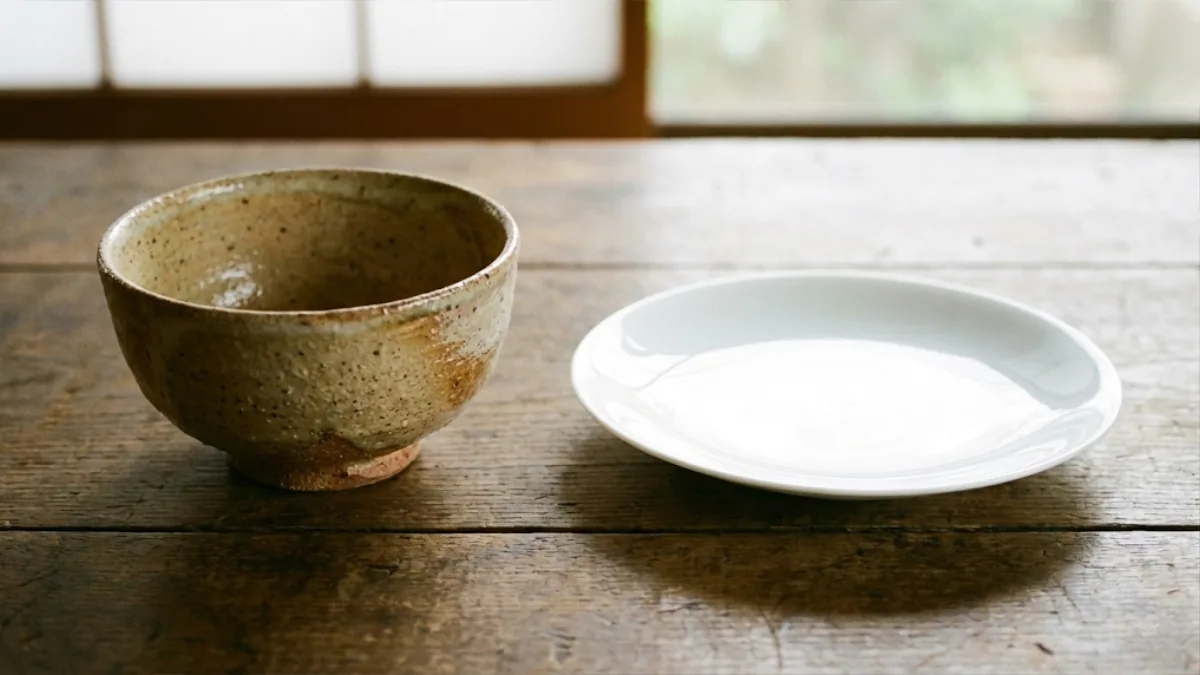
| Feature | Pottery / Stoneware (e.g. Mino-yaki, Mashiko-yaki) | Porcelain (e.g. Arita-yaki, Hasami-yaki) |
|---|---|---|
| Raw Material | Clay-based soil | Pottery stone (ground rock powder) |
| Texture | Thick, slightly rough, earthy warmth | Thin, smooth, glass-like finish |
| Durability | Prone to chipping; absorbs water, can stain | Very hard; non-porous, hygienic |
| Practical Use | Often not microwave/dishwasher safe | Mostly microwave/dishwasher safe |
| Best Uses | Coffee cups, decorative serving platters, rustic table settings | Rice bowls, everyday side plates, guest teaware |
Bottom Line:
If you want tableware you can microwave, put in the dishwasher, and use every single day without worry — go with
porcelain.
If you want to bring earthy warmth and personality to your table, and enjoy the process of "seasoning" your pieces
over time — choose pottery.
The Appeal of Pottery — and What to Watch Out For
Pottery is made from clay fired at relatively low temperatures (around 1,000–1,200°C). Famous examples include
Mashiko-yaki from Tochigi Prefecture.
Its thick, rounded form gives pottery a warm, handmade feel — slightly rough to the touch, with a dull sound when
tapped. That tactile quality is part of its charm.
The main downside is that pottery is porous and absorbs water. Strongly colored foods left too long can stain it,
and pieces that aren't fully dried after washing may develop mold. Most pottery is also not microwave safe,
requiring a little extra care.
That said, pottery's greatest appeal is its ability to change over time. As tea and food pigments work their way
into tiny surface cracks (called kan'nyu), the piece develops a patina that's uniquely yours — a Japanese
aesthetic concept known as "raising the vessel."
Porcelain — The Unbeatable Choice for Everyday Use
Porcelain is made from pottery stone (toseki) — a type of ground rock — mixed with clay and fired at high
temperatures (1,300°C and above). Arita-yaki and Hasami-yaki are both classic examples.
Because porcelain contains a large amount of glass-like material, its surface is perfectly smooth and produces a
clear, high-pitched ring when tapped — a sign of its density and hardness.
Its biggest advantage is that it is essentially non-porous and extremely hard. Grease and sauces
wipe right off, and there's no risk of odor transfer or mold. As long as the piece doesn't have gold or silver
decoration, it's generally safe for both the microwave and dishwasher — making porcelain
the clear winner for everyday household use.
2. Hasami, Arita & Mino-yaki: How the Three Regions Compare
Knowing each region's specialty and strengths makes choosing Japanese ceramics far more enjoyable — and helps you
find pieces you'll actually love using.
Here's a clear breakdown of the three major production regions that together account for most of Japan's ceramic
tableware output.
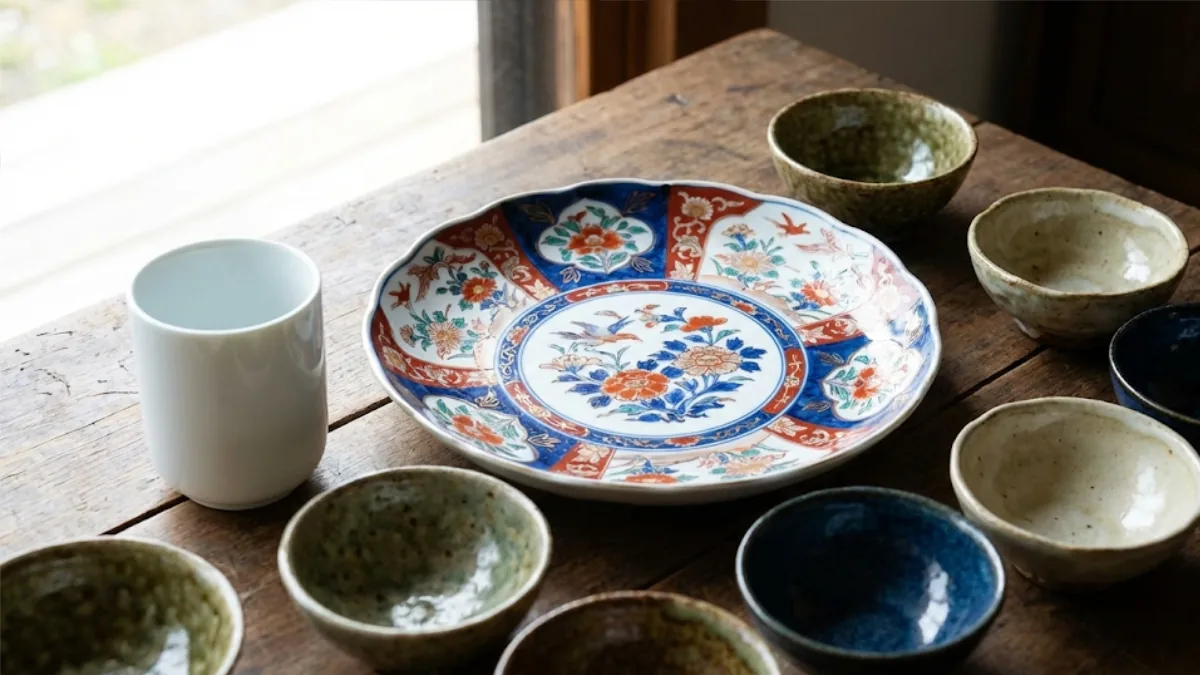
Hasami-yaki (Nagasaki): Modern, Practical Ceramics for Everyday Life
Hasami-yaki (波佐見焼) has a history of about 400 years. It originally developed as a subcontractor to Arita-yaki, but
today it stands as one of Japan's most beloved ceramic regions in its own right.
Its defining strength is the ability to produce high-quality, durable porcelain at accessible
prices. With a long tradition of making everyday tableware for ordinary people — including the famous
kurawanka bowls of the Edo period — Hasami-yaki today combines microwave and dishwasher
toughness with modern, functional designs that wouldn't look out of place alongside
Scandinavian tableware.
When in doubt, you can't go wrong choosing Hasami-yaki for everyday use.
Arita-yaki (Saga): Japan's Finest Porcelain, Beloved Around the World
Arita-yaki (有田焼) holds the distinction of being the birthplace of Japanese porcelain. Known historically in Europe
as "Imari-yaki," it once captivated the royal courts of the continent.
Its signature qualities are a breathtakingly pure white porcelain body and exquisitely
detailed painted decoration — sometsuke in cobalt blue underglaze, and akae in
vibrant overglaze enamels.
For formal entertaining or as a prestigious gift, no other Japanese ceramic tradition can match Arita-yaki. It
brings instant elegance to the table — and many pieces are crafted to be passed down through generations.
Mino-yaki (Gifu): Diversity and Value on an Enormous Scale
Mino-yaki (美濃焼) is Japan's largest ceramic production region, responsible for roughly 50% of all domestic ceramic
output.
Its greatest strength is adaptability: as the saying goes, "Mino-yaki has no fixed style." It can produce
virtually any shape, color, or material — both stoneware and porcelain — to match the needs of the
times.
From earthy, café-style stoneware small bowls to sleek porcelain plates that pair just as well with pasta as with
Japanese food, the range of designs is extraordinary — and the prices are remarkably accessible.
3. Top 5 Japanese Tableware Brands for Everyday Use
These five brands were selected for their outstanding balance of design, functionality, and value — all with the assumption that you'll be using them day in, day out.
Hakusan Toki (白山陶器) — Hasami-yaki's Pinnacle of Functional Design
Hakusan Toki is the leading name in Hasami-yaki, renowned for thoughtfully designed tableware that has won
numerous Good Design Awards. Their pieces work beautifully with Japanese, Western, and Chinese cuisine alike — a
testament to their timeless, universal aesthetic.
Nearly all their products are made from high-quality porcelain, and the official recommendation is that
most pieces are both microwave and dishwasher safe — an impressive combination of beauty and
practicality.
If you're not sure where to start, the Hakusan Toki flat rice bowls or Bloom series plates are a guaranteed great
choice.
- Recommended items: G-type soy sauce dispenser (G型しょうゆさし), flat rice bowls (平茶わん), Bloom series plates
- Why it stands out: Officially microwave and dishwasher safe across the entire range. Thin yet remarkably chip-resistant, with stackable designs that save cabinet space.
Hakusan Toki — ST-17 Blue Flat Rice Bowl (Pair)
An iconic flat rice bowl from Hakusan Toki's long-running collection — the ST-17 design in deep indigo blue is one of the brand's most beloved everyday pieces. Authentic Hasami-yaki porcelain, made in Japan. Dishwasher and microwave safe.
View on AmazonKoransha (香蘭社) — Arita-yaki Prestige for an Everyday Luxury
Koransha is one of Arita's most prestigious and long-established brands, with a history of supplying tableware to
Japan's Imperial Household. Their signature "Koransha style" — pure white porcelain with graceful overglaze
decoration — is celebrated worldwide.
While often associated with gifts and special occasions, Koransha also offers modern everyday series and
lightweight porcelain plates well-suited for daily use.
Pieces without gold decoration can be used in the microwave and dishwasher, making them a surprisingly practical
luxury for morning tea or weekend entertaining.
- Recommended items: Orchid Lace (蘭花レース) series, guest tea sets (teacups and yunomi)
- Why it stands out: Unrivaled prestige and craftsmanship. One of the most trusted choices for formal gifts — weddings, longevity celebrations, and milestone birthdays.
Koransha — Orchid Bloom Pair Rice Bowl
A pair of Koransha rice bowls featuring the brand's signature orchid motif on pristine white Arita porcelain. An authentic piece from Japan's most prestigious porcelain brand — a refined daily indulgence or an elegant gift.
View on AmazonMino-yaki (Oribe Style) — Versatile Japanese Ceramics at an Accessible Price
A standout representative of Mino-yaki — Japan's largest ceramic-producing region in Gifu Prefecture. These pieces
blend traditional Japanese aesthetics with a modern, casual sensibility, working beautifully with everything from
rice and miso soup to pasta and salad.
Mino-yaki's enormous production base means an extraordinary range of designs — from earthy stoneware small bowls
to sleek dishwasher-safe porcelain plates — all at very reasonable prices.
An ideal choice for stocking up for a new household, or refreshing your entire tableware collection at once.
- Recommended items: Modern-patterned small bowl sets, Japanese café-style lunch plates, couples' rice bowl pairs
- Why it stands out: Casual, approachable designs that blend seamlessly into any dining scene. An accessible starting point for building a Japanese tableware collection.
MINO WARE JAPAN — Yuuzen Pattern Chawan (Mino-yaki Rice Bowl)
A traditional Mino-yaki rice bowl in the flowing Yuuzen pattern — made in Japan, dishwasher and microwave safe. Represents the everyday versatility and heritage of Gifu's Mino-yaki tradition, at an accessible price point.
View on AmazonAzumaya (東屋) — Japan's Craft Tradition, Reimagined for Modern Living
Azumaya is a Tokyo-based brand that collaborates with skilled craftsmen and kilns across Japan to reinterpret
traditional Japanese tools and tableware for contemporary households.
Their most beloved pieces are Hasami-yaki plates and sobachoko (small multipurpose cups) featuring the
inban (印判) technique — a traditional woodblock transfer-print method where patterns are
transferred from washi paper onto the ceramic surface. The slight irregularities in alignment and ink that result
give each piece a uniquely handmade character.
With Azumaya, the pleasure is in collecting pieces gradually — each one a small, thoughtful object for daily life.
Saikai Pottery — Hasami Ware Inban Pattern Bean Plates, Set of 8
A set of 8 small Hasami-yaki porcelain plates (approx. 3.1") in the traditional dyed nishiki multi-pattern transfer print — the closest available alternative to Azumaya's signature inban-style tableware. Gift-boxed, made in Japan. (Note: Azumaya tableware is not sold on Amazon.com US.)
View on AmazonAizomegama (藍染窯) — Hasami-yaki Celebrated for Lightweight, Hand-Fitting Bowls
Among the many kilns producing practical Hasami-yaki, Aizomegama has earned a loyal following for the
exceptional lightness and ergonomic feel of their bowls and mugs.
When you reach for a rice bowl or mug every single day, weight matters. Aizomegama's pieces are shaped to sit
naturally in the hand, and their signature deep indigo and earthy brown color palette gives the
table a calm, grounded feeling that is distinctly Japanese.
Microwave and dishwasher safe, these bowls turn even the most ordinary meal into something a little more special.
Saikai Pottery — Hasami Ware Navy Multi-Purpose Bowl Pair
A pair of Hasami-yaki bowls (5.9") in deep navy blue with a hand-painted old-dyed floral crest pattern — made in Japan. A strong match for Aizomegama's lightweight, indigo-toned everyday bowl aesthetic. (Note: Aizomegama is not sold on Amazon.com US.)
View on Amazon4. Before You Buy: A Practical Checklist
Even if you find a piece you love, disappointment waits if it chips after a week or turns out to be microwave-unsafe. Run through these three checks before purchasing.
Check 1: Microwave and Dishwasher Compatibility (Watch for Gold or Silver Decoration)
Most porcelain — especially Hasami-yaki — is safe for the microwave and dishwasher. However, pieces with gold or silver metallic decoration must never go in the microwave: the metal can arc and spark, scorching or cracking the piece. Always look for an explicit "microwave safe" label, especially on decorative pieces.
Check 2: Smoothness of the Foot Ring
The ring on the base of a bowl or plate (called the kodai) is what contacts your dining table. If it's
rough or unglazed, it can scratch the table surface or damage other stacked pieces.
When buying in person, flip the piece over and run your finger across the base — check for a smooth, polished
finish. When shopping online, scan customer reviews for any mention of the bottom surface, as
it's a detail worth confirming.
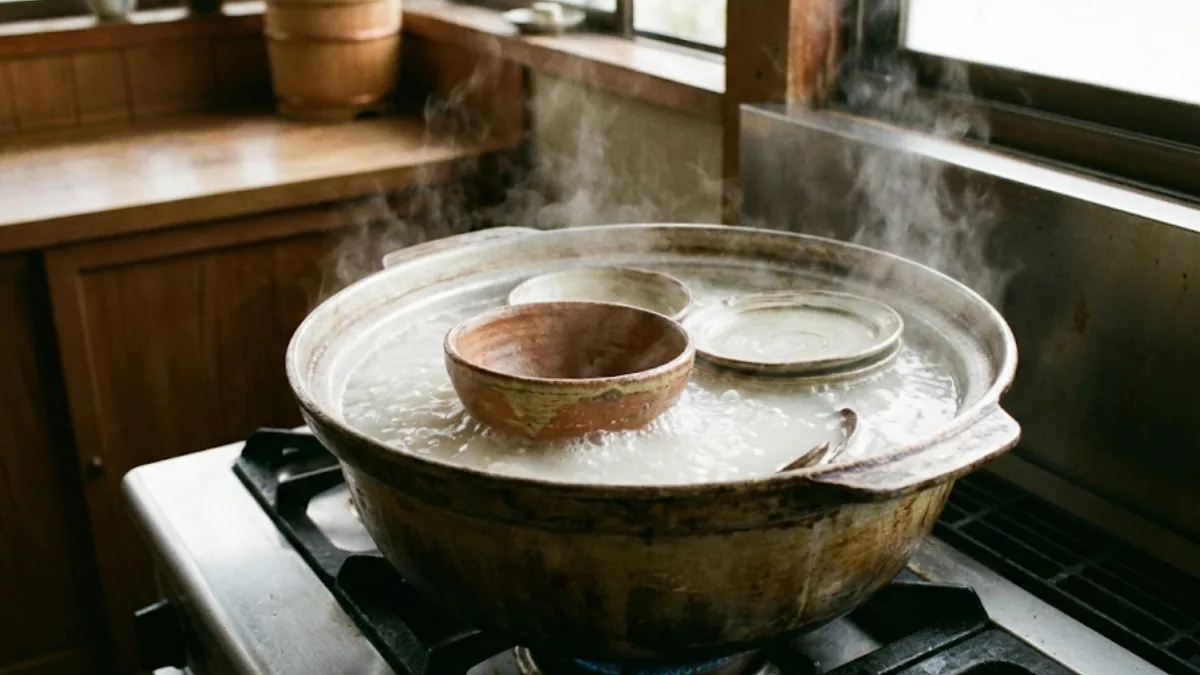
Check 3: Does the Pottery Require "Medome" Seasoning?
Pottery (stoneware) has countless microscopic pores, which means it can absorb cooking juices and oils if used
straight out of the box — leading to stains. Many pottery pieces benefit from a first-use treatment called
medome (目止め): simmering the piece in rice-washing water or starch water for 10–15 minutes to seal the
surface.
If you'd rather skip this step, look for pottery with a full glaze coating — or simply choose porcelain instead.
5. Care & Cleaning: How to Keep Your Ceramics Looking Their Best
Japanese ceramics are sturdy, but a few simple habits will extend their life dramatically and keep them beautiful for years.
Caring for Porcelain (e.g. Hasami-yaki, Arita-yaki)
Good news: porcelain requires almost no special care and is very easy to maintain.
- Use the dishwasher: For pieces without gold or overglaze painted decoration, the dishwasher is actually the safest and most hygienic cleaning method.
- Remove tea stains with bleach: If staining builds up over time, household kitchen bleach (chlorine-based or oxygen-based both work) will restore the original bright white without any scrubbing.
- Avoid abrasives: Never use scouring powder or steel wool — they'll scratch the glaze and dull the surface permanently.
Caring for Pottery (e.g. some Mino-yaki stoneware)
Pottery with an earthy, rustic character needs a little more attention around moisture.
- Dry thoroughly after washing: After washing, wipe the piece immediately with a cloth and let it air-dry completely in a well-ventilated spot before storing. Putting it away while still damp is the leading cause of mold and unpleasant odors.
- Don't soak overnight: Leaving dirty pottery to soak in water invites mold — rinse and wash it promptly instead.
6. Frequently Asked Questions
Are Arita-yaki and Imari-yaki the same thing?
Essentially, yes. Porcelain made in Arita (Saga Prefecture) was historically exported through the nearby port of Imari, which is why it came to be called "Imari-yaki" in international markets. Today, older pieces in traditional styles are often referred to as Ko-Imari (Old Imari), while modern production from Arita is typically called Arita-yaki.
Is Hasami-yaki considered lower quality than Arita-yaki?
Not at all. The two regions simply excel at different things. While Arita-yaki is unmatched for prestige and formal gifting, Hasami-yaki is designed for everyday beauty and durability. Hakusan Toki's G-type soy sauce dispenser won the Good Design Award and is loved by design enthusiasts around the world. They are different traditions with different strengths — not a hierarchy.
Pottery or porcelain — which is better for giving as a gift?
For a formal gift to someone senior or for a ceremonial occasion, porcelain (such as Arita-yaki) is the safer and more traditional choice. For a thoughtful gift to a close friend, handmade pottery pieces by individual artisans can also be deeply appreciated. When in doubt, confirm that the piece is microwave and dishwasher safe — it's a practical touch that shows you've thought of the recipient's daily life.
Is the medome seasoning process really necessary for pottery?
It's not mandatory, but it's worth doing. Medome involves simmering the pottery piece in rice-washing water (or water with dissolved potato starch) for 10–15 minutes to fill its microscopic pores — which helps prevent staining and mold. If you'd rather skip the step, choose fully-glazed pottery or go with porcelain instead.
How can I tell if a Japanese ceramic is dishwasher safe?
The basic rule: porcelain (thin, smooth, lightweight) is almost always dishwasher safe. Pottery (thick, rough-textured, earthy) usually isn't. But even for porcelain, pieces with sparkling gold or silver gilding — or delicate hand-painted overglaze decoration — must be hand-washed, as the dishwasher's strong spray and alkaline detergent will strip the decoration over time.
What are those fine crackle patterns on some Japanese ceramics?
These are called kan'nyu (貫入) — a natural feature of pottery, not damage. They form during cooling after firing, when the clay body and the glaze (a glass-like surface coating) contract at slightly different rates, creating fine surface cracks. Far from being a flaw, kan'nyu is prized in Japanese ceramics: as the piece is used over time, tea and food pigments gradually tint the cracks, giving the vessel a deeper, more complex beauty — what Japanese ceramicists call "the scenery of the vessel."

Lacquerware Ranking: Top 5 Japanese Urushi Brands — Wajima, Yamanaka & Echizen Compared