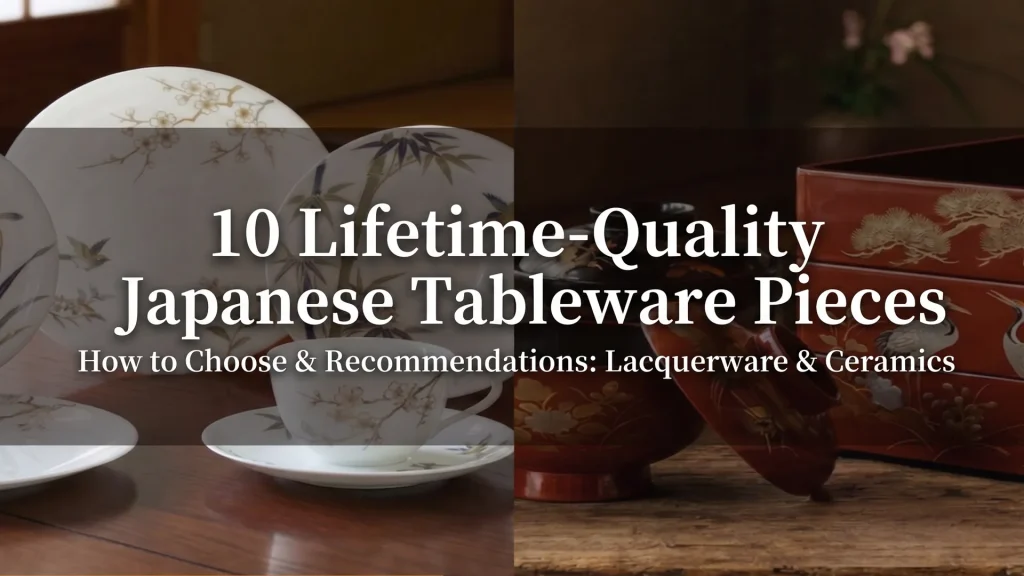
From the everyday family meal to the most formal celebration, the right Japanese tableware transforms the table.
Japan's lacquerware traditions (Wajima, Yamanaka) and ceramics (Arita, Mino) have earned global recognition for
their beauty, durability, and function in equal measure.
This guide cuts across the categories of lacquerware, porcelain, and stoneware to bring you the
finest ten pieces — each balancing tradition with contemporary living — selected by the Made in JAPAN.JP editorial
team.
Your definitive guide to finding the tableware that will enrich your daily life and stand the test of generations.
Quick Reference: Japanese Tableware by Region
| Region | Type | Character | Best for |
|---|---|---|---|
| Wajima (Ishikawa) | Lacquerware (hon-kataji) | Maximum durability and elaborate decoration | Gifts, formal occasions, milestone celebrations |
| Yamanaka (Ishikawa) | Lacquerware (wood-turner's region) | Beautiful woodgrain base, refined modern designs | Everyday to special dining; modern Japanese aesthetic |
| Arita (Saga) | Porcelain (Arita-yaki) | White porcelain beauty, fine painted decoration | Daily use, gifts, collecting |
| Mino (Gifu) | Ceramic/Porcelain (Mino-yaki) | Diverse designs, accessible pricing | Everyday table, practical use |
Editor's Picks: Top 5 Overall
Across materials and regions, these are the five pieces that best combine function, design, and the authority of their tradition.
Wajima Lacquerware — Soup Bowls and Jubako Boxes
- Material
- Hon-urushi (genuine lacquer), wood base (hon-kataji technique)
- Recommended for
- Milestone gifts, formal new-year dining, milestone birthdays, wedding presents
- Overall assessment
- Both artistic value and structural toughness at the highest level. When only a true lifetime piece will do for a landmark occasion, this is the choice.
Japanese Traditional Lacquer Urushi Wood Miso Soup Bowl — Made in Japan
Handcrafted urushi lacquerware soup bowl from Japan. The natural wood body keeps soup warm longer; the lacquer surface is gentle against the lips. A genuine piece of Japanese craft.
View on AmazonKoransha — Arita Porcelain
- Material
- Porcelain (Arita-yaki)
- Recommended for
- Formal dining, guest tableware, wedding gifts
- Overall assessment
- White porcelain beauty and the precision of hand-painted decoration at its finest. For those seeking dignified tableware they can use for decades.
Koransha Arita Porcelain Plate — Orchid Design, Official Kiln
Handcrafted by Koransha — the official kiln with ties to the Japanese imperial household. Fine Arita porcelain, orchid design, made in Japan. A piece that carries 300 years of heritage.
View on AmazonYamanaka Lacquerware — Thin-Turned Soup Bowls
- Material
- Hon-urushi (genuine lacquer), wood base
- Recommended for
- Daily miso soup, tea ceremony, those who prefer a lighter bowl
- Overall assessment
- The best balance of practicality, feel-in-hand, and price. The ideal first premium lacquerware purchase.
IPPINKA Japanese Yamanaka Lacquerware Wooden Soup Bowls — Dishwasher Safe, Pair
Yamanaka lacquerware soup bowls in a matching black and red pair. Crafted from jujube wood with lacquer applied in Japan. Dishwasher safe — the rare combination of genuine craft and modern convenience.
View on AmazonTachikichi — Everyday Japanese Tableware
A Kyoto-founded heritage tableware retailer that curates pieces from Mino, Kyoto, and other production regions — quality above the ordinary, without the premium price tag. The ideal foundation for an everyday Japanese table.
Tachikichi Japanese Tableware Set — 2 Medium Bowls + Plate, Gift Box
A genuine Tachikichi tableware set from the Kyoto-based institution. Includes 2 medium bowls and a plate in a presentation box — an effortless everyday set or a thoughtful gift. Made in Japan.
View on AmazonHigashiya (Azumaya) — Inban Small Plates (Mamezara)
A beloved contemporary Japanese tableware brand that uses traditional techniques — Arita, Iga, and others — to create quietly modern pieces. Their stamp-printed (inban) small plates are particularly collectible: simple, refined, and impossible not to add to your set one by one.
MINO WARE JAPAN Mino-yaki Small Plates — Set of 4, Tanuki Design
Handcrafted Mino-yaki small plates (mamezara) with charming hand-painted tanuki raccoon-dog designs. 3.5 inches — the perfect size for condiments, pickles, or small sides. Made in Japan, Gifu.
View on AmazonBest Lacquerware for Gifts: 3 Regional Brands
Lacquerware's insulating properties — keeping soup and rice warm — make it irreplaceable at the Japanese table. Here are three regional traditions particularly suited to formal gifts.
Echizen Lacquerware — Modern and Dishwasher-Safe
A traditional craft from Fukui prefecture that has fully embraced contemporary living. Echizen makers have led the industry in developing dishwasher-compatible lacquerware — authentic craft you can actually use every day without anxiety about the sink.
Echizen Lacquerware Dishwasher-Safe Nesting Bowl — Black
Authentic Echizen lacquerware that's genuinely dishwasher-safe. Nesting design for compact storage. The rare intersection of traditional craft and everyday practicality. Made in Japan.
View on AmazonZohiko — The Elegance of Kyoto Lacquerware
A long-established Kyoto lacquerware (Kyo-shikki) maker whose roots reach into the tea ceremony tradition. Zohiko's pieces carry the particular refinement that only Kyoto's cultural heritage can produce — a distinctly courtly beauty that other regions don't replicate.
Zohiko Lacquerware Round Tray (Obon) — Mizuhiki Grass, Natural Wood, 11.8 inch
An authentic piece from Zohiko — Kyoto's most storied lacquerware house. Natural wood base with genuine wet lacquer (hon-urushi), in the Mizuhiki Grass motif. A tray that carries 350 years of Kyoto craft heritage. Made in Japan.
View Official SiteHida Shunkei — The Beauty of Visible Wood Grain
Where other lacquerware techniques coat and obscure the wood, Hida Shunkei (from Gifu's Hida region) does the opposite: transparent lacquer is applied directly over the bare wood, preserving — and deepening — the natural grain. The result is a warm, clear amber color unlike any other lacquerware tradition. Understated and deeply Japanese.
Hida Shunkei Lacquerware Tray — Traditional Craft, Natural Wood
A Hida Shunkei tray in natural wood with transparent lacquer, showcasing the wood grain through the finish. A designated Traditional Craft of Japan. Hida, Gifu. Made in Japan.
View on AmazonFor a detailed comparison of the three major lacquerware regions and how to care for them, see the Lacquerware Materials & Regions Guide.
Best Everyday Ceramic Brands: 2 Picks
Ceramics are the workhorse of the Japanese table — tough, microwave- and dishwasher-compatible, and available at every price point. Porcelain (jiki) is hard and non-porous; stoneware (toki) has a warm earthen texture.
Hakusan Toki — Functional Beauty and Good Design Awards
A Hasami-yaki (Nagasaki) brand that has won multiple Good Design Awards. Their pieces are designed specifically around daily use — the kind of clear-headed functionality that makes you reach for them every single day. The signature white porcelain is ageless.
Hakusan Toki 5-Inch Rice/Noodle Bowl — White Porcelain, Hasami Ware
From Hakusan Toki — multiple Good Design Award winner. Clean white Hasami porcelain, made in Japan, in their signature "100 Tiers" design that has been crafted since the 1960s. Functional and timeless.
View on AmazonMino-yaki — Japan's Most Diverse Ceramics
Mino (Gifu prefecture) accounts for roughly half of all Japanese ceramic tableware production — and the range is staggering, from bold colorful contemporary pieces to quietly earthy traditional ones. For building an everyday table set with character, Mino-yaki gives you more choices than anywhere else.
Mino Ware Dinner Plate 9.0 inch — Chrysanthemum Design, Navy, Made in Japan
A classic Mino-yaki dinner plate from Gifu — traditional chrysanthemum pattern in navy blue. Microwave and dishwasher safe. The kind of plate that looks better on the table than it does in the shop. Made in Japan.
View on AmazonFor a deep-dive comparison of Arita, Hasami, and Mino ceramics, see the Porcelain & Ceramics Specialist Guide.
Final Checklist: Choosing by Material
One more pass to confirm which material matches what you're actually looking for.
Material Selection Checklist
| Material | Key Advantages | Limitations / Notes | Best suited for |
|---|---|---|---|
| Lacquerware (hon-urushi) | Lightweight, insulating, lip-friendly. Long-lasting with care | No dishwasher/microwave (unless specified), higher cost, requires hand care | Soup bowls, rice bowls, gifts and special occasions |
| Porcelain (e.g., Arita) | Durable, often microwave/dishwasher safe. White porcelain beauty | Cools faster than lacquer; chips show clearly | Everyday plates, multipurpose pieces, functional use |
| Stoneware (e.g., Mino-yaki) | Warm earthen character, huge design variety, relatively affordable | Heavier, porous (can stain), more fragile | Character pieces, Japanese aesthetic lovers, everyday variety |
Frequently Asked Questions
What is the difference between Wajima and Yamanaka lacquerware?
Wajima is defined by the durability of its lacquer; Yamanaka by the beauty of its wood base.
Wajima uses diatomite earth in a technique called hon-kataji, creating a lacquer coat of extraordinary toughness —
capable of lasting decades of daily use. It excels as a formal gift.
Yamanaka is a center of lathe-turning (wood-turning) craftsmanship, producing bowls turned to an extreme thinness
that highlights the wood grain. Many modern designs come from Yamanaka, and it tends to suit daily use more
naturally.
Can lacquerware go in the dishwasher?
Genuine hon-urushi lacquerware is not dishwasher-safe.
The high heat, harsh detergent, and water pressure of a dishwasher all damage the lacquer coat and can cause
peeling.
Wash by hand with a soft sponge and mild detergent diluted in water, then wipe dry immediately.
Exception: pieces labeled "urethane finish" (ウレタン塗装) are often dishwasher-compatible — check the product label.
What is the difference between Arita-yaki and Hasami-yaki?
Both are celebrated regions, but with distinct personalities.
Arita (Saga prefecture) is Japan's oldest porcelain-making region (since 1616), defined by white porcelain with
fine hand-painted decoration. It ranges from heirlooms to everyday ware.
Hasami (Nagasaki prefecture), adjacent to Arita, is known for simple, user-oriented designs — high quality at
honest prices. Its practical aesthetic has made it a favorite for contemporary kitchens.
For a Japanese tableware gift — lacquerware or ceramics?
Match the occasion to the material.
For formal celebrations — milestone birthdays, weddings, longevity anniversaries — lacquerware (Wajima or
Yamanaka) carries more prestige and longevity as a gift.
For practical everyday gifts that will genuinely be used — housewarming, a new household — a quality set of
Arita or Mino-yaki tableware is more likely to be appreciated daily.
What is the difference between stoneware (toki) and porcelain (jiki)?
They differ in raw material and firing temperature.
Stoneware uses clay (tochi) fired at relatively lower temperatures (around 1200°C or below). It is porous, warm in
texture, and has the earthen character associated with folk craft. Mino-yaki and Shigaraki are examples.
Porcelain uses ground stone (tōseki) fired at high temperatures (around 1300°C). It is non-porous, white,
translucent, and harder. Arita-yaki and Hasami-yaki are examples.
What sets Japanese tableware apart from foreign-made pieces?
The combination of hand craftsmanship and region-specific inherited technique.
Wajima's hon-kataji lacquer application, Arita's hand-painted overglaze — these are techniques that cannot be
replicated by machine.
Beyond technique, Japanese tableware carries a particular design philosophy: that the vessel exists to make the
food beautiful. The way a bowl fits in the palm, the way its rim meets the lip — these are considered as carefully
as the glaze.
Explore Further: Specialist Guides
For deeper dives into specific categories — materials, regions, and gift selection — each topic has its own dedicated guide.

Materials & Regions Guide: Wajima, Arita, and More — How to Choose Japanese Tableware

Gift Guide: Premium Lacquerware and Japanese Tableware — 10 Best Gifts for Weddings and Special Occasions
