If you own a Japanese rice cooker, it has a keep-warm function that will hold rice for
twelve hours. You have probably also noticed what the rice is like at hour eight —
yellowing at the edges, drier, with a faint smell that was not there at the start.
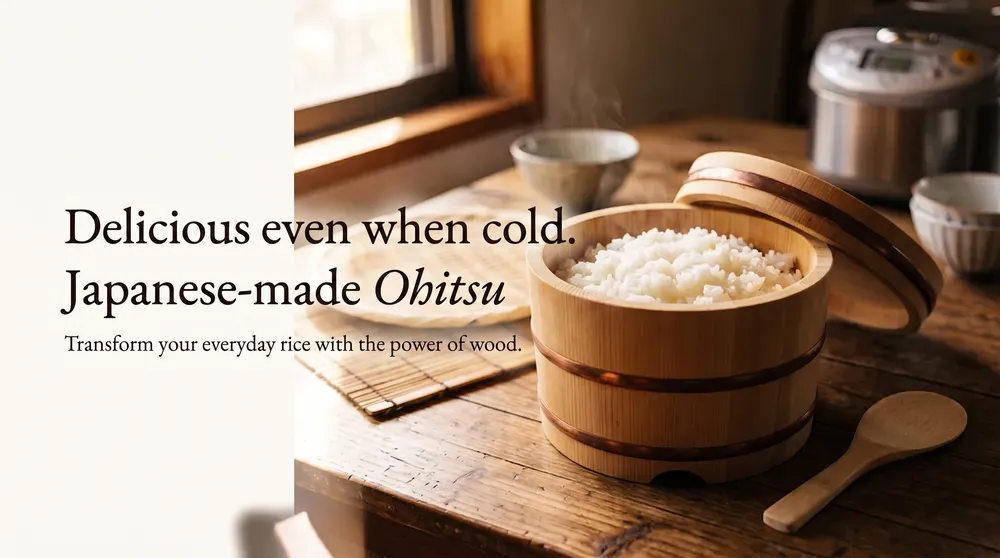
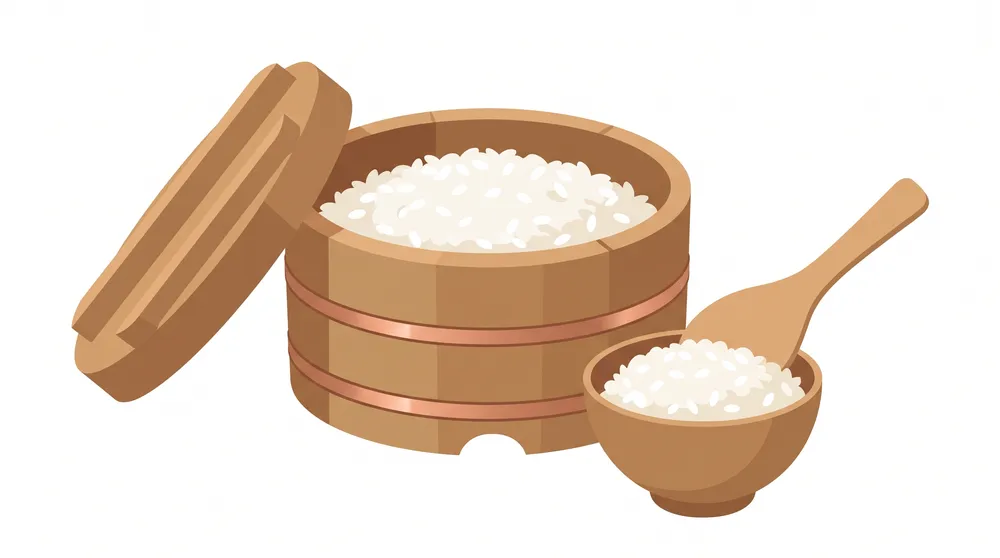
That is what an ohitsu exists to avoid. It is a lidded wooden tub, and
the instruction is simple: as soon as the rice has finished steaming, take it out of the cooker
and put it in here.
But be clear about the trade before you buy one. An ohitsu does not keep rice
hot. It makes room-temperature rice better — which is a real thing to want, and
not the same thing at all.
Quick Reference: Keep-Warm vs Ohitsu
| You want | Use |
|---|---|
| Hot rice in four hours | Keep-warm. The ohitsu cannot do this |
| Onigiri, bento, sushi rice | Ohitsu, clearly |
| Rice on the table for a long dinner | Ohitsu |
| To reheat it in a microwave | Ceramic ohitsu, not wooden |
| No maintenance at all | Ceramic — wood needs drying every time |
| The one-line version: keep-warm keeps rice hot and slowly ruins it. An ohitsu lets it go cold and keeps it good. | |
The Trade: Better Cold Rice, Not Hotter Rice
Keep-warm holds rice at around 70°C for as long as you leave it. At that temperature, over hours, water leaves the grains, the sugars brown slightly at the edges, and the trapped steam that cannot escape gives it that particular stale smell. None of that is a fault in your cooker — it is what holding cooked starch warm does.
An ohitsu takes the rice off heat entirely and manages the moisture instead. The wood absorbs the excess steam coming off freshly cooked rice, so the surface does not go claggy — and because the wood is damp rather than dry, it does not pull the rice past that into hardness either.
The result is rice that is genuinely good at room temperature, which is not a
state most Western cooking asks rice to be in.
Japanese cooking asks it constantly — onigiri, bento, sushi rice — and this is
the tool built for it. Sushi counters use an ohitsu for the seasoned rice for
exactly this reason, and have done for far longer than electric cookers have existed.
So the honest test is what you do with leftover rice. If it goes straight into the fridge or the freezer, an ohitsu buys you little. If it becomes tomorrow's lunch, or gets eaten over an evening, it changes that rice completely.
Why Japanese — Sawara, and Why Not Hinoki
Almost every good ohitsu is made of sawara — a cypress closely related to hinoki, the wood used for Japanese baths and cutting boards.
The reason it is sawara and not hinoki is the smell. Hinoki's scent is its selling point everywhere else, and it is far too assertive to sit against rice for four hours. Sawara has the same working properties with a much quieter aroma, so it contributes almost nothing to the taste.
It is also lighter, softer to work, and sheds water well — which is why it has been the rice-tub wood for centuries rather than a modern substitution.
You will see hinoki lids on sawara bodies, which is a sensible split: the lid is
not in contact with the rice for long, so it can be the more fragrant wood.
Akita cedar (sugi) is the other traditional choice, lighter again and
with a straighter grain. All three work. What does not work is a hardwood, which
neither absorbs nor releases moisture usefully.
The hoops are structural, and they are the weak point
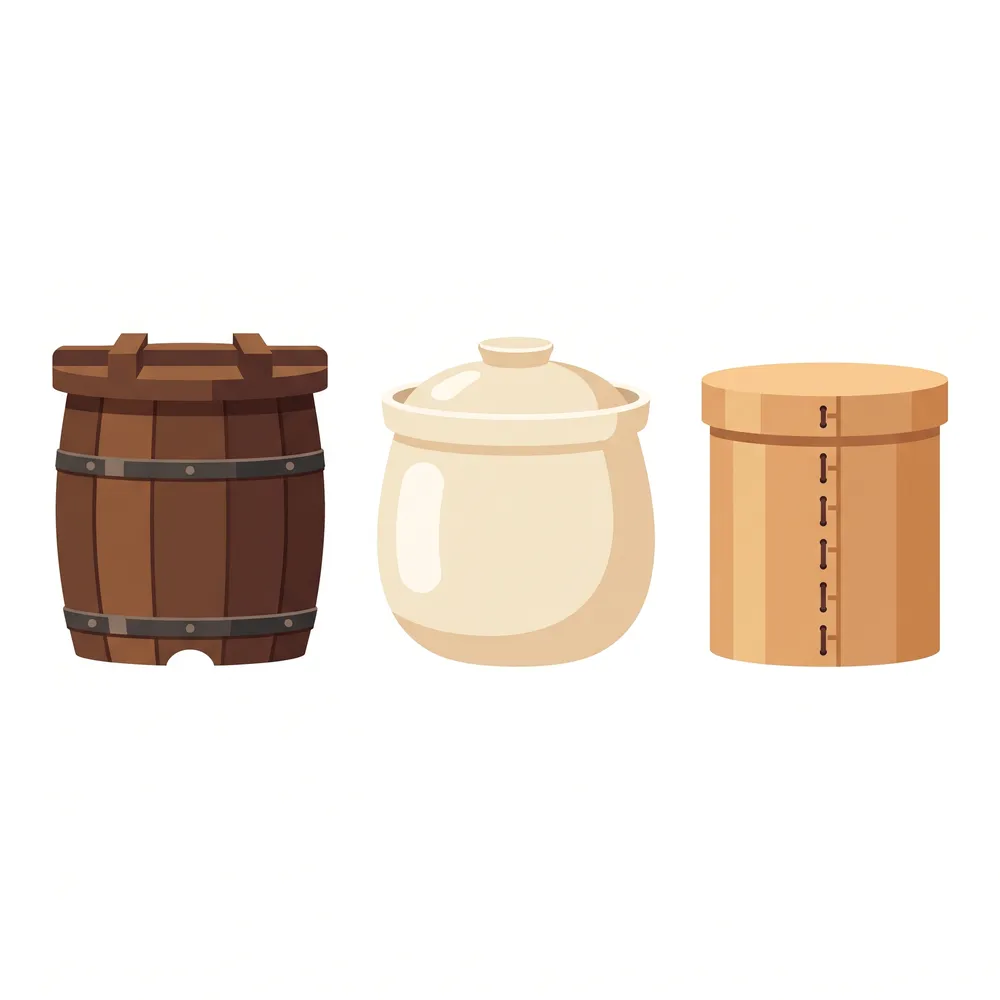
A traditional ohitsu is coopered — staves held together by copper hoops, with no glue doing the real work. It is a barrel, in miniature and with better manners.
That construction is why it can be repaired and re-planed for decades, and also why it has a specific failure mode that a moulded plastic box does not. Which brings us to the part the Japanese-language guides do not cover.
Two Things That Go Wrong in a Western Home
1. Mould, if you put it away damp
This is the failure everyone warns about, and the cause is always the same — the
tub went into a closed cupboard before it was dry.
The fix is not a technique, it is a habit. Wash it soon after use, stand it on
its side somewhere with moving air, and do not shut it away until the inside is properly dry.
If you use it every day, just leave it out.
2. Cracking and loose hoops, if your home is heated and dry
This one is barely mentioned in Japanese guides, because Japanese homes are humid enough that it rarely comes up. In a centrally heated house in winter it very much does.
Wood that dries out too far shrinks, and the copper hoops go slack — after which
the staves have nothing holding them together. Left long enough, it splits.
If a hoop loosens, push it back down, then let the wood take up water properly and dry
out again slowly. Keep it out of direct sun and away from a radiator, and if you are
not using it for a while, run water into it occasionally rather than leaving it bone dry in a
warm room.
Between the two, you are aiming for the middle: never stored wet, never baked dry. A kitchen shelf with air around it is right; the top of a radiator and the back of a sealed cupboard are both wrong.
What to Buy: Wood, Ceramic or Bentwood
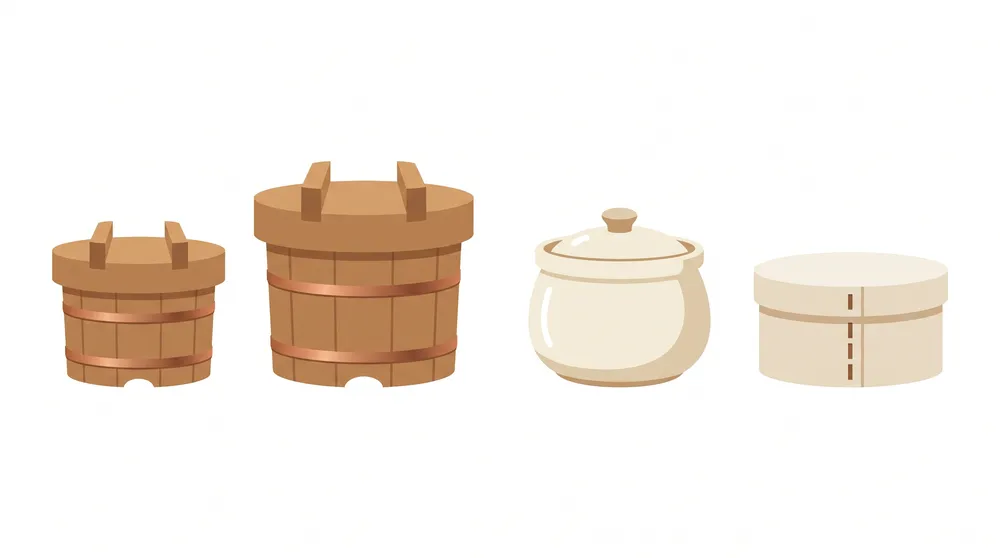
Size first, and smaller than you think. Sizes are quoted in gō — the
same 180 ml cup your rice cooker uses. Three gō suits one or two people;
five suits a family.
Too large is worse than too small, because a thin layer of rice in a big tub
has far more wood surface pulling moisture out of it and simply goes dry.
Sawara wooden ohitsu — the actual thing
Sawara body with a hinoki lid, made in Japan, in a two-gō size that
suits one or two people and is small enough to be realistic about drying every day.
This is the version that does what the article describes. If you want the
effect rather than the object, start here rather than with something larger.
- Wood
- Sawara body, hinoki lid
- Capacity
- 2 gō — one or two people
- Made
- Japan
- Microwave
- No. Never
The professional sushi version, and a warning about coatings
Restaurant suppliers sell the large edobitsu that sushi counters use
— copper-hooped sawara, hand-made, from around $200. Sizes run well past anything domestic.
Many are sold "anti-crack coated", meaning a food-safe polyurethane layer
that stops the wood splitting as it dries and makes it far easier to clean. For a commercial
kitchen that is an obvious win.
- Wood
- Sawara, copper hoops
- Sizes
- From about 7 gō upward
- Price
- From about $200
Check whether the coating is on the inside. A sealed interior cannot take up moisture — and taking up moisture is the entire reason the tub is made of wood. A coated exterior with bare wood inside gives you both; coated throughout gives you a handsome, low-maintenance bucket. Ask before you spend $200 on the wrong one.
Bentwood magewappa — light, small, and the prettiest
Cedar steamed and bent into a cylinder rather than assembled from staves, a
technique carried on in Odate in Akita for something like 1,300 years. Much lighter than a
coopered tub, and it looks like something you would put on the table rather than beside the
hob.
The sizes suit one or two people, which for most households abroad is the
realistic size anyway.
- Wood
- Akita cedar, bentwood
- Weight
- Notably lighter than coopered
- Care
- Same as any bare wood — dry it properly
Ceramic — the version you will actually keep using
Ceramic ohitsu go in the fridge and then straight into the microwave, and many
are dishwasher safe. They buffer moisture far less than wood — this is a real
downgrade, not a marketing equivalence.
But a ceramic one that gets used every day beats a wooden one that gets used twice and
then feared. If the daily drying routine sounds like something you will resent, buy
ceramic and do not feel you have compromised badly.
First Use, and Keeping It Alive
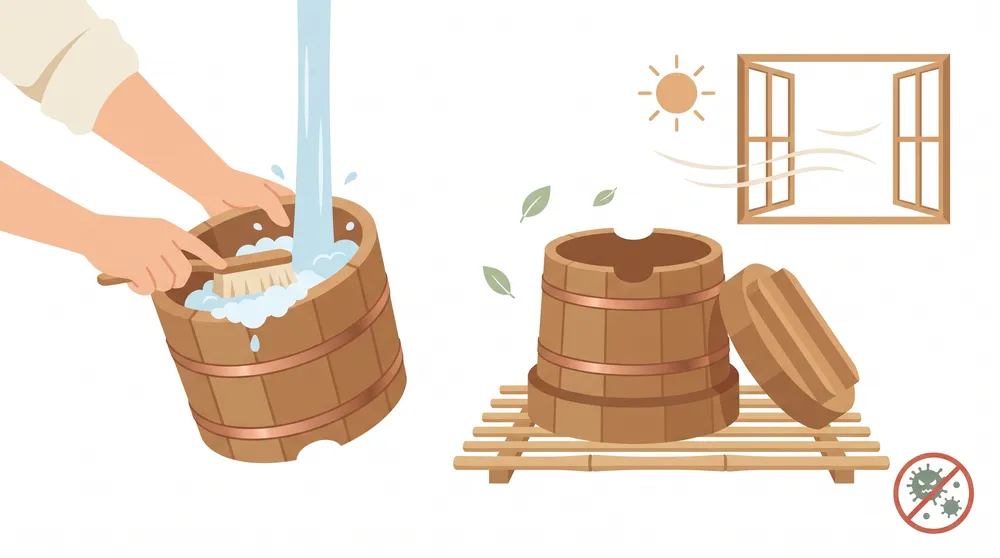
Before the first use: hot water and vinegar
Fill it with hot water and add roughly 150–200 ml of vinegar, then let it
cool on its own before rinsing thoroughly.
This draws out the raw-wood tannins and the mill smell that would otherwise
end up in your first few batches of rice. It is worth doing properly once, and
never needs repeating.
- Wet it before every use. Run water round the inside and wipe it out with a well-wrung cloth — damp wood does not grab the rice, and dry wood does.
- Move the rice as soon as the steaming is finished. Cut through it with the paddle first so trapped steam escapes, then transfer. Do not press it down.
- Go easy on detergent. Bare wood absorbs both the soap and its perfume, and gives them back to your rice. Water and a brush handles most of it.
- Dry it in the shade, standing on its side. Not face-down — that traps damp against the rim — and not in direct sun, which causes the cracking and fading you are trying to avoid.
- Black marks: a scourer and lemon juice. It fades them rather than removing them; deeper staining can be planed back by a maker. A little darkening with age is normal.
Frequently Asked Questions
Does an ohitsu keep rice warm?
No, and it is not trying to. Rice in a wooden ohitsu cools to room temperature
over an hour or so.
What it does is keep that cooled rice good — not dried out, not claggy, still
sweet. If you need hot rice four hours from now, keep-warm is the right tool.
Can I microwave it?
Not a wooden one, ever. It will dry the wood out from the inside and split it.
Ceramic ohitsu are made for this — fridge, then microwave, then table — which is
the main reason to choose ceramic over wood.
How long can rice sit in it?
Several hours at room temperature is normal, which covers an evening or a
morning's bento-making.
Overnight or in hot weather, refrigerate instead — cooked rice at warm room
temperature is a genuine food-safety question, and no amount of nice wood changes that.
Will it go mouldy?
Only if you put it away damp. That is the single cause, and the answer is
washing it promptly and letting it dry in moving air before it goes in a cupboard.
If you cook rice daily, leave it out on the shelf — wood keeps far better in
open air than shut in.
What size should I get?
Match the amount you actually cook, and err small. Three gō for one or
two people, five for a family — using the same 180 ml cup as your rice cooker.
A half-empty tub dries rice out faster than a full one, so an oversized ohitsu
actively works against you.
Why sawara rather than hinoki?
Because hinoki smells too strongly. Its aroma is the reason it is used for baths
and it would dominate rice sitting against it for hours.
Sawara is a close relative with a much quieter scent, plus it is light and sheds
water well. Lids are often hinoki, since they touch the rice far less.
Final Thoughts: A Box That Does One Thing
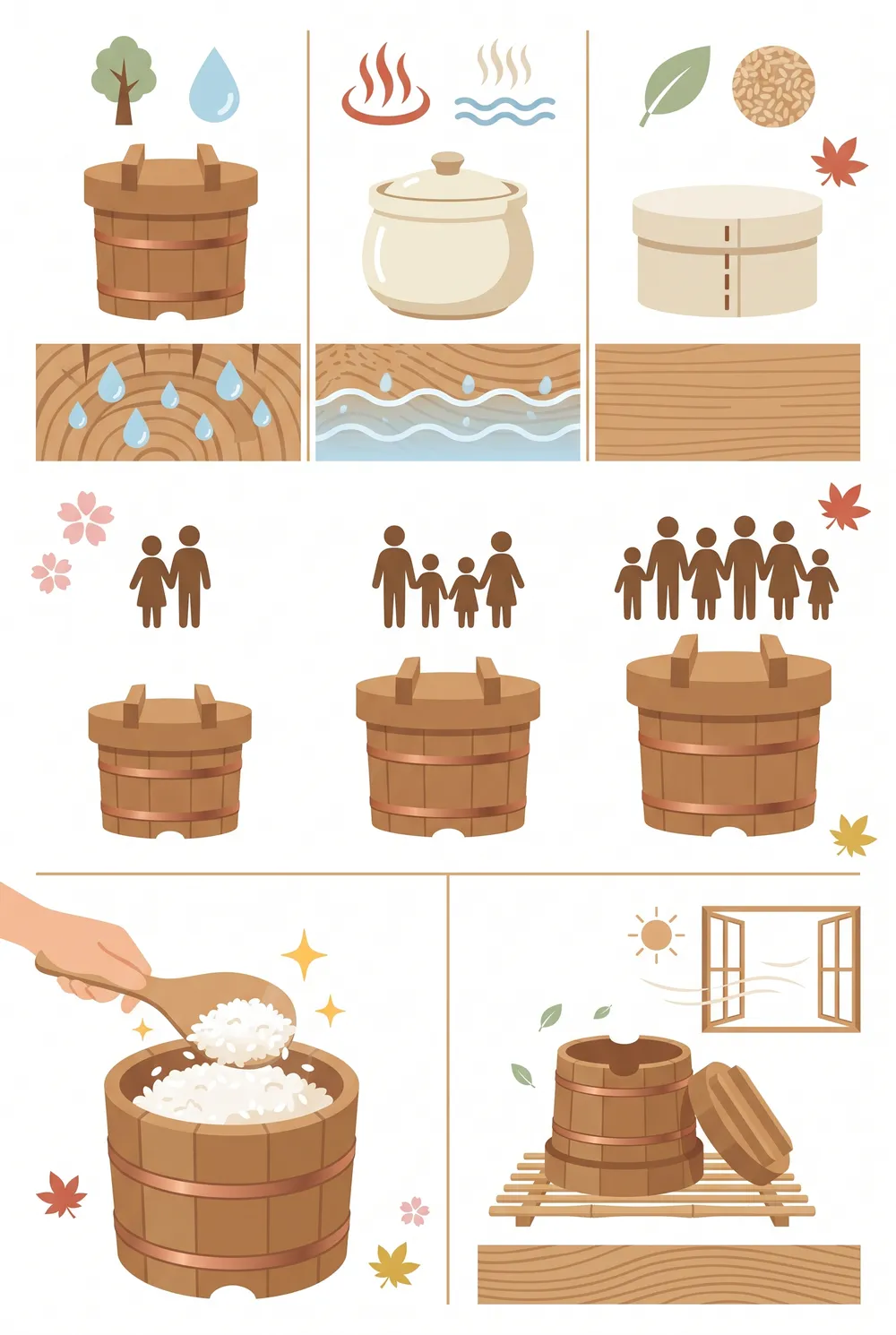
An ohitsu is a lidded wooden box with no moving parts that solves one problem: cooked rice sitting in its own steam. That is the whole product.
Whether it earns its place depends entirely on how you eat. If your rice goes from cooker to bowl to fridge, it does not. If it becomes onigiri, or lunch, or sits out through a long dinner, it does — obviously and immediately.
Buy it small, wet it before use, and dry it standing in the shade. Do those three and it will outlast the cooker it sits next to.

Japanese Rice Cookers: Buy the 120V Model
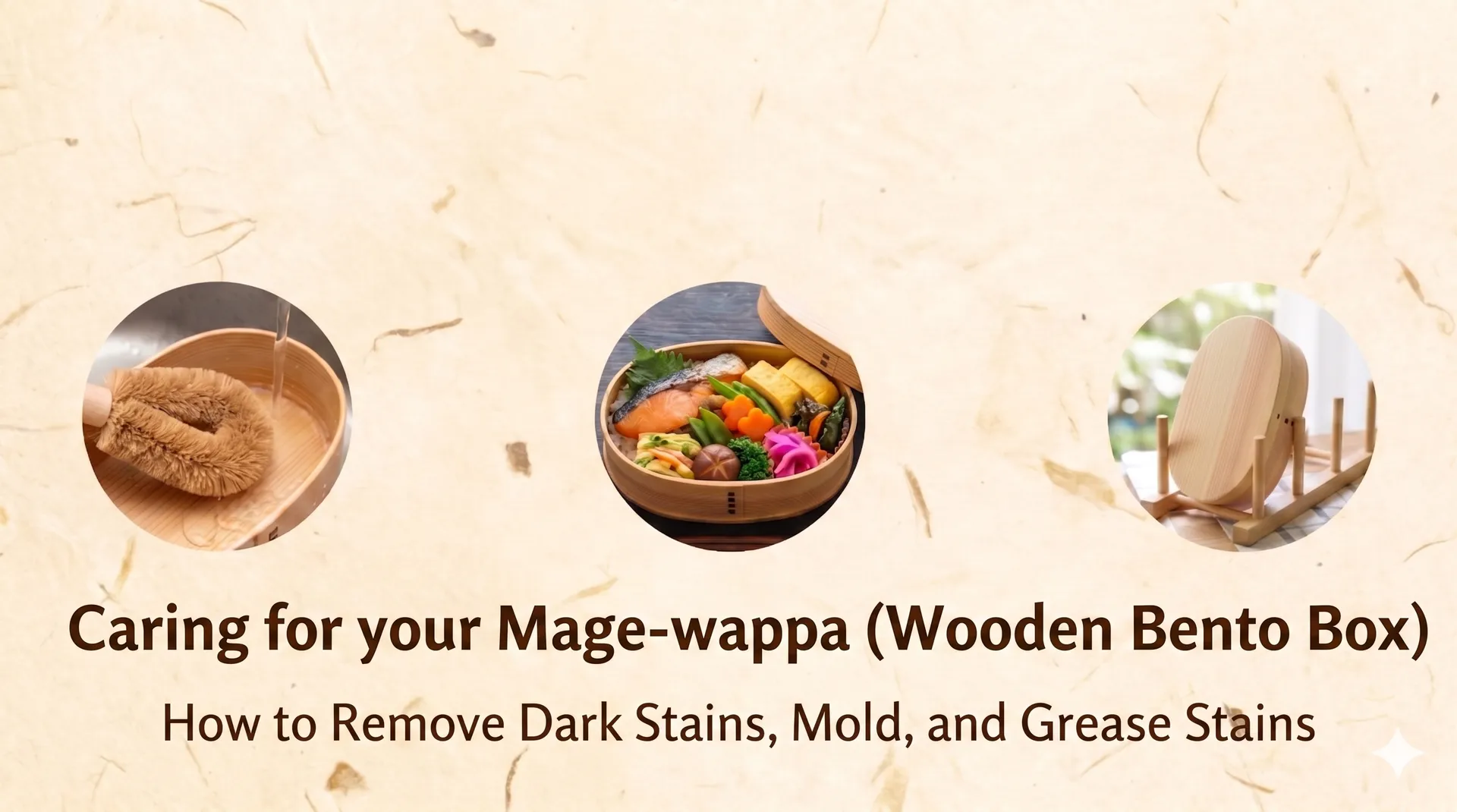
Magewappa Bento Box Care: Washing, Black Stains & Mold