Japanese lacquerware (shikki) keeps food warm, feels silky against the lips, and grows more beautiful with
every year of use.
Each major lacquerware region has developed its own distinct character — from the construction of the wooden core to
the final layers of urushi lacquer.
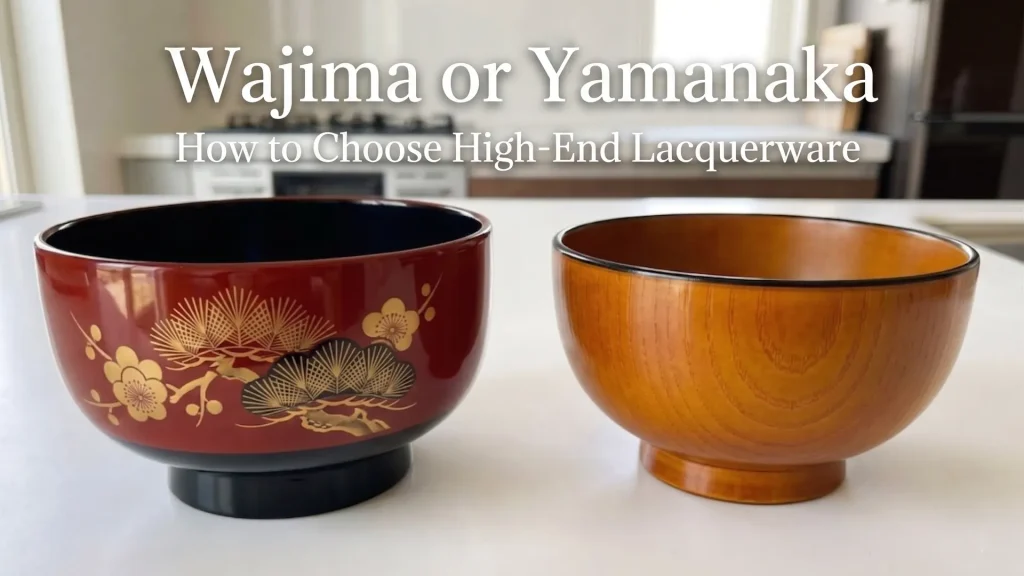
This guide focuses on Wajima-nuri (Ishikawa) and Yamanaka-nuri (Ishikawa) —
Japan's two premier lacquerware traditions — comparing their durability and
lightness in depth, alongside Echizen-nuri from Fukui.
Whether you want a soup bowl for daily miso, a lacquered jubako box for New Year, or a prestige gift that will last
a lifetime, this is your complete guide.
Quick Reference: Japan's Major Lacquerware Regions at a Glance
| Feature | Wajima-nuri (Ishikawa) | Yamanaka-nuri (Ishikawa) | Echizen-nuri (Fukui) |
|---|---|---|---|
| Defining Strength | Unmatched durability via the honkataji base technique | Feather-light and smooth-lipped from ultra-thin wood turning | Pro-kitchen toughness with modern, dishwasher-compatible designs |
| Best Use | Jubako · formal gifts · tea ceremony · heirloom pieces | Soup bowls · rice bowls · everyday tableware | Commercial kitchens · dishwasher-safe daily use |
| Dishwasher Safe | ✕ (hand-wash required) | Depends on the piece | ◎ Compatible models available |
| Price Range | Premium (many production stages) | Mid to high (wide quality range) | Mid (good value options available) |
| Best For | Formal gifting · heirloom quality | Lightness and lip feel | Everyday use · practicality first |
1. Wajima vs. Yamanaka: The Decisive Difference Between Japan's Two Premier Lacquerware Regions
Both Wajima-nuri and Yamanaka-nuri originate within Ishikawa Prefecture — yet their manufacturing philosophies are
fundamentally different, with direct consequences for performance and price.
※ Urushi lacquer (urushiol polymer) reacts with moisture in the air to cure into an exceptionally tough, acid- and
salt-resistant natural polymer — but the two traditions take completely different approaches to the underlying wood
core and base-coat preparation.
| Feature | Wajima-nuri | Yamanaka-nuri |
|---|---|---|
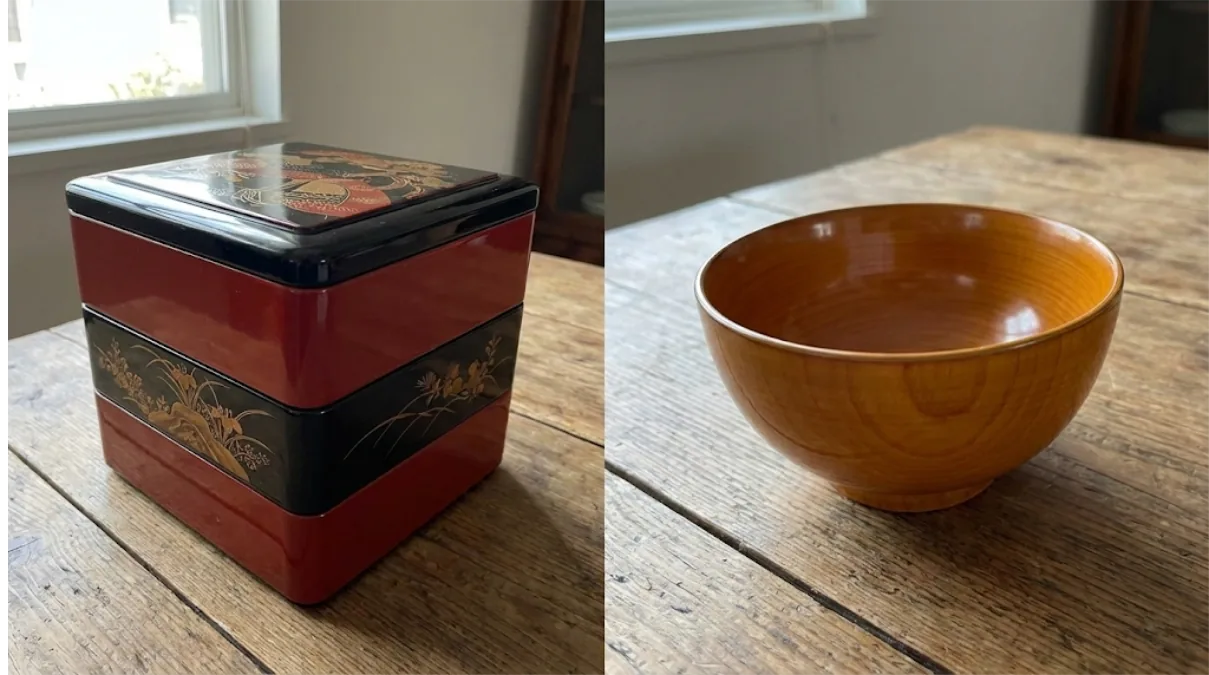
| Defining Technique | Durability: the unique honkataji (true solid ground) base builds extraordinary toughness layer by layer | Wood turning: ultra-thin lathe work produces exceptional lightness and a smooth feel at the lip |
| Primary Use | Formal gifts, jubako stacked boxes, tea ceremony wares, art objects | Soup bowls, rice bowls, modern everyday tableware |
| Decoration | Rich surface ornament — chinkin (gold inlay) and maki-e (gold-powder painting) are hallmarks | Clean, minimal finishes; many contemporary designs |
| Price | Premium (many specialist stages involved) | Wide range — affordable pieces exist (some use synthetic resin bodies) |
Bottom line:
Choose Wajima-nuri when formality and generational durability are the priority. Choose
Yamanaka-nuri when you want effortless lightness and a satisfying lip-feel for daily use.
2. For Gifts & Formal Occasions: 3 Top Lacquerware Brands
These are the brands chosen for once-in-a-lifetime gifts — longevity celebrations, weddings, and anniversaries — where quality and prestige matter most.
Taigadou (Wajima-nuri) — The Art of Chinkin & Maki-e
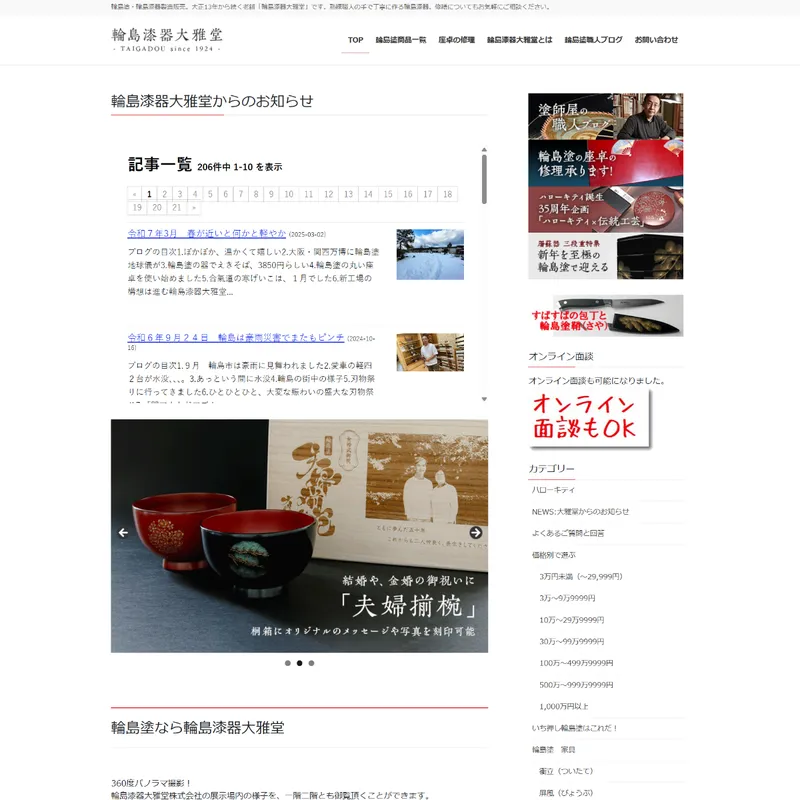
When choosing from Wajima-nuri for a prestige gift, look for studios with a strong tradition of chinkin (carving and gold-foil inlay) and maki-e (lacquer painting with gold powder). Beyond beauty, check whether the maker offers a repair warranty — authentic Wajima lacquerware can be restored by craftsmen and handed down across generations.
- Recommended items: Pair soup bowls, premium tea-tray sets, jubako stacked boxes
- Key point: State your budget clearly and match the level of surface decoration to the occasion.
Echizen-nuri (Fukui) — Durability Meets Modern Design
Echizen-nuri, from Sabae City in Fukui Prefecture, combines robustness second only to Wajima-nuri with an openness to contemporary design and dishwasher-compatible finishes. An excellent choice when the recipient values practicality alongside tradition.
- Recommended items: Modern-design plates, dishwasher-safe pair soup bowls
- Key point: Rooted in tradition yet flexible enough for modern lifestyles.
Matsuya Lacquerware — Echizen Dishwasher-Safe Nesting Bowl (Black)
An Echizen-nuri lacquer bowl by Matsuya Lacquerware Shop — tough enough for everyday use and rated dishwasher-safe, a rarity in genuine urushi lacquerware. Authentic Echizen craft from Fukui, made in Japan.
View on AmazonZohiko (Kyoto Lacquerware) — Elegance from the Imperial Court
Founded in 1661, Zohiko is one of Kyoto's most storied lacquer houses, historically supplying tea ceremony masters and the Imperial Court. Their exquisitely fine maki-e decoration — an aesthetic worlds apart from other regional traditions — makes their pieces as much art objects as tableware. Zohiko sells through its own Kyoto boutique and international online store.
- Recommended items: Tea ceremony wares, confectionery dishes, kogo incense boxes
- Key point: The right choice when design elegance matters as much as prestige.
Zohiko — Official International Online Store
Browse Zohiko's full collection of maki-e confectionery dishes, tea ceremony wares, kogo incense boxes, and decorative lacquerware directly on their official international site. Founded 1661, Kyoto.
Visit Zohiko Official Store3. For Daily Use: 2 Practical Lacquerware Brands
Light, comfortable to hold, and reasonably priced — these are the lacquerware brands designed to be used every single day.
Kashouan (Yamanaka-nuri) — The Finest Lip Feel
The great Yamanaka workshops push their lathe skills to the limit, producing wooden bodies so thin they achieve a "feather-light" quality and an exceptionally smooth feel against the lips. For a daily soup bowl or rice bowl, no other lacquerware tradition comes closer to the platonic ideal.
- Recommended items: Miso soup bowls, rice bowls, café-au-lait style Western bowls
- Key point: The best choice for outfitting the whole family with everyday lacquer bowls.
IPPINKA Yamanaka Lacquerware Soup Bowls — Pair (Dishwasher Safe)
A pair of Yamanaka-nuri urushi soup bowls by IPPINKA — crafted using the ultra-thin wood-turning technique Yamanaka is famous for, with dishwasher-safe finish for modern households. Experience the feather-light quality and smooth lip feel of authentic Yamanaka lacquerware in daily miso soup.
View on AmazonHida Shunkei (Gifu) — Natural Wood Grain as the Decoration
A traditional craft from Gifu Prefecture, Hida Shunkei uses a translucent urushi finish called shunkei-nuri — the lacquer is clear rather than pigmented, allowing the natural wood grain to show through in warm amber tones. The result is a bright, unpretentious warmth quite unlike the deep-gloss lacquers of other regions. Popular for bento boxes and trays as well as tableware.
- Recommended items: Bento boxes, serving trays, tea saucers (chataku)
- Key point: Ideal for those who want a calm, wa-modern table with natural warmth rather than high gloss.
Hida Shunkei Lacquerware Round Tray — Traditional Craft, Natural Wood
An authentic Hida Shunkei lacquerware round tray (bon) — the translucent shunkei finish lets the natural wood grain glow through in warm amber. A certified Traditional Craft of Japan from Gifu Prefecture, made in Japan.
View on Amazon4. Four Checkpoints for Buying Lacquerware Without Regret
Lacquerware is an investment. Before you commit, run through these four checks.
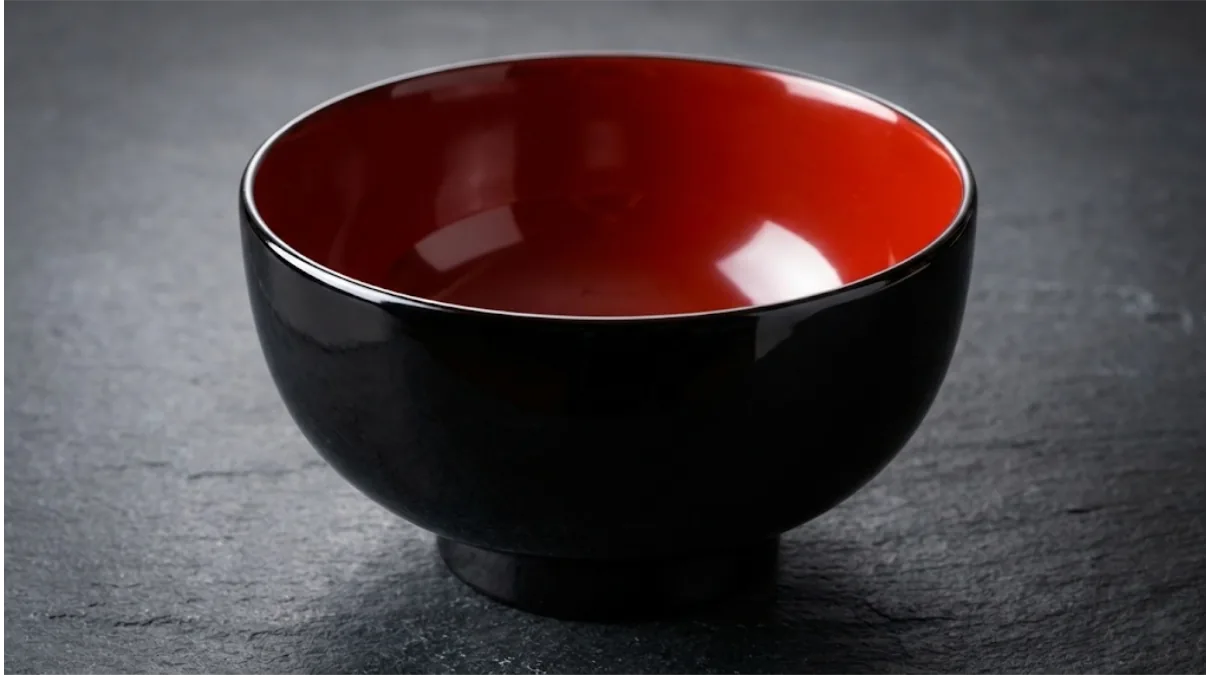
Checkpoint 1: Is the lacquer genuine urushi or synthetic paint?
Lacquerware divides into two categories: pieces finished with hon-urushi (true natural lacquer)
and those coated with urethane or other synthetic paints.
The active compound in natural urushi — urushiol — reacts with the enzyme laccase to form an interlocking polymer
network of extraordinary chemical stability, resistant to acids, alkalis, and bacteria. Synthetic coatings are
cheaper and often dishwasher-safe, but they will never develop the deepening translucency and rich patina
(aging) that true urushi gains over decades of use.
Checkpoint 2: Is the body natural wood or synthetic resin?
A natural wood body dramatically enhances heat retention and lightness — both hallmarks of great lacquerware. A synthetic resin (plastic) body is cheaper and durable, but cannot deliver the warmth in the hand or the smooth lip feel that natural wood provides.
Checkpoint 3: Is the weight and shape right for the intended use?
For daily soup and rice bowls, prioritize lightness — Yamanaka-nuri is the benchmark. For jubako stacked boxes or formal serving dishes, prioritize structural durability — Wajima-nuri excels. Also pay attention to the rim thickness: a thinner, rounder lip edge dramatically improves the drinking and eating experience.
Checkpoint 4: Does the maker offer repair and aftercare?
The greatest advantage of genuine lacquerware is that it can be repaired — and used for decades, even centuries. Before purchasing, confirm whether the studio or retailer can handle re-lacquering and crack repair. A piece with lifetime aftercare is a fundamentally different investment from one without.
5. Care & Maintenance for Lifelong Enjoyment
Lacquerware feels more delicate than it is — follow the basics and it will outlast you.
Basic Washing & Storage
- Washing: Use lukewarm water and a mild neutral detergent. Wash gently with a soft sponge.
- Drying: Wipe immediately after washing with a dry cloth. This prevents dehydration and preserves the gloss.
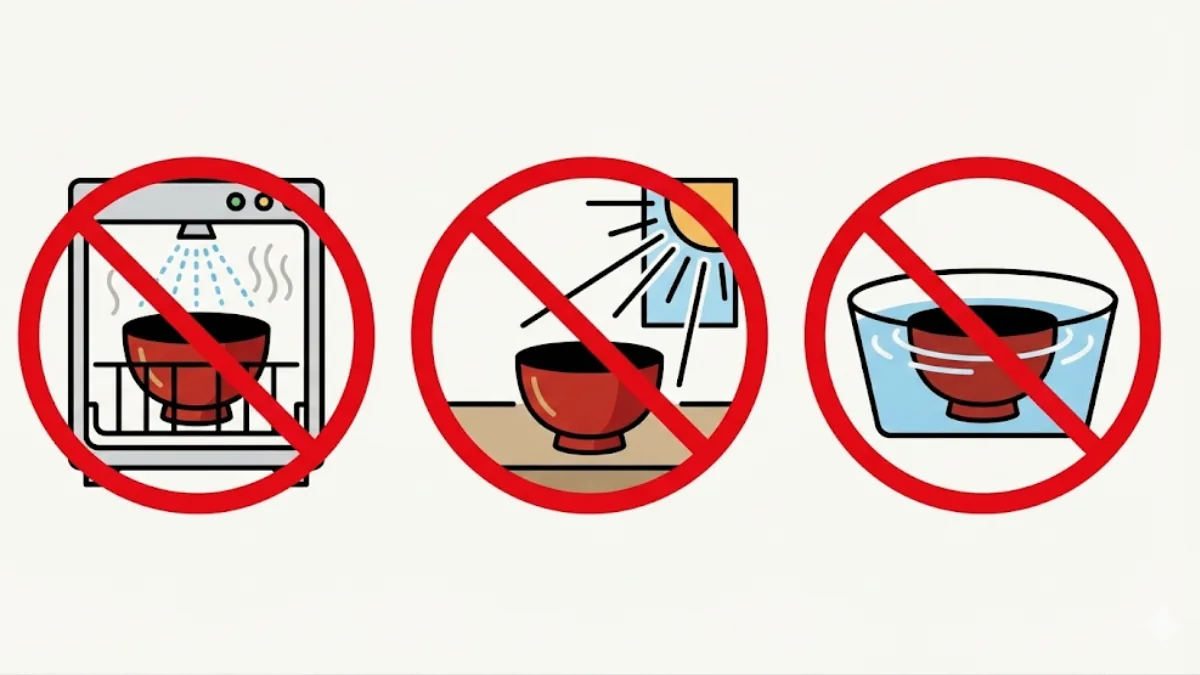
- Storage: Keep away from direct sunlight and excessively dry environments.
Things to Strictly Avoid
- Dishwasher / drying machine: The heat and strong alkaline detergent will peel and crack the lacquer coating.
- Microwave: The wood body will scorch and the lacquer will degrade — see FAQ below for the detailed reason.
- Prolonged soaking: The wood absorbs water, causing the lacquer to lift and peel.
6. Frequently Asked Questions
How do I tell genuine urushi lacquerware from urethane-coated pieces?
The product description and price are the most reliable indicators.
Check the quality label (required under Japanese product disclosure law) for the words "natural wood /
hon-urushi (natural lacquer)." In practice, genuine natural-wood + hon-urushi pieces almost never sell new for
under $25 — the number of specialist production stages makes that impossible. High-quality hon-urushi pieces
typically start from $45–$90 and rise steeply from there.
I accidentally put my lacquerware in the dishwasher. Is it ruined?
One incident is usually survivable — but hand-wash it from now on without exception.
The dishwasher's hot air and strong alkaline detergent are lacquerware's enemies. A single cycle won't cause
immediate catastrophic damage, but cumulative stress builds invisibly inside the coating and will eventually
cause cracking or peeling. If the lacquer does peel, a hon-urushi piece can be brought back to like-new
condition by a craftsman through re-lacquering.
My new lacquerware has a distinctive smell. How do I remove it?
Wiping with diluted rice vinegar, or burying it in a rice bin, works well.
Freshly cured hon-urushi releases a subtle odor as residual urushiol and related compounds evaporate — it is
completely harmless. To speed up the process: gently wipe the surface with a soft cloth dampened in diluted rice
vinegar; bury the piece in a bag of dry uncooked rice for a few days (the rice absorbs the odor); or leave it in
a shaded, well-ventilated spot away from direct sunlight.
Why is microwave use absolutely forbidden for lacquerware?
The internal moisture in the wood boils and expands, catastrophically splitting the piece.
Natural wood bodies retain microscopic moisture in their cells. Microwave energy heats this internal water
directly, turning it to steam that expands with nowhere to go — the result is either a dome-shaped blister
beneath the lacquer or an irreversible crack straight through the body. This damage cannot be undone.
What if tea stains or food coloring gets on my lacquerware?
Hon-urushi is highly stain-resistant — a gentle wipe with warm water and neutral detergent is all you
need.
The cured urushi surface forms a dense polymer barrier that, unlike pottery, absorbs virtually nothing. Curry,
coffee, and tea tannins cannot penetrate. If something does adhere to the surface, wash promptly with a soft
sponge in lukewarm water with mild detergent — no bleach needed.
What is a reasonable budget for lacquerware as a gift?
For a pair, $120–$200 is the classic sweet spot.
For a personal soup or rice bowl: $45–$120 will get you a genuinely high-quality hon-urushi
piece. For a formal pair gift (wedding, anniversary): $120–$250. For a landmark occasion gift —
a Wajima-nuri jubako with chinkin or maki-e decoration for a longevity celebration: $250–$800+.
Because lacquerware is used every day and repaired across generations, spending more truly pays off.
7. Explore Ceramics to Complete Your Japanese Table
Now that you understand lacquerware and how to choose it, the natural next step is Japanese ceramics — Arita-yaki, Hasami-yaki, and the other great pottery traditions that complete a well-considered Japanese table.

Japanese Porcelain: Arita-yaki & Hasami-yaki — Top 5 Brands for Everyday Bowls & Plates

Japanese Soup Bowls: Top 5 Japanese-Made Picks — From Dishwasher-Safe to Hon-Urushi