"I want whatever goes against my newborn's skin to be as gentle as possible."
Search for baby clothes with that in mind, and "organic cotton" appears everywhere. But what actually separates it from regular cotton — and why does Japanese manufacturing matter on top of that — tends to be less clear.
This guide breaks down the real advantages of Japanese-made organic cotton baby clothing: what to look for in certifications, how fabric construction affects skin feel, and which brands actually follow through on their materials claims. Three domestic brands — each chosen for how seriously they take the full process, from fiber to finished garment.
Quick Reference: Organic Cotton Certifications at a Glance
| Certification | What It Covers | Strictness | Price Impact |
|---|---|---|---|
| GOTS | Global standard — entire chain from farming through stitching | ★★★★★ (Highest) | Higher price |
| OCS | Certifies organic cotton content — processing steps not covered | ★★★☆☆ (Moderate) | Slightly higher |
| JAS Organic | Japan Agricultural Standards — covers domestic farming practices | ★★★★☆ (High) | Slightly higher |
| Uncertified ("self-claimed") | No verified standard — label only, no third-party confirmation | ★☆☆☆☆ (Unknown) | Often cheaper |
Why Japanese-Made Organic Cotton Stands Apart
Formaldehyde Standards That Are Stricter Than Anywhere Else
A newborn's skin is about half as thick as an adult's, with an immature barrier function. Chemical residues in fabric — particularly formaldehyde, which is commonly used in fabric finishing — can irritate it in ways that wouldn't affect adult skin at all.
Japan's regulatory limits on formaldehyde in baby clothing are among the strictest in the world. Japanese baby clothing manufacturers don't just choose organic cotton — they test and document the absence of harmful substances at every stage of production, including finishing, dye processes, and final assembly. That's what the "Made in Japan" label means in this category.
Processing That Preserves What the Fiber Actually Is
Here's an often-missed problem: you can start with certified organic cotton and ruin it in the finishing process. Aggressive bleaching and synthetic dyes leave residues in the fiber — which then sit against a baby's skin for hours at a time.
Japan's major textile-producing regions — Wakayama, Senshu in Osaka, Mikawa in Aichi — have long traditions of gentle processing: slow-bleaching techniques like wazarashi (a traditional gradual-bleach method using water and time rather than chemicals), and natural-pigment dyeing that doesn't require chemical fixatives. The cotton's natural oils stay intact. The result is fabric that doesn't harden with washing — the opposite of what usually happens to cheaper alternatives.
Seam Construction That Thinks About What It Feels Like to Wear
Good fabric handled badly at the sewing stage still produces something that scratches. Japanese baby garment makers apply flat-seam construction (where seam allowances are pressed completely flat rather than raised), and "outside seam" designs that put every join away from the skin surface. Tags are positioned to avoid skin contact entirely; side seams are often eliminated.
This level of construction detail — caring about what wearing the garment actually feels like — is the part that most directly separates Japanese-made baby clothing from alternatives that share the same fabric certification.
3 Things to Check When Choosing Baby Clothes
1. Look for a Certification, Not Just the Word "Organic"
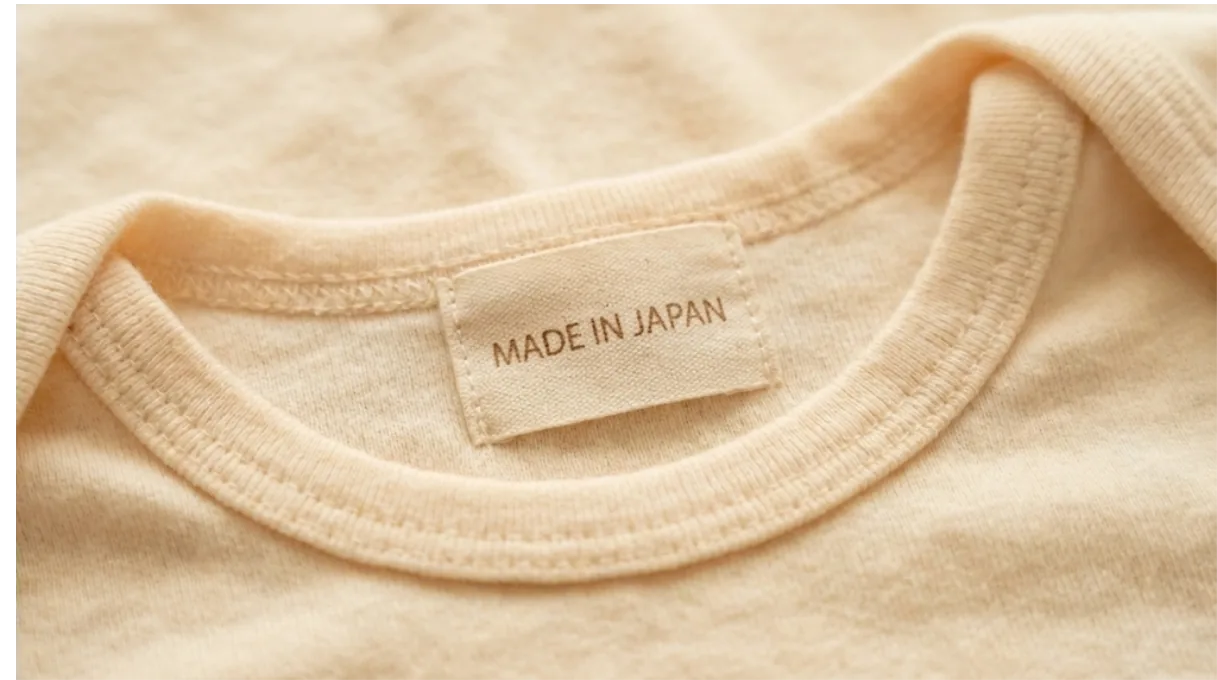
"Organic" without certification means nothing — it's a label any manufacturer can apply without third-party verification. GOTS (Global Organic Textile Standard) is the strongest: it covers the entire chain from cotton farming through dyeing, sewing, and finishing. OCS (Organic Content Standard) verifies cotton content but doesn't extend to the processing steps. Either is meaningful; an uncertified claim is not.
Some Japanese brands go further and include traceability tags showing which farm the cotton came from. When that level of transparency is present, the claim is real.
2. Check the Knit Construction, Not Just "100% Cotton"
Two garments can both be 100% organic cotton and feel completely different against skin. The knit matters:
- Interlock rib knit (frise): High two-way stretch; smooth on both sides; warm enough for year-round use. The standard for underwear and bodysuits.
- Jersey knit (tenjiku): Lighter, with a T-shirt-like hand; breathable and less stretchy; best for summer.
- Smooth interlock (smooth): Slightly thicker and denser; holds body warmth well; suited to autumn and winter.
Match the knit to the season and the baby's temperature tendencies — a jersey bodysuit in midwinter is as poorly chosen as a heavy interlock in July.
3. Check That It Survives Frequent Washing
Organic cotton has a reputation for being delicate, but a well-made Japanese garment is genuinely durable. The tell is the neckline after 20 washes — cheap alternatives stretch out and never recover. Quality domestic production holds its shape through hundreds of washes, long enough that families routinely hand them down to second children. If a product description mentions machine-washability with confidence, that's a reliable signal of construction quality.
3 Japanese Organic Baby Brands Worth Trusting
From the brands featured on Made in JAPAN.JP, here are three domestic labels chosen specifically for how seriously they approach materials, certification, and garment construction — not just the label.
COFUCU
The organic cotton specialist — GOTS-certified, naturally dyed, from the foothills of the Southern Alps.
COFUCU has focused exclusively on organic cotton since the brand's founding, operating from Minami-Alps City in Yamanashi Prefecture. Their factory holds GOTS certification, covering every step from dyeing through final stitching. No synthetic colorants: colors come from the cotton itself (undyed natural tones) or from plant and earth-derived pigments.
Swaddle blankets and hospital discharge outfits in their understated natural palette are among their most popular items — the kind of thing that works as a first gift and keeps being used for years.
Best for: Parents who won't compromise on certification and prefer a fabric that's genuinely close to nature — no chemical treatments at any stage.
PUPO
End-to-end domestic production — tough enough to wash daily, gentle enough for newborn skin.
PUPO is run by a long-established underwear manufacturer in Senshu, Osaka — Japan's traditional center for knit innerwear. Thread selection, knitting, cutting, and sewing are all handled in-house, which is why the consistency is so reliable. Practical details are built in as standard: flat seams throughout, tag placement that avoids skin contact, no side-seam friction points.
High quality with pricing accessible enough for buying five at once — which is exactly what the early months require. For stocking up on basics without second-guessing every item, PUPO is the answer.
Best for: Parents who need a reliable daily-use rotation — soft, durable, and priced for buying multiples without hesitation.
mon-ange-robe
Small-batch domestic sewing — organic cotton that doesn't sacrifice occasion dressing.
mon-ange-robe produces in small quantities with skilled domestic ateliers, combining organic cotton with lace and ribbon details that read as genuinely elegant rather than merely precious. Hospital discharge outfits, shrine visit sets, and first outing clothes — occasions where parents want something that photographs as well as it feels.
For parents who prioritize skin safety but also care about how their baby looks in clothes — this is the brand that doesn't make them choose between the two.
Best for: Parents who want organic materials in celebration-worthy designs — for discharge, shrine visits, or first social occasions.
Column: If You're Choosing Good Fabric, Choose Good Detergent Too
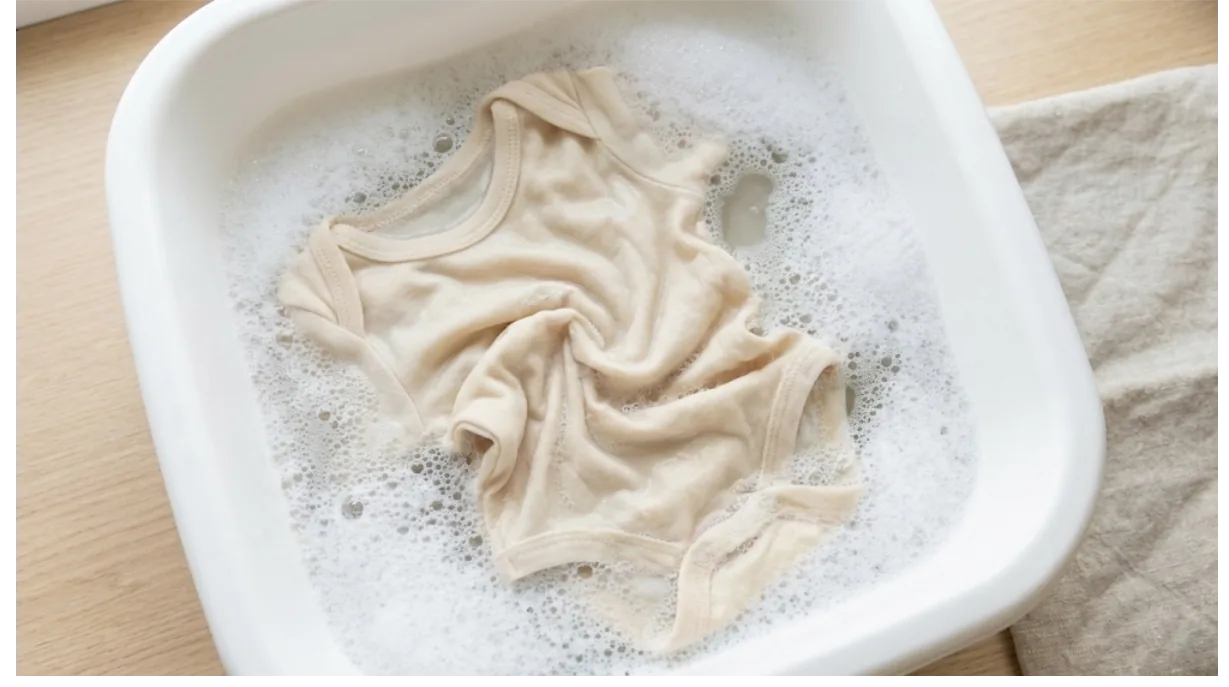
Choosing certified organic cotton baby clothes and then washing them in a detergent full of optical brighteners and synthetic fragrance partly defeats the purpose. These compounds can remain in the fiber after washing, sitting against a baby's skin at the same concentration they'd be on synthetic fabric. Fabric softener compounds also reduce absorbency in cotton — which matters for items worn close to skin all day.
The recommendation for baby laundry is a fragrance-free, additive-free soap — ideally one made specifically for sensitive skin or babies. Made in JAPAN.JP features two Japanese domestic soap makers worth knowing: Kimura Soap, which produces laundry soap using traditional cauldron-brewing methods, and Oketani Soap, a specialist in additive-free formulations. Both clean effectively without leaving residues that would undo the care put into the clothing itself.
Frequently Asked Questions
What's the actual difference between organic and regular cotton?
The key difference is pesticide and synthetic fertilizer use. Organic cotton is grown on land that has been free of those chemicals for at least three years.
For baby clothing specifically — items worn directly against very thin, permeable skin — reducing residual chemical exposure is the core reason parents choose it.
What does GOTS certification actually mean?
GOTS stands for Global Organic Textile Standard. It covers the full production chain: farming practices, yarn processing, dyeing, and garment finishing — not just the raw fiber.
A third-party auditor confirms that no harmful chemicals are used at any stage of manufacturing. It's the most rigorous certification in this category and the one worth prioritizing when available.
Is organic cotton less durable than regular cotton?
Not in well-made Japanese garments. Because the fiber isn't chemically treated to appear stronger or smoother than it naturally is, what you're washing is pure cotton — which holds up honestly over time.
Many Japanese parents report using the same garments for two children, with the second child's clothes showing minimal wear compared to single-use fast-fashion alternatives.
Does organic cotton baby clothing help with eczema or sensitive skin?
It's not a treatment, but it reduces exposure to common irritants — synthetic dye residues, pesticide traces, formaldehyde finishing compounds — that can worsen reactive skin conditions.
Pairing organic fabric with additive-free laundry soap compounds the benefit. For babies with consistently irritated skin, both changes together are usually worth trying before assuming something else is the cause.
Where can I buy these brands from outside Japan?
COFUCU, PUPO, and mon-ange-robe all sell through their official online stores, which ship internationally.
The brand pages on this site link directly to each brand's shop.
Is "100% natural fiber" the same as "organic"?
No. "100% natural fiber" describes the material category — it says nothing about how the cotton was grown or processed.
To be confident you're choosing organic, look for a third-party certification mark (GOTS, OCS, or JAS Organic). Without one, the claim is unverified.
Baby clothing is sometimes called the "second skin" — the layer between a newborn and the world for most of every day. Before a baby can express discomfort, the people around them have to make that call on their behalf.
Japanese-made organic cotton isn't a marketing category. It's a specific set of decisions — about what goes into the fiber, how it's processed, how the seams are built — that a small number of domestic makers take seriously enough to be worth choosing. The three brands here are among them.
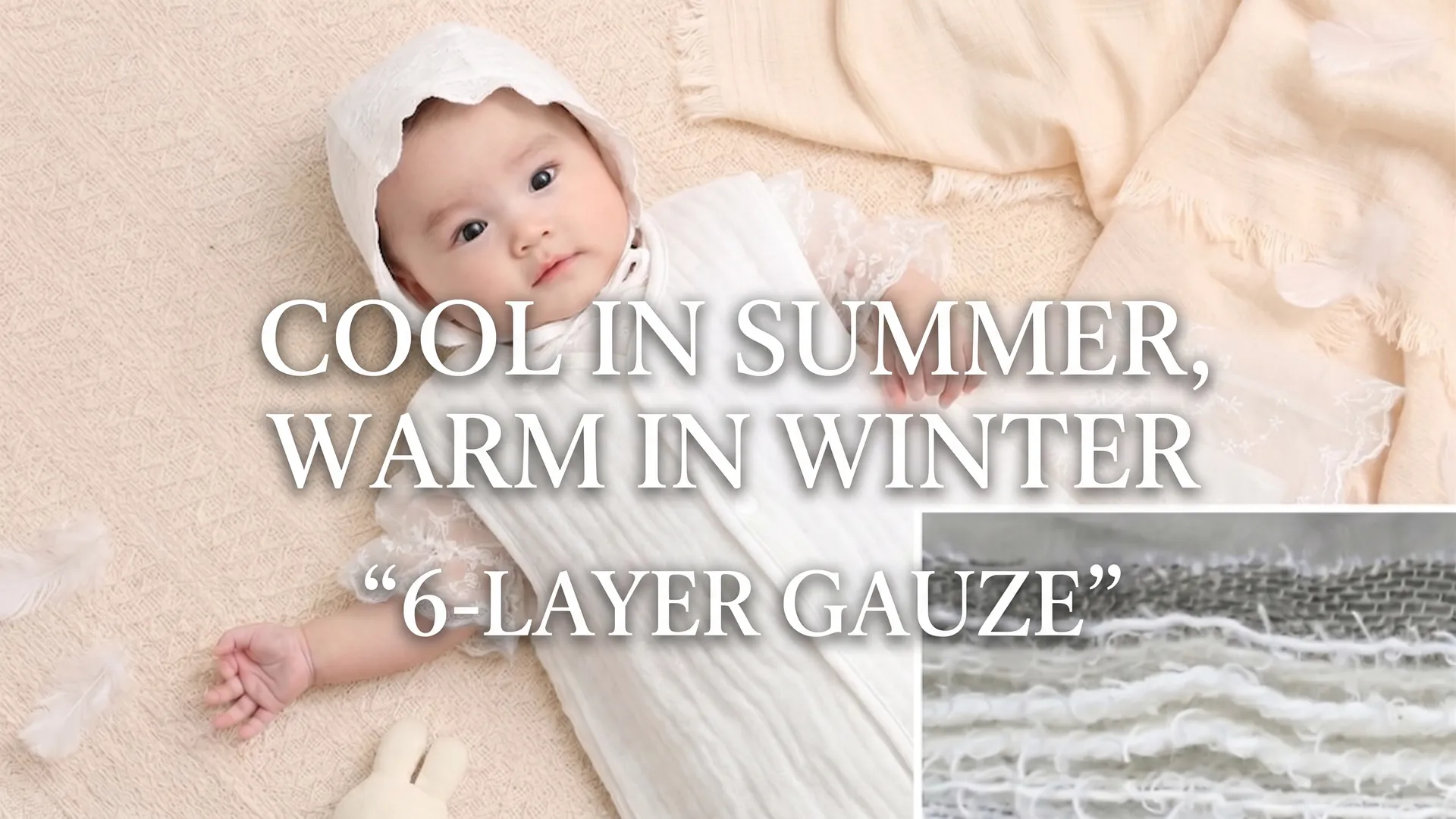
6-Layer Gauze for Babies: Why It Works in All Seasons
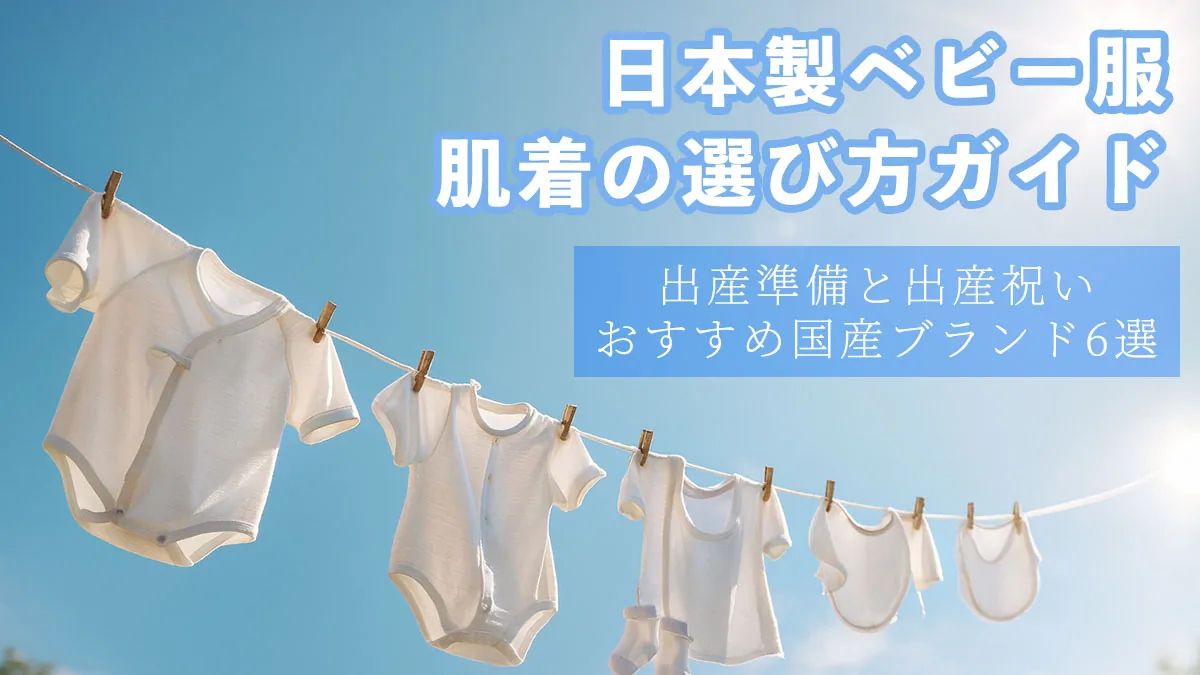
Japanese Baby Clothes Guide: 6 Best Brands for Newborns