The six Japanese baby clothing brands most worth buying are mon-ange-robe, Chêne, BabyGoose, COFUCU, PUPO,
and Akachan no Shiro — all sewn in Japan in small batches, using organic or low-irritation cotton and flat
seams designed to sit gently against newborn skin.
"I want Japanese-made for my newborn — but what do I actually need, and how many of each?" It's one of the most common questions from parents preparing for their first baby. With so many types — short-sleeve onesies, combination bodysuits, rompers, 2-way all-in-ones — and dozens of brands in each category, knowing where to start is genuinely hard.
This guide organizes Japanese newborn clothing by type and function, covers how many pieces to prepare by life stage, and introduces six domestic brands featured on Made in JAPAN.JP — each with a different strength, from organic cotton to personalized gift sets to all-in-one newborn preparation bundles.
Whether you're stocking up before the birth or choosing a birth gift, start with the comparison table below to find the brand that fits, then follow the anchor links for full details.
Quick Reference: 6 Japanese Baby Clothing Brands at a Glance
| Brand | Strengths & Materials | Best For | Details |
|---|---|---|---|
| mon-ange-robe | Small-batch domestic sewing, elegant design | Parents who want photogenic, special-occasion pieces made with care. | Details ↓ |
| Chêne | Simple, quality design; versatile styling | Parents who prefer minimal design and want pieces that stay in rotation long-term. | Details ↓ |
| BabyGoose | Name embroidery, premium gift sets | Anyone giving a birth gift who wants personalization and proper packaging. | Details ↓ |
| COFUCU | Organic cotton, swaddle blankets | Parents who prioritize material safety above all; organic cotton from fabric to finish. | Details ↓ |
| PUPO | Newborn basics specialist, preparation sets | First-time parents who want to cover all the essentials in one reliable Japanese-made purchase. | Details ↓ |
| Akachan no Shiro | Full range: clothing + bedding, trusted brand | Families who want to source everything — clothes and sleep items — from one established domestic brand. | Details ↓ |
Why Japanese-Made Baby Clothes Are Worth It
Materials and Construction Designed for Skin That Can't Tolerate Much
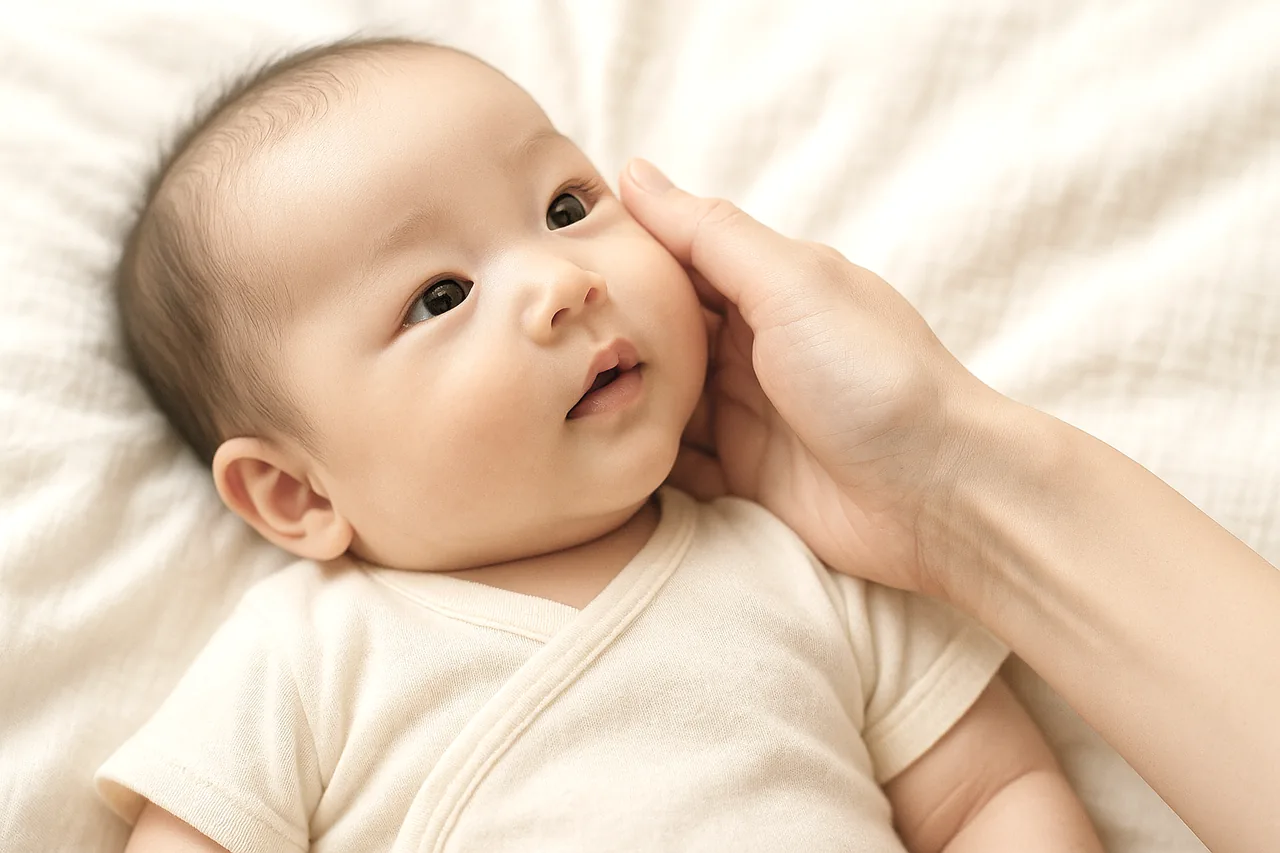
A newborn's skin is significantly thinner than an adult's — more permeable, less able to regulate itself, and quick to react to anything abrasive or irritating. Baby clothes sit against that skin for most of the day and through the night.
Japanese baby clothing takes this seriously at the manufacturing level: cotton and gauze materials chosen for minimal surface friction; seam allowances pressed flat so stitching doesn't press into skin; tags positioned to avoid body contact. Japan's regulatory limits on formaldehyde residues in baby clothing are among the most stringent in the world — only products that clear newborn-grade standards reach the market. That's a baseline that isn't universal.
Sizing and Fit Calibrated for Japanese Babies — and Japanese Parenting
Pattern-making for Japanese baby clothes is done with Japanese body proportions in mind: sleeve lengths, body width, and inseam measurements that produce a fit and range of motion that overseas-made sizing doesn't always match.
Beyond body fit, functional details reflect real parenting scenarios: snap button positioning optimized for quick diaper changes in the dark; front-opening designs for newborns who can't be dressed over the head; thickness calibrated to work inside a baby carrier or car seat without creating bulk. The practical details are built in, not added as afterthoughts.
Knowing Who Made It — and Being Able to Ask
Most of the baby clothing brands on Made in JAPAN.JP work with domestic factories — either their own or regional ateliers they have long-term relationships with. That means the supply chain is short and visible, and the maker is reachable.
For parents, this translates into practical benefits: you can ask about fit, about materials, about care. When a size is outgrown, the next size up from the same brand will feel familiar. Consistency you can rely on — which is what makes the slightly higher price worth considering from day one.
Newborn Clothing Types: What Each One Does — and How Many to Start With

Short-Sleeve Onesie / Long-Sleeve Onesie / Combination Bodysuit — The Newborn Essentials
In the first 0–3 months, these are the garments that matter most.
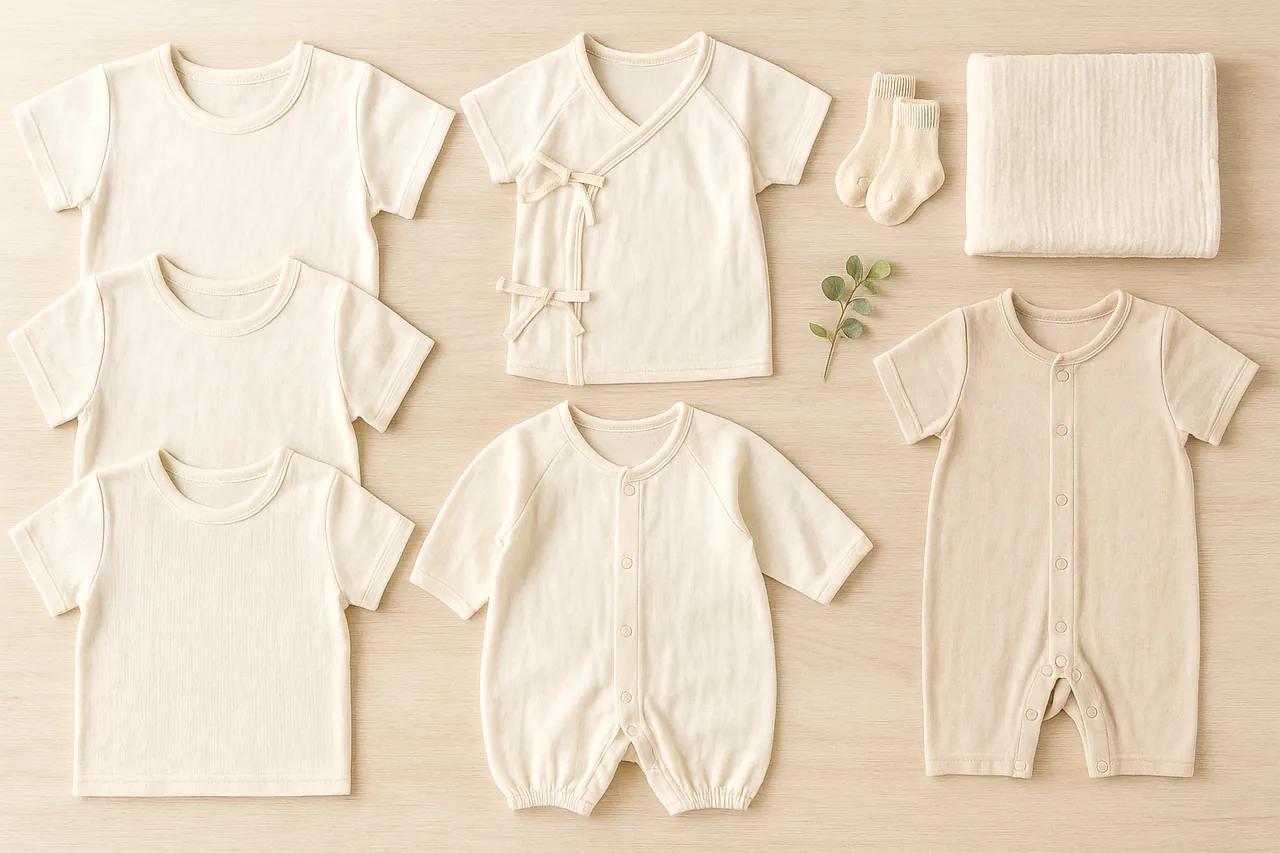
The base layer is the short-sleeve onesie — worn directly against skin, its job is sweat absorption, which means 100% cotton or gauze is the right choice. Over it goes a long-sleeve onesie for cooler weather, or a combination bodysuit (same concept but with snap closures at the crotch to prevent riding up). Japanese-made versions typically position all seams on the exterior surface — nothing raised touches skin. Start with 5–6 pieces of each.
Rompers / Coveralls — The Post-Head-Control Standard
Once the baby has head control, rompers become the go-to outer layer.
Snap closures at the crotch keep the stomach covered during carrying, rolling, and sleep — no shirts riding up. Japanese rompers often position snaps diagonally from shoulder to crotch for easier single-handed fastening. Because diaper changes happen constantly, the design question worth asking is: can I do this in the dark without fumbling? Good Japanese construction gives you the answer.
2-Way All-in-One / Separates — The Long-Use Investment
The 2-way all-in-one is the highest value-per-use item in any baby wardrobe.
In the early weeks, leave the snaps open and it functions as a gown — simple on and off, no leg manipulation needed. As the baby becomes more active, close the snaps to convert it to a coverall. One garment, two configurations, months of use.
From around 6 months, separates (top + pants) become practical. Japanese-brand bottoms are cut with diaper volume in mind — they sit cleanly rather than pulling or bunching.
Sleepers / Gauze Blankets — The Night Shift
For air-conditioned summer nights and winter rooms where blankets never stay put.
Japanese baby brands offer sleepers in season-appropriate fabrics: double gauze for summer, heavier gauze or pile for autumn and winter. Good sleeper design covers the shoulders and stomach securely — the parts that get cold first — while drying quickly after washing. A gauze blanket serves double duty: nap cover, swaddle, stroller shade, and portable changing mat in a single lightweight piece.
How Many to Buy — By Season and Life Stage
How Much to Prepare for the Newborn Period
Newborns (0–3 months) sweat more than you'd expect, and spit-up means multiple outfit changes per day. A baseline of 5–6 short-sleeve onesies and 5–6 combination bodysuits supports a comfortable laundry rhythm. Add long-sleeve onesies or 2-way all-in-ones based on the season.
The more practical approach is to start with a reliable Japanese-made basics set, then buy additional pieces as you learn your actual washing pace. Buying everything in advance often means purchasing things that turn out to be the wrong type or wrong quantity for how your days actually go.
Newborn Period (0–3 months): Minimum Quantity Guide for Japanese-Made Basics
- Short-sleeve onesies: 5–6 (worn all day; the sweat-absorption layer)
- Combination bodysuits: 5–6 (layer over onesie; crotch snaps simplify diaper changes)
- Long-sleeve onesies or 2-way all-in-ones: 2–3 (for cooler weather and extra coverage)
- Gauze blanket or sleeper: 1–2 (prevents overnight chill; doubles as swaddle)
Adjust by season: summer-born babies need more short-sleeve onesies and fewer heavy layers; winter-born babies need more 2-way all-in-ones and an outer layer.
Balancing Daily-Use and Occasion Pieces
Most of a baby's wardrobe should be the kind of thing you wash without thinking and put back on the next morning — simple, quick-drying, durable. A few occasion pieces for first family photos, a shrine visit, or a special celebration are worth having, but they shouldn't be the majority of what you buy.
Japanese brands cover both: some specialize in everyday practicality, others in the kind of design worth photographing. The best approach is to establish the daily wardrobe first — five or six reliable pieces you rotate constantly — and then add one or two occasion items on top.
Choosing for Your Laundry Setup
Baby clothes generate more laundry than most parents anticipate. For households doing daily machine washes or air-drying indoors, lightweight gauze and jersey fabrics dry faster and are more forgiving of frequent washing than heavier constructions.
Japanese brands specify care requirements clearly — "machine wash OK," "tumble dry on low" — and many engineer their fabrics specifically to maintain shape through high-frequency washing. Check the care label or product page before buying if laundry frequency is a concern.
Choosing a Size When Giving as a Gift
For birth gifts, skip newborn size (50–60cm) — it's outgrown in weeks and often already covered by the parents themselves. The 60–70cm range (roughly 3–6 months of age) is the most universally useful gift size: there's enough time to actually wear the item, and most families don't have it fully stocked yet.
If you're unsure whether your gift overlaps with what's already been given, choose something size-agnostic instead: bibs, sleepers, gauze blankets, and swaddles all sidestep the sizing problem entirely and are always welcome.
6 Best Japanese Baby Clothes Brands Worth Buying
From the brands featured on Made in JAPAN.JP, here are six domestic baby clothing labels — each chosen specifically for their commitment to Japanese manufacturing. They differ in what they do best, so find the one that matches your priorities or the priorities of the parents you're buying for.
mon-ange-robe — Japanese Baby Clothes, Carefully Made
Small-batch, domestically sewn — soft colors and shapes that make every photo worth keeping.
mon-ange-robe produces in small quantities through domestic ateliers, with the kind of care in finishing that shows up in person and in photographs. The palette is restrained: soft, warm tones that complement rather than compete with the baby. Silhouettes are gently rounded, leaning toward the occasion without looking costume-like.
From newborn basics to commemorative rompers and dresses, this is the brand for parents who want a wardrobe that photographs well and holds together beautifully — a piece you'd actually keep after it's outgrown.
Best for: Parents looking for photogenic, occasion-ready Japanese baby clothes made with domestic craft and careful sewing.
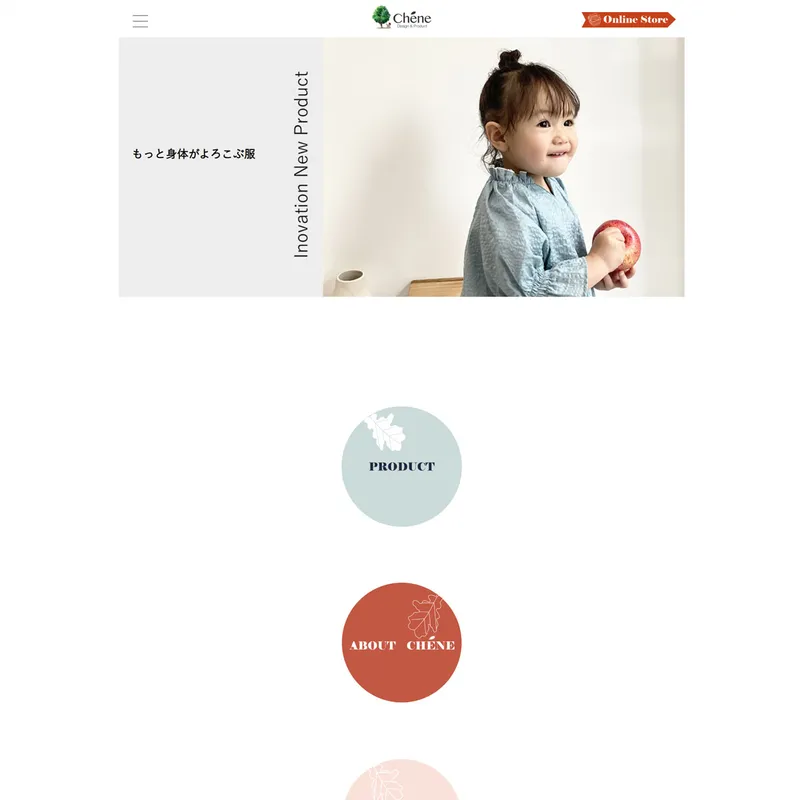
Chêne — Domestic Baby Clothes with Simple, Lasting Design
Clean shapes, quiet colors — the Japanese baby brand for parents with a considered aesthetic.
Chêne makes baby clothing for parents who find most baby clothes too busy. The palette is muted. The cuts are clean. Nothing competes for attention — it just fits well and photographs naturally against any background. The range includes parent-and-child coordinating items for families who want to extend their own style to a baby wardrobe.
Beyond the aesthetic, the construction is built for longevity: basics and rompers that hold shape through months of washing, and cardigans and dresses cut with enough room to be worn across a wider age range than most. Less turnover, more use.
Best for: Parents who prefer understated design and want pieces that stay in active rotation for longer rather than being replaced every few months.
BabyGoose — Japanese Baby Gift Specialist, Shiroganedai, Tokyo
Name embroidery and gift sets that make a birth present feel genuinely special.
BabyGoose has been making birth gifts from their Shiroganedai atelier for over 40 years, and the focus shows: bibs, rompers, and sleepers with name embroidery available across the range, packaged in their signature blue gift boxes at a presentation level that stands out when it's unwrapped.
The construction quality is real — American cotton that holds shape through repeated washing, and Japanese-made detailing that survives being a daily-use item rather than a keepsake. A gift worth giving because it's actually used, not just displayed.
Best for: Birth gifts where personalization and presentation matter — the choice when you want the recipient to feel the thought that went into it.
COFUCU — Japanese Organic Cotton Baby Clothing
GOTS-certified organic cotton, naturally dyed — the serious choice for material-conscious parents.
COFUCU builds every product around organic cotton — GOTS-certified, with dyeing done using plant and earth-derived pigments rather than synthetic colorants. The result is a complete lineup from hospital discharge outfits to daily bodysuits and blankets, all produced domestically and traceable from fiber to garment.
Swaddle blankets and knit afghans in their undyed natural colorways have become popular gifts — they're size-flexible, useful well past infancy, and as safe against a baby's skin as anything available. For parents who read ingredient labels and have strong preferences about what touches their baby, this is the brand that matches the standard.
Best for: Parents who prioritize certified organic materials and want to know exactly what process produced the clothes their baby wears.
PUPO — Japanese-Made Newborn Basics & Preparation Sets
Everything for the first weeks — short-sleeve onesies, combination bodysuits, and ready-to-use preparation bundles.
PUPO specializes in the items that new parents need the most and buy the most of: newborn basics. Short-sleeve onesies, combination bodysuits, and 2-way all-in-ones available as pre-bundled preparation sets — which removes most of the "what do I actually buy?" uncertainty from the newborn wardrobe decision.
Soft cotton construction, seaming that holds shape through high-frequency washing, tags positioned away from skin — the practical details that make daily-use baby clothes worth buying well. Priced for buying enough of them. The answer to "just tell me what to get".
Best for: First-time parents preparing for a newborn who want to cover the essentials in one reliable Japanese-made purchase without overthinking the selection.
Akachan no Shiro (Baby's Castle)
The brand used in Japanese maternity hospitals — clothing and bedding from one trusted domestic source.
Akachan no Shiro covers more than clothing: their range extends to bedding, blankets, and sleep environment items — everything a family might want to source together under one roof. Japanese safety standards throughout, sizing calibrated for Japanese babies, and design that works from the hospital through the first year and beyond.
Tricolor and elephant patterns that don't date or over-design — the kind of garments that photograph naturally and wash without fuss. For families who want a single reliable Japanese brand for clothing and sleep items both, this is the established answer.
Best for: Families who want to source baby clothes and bedding from one brand — and want a name that Japanese maternity wards have trusted for decades.
Other Japanese Baby Brands on Made in JAPAN.JP
The six brands above don't cover everything. Japan has dozens of smaller workshops producing baby items that rarely reach overseas distribution: wooden toys, hand-sewn bibs, baby skincare from traditional soap makers, regional textile producers. For families who want to extend the "as Japanese-made as possible" approach beyond clothing, the range is wider than most people realize.
Made in JAPAN.JP features individual pages for each brand and workshop, including background on how they make what they make. Browse by category or search for a specific type of item to find options outside the mainstream.
Final Thoughts: Why Japanese Baby Clothes, and How to Choose
The three reasons Japanese-made baby clothes are worth choosing: material safety standards, construction quality, and design calibrated for how Japanese parents actually live with a baby. Newborn skin is permeable and reactive — the items against it all day matter more than most product categories, and Japan's domestic regulations reflect that.
For preparation, the practical starting point is: 5–6 short-sleeve onesies and 5–6 combination bodysuits, then add 2-way all-in-ones and sleepers as season and habit require. Don't buy everything at once — your actual laundry rhythm and daily needs will make the right additions obvious after the first few weeks.
When comparing brands, the three axes that matter most are: whether they specialize in newborn basics, whether organic or additive-free materials are used, and whether gift wrapping and name embroidery are available. The brands on this page — PUPO, COFUCU, Akachan no Shiro, BabyGoose, mon-ange-robe, and Chêne — each answer at least one of those questions clearly.
Frequently Asked Questions
How many pieces should I prepare for a Japanese-made newborn wardrobe?
The safe baseline is 5–6 short-sleeve onesies and 5–6 combination bodysuits, plus 2–3 2-way all-in-ones or coveralls depending on the season. Spit-up and sweat mean multiple changes per day in the early weeks, so the actual number depends on how often you plan to do laundry.
Start with the basics set from a brand you trust, then add pieces as you learn your real washing rhythm. Buying everything in advance often leads to the wrong quantities.
What fabrics work best for newborns?
The standard for the newborn period is 100% cotton or gauze — both absorb sweat well and breathe without requiring anything synthetic against very sensitive skin. Japanese brands typically use soft gauze, interlock rib knit (frise), or jersey (tenjiku), each chosen for different seasons and uses.
Synthetic blends aren't automatically problematic, but starting with pure cotton and introducing other fabrics gradually as you observe the baby's skin is the lower-risk approach.
How should I wash Japanese-made baby clothes?
Follow the care label — most Japanese baby brands support machine washing with specific temperature and cycle guidelines, and many specify mesh laundry bag use for delicate items.
Many families wash newborn clothes separately from adult laundry using a fragrance-free, low-irritant detergent. Most Japanese baby brand products specify "machine wash OK" clearly, and some support low-heat tumble drying. Check the product page if you're unsure.
What size should I buy for a birth gift?
Skip the 50–60cm newborn size — it's outgrown in weeks and usually already covered by the parents.
The 60–70cm size (roughly 3–6 months of age) is the most useful birth gift target: enough time to actually wear it, and usually not yet stocked up on by the family. When unsure, size-agnostic items — sleepers, gauze blankets, bibs — avoid the sizing problem entirely.
What's the difference between "Made in Japan" and "domestic" (kokusан)?
"Made in Japan" (日本製) indicates the final assembly and sewing was done in Japan. "Domestic" (国産) is sometimes used more loosely — a product can use the term while sourcing some materials or processes from overseas.
For baby clothing specifically, it's worth checking where the fabric is woven and dyed, not just where the final sewing takes place. Brands that specify "our own domestic factory" or "fully produced in Japan from fabric onward" are the ones where the claim is most complete.
How does Japanese-made baby clothing compare to overseas alternatives?
The three distinguishing factors: material safety standards, seam construction, and fit for Japanese babies.
Japan's formaldehyde limits for baby clothing are among the world's strictest — only products that pass newborn-grade standards reach the market. Seam construction in quality Japanese brands is designed to keep stitching away from skin. And patterns are drawn to match the proportions and movement range of Japanese babies. These aren't marketing claims — they're engineering decisions that show up in how the clothes feel and last.
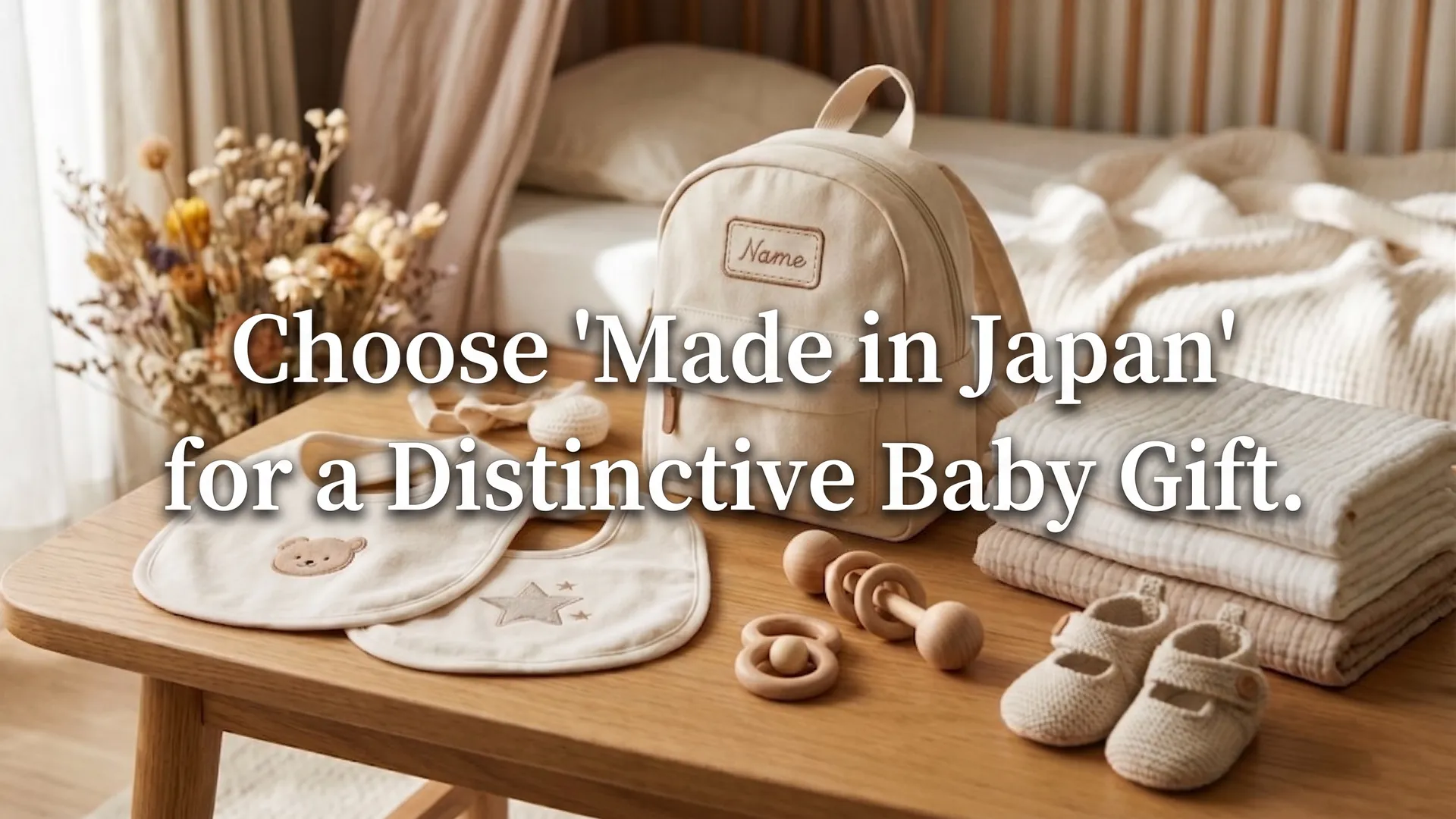
Japanese Baby Gifts: 5 Best Brands for Birth Presents
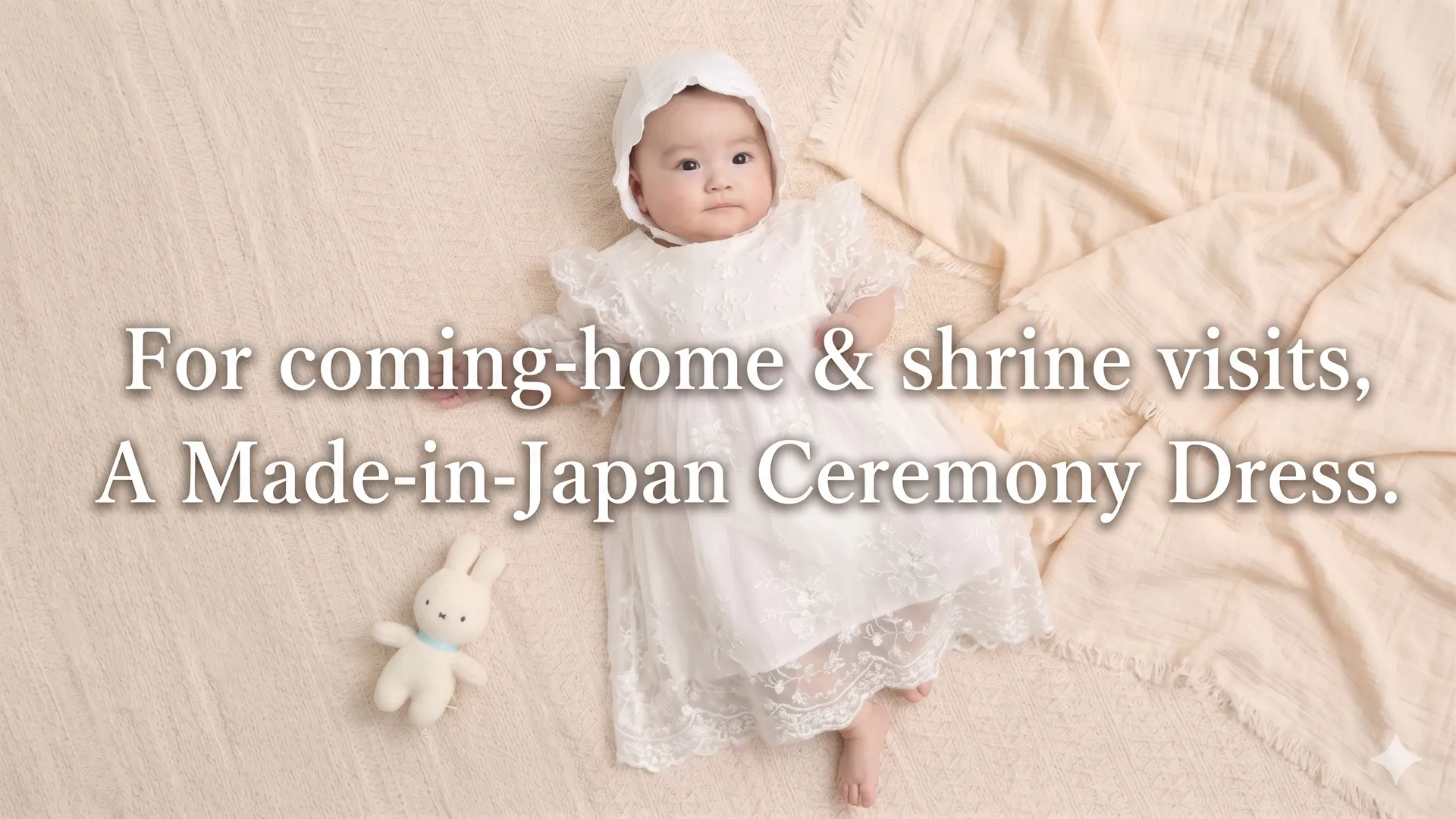
Japanese Ceremony Dress for Hospital Discharge & Shrine Visits