Still reaching for bottled green tea out of habit?
The truth is that 80% of green tea flavor is determined by the teapot.
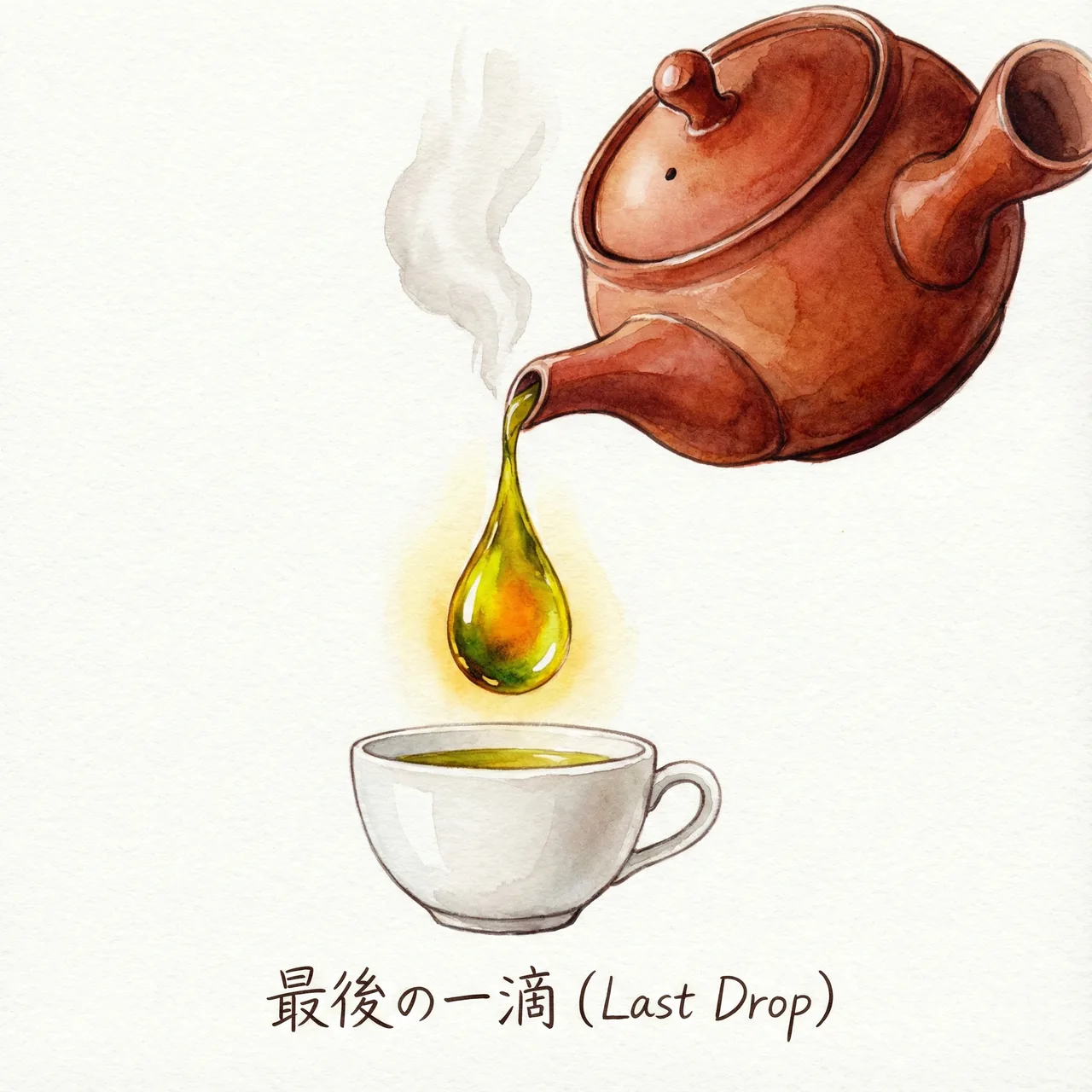
A kyusu that lets the leaves fully open and pours every last drop — including the golden drop at the end —
transforms even an inexpensive supermarket tea into something that tastes like it came from a fine restaurant.
This guide focuses on stylish, easy-to-clean Japanese-made kyusu that make every cup better — from
lifetime Tokoname red-clay classics to modern designer teapots that look beautiful on any table.
Quick Reference: Kyusu Types at a Glance
| Type | Handle Position | Ease of Use | Best For |
|---|---|---|---|
| Yokode (side handle) | Side | ◎ Right-hand friendly · most common | Everyday green tea & sencha |
| Ushirode (rear handle) | Rear (opposite spout) | ○ Works for both hands | Left-handed users · teapot-style brewing |
| Uwade (top handle) | Top arch | ○ Good stability for large volumes | Large groups · mugicha & hojicha |
| Hohin (no handle) | None | △ Advanced · gyokuro specialist | Gyokuro & premium teas (low-temp brewing) |
1. Why Metal Strainers Fail — How to Choose a Kyusu You'll Love
Choose a kyusu purely by looks and you'll quickly discover the classic frustrations: tea leaves clogging the strainer, a faint metallic taste in the cup. Two points will save you from both.
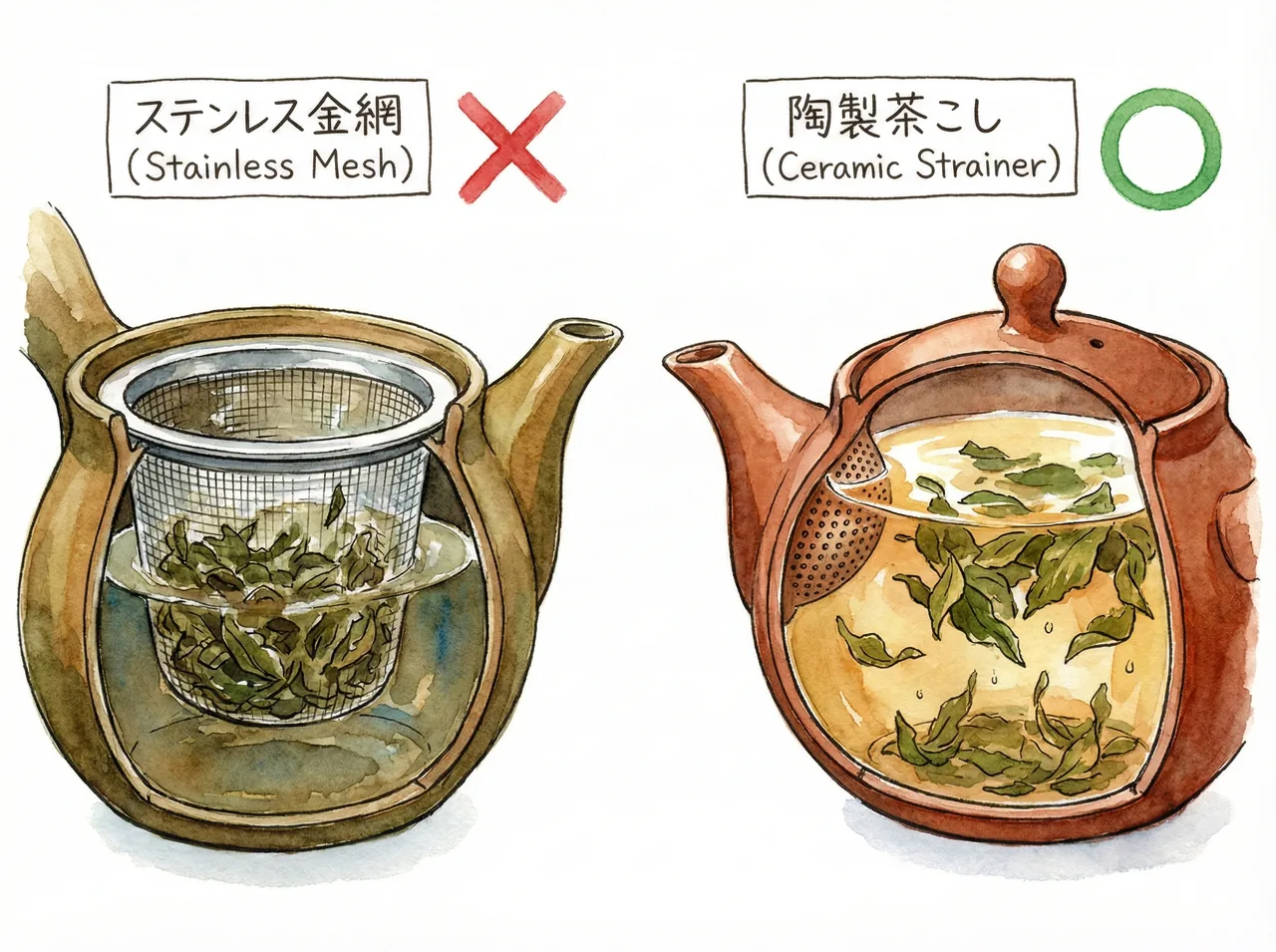
① Always choose a ceramic strainer (ceramic mesh / sasame)
The strainer is the single most important feature of any kyusu.
Avoid basket-style stainless steel strainers. Instead, look for a ceramic strainer — fired from the same
clay as the teapot body (sometimes called ceramesh or sasame).
Why it matters:
· No metallic taste — the clay is inert, so the tea's natural aroma comes through clean
· The leaves unfurl freely inside the pot, producing a richer, more complex flavor
· No mesh grid for leaves to wedge into — rinse under water and it's clean (genuinely easy to wash)
② Choose your clay: stoneware vs. porcelain
Tokoname / Banko-yaki (stoneware):
A matte, earthy surface texture. The iron-rich clay absorbs tea tannins and mellows the astringency — this is the
reason Tokoname kyusu are considered the gold standard for green tea. No other material makes sencha taste
smoother.
Hasami-yaki / Arita-yaki (porcelain):
Smooth, non-porous, and available in a huge range of designs. Because the clay does not absorb flavor, porcelain is
ideal for teas where aroma matters — black tea, oolong, or Chinese teas. Easy to clean and very versatile.
2. 5 Best Japanese-Made Kyusu & Teapots
From tradition-perfected craft to contemporary design that fits any modern kitchen — here are the Japanese-made teapots worth owning.
#1 Tokoname-yaki (Aichi) — Shudei Red Clay Kyusu
"When it comes to kyusu, Tokoname" — the undisputed benchmark.
Tokoname in Aichi Prefecture is one of Japan's Six Ancient Kilns, and its shudei (red clay) is
uniquely high in iron. That iron reacts chemically with tea tannins, rounding the astringency and producing a
remarkably mellow, full-bodied cup.
The precision ceramic sasame strainer — made by hand to fit each individual pot — resists clogging and pours
the last drop cleanly. For your first serious kyusu, there is no better starting point.
Tokyo Matcha Selection — Tokoname Shudei Kyusu "KOJI" (260 ml)
Authentic Tokoname shudei (red iron-rich clay) yokode kyusu with a precision ceramic fine-mesh strainer. Ships from Japan. The iron clay mellows tea astringency and improves with every use — a genuine lifetime kyusu.
View on Amazon#2 Nanbu Tekki (Iwate) — Roji Associates Cast Iron Teapot
The teapot the world knows as "Nambu Tekki." Built to last forever.
A modern take on the legendary Nanbu Tekki cast iron tradition from Iwate Prefecture — by Roji Associates, the
brand that brought Nambu Tekki to an international audience.
Cast iron holds heat extraordinarily well, keeping tea warm for far longer than ceramic. The enamel-coated
interior prevents rust and makes cleaning simple. Beautiful enough to leave on the table as a design object —
and one of the most popular Japanese craft gifts for people overseas.
Roji Associates — Nanbu Tekki Cast Iron Teapot ARARE Dome (Purple)
Authentic Nanbu Tekki cast iron teapot by Roji Associates — the brand featured in this guide. Traditional arare (hailstone) texture, enamel interior, stainless strainer included. Made in Iwate, Japan. Available in multiple colors.
View on Amazon#3 Hakusan Toki (Nagasaki) — Asa no Ito Pot
Good Design Award winner. The pot that pairs beautifully with everything.
The iconic "Asa no Ito" (hemp thread) series from Hakusan Toki — Hasami-ware's most celebrated studio. The
deep indigo stripe lines on crisp white porcelain are elegant yet understated, pairing equally well with
Japanese teacups, Scandinavian mugs, and everything in between.
Wide mouth opening makes it genuinely easy to clean, and its generous capacity (approx. 700 ml) serves a whole
family or a long afternoon.
Hakusan Toki — Asa no Ito Pot, Large, Indigo (700 ml)
The award-winning Asa no Ito (Hemp Thread) series from Hakusan Pottery — Hasami-ware porcelain with deep indigo stripe lines designed by Masahiro Mori. 700 ml capacity, wide mouth for easy cleaning. Made in Japan.
View on Amazon#4 Banko-yaki (Mie) — Shidei Purple Clay Kyusu
The connoisseur's choice. A kyusu that deepens with every use.
Banko-yaki from Mie Prefecture is the other great kyusu tradition alongside Tokoname — its shidei
(purple iron-rich clay) is fired at very high temperatures, leaving an extremely dense, non-porous surface.
Tea's flavor is drawn out directly and cleanly, without being softened.
The more you use it, the richer the surface gloss becomes — a kyusu that visibly "matures" as your tea
practice deepens.
Japanese Banko-yaki Kyusu — Shidei Purple Clay (11.8 fl oz)
An authentic Banko-yaki teapot in shidei (purple iron-rich clay) from Mie Prefecture. High-temperature firing produces a dense, non-porous surface that draws out full tea flavor. The surface develops a richer gloss with each use — a kyusu that rewards a daily tea practice.
View on Amazon#5 Kobo Aizawa (Niigata) — Black Pepper Straight Pot
From the metalwork capital of Japan — functional beauty in stainless steel.
For those who worry about dropping a ceramic pot, Kobo Aizawa from Tsubame-Sanjo — Japan's legendary
metalworking hub — offers the answer. 18-8 stainless steel construction means it will not chip, crack, or
break, ever.
The streamlined "Black Pepper" design strips everything unnecessary away, while a natural moso bamboo handle
adds a quietly Japanese touch. The integrated strainer body means cleaning takes seconds.
Kobo Aizawa — Black Bell Peppers Straight Pot (400 ml)
18-8 stainless steel teapot with a natural moso bamboo string-wound handle by Kobo Aizawa of Tsubame-Sanjo, Niigata. 400 ml capacity, integrated strainer, unbreakable construction. Made in Japan — the ideal choice for anyone who wants Japanese craft without ceramic fragility.
View on Amazon3. Brew Like a Tea House: The 3-Step Ritual
Once you have a great kyusu, a small shift in technique makes all the difference.
The single most important step: cool the water before brewing. This one habit eliminates
astringency and unlocks a savory, broth-like sweetness you won't believe came from the same leaves.
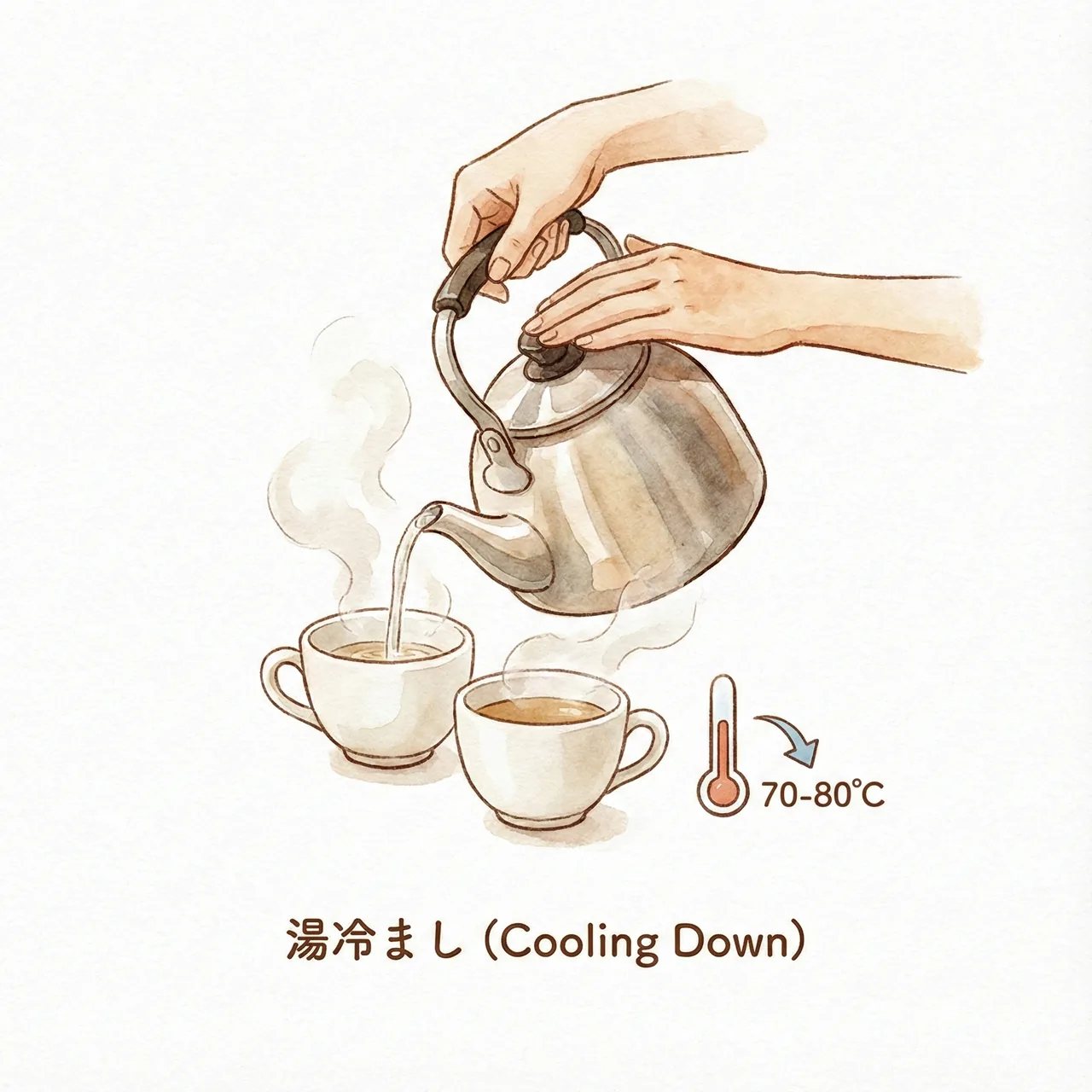
STEP 1: Pour into cups first — and wait
Never pour boiling water directly into the kyusu. Instead, pour the hot water into the number of teacups you'll
be filling, and wait about one minute.
This warms the cups and drops the water temperature to the ideal brewing range (70–80°C / 158–176°F). This
single step is the biggest single unlock for sweetness in green tea.
STEP 2: Add leaves and steep quietly
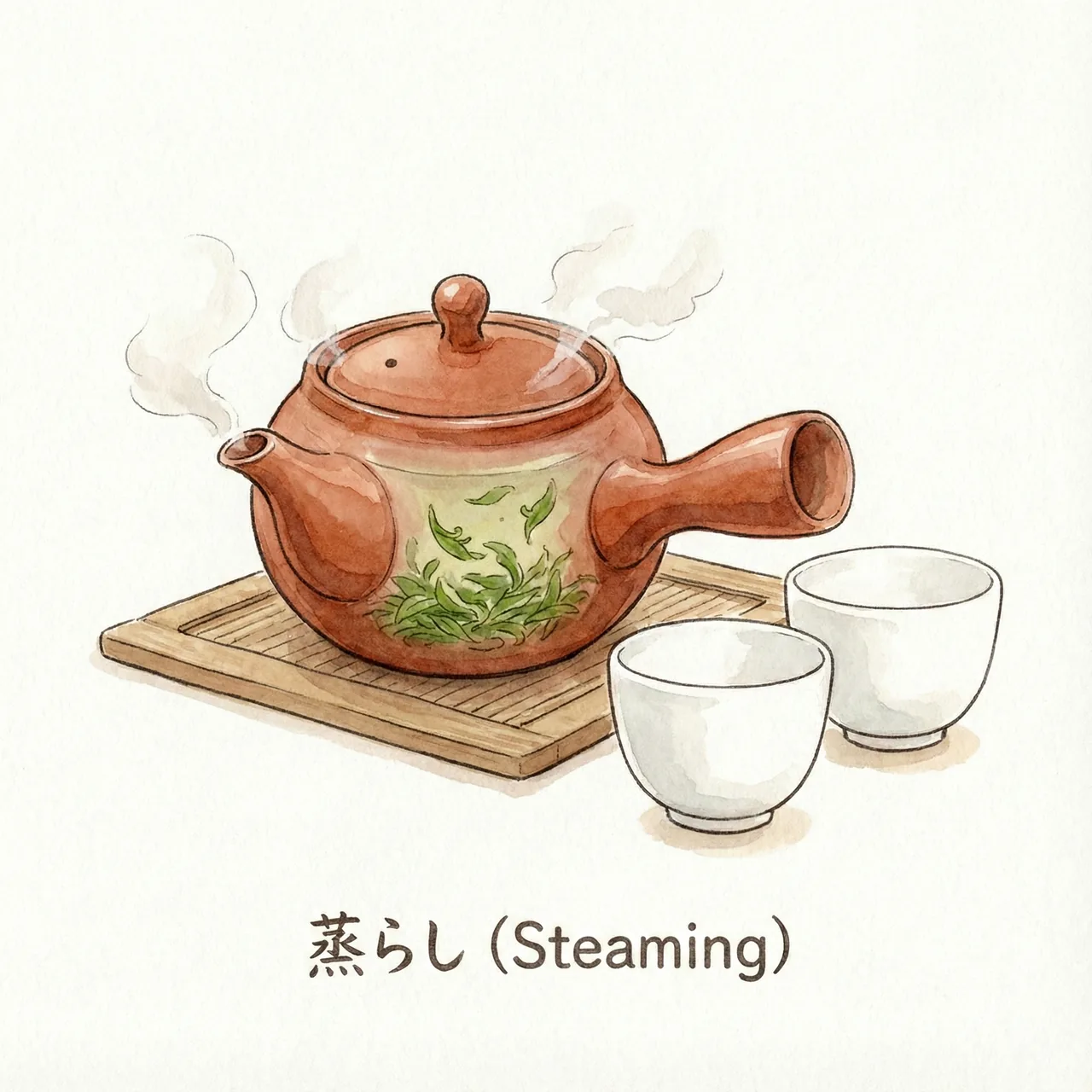
Add tea leaves to the kyusu (about 1–2 teaspoons per person), pour in the cooled water from the cups, and put
the lid on.
Wait about one minute. Inside the kyusu, the leaves are slowly unfurling, releasing a vivid green liquor into
the water.
Do not shake or swirl the pot during steeping — agitation brings out bitterness.
STEP 3: The Golden Drop
When pouring for multiple cups, use a circular pour (1→2→2→1) to equalize concentration across cups.
Then comes the most important moment: the last drop.
This final drop contains the highest concentration of umami in the whole pot — tea practitioners call it the
Golden Drop. Tilt the kyusu fully and shake out every last bit.
(Emptying the pot completely also prevents the leaves from over-steeping in residual water, keeping your second
pour just as good as the first.)
Fresh Tea and Japan's Golden Winter Snack
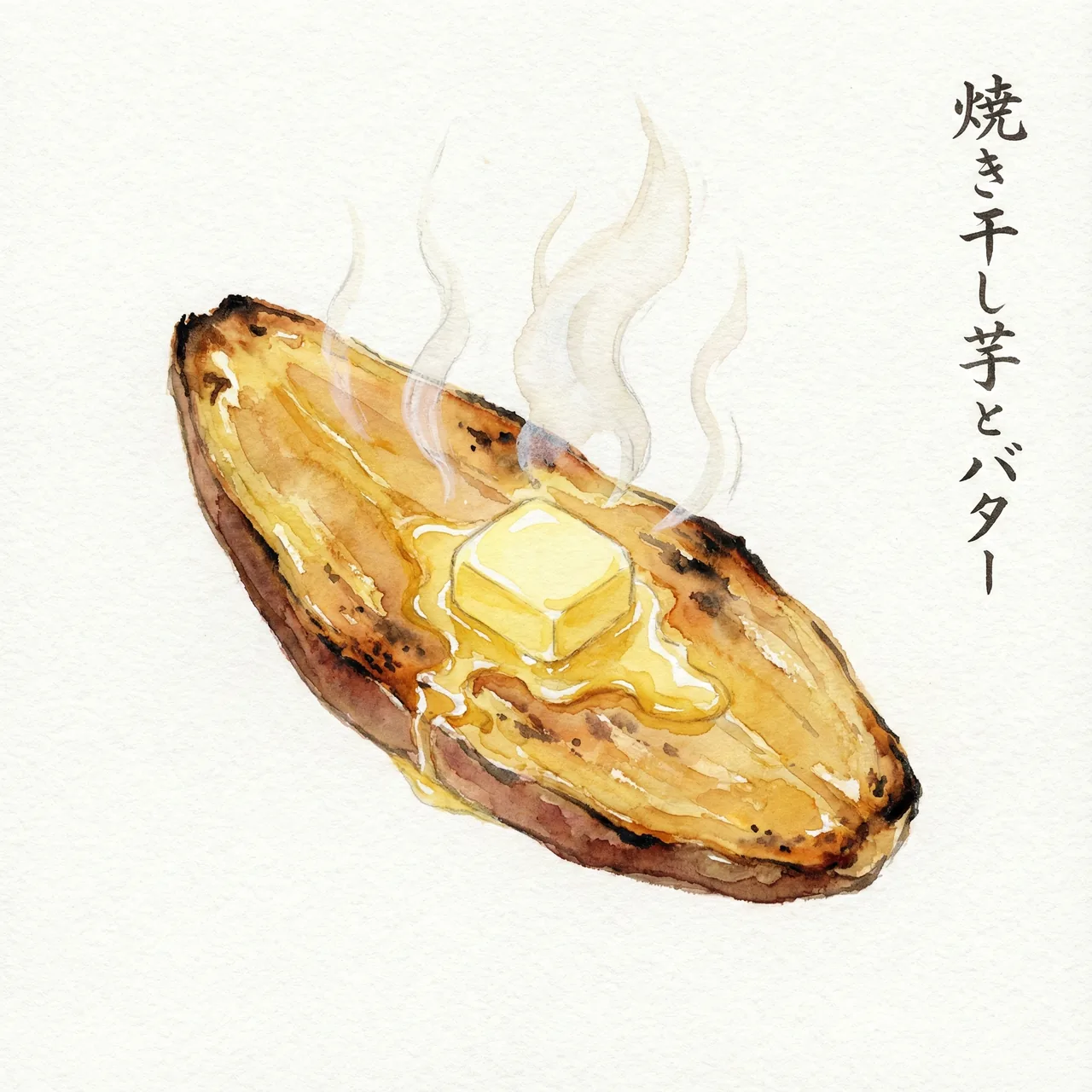
The perfect companion for a carefully brewed cup of green tea? Hoshi-imo — Japanese dried sweet
potato.
Zero added sugar, yet sweeter than jam. Ibaraki-grown Beni-haruka variety dried sweet potato, eaten
warm from the oven beside a hot pot of sencha — this is one of Japan's finest simple pleasures, and a winter
ritual worth adopting.
4. No Soap Allowed — How to Season & Care for Your Kyusu
A clay kyusu (Tokoname-yaki, Banko-yaki) is often described as a "living" object. Care for it correctly and it becomes a lifelong companion — gradually developing a gloss and flavor memory that enhances every cup.
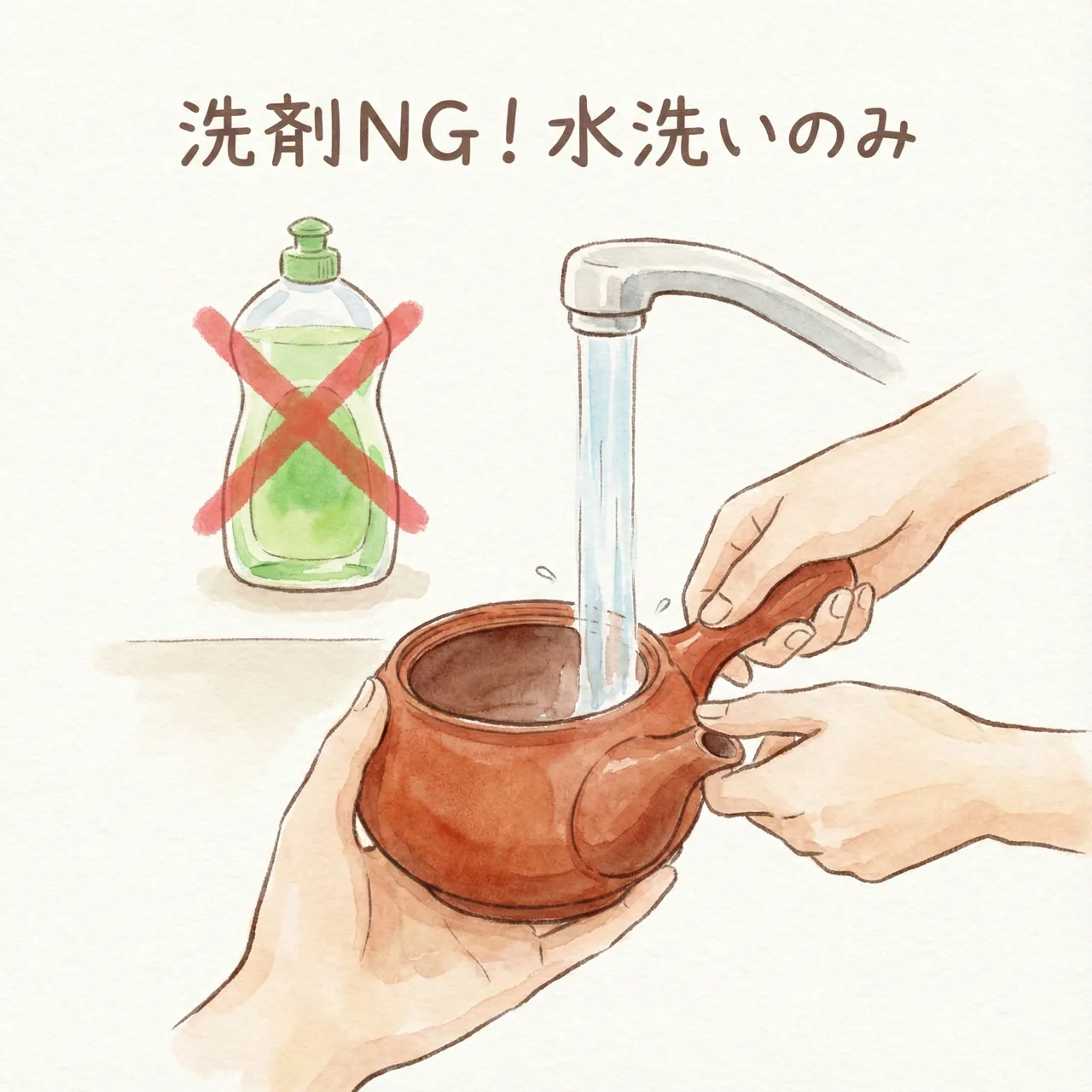
① Rinse with water only — no dish soap
Clay has countless microscopic pores invisible to the eye.
Dish soap soaks into those pores and leaches into your tea, tainting both flavor and aroma — so
as a general rule, soap is off-limits for clay kyusu.
After use: discard the spent leaves, give the pot a quick rinse with water or lukewarm water, and you're done.
For stubborn tannin stains, a diluted baking soda or oxygen-bleach soak is acceptable on occasion.
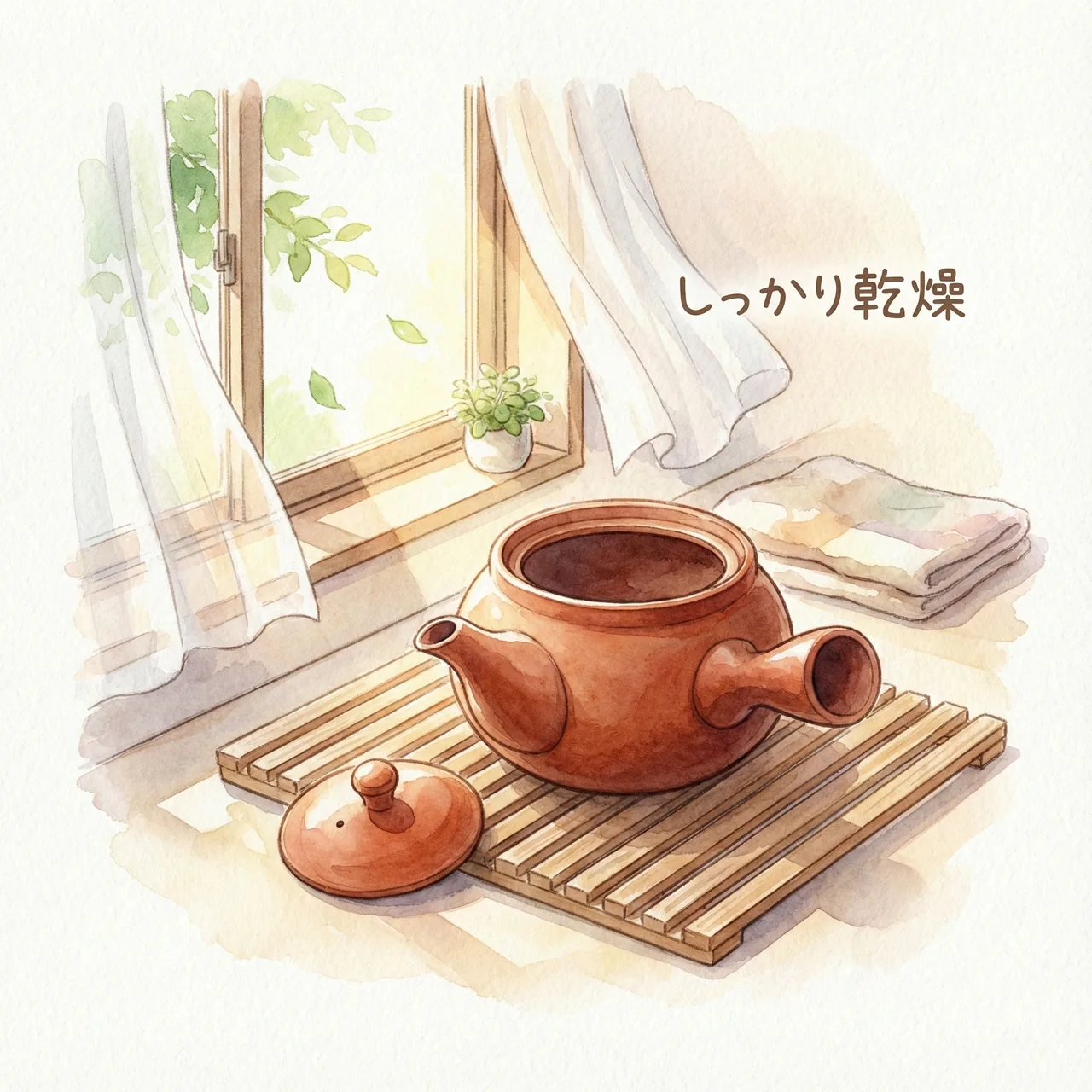
② Always dry completely
After rinsing, remove the lid and leave the kyusu in a well-ventilated spot to air-dry completely. Residual
moisture trapped inside will cause mold.
Dry with the opening facing upward — placing it face-down traps humidity inside and defeats the
purpose.
5. Frequently Asked Questions
What size kyusu should I get — for one person, or a family?
A single teacup holds roughly 80–100 ml, so use that as your multiplier.
For one person: Around 200 ml — larger pots make it hard for the leaves to steep properly without
too much water.
For 2–3 people: 350–400 ml — the most common general-purpose size.
"Bigger is better" doesn't apply to tea — brewing in a pot sized to your serving produces the best leaf
circulation and the richest flavor.
I'm left-handed — can I use a standard yokode (side-handle) kyusu?
Standard yokode kyusu are designed for right-hand pouring; using them left-handed requires an awkward wrist twist
and makes spilling likely.
Left-handed users should look for an ushirode (rear-handle) teapot-style pot or an uwade
(top-handle) dobin-style pot — both work equally well with either hand. Some Tokoname studios also make
dedicated left-handed yokode kyusu if you prefer that style.
Should I remove the protective vinyl cap on the spout?
Yes — remove it before your first use and discard it.
The small vinyl cap on a new kyusu's spout is a shipping protector. If you brew with it in place, tea residue and
moisture will accumulate in the gap between the vinyl and the spout, creating a mold risk. Always remove it first.
How do I remove tea stains from inside my kyusu?
A baking soda or rice-vinegar soak works well.
Fill the kyusu with lukewarm water (40–50°C / 104–122°F), dissolve about a teaspoon of baking soda, and leave for
1–2 hours. Then rinse gently with a soft sponge.
That said — for a Tokoname or Banko clay kyusu, the tannin buildup inside is partly what gives the pot its
character (it's called sabi — the seasoning). Many tea lovers deliberately leave it undisturbed as part
of the kyusu's "growing up."
Is a kyusu a good gift for a tea lover?
Yes — it is one of the most appreciated gifts you can give a tea enthusiast.
A Tokoname-yaki kyusu or a premium teapot makes an excellent birthday, retirement, or milestone birthday gift.
Pairing it with a set of matching yunomi teacups makes it immediately usable and adds presentation value. A
quality Tokoname kyusu in the $80–$150 range has an unmistakably premium feel and carries genuine cultural
meaning.
Why is Tokoname-yaki considered the best clay for green tea?
The high iron content in Tokoname's red shudei clay reacts with tea tannins, softening
astringency.
Tokoname's shudei contains unusually high levels of iron. When hot tea steeps in the pot, the iron interacts with
the catechins and tannins in green tea, chemically mellowing the sharp edges and producing a rounder, more complex
flavor.
The clay is also fired to a very high density, making it resistant to odor absorption and easy to keep clean,
while the surface develops a richer sheen with regular use — a pot that genuinely improves over years of daily
service.
6. Final Thoughts: Tea Time as a Daily Reset
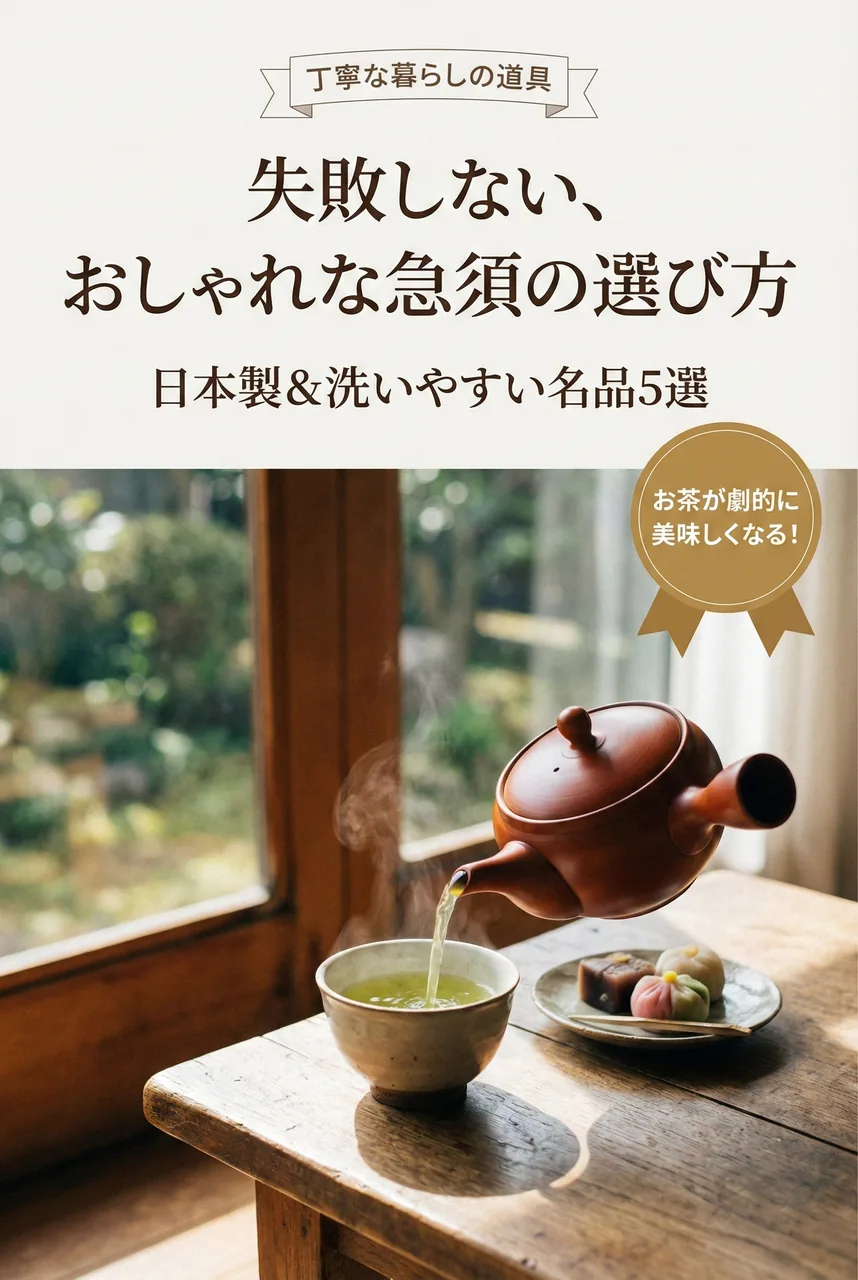
Three minutes to brew a pot of tea in the middle of a busy day.
It is not just hydration — it is a small ritual that clears the mind and resets the mood.
Find a kyusu you love, keep a favorite tea snack nearby, and give yourself that three-minute pause every
day.
Watching the gloss deepen on a clay kyusu as the months pass is one of the quiet pleasures that come with owning
a truly good tool.

Japanese Pair Rice Bowls: 5 Best Brands — Hasami-yaki, Arita & More

Japanese Soup Bowls: Top 5 Japanese-Made Picks — From Dishwasher-Safe to Hon-Urushi
