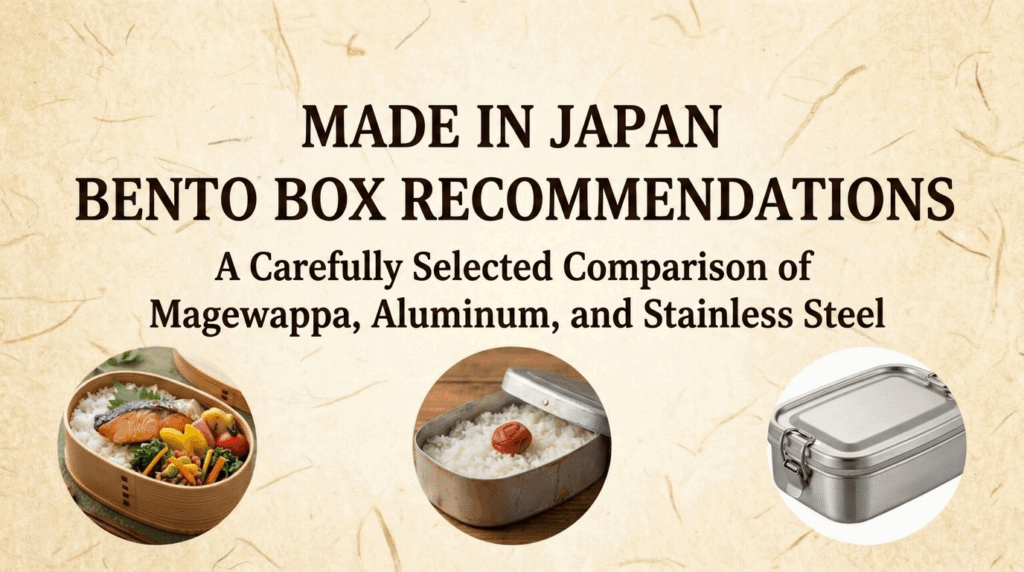
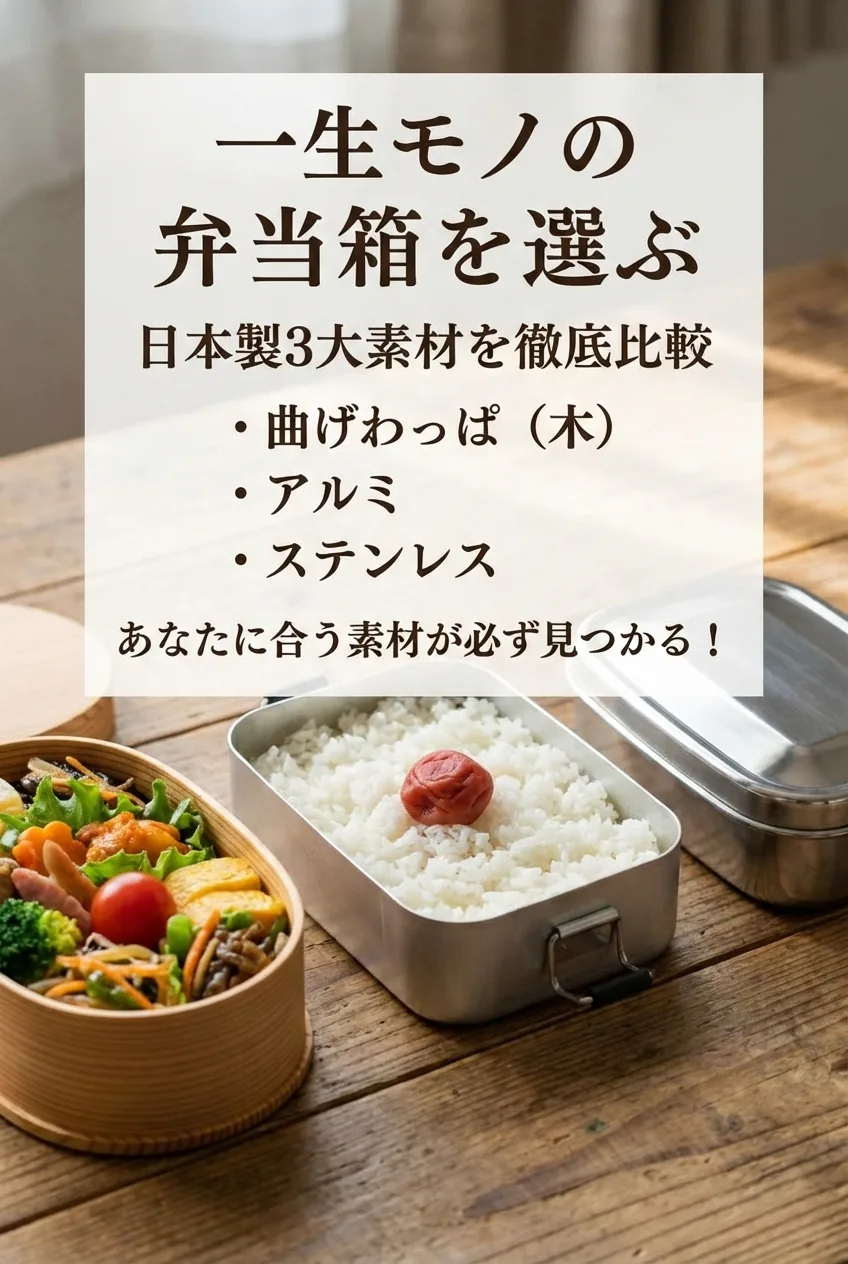
When choosing a Japanese-made bento box, the key decision is this: pick the material based on what you're packing.
① Magewappa (cedar wood) — For rice lovers who want their lunch to taste good even when cold
② Aluminum — Great for kids or beginners. Light, retro, and easy to clean after oily foods
③ Stainless steel — For heavy eaters. No odor transfer, no staining, and practically indestructible
"Plastic boxes leave greasy residue I can never fully wash off." "My rice turns mushy and clumped by lunchtime."
These are real frustrations — and Japanese-made bento boxes solve them through material science, not marketing.
This guide covers the best Japanese bento boxes built to last a lifetime, organized by material, with honest advice on what to pick first.
Quick Reference: Bento Box Materials Compared
| Material | Key Features | Weight | Care |
|---|---|---|---|
| Magewappa (cedar) | Absorbs excess moisture; rice stays fluffy even when cold | Light | Some effort (unfinished wood: no detergent) |
| Plastic | Lightweight, airtight; many are microwave-safe | Lightest | Dishwasher-safe options available |
| Aluminum | Oily food washes off easily; light, retro look | Light | Hand wash recommended |
| Stainless Steel | No staining, no odor transfer; durable and hygienic | Heavier | Hand wash recommended (many are not dishwasher-safe) |
1. Choosing by Material: Wood, Aluminum & Stainless Steel
The most common bento box mistake is choosing based on looks before understanding the material.
Match the material to your lunch habits, and the right choice becomes obvious.
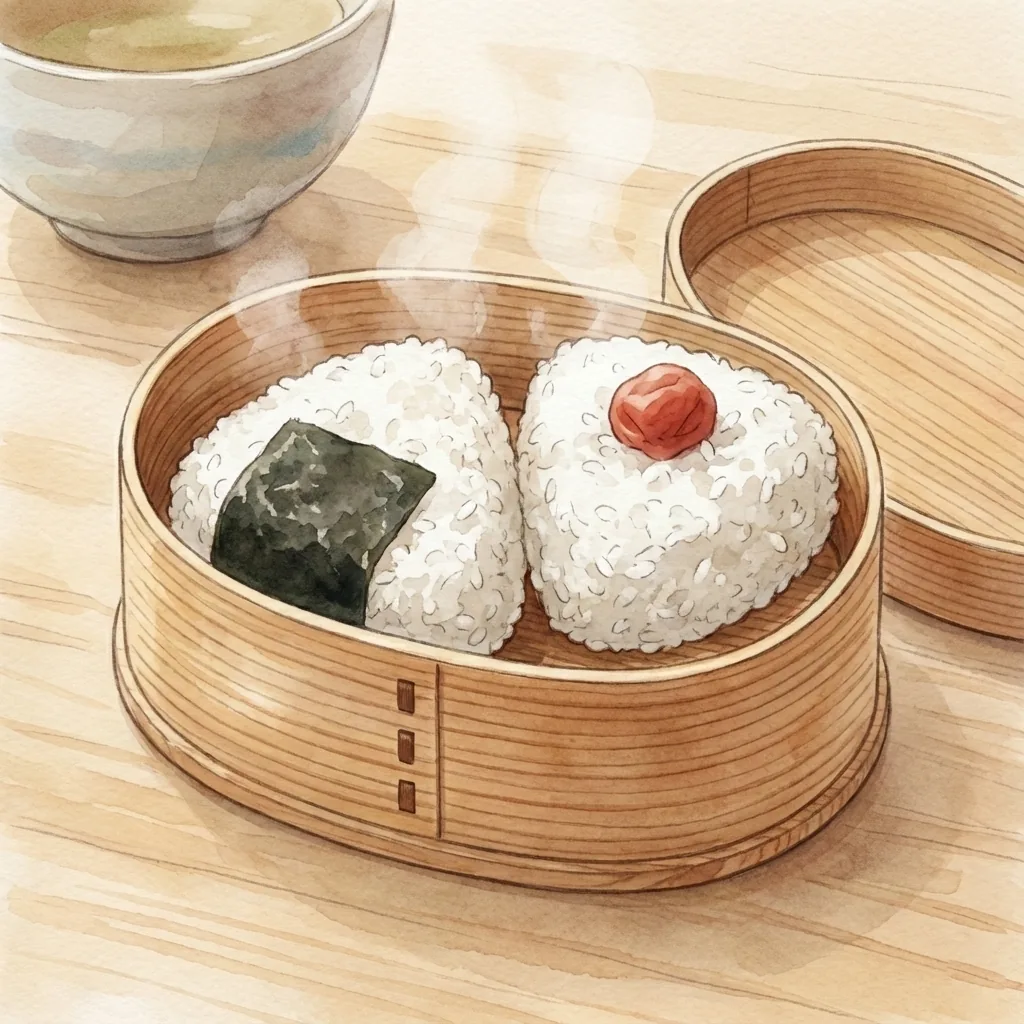
Wood (Magewappa, Kiso Hinoki)
Pros: The cedar naturally regulates moisture, keeping rice from going stiff or sticky. The subtle wood fragrance enhances the meal.
Cons: Not microwave-safe. Most don't seal fully, so soupy sides need to be packed carefully.
Best for: Anyone who eats a lot of plain rice and wants their lunch to taste freshly made.
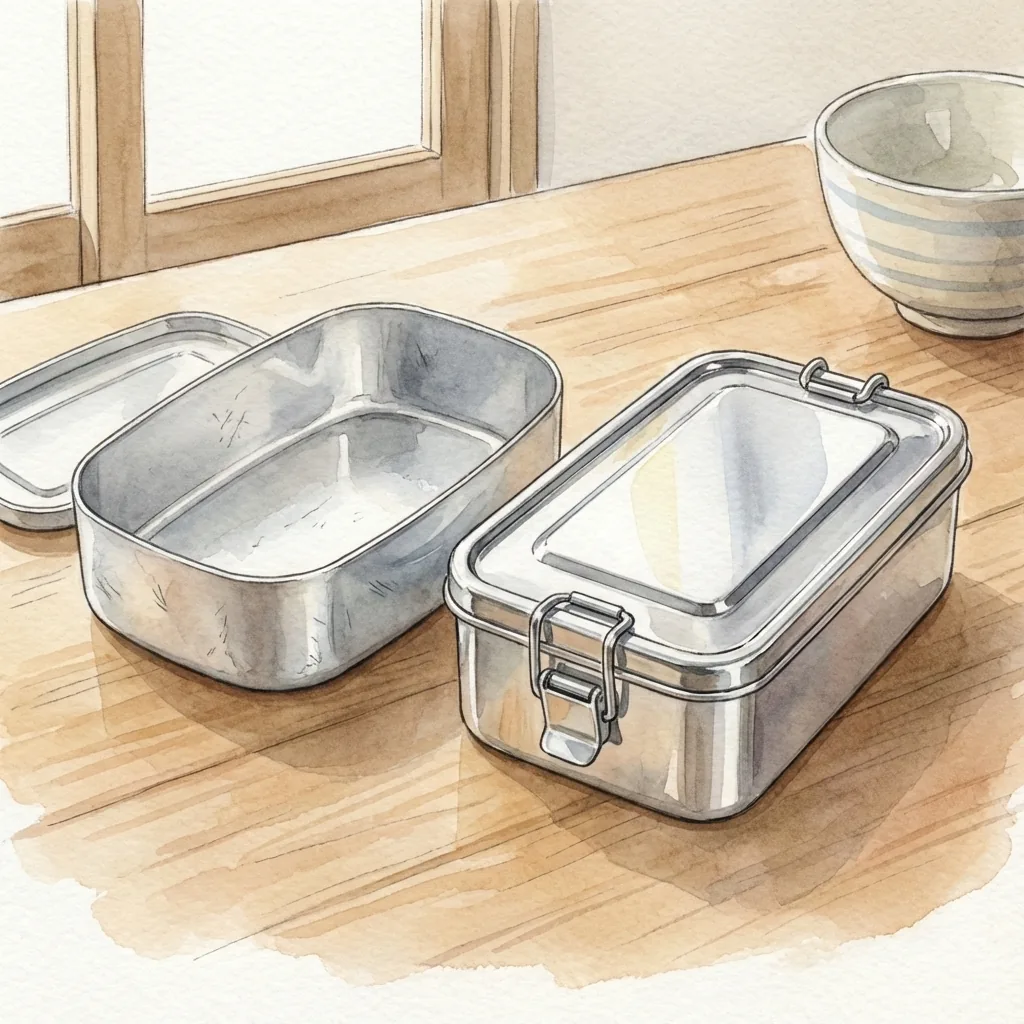
Metal (Aluminum & Stainless Steel)
Pros: Grease washes right off. No staining from curry or tomato sauce. Tough and long-lasting.
Cons: Not microwave-safe (though warming cabinets are usually fine). Conducts heat quickly, so handle with care right after filling.
Best for: Anyone who hates scrubbing oily containers, or who packs strongly flavored foods like curries or stir-fries.
2. Magewappa (Cedar): Unmatched Rice Quality — Odate Kogei & More
If your rice always seems dry and hard by lunchtime, magewappa is the answer.
The cedar wood breathes — absorbing surplus moisture when the rice is hot, then releasing it gently as it cools, keeping every grain tender and slightly chewy hours later.
[Akita Prefecture] Odate Kogei — Koban Bento Box
The easiest magewappa to start with, thanks to its urethane lacquer finish.
Made by one of the leading producers of Odate magewappa, a recognized traditional craft of Japan.
The urethane coating means you can wash it with regular dish soap and it handles oily foods without staining — a major practical advantage over unfinished cedar.
If it's your first magewappa, this is the one to get.
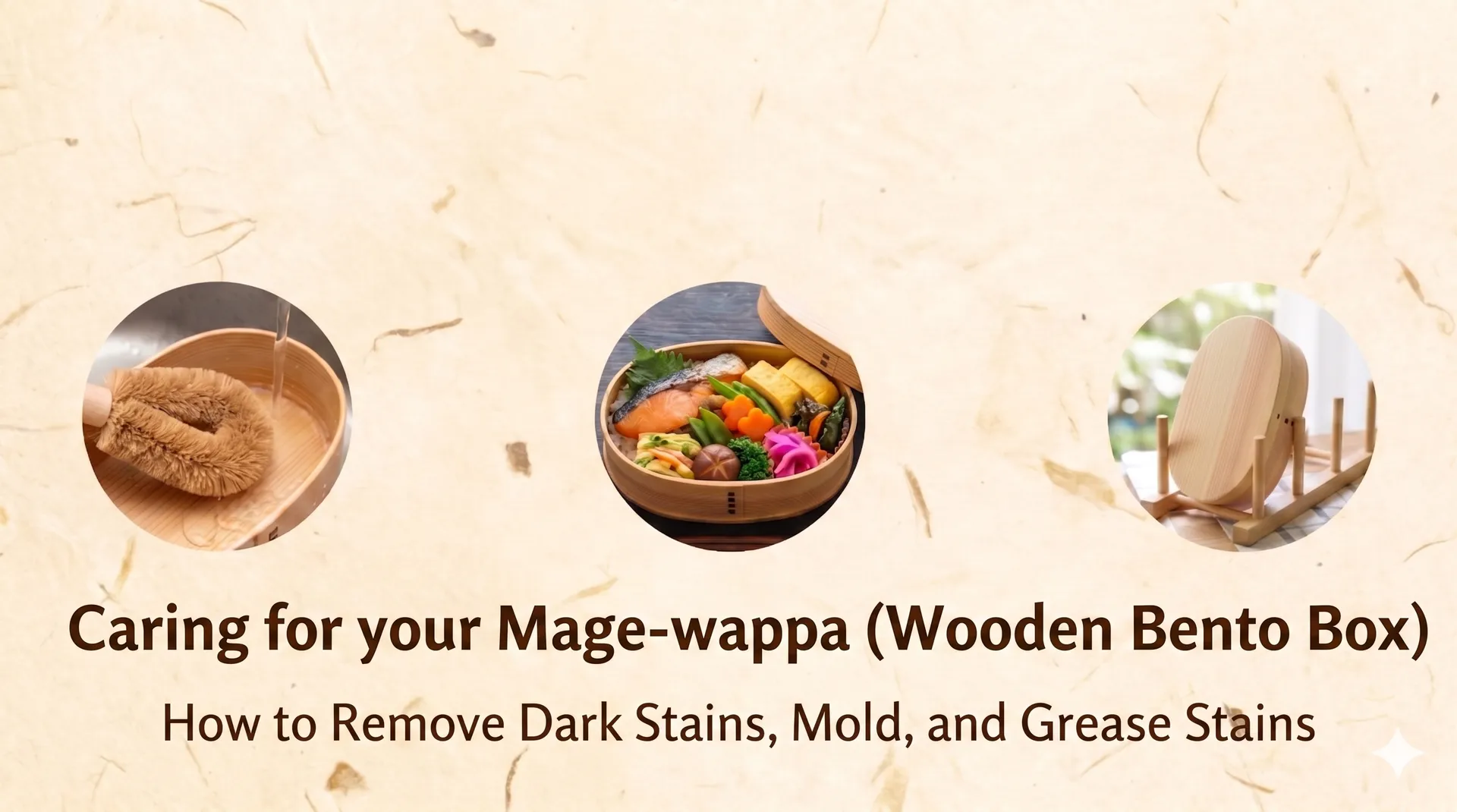
See the full magewappa care and cleaning guide
Odate Kogeisha Magewappa Bento Box "Himeko" — Urethane Lacquer, Made in Akita
Handcrafted from Akita cedar (sugi) using the traditional Odate magewappa bending technique — a nationally recognized traditional craft. The urethane lacquer finish means you can wash it with regular dish soap and pack oily foods without staining. 360ml capacity. The ideal first magewappa.
View on Amazon[Fukuoka Prefecture] Hakata Magemono — Gyokuju
Joined with cherry bark strips, not metal nails — a traditional technique that's increasingly rare.
The result is a warmer, more rustic appearance that feels genuinely handcrafted.
Choosing an unfinished (shiro-ki) version gives you the full benefit of cedar's fragrance and moisture-absorbing power.
For the purist who wants the maximum rice-quality effect, this is the serious choice.
Cocobitplus Magewappa Bento Box — Unpainted Cedar, Handmade in Japan
Hakata Magemono products are available through specialist Japanese craft retailers. For an unfinished cedar magewappa on Amazon, this craftsman-made natural wood bento box delivers the same essential benefit — full moisture absorption, cedar fragrance, and the maximum rice-quality effect. Unpainted shiro-ki finish.
View on Amazon3. Aluminum: Light, Hygienic & Retro — Hoshimaru & THE LUNCH BOX
Aluminum bento boxes bring to mind the classic "doka-ben" (oversized construction worker's lunch) — but they're a surprisingly practical modern choice.
The satisfying ease of oily residue washing off in one pass is something plastic users never experience.
[Tokyo] Hoshimaru (Daiichi Aluminum Seisakusho)
The classic deep aluminum bento box, still made by hand in a Katsushika workshop.
A longtime bestseller that hasn't needed to change because it was right the first time.
Models with an inner lid significantly reduce the risk of spills.
Light and tough enough to handle years of daily use — popular for children's daycare and kindergarten lunches.
Daiichi Aluminum Deep-Type Bento Box with Inner Lid — Made in Japan
The classic Japanese aluminum lunch box from a Katsushika workshop — deep form, inner lid for spill resistance, and the characteristic ease of oily food wiping clean in one pass. ~700ml capacity. Light, tough, and the kind of thing that gets handed down to your kids.
View on Amazon[Collaboration] THE LUNCH BOX (Nakagawa Masashichi Shoten)
All the function of aluminum in a more refined, contemporary form.
The surface has an alumite (anodized) finish that resists scratches and corrosion better than bare aluminum.
Clean, understated design that looks at home on an adult's desk — not just in a school bag.
Rounded interior corners mean rice and crumbs don't get trapped in edges, making cleanup effortless.
MUJI Aluminum Lunch Box — Large, Clean Modern Design
THE LUNCH BOX by Nakagawa Masashichi Shoten is available through their own online store. For a clean-design anodized aluminum bento box on Amazon, MUJI's aluminum lunch box shares the same minimal Japanese aesthetic — scratch-resistant surface, rounded interior corners for easy cleaning, and an understated look that fits an adult's desk as well as a school bag.
View on Amazon4. Stainless Steel: No Stains, No Odors — Kobo Aizawa
For sheer practicality, stainless steel is unmatched.
The same material used in surgical instruments is completely impervious to curry stains, kimchi odors, and everything else you throw at it.
[Niigata, Tsubame City] Kobo Aizawa — Square Lunch Box
The benchmark for functional beauty in stainless bento boxes.
The clasp-and-gasket sealing system is robust enough that leaks are virtually a non-issue — even on its side in a bag.
Rounded edges throughout make it easier to clean, and the gasket can be removed and boiled for sterilization.
If you want one bento box that genuinely lasts a lifetime, the answer is this one.
Kobo Aizawa Square Food Box (Large) — Stainless Steel, Gasket Seal, Made in Tsubame
18-8 stainless steel bento box from Kobo Aizawa, a Tsubame, Niigata workshop established in 1917. Silicone rubber gasket and rubber band closure create a near-leak-proof seal — safe to carry sideways in a bag. The gasket is removable for boiling and sterilization. 1000ml capacity. A bento box that will genuinely outlast you.
View on Amazon
Personal note: Stainless is unbeatable in summer
Stainless steel conducts temperature so efficiently that resting a cold pack on top chills the entire contents fast.
For hot-weather months when food safety is a concern, using a stainless box inside an insulated bag gave me far more confidence than any other material.
5. Real Talk: What I Learned from Using All Three
I currently own all three: an unfinished cedar magewappa, an aluminum box, and a stainless steel one.
Here's the honest breakdown of how I actually rotate between them.
Magewappa as the Default, Metal for Special Cases
Nothing beats the magewappa for plain white rice — the difference is not subtle, it's dramatic.
That said, I reach for the metal boxes in specific situations:
· Curry or meat sauce days → Stainless (zero staining risk)
· Fried rice or omelette rice days → Aluminum (oily residue wipes right off)
· Days when I won't get to wash it until late → Either metal (no mold risk overnight)
If you're buying your first Japanese bento box, go with either a urethane-coated magewappa (easiest to maintain) or the Kobo Aizawa stainless (most versatile). Either one will outlast any plastic box you've owned.
6. Frequently Asked Questions: Microwaves, Leaks & Sizing
Are any of these Japanese bento boxes microwave-safe?
The materials covered in this guide — wood, aluminum, and stainless — are not microwave-safe.
If you need to reheat at work, look for resin lacquerware-style boxes (such as Yamanaka-nuri lunch boxes) that are designed for microwave use.
That said, reheating rice in a microwave drives out the moisture and leaves it stiff — one reason magewappa users often prefer eating their lunch at room temperature and still finding it delicious.
Do these boxes leak?
Magewappa and push-on-lid aluminum boxes are not fully sealed, so soupy sides are a risk.
To prevent leaks, either wrap the box firmly in a tenugui cloth or choose the Kobo Aizawa stainless box with its gasketed clasp closure — which is effectively leak-proof.
What size should I get?
A useful rule of thumb: capacity in milliliters roughly equals recommended calories.
· Women and children: 400–600ml
· Men and larger eaters: 700–900ml
Keep in mind that magewappa boxes tend to have more depth than they appear from the outside, so they usually hold more than you'd expect.
Is the difference in rice quality between magewappa and plastic really noticeable?
Yes — clearly and immediately. Magewappa absorbs the excess steam from fresh rice and releases it gradually, so the grains stay plump and lightly chewy at lunchtime.
Plastic containers, being airtight, trap steam against the rice, which makes it mushy when warm and gummy when it cools. Once you've eaten from a magewappa, it's very hard to go back.
Which material is worst for oily foods?
Plastic holds onto grease the most — even after washing, the slick residue often lingers.
Aluminum and stainless steel release oily food cleanly with minimal scrubbing, making them ideal for curries, stir-fries, and naporitan pasta.
For unfinished cedar magewappa, place a sheet of wax paper under fried foods to prevent the oil from seeping into the wood.
What's the most reliable way to prevent leaks?
For complete leak protection, a gasketed stainless steel box (like the Kobo Aizawa) is the most reliable option.
For magewappa and snap-lid aluminum boxes — which aren't designed to seal — use small separate containers for saucy sides, or wrap the entire box snugly in a tenugui to contain any minor drips.
7. Final Thoughts: Find a Bento Box That Makes Lunch Something to Look Forward To
Japanese-made bento boxes cost more than a plastic supermarket box — but the gap in durability and daily satisfaction is enormous.
Quick decision guide:
· Rice quality first → Odate Kogei magewappa (urethane-coated)
· Durability first → Kobo Aizawa stainless steel
· Light weight and retro charm → Hoshimaru aluminum
Having a bento box you genuinely love transforms the tedium of packing lunch into something almost enjoyable — a few minutes of care that pays off at noon every day.
Find your companion for the long haul.
Magewappa Care Guide: How to Remove Black Stains & Oil Residue
Japanese Cutting Boards: Wood vs. Resin — How to Choose and Care for Them