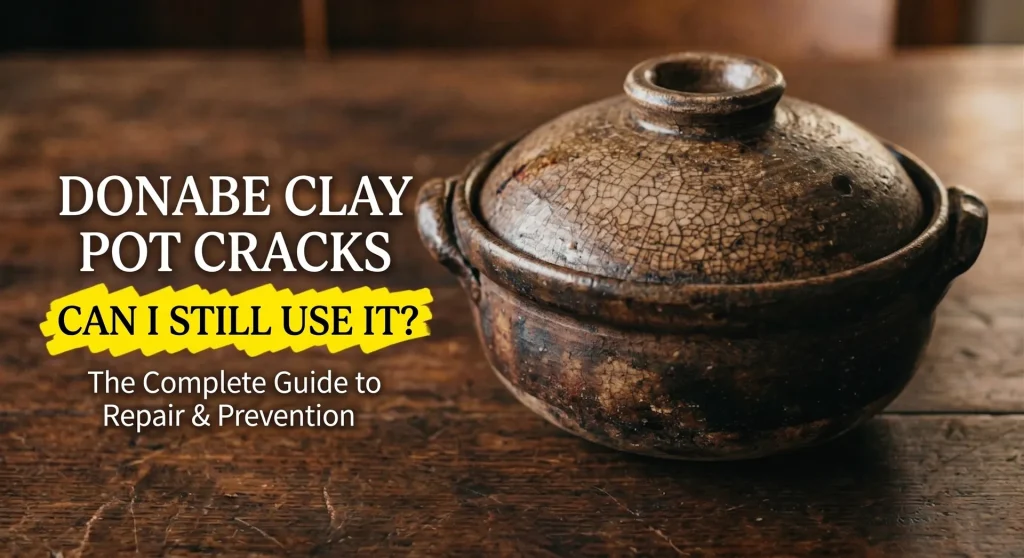
Your donabe cracked. Can you still use it?
The short answer: fine surface cracks (kannyu) are completely normal — keep cooking. Only a crack large enough to drip water means it is time to replace.
① Fine hairline cracks (kannyu) → Re-season with medome and continue using
② Deep crack with water leaking → Replace (hot liquid hazard)
③ Nine out of ten cracks come from moisture on the bottom or sudden temperature changes
This guide covers everything: how to read a crack, how to do medome seasoning with leftover rice, and the daily habits that prevent cracks from forming in the first place.
Whether your donabe cracked on day one or you want to restore one you have used for years — you are in the right place.
Quick Reference: Donabe Care Cheat Sheet
Check what to do in any situation at a glance. Each row links to the detailed section below.
| Situation | What to Do | Details | Priority |
|---|---|---|---|
| Brand-new donabe | Medome with rice porridge (let cool overnight) | How to do medome | ★★★ Required |
| Before every use | Wipe the bottom dry with a cloth | NG Action #1 | ★★★ Required |
| Fine surface cracks (kannyu) | Use as-is. If leaking, re-season with medome | Crack treatment | ✓ Normal |
| Large crack, water dripping | Replace (hot liquid hazard) | FAQ: cracked donabe | ⚠ Replace |
| Mold smell | Simmer vinegar + water (10 minutes) | Mold treatment | ⚠ Treat |
| Scorching on the bottom | Simmer baking soda + water and soak | Scorching fix | ⚠ Treat |
| Long-term storage | Dry fully, then wrap in newspaper | Daily care | ℹ Storage |
1. Why Medome? The Essential First Step for a New Donabe
A donabe is made from clay that has countless microscopic pores throughout its body.
Those pores give it exceptional heat retention and make food taste better — but in a brand-new pot, the same pores allow moisture and food odors to seep in, eventually causing hairline cracks and leaks.
Rice starch fills and seals the pores
The solution is medome (目止め) — literally "sealing the eyes."
When you cook rice porridge in a new donabe, the starch from the rice seeps into the clay pores and sets like natural glue. The result: the pot becomes more water-resistant, odor-resistant, and significantly less prone to cracking.
2. How to Do Medome: Leftover Rice Works Fine
All you need is water and a bowl of leftover cooked rice.
Katakuriko (potato starch) or flour can substitute, but cooked rice is the most effective thanks to its stickier starch content.
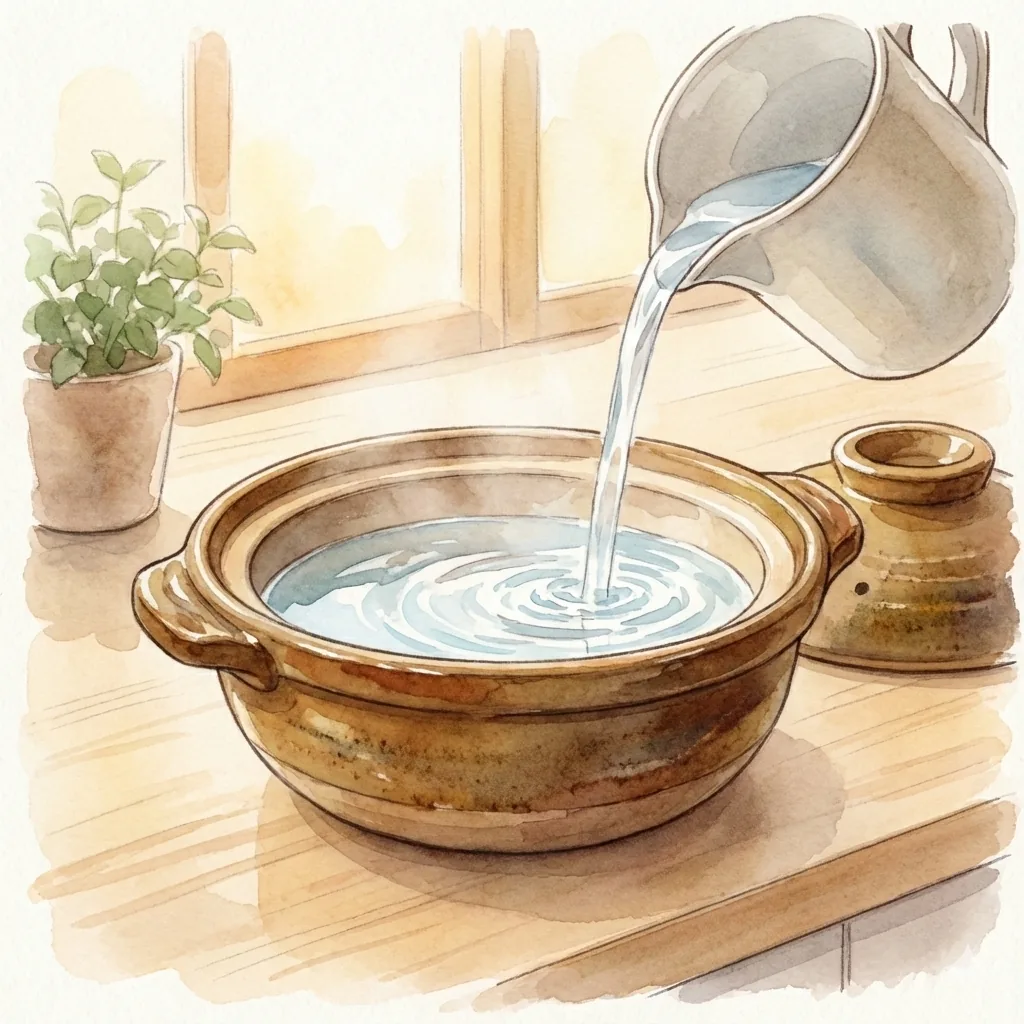
Step 1 — Rinse, dry, and fill to 80% with water
Give the donabe a light rinse and wipe the surface completely dry.
※ Never put a wet donabe on heat — that is the most common cause of cracking.
Fill the pot with water to about 80% capacity.
Step 2 — Add the rice and cook porridge over low heat
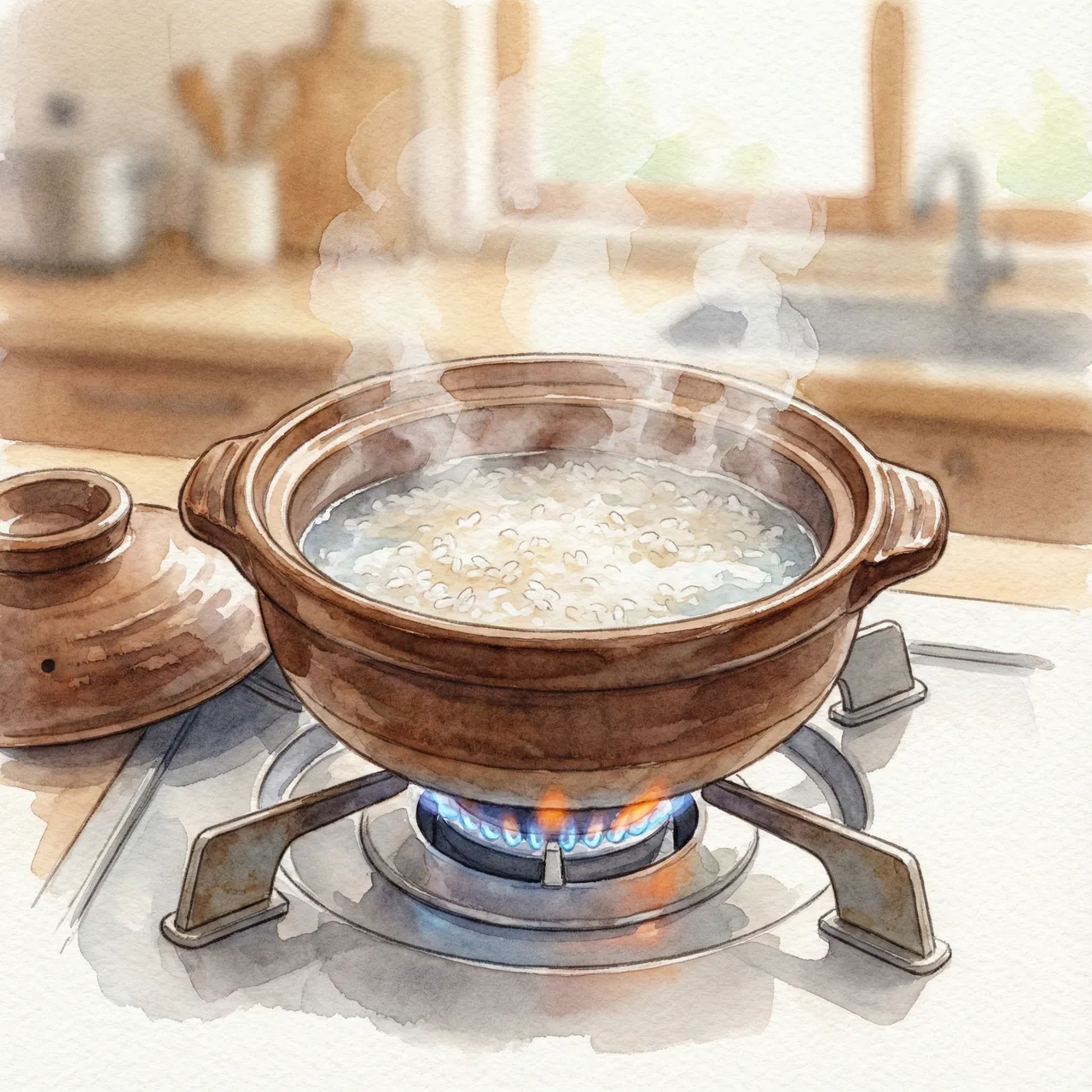
Add the leftover rice and stir to loosen the grains.
Place on the stove without the lid and start on the lowest heat setting.
Once it comes to a gentle simmer, cook for about an hour until the porridge thickens. Adjust heat to prevent boiling over.
Step 3 — Turn off heat and let it cool with the porridge inside
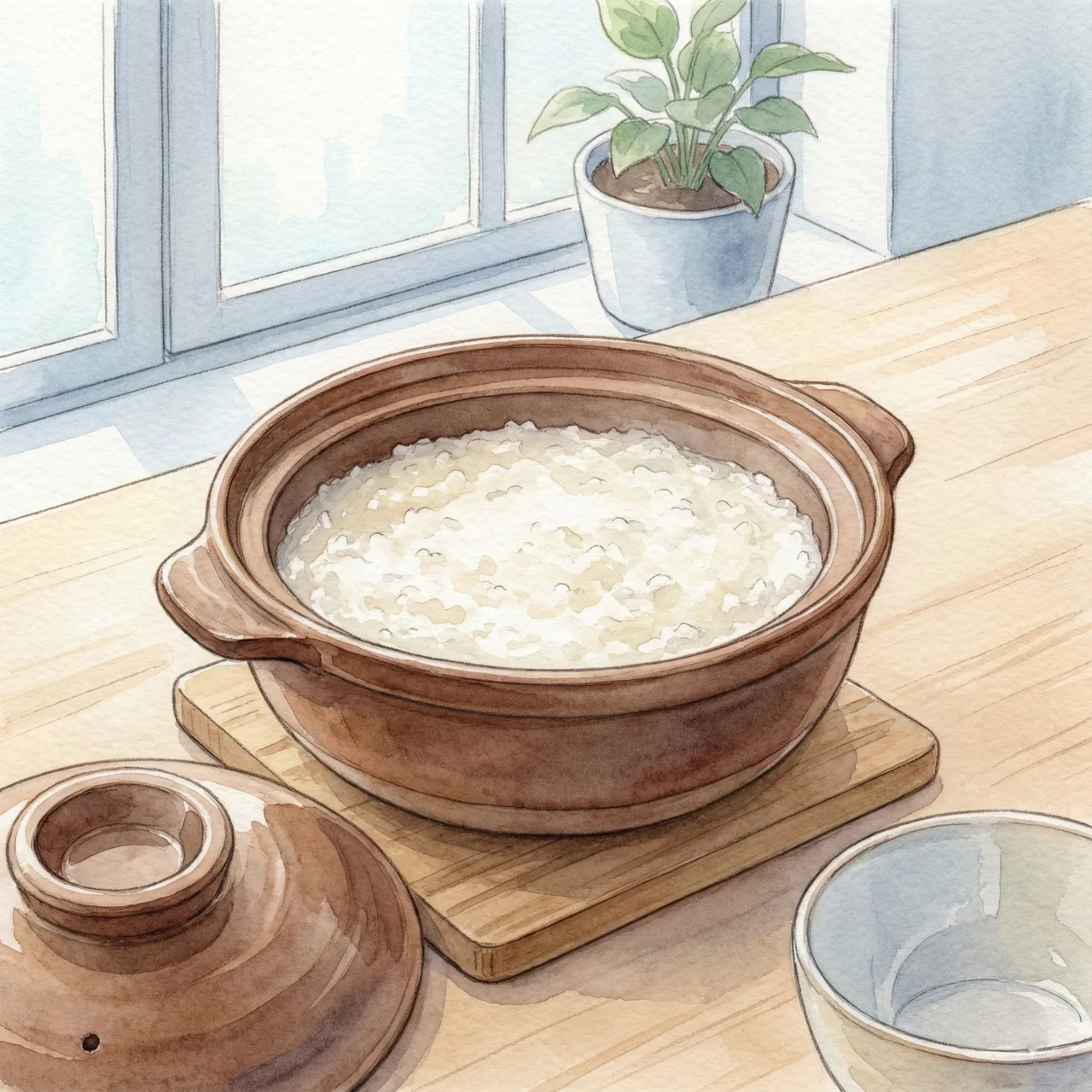
This is the most important step.
Once the porridge is ready, turn off the heat and leave the porridge in the pot overnight (several hours minimum) until it cools completely.
As the temperature drops, the starch bonds with the clay.
The next morning, discard the porridge (or eat it — it is fine to eat), rinse the pot, and let it dry. Medome is complete.
3. Daily Care: Can You Use Soap? How Long to Dry?
Once medome is done, everyday use is straightforward.
The main difference from metal pots is in how you wash and dry the donabe.
Dish soap — a quick wash is fine
You may have heard "never use soap on a donabe," but modern dish soap is safe for a quick wash.
What you must avoid is soaking the pot in soapy water — the porous clay will absorb detergent.
Apply a little soap to a soft sponge, wash quickly, and rinse thoroughly.
Avoid abrasive cleaners and steel wool, which will scratch the surface.
Dry upside-down for proper airflow
After washing, wipe off excess moisture and let the pot dry in a well-ventilated spot with the opening facing down.
The unglazed base of most donabe absorbs the most water and needs airflow to dry completely.
Storing the pot while damp is the leading cause of mold.
4. 3 Things You Should Never Do to a Donabe
Almost every donabe crack can be traced back to sudden temperature changes or moisture on the bottom.
Knowing these three common mistakes will save you from the most frustrating experience in the kitchen.
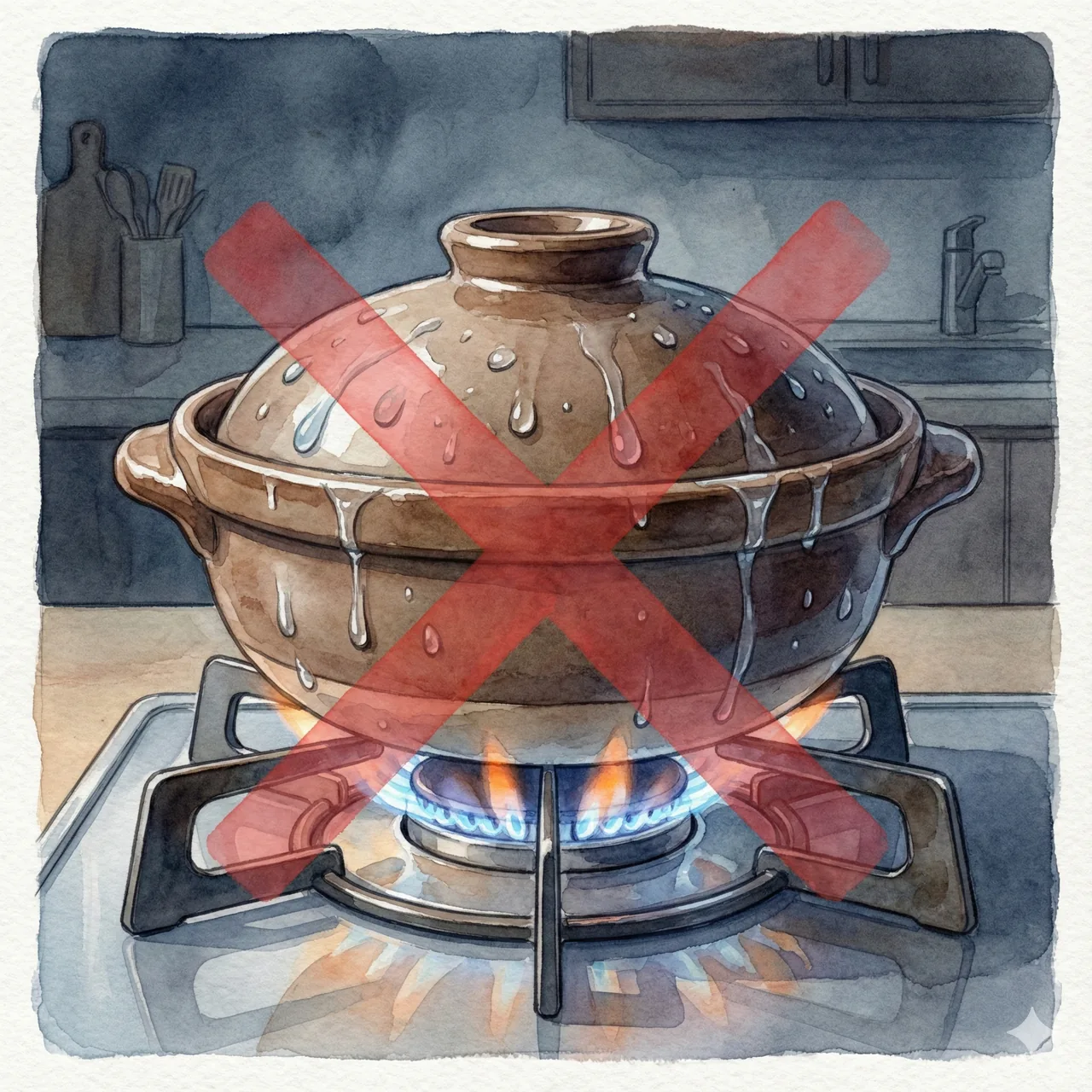
NG #1 — Putting a wet-bottomed donabe on heat
This is the #1 cause of donabe cracking — sometimes with an alarming snap.
Water droplets on the bottom flash-expand when heated, putting sudden stress on the clay.
Make it a habit to always wipe the bottom dry before placing the pot on the burner.
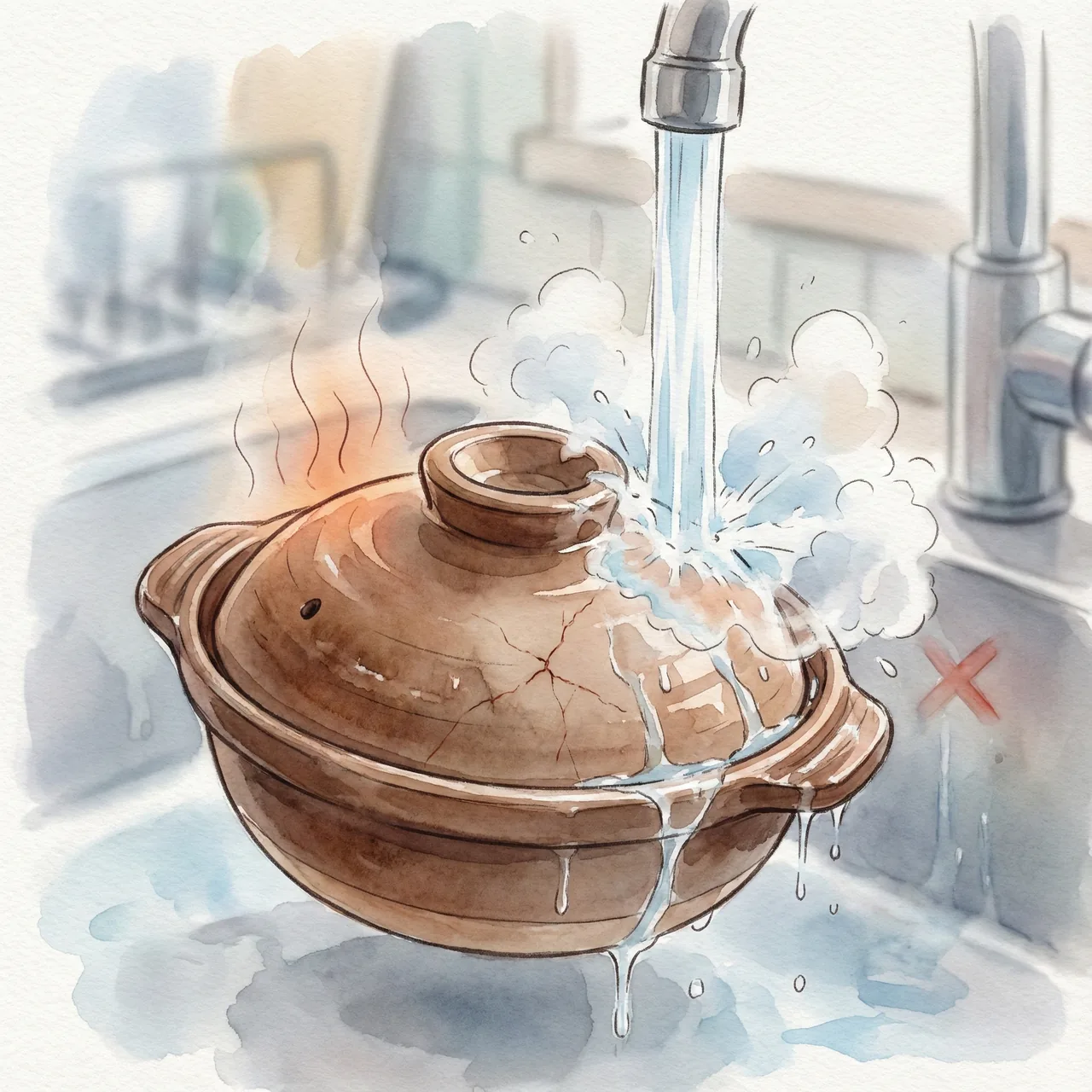
NG #2 — Plunging a hot donabe into cold water
Running cold water over a hot donabe fresh from the stove is dangerous.
The extreme temperature shock will crack the clay.
Wait until the pot is cool enough to touch comfortably before washing it.
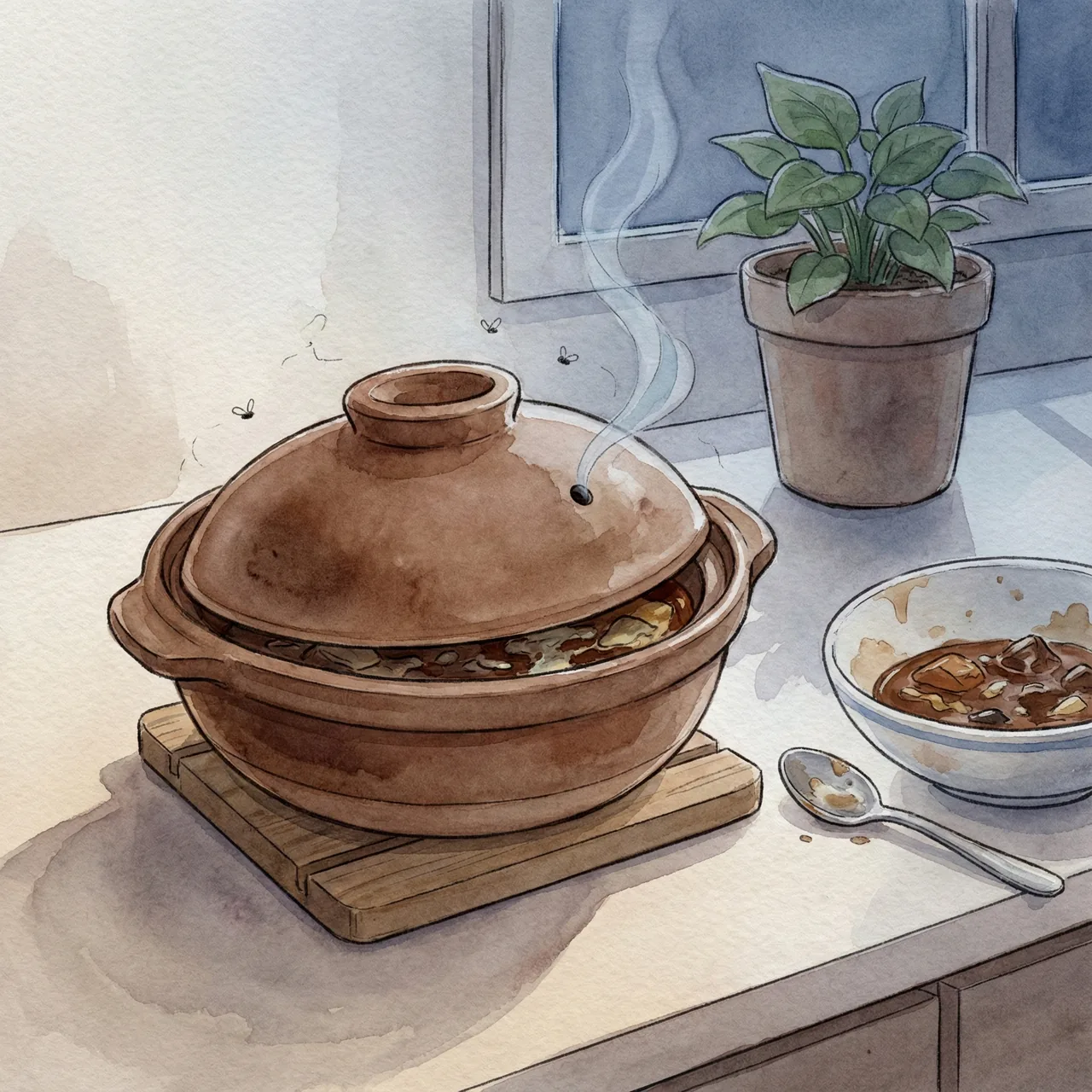
NG #3 — Leaving food inside overnight
Storing leftover hot pot or soup in the donabe overnight is a bad habit.
Broth soaks into the clay, causing off-odors and mold over time.
Transfer leftovers to a food storage container, wash the donabe promptly, and let it dry.
5. Cracks, Mold & Scorching: How to Handle Each
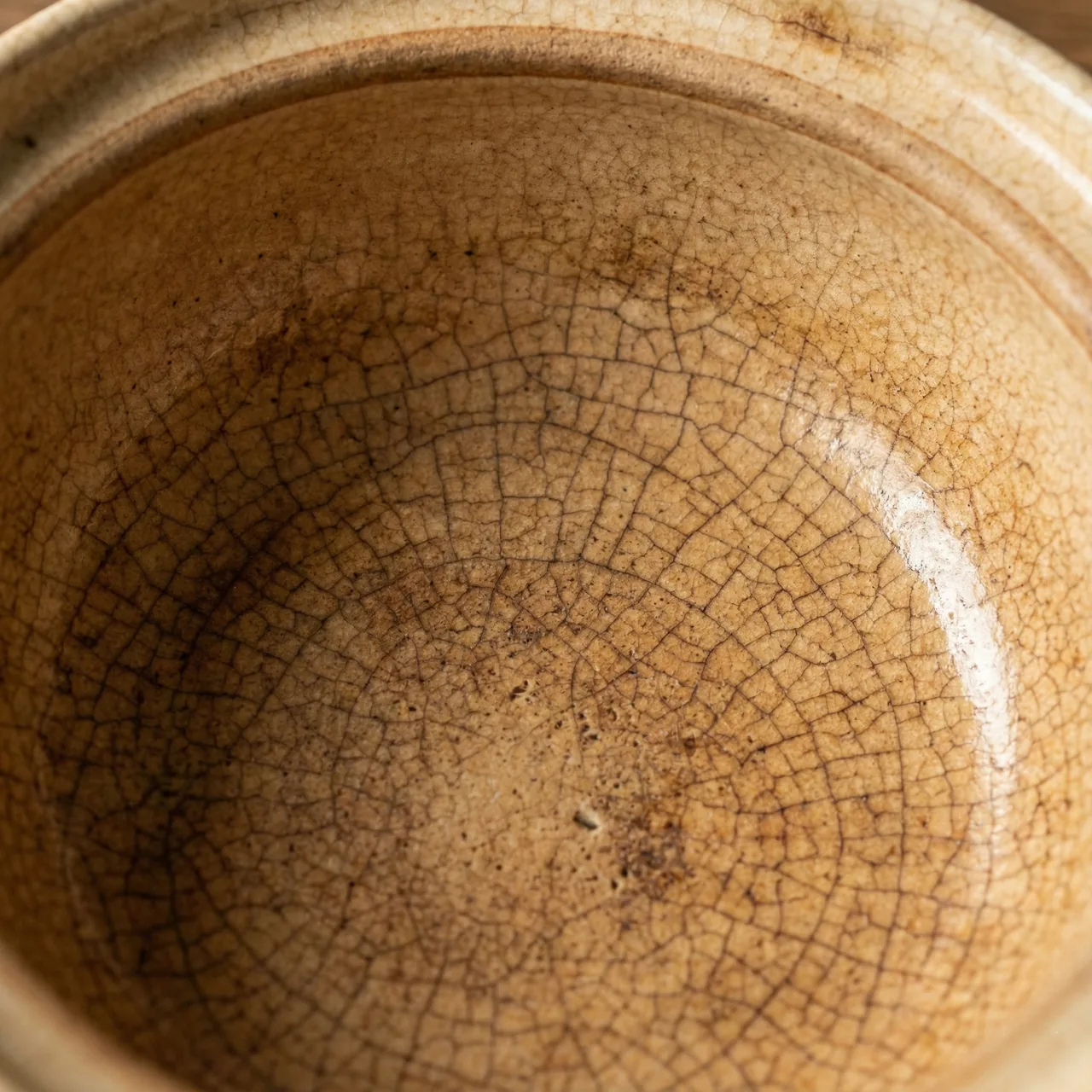
Fine surface cracks appeared (kannyu)
The fine network of hairline cracks that forms on a donabe's surface is called kannyu — a natural part of the clay's breathing and completely harmless.
If water seeps through them, do the medome process again with rice porridge.
The starch will fill the cracks and seal them from the inside.
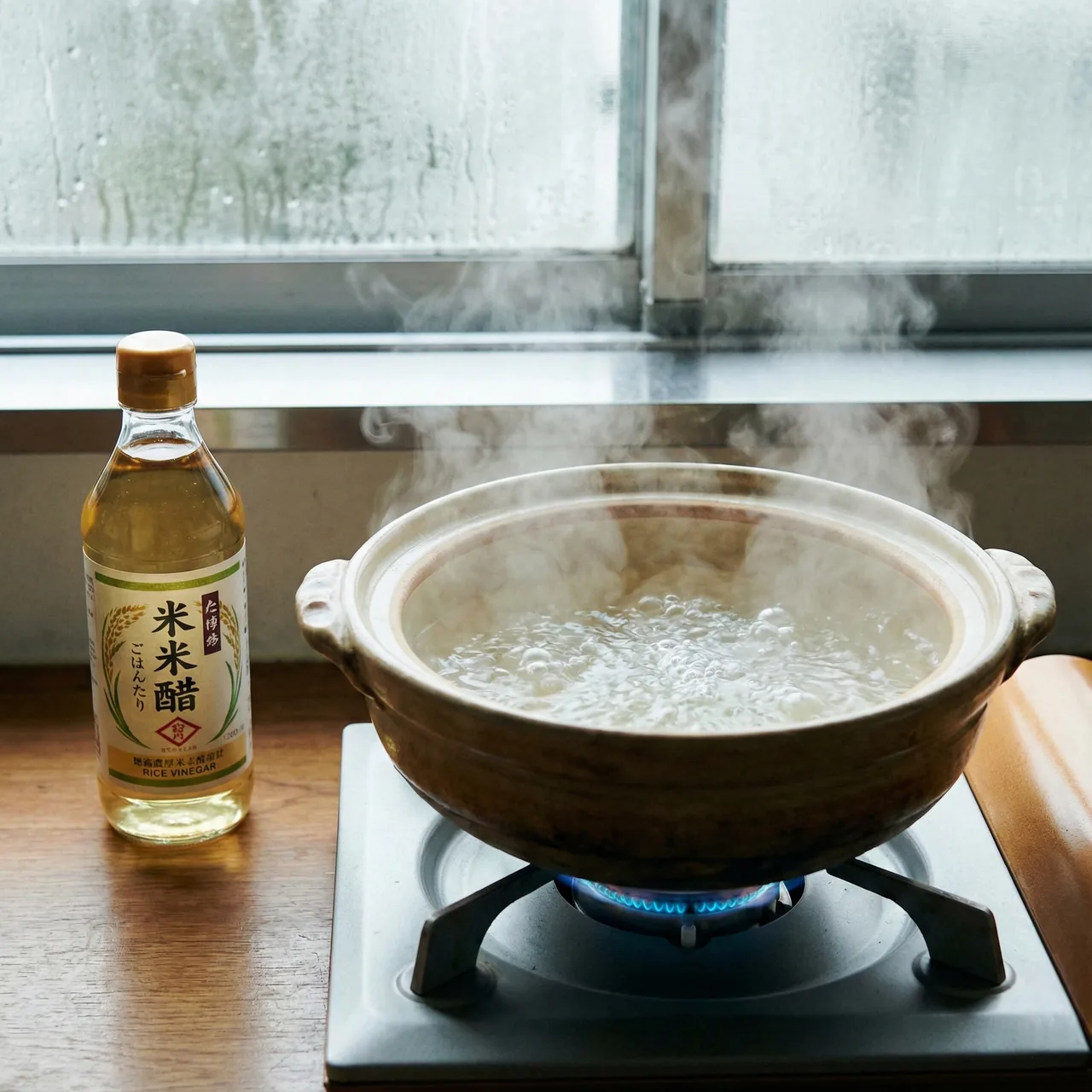
Mold smell developed
Add water to the pot and stir in 2–3 tablespoons of rice vinegar. Bring to a simmer and hold for about 10 minutes.
The acidity of the vinegar kills mold and neutralizes odors.
Rinse thoroughly and dry the pot completely afterwards.
Scorching on the bottom
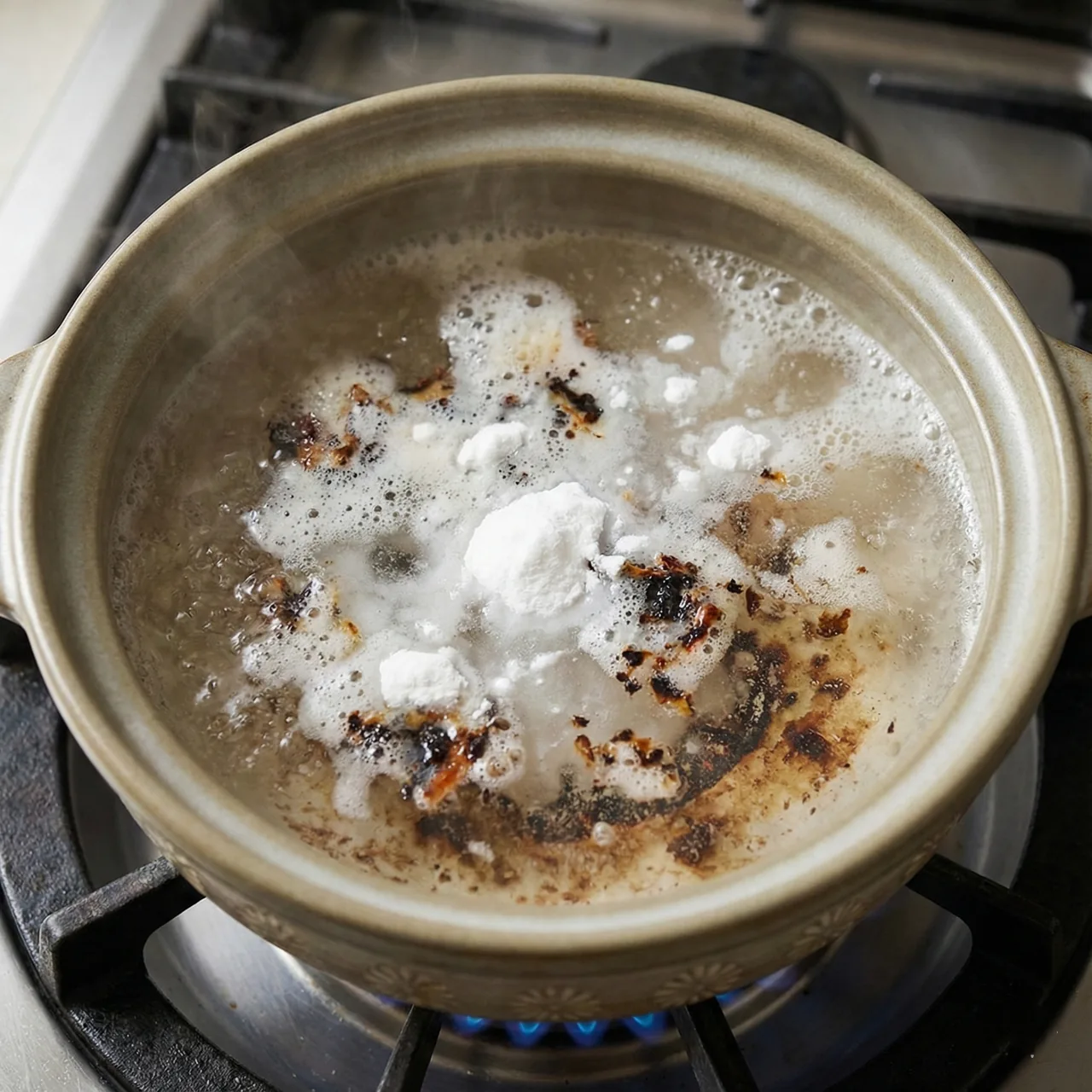
Do not scrub — it will scratch the clay.
Fill the pot with water, add 1 teaspoon of baking soda, bring to a boil, then remove from heat and leave until cool.
The scorched layer will soften and wipe away easily with a soft sponge.
6. Iga-yaki vs. Banko-yaki: Does Clay Type Change Your Care Routine?
Japan's two dominant donabe-producing regions are Iga and Banko, both in Mie Prefecture.
Knowing which you own will help you calibrate how careful you need to be.
Iga-yaki — Nagatani-en "Kamadosan"
Porous, breathing clay. Medome is non-negotiable.
Iga clay was once the floor of ancient Lake Biwa, leaving it full of tiny air pockets that deliver exceptional heat retention. The downside: it absorbs water readily, which means medome is absolutely required before first use.
Iga-yaki donabe produce the most celebrated rice in Japan, but they reward careful handling.
Banko-yaki — Ginpo "Hana Mishima"
Dense and durable. Some require no medome at all.
The grey-bodied donabe with floral patterns found in most family restaurants is Banko-yaki. Fired at higher temperatures, it is denser, more durable, and less prone to absorbing odors.
Many modern Banko-yaki come with a ceramic coating that makes medome unnecessary — always check the instruction sheet that comes with your pot.
7. Frequently Asked Questions
Can I use a donabe on an IH induction cooktop?
Standard donabe are not IH-compatible, but IH-ready donabe with a built-in heat-conducting plate on the base are available.
If yours uses a separate IH plate insert, check the manufacturer's instructions — the medome process may differ from a standard donabe.
How often should I do medome?
The initial medome when the pot is new is the most important — do this once before first use.
After that, repeat medome only when needed: after a long period of storage, when dirt will not come out, or when fine cracks start seeping water.
Is a crack always a reason to throw the donabe out?
Not at all. Fine surface cracks (kannyu) — smooth to the touch — are normal and safe.
Only a crack deep enough to catch a fingernail and allow water to drip through poses a safety risk (hot liquid could escape suddenly), and that is when replacement is the right call.
What causes a donabe to crack? How do I prevent it?
The two main culprits are sudden temperature changes and moisture on the bottom.
Common triggers: submerging a hot pot in cold water, placing a wet-bottomed pot on the burner, or moving a refrigerator-cold pot directly to high heat.
Prevention comes down to three habits: ① wipe the bottom dry before every use, ② wait until the pot is cool before washing, ③ never shock it with cold water. Proper initial medome also significantly reduces crack risk.
Can I use a donabe for deep frying?
No — do not deep fry in a standard donabe. The porous clay absorbs oil, which can superheat and ignite. There is also a risk of the pot cracking from sudden temperature changes when cold oil meets a hot surface.
Only use donabe marketed specifically as "frying-safe" for this purpose.
Can I put a donabe in the dishwasher?
No. The combination of high heat, high water pressure, and strong alkaline detergent will crack the clay and destroy the medome seal. Always hand-wash. After washing, wipe off moisture and stand the pot upside-down to air-dry completely.
8. Final Thoughts: The More Care You Give, the Better It Cooks

Donabe care may feel like a ritual at first.
But cooking the initial porridge, waiting overnight, and wiping the bottom before every use — these small habits are exactly what make a donabe last a lifetime and cook extraordinary food.
The three rules to live by:
· Season with medome before first use
· Wipe the bottom dry before placing on heat
· Dry upside-down after every wash
Follow these, and your donabe will be by your side for 10, 20 years — the most rewarding tool in a Japanese kitchen.
Donabe care begins with one simple habit.
Medome with rice porridge, wipe the bottom before every use, dry upside-down after washing — get these three things right, and you will have a lifetime cooking companion.
← Back to: Japanese Donabe Buying Guide

Donabe Rice: Perfect Every Time Without Adjusting the Heat
Japanese Donabe Guide: 4 Picks That Make Rice Taste Extraordinary
Tetsubin Care Guide: Rust Removal & Long-Term Maintenance

Magewappa Bento Box Care: Washing, Black Stains & Mold