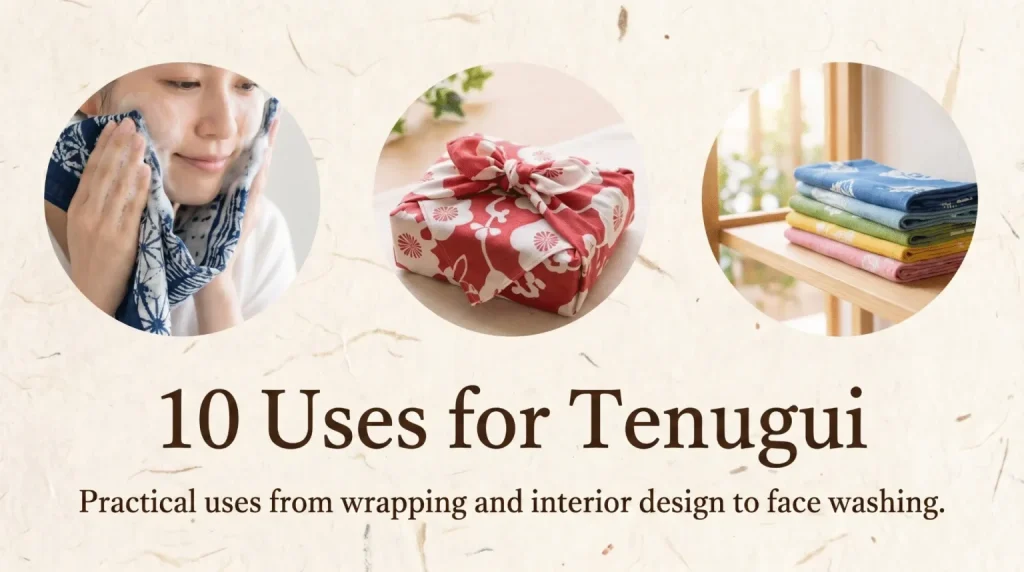
A tenugui (traditional Japanese
hand towel) is more versatile than any regular towel you own.
① As a hygiene tool — handkerchief, face wash cloth, dish drying towel
② As a wrapping cloth — bento box wrap, bottle wrap, gift wrapping
③ As home décor — tissue box cover, wall tapestry
④ As a wearable / emergency item — neck cooler, scarf, improvised bandage
"I received one as a gift but have no idea what to do with it." "The fraying edges make me nervous."
These are the most common tenugui concerns — and both have simple answers.
The unfinished edges are intentional: raw-cut fabric dries faster and stays more hygienic than
hemmed cloth.
This guide covers 10 concrete ways to use a tenugui starting today, plus tips on washing and
letting it "age" beautifully over time.
1. Everyday Basics: Handkerchief, Face Washing & Dish Drying
Let's start with the three core uses that make the most of tenugui's absorbency and fast-drying properties.
Because it's much thinner than a bath towel, bacteria have less damp material to multiply in —
which makes it genuinely more hygienic.
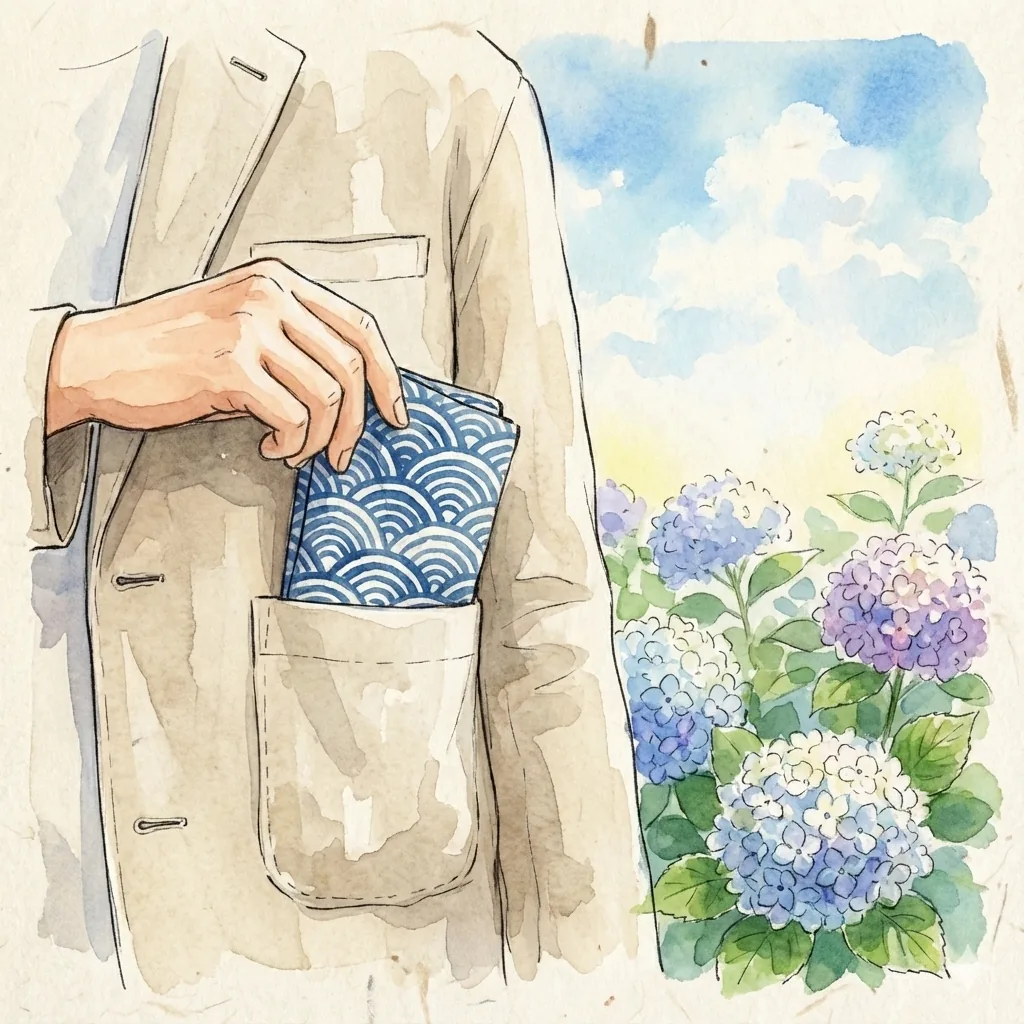
Use 1: Handkerchief / Face Towel
Folded, a tenugui takes up almost no space in a pocket or bag.
It absorbs well and then — the key difference from a terry cloth towel — it dries almost
immediately when unfolded and hung up, so musty odors are rarely an issue.
In summer heat or the rainy season, when regular handkerchiefs stay damp all day, this is the best possible
swap.
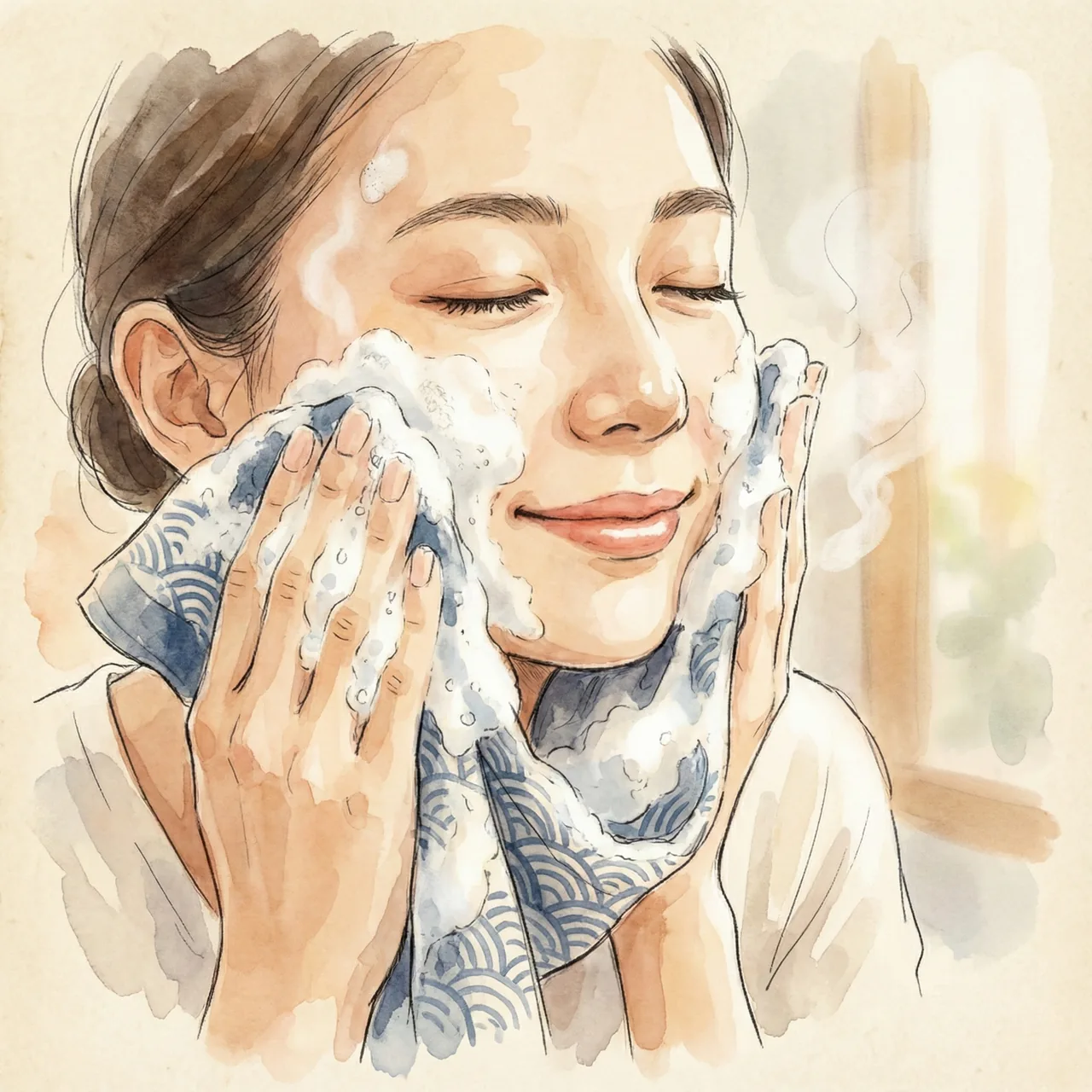
Use 2: Face Washing Cloth (Gentle Exfoliation)
Lather soap onto a damp tenugui and use it to wash your face. The fine woven fibers gently lift dead
skin cells and pore debris without harsh scrubbing.
The technique: float the cloth across the skin in soft circles — don't scrub.
The result is a noticeably smoother surface that absorbs toner and moisturizer more evenly.
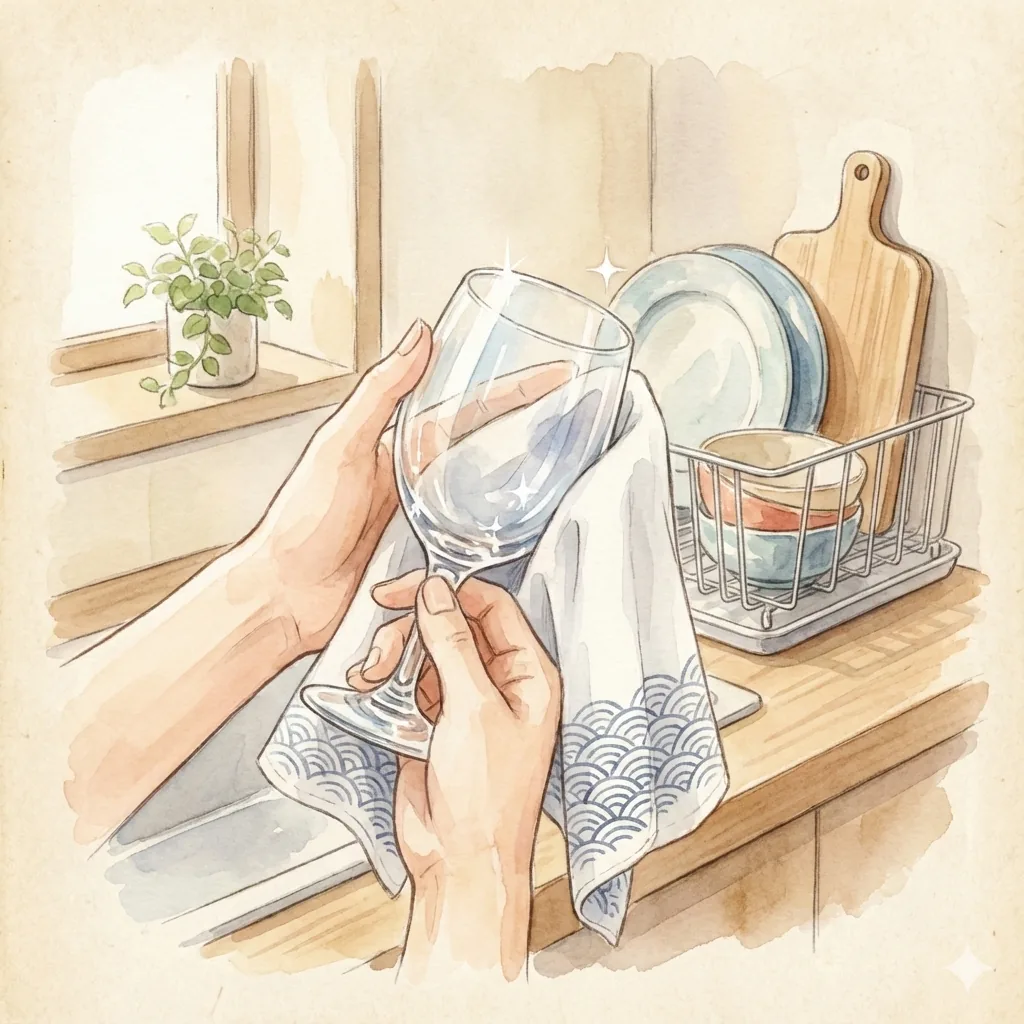
Use 3: Dish Drying (No Lint Left Behind)
Unlike loop-pile terry towels, tenugui leaves no lint or fibers on glassware or
lacquerware.
It's ideal for polishing wine glasses, sake cups, and anything else that needs to come out spotless.
The long shape makes it easy to wrap around large pots, and once you're done, it dries flat in minutes — keeping
the kitchen cleaner.
2. Wrapping Uses: Bento Box, Bottles & Gift Wrap
Tenugui is naturally good at tying and wrapping — far more so than a square furoshiki cloth, thanks to its elongated
shape.
Choosing a seasonal pattern instantly elevates any wrapped item into something gift-worthy.
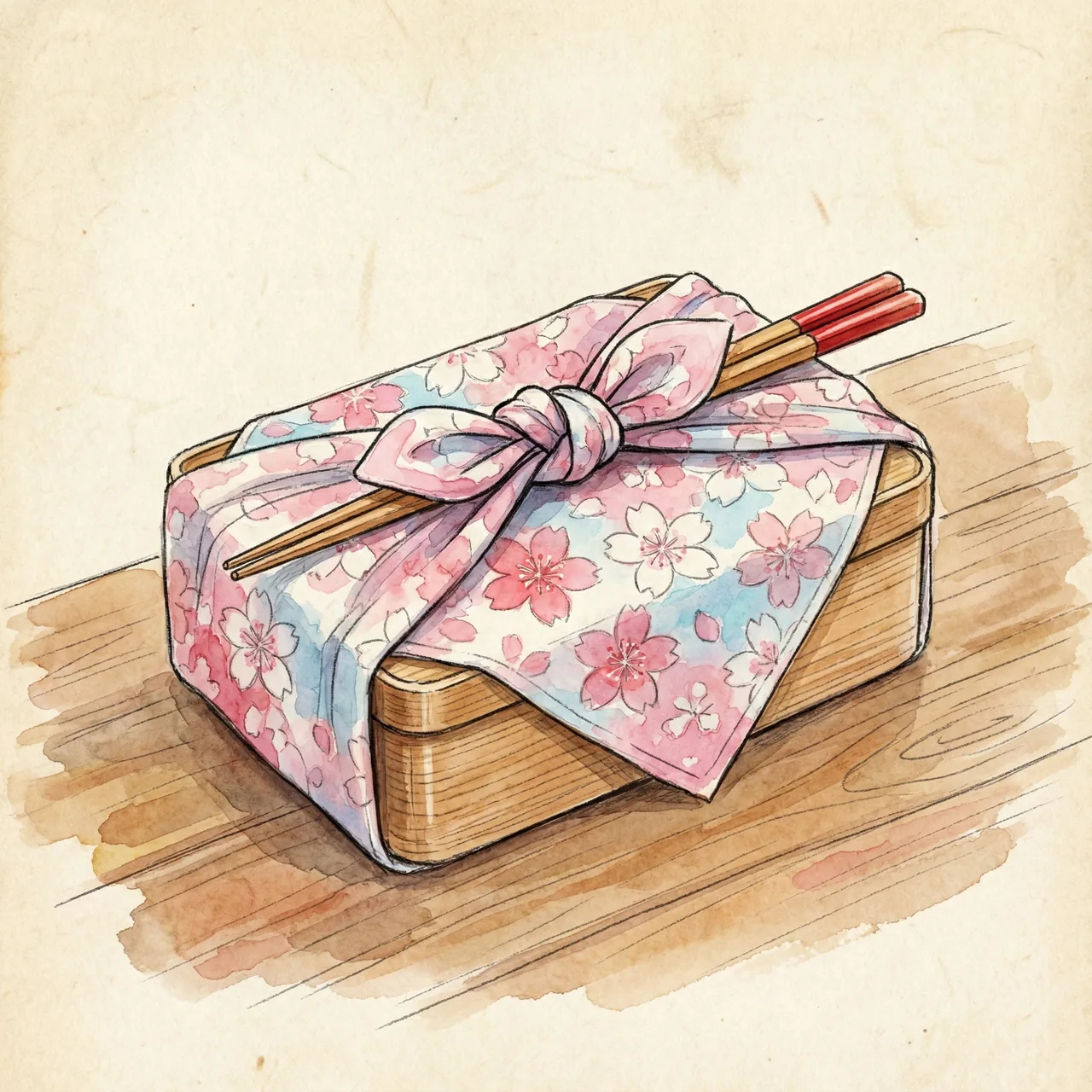
Use 4: Bento Box Wrap (and Instant Placemat)
Longer than a typical handkerchief, a tenugui wraps comfortably around large bento boxes — even with a drink
bottle alongside.
The tied knot becomes a handle for carrying. At lunchtime, unfold it flat and it becomes a
placemat.
It washes and dries so quickly that daily use is effortless.
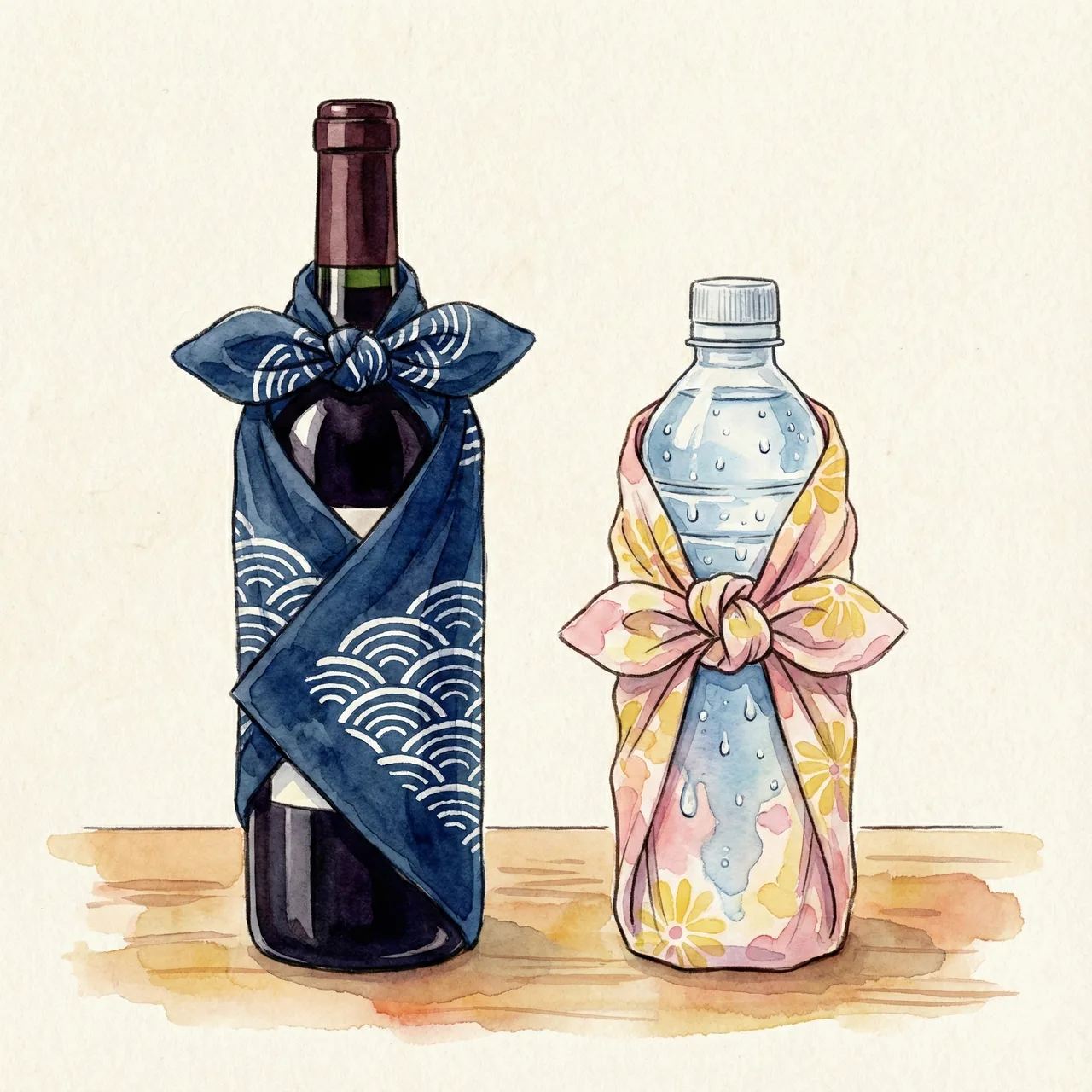
Use 5: Bottle & Wine Wrap
Wrapping a bottle of wine or sake in a tenugui transforms a simple hostess gift into something thoughtful and
distinctly Japanese.
It also serves a practical purpose: the cotton absorbs condensation from cold drinks, making it a natural
anti-sweat sleeve for carrying chilled bottles in a bag.
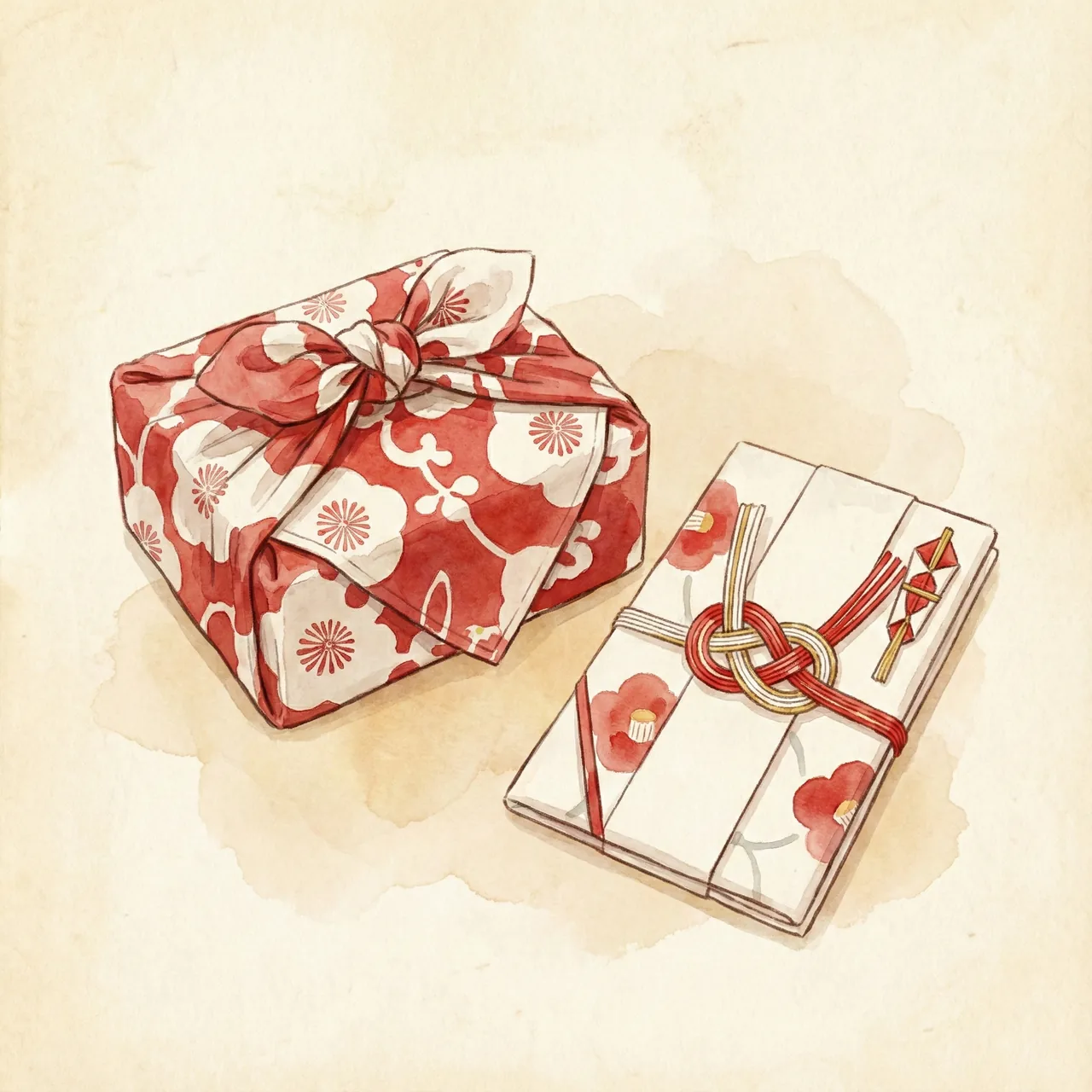
Use 6: Gift Wrapping
Wrapping a gift in tenugui instead of paper means the wrapping itself is part of the gift.
Traditional Japanese-style gift envelopes made from tenugui cloth (tenugui shugi-bukuro) are increasingly
popular for weddings and celebrations.
Zero waste, thoughtful, and genuinely reusable — a welcome break from disposable gift wrap.
3. Décor & Wearable Uses: Covers, Tapestry, Neck Cooler & Emergency
Beyond practical use, tenugui works beautifully as interior décor and seasonal accessories.
Swapping out a pattern with the seasons gives a room an entirely different atmosphere with almost no effort.
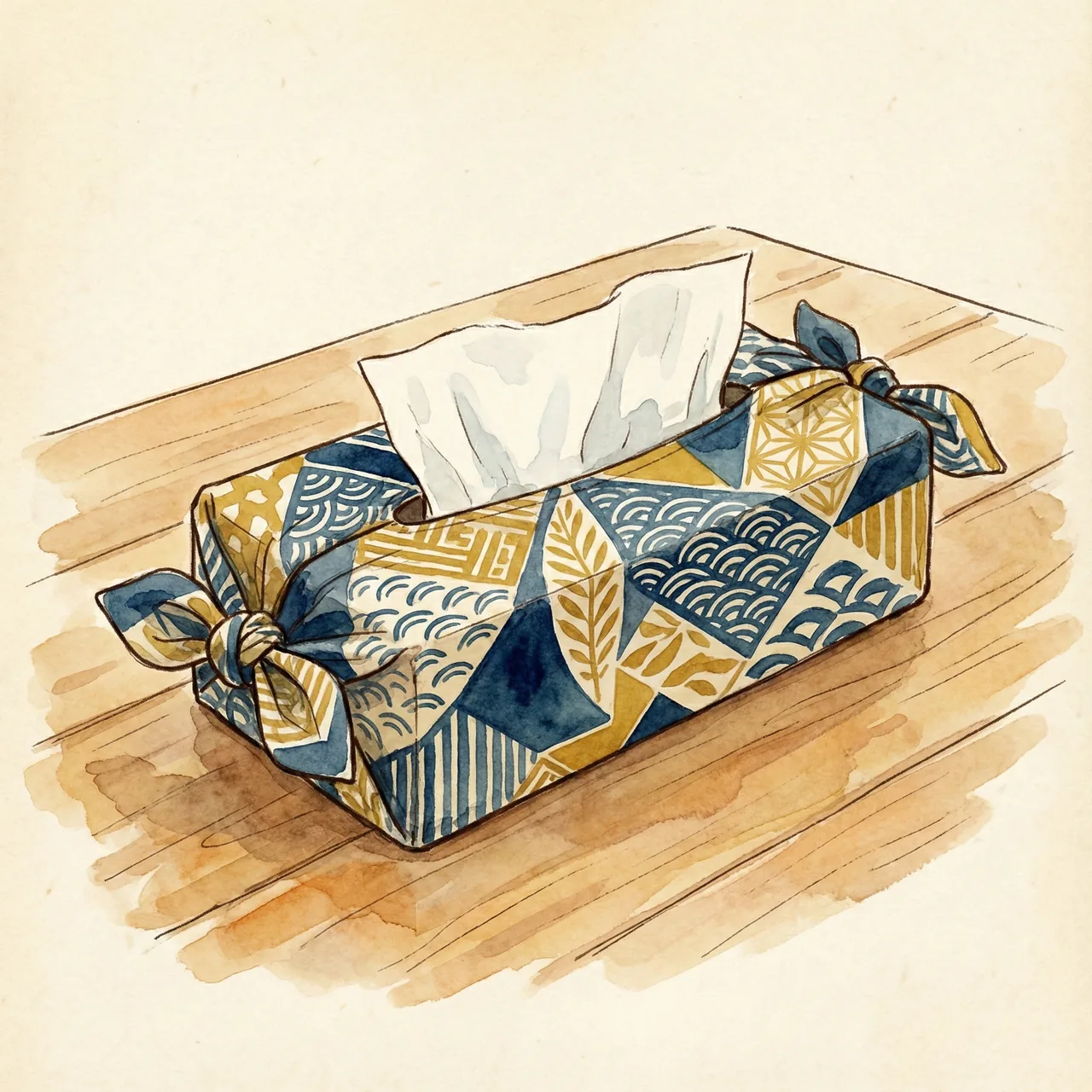
Use 7: Tissue Box Cover
A tissue box is one of the most visually disruptive items in any room — but wrap it in tenugui with a simple
knot and it instantly becomes décor.
When it gets dusty or dirty, just remove and wash. No sewing required — two knots, done.
Works especially well in bathrooms and kitchens where you want to keep things looking tidy.
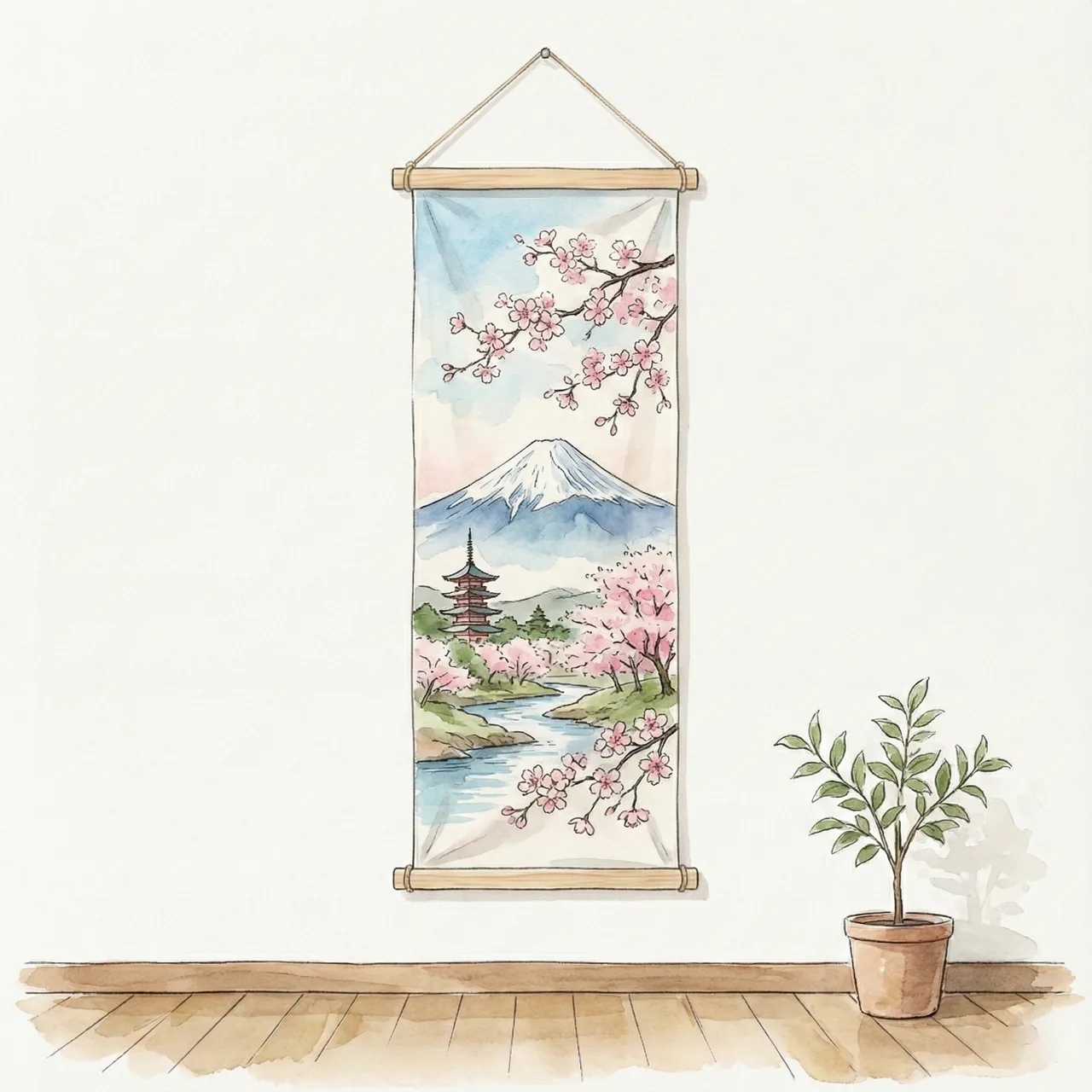
Use 8: Wall Art / Tapestry
A beautiful printed tenugui — cherry blossom, goldfish, autumn leaves — hung in a frame or on a tapestry rod
becomes seasonal wall art.
Rotate it monthly and you have a simple way to mark the seasons without storage bulk.
Also works as a cover for a monitor, printer, or any shelf you'd rather not show visitors.
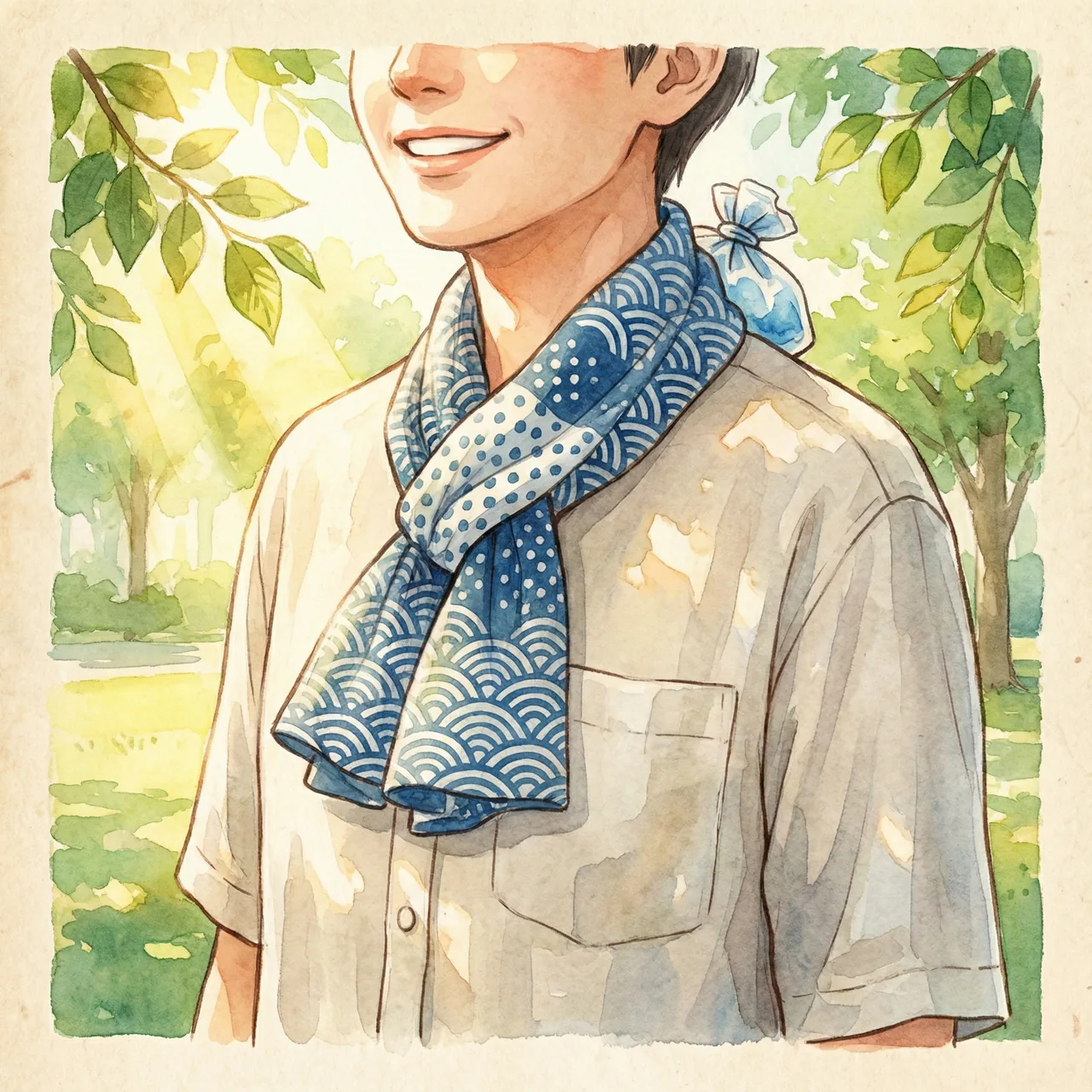
Use 9: Neck Cooler / Scarf
In summer, wrap a cold pack inside a tenugui and tie it around your neck — the soft cotton makes it far more
comfortable than a synthetic cooling towel.
In winter, fold it into a mini scarf to fill the gap between collar and chin.
100% cotton absorbs sweat naturally, and for anyone with metal allergies who avoids jewelry, it makes an easy,
skin-safe neck accent.
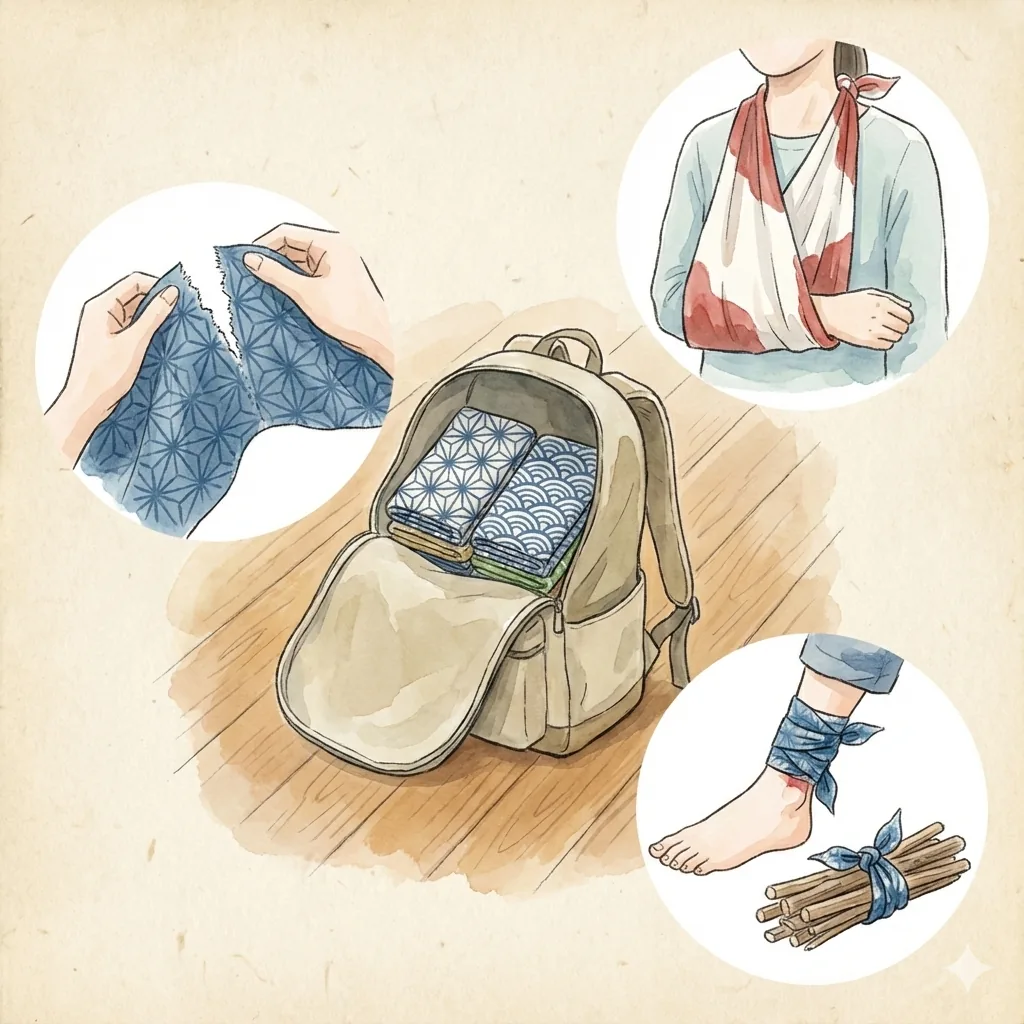
Use 10: Emergency Preparedness Item
A tenugui can be torn by hand with almost no effort — which makes it genuinely useful in an emergency.
Torn strips can serve as a bandage, pressure cloth, triangular
sling for a fractured arm, or rope for tying things together.
Keeping a few in your emergency bag makes more practical sense than a bulky towel — same size, far more
functions.
4. Why the Raw Edges? The Logic Behind Tenugui Design
The Unfinished Ends Are Intentional
The cut edges on a tenugui are not a defect — they are a deliberate design choice rooted in centuries of Japanese
practical thinking.
Without a sewn hem, the cloth sheds water faster and dries more quickly, and with no folded seam
to trap moisture, there's nowhere for bacteria to accumulate.
The raw ends also allow the cloth to be torn cleanly by hand — part of its traditional value as an emergency tool.
A Cloth That Gets Better with Age
Brand-new tenugui have a slight stiffness. After repeated washing, the weave loosens and the cloth becomes
remarkably soft — a softness that terry cloth rarely achieves.
The colors mellow and blend into a unique, lived-in tone that belongs only to your cloth.
Once you've felt a well-worn tenugui against your skin, going back to a regular towel takes a conscious effort.
5. How to Choose Your First Tenugui: Printed vs. Plain
If you're not sure where to start, aim for one printed (chūsen-dyed) cloth and one plain
white — that combination covers almost every use case.
Chūsen-Dyed Tenugui — Kamawanu, Eiraku-ya & similar
The real thing: color that goes all the way through, front to back. Best for gifts and
display.
Chūsen (pour-dyeing) is a hand-craft technique where dye is poured through layered fabric by a craftsperson. The
result is a rich, even color that ages beautifully.
Absorbency is excellent, and the subtle color-shift as it breaks in over time is one of tenugui's great pleasures.
Japanese Tenugui: Chūsen Dyeing, Popular Patterns & Where to Buy
Anbo Hand-Dyed Tenugui — Mt. Fuji & Cherry Blossom, Made in Japan
Traditional hand-dyed tenugui from Anbo, an Asakusa dyeing atelier established in 1907. The Tenassen dyeing technique produces deep, even color that ages beautifully over time. 100% cotton, 35 x 100 cm. A classic Japanese motif that works as a daily cloth or elegant gift wrapping.
View on AmazonPlain White / Natural Undyed — For Cooking & Face Care
The most practical option. Clean, visible, and multipurpose in the kitchen.
No pattern means you can see at a glance when it needs washing — a real advantage for hygiene-conscious use.
Dish drying, straining dashi stock, squeezing water from vegetables: plain cotton tenugui handles all of it
without hesitation.
KOMESICHI Plain White Tenugui — 10-Pack, 100% Cotton
Pure plain white cotton tenugui with fray-prevention stitching on the ends. No pattern means you can see at a glance when it needs washing — ideal for kitchen use, dish drying, and straining dashi. Economical 10-pack for daily replacement.
View on AmazonGauze Tenugui — For Sensitive Skin
A gentler entry point for those hesitant about raw edges.
Some styles combine a gauze face with a terry-cloth back; others are finished with a hem rather than left
raw-cut.
Technically different from traditional tenugui — but for babies' bathing or people with very sensitive skin, these
are the most comfortable option to start with.
MIKURA Double Gauze Tenugui — Cherry Blossom, Made in Japan
Double-gauze construction makes this noticeably softer and gentler against skin than standard woven tenugui. Hemmed on all four sides — a good starting point for those new to tenugui or for sensitive skin. 100% cotton, made in Japan by MIKURA, established 1950. ~34 x 13 inches.
View on Amazon6. Frequently Asked Questions: Fraying, Washing & Ironing
The edges keep unraveling. What should I do?
Some loose weft threads will emerge at the cut ends during the first few uses — this is expected. Trim
only the loose horizontal threads with scissors, leaving the cloth itself intact.
After three or four washes with occasional trimming, the edge naturally stabilizes into a short fringe about
5–10mm wide.
Once it reaches that point, it won't unravel further.
Can I machine wash it?
Yes. To avoid tangling with other laundry and pulling the threads, place it in a mesh laundry bag
first.
Deeply dyed tenugui (especially chūsen-dyed) may bleed color in the first few washes — wash separately or with
items that can tolerate minor color transfer for the first couple of cycles.
Can I iron it?
Yes — 100% cotton handles high heat without issue.
If you want it crisp and flat for use as a placemat, iron at high heat.
For everyday use, shaking the cloth out firmly while still slightly damp and hanging it flat is usually enough to
dry wrinkle-free without any ironing.
7. Final Thoughts: The Most Versatile Cloth in Your Home
A tenugui is not a relic of old Japan. It is a practical, everyday tool that outperforms modern alternatives in
several key areas: drying speed, hygiene, packability, and adaptability.
Start with just one:
· Pick a pattern you genuinely like
· Carry it as a handkerchief for a week
· Try using it in the kitchen to dry dishes
Once you experience how quickly it dries and how soft it becomes with use, you'll start reaching for it over a
regular towel almost automatically.
Find a pattern you love — and let it age into something that's entirely yours.