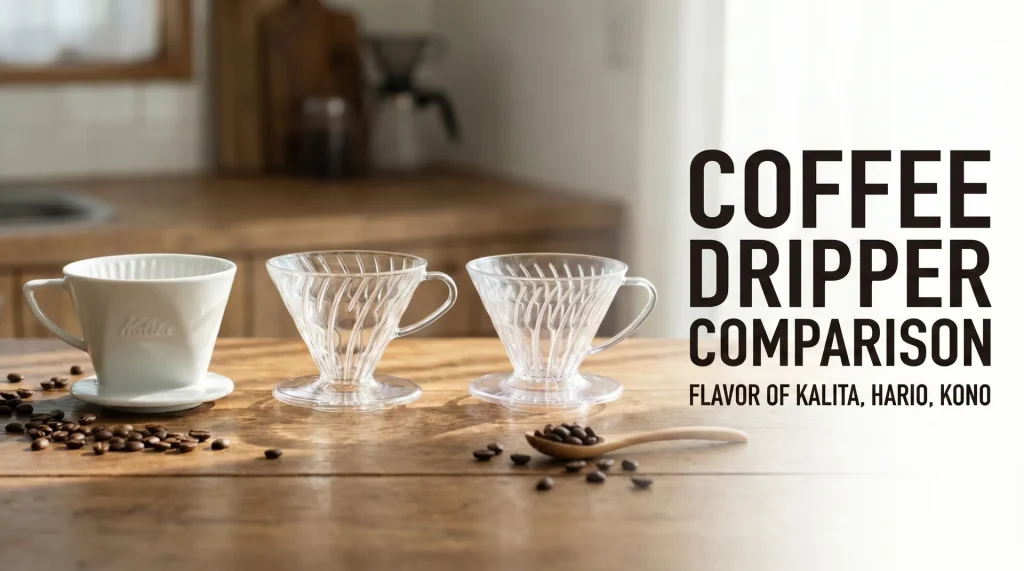
You want to get into pour-over coffee but the options are overwhelming. Or you're already brewing by hand but the
result never matches what the café produces — somehow thinner, less complex.
The answer is not in your beans. It's in your dripper.
The shape of a coffee dripper — the angle, the hole count, the rib structure — fundamentally
controls the character of the cup.
Here's the short version: for reliably rich and balanced coffee, choose Kalita. For clean, bright
acidity, choose HARIO. For dense, sweet, concentrated coffee, choose KONO.
Each of these Japanese makers developed their drippers with precise engineering logic — and the specialty coffee
world has adopted all three as global standards.
This guide explains the physics behind shape and hole count, covers the three universal rules of pour-over brewing,
and helps you find the dripper that matches exactly how you like your coffee.
Quick Reference: Dripper Shapes at a Glance
| Shape | Flow Speed | Flavor Profile | Key Brands |
|---|---|---|---|
| Trapezoidal (Melitta style) | Slow (water pools at base) | Rich, mellow body — consistent result | Kalita, Melitta |
| Conical (HARIO style) | Fast (single hole, adjustable) | Clean, fruity acidity — skill-responsive | HARIO V60 |
| Fan-shaped | Medium (short ribs, stable) | Balanced — clarity and sweetness together | Origami, KONO |
| Wave (flat-bottom) | Even (wavy filter structure) | Dense, sweet — very forgiving | Kalita Wave |
2. The Physics of Shape and Holes | Immersion vs. Percolation
Why does a different shape produce a different flavor? Because it changes how long water stays in contact with the grounds — and how it flows.
Water That Pools vs. Water That Flows Through
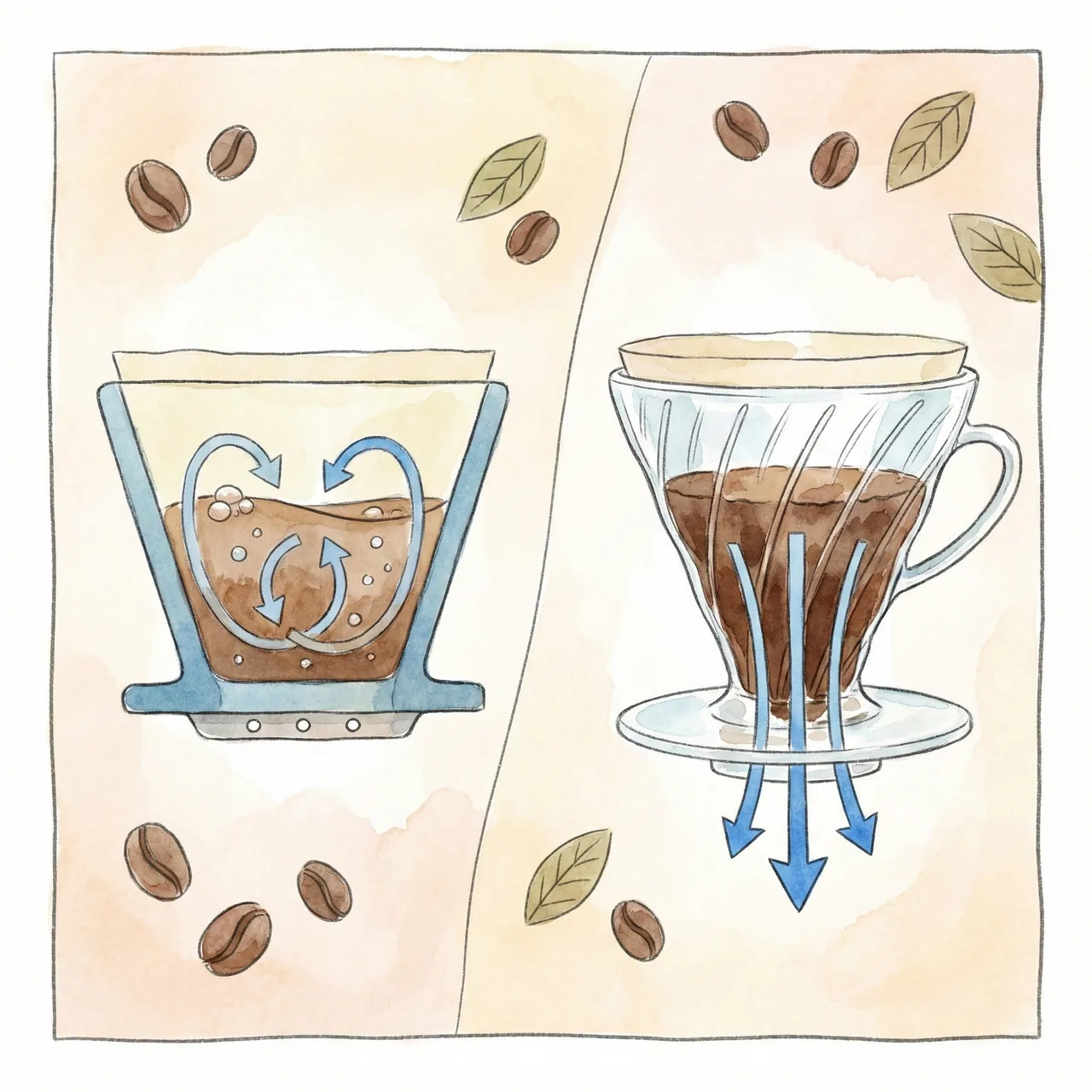
Trapezoidal (Kalita etc.): Water pools briefly at the flat base before draining, creating an
immersion effect where grounds soak in hot water. This extracts compounds thoroughly and consistently — making
it forgiving regardless of how you pour.
Conical (HARIO, KONO): Water flows toward a central point and exits quickly in a percolation
style. Pour speed translates directly to flavor — more control, more variability, more skill required.
Ribs Control Air and Speed
The ridges running down the inside of a dripper are called ribs. They hold the paper filter away from the
dripper wall, creating an air channel.
When ribs run all the way to the top, air escapes freely and water moves fast — producing clean, lighter-bodied
coffee. When ribs only run partway, water is slowed and concentrated. The rib design is where each maker's
engineering philosophy lives.
3. The 3 Universal Rules of Pour-Over Brewing
Even the best dripper won't help if the fundamentals are wrong. These three principles apply regardless of which dripper you use.
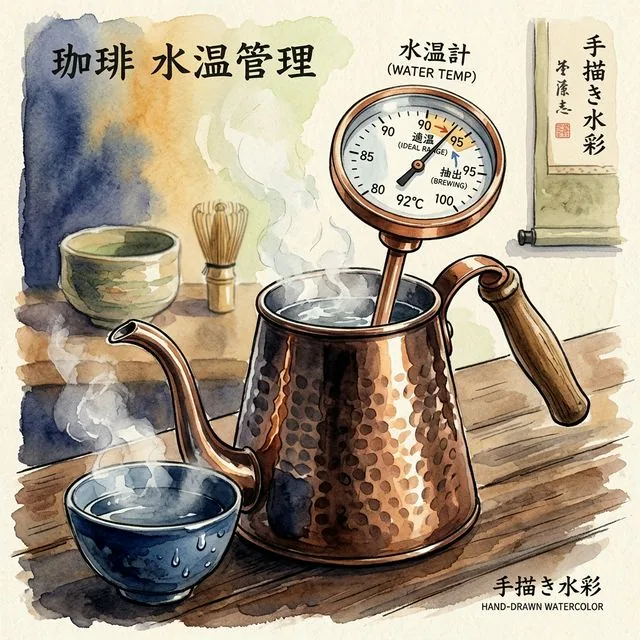
① Temperature: Light Roasts Higher (90–93°C), Dark Roasts Lower (83–85°C)
Never pour boiling water directly onto your grounds. Water above 95°C extracts harsh astringency and unpleasant
bitterness that no technique can fix.
Water that is too cool under-extracts and produces sour, flat coffee. Pouring boiling water from a kettle into a
narrow-spout drip pot naturally drops the temperature to around 90°C — simple and effective.
The general rule: lighter roasts need higher temperatures to open up their delicate aromatics;
darker roasts need lower temperatures to avoid over-extraction of bitter compounds.
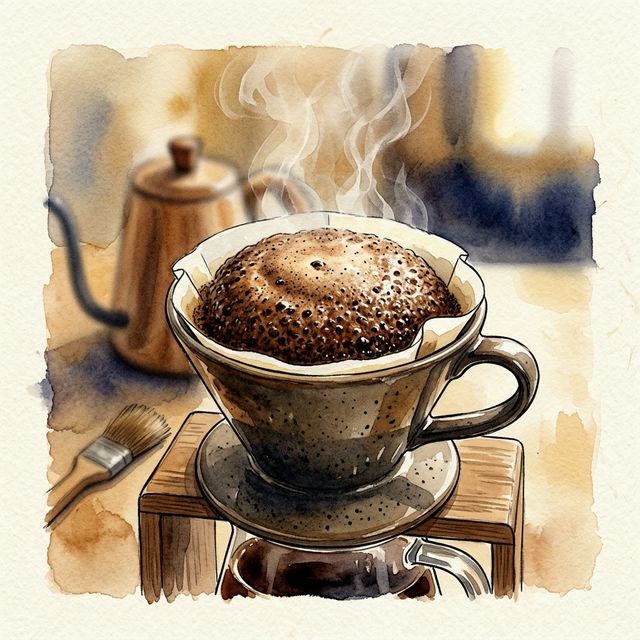
② Bloom: The First 30 Seconds Are Everything
Start by gently pouring just enough water to wet all the grounds, then wait 30 seconds.
This "bloom" phase releases trapped CO₂ from the grounds, allowing the water to penetrate evenly rather than
channeling through gas pockets. Fresh beans will swell up beautifully during this phase — a visible sign of
quality.
Skip the bloom, and hot water flows straight through the grounds without extracting properly. The result is
weak, watery, under-extracted coffee regardless of your dripper choice.
③ Path: Pour in Circles, Never Hit the Paper
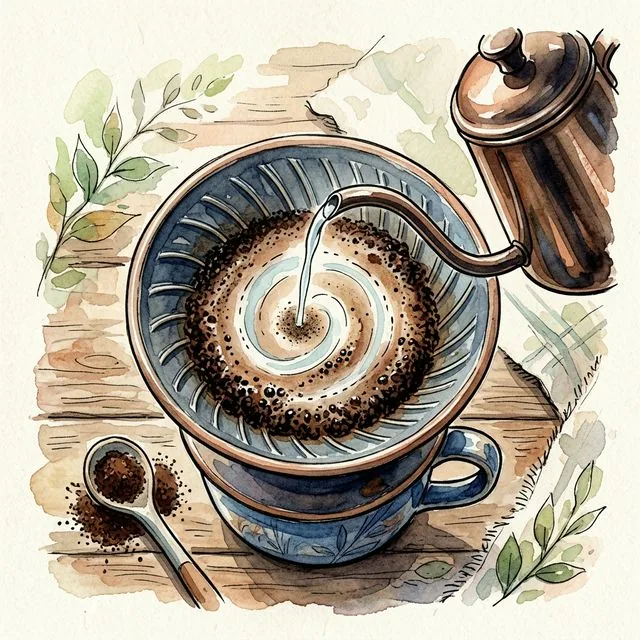
Using a narrow-spout kettle, pour in slow, small concentric circles — starting from the center and spiraling
outward to about the size of a coin.
The single most important rule: never let water hit the paper filter directly. Water landing on
the paper bypasses the coffee bed entirely, flowing through the gap between filter and dripper directly into the
cup — producing a completely flat, flavorless extraction known as channeling. Keep every pour within the bed of
grounds.
4. Kalita Style | 3-Hole Trapezoidal for Consistent Body
The most widely used dripper style in Japan — the Kalita trapezoidal. Beloved by beginners who want reliable results and by veteran café owners who value repeatability.
Kalita 101 / 102 Roto
Born from a patent workaround — and the 3-hole fluid dynamics that followed.
Kalita originally developed the three-hole design as a Japanese alternative to the patented single-hole
Melitta dripper. What emerged was a fail-safe engineering solution that turned out to be brilliant.
The three small holes at the base act as a controlled drain: water pools briefly in the flat bottom (immersion
effect), extracting body and richness — then all three holes drain simultaneously before harsh astringency
compounds have time to dissolve. No matter how inconsistently you pour, the dripper regulates itself.
The ceramic Roto model holds heat well and has a warm, retro aesthetic that coffee lovers find deeply
satisfying.
Kalita 102-Roto — 3-Hole Ceramic Dripper (2–4 Cups)
Japan's most trusted pour-over dripper. Three-hole flat-bottom design regulates extraction speed for consistent, full-bodied coffee — beginner-proof and café-proven.
View on AmazonKalita Wave Dripper
The flat-bottom that makes barista-quality coffee skill-independent.
The Kalita Wave is a newer design that became a staple of the third-wave coffee movement — and for good
reason.
Its flat bottom (unlike the tapered trapezoidal) creates a perfectly even coffee bed, preventing water from
finding shortcuts through the grounds. The dedicated "wave filter" — a corrugated paper filter — holds itself
away from the dripper walls, eliminating contact points and producing exceptionally smooth, even
extraction.
Sweet, clean coffee without channeling or over-extraction — no technique needed.
Kalita Wave 185 — Flat-Bottom Wave Dripper
Third-wave favorite from Kalita. Flat-bottom design with proprietary wavy filter produces even extraction and sweet, clean coffee — no technique required.
View on Amazon5. HARIO Style | Single-Hole Conical for Bright Clarity
The HARIO V60 is the most commonly used dripper in barista championship competitions worldwide. It converts the brewer's skill directly into the cup — high ceiling, high reward.
HARIO V60
Founded as "Hari-O" (King of Glass) in 1921 — and engineered to mathematically replicate nel-drip
brewing.
HARIO traces its roots to a heat-resistant glass manufacturer established in 1921. Their key insight: the
beloved cloth nel-drip method (using a flannel filter) produces a uniquely deep, clean cup — and they set
about replicating it in paper.
The solution was the V60 conical form, angled at precisely 60 degrees. This creates a tall, vertical column of
coffee grounds through which water descends slowly, maximizing contact time. Spiral ribs running all the way
to the rim hold the filter open at all points, ensuring air escapes freely and water moves without
obstruction.
Pour faster for a lighter, cleaner cup. Pour slowly for more body and depth. The V60 is the definitive choice
for extracting the fruity aromatics of light-roast single-origin beans.
HARIO V60 Size 02 — Clear Plastic Conical Dripper
The world's most competition-used pour-over dripper. 60° conical form with spiral ribs — pour speed becomes flavor. The standard for specialty light-roast extraction.
View on Amazon6. KONO Style | Original Conical for Dense Sweetness
A professional's dripper. At first glance similar to the HARIO, but engineered on an entirely opposite philosophy.
KONO Meibun Filter (Meimon)
Founded in 1925 with the siphon pot — and the capillary force engineering that followed.
Kohii Saiphone Co., Ltd. — whose founder invented the coffee siphon in 1925 — developed the original conical
paper dripper. The KONO is the ancestor of all conical drippers, including the HARIO V60.
Its defining feature is that ribs only exist in the lower half of the cone. In the upper
half, the paper presses flush against the dripper wall, physically sealing off any lateral escape path for
water. The liquid is forced downward through a narrow gap at the base, where it is pulled toward the single
exit hole by capillary action and gravity — slowly, drop by drop.
This allows the "point-drop" (teki-teki) technique: dripping water one drop at a time to coax out maximum
sweetness and richness from the grounds. The result is a syrupy, concentrated cup that dark-roast enthusiasts
describe as the closest thing to old-school Japanese kissaten coffee available from a home dripper.
KONO Meimon MDN-20 — Original Conical Dripper (2 Cup)
The conical dripper that came before V60. Lower-half ribs force capillary-action extraction — enabling drop-by-drop brewing for maximum sweetness and depth from dark roasts.
View on Amazon7. Frequently Asked Questions
Which dripper should an absolute beginner choose?
The Kalita (3-hole) or Kalita Wave — neither will let you fail.
Because the dripper self-regulates flow speed, inconsistent pouring technique doesn't ruin the cup the way it does
with conical drippers. You'll consistently produce full-bodied, enjoyable coffee from your first brew.
Once you've learned to appreciate the differences, stepping up to HARIO or KONO becomes a natural and exciting
progression.
Does material — plastic, ceramic, or glass — affect flavor?
Subtly yes, mainly through heat retention.
Plastic: Requires no pre-heating and loses virtually no heat to the dripper body — actually the
most thermally consistent for extraction, despite what you might expect from a premium perspective.
Ceramic / Glass: Must be pre-rinsed with hot water before brewing (to avoid the cold dripper
dropping extraction temperature). Without pre-heating, you risk under-extraction and sour notes. That said,
ceramics and glass are far more durable and aesthetically rewarding for daily use.
Do I have to use the brand's own paper filters?
As a rule, yes — especially for conical drippers.
Conical drippers vary by a few degrees of angle between brands — non-matching filters won't seal correctly against
the walls, changing the water path unpredictably.
Trapezoidal filters are somewhat more interchangeable, but manufacturer filters tend to have less paper taste and
are engineered for the specific flow rate of the dripper.
What size should I buy for one person?
Choose the 1–2 cup size (01 size).
It's tempting to buy the larger size "just in case" — but brewing one cup in a 1–4 cup dripper produces a thin,
shallow coffee bed that water passes through too quickly. The bed needs sufficient depth to extract properly.
Match the dripper size to the amount you typically brew.
Are copper drippers worth it?
For serious brewers, yes — they are genuinely functional, not just beautiful.
Both Kalita and HARIO offer copper models. Copper's superior thermal conductivity means heat distributes evenly
across the entire dripper body, maintaining a more stable extraction temperature throughout the brew.
The trade-off: copper develops a natural patina over time if not maintained. It's a material for people who enjoy
caring for their tools.
Is a narrow-spout drip kettle absolutely necessary?
Yes — from a fluid dynamics standpoint, it is non-negotiable.
A standard kitchen kettle pours turbulent water — a churning, unpredictable flow that craters the coffee bed and
causes channeling. Once the bed is disturbed, water finds shortcuts through the disrupted grounds rather than
passing through them evenly, producing flat, over-extracted coffee simultaneously.
A narrow-spout drip kettle produces a laminar flow — a thin, straight, gentle stream that lands on the grounds
without disturbing them. This is what allows the dripper to function as designed.
8. Editor's Note: Match Your Dripper to Your Mood
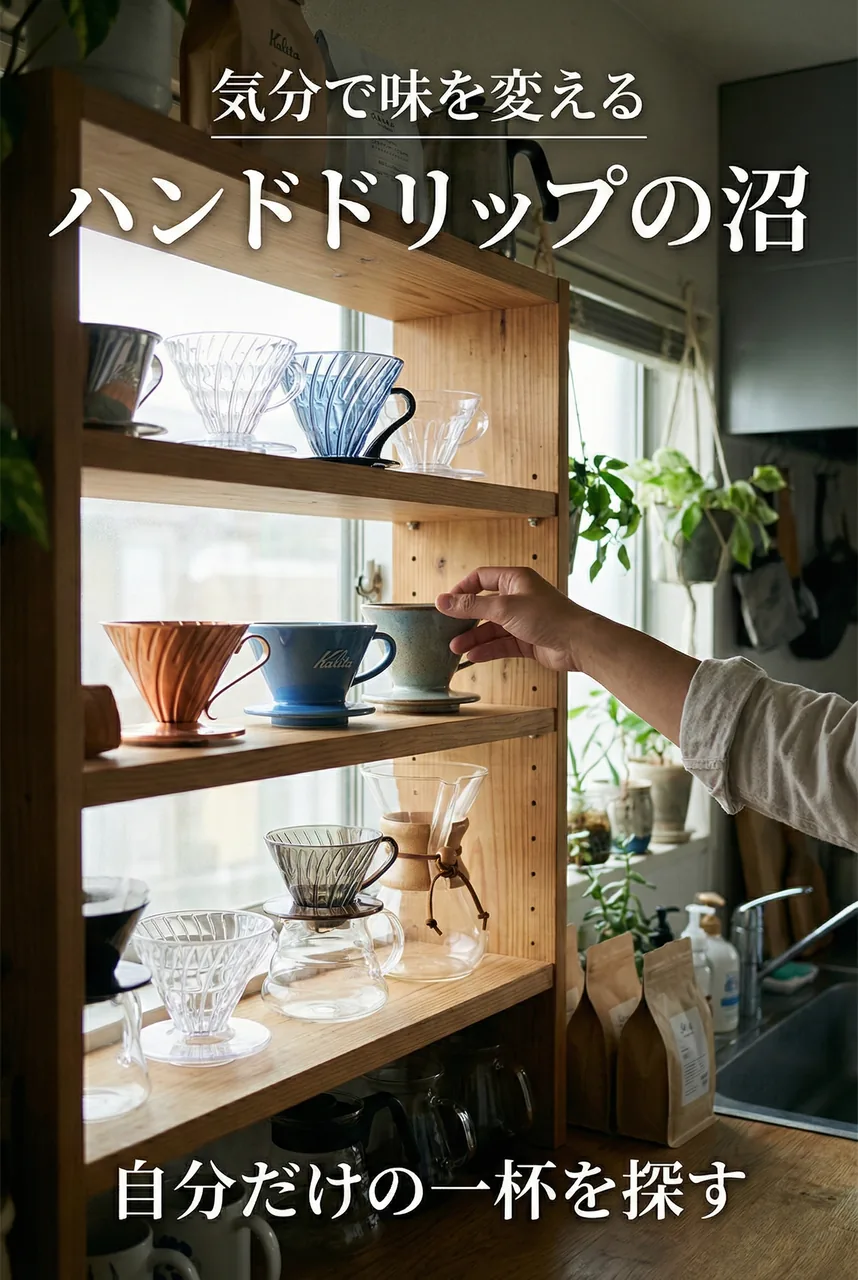
"I'm tired today. I want Kalita — something rich and grounding."
"These new light-roast beans deserve the V60 treatment. Let's see what's hiding in there."
Having more than one dripper opens up this kind of daily choice — pairing the tool to the mood, or to the
character of the beans you're working with. It's a dimension of coffee enjoyment that no automatic machine can
offer.
The price of admission is a few dollars to a few hundred. The difference in your cup is immediate and
remarkable.
Explore what changes when you change the shape — and welcome to one of the most enjoyable sciences you can
practice in your own kitchen.
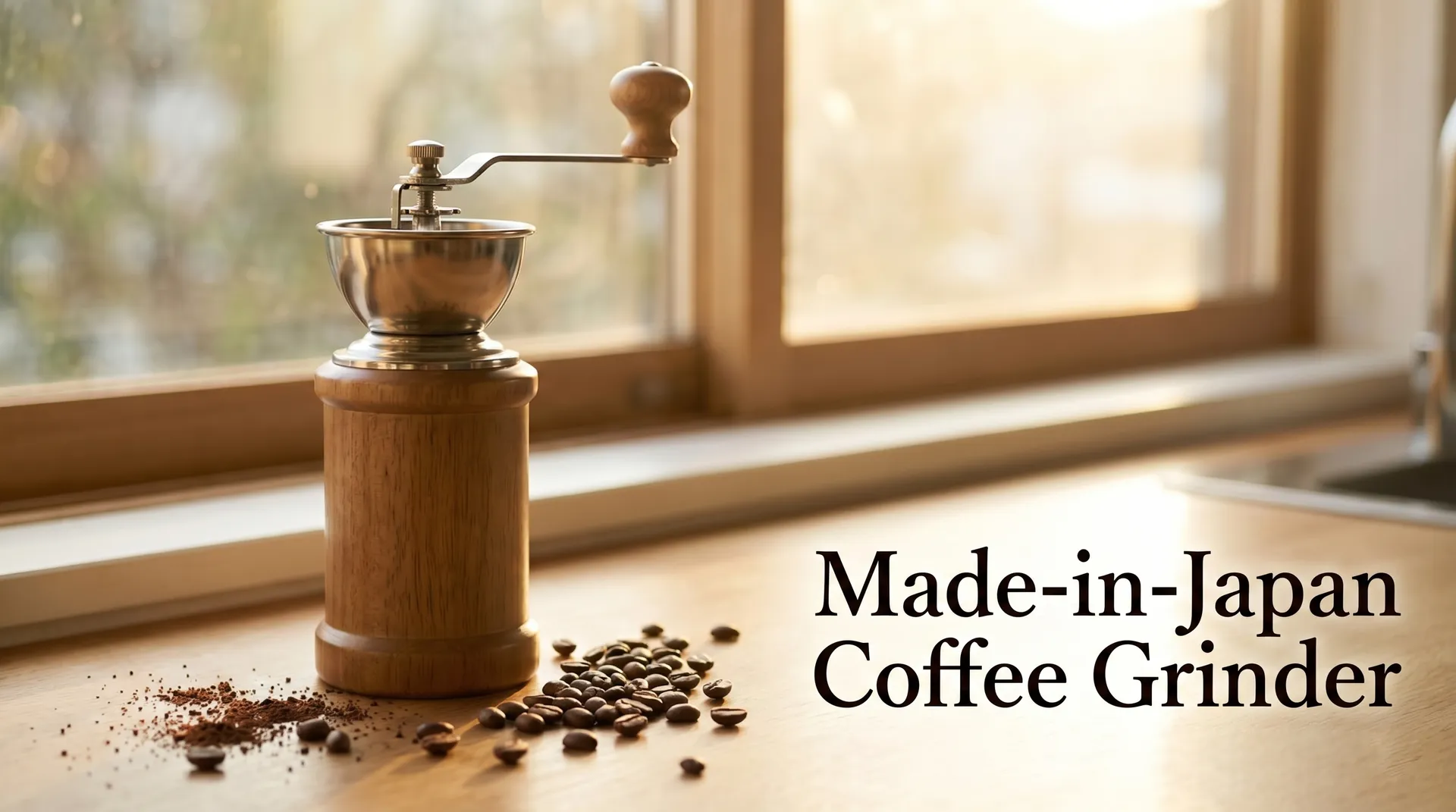
Japanese Coffee Mill Guide | Tsubame-Sanjo Blades for Even, Consistent Grind
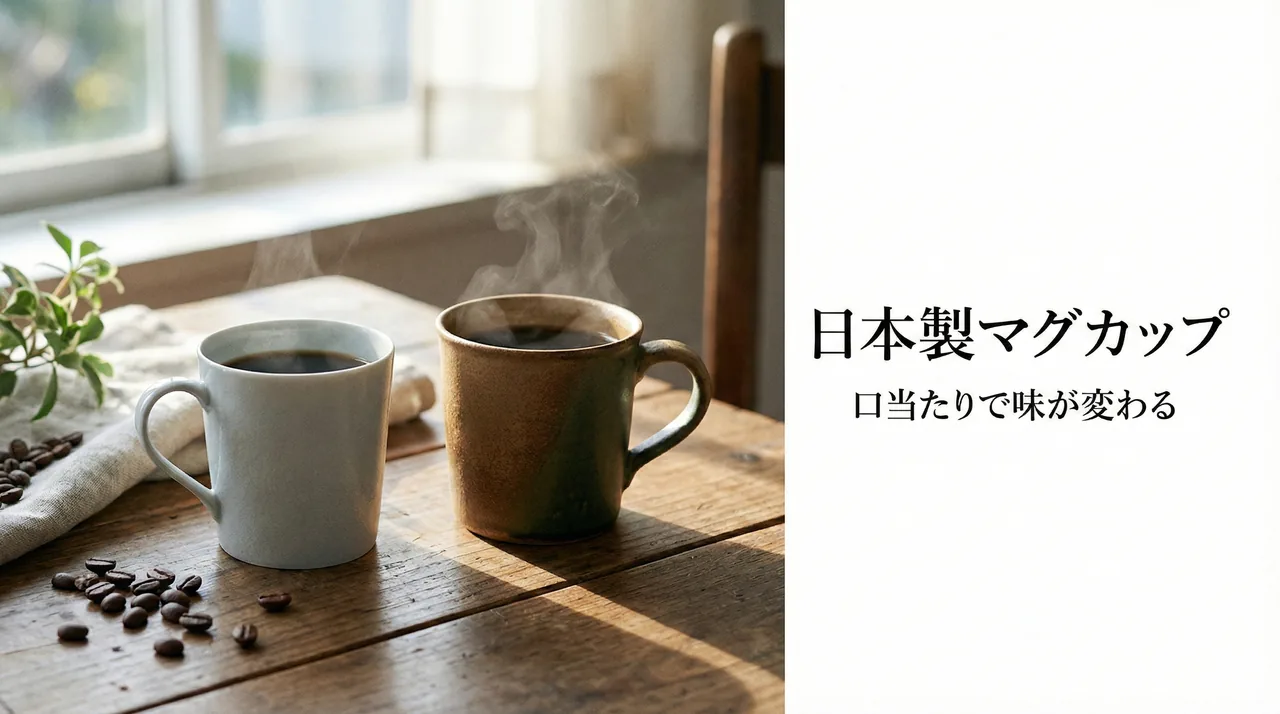
Japanese Mug Guide | Why Arita and Mino Ware Change the Way Coffee Tastes