"I'm buying the same beans as the café — but my coffee tastes bitter and muddy at home."
"My electric blade grinder produces uneven powder and the flavor changes every cup."
If that sounds familiar, the problem is not your beans. It's your grinder.
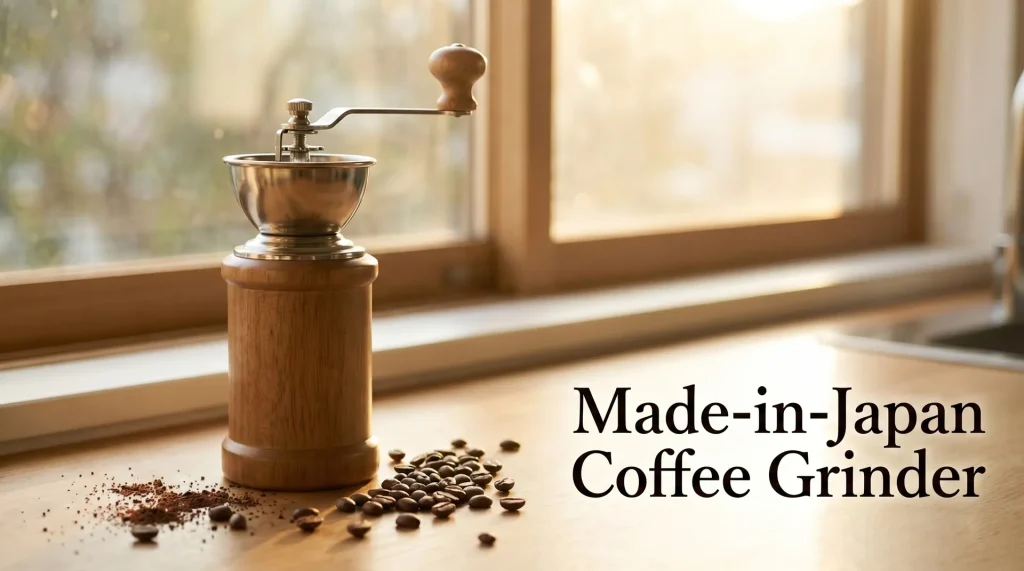
The single most impactful upgrade you can make to your home coffee setup is a quality burr mill. And in the world of
hand grinders, the mills made in Tsubame-Sanjo, Niigata Prefecture — Japan's
metalworking capital — are in a class of their own.
The precision-machined burrs cut beans cleanly rather than crushing them, producing an exceptionally uniform grind
with minimal fine powder. The result is a cup that is startlingly clean and clear — something a blade grinder cannot
produce.
This guide covers the food science of why pre-ground coffee always falls short, the engineering behind great burrs,
and the finest Japanese hand mills for making the first five minutes of your morning worth looking forward to.
1. Why Pre-Ground Coffee Is Always a Compromise | The Food Science
"Can't I just ask the café to grind the beans for me when I buy them?"
From a pure flavor standpoint — no. Food science is clear: storing coffee in ground form accelerates deterioration
dramatically compared to whole beans. Here are the three reasons why.
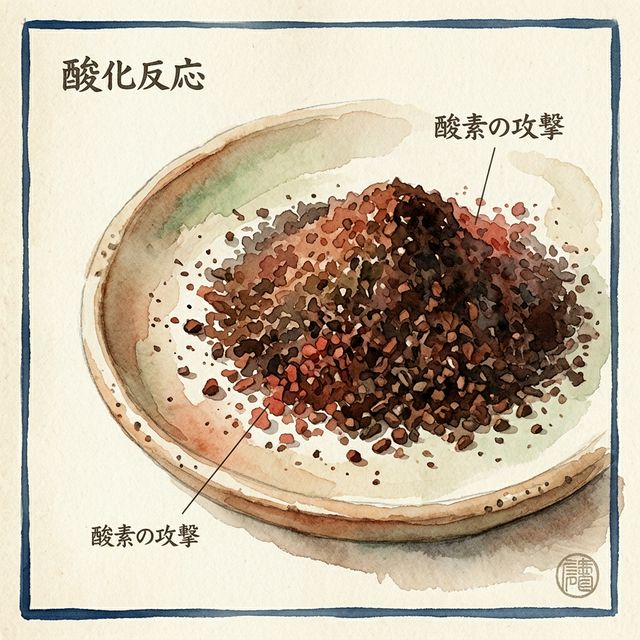
① Surface Area Expands Hundreds of Times — Oxidation Accelerates Instantly
When a coffee bean is ground, the surface area exposed to oxygen increases by hundreds of times in an
instant.
The aromatic oils that carry coffee's flavor are highly vulnerable to oxygen. From the moment grinding occurs,
oxidation (rancidification) begins at a rapid pace. Those peroxidized lipids are directly responsible for the
stale sourness and old-oil smell in aging coffee.
Whole beans can stay fresh for weeks. Ground coffee begins to show clear flavor degradation within a matter of
days — sometimes less.
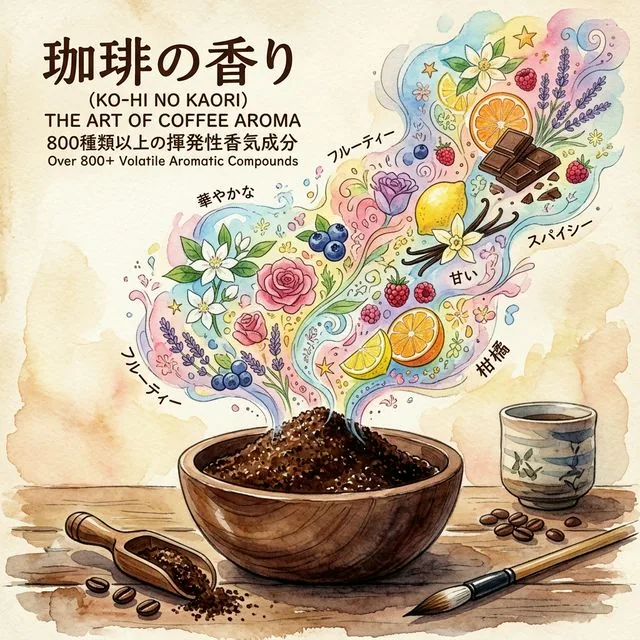
② Up to 70% of Aroma Compounds Escape Within Minutes of Grinding
A roasted coffee bean contains over 800 distinct volatile aromatic compounds — the compounds responsible for
everything you smell when you open a fresh bag.
The moment grinding breaks open the bean's cellular structure, CO₂ that was trapping those aromatics rushes
out — and the most volatile, highest-quality fragrance molecules (the floral and fruity notes) escape into the
air almost immediately.
Research indicates that up to approximately 70% of the most desirable aromatic compounds are lost within 15–30
minutes of grinding. What's left is the heavier, blunter part of the aroma profile.
③ Lost CO₂ Means No Bloom — and Uneven, Channeled Extraction
When you pour hot water over freshly ground coffee, the grounds swell up into a beautiful dome — the bloom.
This happens because residual CO₂ inside the grounds reacts with the hot water and escapes, creating a cushion
that regulates how water flows through the coffee bed uniformly.
Pre-ground coffee has already lost its CO₂ entirely. Pour water over it and nothing happens — no bloom, no
cushion. Water finds the path of least resistance through the flat, deflated grounds (channeling), producing
an extraction that is simultaneously watery in some spots and over-extracted in others: thin, astringent, and
flat.
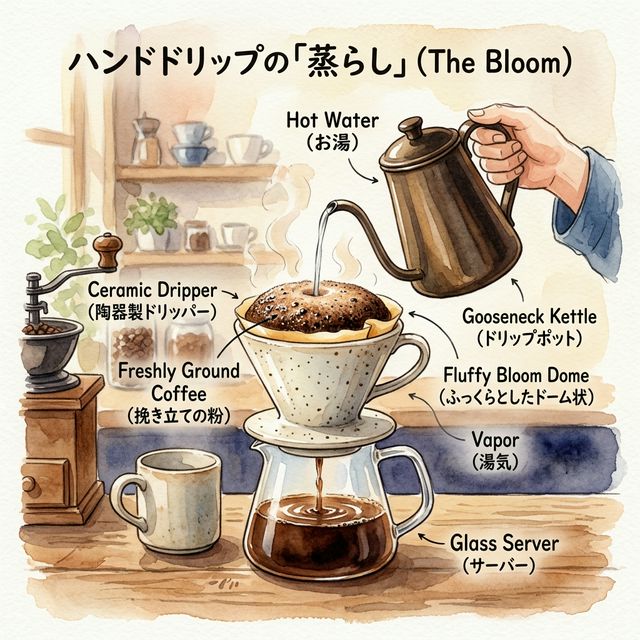
Bottom line: grinding an ordinary bean fresh immediately before brewing will improve your cup more dramatically than switching to an expensive pre-ground specialty coffee.
Quick Reference: Coffee Mill Types at a Glance
| Type | Grind Uniformity | Effort | Price Range |
|---|---|---|---|
| Hand Mill — Ceramic Burr | ◎ High (minimal fines) | Manual (1–2 min) | $25–$130 |
| Hand Mill — Steel Burr | ○ Uniform, sharp cut | Manual (1–2 min) | $25–$90 |
| Electric — Blade (Propeller) | △ Inconsistent (many fines) | One button (10–15 sec) | $15–$40 |
| Electric — Flat Burr | ◎ Extremely high (commercial grade) | One button (automatic) | $180–$1,000+ |
3. Why the Burr Determines 90% of Flavor
Why can't a cheap blade grinder produce great coffee? The answer comes down to one thing: grind uniformity.
How Tsubame-Sanjo Precision Machining Achieves a Tight Particle Distribution
Tsubame-Sanjo's CNC metalworking capabilities represent world-class industrial precision — the same region that
supplies cutlery and surgical tools to global markets.
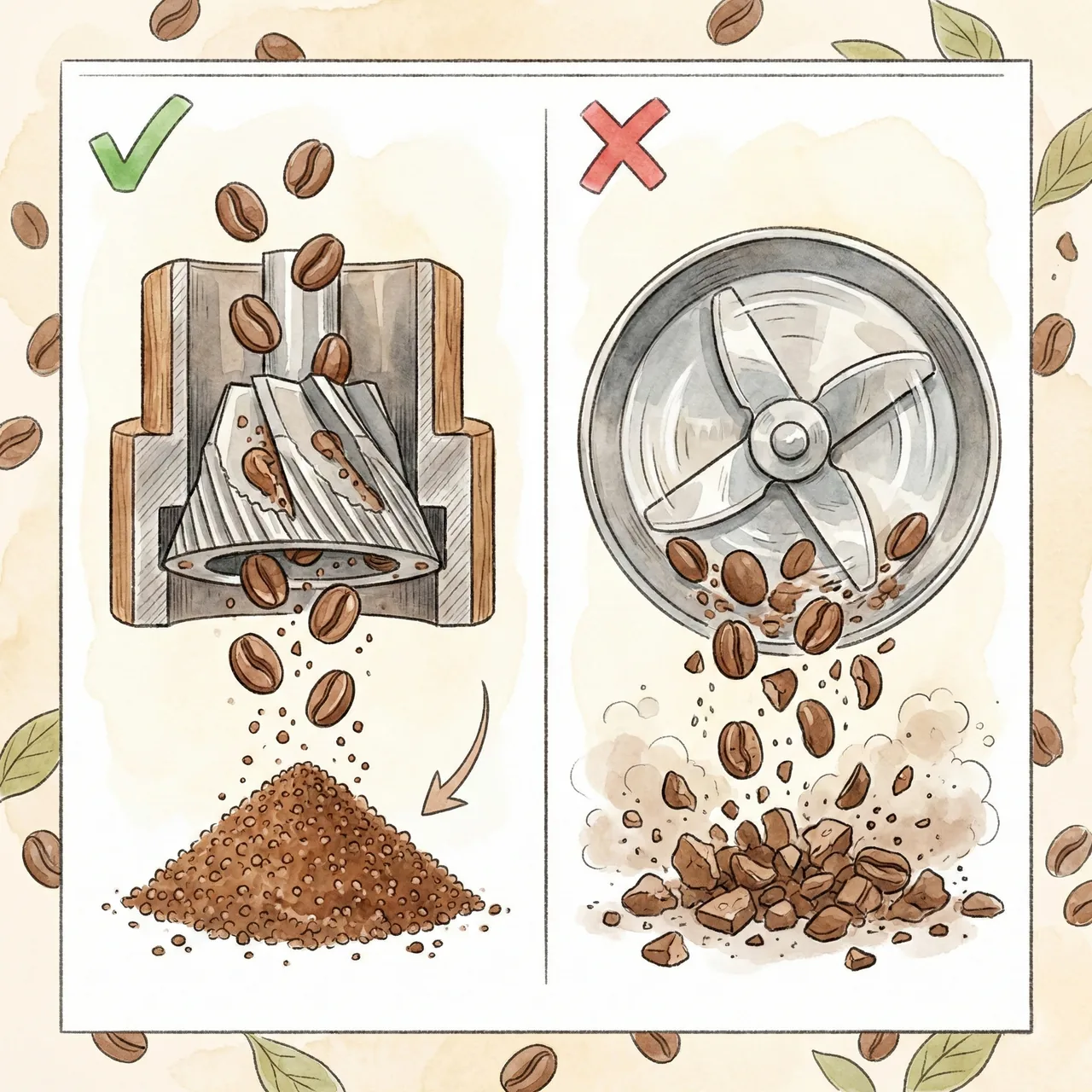
The burrs machined from stainless steel to micron-level tolerances don't crush beans the way a blade does — they
slice through them cleanly and consistently.
This produces a tight grind particle distribution: virtually all the resulting particles are the same size, with
minimal ultra-fine powder (called "fines"). When all particles are the same size, they all extract at the same
rate — producing a clear, clean cup with no muddiness or harshness from over-extracted fines.
Ceramic Burr vs. Stainless Steel Burr
Ceramic burr: No metallic taste — won't interfere with coffee's natural aromatics. The major
advantage is that it can be fully washed with water without rusting.
Stainless steel burr: Sharper cutting action that requires less hand force and grinds more
quickly. However, water washing causes rust — cleaning requires a dry brush or air only.
4. Three Masterpiece Mills from Tsubame-Sanjo
The Tsubame-Sanjo metalworking district has produced hand grinders that baristas around the world trust as daily
drivers.
From this cluster of exceptional makers, here are three that deliver reliably for home use.
PORLEX Coffee Mill (Tall)
Pioneer of the ceramic burr. The washability is a game-changer.
A globally recognized standard in hand grinders, manufactured in Kagoshima with a Japanese-made ceramic
burr.
Its defining advantage: fully disassembles for water washing.
The chronic problem with hand grinders — old coffee oil building up inside the burr mechanism and tainting
future brews — simply does not exist with the PORLEX. Pull the handle off, take it apart, rinse it under the
tap.
With the handle removed it becomes remarkably compact — equally at home in a camping pack as on a kitchen
shelf.
Porlex 2024 Professional Tall — Japanese Ceramic Burr Hand Grinder
Kagoshima-made ceramic burr hand grinder with 60 adjustable grind settings. Fully disassembles for water washing — eliminates rancid oil buildup. Compact with handle removed for travel and camping.
View on AmazonKalita Classic Mill
Trusted heritage brand. A countertop mill that looks like it belongs.
For those who want to hear and feel the beans grinding — the satisfying crunch and resistance of a countertop
box mill — this is the recommendation.
The heavy cast-iron burr is highly durable, and the stable weighted body means you can hold it in place with
one hand while grinding with the other, no grip struggle required.
And on a kitchen shelf between uses, it simply looks right — the kind of object that quietly signals a
considered approach to coffee.
Kalita Classic Mill — Cast Iron Countertop Hand Grinder
Heavy-duty countertop box mill with cast-iron burr from Japan's most trusted coffee brand. Stable body, satisfying grind feel, and a retro aesthetic that displays beautifully.
View on AmazonMokuNeji Coffee Mill
Yamanaka lacquerware woodturning meets Kalita engineering. Grip comfort taken seriously.
A collaboration between the traditional lathe-turned woodcraft of Ishikawa Prefecture's Yamanaka district and
Kalita's precision mill mechanism — the result is a grinder that is genuinely a craft object.
The natural wood body is shaped with a subtle taper and curve that fits comfortably in any hand size — even
with light grip pressure, it doesn't slip and transfers force efficiently to the burr.
As with all wooden tools, the color deepens and the surface develops character with use. This is a mill that
becomes more personal over years of daily grinding.
MokuNeji × Kalita Coffee Mill — Lathe-Turned Zelkova Wood
Ishikawa woodcraft meets Kalita's burr mechanism. Ergonomic natural zelkova wood body deepens in color with age — a daily-use grinder that grows into a personal object.
View on Amazon☕ Got your mill? Next step: compare Kalita, HARIO, and KONO drippers to complete your setup.
5. Outdoor-Ready: Portable Japanese Mills
Coffee made outdoors — by a river, at a campsite, on a mountain trail — hits differently. Here is a mill built to go wherever you go.
Belmont OUTDOOR Coffee Mill
Lightweight and rugged from Tsubame-Sanjo's titanium specialists.
Belmont is known for fishing and outdoor gear — that no-nonsense, field-tested design philosophy carries
through to this mill.
The combination of a rust-resistant stainless steel body and ceramic burr makes it completely at ease in
coastal and wet environments where other mills would corrode.
The standout design detail: the handle folds flat and doubles as the lid — the mill collapses into a sealed,
compact cylinder that packs without fuss.
Belmont BM-351 Outdoor Coffee Mill — Stainless + Ceramic Portable Grinder
From Tsubame-Sanjo's outdoor gear specialists. Stainless body with ceramic burr — rust-proof for coastal use. Folding handle doubles as lid for sealed, compact packing.
View on Amazon6. Frequently Asked Questions
Is hand grinding tiring?
Honestly, a little — especially at first.
Light-roast beans are harder and require more force. But the PORLEX, MokuNeji, and similar ergonomic designs are
specifically shaped to minimize strain, and once you're accustomed to it, grinding 20g (enough for two cups) takes
around one to two minutes without real effort.
Most people find that the slow, rhythmic motion — and the aroma that rises immediately — becomes a calming part of
the morning routine rather than a chore.
How do I adjust the grind size?
Turn the adjustment nut at the base of the burr assembly.
Clockwise tightens for a finer grind; counterclockwise loosens for coarser. Most hand mills have distinct click
stops — a common approach is to find the tightest position and count clicks outward from there, then write down
your preferred setting for each brewing method.
This makes it easy to return to the same grind size every time without guessing.
How often does a hand mill need cleaning?
Ideally, clean whenever you switch to a different bean variety.
You don't need to wash it after every use — but old coffee oil accumulating in the burr chamber will eventually
taint new brews with a stale, rancid note.
For ceramic burr mills like the PORLEX, a weekly full water rinse and thorough drying works well. For steel burr
mills, use the included brush or an air blower to clear residue — avoid water.
Do burrs wear out?
Ceramic burrs are essentially permanent under normal use — but they can crack from impact.
Normal grinding does not noticeably wear a ceramic burr over years. The risk is dropping the mill or accidentally
grinding a small stone mixed in with the beans, which can chip the ceramic.
PORLEX and similar makers sell replacement burr sets as spare parts, so a cracked burr does not mean replacing the
entire mill.
Can I actually taste the difference compared to a blade grinder?
Yes — the difference is immediately and clearly apparent.
A blade grinder generates heat during operation, which drives off aromatics before the coffee even hits the water.
The grind itself is a mix of coarse chunks and ultra-fine dust that extract at completely different rates
simultaneously.
Coffee from a quality burr mill — with its even particle size and minimal fines — is noticeably cleaner in the
cup: less astringency, no muddiness, and a clean, lingering finish that blade-ground coffee simply cannot produce.
Why exactly do fines (ultra-fine particles) make coffee taste bad?
Because their enormous surface area causes them to over-extract almost instantly — releasing harsh, bitter
compounds while the coarser particles are still extracting desirable flavors.
Extraction speed is directly proportional to surface area: finer particles extract faster. When a grind contains
both coarse particles and ultra-fines, the fines have already extracted into astringency and bitterness before the
coarser particles have finished yielding their sweetness and body.
A mill that produces tight particle distribution eliminates this overlap — every particle extracts at roughly the
same rate, and you can stop at the flavor you want rather than accumulating the flavors you don't.
7. Editor's Note: Five Minutes, a Handful of Beans, and a Morning Worth Starting
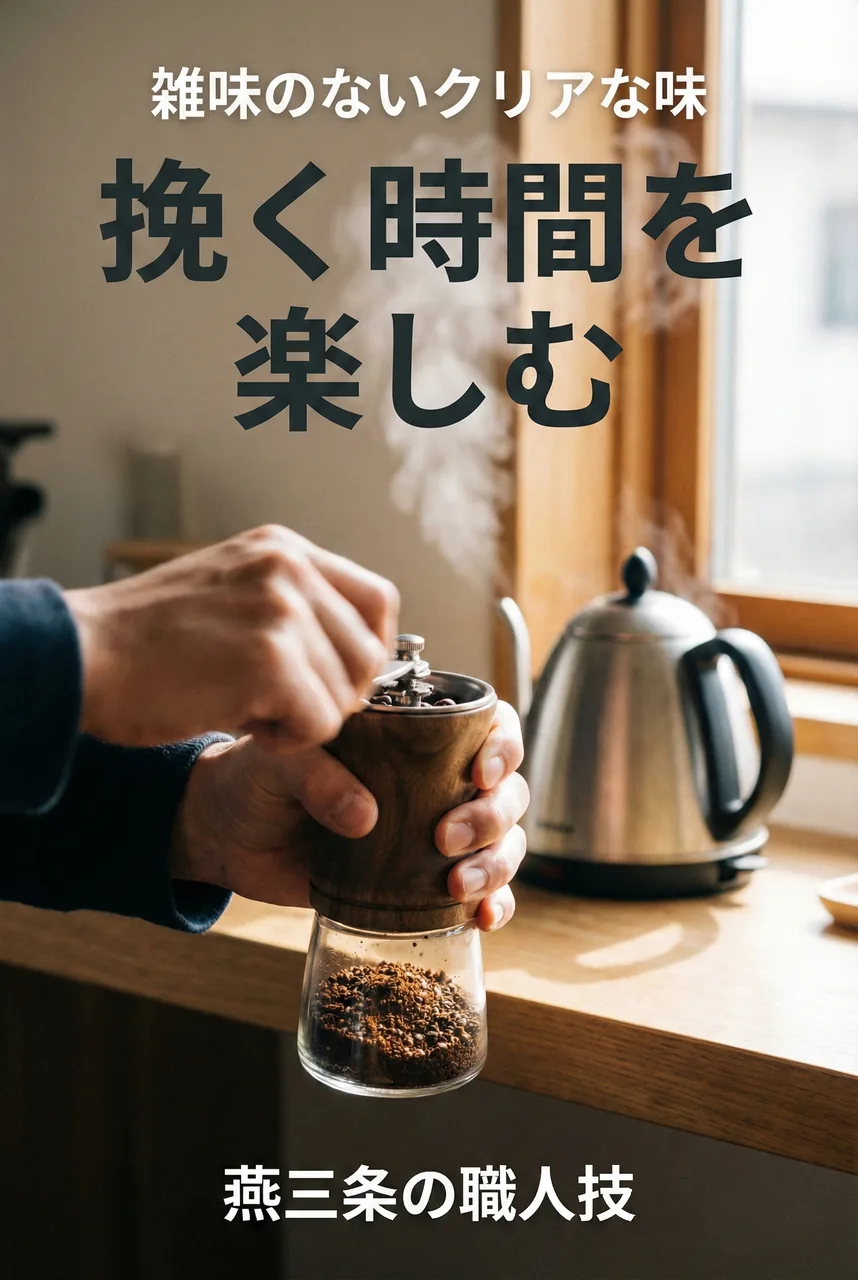
Grinding beans by hand in the morning sounds like an unnecessary inconvenience. I thought so too, before I tried
it.
What I didn't expect was the smell. The moment the burr breaks open the first bean, the kitchen fills with
something that no bag of pre-ground coffee can replicate — the full, unfiltered aroma of a fresh roast, still
intact because the cell walls were whole until thirty seconds ago.
The two minutes of grinding, while the kettle heats, become a kind of moving meditation: no phone, no screen,
just the slow turning of the handle and the sound of beans becoming something ready to brew.
When the fresh grounds bloom in the dripper — swelling up into that beautiful dome — you understand why you
can't go back to pre-ground. The difference isn't subtle. It's the whole point.
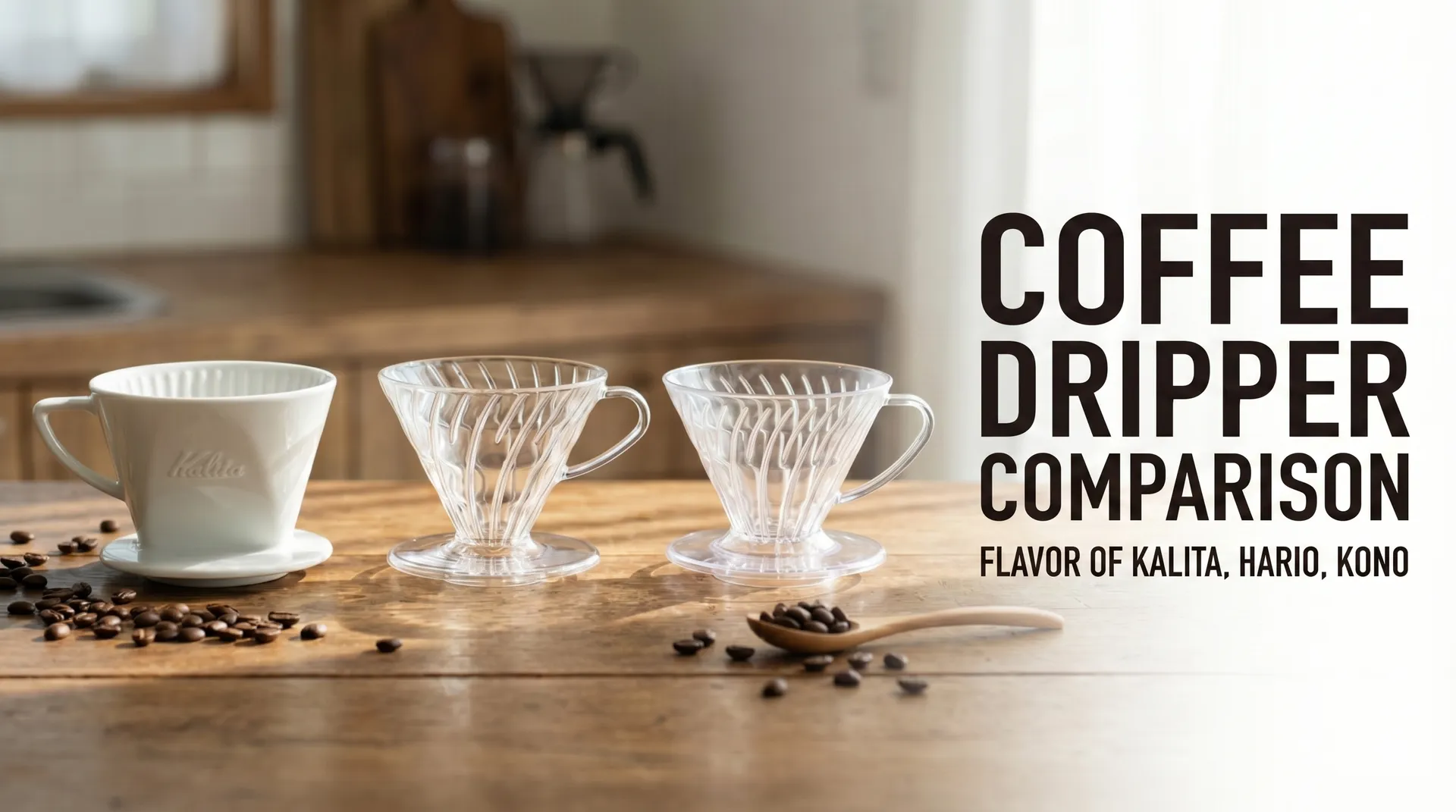
Coffee Dripper Comparison | Kalita, HARIO & KONO — Shape and Holes Explained
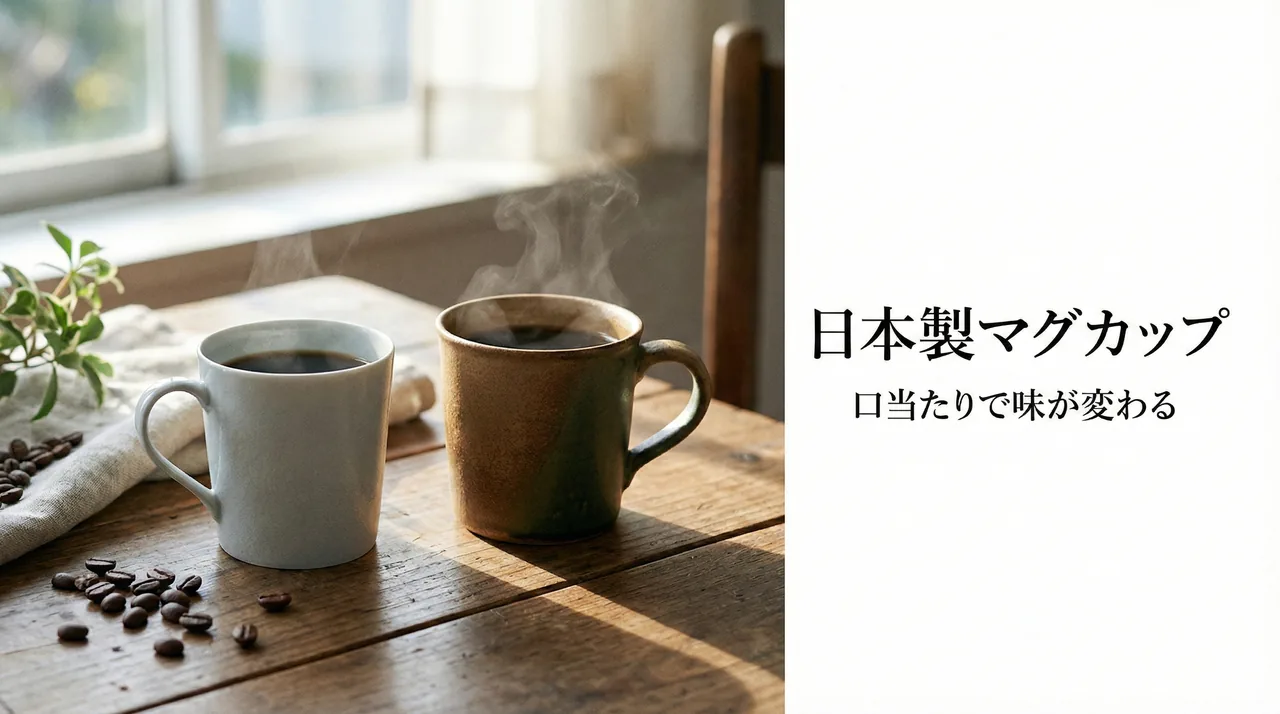
Japanese Mug Guide | Arita & Mino Ware and How Ceramics Change the Taste