[Comparison] The Decisive Differences Between "Western" and "Japanese" Tableware
What you should know before choosing is the difference in design philosophy.
・Western Tableware (A Culture of Placing):
Since knives and forks are used, the foundation is hard "stoneware/porcelain" that won't be scratched by metal. Since meals are eaten with tableware placed on the table, the dish's rim is wide, providing stability. Characterized by the "beauty of uniformity" gathered in sets.
・Japanese Tableware (A Culture of Holding):
Rice bowls and soup bowls are "held in the hands" and brought to the mouth. Therefore, the feel, weight, and sensation against the lips (mouthfeel) are heavily prioritized. Also, enjoying the "beauty of harmony" by combining different materials (earth, stone, wood, glass) is the Japanese style.
[Complete Preservation Edition] How to Distinguish and Use "Pottery (Earth)" and "Porcelain (Stone)"
Tableware is broadly classified into two types: "Earthenware (Pottery)" and "Stoneware (Porcelain)." Because their raw materials differ, their properties and the dishes they excel at are entirely different.
1. Pottery (Earthenware): Thick and Warm
- Raw Material: Made from "clay."
- Characteristics: Because soil particles are rough, they are thick and have a "plump," warm feel. They do not let light through when held up, and tapping with a finger yields a dull "kon-kon" sound.
- Properties: Because they contain air inside, they have high "heat retention," taking longer to heat up and longer to cool down.
- Compatible Foods: "Warm home cooking" like simmered dishes, oden, or pork miso soup. The earthy atmosphere makes brown side dishes look delicious.
2. Porcelain (Stoneware/Glass-like): Smooth and Hard
- Raw Material: Made from powdered stone called "pottery stone." It becomes glassy because it is baked at high temperatures.
- Characteristics: Thin, hard, and "smooth." It has a transparency that lets light pass through, and tapping with a finger yields a high, clear metallic "chiin" sound.
- Properties: Because it doesn't absorb water, it resists stains, and its smooth surface allows spoons and chopsticks to glide smoothly.
- Compatible Foods: Sashimi, salads, cold pastas. The pure white background enhances the vivid colors of the ingredients.
★ Simple Way to Distinguish:
If you are unsure at a store, lightly tap it with your finger. If it's a "kon-kon (low sound)," it's pottery; if it's a "kinn (high sound)," it's porcelain.
[Producing Regions] Japanese Kilns Bursting with Individuality
・Arita-yaki / Imari-yaki (Saga):
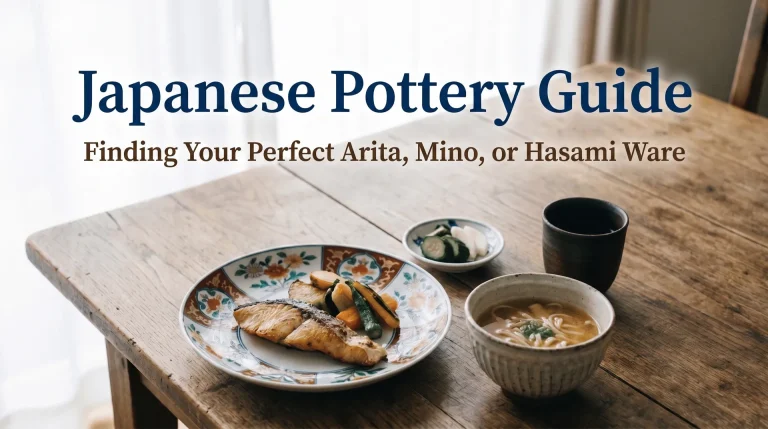
The origin of Japanese porcelain. Pieces featuring gorgeous red or indigo paintings on translucent white porcelain are perfect for celebratory days or guests. Being thin and durable, they were loved by royalty worldwide.
・Mino-yaki (Gifu):
No. 1 in domestic production share. Diverse styles coexist, such as "Oribe" with beautiful green glazes and "Shino" with soft whites. If you are looking for modern everyday tableware, start here.
・Mingei Tableware (Mashiko / Okinawa):
Mashiko-yaki (Tochigi) and Okinawa's Yachimun pursuing the "beauty of use." Their plump thickness and powerful patterns make unpretentious home-cooked meals like curry, pasta, and stir-fries look like the supreme feast.
[Sake Vessels] The Taste Dramatically Changes? The Science of "Vessels" Elevating Evening Drinks
Sake is a mysterious drink whose taste changes dramatically depending on the material and shape of the poured vessel. Changing sake vessels according to the mood of the day and the type of alcohol is the taste of an adult.
1. Magic Metal "Tin": Mellowing the Taste
"Tin" sake vessels famous from Takaoka City in Toyama. Tin has a high ion effect, removing off-tastes from alcohol and possessing the power to change it to an amazingly "mellow" mouthfeel. It has such a purifying effect that it's said "alcohol put in tin won't spoil," and due to its high thermal conductivity, cold sake stays icy, and hot sake reaches the right temperature quickly.
2. "Glass" Locking in Aroma: Cold Sake and Ginjo
Thin glassware like Edo Kiriko has a small contact area with the lips, directly transmitting the alcohol's coldness and sharp crispness to the tongue. Shapes like wine glasses, in particular, do not let the fruity ginjo aroma escape, making them ideal when you want to enjoy the scent at the tip of your nose.
3. "Pottery" Gently Wrapping: Hot Sake and Junmai
Thick pottery guinomi (sake cups) softly transfer the heat of kanzake (hot sake) and fit comfortably in the hand. The unevenness of the earth softens the harshness of the liquor, enhancing the plump rice umami of Junmai-shu.
4. The Secret of Shapes:
- Trumpet Shape (Wide mouth): Easy for the aroma to spread, the alcohol softly enters the mouth; suitable for highly aromatic alcohol.
- Straight Shape (Narrow mouth): Does not let the aroma escape, delivering it smoothly to the back of the tongue; suitable for clean, dry alcohols.
Not Just "Tokkuri". The Aesthetics of Pouring Vessels
We are particular not only about ochoko (cups) but also pouring vessels.
・Tokkuri (Sake Flask):
Because the neck is narrow, it retains heat well, making it ideal for hot sake. The "toku-toku" pouring sound is also one of Japan's unique atmospheric charms.
・Katakuchi (Spouted Bowl):
Shaped like a bowl with a pouring spout. Characterized by a wide mouth making it easy to wash, and allowing the alcohol's aroma to rise easily. Modern usages are popular, like serving cold sake or using it on the dining table to hold dressings.
Cool in Summer, Warm in Winter. "Lacquer" and "Glass"
Besides pottery and porcelain, Japan has tableware tailored to the four seasons.
・Lacquerware (JAPAN):
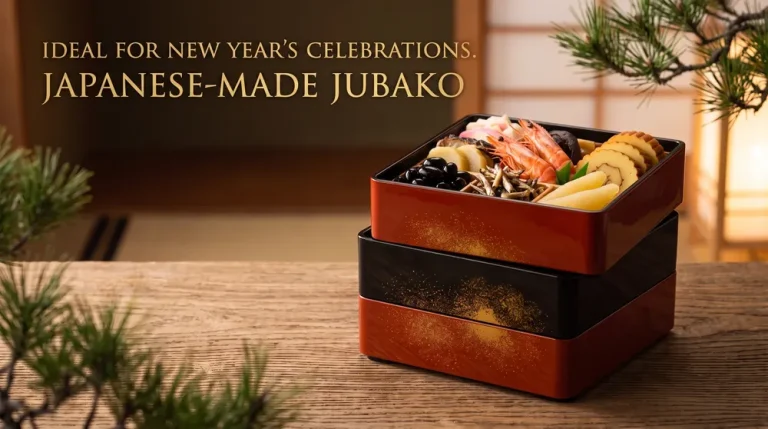
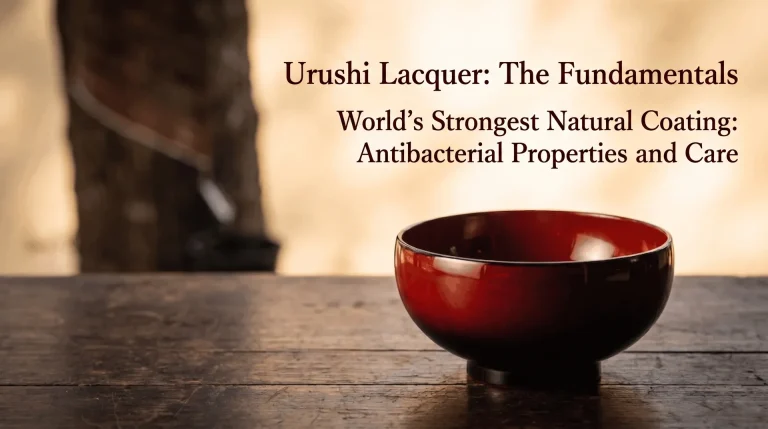
Because the thermal conductivity is extremely low, hands won't get hot even holding scalding miso soup, communicating a gentle warmth to the lips. Not just for New Year's ozoni, it's a "magic vessel" you want to utilize as everyday soup bowls.
・Edo Kiriko / Glass:
Somen and cold sake for summer. The delicate cuts (kiriko) chiseled by craftsmen reflect light summoning coolness. Introducing just one glass piece onto the dining table creates a sense of openness across the entire table.
"Medome" to Raise the Vessel and Q&A
Q. What is the first ritual upon buying pottery?
A. It's "Medome" (sealing). Pottery has invisible fine pores on its surface. Boiling it in rice cooking water (togi-jiru) lets the starches fill the pores, forming a coating preventing food juices and oil stains. It's the first step in "raising the vessel."
Q. Are plates bordered in gold safe for the microwave?
A. Yes, absolutely NG. Placing items decorated with gold or silver paint in microwaves induces metals reacting, shooting sparks (sparking). Hand washing gets advocated since dishwashers also cause patterns peeling.