Tokoname Ware
From centuries of clay and fire—Tokoname Ware for tea and everyday life.
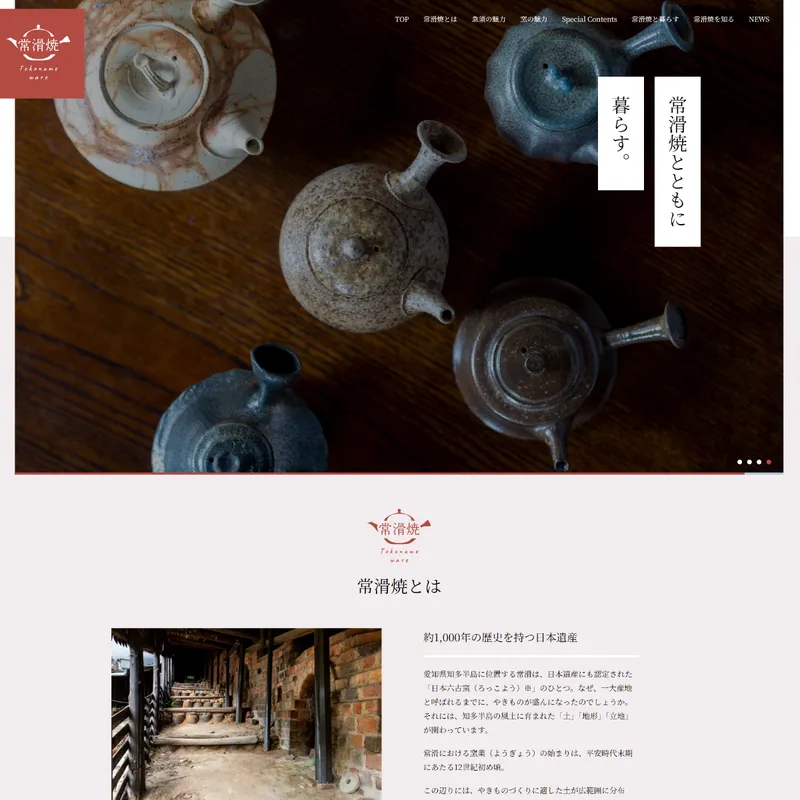
Tokoname Ware is pottery made in Tokoname on the Chita Peninsula in Aichi, Japan. Tokoname is introduced as one of Japan’s “Six Ancient Kilns” and is part of a Japan Heritage designation. Local clay sinters well even at relatively low temperatures and becomes less permeable to water. The ceramic tradition is said to have started in the early 12th century. It began with bowls and later grew into large jars and pots, and excavation records mention more than 24,000 Tokoname pieces found across Japan. Teapot making is said to have started in the late Edo period. In the Meiji era, the industry expanded to ceramic pipes and tiles, and Tokoname is also linked to the “yellow bricks” made for the Imperial Hotel. Today, teapots, tableware, garden pots, and even coffee teapots show how the craft keeps evolving.
Why We Love It
If you are starting with just one item, a Tokoname teapot is a natural choice. The classic shudei-red look is iconic, and the “suri-awase” fit between body and lid is a detail you can feel in use. For sencha, cool the boiled water once in a cup (around 90°C as a guideline) before pouring it into the teapot. The one-minute steep becomes a small, quiet ritual. If you prefer tableware, begin with a yunomi cup or a small plate. Tokoname clay tends to sit gently on the table, and the surface texture feels warm. Pair it with a stroll through the pottery path or a museum visit, and the tools start connecting to the place they come from.
PROFILE About the Company / Workshop
Tokoname Ware begins with place. Suitable clay is widely distributed across the peninsula. The terrain is gentle enough for kiln building, and the coast provided excellent water transport. Production and distribution grew together.
The beginning of Tokoname’s ceramic industry is described as the early 12th century. With clay that sinters well and resists leaking, makers started with bowls and moved into large jars and pots used for dyeing, brewing, and even burials. Excavation records mention over 24,000 Tokoname pieces found nationwide, many of them large vessels.
Teapot making is said to have started in the late Edo period, with a story of a potter copying an illustrated catalog. Techniques developed, including shudei firing that produces a vivid red tone by refining iron-rich clay and oxidizing at the end of firing.
A Tokoname teapot is assembled from separately made parts. The side handle relates to an older style of brewing tea over heat. The body and lid are fired together for a precise “suri-awase” fit, which reduces gaps and helps keep water temperature stable.
In the 1950s (Showa 30s), mold-based production enabled larger output. With strong transport routes, Tokoname grew into a major teapot center. At the same time, wheel-thrown work continues, and the site notes roughly 50 traditional teapot artists still active, with local efforts to pass skills to the next generation.
Tokoname also supported modern life in other ways. Meiji-era infrastructure and construction drove mass production of pipes and tiles. The “yellow bricks” for the Imperial Hotel required a technique said to exist only in Tokoname at the time, produced at a factory in Tarumi. After the war, demand expanded for toilets and interior tiles, and later for garden pots and teapots. New ideas—like coffee teapots—keep appearing.
Kilns add another layer. Gas kilns aim for around 1250°C so glazes melt, and shifts between oxidation and reduction can change color and surface. Electric kilns offer stable, programmable firing and are used for items that need uniformity, like teapots. Wood kilns can take days of firing, and one example notes 600 bundles of cedar used for a single firing session.
Historic sites remain, too. The Meiji-era climbing kiln “Toueigama” (built around 1887) has eight chambers and could take about 11 days to complete a firing. It operated until 1974 and is designated an Important Tangible Folk Cultural Property. Even older are the Kagoi-ke kiln ruins (1135–1150 and 1220–1250), showing how medieval kiln design evolved.
To go deeper, the Tokoname Ceramic Museum (Tokoname Tō-no-Mori) is a helpful starting point. It connects history, technique, and everyday use—making a walk through Tokoname feel richer.
A Japan Heritage craft among the “Six Ancient Kilns”
Tokoname is introduced as one of the Six Ancient Kilns (Echizen, Seto, Tokoname, Shigaraki, Tanba, Bizen). Clay resources, gentle hills suitable for building kilns, and convenient sea transport helped the craft spread to other regions.
Teapots: clay, precision, and practical design
Tokoname teapots are made from multiple parts—body, spout, handle, strainer, and lid—assembled by hand. The side handle has historical roots in boiling tea over fire, and the tight “suri-awase” lid fit helps retain heat. The site also notes that iron-rich clay reacts with tea tannins, making the brew taste mellower.
Evolving with the times, from jars to pipes and bricks
Tokoname started with bowls, then grew famous for large jars and pots. In the Meiji era, demand expanded for ceramic pipes and tiles. Tokoname also produced the “yellow bricks” used for the Imperial Hotel, made at a dedicated factory in Tarumi. Postwar production included sanitary ware and interior tiles, and recent years have brought new products like coffee teapots.
Kilns tell the story—modern and historic
From gas and electric kilns used today to Meiji-era climbing kilns and medieval kiln ruins, Tokoname offers a rare look at how firing methods changed over time. Understanding the kiln often makes the surface of a piece feel more alive.
LINKS Official Links / Social Media
- Official Website https://www.tokoname-kankou.net/tokonameyaki/
- Contact Form https://www.tokoname-kankou.net/contact/
- X (Official) https://x.com/tokonamekanko
- Tokoname Ware Portal https://www.tokoname-kankou.net/tokonameyaki/
- Tokoname Teapots (Charm & Making) https://www.tokoname-kankou.net/tokonameyaki/miryoku/
- Kilns of Tokoname https://www.tokoname-kankou.net/tokonameyaki/kama/
- Tokoname Ware Feature https://www.tokoname-kankou.net/feature/detail/9/
- Living with Tokoname Ware https://www.tokoname-kankou.net/feature/detail/22/
- Tokoname Ceramic Museum https://www.tokoname-tounomori.jp/