"No matter how many times I wash it, the corners of my plastic lunch box stay greasy…"
"I'd love a magewappa, but I'm scared I'll ruin it with mold."
The most quietly frustrating part of packing lunch every day is dealing with the dishes afterward. Coming home exhausted and scrubbing an oily plastic container is nobody's idea of a good evening.
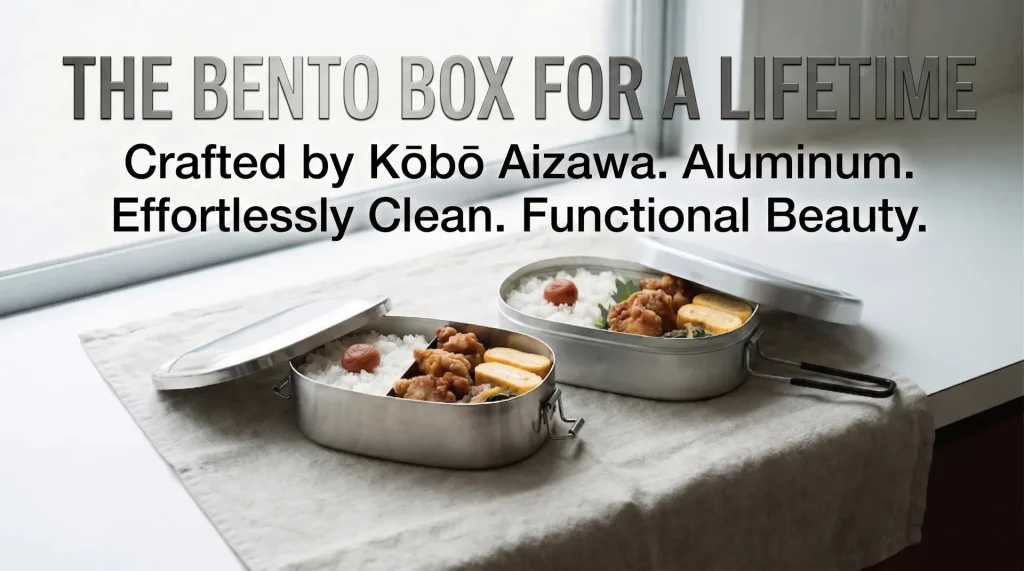
The answer, if you prioritize practicality and hygiene above all else, is a metal bento box — aluminum or stainless steel.
Fried chicken and tomato-based pasta slide right out, and a quick wash with dish soap leaves the surface squeaky-clean with no lingering odor. Kobo Aizawa from Niigata Prefecture's Tsubame-Sanjo metalworking region and classic aluminum lunch boxes are beloved by professional cooks for exactly this reason: they are honest, durable, and reliably functional.
Series: This article is part 6 of the "Prepared & Organized (Hygiene, Disaster Prep & Storage)" series.
Quick Reference: Bento Box Types Compared
| Type | Key Features | Capacity | Best For |
|---|---|---|---|
| Magewappa (cedar) | Moisture-regulating; rice stays fluffy; beautiful | 450–600 ml | Aesthetic-focused; fans of Japanese cuisine |
| Stainless Steel | Durable; odor-free; grease wipes right off | 500–1000 ml | Easy cleanup; long-term daily users |
| Plastic (with dividers) | Lightweight; microwave-safe; many designs | 400–800 ml | Microwave reheating; budget-conscious users |
| Insulated (thermos-style) | Keeps food hot; suitable for soups | 600–900 ml | Those who want a hot lunch no matter what |
1. Not Just Magewappa: Why Metal Wins on Practicality
Every bento box material has its strengths. Magewappa cedar boxes are gorgeous and regulate moisture beautifully — but for pure day-to-day ease of use, metal is in a class of its own.
Material Comparison
| Material | Advantages | Drawbacks |
|---|---|---|
| Stainless Steel (Kobo Aizawa, etc.) |
Exceptionally durable. Rust-resistant; no odor absorption. Silicone gasket options prevent leaks. |
No microwave. Slightly heavier than plastic. |
| Aluminum (classic silver) |
Very light. Grease cleans off easily. Works in kindergarten warming boxes. |
No microwave. Reactive to acid and alkali (see note). |
| Plastic | Microwave-safe. Wide design range; affordable. |
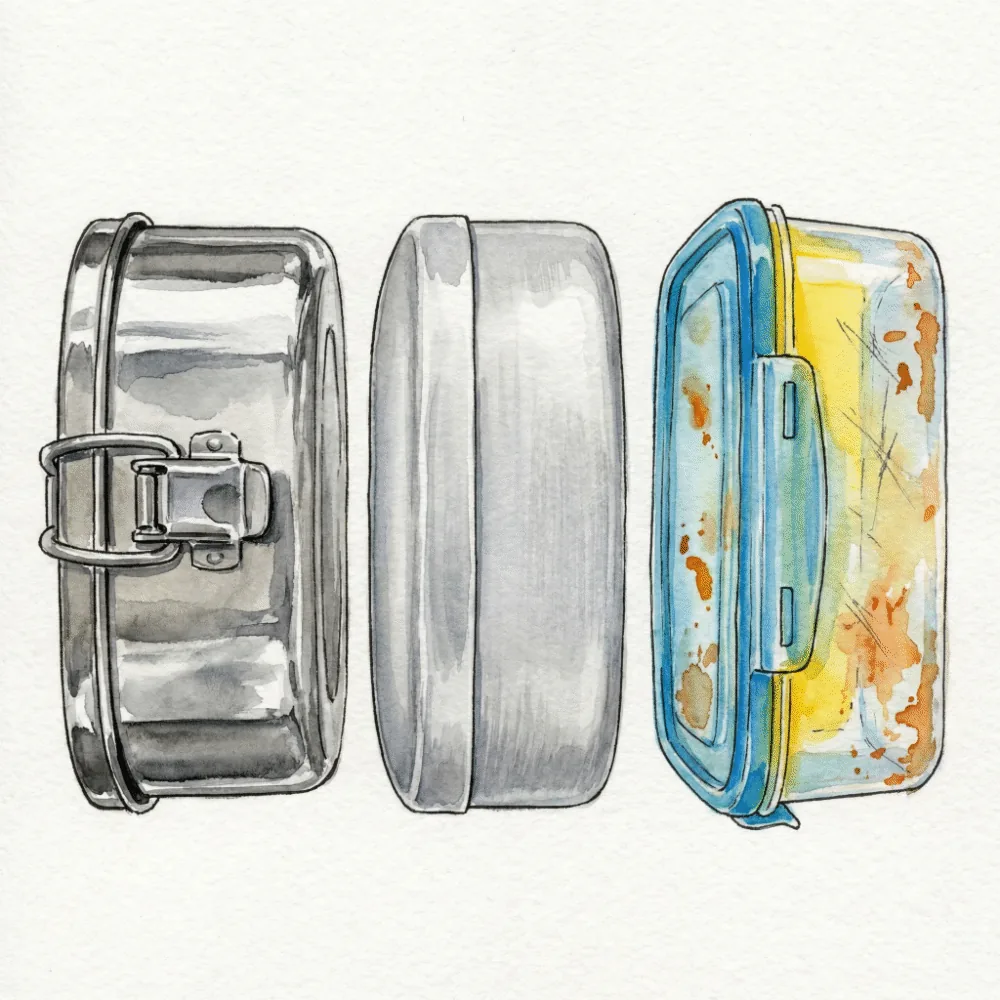
Grease clings to the surface. Stains; degrades over time. |
Note: Modern aluminum bento boxes use an anodized (alumite) coating for corrosion resistance, but scratches can expose the metal to acidic foods.
2. Aluminum: Light, Retro, and Compatible with Warmer Boxes
There is something endearingly nostalgic about a silver aluminum lunch box — and it has seen a genuine revival among minimalists and adult women who value its featherlight weight and easy care.
THE LUNCHBOX
A beautifully crafted aluminum box for the discerning adult.
THE LUNCHBOX has a subtle matte finish that reads as quietly refined. Some versions include an inner lid, making them suitable even for moister dishes like simmered vegetables. Over time, the box picks up small scratches — each one adding a layer of character and charm that only grows with use.
MUJI Aluminum Lunch Box — Large, Anodized Finish
Clean minimal aluminum lunch box with anodized surface — scratch-resistant and corrosion-resistant. Rounded interior corners for effortless cleaning. The scratches that accumulate over years only deepen the character. Lightweight, understated, and completely at home on an adult's desk.
View on Amazon3. Stainless Steel: Kobo Aizawa's Functional Beauty — A Box for Life
Kobo Aizawa is a long-established kitchenware workshop from Tsubame City, Niigata Prefecture — the heart of Japan's metalworking industry. Their stainless steel bento boxes are the kind of tool that, once you use one, you wonder how you lived without it.
Kobo Aizawa Square Lunch Box
Leak-proof, odor-free, and beautiful.
Medical-grade stainless steel with the clean, precise look of a surgical instrument. The defining feature: a silicone gasket on the inside of the lid, held shut by two metal clasps on either side. Despite being metal, the seal is tight enough to handle curries and saucy dishes without a drip. Rounded interior corners mean a sponge can reach everywhere, and no hidden grime accumulates.
Available in multiple sizes, including a two-tier version for bigger appetites and a slim rectangular design for commuters.
View the Kobo Aizawa brand page
Kobo Aizawa Square Food Box Large — 18-8 Stainless Steel, Gasket Seal
18-8 stainless steel bento box from Kobo Aizawa, Tsubame City, Niigata — Japan's metalworking heartland, since 1917. Silicone rubber gasket and rubber band closure hold even saucy dishes without a drip. Rounded interior corners mean the sponge reaches everywhere. The gasket is replaceable. 1000ml.
View on Amazon4. Grease Gone in Seconds: How Metal Makes Cleanup Effortless
The biggest practical advantage of a metal bento box is how dramatically it reduces the burden of washing up. Here's what that difference actually looks like.
No Pre-Rinsing Required
With plastic:
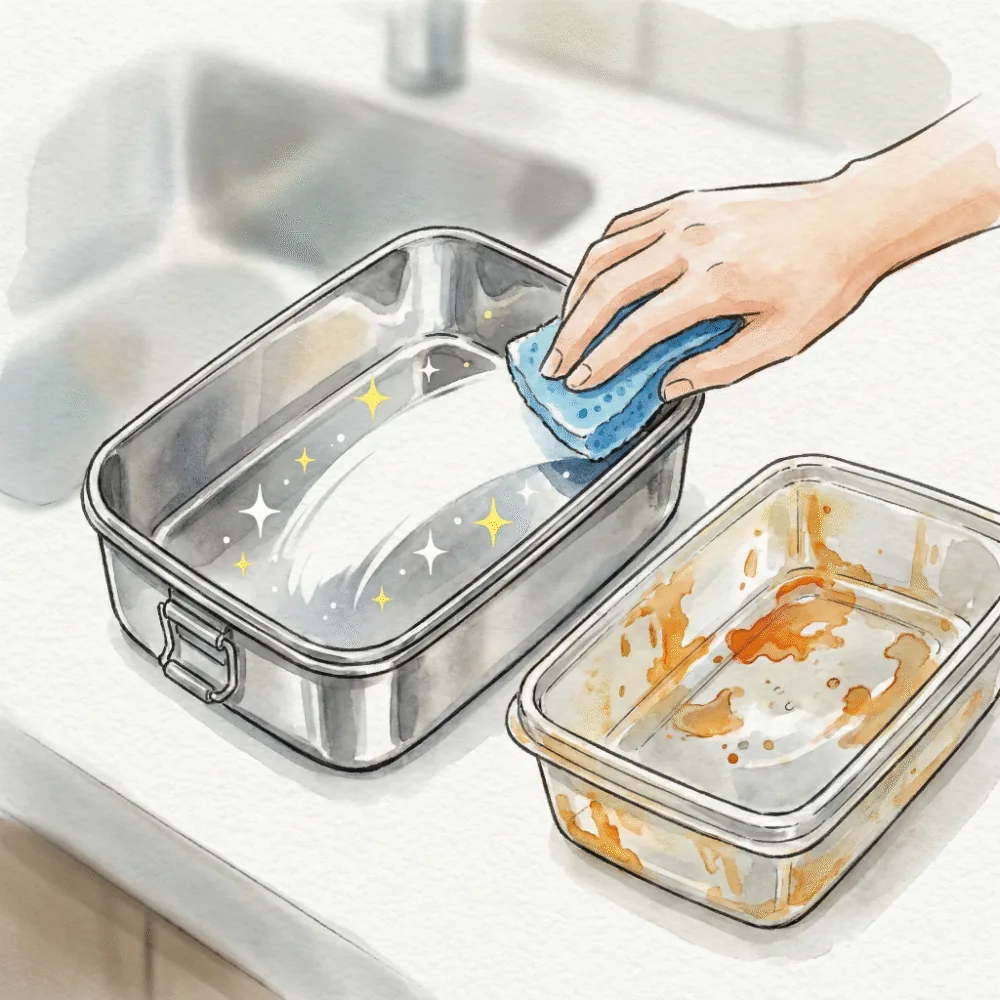
Oil from fried food or tomato sauce gets absorbed into the plastic surface. One wash isn't enough — you end up scrubbing twice with extra detergent, trying to de-grease the container itself.
With metal:
Oil just sits on the surface — it doesn't bond. A quick, light wash sends it straight down the drain. Tomato sauce leaves zero staining. And if you choose a design with rounded corners (a radius cut), your sponge can reach the last corner without any scrubbing effort at all.
5. Using Thermal Conductivity: Keep It Cool in Summer, Warm in Winter
Metal conducts heat efficiently — which means it can't go in the microwave, but it has a hidden advantage: it lets you control temperature faster and more effectively than plastic or wood.
Cool It Fast, Warm It Thoroughly
- Summer food safety (cooling):
Metal transfers ambient temperature to its contents far faster than plastic or wood. Place an ice pack on top of the closed box and the contents will chill through quickly — suppressing bacterial growth more effectively than insulating the box. It also means hot rice cools down faster after packing, so you can seal and head out sooner. - Winter warming (warmer boxes):
Many Japanese kindergartens and nurseries have electric warming boxes (food warmers) that heat bento boxes before lunch. These warmers require metal containers — plastic insulates too well and won't heat through. Aluminum conducts heat so efficiently that by lunchtime, the rice is genuinely warm.
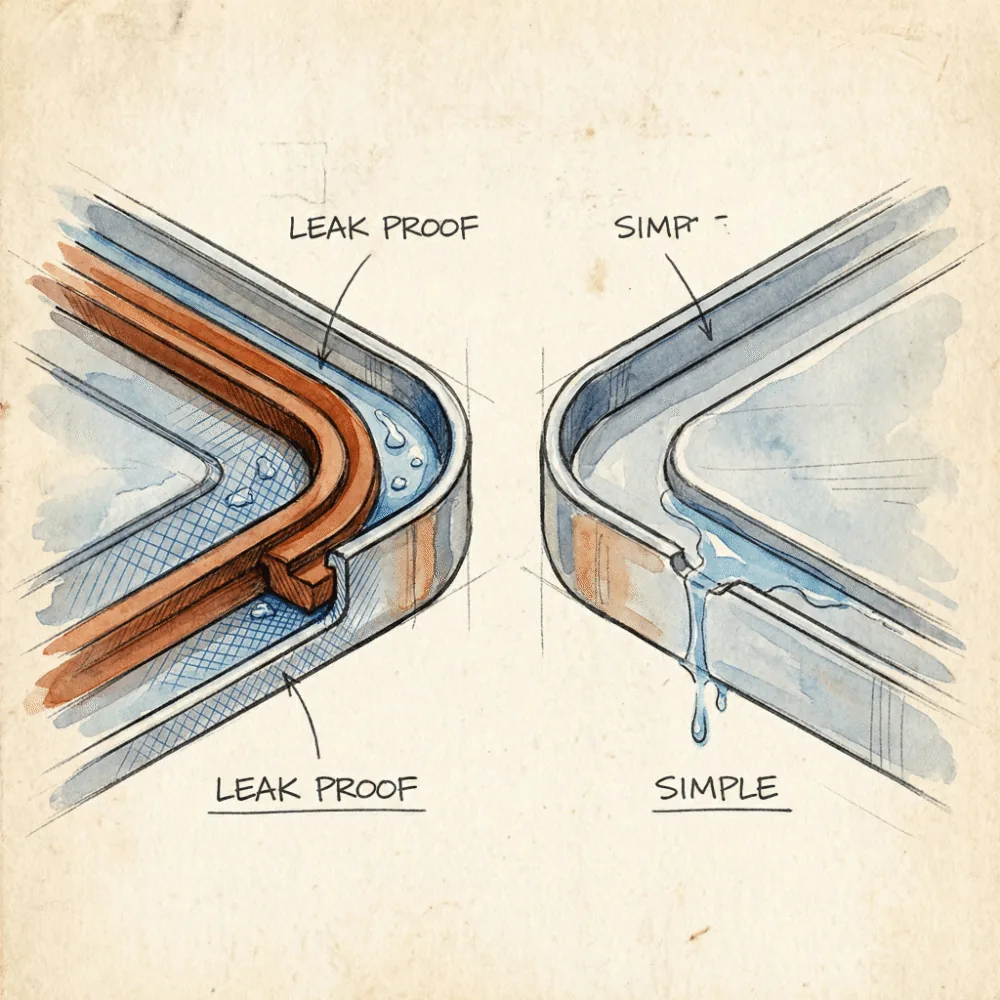
6. With or Without a Gasket? Understanding Leak-Proof Designs
The biggest decision when choosing a metal bento box is whether you need a silicone gasket seal. Both approaches make sense depending on your lifestyle.
Sealed vs. Open-Lid
With a gasket (Kobo Aizawa and similar):
Essential if you carry your bento in a bag on the way to work or school. Virtually no leakage, even with saucy dishes. The tradeoff: you need to remove the gasket to wash it properly, and gaskets harden or warp after a few years of use — requiring occasional replacement.
Without a gasket (traditional aluminum):
Simple structure, nothing to break, instant to wash. The downside: tilt it and liquid escapes. Use a rubber bento band to secure the lid and be mindful of how you carry it. For many home-to-office or home-to-school uses, this is perfectly adequate.
7. One Tier or Two? Choosing the Right Capacity for You
"I bought it and it's too small" or "too big to fill properly" — the right size matters. Here's a practical guide to avoid those mistakes.
Volume (ml) ≈ Calories (kcal)
A useful rule of thumb: the volume of a bento box in milliliters roughly corresponds to the calorie count of a packed meal.
(Example: a 600 ml box packed full holds roughly 600 kcal.)
| Capacity | Recommended Type | Best For |
|---|---|---|
| 300–400 ml | Aluminum S (small oval) | Young children, small eaters |
| 500–600 ml | Kobo Aizawa medium THE LUNCHBOX |
Women, primary school children |
| 800–1000 ml | Kobo Aizawa 2-tier Deep single-tier |
Men, teenage athletes |
When in doubt, go for a box with more depth. A deeper box lets you pile rice with toppings ("nokke-ben" style) and adjust portion size more flexibly than a wide, shallow one.
[Small] Aluminum Lunch Box, Oval S (approx. 280–300 ml)
A child's first bento box — built for small hands and warmer boxes.
Aluminum construction means it works in kindergarten electric warming boxes. A simple snap-on lid (no clasps) lets even small children open it on their own. Light enough that carrying it on a field trip is never a burden.
Daiichi Aluminum Bento Box Small — Made in Japan, Snap Lid
A compact aluminum lunch box from a Katsushika, Tokyo workshop. Simple snap-on lid that small children can open themselves. Lightweight enough to carry on a field trip without complaint. Works in kindergarten electric warming boxes. Classic Japanese aluminum construction — nothing to break, easy to clean.
View on Amazon[Medium] Kobo Aizawa Square Lunch Box, Medium (approx. 670 ml)
The most versatile size — works for women and men alike.
Comfortable for a woman with a bit of room to spare; satisfying for a man packed full. The depth makes it easy to arrange food in layers or tuck in a sandwich. One box that carries you from high school through adulthood with no regrets.
Kobo Aizawa Square Food Box Small — 18-8 Stainless Steel, Gasket Seal
The smaller Kobo Aizawa stainless box — a comfortable size for women and a good starting point before committing to the large. Same silicone gasket seal, same rounded interior corners, same replaceable gasket design. Made in Tsubame, Niigata. Leak-resistant enough to carry sideways in a bag.
View on Amazon[Large] Kobo Aizawa Rectangular 2-Tier Lunch Box (approx. 1000 ml)
Serious capacity in a slim commuter-friendly profile.
The slim rectangular two-tier design is popular precisely because it slips neatly into a business bag's gusset. You can also use just the bottom tier (500 ml) on lighter appetite days — flexibility that a single-tier box can't match.
Kobo Aizawa Square Food Box Large — 18-8 Stainless Steel, 1000ml
The large-capacity Kobo Aizawa stainless box for bigger appetites. Deep single-tier design lets you pile rice with toppings or build a proper layered bento. Silicone gasket seal and replaceable gasket for multi-decade use. Made in Tsubame, Niigata — one of Japan's premier metalworking centers.
View on Amazon8. FAQ: Microwaves, Plum Vinegar, and Dishwashers
Can I really not use a microwave with these?
Correct — metal in a microwave causes sparking and potential fire.
If you need to reheat, remove the lid and place the box in a steamer, or transfer the contents to a microwave-safe dish. Some specialized metal containers are marketed as microwave-compatible, but Kobo Aizawa boxes are not in this category.
I've heard aluminum boxes can develop holes from pickled plum (umeboshi). Is that true?
It was a real concern with older boxes — modern ones are treated against it.
Contemporary aluminum bento boxes have an anodized (alumite) protective coating that prevents immediate corrosion. However, if the coating gets scratched by utensils or abrasive cleaning, the exposed aluminum can react with the acidity of umeboshi or vinegar. To be safe, place the plum on a small piece of plastic wrap or use an aluminum cup as a liner.
Are these dishwasher-safe?
Stainless steel (Kobo Aizawa): generally yes. Aluminum: generally no.
Uncoated stainless handles dishwasher heat and detergent well. Aluminum, however, can discolor or develop a white powdery residue when exposed to the strong alkaline detergents and high heat of a dishwasher. Always check the manufacturer's instructions before washing.
Isn't stainless steel too heavy to carry every day?
Heavier than plastic, but well within acceptable range.
The Kobo Aizawa medium square box weighs approximately 250–300 g — roughly 1.5 times the weight of a smartphone. If weight is your top priority, aluminum (around 150 g) is the lighter choice.
Rice grains keep sticking inside the box. Any tips?
Wipe the inside with a thin coat of vinegar or oil before packing the rice.
Dampen a piece of kitchen paper with rice vinegar or neutral cooking oil and wipe the inner surface lightly before packing. The rice releases cleanly, and the vinegar also provides a small antibacterial benefit — two benefits in one step.
Can I replace the gasket when it wears out?
Yes — Japanese brands like Kobo Aizawa sell replacement gaskets as a separate part.
Silicone gaskets are a consumable: after 2–3 years of daily use they can harden or deform. Search for "replacement gasket" on the brand's official site or Rakuten store and you'll find the right size. The box body lasts a lifetime; you just replace the worn part. That's smart, sustainable maintenance.
Final Thoughts: Tough and Clean, Every Single Day
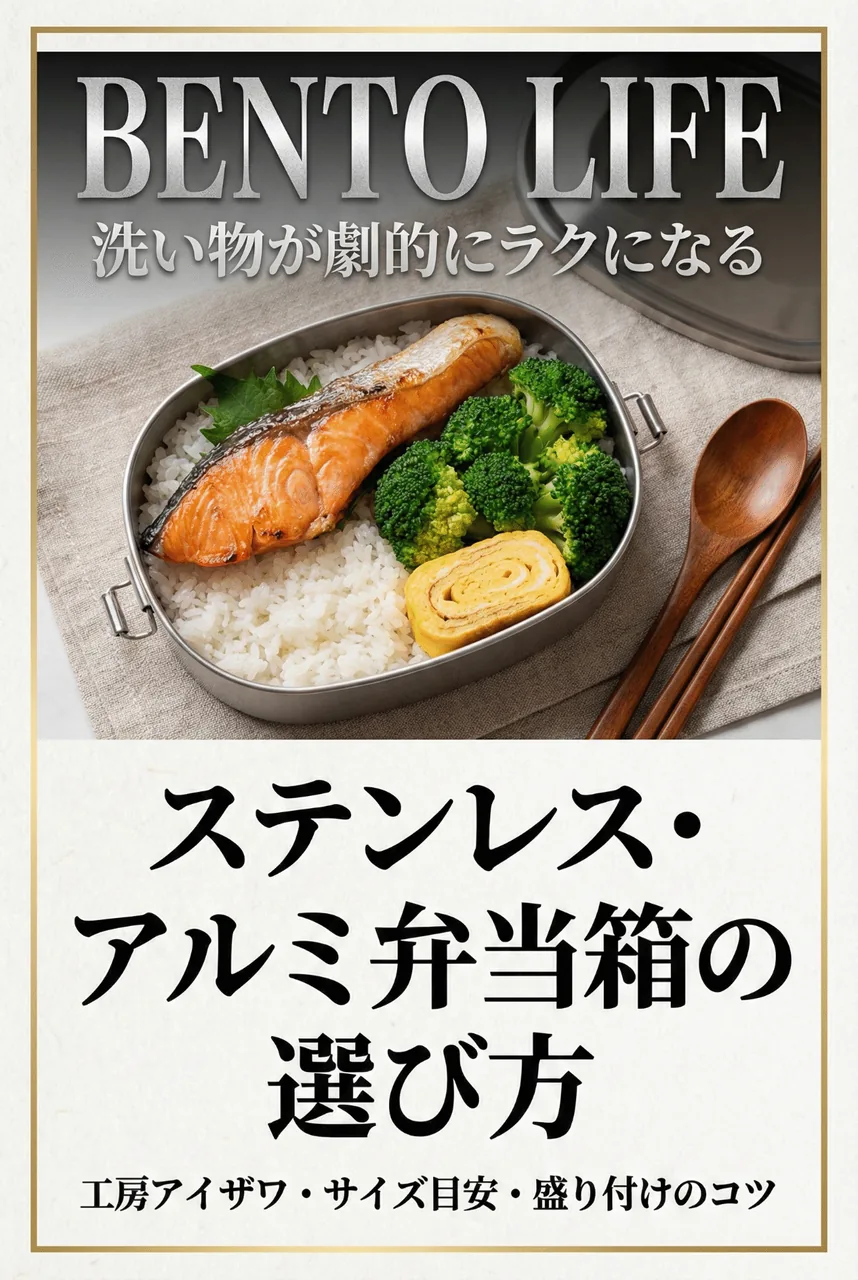
Packing lunch is something you do every single day. "Instagram-worthy" presentation matters, but what matters more to the person doing it is ease of cleaning and the confidence that the box will hold up for years.
A Kobo Aizawa stainless box or a classic aluminum lunch box is never flashy. But their plain, unassuming forms somehow suit fried chicken and rolled omelet perfectly — the kind of food that needs no decoration.
Every small scratch is a memory: another "Thanks for lunch" from a child, another ordinary meal shared. These are tools worth keeping for a lifetime.
Storage Containers | Noda Horo & Aderia Retro for an Organized Refrigerator
Japan-Made Water Bottles for Life | Tsubame-Sanjo Robust Bottles & Thermos Brands