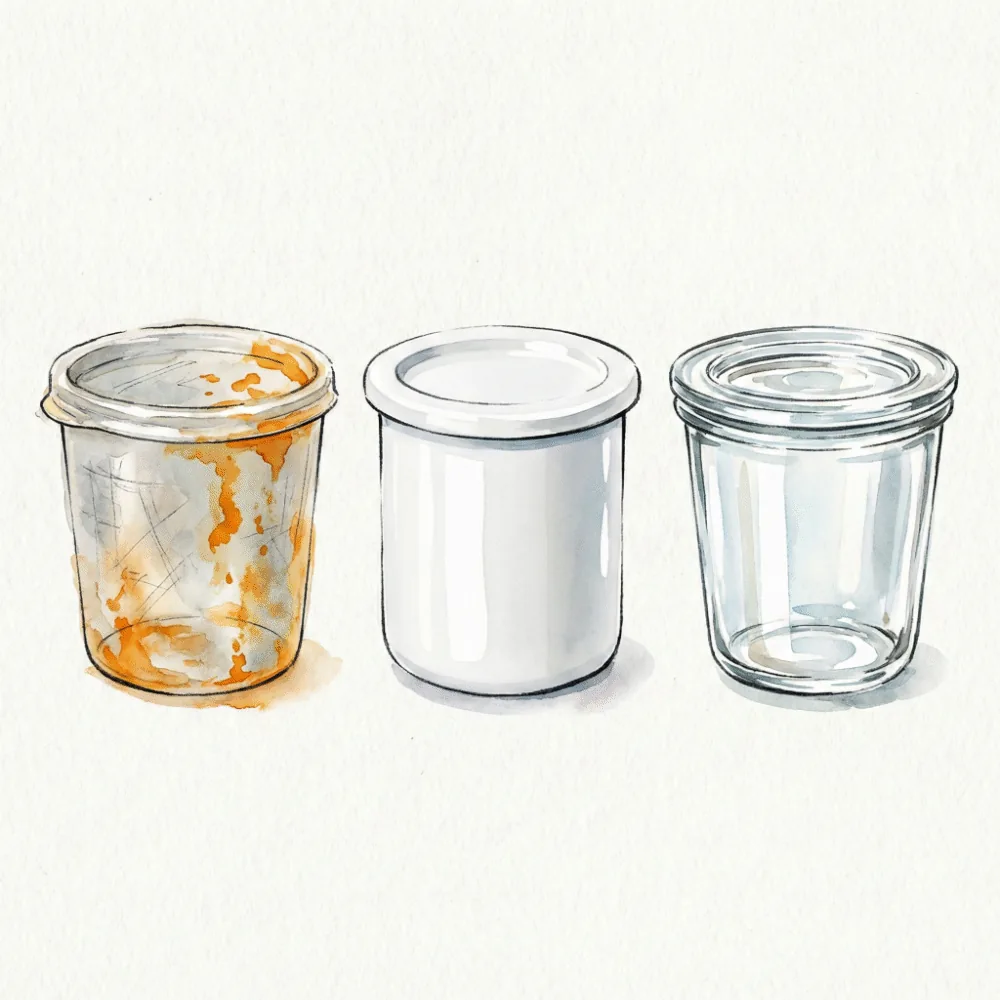
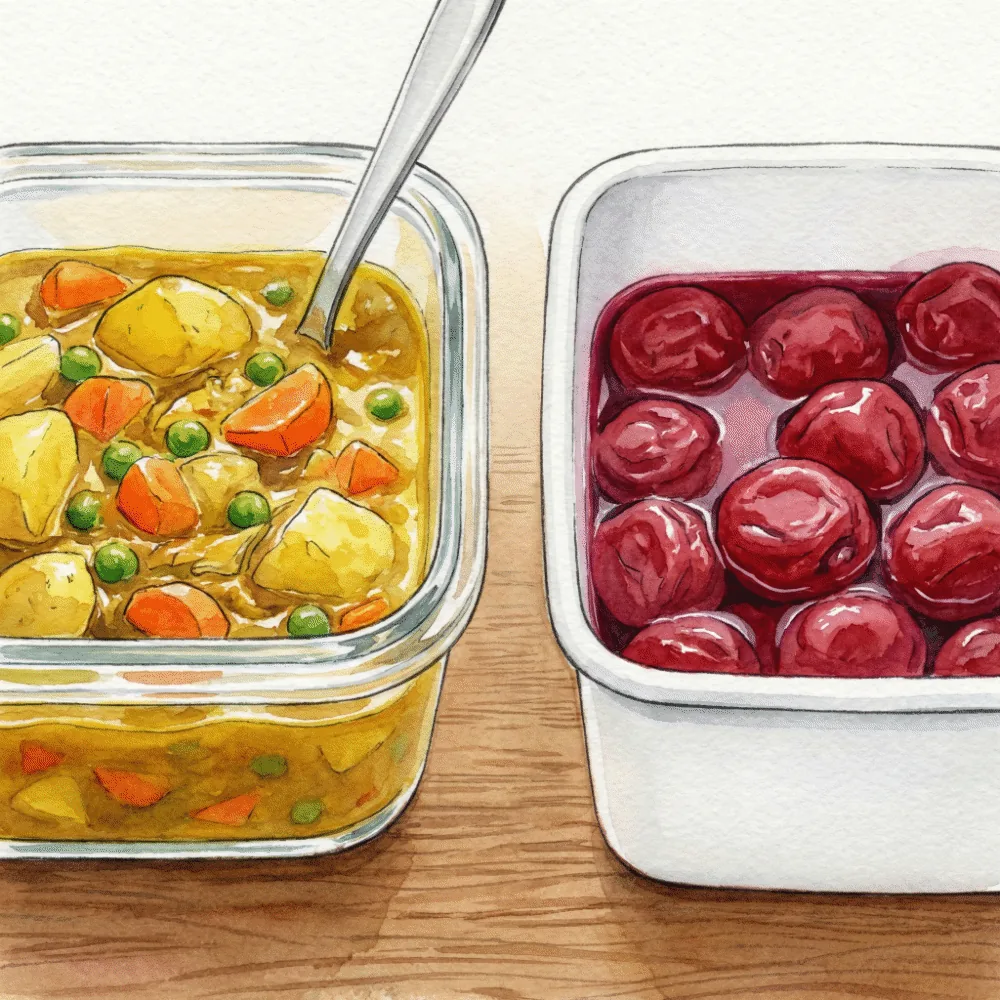
"The container I stored curry in turned yellow and just won't come clean..."
"My fridge is packed with mystery containers — I can't tell what's inside half of them."
Plastic containers are light and cheap, but they absorb odors, stain easily, and develop a greasy film that never
quite washes off. When it's something you use every single day, isn't it worth upgrading to something that lasts a
lifetime?
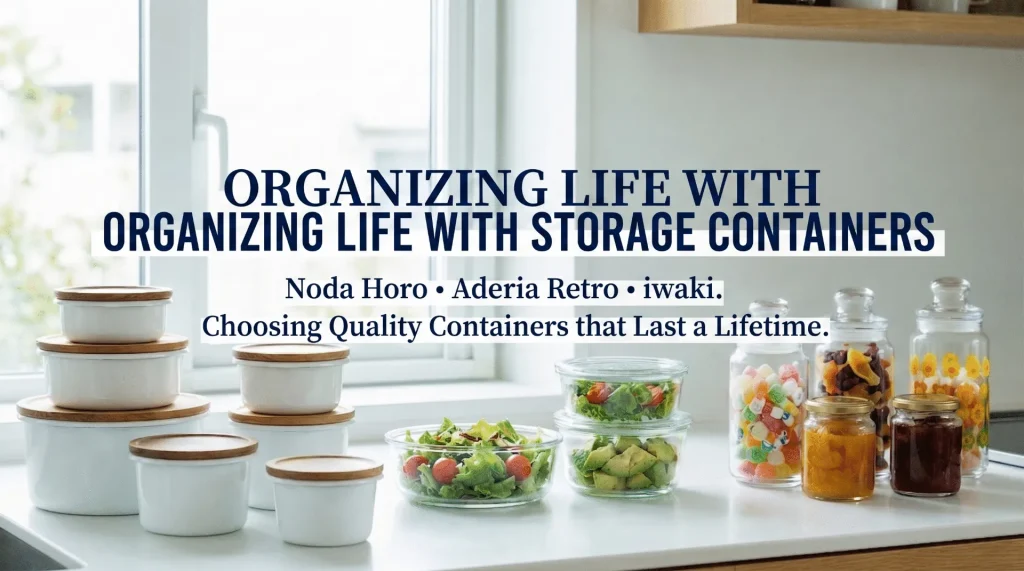
The answer that serious home cooks keep coming back to: enamel containers from Noda Horo — clean,
stovetop-safe, and built to last — and heat-resistant glass, which goes straight from fridge to
microwave to table.
These aren't just storage boxes. They double as cookware, they won't leach flavors or stains into your food, and in
an emergency they can be heated directly on a camp stove — truly phase-free kitchen tools.
This guide introduces beautiful, functional Japanese storage containers that will make you actually look forward to
opening your fridge.
Series: This article is part 5 of the "Prepare & Organize (Hygiene · Disaster Prep · Food Storage)" series.
Quick Reference: Storage Container Materials at a Glance
| Material | Characteristics | Microwave Safe? | Price Range |
|---|---|---|---|
| Glass | See-through · no odor transfer · easy to clean | Heat-resistant glass: yes | $10–$40 |
| Enamel | Stovetop safe · no odor transfer · rapid cooling | No (metal) | $15–$50 |
| Stainless Steel | Durable · lightweight · good for long-term storage | No (metal) | $20–$60 |
| Plastic | Lightweight · affordable · wide variety | Most are compatible | $3–$20 |
1. Beyond Plastic: Why Enamel and Glass Keep Food Fresher Longer
Why do professional cooks and minimalists tend to avoid plastic containers?
Because the difference in food freshness — and the effort of cleaning — is dramatic.
Understanding the Difference by Material
| Material | Pros | Cons |
|---|---|---|
| Enamel (iron + glass coating) |
Stovetop and oven safe. Conducts cold quickly for fast chilling. No odor transfer. |
Not microwave safe. You can't see inside. |
| Heat-Resistant Glass | Microwave and oven
safe. See-through. Oily residue wipes off easily. |
Heavy. Breaks if dropped. |
| Plastic | Light and inexpensive. Microwave compatible. |
Degrades over time. Absorbs odors and colors. Develops a greasy film. |
The smart approach: use both. Glass for reheating, enamel for freezing and stovetop use. Each has its lane.
2. Enamel: Noda Horo White Series — Stovetop, Oven, and Fridge in One
A storage container that's also a cooking vessel.
That versatility is exactly why Noda Horo has been a kitchen staple for generations.
An Unexpectedly Strong Disaster-Preparedness Tool
Noda Horo (野田琺瑯) White Series:
Enamel is iron coated with a fused glass layer — combining the strength of metal with the hygienic properties of
glass.
How to use it:
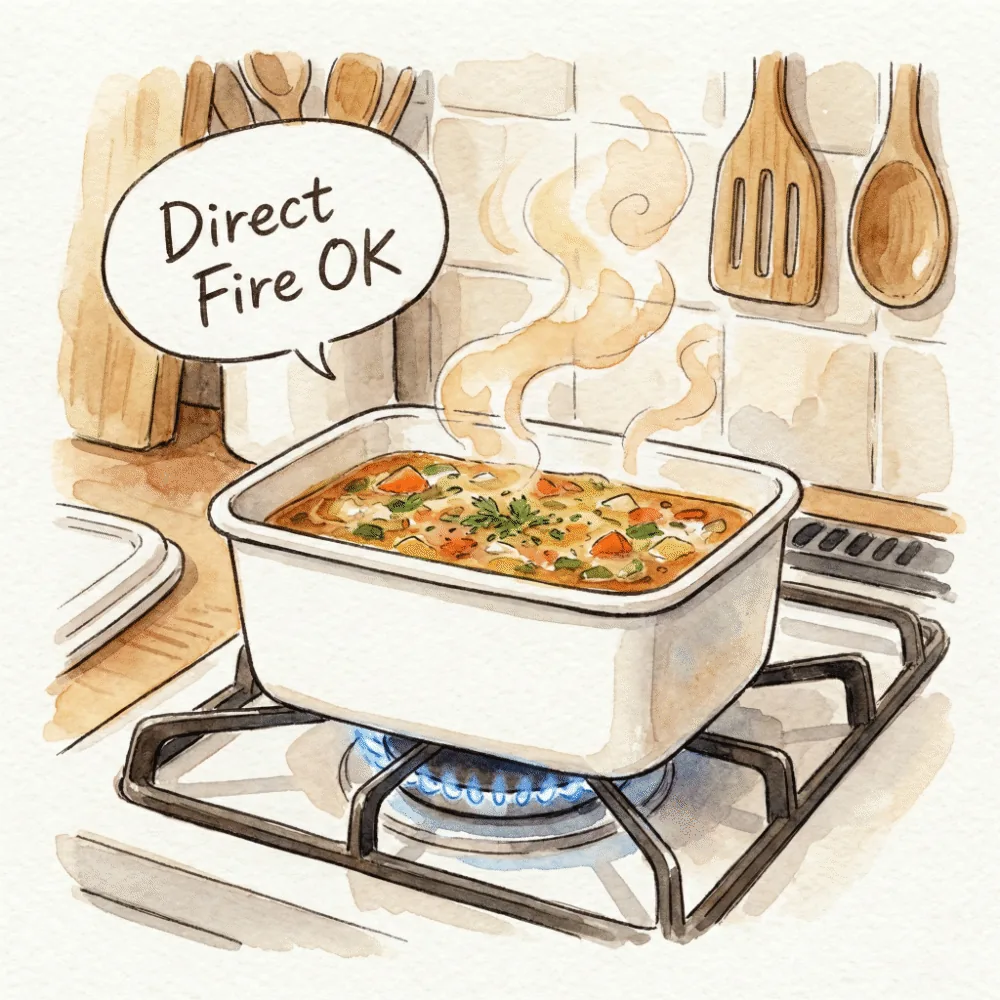
- Reheat directly on the stovetop:
Take leftover soup or curry straight from the fridge to the burner — no transferring to a pot, no extra dishes.
During power outages, it works over a portable camp stove, making it genuinely useful in emergencies. - Use as a baking dish:
The White Series goes straight into the oven for gratins, baked dishes, or even simple cakes. - Flash-freeze ingredients:
High thermal conductivity means food chills and freezes faster than in plastic.
Noda Horo White Series Rectangle Deep M
The one container that does it all — sized for a block of tofu or two servings of curry.
This is the most useful size in the White Series. It comfortably holds a block of tofu, two portions of curry,
or leftover miso soup — the everyday meal-prep staples.
Containers stack neatly in the fridge, and the pure white finish makes whatever you've stored look clean and
appetizing.
- Material
- Enamel (iron + glass coating) · Made in Japan
- Stovetop / Oven
- Both safe · Microwave: not compatible
- Lid
- Plastic seal lid included · Enamel and airtight lids available separately
- Brand
- Noda Horo (野田琺瑯) · Founded 1934 · Tokyo
3. Glass: Aderia Retro Canisters — Vintage Style Meets Practical Storage
Storage containers don't have to be hidden away.
The Aderia Retro line revives the cheerful glassware patterns of mid-century Japanese kitchens — stylish enough to
leave on the counter as part of the décor.
Ishizuka Glass — Aderia Retro Canister (Bonbon Jar)
Nostalgic and new at once — retro Japanese charm in glass.
Originally designed for the Japanese households of the Showa era, these glass jars have been revived with modern
craftsmanship. The playful floral and animal patterns are an instant mood-lifter.
Perfect for storing candy, dried goods, short pasta, or tea bags — and attractive enough to sit front and center
on your kitchen counter as display storage.
- Material
- Glass · Made in Japan
- Best for
- Dry goods · candy · tea bags · spices · display storage
- Brand
- Ishizuka Glass (石塚硝子) / Aderia · Founded 1819 · Aichi Prefecture
4. Heat-Resistant Glass: iwaki Pack & Range — Fridge to Microwave to Table
If you forget about food when you can't see it, transparent heat-resistant glass is your best friend.
The ability to microwave with the lid on is a small convenience that adds up to real time savings every day.
iwaki Pack & Range System Set
A Japanese kitchen icon with over 30 years on the market.
Made from heat-resistant borosilicate glass, the Pack & Range handles microwave and oven cooking with
ease.
Its standout feature: you can microwave with the lid on — no need for plastic wrap. The clear glass means you
can see exactly what's inside without opening anything, and you can bring the container straight to the
table.
Less fussing with serving dishes, fewer things to wash.
- Material
- Heat-resistant borosilicate glass · Made in Japan
- Microwave / Oven
- Both safe · Lid-on microwaving: supported
- Dishwasher
- Safe (body) · Hand-wash recommended for plastic lids
- Brand
- iwaki (イワキ) · AGC Techno Glass · Tokyo
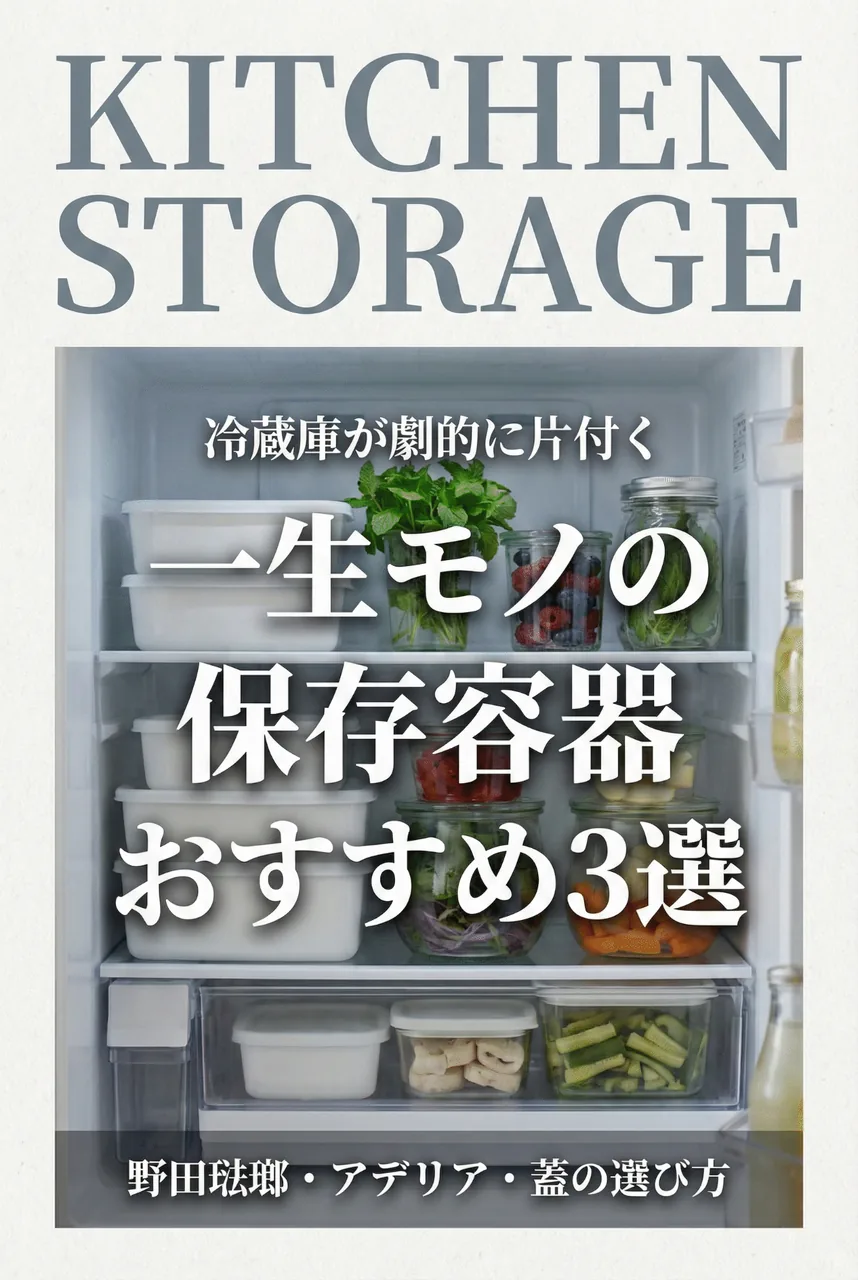
5. Stacking for an Organized Fridge: Building a Matching Container Set
Mixing brands leads to a jumbled fridge — containers that won't stack, wasted vertical space, and lids that don't
fit.
Sticking with one series is the single biggest shortcut to a tidy refrigerator.
The Beauty of Modular Design
Products like Noda Horo's White Series and iwaki's Pack & Range are designed so that different sizes stack
cleanly onto each other.
Two S-size containers line up to the width of one M-size. Lids are often shared across depths. The pieces fit
together like a puzzle.
Opening your fridge to a neatly organized row of matching containers is a surprisingly effective way to stay
motivated about cooking.
6. No Stains, No Odors: Why Curry and Pickles Are No Problem for Glass and Enamel
"My container turned bright yellow after storing curry." "The kimchi smell won't go away no matter how many times I
wash it."
This happens because plastic surfaces have microscopic pores that trap pigments and odors. Glass and enamel have
smooth, non-porous surfaces — these problems simply don't occur.
Acid and Salt Resistant — Perfect for Preserved Foods
Pickled plums (umeboshi), pickled scallions, pickles, marinades — acidic and high-salt foods gradually degrade
plastic over time, but they have zero effect on glass or enamel.
Even the most stain-prone foods — tomato sauce, turmeric-heavy curry — wash off with a quick scrub and a squeak
of clean glass.
When it comes to keeping meal-prepped food fresh and hygienic, the container material matters more than most
people realize.
7. Lid Options and Replaceability: Making Your Containers Last Even Longer
The mark of a truly long-lasting tool is that its consumable parts can be replaced.
With Noda Horo, you can buy replacement lids individually — so the body lives on even when the lid wears out.
Lid Types and When to Use Each
| Type | Features & Best Use |
|---|---|
| Plastic Seal Lid (semi-transparent polyethylene) |
Included as standard. See-through. Inexpensive. Note: degrades over time, but replacements cost just a few dollars. |
| Enamel Lid (same material as the body) |
Doubles as a trivet after stovetop use. Stacks more stably than plastic lids. Zero odor transfer. |
| Airtight Lid (silicone gasket) |
Prevents liquid leaks. Ideal for long-term storage and transporting soups or stews. |
8. Frequently Asked Questions
Can I use an enamel container in the microwave?
Absolutely not.
Enamel contains iron (a metal), which will spark and can damage your microwave or start a fire.
To reheat, use the stovetop, a hot water bath, or transfer the contents to a microwave-safe container first.
Can these containers be used for freezer storage?
Yes, with one precaution.
Liquids expand as they freeze, so filling a container to the brim risks deforming or cracking it.
Leave about 20–30% of the container empty when storing liquids.
For glass containers, only use ones specifically labeled as freezer-safe.
Are these dishwasher safe?
It depends on the material.
Heat-resistant glass (such as iwaki) is generally dishwasher safe.
Noda Horo enamel bodies are also dishwasher compatible, but prolonged soaking can cause the unfinished rim edges
to rust. Hand-washing and drying promptly is the best approach for longevity.
Plastic seal lids should always be hand-washed — heat warps them.
I dropped and broke a glass container. Can it be repaired?
Unfortunately, no.
Even a hairline crack is dangerous — it can shatter suddenly when heated.
Dispose of it safely rather than risk injury. For enamel, if the glass coating chips the body may develop surface
rust, but this isn't toxic. That said, if the damage bothers you, it's a good sign it's time for a replacement.
The plastic seal lid has yellowed or warped. What should I do?
Just replace the lid.
Noda Horo and iwaki both sell replacement lids through their official shops and on Amazon.
Think of the body as a lifetime investment and the lid as a consumable — replacing it every few years is normal
and costs very little.
Which container should I buy first?
Start with one Noda Horo White Series Rectangle Deep M.
It's the most versatile size for everyday meal prep — just one piece is enough to experience the real difference
enamel makes.
Once you're hooked, adding S and L sizes is the natural next step.
If you rely heavily on the microwave, pick up an iwaki Pack & Range set alongside it.
Final Thoughts: Better Containers Mean a Better-Organized Fridge — and More Joy in the Kitchen
It might seem like a small thing — just a container. But the right one changes everything.
When your meal-prepped dishes look appetizing, when your fridge opens to a clean and organized arrangement, you
find yourself actually wanting to cook again tomorrow.
Noda Horo, which goes straight from the fridge to the flame.
iwaki, transparent and honest about everything stored inside.
And Aderia Retro, cheerful enough that you almost don't want to put it away.
Choose the material that fits your lifestyle, and give your fridge — and yourself — a fresh start.
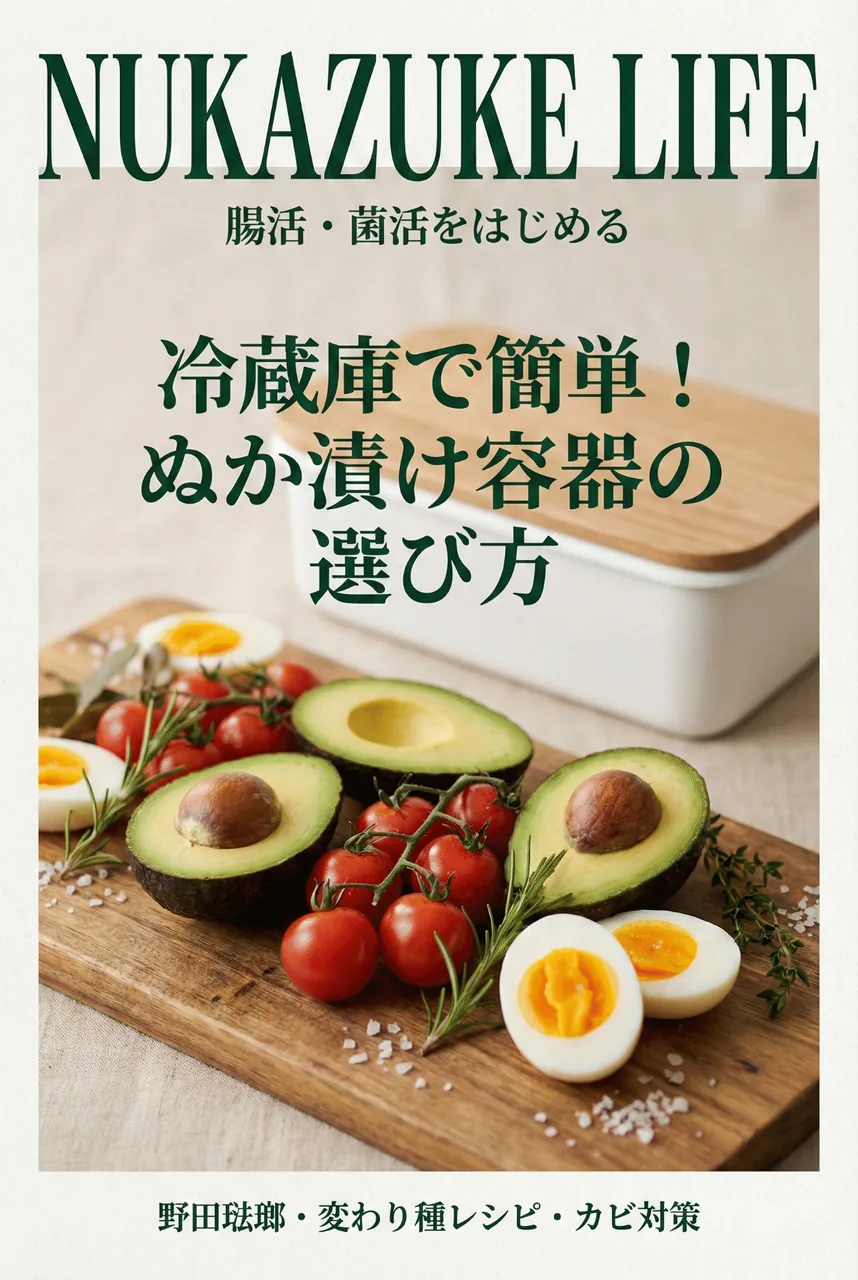
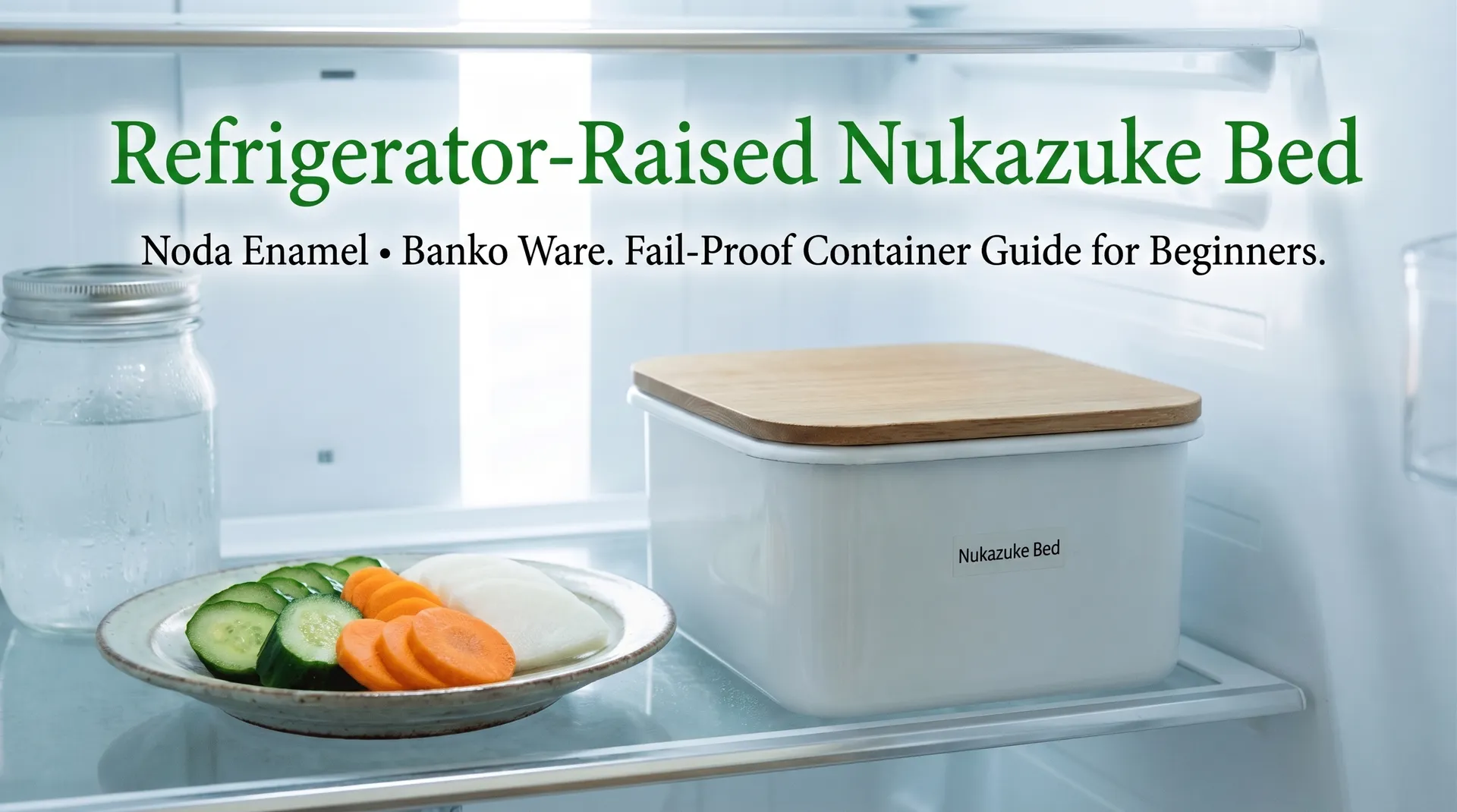
Best Japanese Pickling Containers: Noda Horo & Banko Ware for Fridge Nukadoko
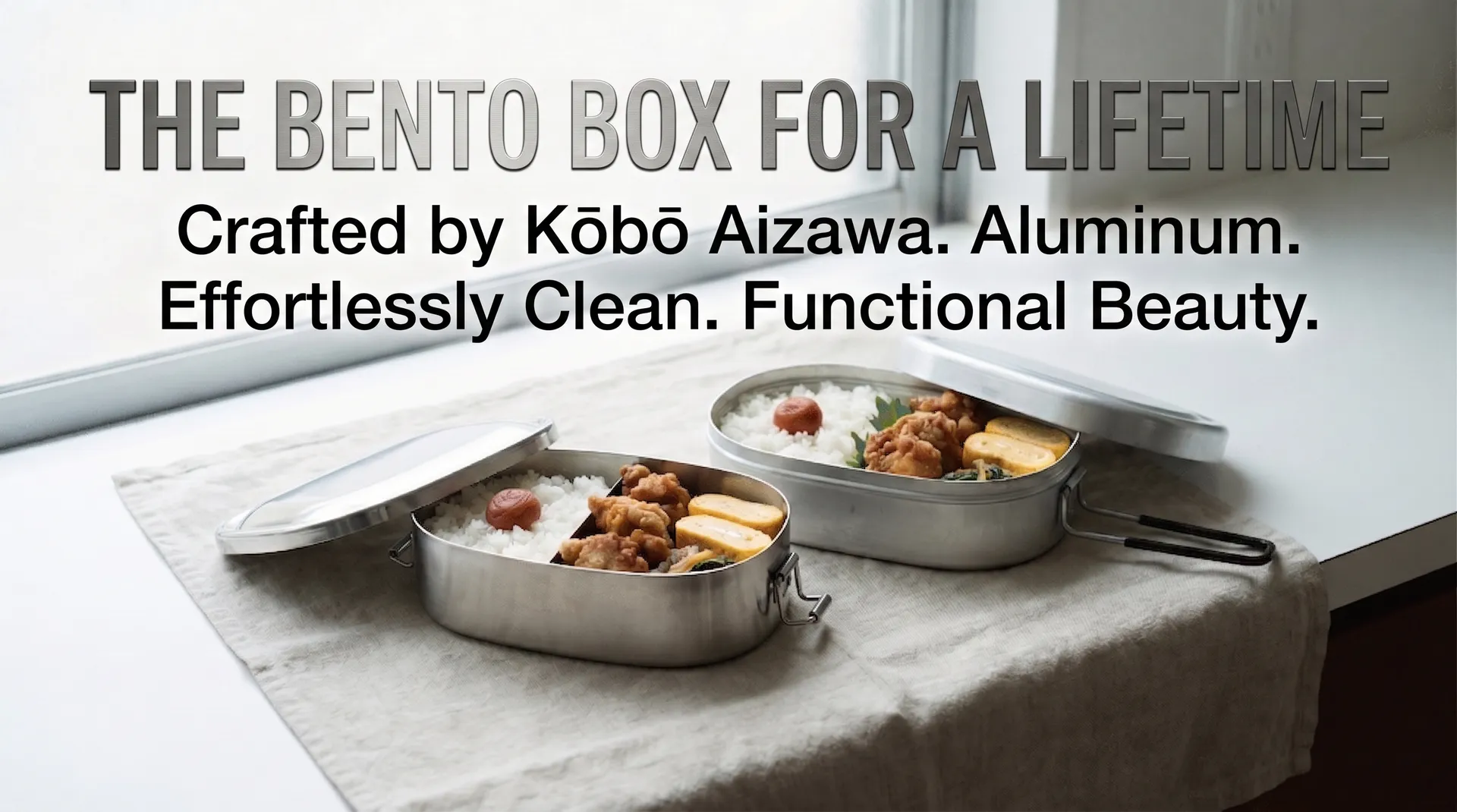
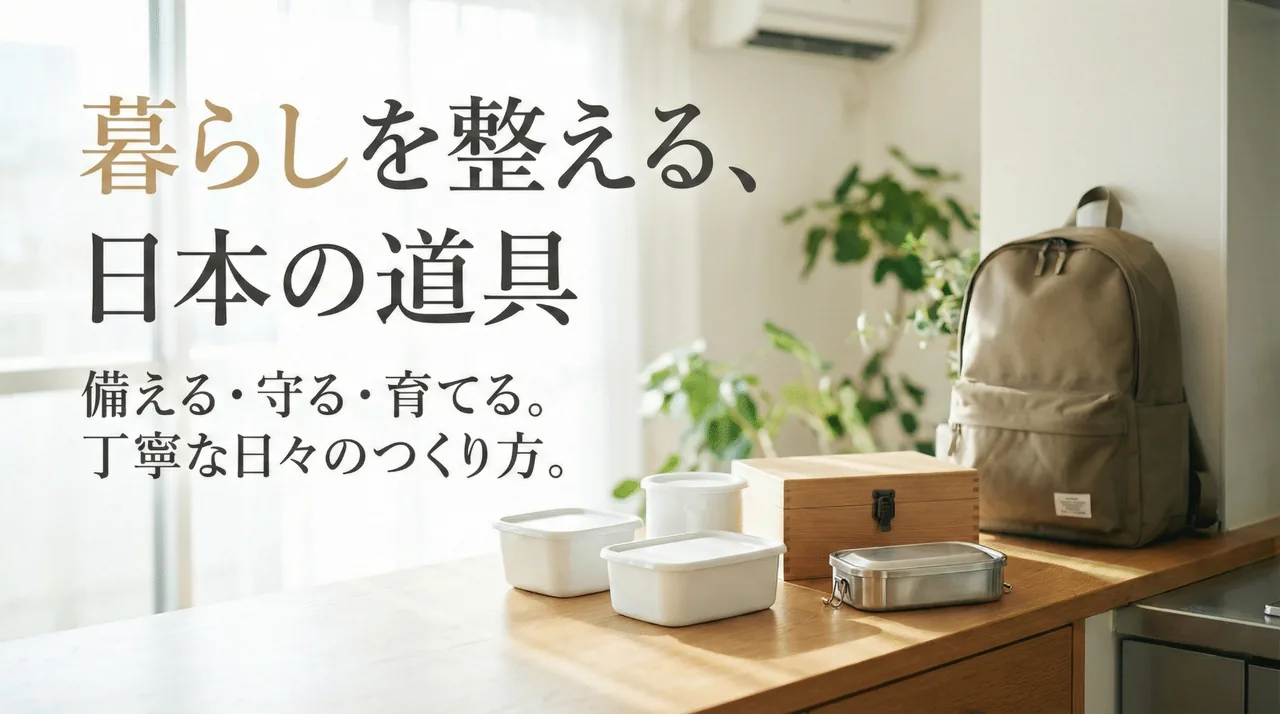
Japanese Aluminum & Stainless Steel Bento Boxes: Durable, Easy to Clean