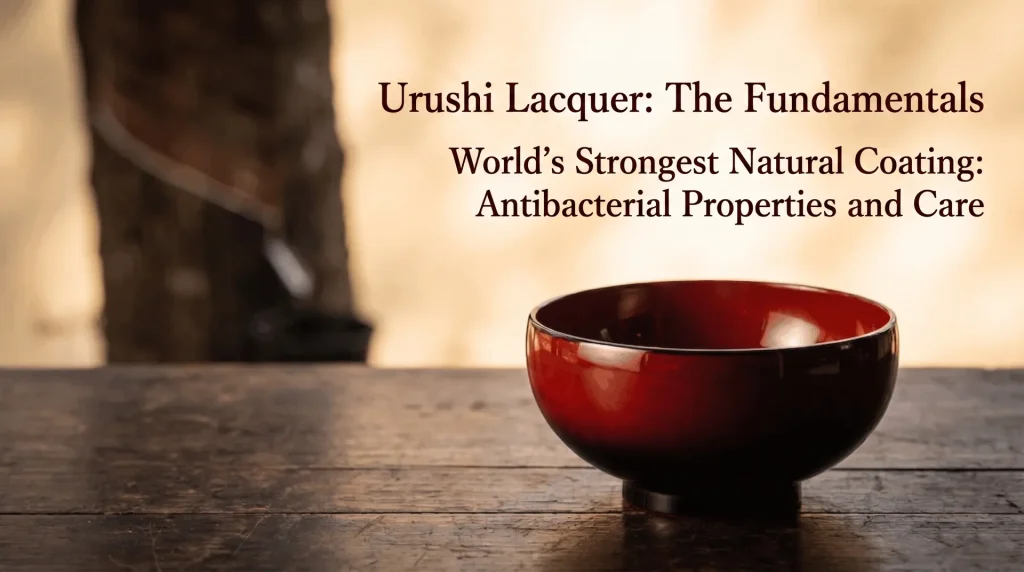
"Lacquerware seems fragile and high-maintenance."
"Doesn't lacquer cause a rash if you touch it?"
If these thoughts have kept you away from lacquered bowls and trays, let me correct the record.
Urushi (lacquer) is a natural tree sap that has been in use for over 9,000 years — one of the world's most
durable natural adhesives and coatings, still unsurpassed in performance by any synthetic
alternative.
Once cured, it resists acids, alkalis, alcohol, and boiling water. Research has confirmed it carries strong
antibacterial and antiviral properties. And unlike plastic, it feels alive in the hand — smooth
without being cold, and deepening in clarity the more you use it.
This guide covers what urushi actually is, the Japan vs. China quality difference, how to use lacquerware without
worry, and what happens when you use it every day for years.
Quick Reference: Urushi Finish Types at a Glance
| Finish type | Description | Durability | Appearance |
|---|---|---|---|
| Hon-urushi (natural) | Pure lacquer tree sap, refined | ★★★★★ Highest | Deep gloss, inner clarity |
| Fuki-urushi (wiped) | Applied and wiped repeatedly to build depth | ★★★★☆ High | Natural wood grain visible |
| Roiro finish | Polished with charcoal for mirror-level gloss | ★★★★★ Highest | Jet-black mirror shine |
| Makie | Gold/silver powder on wet lacquer — decorative | ★★★★☆ High | Gold/silver design on black |
1. What Is Urushi? The World's Oldest High-Performance Coating
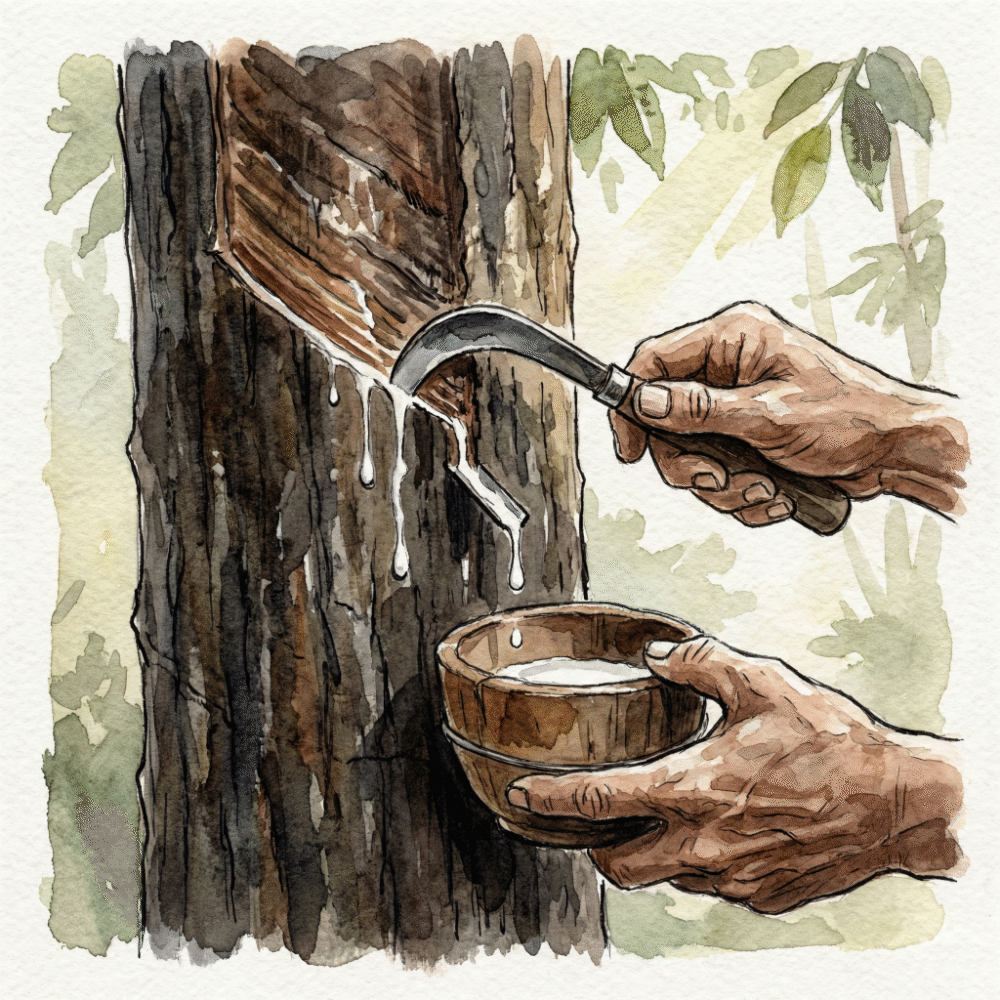
Urushi is the refined sap of the urushi tree (Toxicodendron vernicifluum). When the bark is scored, a milky-white liquid seeps out — the tree's response to injury. That liquid is urushi.
One Tree, One Milk Bottle
An urushi tree takes 10–15 years from planting before it can be tapped. A single tree yields roughly 200
ml — about one milk bottle's worth — over its entire lifetime. Once the sap is harvested, the tree is
felled. Every drop is the tree's life.
In controlled temperature and humidity, enzymes in the sap catalyze a polymerization reaction and the liquid
cures into a rigid, durable film. Once fully cured, it resists acids, alkalis, alcohol, and boiling water — a
performance profile no fully synthetic coating of equivalent age has matched.
That is why urushi has been Japan's primary coating and adhesive from the Jomon period to the present, 9,000
years uninterrupted.
2. Japan vs. China: Why Most Lacquerware Uses Imported Sap
Over 90% of urushi used in Japan today is imported from China. Even products labeled "Japanese lacquerware" are often coated with Chinese-sourced sap. This is not fraud — it is economics.
Japan vs. China: What the Difference Actually Is
| Comparison | Japanese Urushi | Chinese Urushi |
|---|---|---|
| Urushiol content | High (70–75%). Cured film is harder, more transparent. |
Moderate (~60%). Higher water and resin content in some batches. |
| Working properties | Cures faster, more viscous. Superior durability and gloss. |
Slower curing in some grades. Quality varies; significantly cheaper. |
| Price | Very expensive. Roughly 5–10× the Chinese price. |
Affordable and consistently available. |
Why Chinese urushi dominates:
Price and supply volume. Making affordable everyday lacquerware accessible to consumers requires Chinese urushi.
There is nothing inherently inferior about the result for daily use items.
Where Japanese urushi is irreplaceable:
The restoration of national treasures and Important Cultural Properties — Nikko Toshogu Shrine, Kinkakuji Temple,
historic temples and artifacts — mandates Japanese-sourced urushi for both durability and
authenticity. As the tapper workforce aged and production declined, the supply of domestic urushi approached a
crisis point. The Agency for Cultural Affairs and regional producers are now actively working to preserve and
rebuild domestic production, with slow but steady progress.
3. Why Lacquerware? The Antibacterial Case and Durability
Lacquerware is not just beautiful — its hygienic properties are genuinely exceptional and increasingly validated by research.
Bacteria Counts Drop Significantly Within 24 Hours
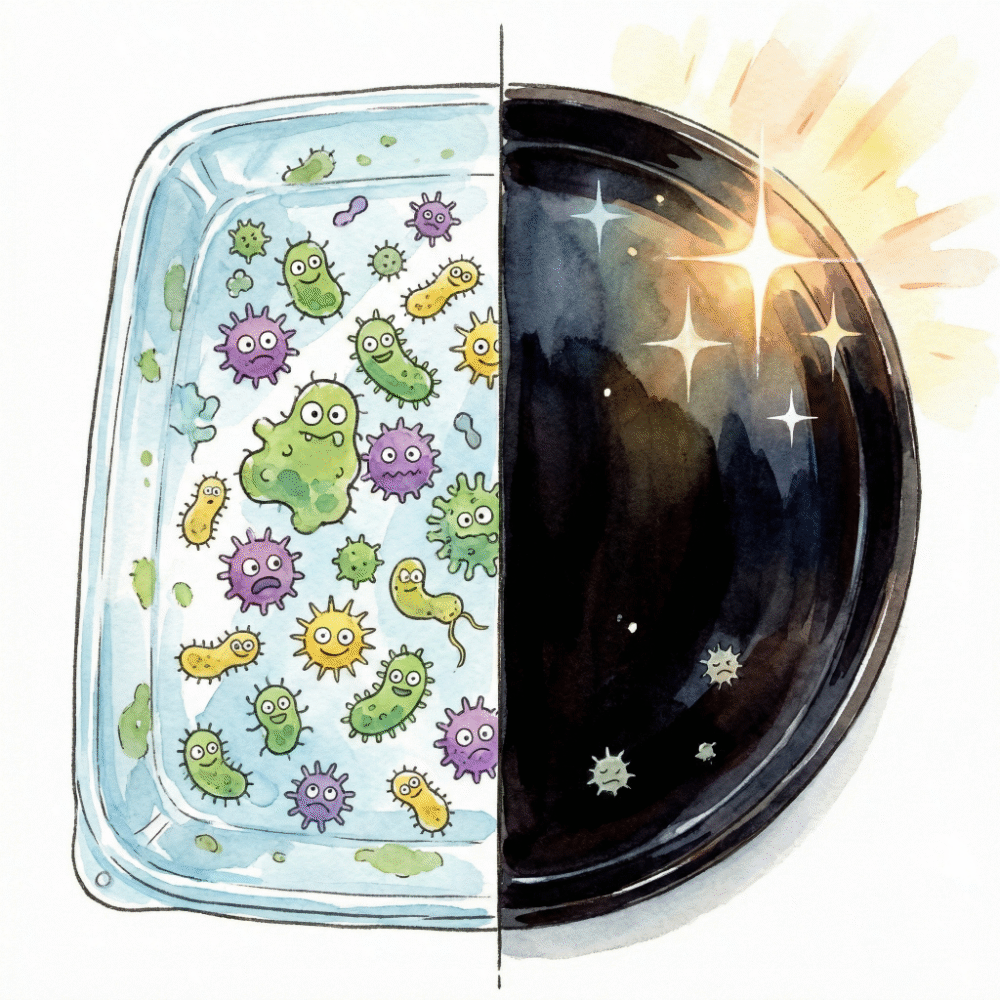
Studies have demonstrated that E. coli, MRSA (Staphylococcus aureus), and influenza viruses on lacquer-coated
surfaces are sharply reduced within hours to 24 hours of contact. The effect comes from urushi's chemical
composition. Japanese people used lacquered lunch boxes and stacking food containers for centuries — the
practical knowledge that "food keeps longer" was empirically sound long before it was scientifically
explained.
Additionally, lacquer's thermal insulation is exceptional: hot miso soup in a lacquer bowl stays hot longer
while the exterior remains comfortably warm to hold. Cold dishes stay cold without condensation forming on the
outside.
It is, in a direct sense, the material perfectly suited to the Japanese table.
4. Three Production Regions: Wajima, Yamanaka, Aizu
Japan has multiple lacquerware producing regions, each with a distinct specialty. The three most important:
Wajima-nuri — The Master Standard
Japan's most robust lacquerware, built through 100+ production steps using ji-no-ko (diatomaceous earth) base layers for extraordinary structural hardness. This vermilion couple's soup bowl showcases the Wajima tradition of formal beauty — for ceremonial occasions and formal gifting, Wajima is the standard.
- Region
- Wajima, Ishikawa Prefecture
- Technique
- Multi-layer ji-no-ko base with chinkin and makie decoration
- Best for
- Daily miso soup, formal gifting, long-term heirloom use
Yamanaka-nuri — Wood Grain Beauty
Japan's finest lathe work, with fuki-urushi (wiped lacquer) that preserves the natural wood grain visible through the lacquer surface. This Shirasagi wood soup bowl lets the material speak for itself — ideal for contemporary table settings that value organic simplicity.
- Region
- Yamanaka, Ishikawa Prefecture
- Technique
- Fuki-urushi (wiped lacquer) over lathe-turned wood
- Best for
- Everyday soup, minimalist table settings, nature-inspired décor
Aizu-nuri — Color and Everyday Use
Vivid "Aizu-e" painted decoration and durable everyday practicality. Aizu lacquerware is characterized by its bright, colorful painted motifs — a contrast to the austere black-and-red formal tradition. Relatively affordable and built for daily use, these designs invite handling rather than display-case preservation.
- Region
- Aizu, Fukushima Prefecture
- Technique
- Aizu-e painted motifs over lacquer coating
- Best for
- Daily use, colorful table settings, accessible gifting
5. The Allergy Question: What You Need to Know
Lacquer has a reputation for causing rashes. How concerned should you actually be about finished lacquerware?
Fully Cured Lacquer Does Not Cause Rashes
The compound responsible for urushi's allergenic reaction is urushiol. The key fact: once fully
polymerized and cured, urushiol no longer triggers an immune response. The finished product sitting on
a shop shelf cannot cause a rash through normal use.
When to be careful:
A small number of sensitive people may notice a faint odor or mild irritation from brand-new lacquerware. If this
occurs, leave the piece in a ventilated space out of its box for a few weeks, or wash it with warm water before
first use. Both approaches resolve the issue.
Note: if you are doing kintsugi or any other project involving liquid urushi, handle it with gloves —
liquid sap is the allergen, not the cured film.
6. Daily Care: Detergent OK, Microwave Not OK
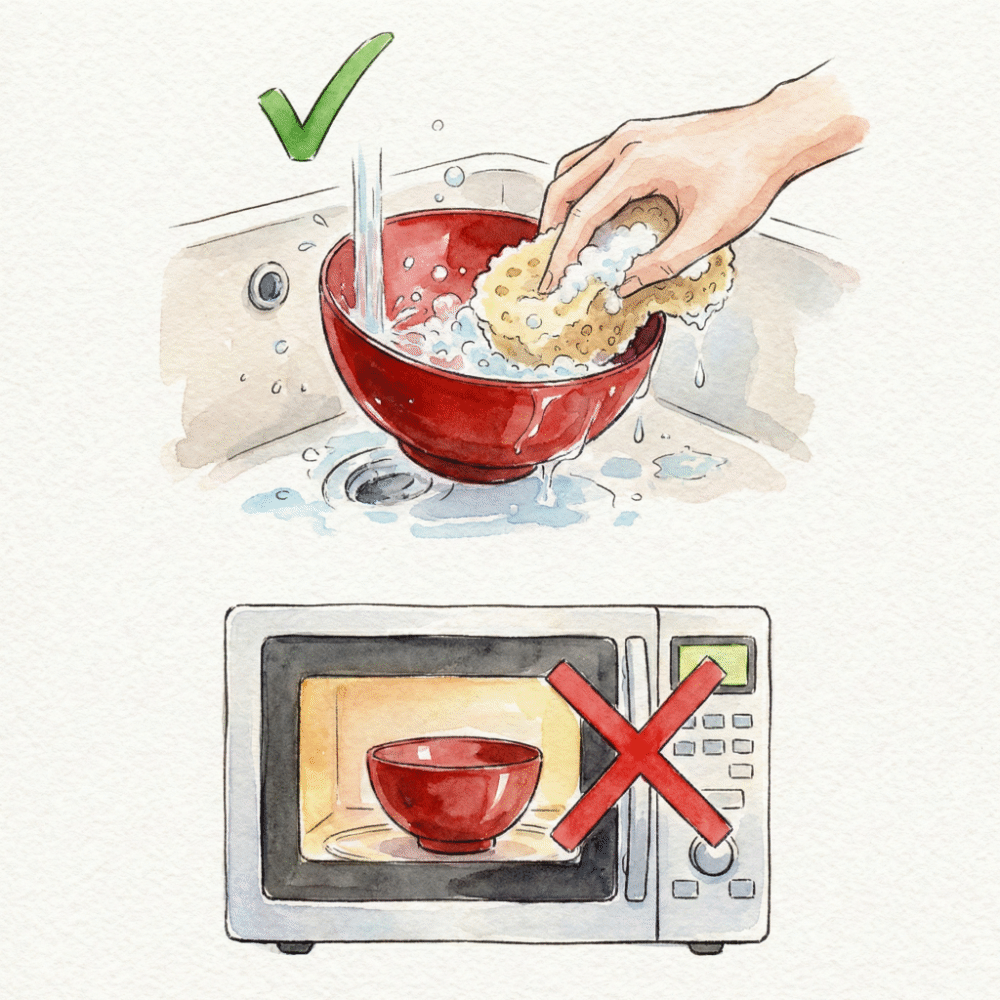
"Lacquerware can only be rinsed with water" is outdated guidance. Modern lacquerware can handle detergent — with a few rules.
What's OK — and What Isn't
- Dish detergent: OK.
Use a soft sponge with mild dish soap and wash gently. The important rule: wash lacquerware separately from glass and ceramic pieces — contact with harder materials chips the surface. - Drying immediately: Essential.
Tap water contains minerals that leave white marks if allowed to dry on lacquer. Wipe immediately after washing with a soft cloth. - Microwave and dishwasher: Not OK.
Rapid heat changes and harsh dishwasher chemistry cause the wooden base to warp and the lacquer surface to crack or peel. Long cold storage in a refrigerator can also dry out the wood — avoid extended refrigeration.
7. How Lacquerware Improves: The "Living" Surface
The most distinctive quality of lacquerware is that it does not peak at purchase. The longer you use it, the more beautiful it becomes.
Urushi Is Alive
Fresh lacquer appears deep and slightly opaque. Over months and years of use, the lacquer film continues to cure
and densify — a process called urushi ga sukeru (the lacquer "clearing"). The base color and wood grain
beneath gradually emerge through the surface, becoming more vivid as the film clarifies.
Wash it. Use it. Dry it. That cycle is what polishes lacquer from the outside. A bowl used every day for ten years
holds a depth of beauty that no new piece off a shelf can show. It is, in the truest sense of the word, grown
rather than bought.
8. When It Chips: Repair and the Joy of Kintsugi
Urushi is not only the world's oldest high-performance coating — it is also one of the oldest adhesives. That dual property is the foundation of kintsugi: the art of repairing broken ceramics with lacquer and gold.
In contemporary language this might be called sustainability — but Japan had a cultural practice of repairing broken objects and honoring the repair as part of the object's story long before that word existed. A lacquer bowl whose coating has worn or chipped can be resurfaced by a craftsperson, emerging with a depth that exceeds the original. "Repair and continue" is not frugality; it is the Japanese ethos of living with objects over time.
9. Frequently Asked Questions
My lacquerware has a faint smell. How do I remove it?
Warm water with a small amount of rice vinegar removes it.
The mild odor of new lacquerware is normal. Placing the piece in a rice bin for a few days, or wiping it with a
cloth dampened in diluted rice vinegar, speeds the process. With regular use, it disappears naturally within a few
weeks.
The lacquer surface has chipped. Can it be repaired?
Yes — resurfacing (nuri-naoshi) restores it fully.
Contact the shop where you purchased it or the producing region's craftspeople. They sand the surface and re-apply
lacquer. In many cases, the cost is less than buying a replacement, and the restored piece often develops more
depth than it had before the repair.
Can I pour boiling water directly into a lacquer bowl?
Avoid water at 100°C — drinking temperature is fine.
Water poured directly from a rolling boil can cause the lacquer to whiten slightly at the contact point. Water at
drinking temperature (70–80°C) — miso soup, green tea — causes no problem whatsoever.
How do I tell real lacquer from urethane-coated imitations?
Check the product label.
Japanese consumer product labeling law requires the coating type to be disclosed: genuine lacquer is listed as
"urushi-coating" (漆塗装); synthetic resin coatings appear as "urethane coating," "cashew coating," and similar. The
tactile difference is also perceptible — a real urushi bowl has a soft, slightly absorptive feel against the lips
that synthetic coatings lack.
How do I clean heavily oily residue?
Pre-rinse with warm water, then wash with mild detergent.
Urushi resists oil, so a fried food platter or oil-dressed salad is not a problem. Float the oil off with warm
water first, then clean with a soft sponge and neutral detergent. The lacquer surface will be undamaged.
How should I store lacquerware I am not using regularly?
Prevent drying out — that is the main concern.
Store in a box, wrapped individually in soft cloth or paper if stacking to prevent surface contact. Keep away from
air conditioning vents, direct sunlight, and any heat source. Excessive dryness causes the wooden base to crack —
humidity-controlled storage is ideal, though a normal closed cabinet is usually sufficient.
Final Thoughts: The Warmth Plastic Cannot Offer
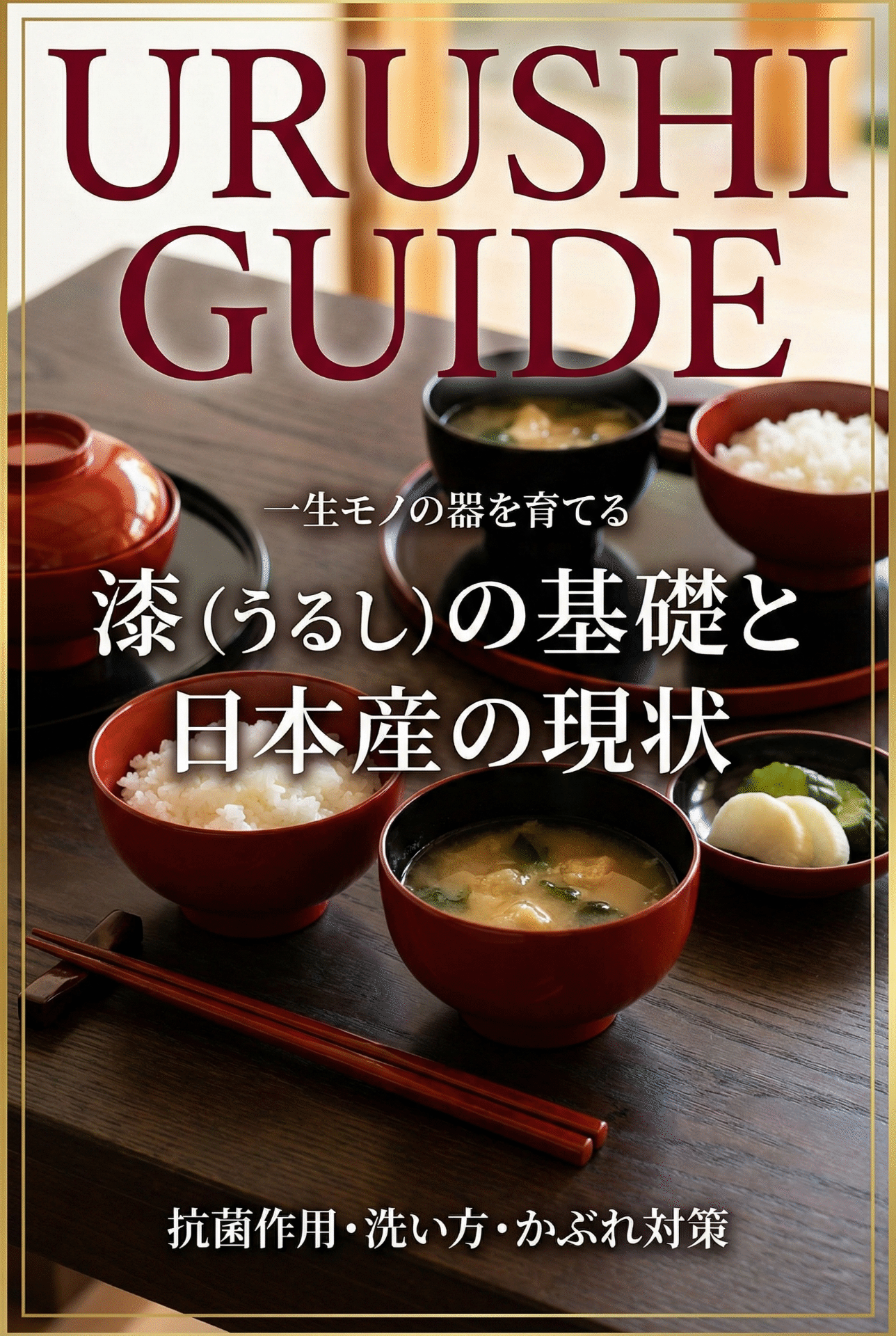
Lacquerware is not a delicate art object to be handled with gloves. It is a daily-use vessel that improves
precisely because you handle it every day.
The moment a lacquer bowl meets your lips — smooth without being cold, warm without being rough. Miso soup stays
hot through the meal. Washing takes thirty seconds. After years of daily use, the grain beneath the surface
begins to emerge, and the bowl becomes entirely, unmistakably yours.
Start with a miso soup bowl. Use it every morning. What feels like a modest beginning quietly becomes a
9,000-year-old practice.

Japanese Pottery: Kilns, Styles & What to Buy

Kintsugi Kits for Beginners: Repair Broken Ceramics in a Day