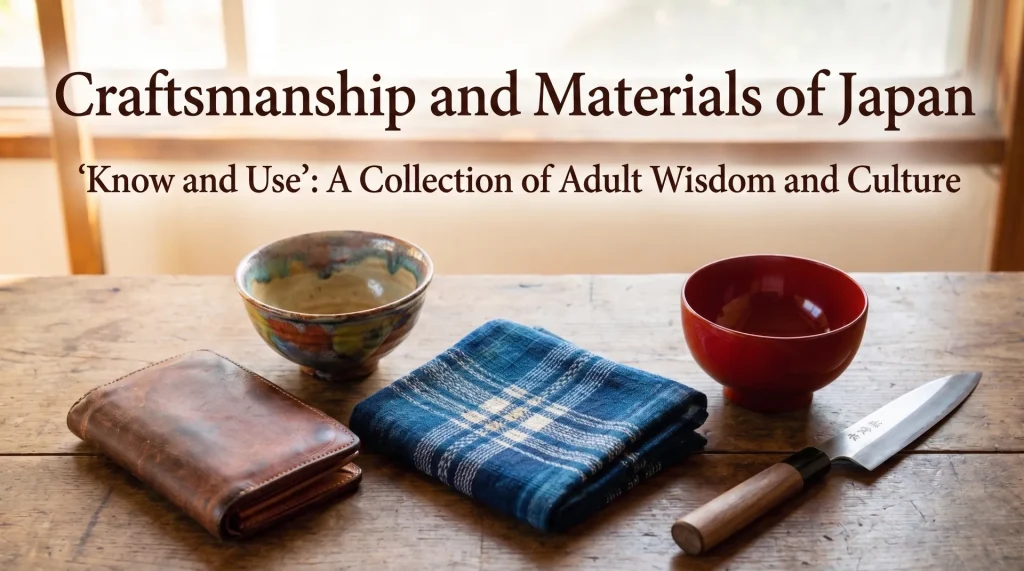
"Why does this leather wallet develop such a beautiful patina over time?"
"Why does a tomato sliced with this knife actually taste different?"
Most of the time, we only ever see finished "products." We use them without thinking much about what went into
them.
But behind every great Japanese tool lies centuries of accumulated material wisdom and artisan
knowledge — passed down, refined, and still very much alive today.
Learning the story behind a tool — the properties of its material, the reason for its design — is not just
interesting trivia.
It's the key to developing real attachment to the things you own, caring for them properly, and making them last a
lifetime.
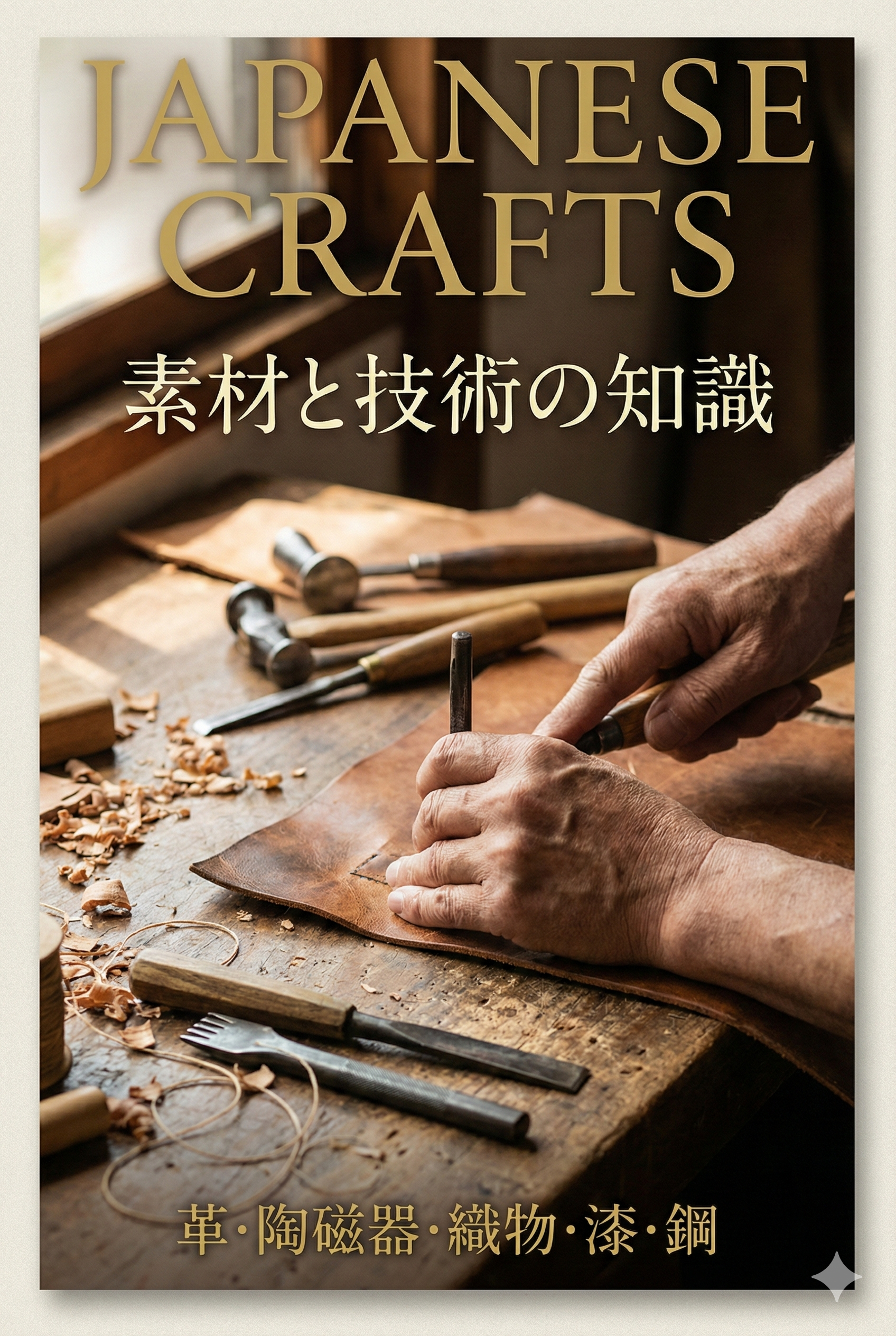
This collection dives deep into five foundational Japanese materials: leather, clay, textiles, lacquer, and steel —
the kind of knowledge that changes how you see the objects around you.
The more you know, the richer your everyday world becomes.
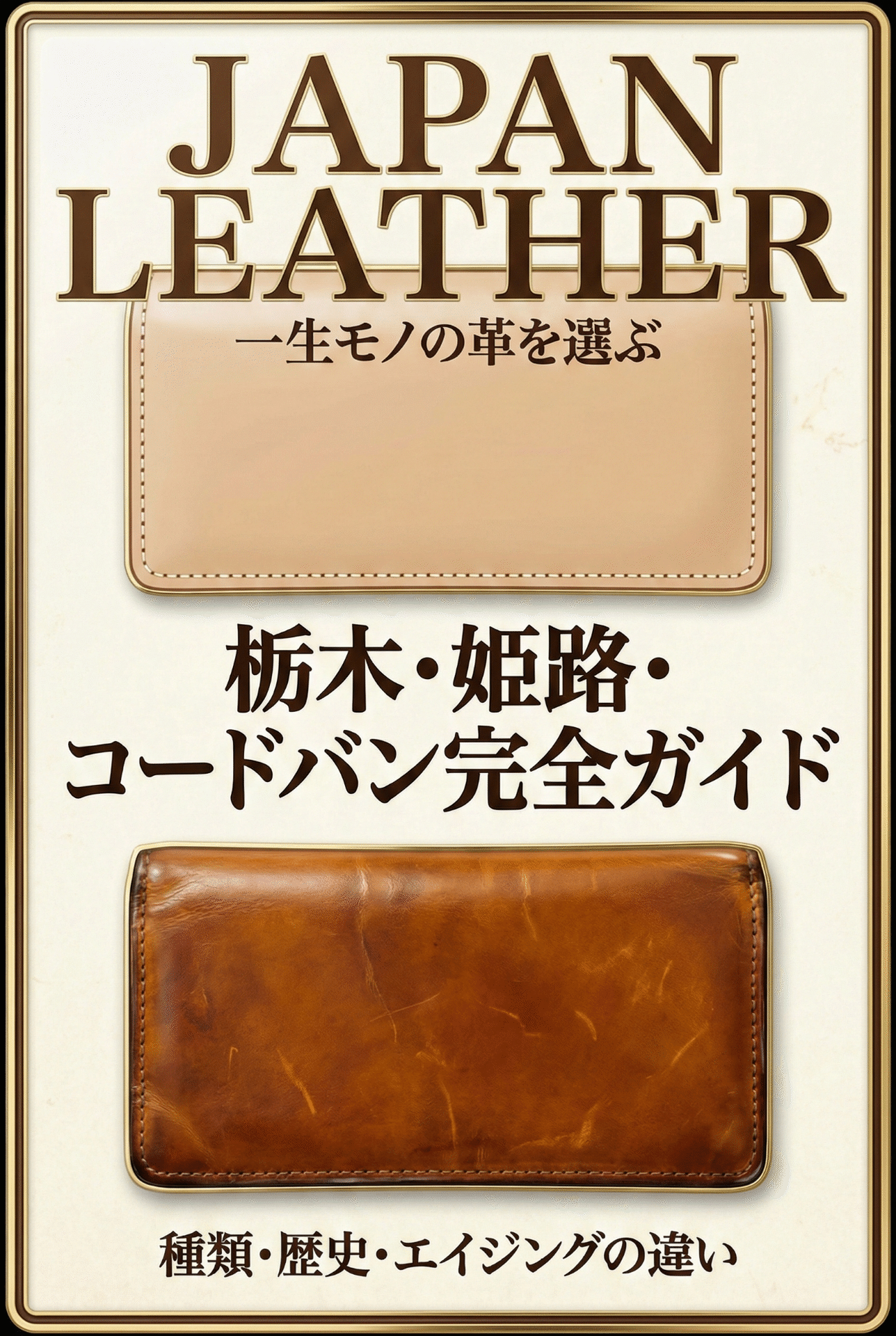
1. Japan's Finest Leather | Tochigi and Himeji — Recognized Worldwide
Leather is the living record of an animal's existence.
Japanese leather (Japan Leather) earns its world-class reputation through meticulous craftsmanship and exceptionally
clean water.
Japanese Leather Types & What Sets Them Apart
Tochigi Leather, prized for its rich aging patina. Himeji Leather, celebrated for vivid color. And cordovan —
the diamond of leatherwork.
Explore the history behind each regional tanning tradition and learn how to choose the right leather for you.
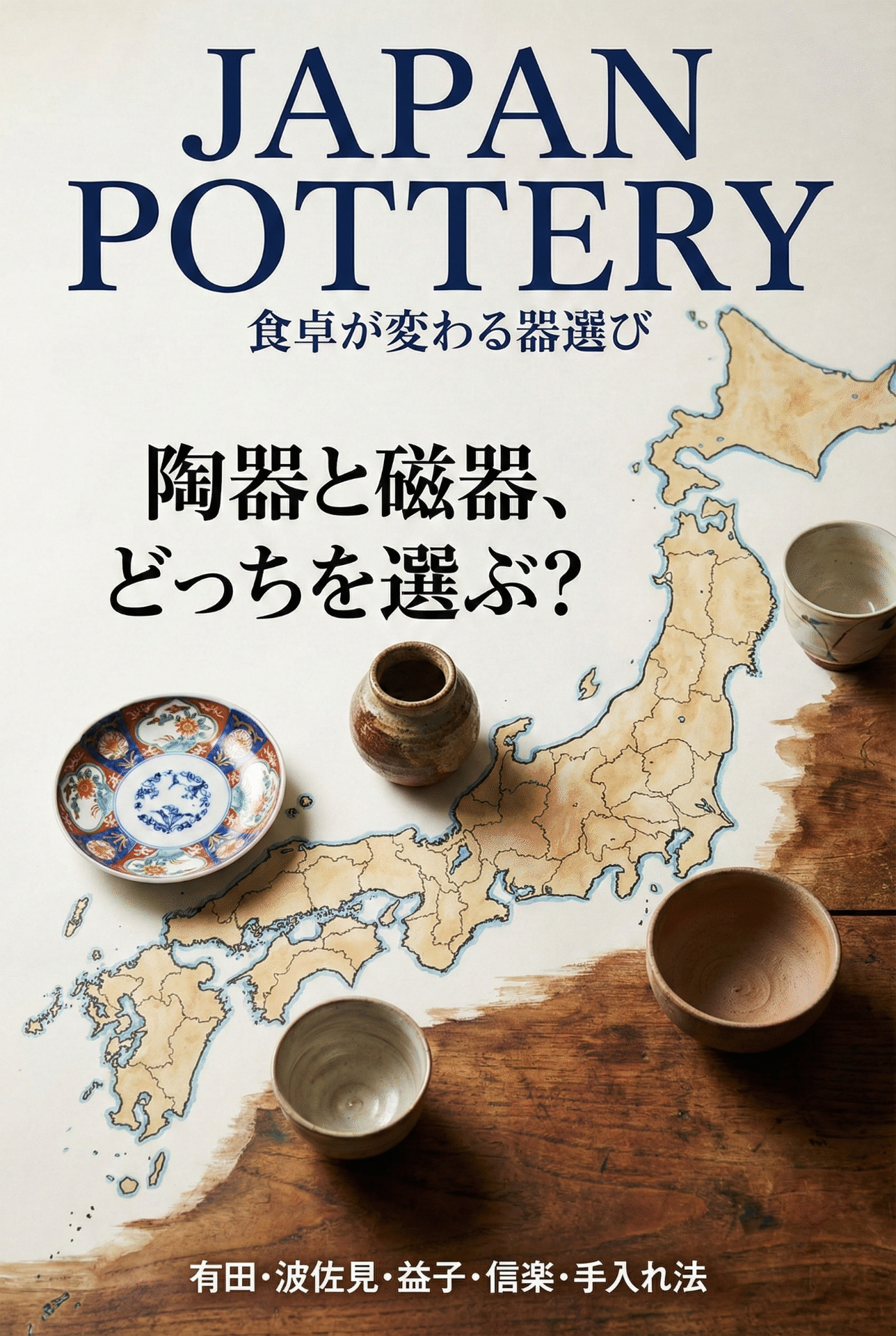
2. Understanding Ceramics | Pottery vs. Porcelain & How to Choose
You use dishes every day — but do you know the difference between pottery (clay) and porcelain (stone)?
Once you understand the materials, you can instantly tell whether a piece is microwave-safe just by looking at it.
Japan's Ceramic Map (Pottery & Porcelain)
Arita, Hasami, Mashiko, Shigaraki…
A region-by-region tour of Japan's ceramic traditions, plus the visual rules for pairing dishes with food so
every meal looks its best.
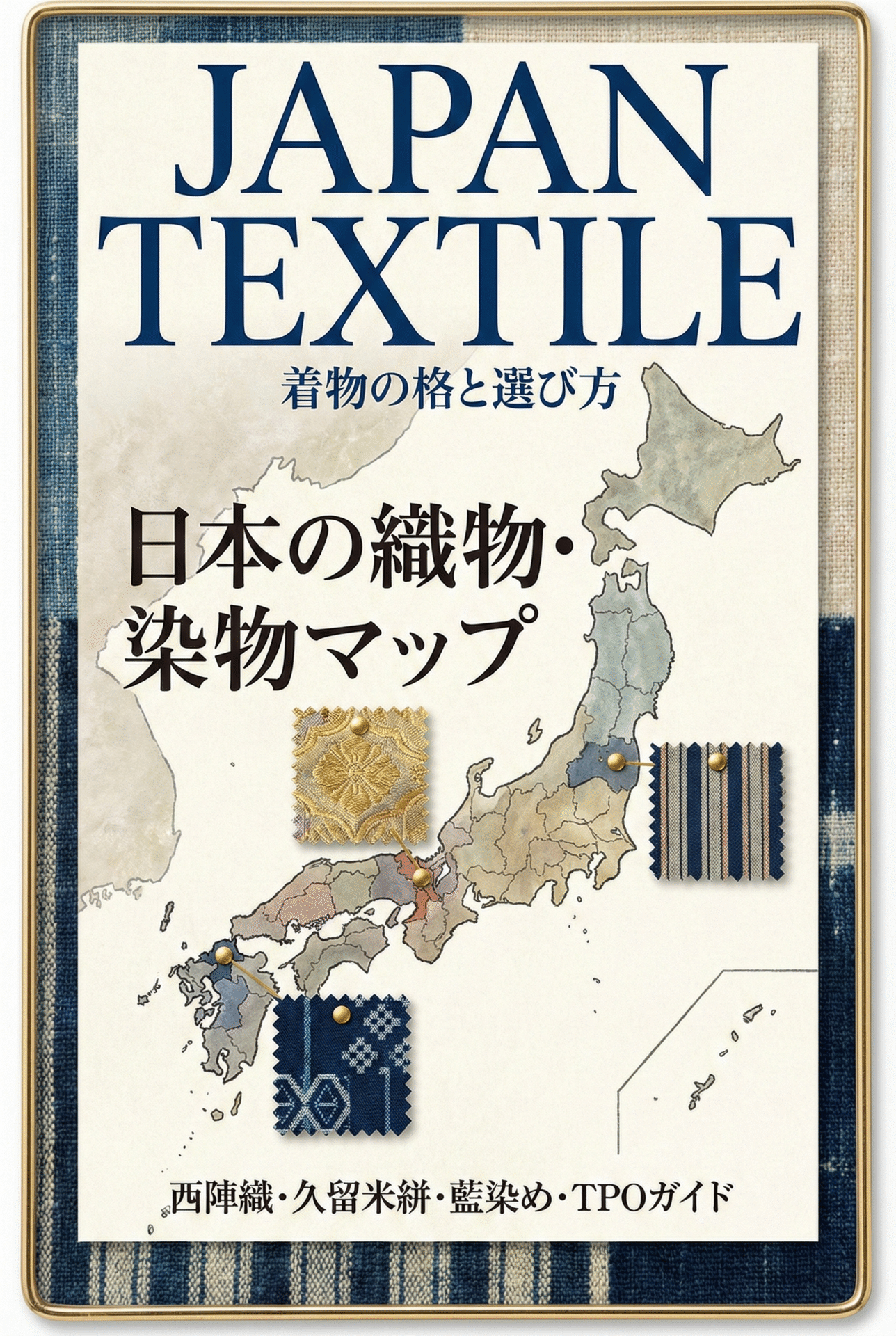
3. Japan's Textiles | Weaving and Dyeing — Nishijin-ori and Japan Blue
"Woven" versus "dyed." In the world of kimono, this distinction separates formal from casual.
Discover the depth of Japan's textile heritage, shaped by centuries of climate, culture, and craft.
Japanese Woven & Dyed Textiles
The opulent Nishijin-ori brocade, the everyday warmth of Kurume kasuri, and the antibacterial power of ai-zome
(indigo dyeing).
A guide to the global phenomenon of Japan Textiles — and how to wear and use them at the right moments.
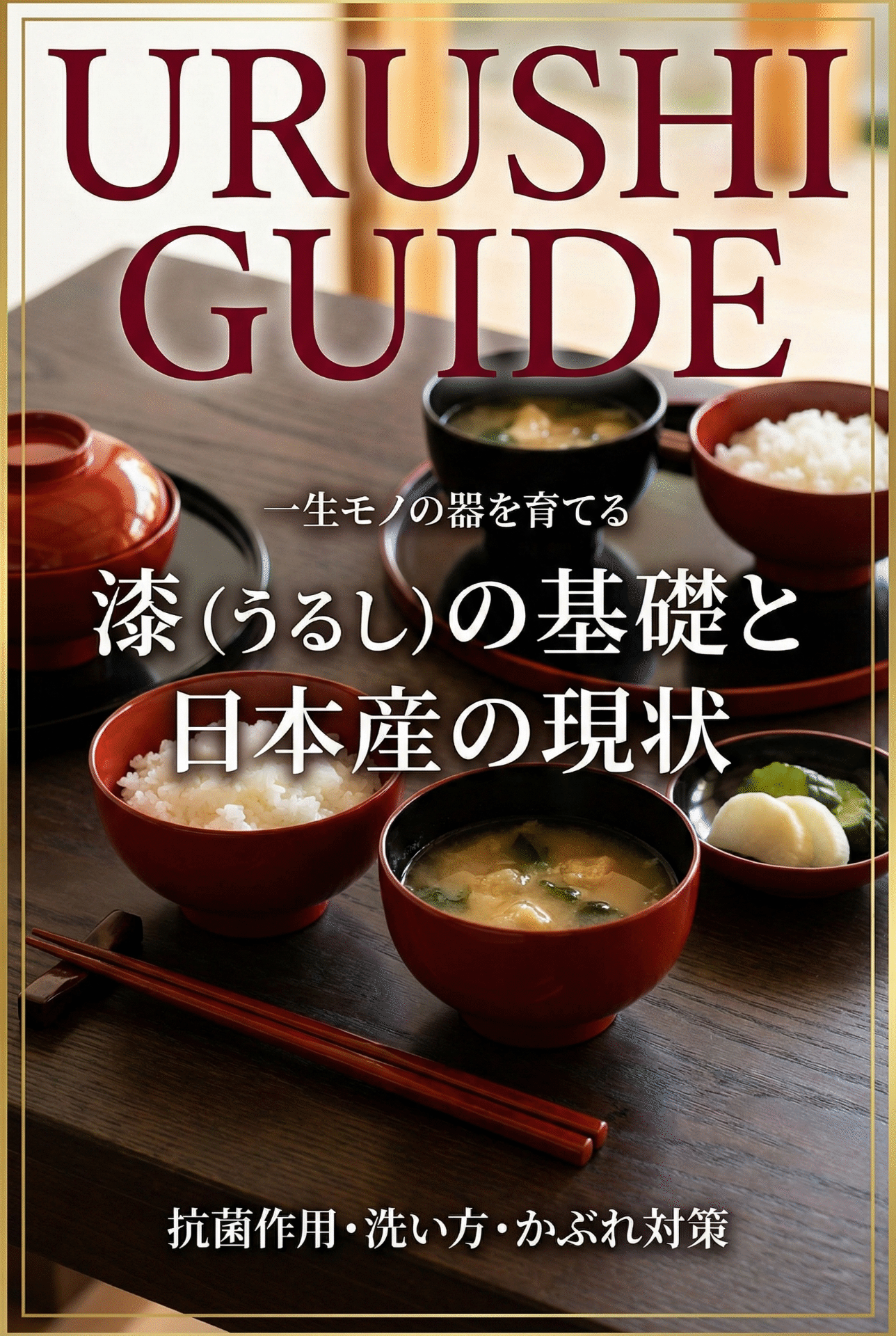
4. The Power of Urushi | Japan's Strongest Natural Coating
Think lacquerware sounds difficult to care for? Think again.
Urushi (漆, Japanese lacquer) — used for over 9,000 years — is one of the most acid- and alkali-resistant natural
coatings ever discovered.
Urushi Basics
Its remarkable antibacterial properties. The clarity that deepens with every year of use. The truth about
"urushi rash" (most people are fine). How to wash lacquerware properly — with dish soap, yes.
Everything you need to know about urushi, all in one place.
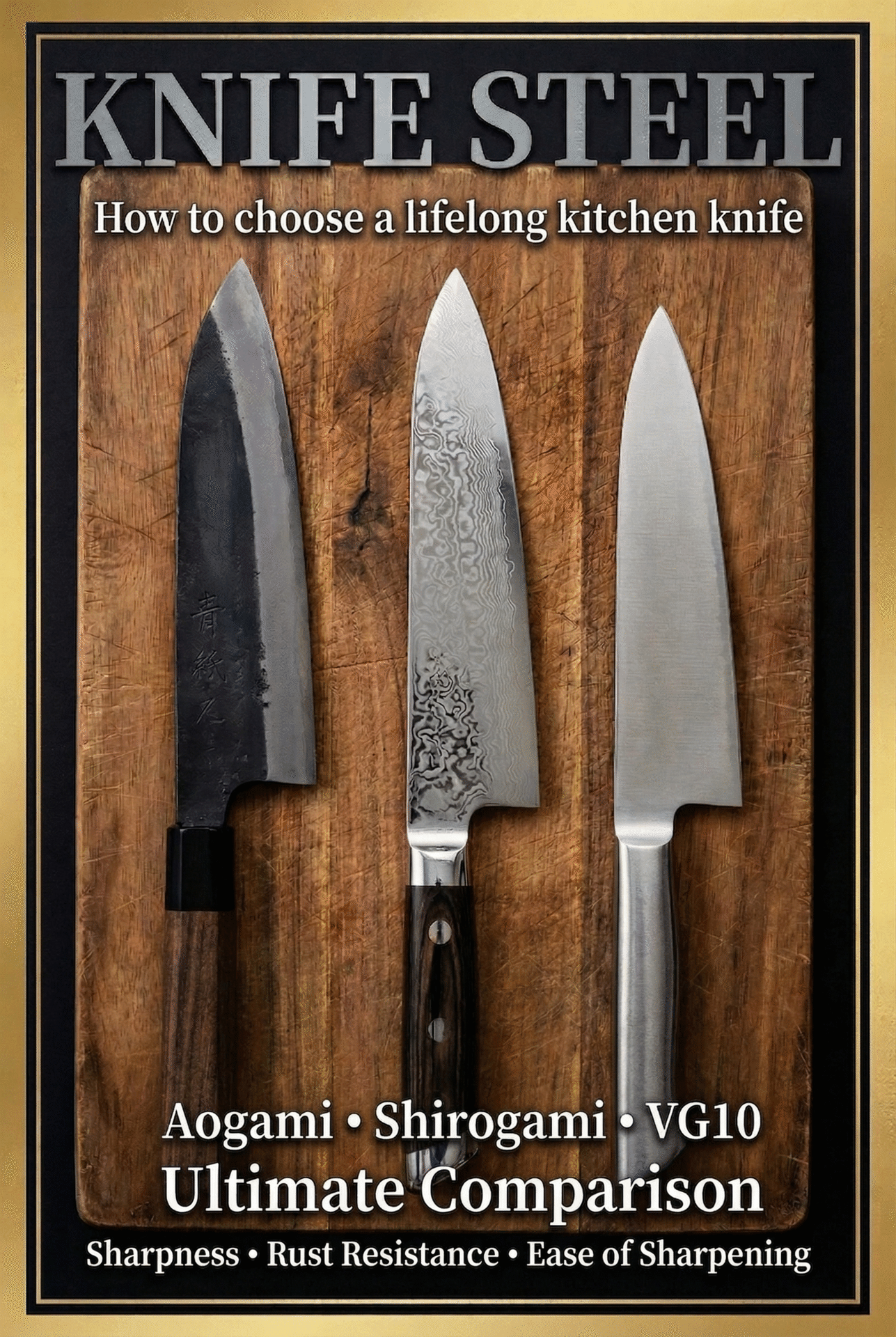
5. Knife Steel Knowledge | Aogami vs. Shirogami — Japanese Blade Steels
What transforms a meal may not be the seasoning — it may be the sharpness of your knife.
The reason Japanese knives are coveted by professional chefs worldwide comes down to one thing: the steel.
Japanese Knife Steel Types
The origin of the names "blue paper" (aogami) and "white paper" (shirogami). The record-hardness powdered
high-speed steel. The mesmerizing Damascus pattern.
Understand the trade-offs between sharpness and rust resistance — and find the lifetime knife that fits how you
cook.
6. Traditional Crafts Aren't Old-Fashioned — They're Cutting-Edge
The Japanese materials covered in this collection are not relics of the past.
In an era defined by sustainability and conscious living, they may be the most rational choice available.
- Repairable: Traditions like kintsugi and lacquer refinishing mean these objects can be restored and kept for generations.
- Biodegradable: Leather, lacquer, cotton — all natural materials with low environmental impact.
- Aging with grace: They don't wear out — they develop character. The longer you use them, the more valuable they become.
Bringing traditional crafts into your daily life isn't nostalgia — it's a forward-thinking lifestyle choice.
Final Thoughts: Know the Story — and the World Looks Different
"Something good" versus "something I chose because I understand why it's good."
That difference shows up in how satisfied you feel every single day.
Thinking about the landscape that produced the raw material. Appreciating the hours a craftsperson invested.
When you acquire something that way, it stops being just a thing — it becomes a companion for life.
Knowledge deepens attachment. And when you're attached to your tools, caring for them becomes something you look
forward to.
Start that kind of relationship with Japanese materials — and enjoy a richer, more intentional everyday life.