SG2 holds an edge longer than VG10. VG10 is tougher, easier to sharpen, and roughly half the
price. That is the whole answer for most people — SG2 (HRC 62–64) is a powdered steel with finer, more
uniform carbides, so it stays sharp longer; VG10 (HRC 60–61) is softer, which makes it more forgiving of a slip and
far quicker to bring back on a whetstone.
For most home cooks, VG10 is the right answer. Rust-resistant, available in every brand from
Tojiro to Yaxell, and sharp enough that the limit will be your technique rather than the steel. Move to SG2 only if
you already sharpen your own knives and would notice the difference.
The other steels people compare against VG10, in one line each:
Cromova 18 (GLOBAL) — HRC 56–58, softer than VG10. Dulls faster, but the most forgiving and the
easiest to sharpen.
Sandvik 19C27 (Misono UX10) — HRC 59–60, comparable to VG10 with a tighter grain and a finer
finished edge.
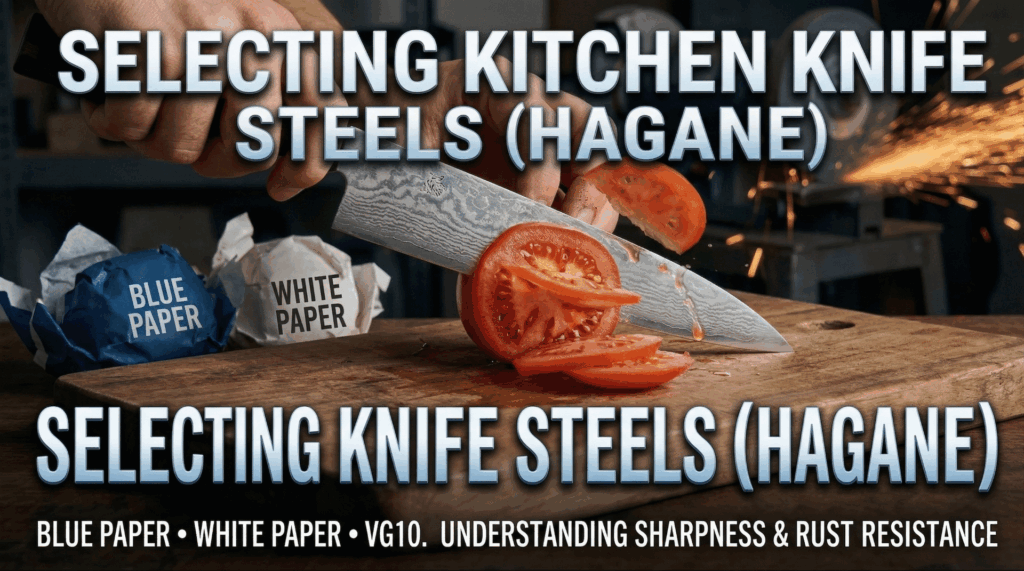
White & Blue Steel (carbon) — sharper than any stainless here, and they will rust if you leave
them wet. For people who want the finest possible edge and accept the upkeep.
If you want it side by side, jump to the steel comparison table.
For what each steel actually is and why it behaves that way, read on.
Quick Reference: Japanese Knife Steel Types
| Steel | Type | HRC | Rust Risk | Best For |
|---|---|---|---|---|
| ▼ Stainless Steel | ||||
| VG10 | Stainless | 60–61 | Very low | Best overall for home cooks. Industry standard. Tojiro, Yaxell. |
| SG2 / R2 | Powdered stainless | 62–64 | Very low | Enthusiast level — harder, finer edge than VG10. Ryusen. |
| Cromova 18 | Stainless | 56–58 | Very low | GLOBAL proprietary. Easier to sharpen, slightly softer. Excellent for low-maintenance cooks. |
| Swedish Sandvik | Stainless | 59–60 | Very low | Misono UX10. Near-carbon performance without rust. Professional standard. |
| ▼ Carbon Steel (Hagane) | ||||
| White Steel #1 (Shirogami) | High-carbon | 62–65 | High (wipe immediately) | Purist choice — sharpest edge possible. Sakai traditional knives. |
| Blue Steel #1 (Aogami) | High-carbon + Cr/W | 63–65 | High (wipe immediately) | Better edge retention than White Steel. Preferred by many professional chefs. |
| Blue Super (Aogami Super) | High-carbon + V/Mo | 65–67 | High (wipe immediately) | Hardest commonly available Japanese steel. Near-legendary edge retention. |
What HRC Means — And Why It Matters
HRC is the Rockwell hardness scale — a standardized measure of how resistant steel is to permanent deformation under load. For kitchen knives, it directly correlates with edge retention and brittleness.
- HRC 54–58
- Most Western knives (Wüsthof, Henckels, Victorinox). Softer — dulls faster, but can be honed back with a steel rod. Tolerant of rough use.
- HRC 59–61
- Most high-end Japanese stainless knives (VG10, Cromova 18, Swedish Sandvik). Holds an edge 2–3x longer than Western knives. Requires a ceramic rod for honing; whetstone for sharpening.
- HRC 62–65
- Premium stainless (SG2) and most carbon steel (White/Blue Steel). Exceptional edge retention. More brittle — chips if used on hard surfaces or bones. Requires proper technique.
- HRC 66+
- Blue Super Steel, ZDP-189, Aogami Super. The hardest commonly used knife steels. Maximum edge retention; brittle enough to chip if dropped. Enthusiast and specialist territory.
Key insight: Higher HRC means the knife holds its edge longer AND is harder to sharpen when it does dull. Harder steel also chips more easily if used improperly (on glass boards, for cutting bone). The right HRC depends on how you use and maintain the knife.
Stainless Steels Compared: VG10 vs SG2 vs Cromova 18
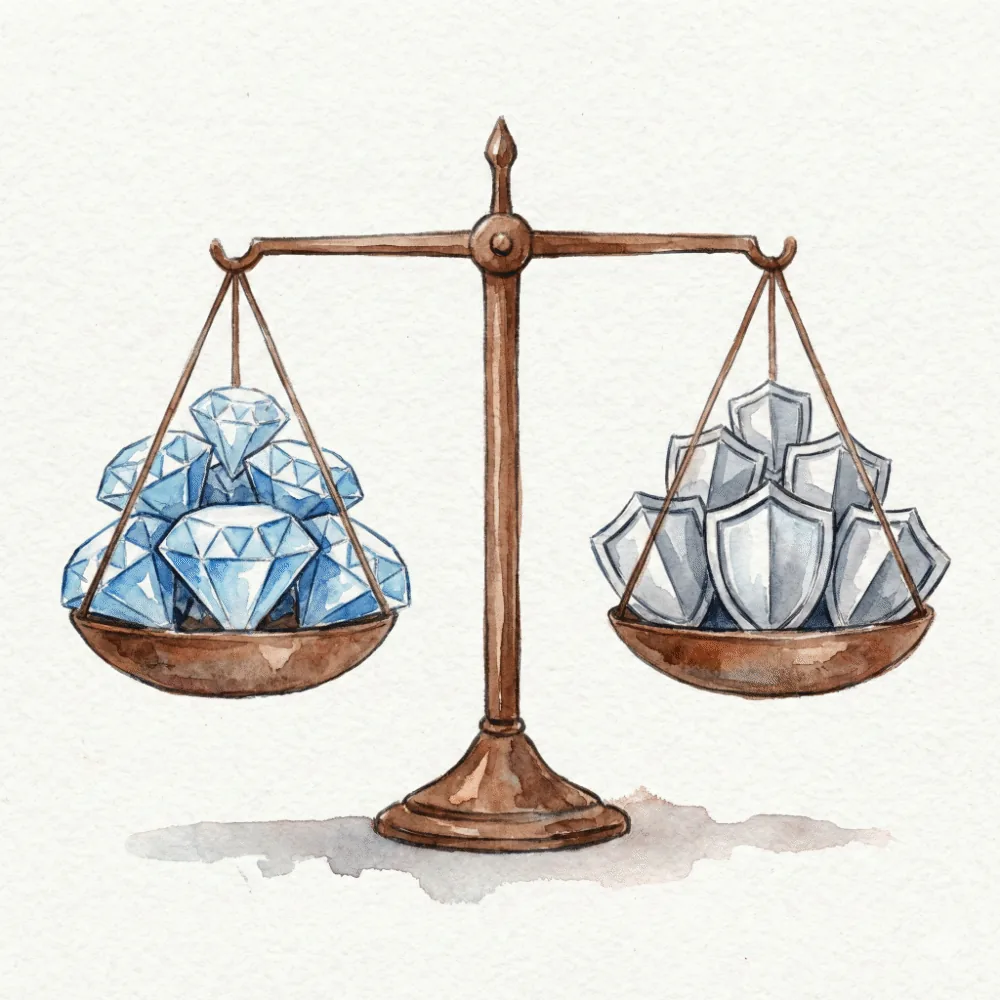
VG10 — The Industry Standard
VG10 (V-Gold 10) is a cobalt-infused stainless steel made by Takefu Special Steel in Fukui, Japan.
It contains vanadium for edge stability, cobalt for hardness, and chromium for corrosion resistance.
At HRC 60–61, it achieves hardness previously only possible with carbon steel, while remaining
fully stainless.
VG10 is the steel inside Tojiro DP, Yaxell Ran, and many other leading Japanese brands.
It's the reason the phrase "Japanese knife quality" exists as a concept internationally — VG10
made it possible to produce professional hardness at affordable prices with no rust maintenance.
Limitation: VG10 can micro-chip if used on glass or ceramic cutting boards, or if the edge contacts bone with lateral force. Use on wood or soft plastic only.
SG2 / R2 — Powdered Steel, Harder and More Uniform
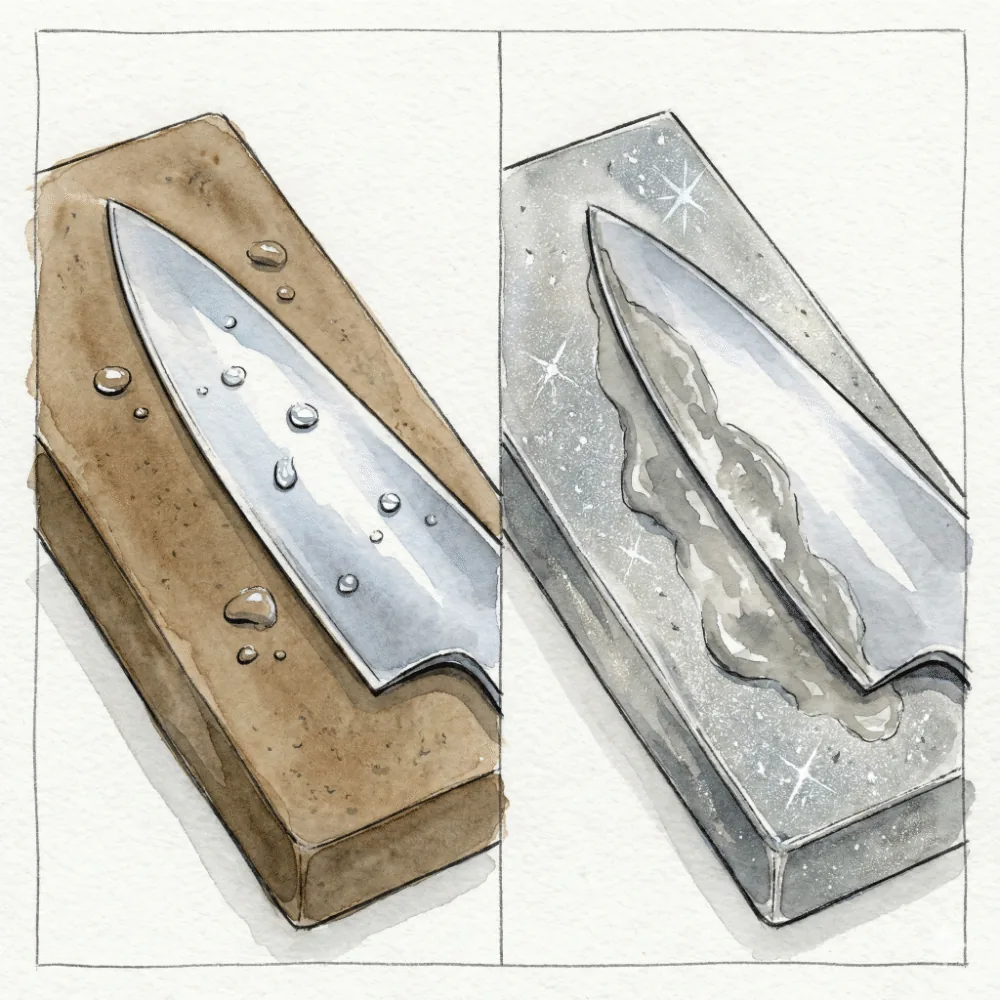
SG2 (Super Gold 2, also called R2 when used as an outer layer) is a powdered metallurgy steel —
the steel is produced from fine powder compressed under heat and pressure, creating an extremely
uniform microstructure. The result: HRC 62–64 with very fine, consistent carbide particles that
produce a finer edge and better edge retention than VG10.
SG2 is used by Ryusen Blazen, some Shun Premier models, and premium handmade knives. It's noticeably
more expensive than VG10 — typically $150–$300+ for a single knife — but the performance difference
is real and perceptible to anyone who sharpens their own knives.
Cromova 18 — GLOBAL's Proprietary Steel
Cromova 18 is a molybdenum-vanadium stainless steel proprietary to GLOBAL (Yoshikin). At HRC 56–58, it's softer than VG10 — which means it dulls a bit faster, but is also significantly easier to sharpen and more tolerant of occasional mistreatment. For cooks who want low-maintenance and consistent, reliable sharpness without the precision required by harder steel, Cromova 18 is an excellent choice. This is part of why GLOBAL is recommended for beginners.
Swedish Sandvik — Misono's Chosen Steel
Misono's UX10 series uses Swedish Sandvik 19C27 steel — a premium stainless designed to bridge the gap between stainless convenience and carbon steel performance. At HRC 59–60 and with very tight grain structure, it achieves an edge refinement that rivals hagane without any rust vulnerability. Many professional chefs who don't want carbon steel care use Misono UX10 as their daily knife for this reason.
Carbon Steel: White Steel and Blue Steel Explained
Carbon steel (hagane) uses iron with a higher carbon content and fewer alloying elements than stainless. Without chromium, it's vulnerable to oxidation — it will rust if left wet. But without the alloying elements that inhibit hardness, it achieves a finer, sharper edge at higher hardness levels than stainless. Traditional Japanese craftsmen have used it for centuries for exactly this reason.
Carbon steel develops a natural blue-grey patina from contact with food acids. This patina actually protects the steel slightly and is prized by enthusiasts — but it requires drying the blade immediately after every use, without exception.
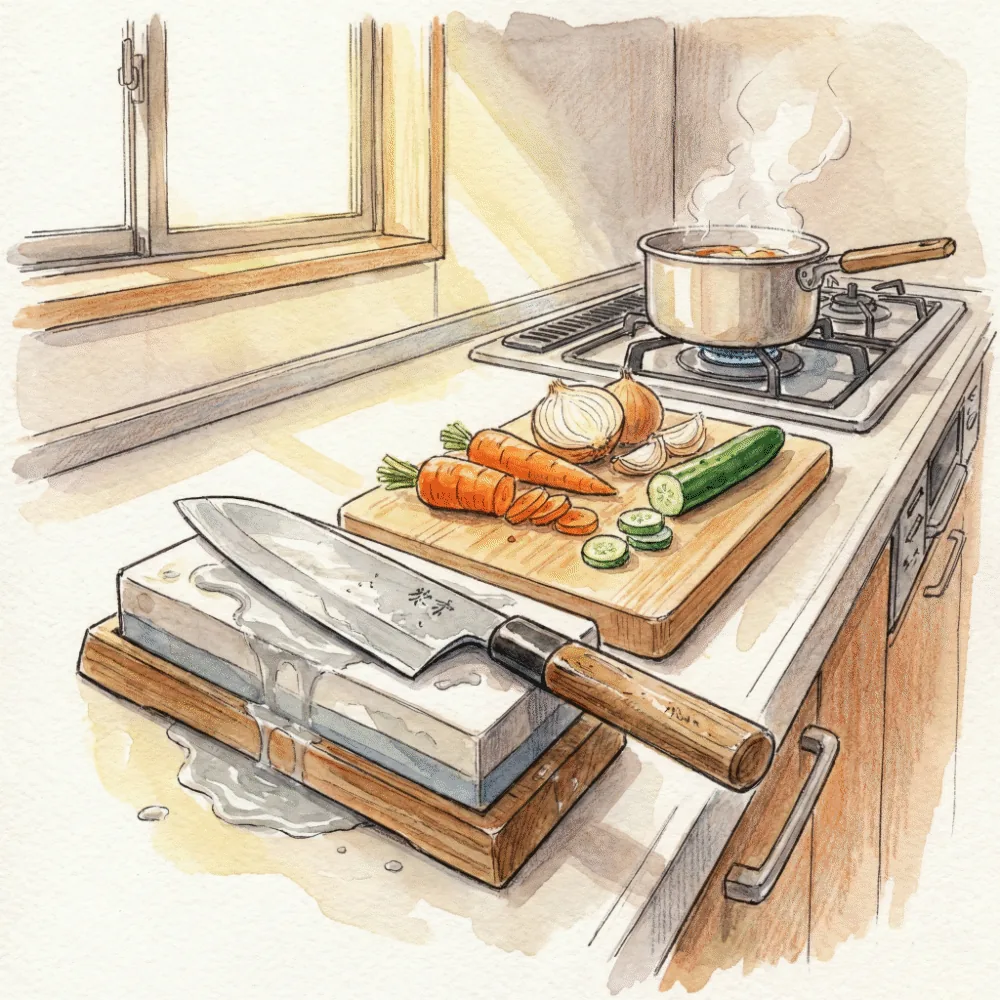
Carbon steel (hagane) uses iron with a higher carbon content and fewer alloying elements than stainless. Without chromium, it's vulnerable to oxidation — it will rust if left wet. But without the alloying elements that inhibit hardness, it achieves a finer, sharper edge at higher hardness levels than stainless. Traditional Japanese craftsmen have used it for centuries for exactly this reason.
White Steel (Shirogami) #1 and #2
The "purest" Japanese carbon steel — very high carbon content, minimal alloying elements. White Steel #1
has higher carbon than #2, resulting in HRC 65 vs 62–63. The high purity produces a sharper initial
edge than any stainless equivalent. A well-sharpened White Steel knife on a polishing stone achieves
a mirror edge that is perceptibly different on delicate ingredients like raw fish.
Trade-off: Lower alloy content means lower toughness. White Steel is the most brittle
of the common Japanese steels. Used primarily for traditional wa-knives (yanagiba, deba, usuba) where
precise cutting technique is assumed.
Blue Steel (Aogami) #1, #2, and Super
Blue Steel adds chromium and tungsten to White Steel's carbon base, improving toughness and edge
retention while maintaining high hardness. Aogami #2 (HRC 63–64) is the most popular choice among
professional chefs — slightly more forgiving than White Steel while still delivering exceptional edge
performance. Aogami Super adds vanadium and molybdenum for the best edge retention of the series
(HRC 65–67), at the cost of being harder to sharpen.
Practical difference: A Blue Steel knife holds its refined edge longer than White
Steel between sharpening sessions. White Steel gives a marginally sharper initial edge but requires
more frequent sharpening. Most serious home cooks who commit to carbon steel find Blue Steel the
more practical choice.
Carbon steel care: the minimum requirements
After every use: wipe the blade with a dry cloth immediately. Do not leave in water or a wet sink. For long-term storage (over a week unused): apply a thin coat of camellia oil with a cloth. If rust spots appear: remove with a fine steel wool or rust eraser before they deepen. The ritual is simple; it just requires consistency. Many enthusiasts find the maintenance meditative — it builds a relationship with the knife.
Damascus: What It Is and What It Isn't
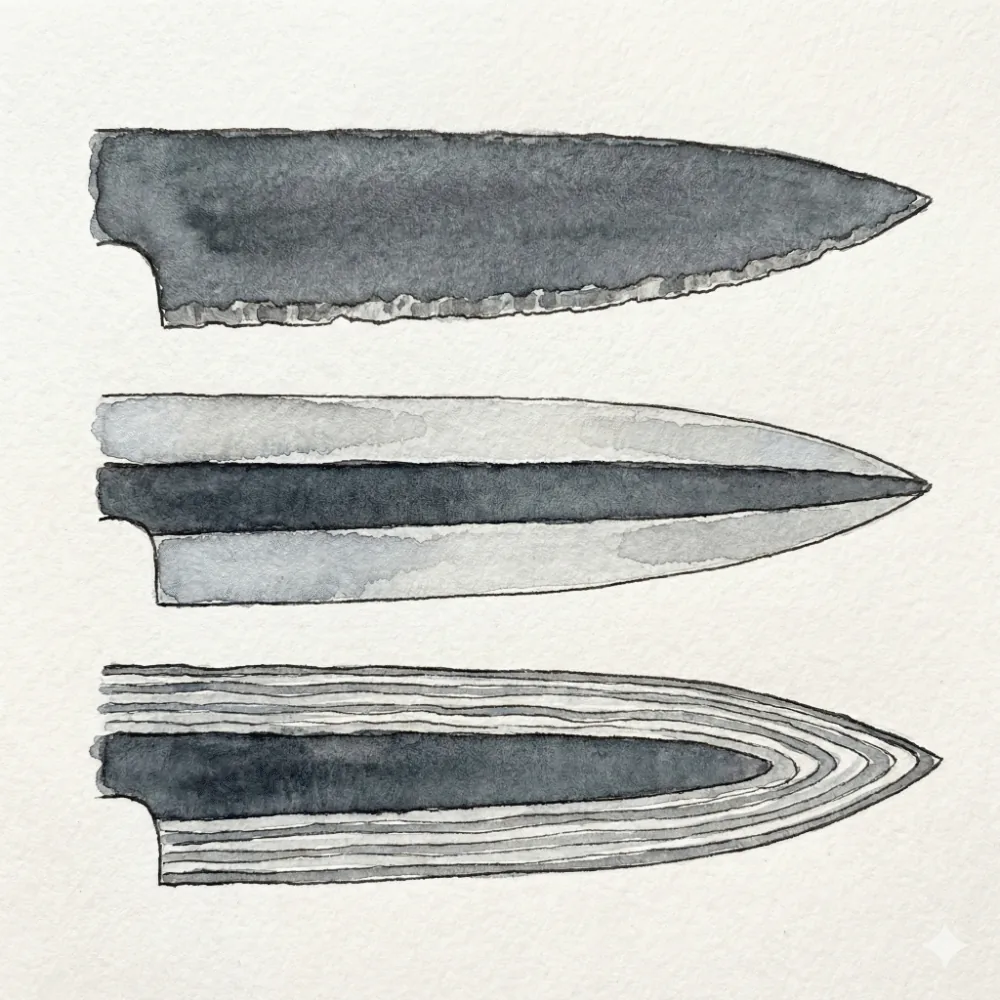
Damascus (多層鋼) in modern Japanese knives refers to multi-layer cladding — a hard core steel (VG10 or SG2) wrapped in many alternating layers of softer stainless steel. The layers are visible because they're folded and welded, creating the distinctive wave pattern on the blade face.
What Damascus actually does:
- Protects the core
- The soft outer layers protect the brittle hard core steel from chipping. The hard core delivers the cutting edge; the soft outer layers absorb lateral stress.
- The pattern is structural
- The Damascus wave pattern is not an etching or surface treatment — it's the actual cross-section of the steel layers. You could grind through it and find the pattern continues through the blade.
- Does NOT make it sharper
- The Damascus layers are not on the edge — they're on the blade face. What determines sharpness is the core steel (VG10, SG2) and the sharpening angle. A plain VG10 knife and a 69-layer Damascus VG10 knife can achieve the same edge.
So why buy Damascus? Aesthetics, toughness protection for the core, and the legitimate premium associated with craftsmanship in layering. Yaxell Ran's 69-layer Damascus is genuinely beautiful and structurally sound — both reasons are valid.
Side-by-Side: Which Steel Is Right for You?
- First Japanese knife, low maintenance priority
- Cromova 18 (GLOBAL) — the most forgiving, lowest maintenance stainless in the category. Focus on learning knife technique before worrying about steel grades.
- First Japanese knife, best value performance
- VG10 (Tojiro DP) — harder than Cromova, better edge retention, still completely stainless. The overwhelming consensus best-value choice.
- Enthusiast who sharpens frequently
- SG2 or Swedish Sandvik (Misono) — the extra hardness delivers perceptibly longer edge life and a finer edge. Worth the premium if you maintain your own knives.
- Traditional Japanese cooking focus, willing to manage rust
- Blue Steel #2 or Aogami Super — for sashimi, dashi, and traditional washoku where the edge quality on raw ingredients is the priority. Start with Blue Steel #2 stainless (many makers offer this).
- Pure performance, no compromises
- White Steel #1 (Shirogami) — the finest edge available. For those who have learned single-bevel sharpening and want the traditional craftsman's steel.
FAQ
Is VG10 the best Japanese knife steel?
VG10 is the best steel for most home cooks — not the "best" in absolute terms, but the best balance of hardness (HRC 60–61), rust resistance, availability, and price. SG2 and Blue Super Steel are harder and hold a finer edge longer, but cost significantly more and require more precise technique. White Steel is sharper at its peak but rusts without careful maintenance. For daily home cooking, VG10 delivers 90% of the performance at 40% of the price of premium alternatives.
What is the difference between VG10 and SG2?
SG2 is harder (HRC 62–64 vs 60–61), with better edge retention and a finer grain structure. VG10 is produced by conventional casting; SG2 uses powdered metallurgy, which creates a more uniform distribution of carbides — resulting in a finer, more consistent edge. The practical difference: SG2 stays sharp noticeably longer between sharpening sessions, and takes a marginally finer polish on a finishing stone. The price difference is typically $80–$150 more per knife. Worth it for serious cooks who sharpen their own knives; less important for those who sharpen rarely.
Is SG2 better than VG10?
Better at staying sharp — not better at everything.
SG2 wins on edge retention and takes a finer polish. VG10 wins on toughness, on how quickly it comes back on a
stone, and on price. Harder steel is also less forgiving of lateral force, so the knife that survives an
accidental twist against a bone is more likely to be the VG10 one.
If you sharpen your own knives and enjoy it, SG2 rewards you. If you sharpen twice a year, you are paying $80–$150
extra for a difference you will not notice.
How does Cromova 18 compare to VG10?
Cromova 18 is softer — HRC 56–58 against VG10's 60–61.
Cromova 18 is GLOBAL's proprietary molybdenum-vanadium stainless. Being softer, it dulls faster than VG10, but it
is also the more forgiving of the two: easier to sharpen, more tolerant of a cutting board it should not have met,
and less prone to micro-chipping.
This is a deliberate design choice rather than a compromise. GLOBAL builds knives for people who want reliable
sharpness without a maintenance routine — which is exactly why GLOBAL is so often recommended as a first Japanese
knife. If you want an edge that lasts longer and you are willing to maintain it, VG10 is the upgrade.
What is SG2 steel, and what does the name mean?
SG2 stands for "Super Gold 2," a powdered stainless steel — the same steel is called R2 when it appears as
an outer cladding layer.
"Powdered" refers to how it is made: the steel is produced as a fine powder and then compressed under heat and
pressure, rather than poured as a molten casting. That process produces very small, very evenly distributed
carbides, which is what lets SG2 reach HRC 62–64 and hold a fine edge longer than conventionally cast steels.
You will find it in Ryusen Blazen, some Shun Premier models, and premium handmade knives — typically $150–$300+.
Does Damascus steel make a knife sharper?
No — Damascus doesn't affect sharpness directly. The Damascus pattern is on the blade face, not the edge. What determines sharpness is the core steel type (VG10, SG2) and the sharpening angle. Two knives with the same core steel — one plain, one Damascus — will reach the same edge sharpness. Damascus does protect the core from chipping (the soft outer layers absorb lateral stress) and is genuinely beautiful. But buy it for those reasons, not for sharpness.
Can I use carbon steel (hagane) knives for everyday cooking?
Yes, but it requires a habit change. After every use: wipe dry immediately. Never soak in water. Never leave in a wet sink. For most home cooks, this is a small routine adjustment that becomes automatic within a week. The edge performance reward — a sharper, more refined edge than any stainless — is tangible if you cook with delicate ingredients like raw fish. If you cook five days a week and forget about knives between sessions, start with stainless and upgrade later.
What's the difference between White Steel and Blue Steel?
Blue Steel adds chromium and tungsten to White Steel's carbon base, improving toughness and edge retention. White Steel is "purer" — fewer alloying elements means a finer initial edge, but also lower toughness and shorter edge retention. Blue Steel holds its edge longer between sharpenings and is slightly more forgiving of hard use. Most professional chefs prefer Blue Steel #2 for daily use, while White Steel #1 is reserved for precision sashimi work where the maximum initial edge is prioritized.
Why do Japanese knives use harder steel than Western knives?
Harder steel holds a thinner, sharper edge longer — the entire philosophy of Japanese knives is built around this. Western knives are softer (HRC 54–58) because they're designed for rocking cuts and occasional contact with hard foods or bone — softness is toughness in that context. Japanese cutting technique (push cuts on a board, pulling slices, precise work) doesn't require the knife to flex under lateral force. So Japanese makers pushed hardness as high as the steel could achieve, producing knives that cut with dramatically less resistance and hold their edge far longer — at the cost of being more brittle.
Final Thoughts: Start with VG10, Upgrade When Ready
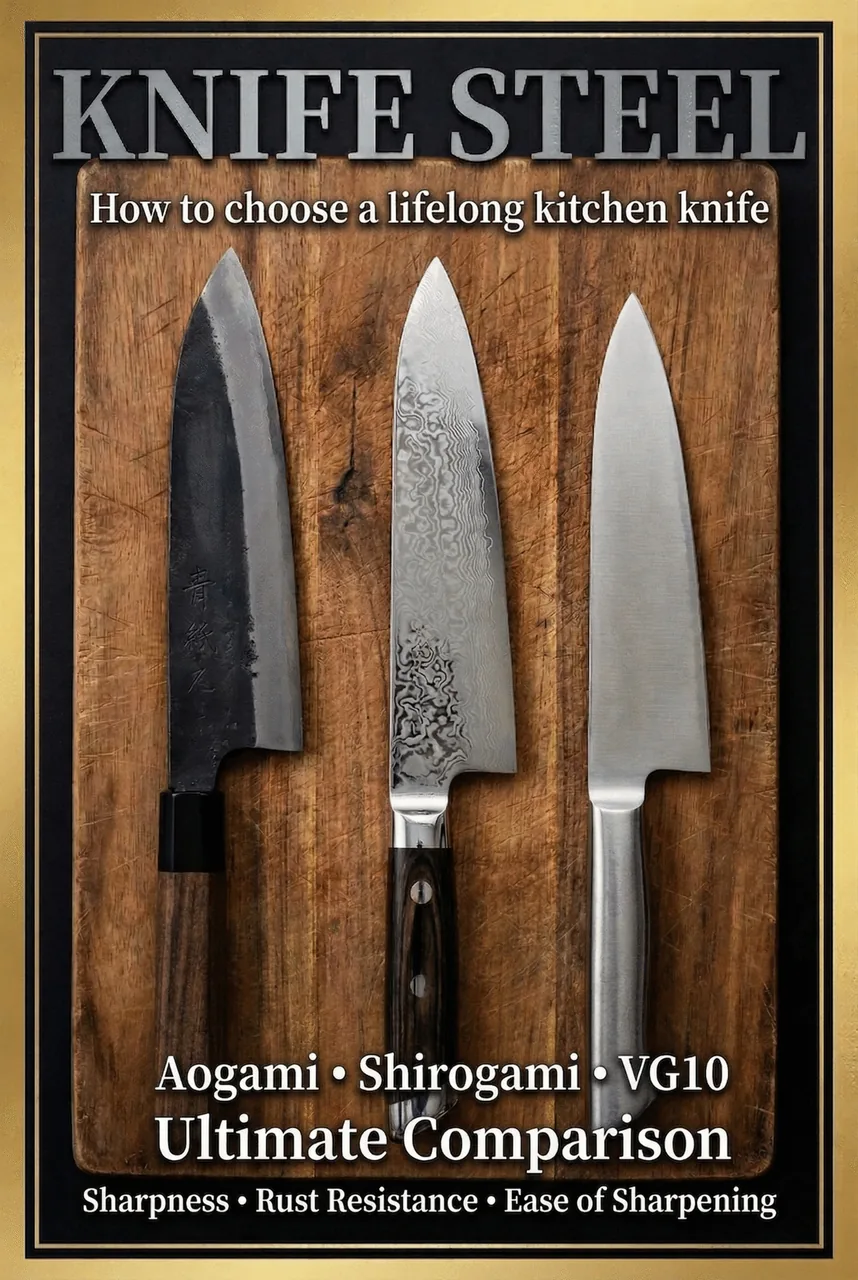
Steel type matters — but it matters less than technique and maintenance. The finest Blue Super Steel
knife, poorly maintained and incorrectly sharpened, will underperform a well-maintained Cromova 18.
Start where you are: VG10 for the best value, Cromova 18 for the lowest maintenance, SG2 when you're
ready to invest in sharpening skills. And if you ever try a well-sharpened White Steel yanagiba on
fresh salmon — you'll understand why Japanese sushi chefs spend a lifetime with these materials.
The steel is the beginning, not the end.
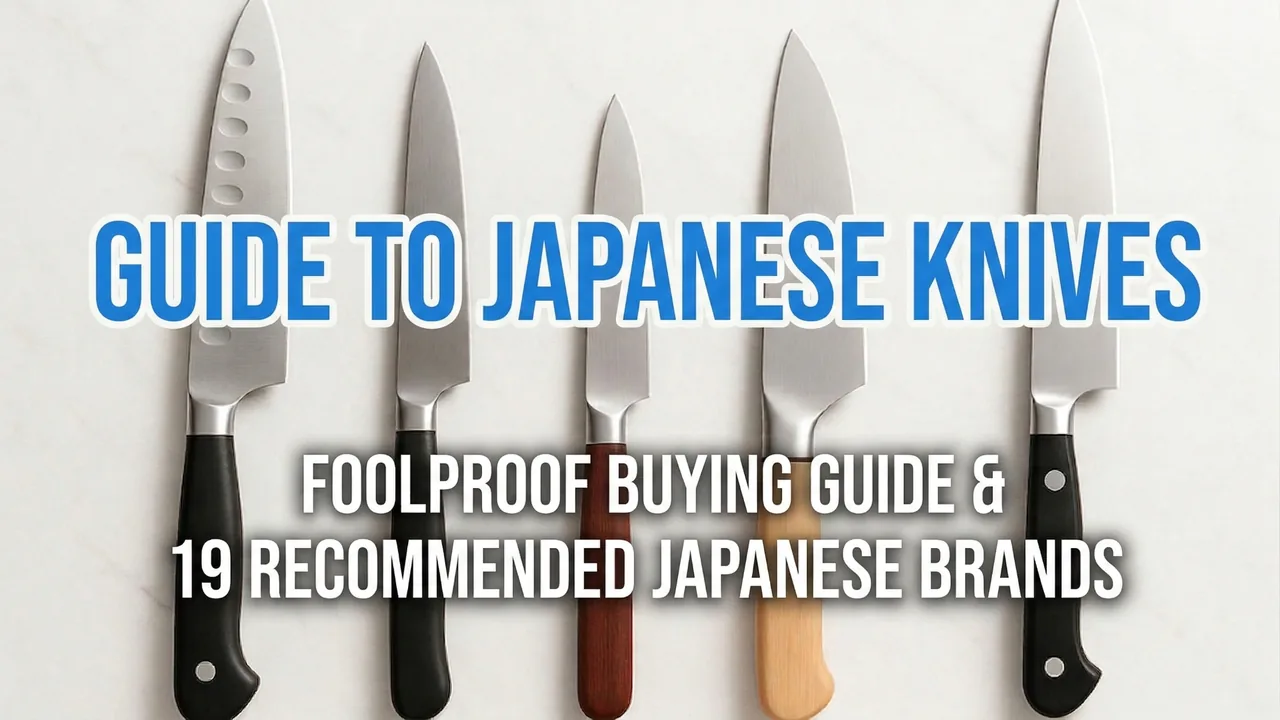
Japanese Kitchen Knives: Complete Buying Guide
How to Sharpen Japanese Kitchen Knives: Whetstone Guide