When the label says "Made in Japan," it matters where in Japan. Sakai knives are
hand-finished by craftsmen who trace their tradition to 14th-century sword smiths. Seki produces the
highest volume of high-quality knives in the world using modern manufacturing. Tsubame-Sanjo is where
GLOBAL and Tojiro are made — precision stainless at scale.
Each region has a distinct character, and the knife you buy reflects it. Jump to the
comparison table for a quick overview, or read on for the full story.
Quick Reference: Japan's Three Knife Regions Compared
| Region | Specialty | Best For | Notable Brands |
|---|---|---|---|
| Sakai (Osaka) | Traditional wa-knives, hand-finishing, single-bevel | Professionals, Japanese cooking, traditional craft | Jikko, Sakai Takayuki, Yamawaki |
| Seki (Gifu) | Modern alloys, Damascus, high-volume quality production | Home cooks, Western-style knives, best value at all prices | Yaxell, Misono, Kai, Shun |
| Tsubame-Sanjo (Niigata) | Precision stainless, metalworking tradition, Western-style | Best value everyday knives, GLOBAL and Tojiro users | GLOBAL (Yoshikin), Tojiro (Fujinoo) |
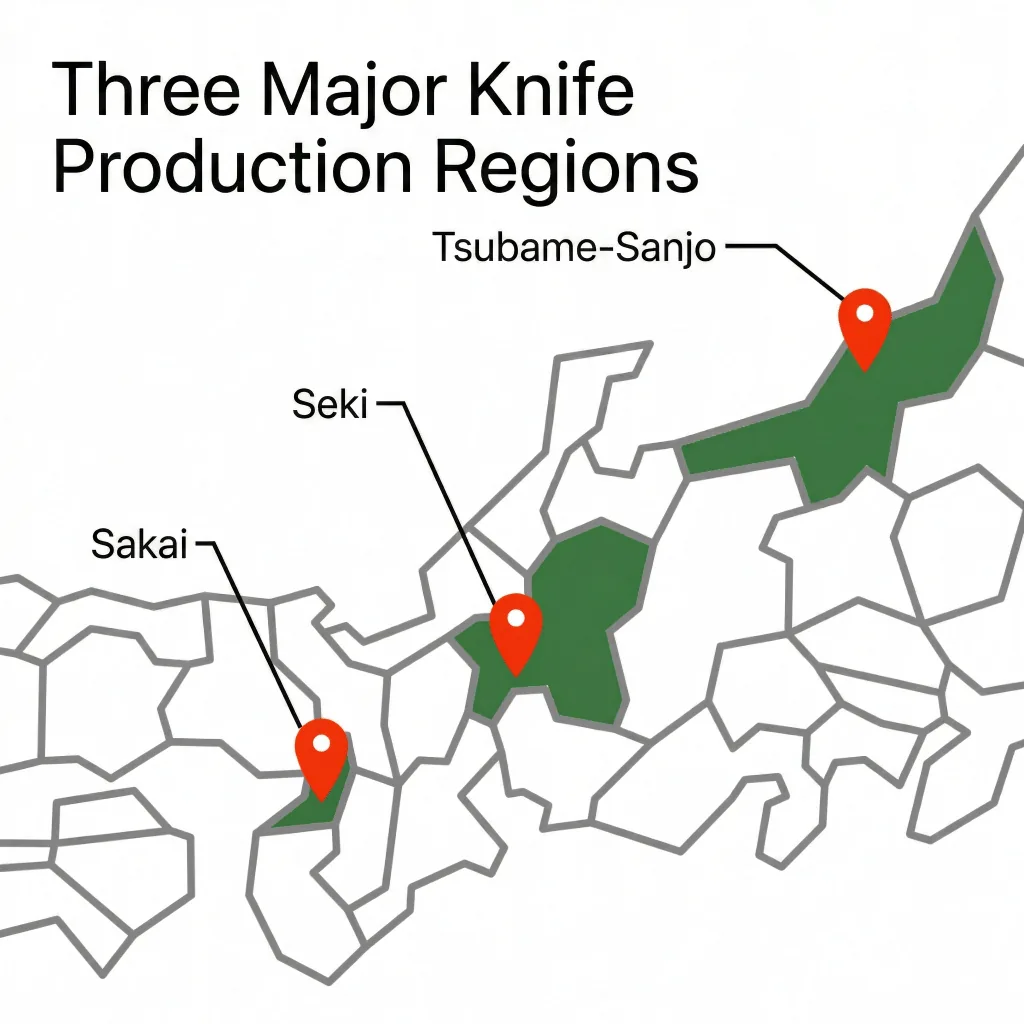
Japan's knife-making tradition is not centered in one place — it is split across three geographically distinct cities, each of which developed independently over centuries. Sakai (Osaka) for traditional single-bevel specialist knives, Seki (Gifu) for modern double-bevel and Damascus knives, and Tsubame-Sanjo (Niigata) for precision stainless construction. Understanding where a knife comes from tells you a great deal about how it was made and what it is best suited for.
Sakai (Osaka): The Traditional Heartland
Sakai is where the tradition of Japanese knife-making began. When the feudal era ended in the late 1300s and demand for samurai swords collapsed, the skilled sword smiths of Sakai turned to kitchen knives. They brought the same forging techniques — differential hardening, hand grinding, water-stone finishing — to the kitchen blade.
Today, over 90% of professional kitchen knives used by Japanese chefs come from Sakai. The city's craft ecosystem is divided by specialization in a way unique to Japanese manufacturing: a knife from Sakai may be forged by one specialist, sharpened by a second, and handled by a third — each a separate artisan who has spent decades mastering one aspect of the process.
What Sakai does best
- Single-bevel wa-knives
- Yanagiba (sashimi), deba (fish butchery), usuba (vegetable) — the traditional Japanese specialist knives. No other region matches Sakai's single-bevel expertise.
- Hand finishing
- Sakai knives are typically hand-sharpened and hand-finished by individual craftsmen. The result is a more personal, higher-variation product — each knife slightly different from the next, in the same way a handmade object differs from a manufactured one.
- Carbon steel mastery
- Sakai is the center of hagane (carbon steel) knife production in Japan. Shirogami and Aogami steel, hand-forged and hand-tempered — the sharpest and most demanding steel handled by the most skilled craftsmen.
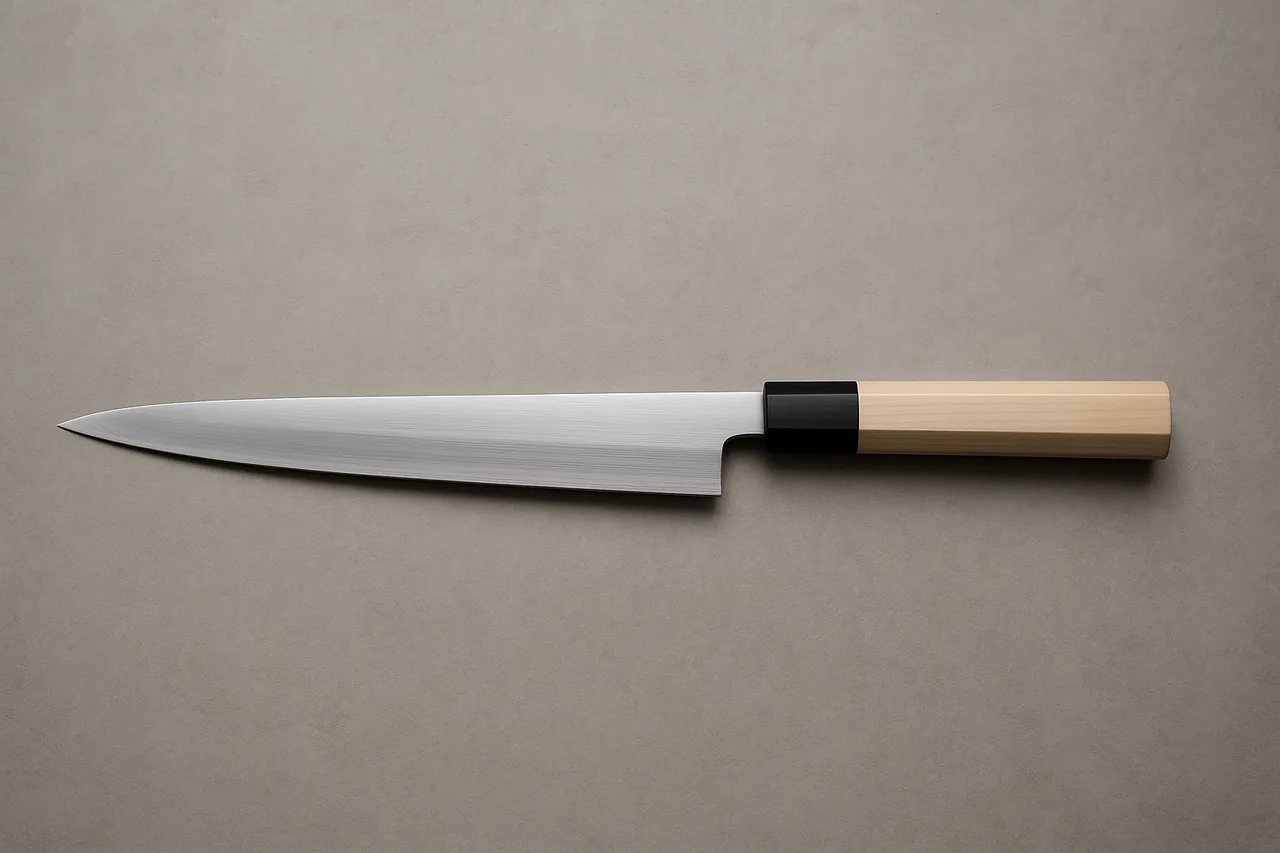
The Sakai knife-making tradition
Sakai's craft tradition is protected by a government-certified designation system — "Sakai Hamono" (Sakai Blade). Blades bearing this designation are made, sharpened, and handled within Sakai by registered craftsmen. The certification tracks every stage of production, preserving techniques that would otherwise be lost. A Sakai Hamono knife is not just a product — it's a document of a living craft tradition.
Sakai brands to know internationally
Jikko (實光刃物) — Professional standard, available internationally with English site.
Sakai Takayuki — Wide range from budget to premium; good international availability.
Yamawaki — Traditional single-bevel specialists, less known internationally.
Aritsugu (Kyoto) — Technically Kyoto-based, but shares Sakai heritage and traditions.
Seki (Gifu): Japan's Largest Knife City
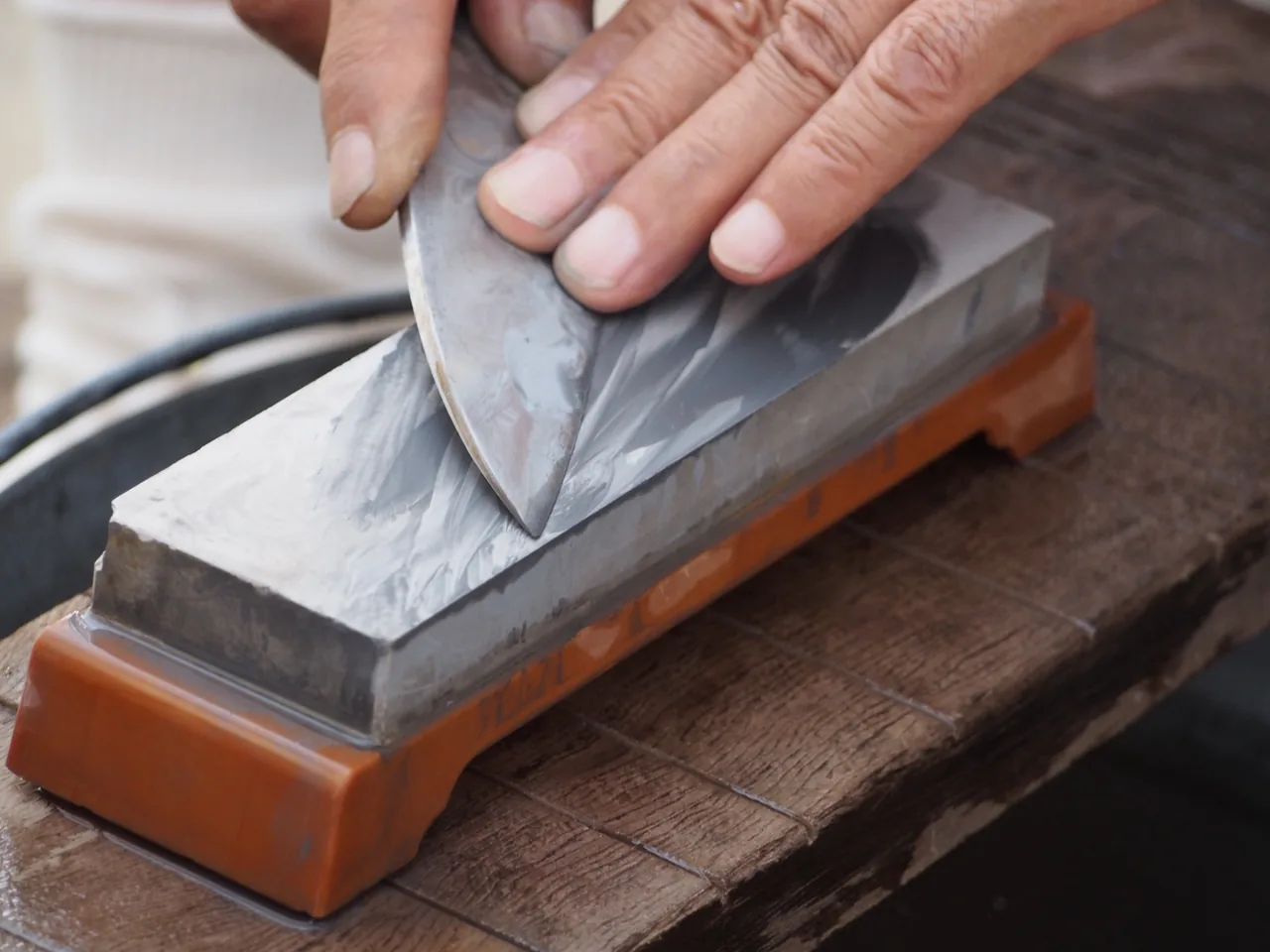
Seki has been a sword-making city since the 13th century — it supplied samurai blades to feudal lords across Japan for centuries. After the Meiji era ended the samurai tradition, Seki adapted to scissors, cutlery, and eventually modern kitchen knives. Today it's the largest knife-producing city in Japan by volume, responsible for a significant share of all premium Japanese knives sold internationally.
Seki's distinguishing characteristic is its integration of modern manufacturing technology with traditional craft. Computer-controlled grinding machines work alongside hand-finishing by skilled craftsmen. The result: consistent quality at scale, with premium options that rival Sakai hand-finishing at more accessible prices.
What Seki does best
- Western-style double-bevel knives
- Gyuto, santoku, petty — the knives most international buyers seek. Seki's brands dominate the globally distributed premium knife market.
- Modern alloys
- VG10, AUS-10, SG2, Damascus construction — Seki is where most of Japan's modern steel innovation in kitchen knives happens. Yaxell's Damascus layering technique is Seki-developed.
- Price diversity
- From Kai Wasabi Black ($35) to Misono UX10 ($200+) to Yaxell Super Gou ($300+) — the widest price range of any region, with quality maintained across all tiers.
Seki brands to know internationally
Yaxell — Best Damascus in the international market; premium positioning.
Misono — Professional chefs' first choice; Swedish Sandvik stainless UX10.
Kai / Shun — The largest Japanese knife brand globally; Shun is the premium tier.
Ryusen — Echizen region adjacent; SG2 powdered steel specialists.
Tsubame-Sanjo (Niigata): Precision Stainless
Tsubame-Sanjo (technically two cities — Tsubame and Sanjo — that form one manufacturing district) is Japan's center of metalworking precision. The region developed from nail and hardware production in the Edo period, building a culture of precise metalwork that made it the natural home for stainless steel kitchen tool manufacturing in the 20th century.
GLOBAL's founder Komin Yamada chose Tsubame-Sanjo for the GLOBAL knife in 1985 because the region's Cromova 18 stainless expertise was unmatched in Japan. Tojiro also operates there, using the same regional metalworking infrastructure for their VG10 laminated construction.
What Tsubame-Sanjo does best
- Seamless stainless construction
- GLOBAL's all-stainless knife — no seam between blade and handle — is only possible because of Tsubame-Sanjo's precision forming capability. No other region produces this construction at this quality level.
- Western-style precision knives
- Gyuto, santoku, petty in Western handle styles. Tsubame-Sanjo doesn't do traditional wa-knives or single-bevel — it specializes in precision-engineered modern kitchen knives.
- Accessible professional quality
- Tojiro DP delivers VG10 at HRC 60 for under $80. GLOBAL's Cromova 18 at $100–$130 is the cleanest stainless kitchen knife design in the world. Both are Tsubame-Sanjo products.
Tsubame-Sanjo brands to know internationally
GLOBAL (Yoshikin) — Founded 1985; the Japanese knife most recognized worldwide.
Tojiro (Fujinoo) — Best value VG10 knives; the recommendation on every serious knife forum.
Which Region Should You Choose?
Decision framework
Buy Sakai if: You cook Japanese food seriously, you want deba or yanagiba,
you appreciate craft heritage over consistency, or you want to own a piece of Japanese tradition.
Buy Seki if: You want Western-style knives at any price point, you're interested
in Damascus construction, or you want the widest selection of styles and brands.
Buy Tsubame-Sanjo if: You want the best value stainless kitchen knife,
you specifically want GLOBAL or Tojiro, or you want precision-made Western-style knives
from Japan's most technically advanced metalworking region.
The honest answer: For most home cooks buying their first or second Japanese knife, Tsubame-Sanjo (GLOBAL, Tojiro) or Seki (Yaxell, Misono, Kai) is the right destination. The Sakai tradition is extraordinary, but its specialized wa-knives require commitment to Japanese cutting technique and carbon steel maintenance. Start there after you've learned on a Western-style Japanese knife from Seki or Tsubame-Sanjo.
FAQ
Which Japanese knife region makes the best knives?
"Best" depends entirely on what type of knife you need. Sakai makes the world's finest traditional wa-knives (deba, yanagiba) — no other region rivals its single-bevel tradition. Seki produces the highest quality Western-style Japanese knives at the widest range of prices — Misono and Yaxell are internationally recognized as among the best in their categories. Tsubame-Sanjo makes the most recognized brand (GLOBAL) and the best value VG10 knife (Tojiro). Each region excels at what it was built to do.
Is a Sakai knife worth the premium over a Seki knife?
For specific knife types, yes; for general cooking, it depends. For deba and yanagiba, Sakai is the only serious choice — Seki doesn't specialize in single-bevel wa-knives and the quality gap is real. For Western-style gyuto and santoku, the gap between a hand-finished Sakai stainless and a Seki Misono UX10 is much smaller — both produce excellent knives, and the Misono costs less. The Sakai premium is most justified when you're buying traditional specialty knives.
Why are Sakai knives so expensive?
Labor cost and process division. A Sakai knife passes through multiple specialist artisans — forge, grind, sharpen, handle — each charging for their expertise. Unlike Seki or Tsubame-Sanjo where one facility handles the full production, Sakai's craft ecosystem is organized around centuries of specialization. Add carbon steel materials, hand-finishing time, and the city's certification overhead, and a $250 Sakai yanagiba represents genuine labor — not just marketing.
Where is GLOBAL made?
Tsubame-Sanjo, Niigata. GLOBAL is made by Yoshikin (Yoshida Metal Industry), founded in 1954 in Tsubame. The all-stainless knife design was created in 1985 by industrial designer Komin Yamada specifically to showcase Tsubame-Sanjo's precision stainless capability. Every GLOBAL knife sold worldwide is made in the same Tsubame facility — there is no lower-cost production version.
Can I visit these knife-making regions as a tourist?
Yes — all three regions offer some form of visitor experience. Sakai has a Knife Museum (Sakai Tradition Crafts Museum) and some workshops accept visitors. Seki hosts the annual Seki Hamono Matsuri (Seki Blade Festival) in October — one of the best events in Japan for knife enthusiasts. Tsubame-Sanjo has industrial tourism infrastructure including factory visits and the Tsubame-Sanjo Works; GLOBAL's factory occasionally accepts tour groups. All three are realistic day trips from Osaka, Nagoya, and Tokyo respectively.
Is Kyoto a knife-making region?
Kyoto has Aritsugu — one of Japan's most famous knife makers — but is not a "region" in the same sense. Aritsugu, established in 1560, is a single legendary maker with a shop in Nishiki Market. Their knives are considered heirloom objects, hand-forged in the Kyoto tradition which overlaps with Sakai heritage. For most purposes, Kyoto knife culture is an extension of the Sakai tradition, not a separate regional style. That said, an Aritsugu knife from Kyoto is one of the most special purchases a Japanese cooking enthusiast can make.
Final Thoughts: Every Region Has Its Story
Sakai, Seki, Tsubame-Sanjo — three cities, three centuries of metalworking tradition, three
distinct answers to the question of what a knife should be.
When you pick up a GLOBAL knife, you're holding Tsubame-Sanjo's precision metalworking tradition.
When you use a Yaxell Damascus or a Misono UX10, you're cutting with Seki's blend of modern
technology and 800-year craft heritage. And when you draw a Sakai yanagiba through fresh salmon,
you're connecting with a tradition that predates the Japanese state as it currently exists.
The origin matters. The knife tells the story.
Japanese Kitchen Knives: Complete Buying Guide
Deba & Yanagiba: Traditional Japanese Specialist Knives