If you buy whole fish or make sashimi at home, a deba and yanagiba are the knives that change
everything. A sharp Sakai yanagiba slices sashimi so cleanly that the cut surface is glossy
— a difference you actually taste. A deba handles the fish head, bones, and filleting in one blade.
These are single-bevel knives — the most technically demanding Japanese knife style. This guide explains
what they are, how to choose, and which brands to trust. If you're only buying one, read
Which to Buy First.
Quick Reference: Deba vs. Yanagiba at a Glance
| Feature | Deba | Yanagiba |
|---|---|---|
| Primary use | Fish butchery — head, bones, filleting | Sashimi slicing — single, clean pull cuts |
| Blade profile | Heavy, thick spine, single-bevel, curved | Long, slender, single-bevel, nearly straight |
| Common lengths | 150mm–210mm | 240mm–330mm |
| Single-bevel | Yes (right-hand standard; left available) | Yes (right-hand standard; left available) |
| Steel | Carbon (hagane) or stainless | Carbon (hagane) preferred; stainless available |
| Best source | Sakai (Osaka) — traditional production | Sakai (Osaka) — professional standard |
| Price range | $80–$300+ | $100–$400+ |
The Deba: Japan's Fish Butchery Knife
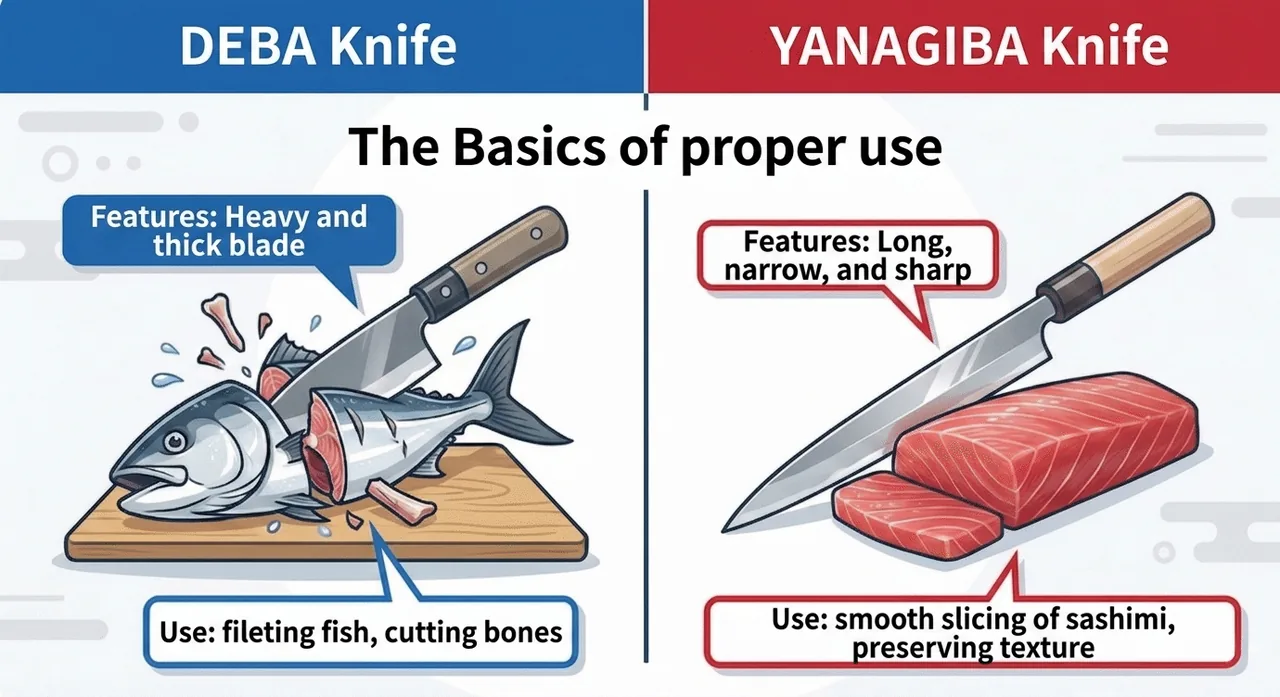
The deba (出刃包丁) is Japan's dedicated fish knife — designed specifically for breaking down whole fish: removing the head, cutting through the spine, and filleting. The thick spine gives the blade enough mass to handle bone without flexing. The single-bevel grind creates a wedge geometry that pushes through fish bone in a chopping motion while the angled bevel guides the blade away from the flesh.
What a deba is (and isn't) for
- Correct use
- Removing fish heads (single decisive chop or rocking motion). Cutting through the spine. Filleting — the curved belly follows the bones when held at a low angle. Trimming fins.
- Not a cleaver
- A deba is not designed for large bones, frozen fish, or heavy chopping like a Chinese cleaver. The single-bevel geometry and hagane steel are brittle under hard lateral force. Work precisely, not forcefully.
- Vegetable work
- The deba's thick spine makes it poor for vegetables — too heavy and too wide. Use your santoku or gyuto for vegetable prep; the deba is for fish only.
Deba size guide
- 150mm (Ko-deba)
- For small fish — mackerel, sardines, sea bream under 30cm. The most manageable size for home cooks. Easier to control for fillets and delicate work.
- 180mm
- The most versatile size. Handles most fish you'd cook at home — sea bream, yellowtail, salmon portions. The standard recommendation for home cooks who want one deba for most work.
- 210mm+
- For large fish — whole salmon, tuna blocks, large sea bass. Professional and enthusiast use. Requires more technique to control.
The Yanagiba: Japan's Sashimi Knife
The yanagiba (柳刃包丁) — literally "willow blade" — is Japan's sashimi knife. The long, narrow single-bevel blade is designed for one task done with complete precision: slicing raw fish in a single pulling motion from heel to tip. No sawing, no pressing — one clean draw.
The single-bevel geometry (flat on one side, angled bevel on the other) means that when the blade passes through fish flesh, one surface is completely flat, leaving a mirror-smooth cut face. This isn't aesthetic — a smooth cut surface means fewer broken cell walls, which means the fish releases less moisture and oxidizes more slowly. Properly cut sashimi from a sharp yanagiba genuinely tastes different from sashimi cut with a double-bevel knife.
Yanagiba size guide
- 210–240mm
- Entry-level range. Manageable for home use — can slice smaller pieces of salmon, tuna, or yellowtail. Shorter than professional blades, which makes technique errors more visible. Start here for learning.
- 270mm
- The standard home enthusiast size. Long enough to slice a standard tuna block or salmon fillet in one stroke. The professional standard size in many kitchens. Recommended for home cooks who are committed to sashimi technique.
- 300mm+
- Professional length. For large fish blocks, competitive sashimi work. Requires significant technique to use well. Not recommended for beginners.
Understanding Single-Bevel Knives
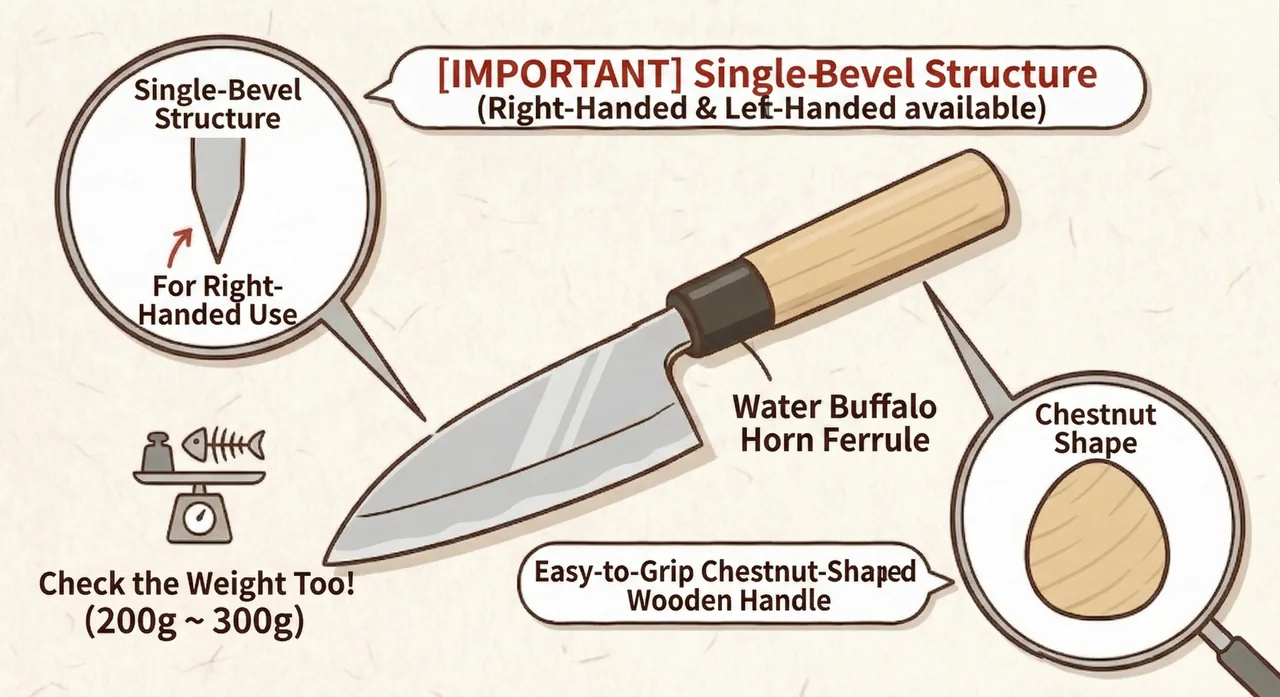
A single-bevel knife has one flat side (the ura, or back) and one angled side (the bevel face). This is the oldest and most technically precise grinding style in Japanese knife making — it's what Sakai craftsmen spent centuries perfecting.
Right-handed vs. left-handed — critical
Single-bevel knives are ground for a specific hand. A right-hand deba has the bevel on the right side (as you hold it); a left-hand deba has it on the left. If you're left-handed, you must specifically order a left-handed version. Using a right-hand single-bevel knife in the left hand will produce incorrect cuts and is uncomfortable — the flat side is on the wrong face.
Almost all single-bevel knives available internationally are right-hand by default. If you need left-hand, contact the maker directly or use a specialist Japanese knife retailer — most Sakai makers can produce left-hand versions on request, though lead times may be longer.
Sharpening is different
Single-bevel sharpening is fundamentally different from double-bevel. The flat back must be kept flat on the stone (no angle). The bevel face is sharpened at the original angle. Never apply an angle to the flat back. If you're not confident in single-bevel sharpening technique, have these knives sharpened by a professional — a Sakai knife sharpener will maintain the geometry correctly.
Steel Choice: Carbon (Hagane) vs. Stainless
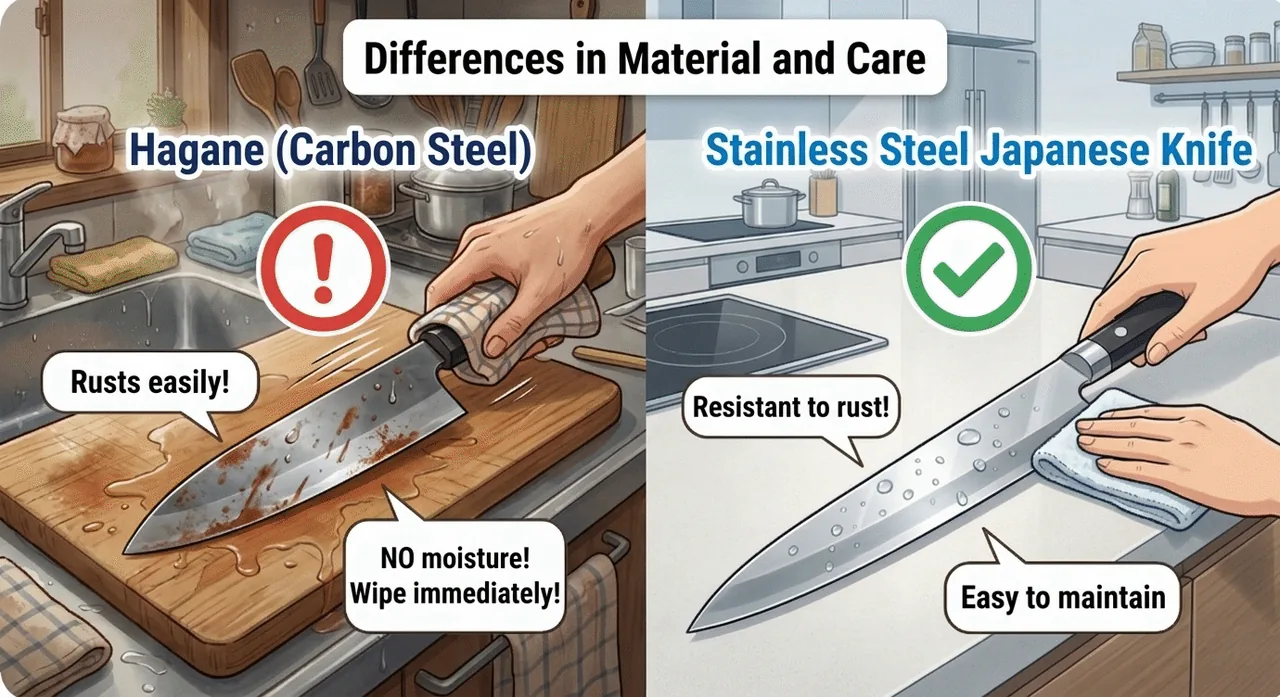
Carbon steel (hagane) — the traditional choice
Traditional Japanese specialist knives use White Steel (Shirogami #1 or #2) or Blue Steel (Aogami).
Carbon steel reaches HRC 62–65 — harder than any stainless, taking a finer initial edge that is
perceptibly sharper on raw fish. The trade-off: it will rust if left wet. After every use you
wipe and dry immediately. Long-term storage requires a light coat of camellia oil.
Professional sushi chefs use carbon steel almost exclusively. The extra care is part of the craft.
Stainless — the practical alternative
Stainless single-bevel knives (usually Molybdenum-Vanadium steel) reach HRC 58–60. Easier to maintain, no rust concern. The edge doesn't achieve quite the same mirror fineness as hagane, but for home cooks who make sashimi occasionally rather than daily, the practical benefits outweigh the performance difference. Stainless deba and yanagiba are available from most Sakai makers and are often half the price of carbon steel equivalents.
Which to Buy First?
The simple decision framework
If you make sashimi: Buy the yanagiba first. The difference in cut quality on raw
fish is the most immediately obvious performance difference a single knife purchase can make.
Start with a 270mm stainless from a Sakai maker — you'll learn single-bevel technique with low
rust risk and still get excellent results.
If you buy whole fish: Buy the deba first. There's no easy substitute for a deba
when breaking down a whole fish — a gyuto or santoku will work, but imprecisely. A 180mm deba in
stainless is the most practical starting point.
If you do both: Start with whichever task you do more often. Add the second knife
after you've learned single-bevel sharpening on the first.
Top Sakai Brands for Traditional Japanese Knives
Jikko (實光刃物) — Sakai, Osaka
Jikko is one of Sakai's most respected traditional knife makers — used by professional sushi chefs throughout Japan. They offer both carbon steel (Shirogami, Aogami) and stainless single-bevel knives across the deba, yanagiba, and usuba range. For international buyers, they have an English-language website with international shipping. Their stainless yanagiba is one of the best entry points into Sakai knife culture at a price that doesn't require commitment to carbon steel care.
- Steel options
- White Steel (Shirogami) #1/#2, Blue Steel (Aogami), Molybdenum-Vanadium stainless
- Handle
- Traditional octagonal wa-handle in magnolia or ho-wood
- Made in
- Sakai, Osaka
- International shipping
- Yes — via official website and select Amazon Japan listings
- Price range
- Stainless: $100–$250 / Carbon: $150–$400+
Sakai Takayuki — Sakai, Osaka
Sakai Takayuki is one of the most internationally accessible Sakai brands — widely available on Amazon Japan and through specialist importers. Their range covers both traditional carbon steel knives for professionals and their popular Grand Chef series in stainless, which brings Sakai craftsmanship to cooks who want the geometry without the carbon steel care requirement. A reliable, mid-range entry into Sakai tradition with strong quality consistency.
- Steel options
- Shirogami, Aogami, SG2 powdered steel, stainless (Grand Chef series)
- Handle
- Traditional magnolia wa-handle standard; rosewood and exotic wood available
- Made in
- Sakai, Osaka
- International shipping
- Widely available on Amazon Japan; ships internationally
- Price range
- $80–$300+
Aritsugu — Kyoto
Aritsugu is one of Japan's oldest knife makers — established in Kyoto in 1560, originally as sword smiths. Today their knives are considered heirloom objects: hand-forged, hand-sharpened, and sold with a relationship to the craftsman. Buying an Aritsugu knife means sending it back for sharpening by the original maker when the time comes — a concept called kanai. For international buyers, a visit to their Nishiki Market shop in Kyoto is the classic experience; they also offer international shipping on select pieces.
- Steel options
- Traditionally carbon steel (Shirogami); some stainless pieces available
- Handle
- Octagonal magnolia or ebony wa-handle, traditionally set by the maker
- Made in
- Kyoto (Nishiki Market)
- International access
- In-store in Kyoto; limited international online orders; specialist import services
- Price range
- $120–$600+
FAQ
Do I need a deba and yanagiba, or can my gyuto do both?
A gyuto can do sashimi work passably, but it cannot replace a deba for fish butchery. The gyuto's thin blade is not designed for cutting through fish spine and bone — you risk chipping the hard Japanese steel. For sashimi, a gyuto's double-bevel grind leaves a rougher cut surface than a yanagiba, which is noticeable on delicate fish like flounder. If you buy whole fish regularly or take sashimi seriously: get the specialist knives. If you only occasionally prepare fish: the gyuto is an acceptable compromise for sashimi; just don't cut through bone with it.
I'm left-handed — can I get a left-hand deba or yanagiba?
Yes — but you must specifically request it. All single-bevel knives available internationally are right-hand by default. Left-hand versions exist but must be ordered directly from the maker or through a specialist retailer. Contact Jikko, Sakai Takayuki, or any Sakai maker directly — all can produce left-hand knives. Expect longer lead times (4–8 weeks for some makers) and potentially a small premium.
Should I start with carbon steel or stainless for my first specialist knife?
Start with stainless. A stainless yanagiba or deba from a Sakai maker will give you the single-bevel geometry and cutting feel at 80–90% of the performance of hagane, without the rust risk. Learn single-bevel technique — the muscle memory for the flat back on the stone, the grip on the handle, the pull-cut motion — on a forgiving stainless knife. When you've developed the habits and genuinely want the finest possible edge, upgrade to carbon steel.
How do I sharpen a deba or yanagiba?
Single-bevel sharpening is different from double-bevel. The flat back (ura) goes completely flat on the stone — zero angle, just the weight of the blade pressing it flat. 3–5 light passes to remove any burr. The bevel face is sharpened at the original angle (typically steep — 10–15° or more on a deba). Never apply an angle to the flat back. If you're not confident, use a professional sharpening service — a Sakai knife sharpened incorrectly loses geometry that takes many sessions to recover.
Where can I buy Sakai knives outside Japan?
Amazon Japan (ships internationally), specialist importers, and maker websites. Jikko and Sakai Takayuki both have international shipping options. Specialist retailers in the US (Korin, Japancentre), UK, and Europe stock Sakai brands. For the full experience, Sakai has a "Sakai Hamono" certified brand system and an annual knife fair — many overseas visitors to Osaka include a Sakai factory visit. Most Sakai knives also come with an adjustment period: the handle may need a light sand and oil, and the initial edge may benefit from a strop or fine-stone pass.
What is the difference between a yanagiba and a sujihiki?
Both are long slicing knives, but the yanagiba is single-bevel; the sujihiki is double-bevel. A sujihiki is a Western-style equivalent — it slices proteins (roasts, fish, cooked meat) with the same pull-cut motion but uses double-bevel geometry that is easier to sharpen. If you already own a double-bevel gyuto and want a longer slicer for general use, a sujihiki is easier to start with. If you specifically want the Japanese sashimi cutting experience — the mirror-cut surface on raw fish — only a yanagiba delivers it fully.
Final Thoughts: The Knives That Reveal Japanese Craft
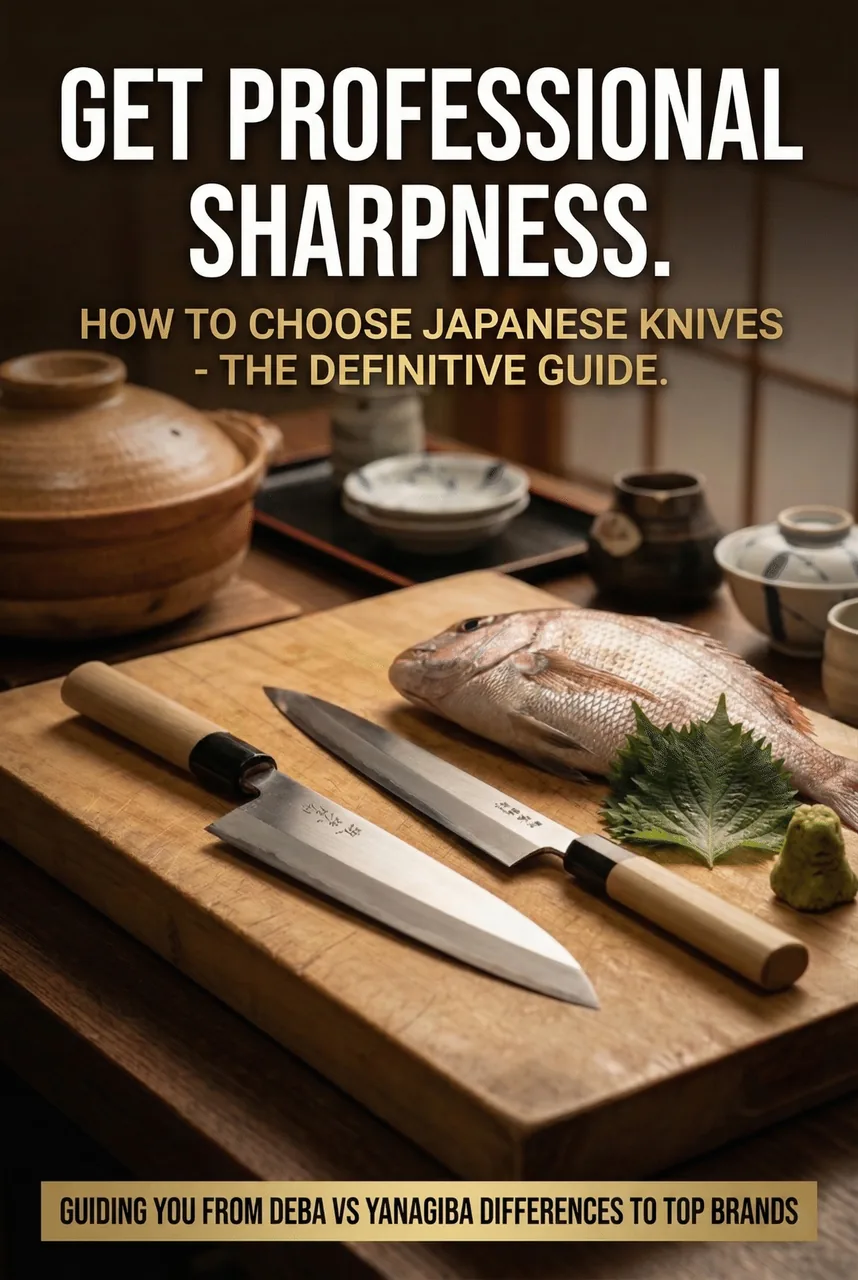
The deba and yanagiba represent the peak of Japanese knife craftsmanship — tools evolved over
centuries specifically to handle fish with a precision that no Western knife achieves.
If you make sashimi at home even occasionally, a yanagiba will change your experience. The knife
doesn't just cut differently — the fish tastes different. Start with stainless from Sakai Takayuki
or Jikko, learn the single-bevel technique on that, and you'll understand why Japanese professional
cooks spend a lifetime with these knives.
The craft is in the edge. The edge is in Sakai.
Japanese Kitchen Knives: Complete Buying Guide
How to Sharpen Japanese Kitchen Knives: Whetstone Guide