The best Japanese santoku knife for most home cooks is the Tojiro DP Santoku (180mm) at around $75
— VG10 core steel, professional sharpness, and built to last decades. If your budget allows, the GLOBAL G-46
is the most recognized santoku in the world and worth every dollar.
If you want the short answer, jump to our top picks. If you want to know what makes
a great santoku and which brands are actually worth buying internationally, read on.
Quick Reference: Best Japanese Santoku Knives at a Glance
| Knife | Steel | Best For | Price |
|---|---|---|---|
| Tojiro DP Santoku | VG10 core, HRC 60 | Best overall value — professional quality under $80 | ~$75 |
| GLOBAL G-46 (18cm) | Cromova 18, HRC 56–58 | Best design, easiest maintenance, worldwide bestseller | ~$130 |
| Yaxell Ran Santoku (165mm) | VG10, 69-layer Damascus | Best Damascus — striking looks, high performance | ~$160 |
| Misono UX10 Santoku | Swedish Sandvik, HRC 59–60 | Best for serious cooks — the knife pros actually use | ~$200 |
| Kai Wasabi Black Santoku | 1K6 stainless, HRC 58 | Best budget — genuine Japanese quality under $50 | ~$45 |
Why a Santoku? The Japanese All-Purpose Knife Explained
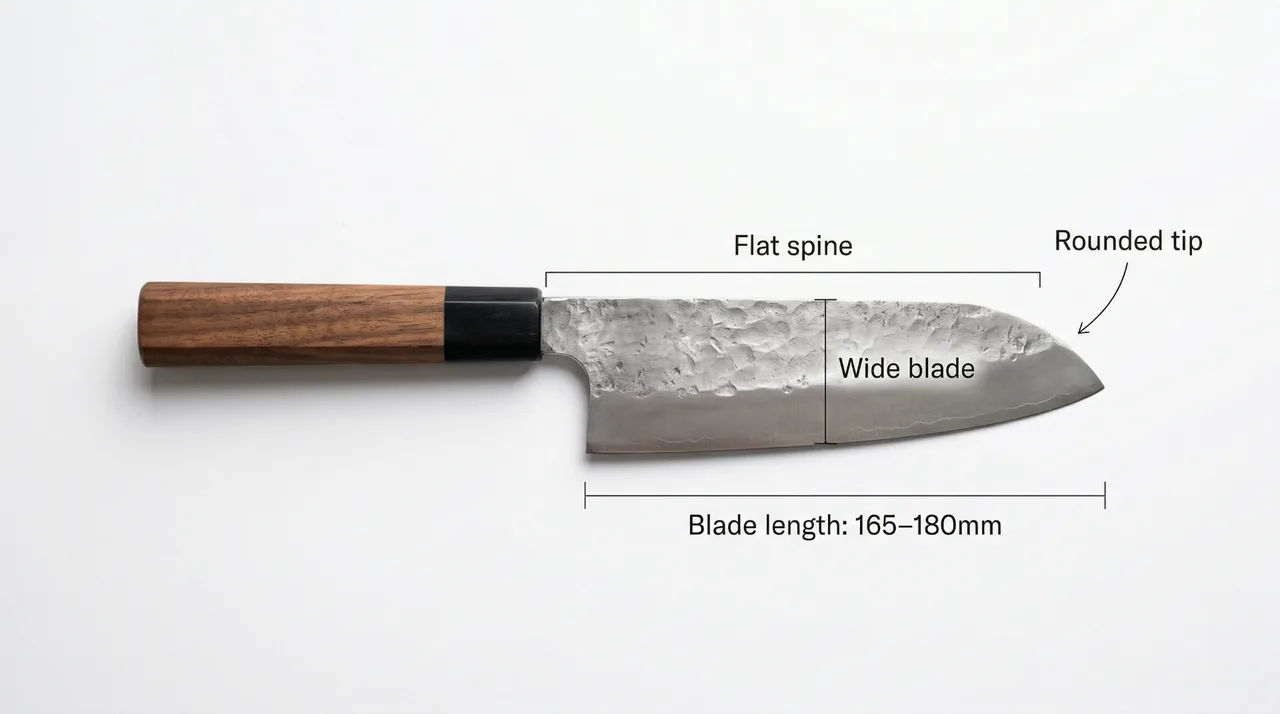
The santoku — 三徳包丁 — literally means "three virtues": meat, fish, and vegetables. It's Japan's most popular kitchen knife for a reason. Compared to a Western chef's knife, the santoku is shorter (165–180mm vs 200–240mm), has a flatter cutting edge, and a wider blade that makes food slide off cleanly.
The flat edge means the entire blade contacts the cutting board on a push-cut, which is faster and more efficient for vegetables. The wide blade doubles as a bench scraper for moving prepped ingredients. And the compact length is easier to control for cooks who don't need to rock-cut large cuts of meat.
If you cook mostly vegetables, fish, and smaller cuts of meat at home — a santoku is your knife. If you regularly break down large roasts or prefer Western rocking technique, a gyuto (Japanese chef's knife) may suit you better.
How to Choose: Size, Steel, and Handle
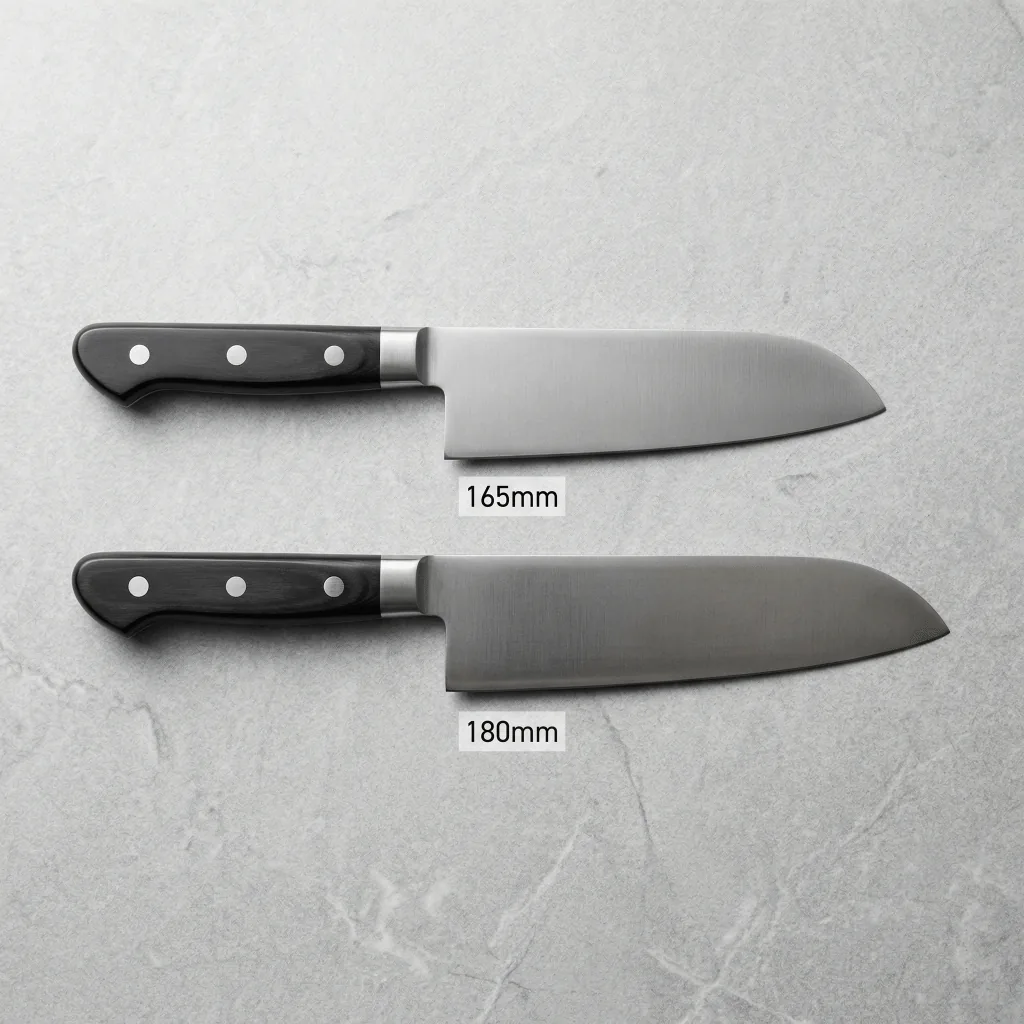
1. Blade Length: 165mm or 180mm?
- 165mm (6.5 inch)
- More nimble and easier to control. Better for smaller hands or compact cutting boards. The standard choice in Japan. Great for precision work — julienne, herbs, fine dice.
- 180mm (7 inch)
- Covers more ground per stroke. Better for larger vegetables (cabbage, squash) and cooks with bigger hands. The most versatile size for international home cooks. If unsure, start here.
2. Steel: Stainless vs. Damascus
For a santoku, stainless steel is the practical choice for most people. Modern Japanese stainless alloys — VG10, AUS-10, Cromova 18 — reach HRC 58–62, hold an edge far longer than Western knives, and require no special rust prevention. Brands like GLOBAL, Tojiro, and Misono all use premium stainless.
Damascus knives (Yaxell, some Kai models) add multi-layer folded steel around a hard core. The Damascus pattern is not purely aesthetic — it protects the brittle hard edge from chipping. If you want the best combination of sharpness and visual appeal, Damascus at $130–$200 is a legitimate choice.
3. Handle: Western vs. Wa-Handle
Western handle (Yo-handle): Full-tang, riveted scales. Familiar feel if you've used
European knives. GLOBAL's seamless all-stainless handle is a variant of this — heavier, more balanced.
Japanese handle (Wa-handle): Lighter octagonal or D-shaped wood handle. Less common
in santoku, but some traditional makers offer it. Better for cooks who prefer wrist rotation over grip stability.
For most international buyers buying their first Japanese santoku: stick with a Western handle. Familiar, widely available, and easier to find grip accessories for.
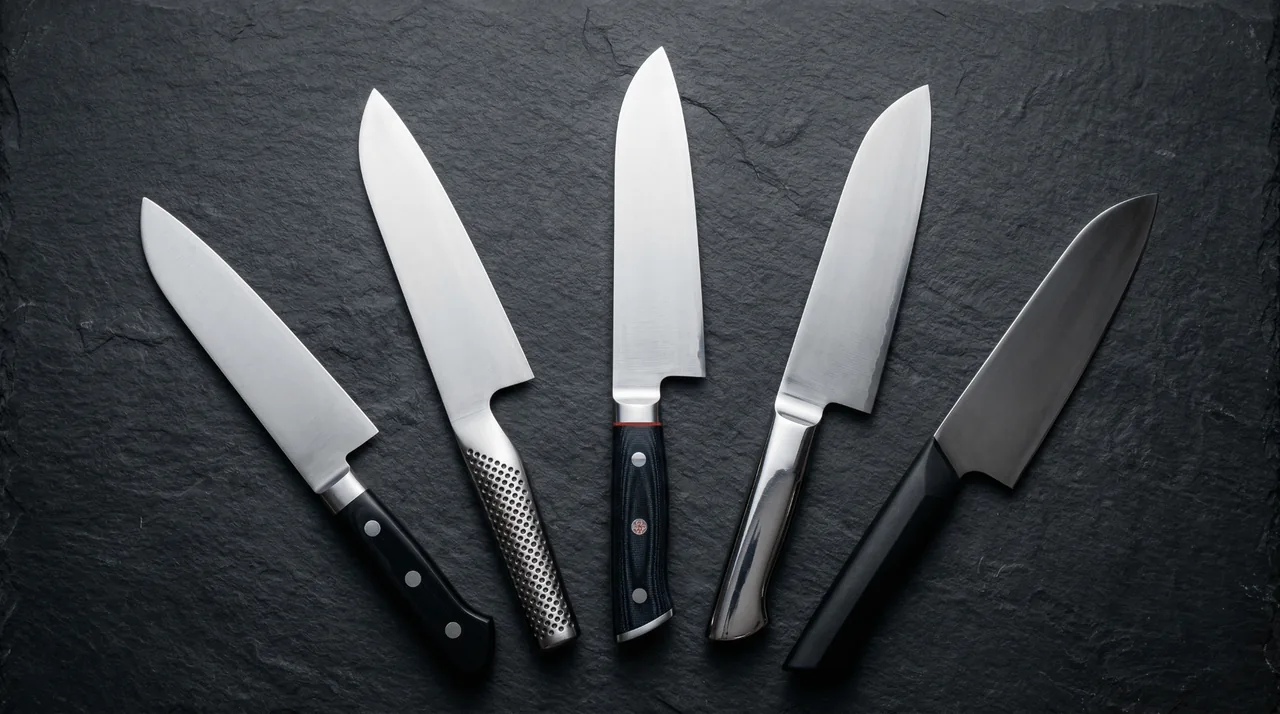
Top 5 Japanese Santoku Knives Available Internationally
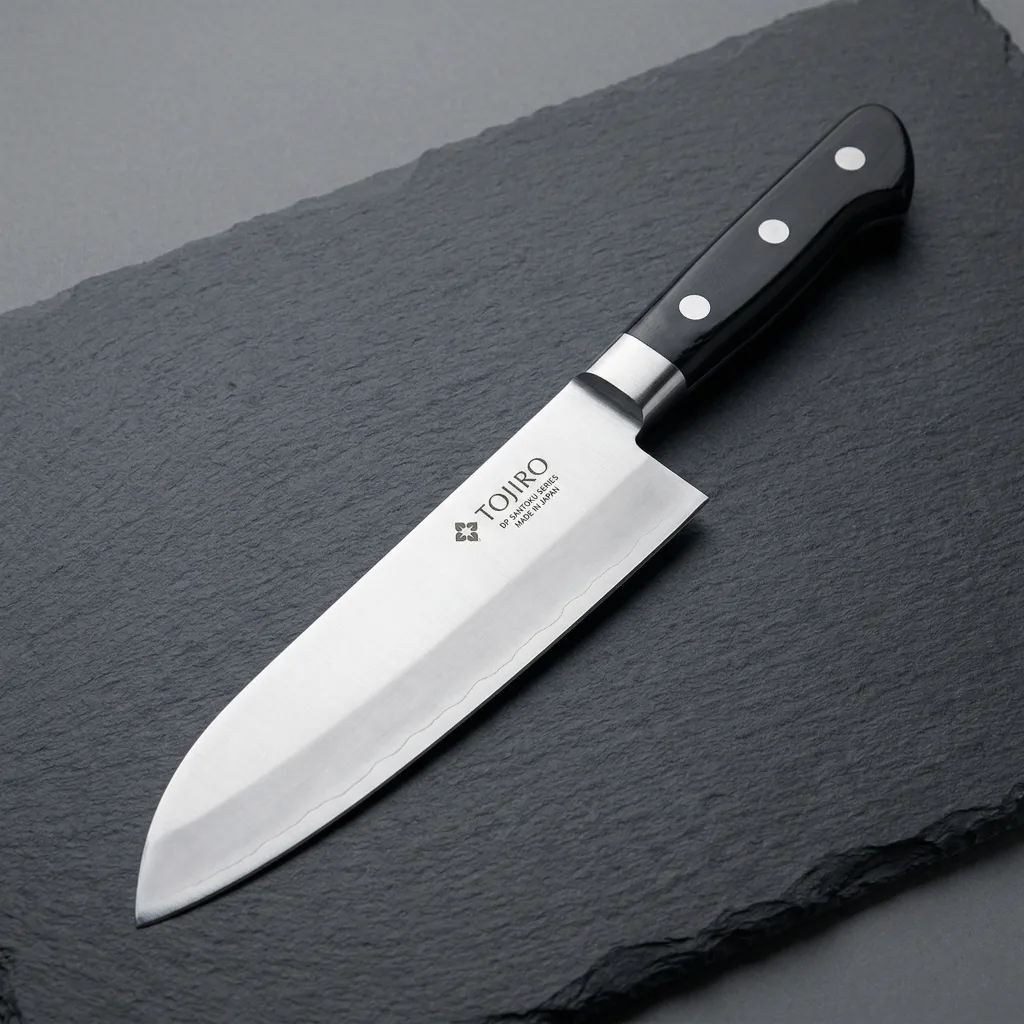
#1 Best Value — Tojiro DP Santoku (180mm)
Tojiro's DP series is the most-recommended Japanese knife for first-time buyers on every serious knife forum for a reason: VG10 core steel at HRC 60, laminated with soft stainless outer layers for durability, in a knife that costs less than most department-store knives back home. Professional chefs use it in their home kitchens even when they can afford anything.
- Steel
- VG10 core with stainless outer layers (DP Series), HRC 60
- Length
- 180mm blade
- Made in
- Tsubame-Sanjo, Niigata
- Handle
- Western-style black laminate, full tang
- Price
- ~$75
Perfect for: Anyone upgrading from a cheap supermarket knife for the first time. This is the knife that will make you wonder why you waited so long.
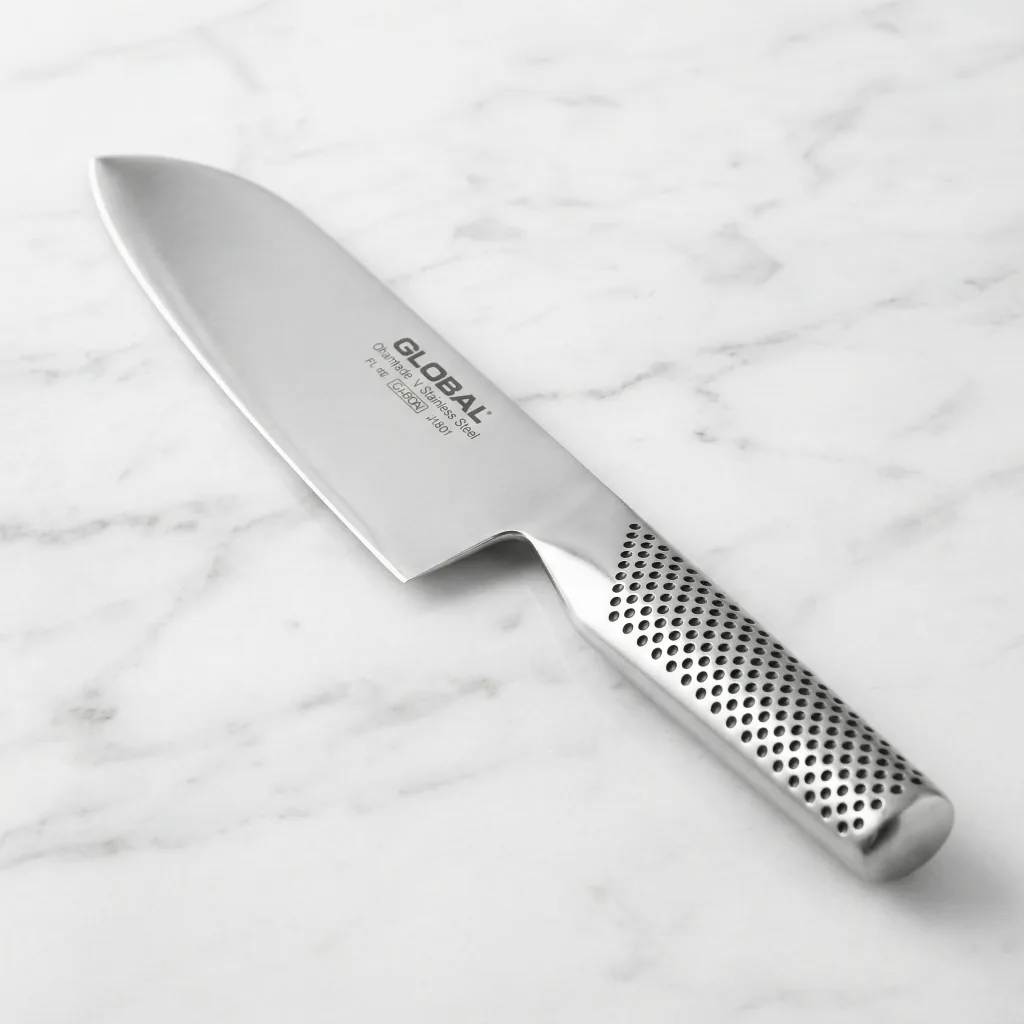
#2 Best Design — GLOBAL G-46 Santoku (18cm)
GLOBAL's G-46 is the santoku that introduced Japanese knife culture to the West. The all-stainless seamless construction — no handle joint, no seams — is both the cleanest design in the category and the most hygienic. The dimpled handle is sand-filled for counterbalance. It's the knife you'll find in Michelin-starred kitchens outside Japan more than any other Japanese santoku.
- Steel
- Cromova 18 stainless (proprietary), HRC 56–58
- Length
- 18cm blade
- Made in
- Tsubame-Sanjo, Niigata
- Handle
- Seamless all-stainless, sand-filled for balance
- Price
- ~$130
Perfect for: Home cooks who want a low-maintenance premium knife and don't want to think about care routines. Also the top choice for gifts — the GLOBAL box is immediately recognizable.
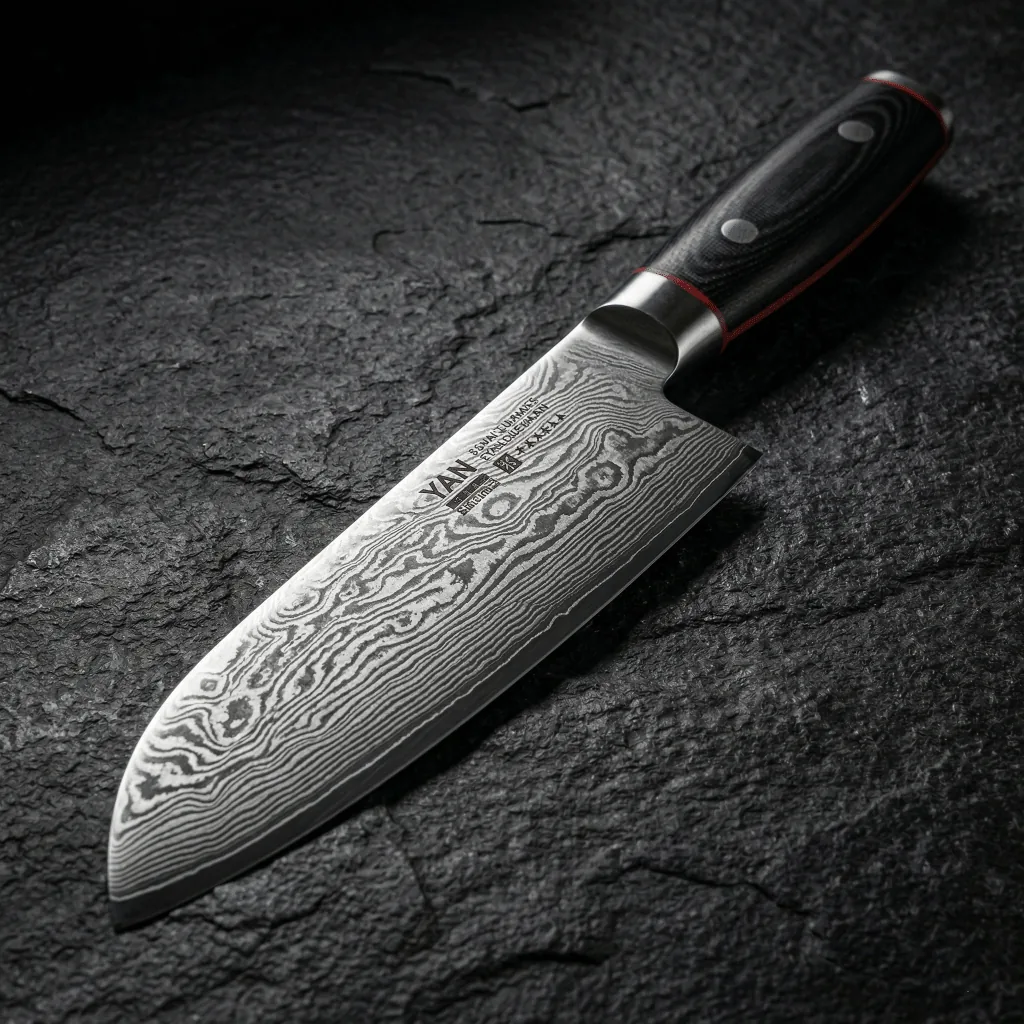
#3 Best Damascus — Yaxell Ran Santoku (165mm)
Yaxell's Ran series brings 69-layer Damascus steel around a VG10 core to the santoku category. The wave pattern is structural — soft outer layers protecting a hard cutting core — and it shows beautifully under kitchen lighting. The canvas micarta handle is non-slip even when wet. If you want a knife that performs at the highest level and looks exceptional on a magnetic strip, this is it.
- Steel
- VG10 core with 69-layer Damascus stainless, HRC 61
- Length
- 165mm (6.5 inch)
- Made in
- Seki, Gifu
- Handle
- Black canvas micarta with red accent spacers
- Price
- ~$160
Perfect for: Food-enthusiast households and cooks who want genuine Damascus performance with visual appeal to match. Also one of the strongest gift choices in this list.
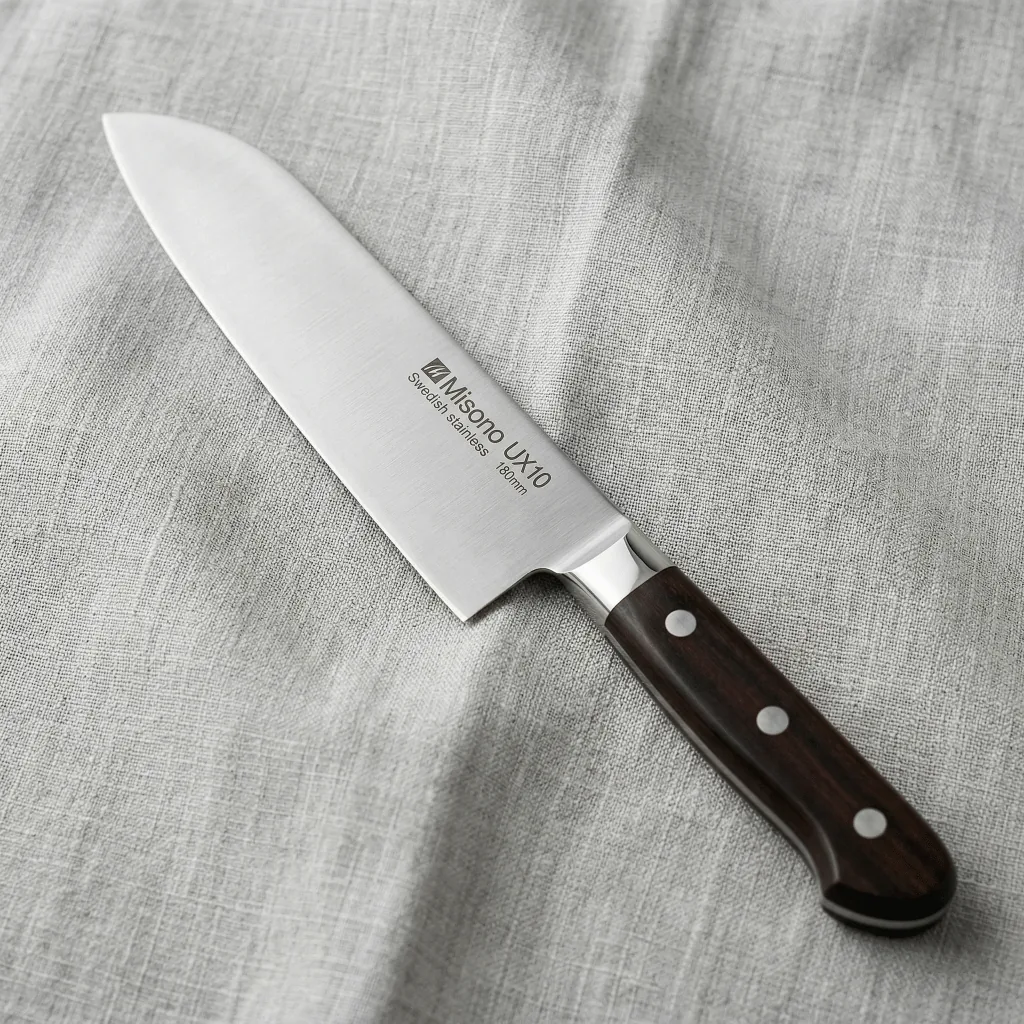
#4 Best for Serious Cooks — Misono UX10 Santoku (180mm)
The Misono UX10 is what professional cooks in Japan actually use. Swedish Sandvik stainless steel achieves edge retention and sharpness that rivals carbon steel, without any rust vulnerability. The nickel silver bolster creates perfect balance at the pinch grip. If you're buying a santoku you intend to use for the next 20 years, this is the most serious answer in the category.
- Steel
- Swedish Sandvik stainless, HRC 59–60
- Length
- 180mm blade
- Made in
- Seki, Gifu
- Handle
- Full-tang Western with nickel silver bolster
- Price
- ~$200
Perfect for: Cooks who have already used a good knife and want to step up to something they'll never want to replace. Not a first knife — a forever knife.
#5 Best Budget — Kai Wasabi Black Santoku (165mm)
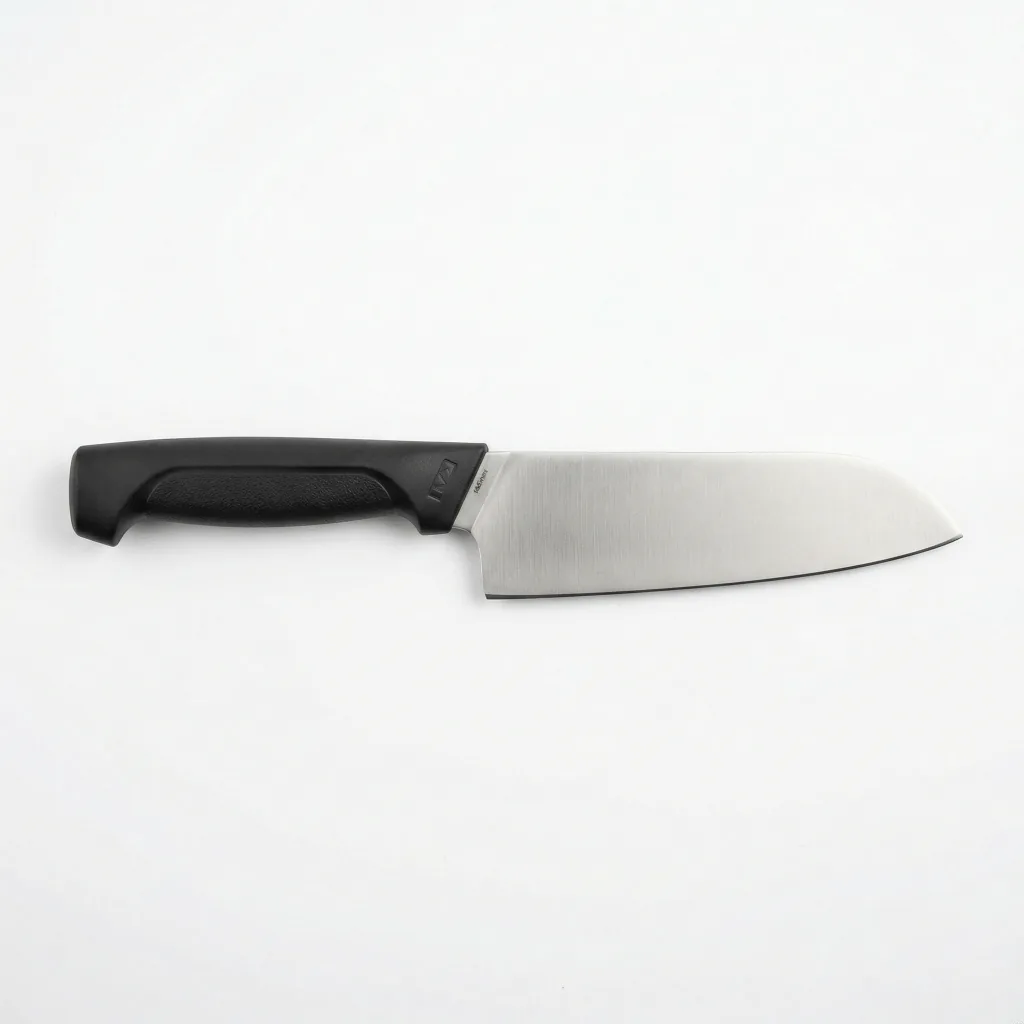
Made by Kai — the parent company behind Shun — the Wasabi Black is genuine Japanese manufacturing at an accessible price. 1K6 stainless steel holds a decent edge, the handle is polypropylene with a non-slip pattern, and it's dishwasher-safe (though hand washing is always recommended for any Japanese knife). For a household that wants a step up from supermarket knives without committing to a premium price, this is the entry point.
- Steel
- 1K6 high-carbon stainless, HRC 58
- Length
- 165mm blade
- Made in
- Seki, Gifu
- Handle
- Polypropylene composite, ergonomic grip
- Price
- ~$45
Perfect for: First-time buyers on a budget, student kitchens, or anyone who wants to test whether Japanese knife quality is right for them before spending more.
FAQ
What size santoku should I buy — 165mm or 180mm?
Go with 180mm if you're unsure. It handles large vegetables and most proteins without feeling oversized. The 165mm is better for smaller hands or cooks who do a lot of fine, precise work. Both sizes are widely available from the brands listed above. GLOBAL's G-45 is 18cm; Tojiro offers both.
Is a santoku better than a chef's knife for beginners?
For most home cooks: yes. The santoku's shorter length and flat edge are easier to control, and the push-cut technique requires less practice than the rocking motion used with a Western chef's knife. If you already cook with a Western chef's knife comfortably, try a gyuto instead — it preserves your existing technique in Japanese steel.
Can a santoku cut meat?
Yes — the name means "three virtues": meat, fish, and vegetables. A santoku handles boneless chicken, pork, and fish with no issues. It's not the right tool for breaking down whole chickens with bones, chopping through large joints, or heavy butchery — for that you'd need a heavier knife. But for everyday home cooking including meat prep, a santoku covers everything.
How do I sharpen a Japanese santoku knife?
A whetstone is the correct tool — a 1000/3000 grit combination stone covers all maintenance sharpening. Sharpen at a 15° angle (flatter than Western knives, which are typically 20°). Avoid pull-through sharpeners — they remove too much metal and won't give you the fine edge Japanese steel is capable of. A well-maintained santoku needs full sharpening every 2–3 months with regular home use; hone with a ceramic rod in between.
What's the difference between a $45 and a $150 Japanese santoku?
Mainly steel hardness and edge retention. A Kai Wasabi at HRC 58 is sharper than any Western knife, but needs sharpening more often than a Tojiro DP at HRC 60, which in turn needs sharpening more often than a Misono UX10. The physical difference in daily cutting is real — a harder steel at HRC 60+ holds its edge noticeably longer and takes a finer initial edge. Handle quality and fit-and-finish also improve with price.
Are Japanese santoku knives dishwasher-safe?
Most Japanese knife makers advise against dishwashers — even for knives marketed as dishwasher-safe. The high heat dulls the blade, the detergent is corrosive to fine edges, and knives can knock against other items and chip. Hand washing with warm water and immediate drying takes 30 seconds and keeps your knife sharper for longer. The Kai Wasabi is the most dishwasher-tolerant on this list, but even there, hand washing is the better habit.
Final Thoughts: One Great Santoku Is All You Need
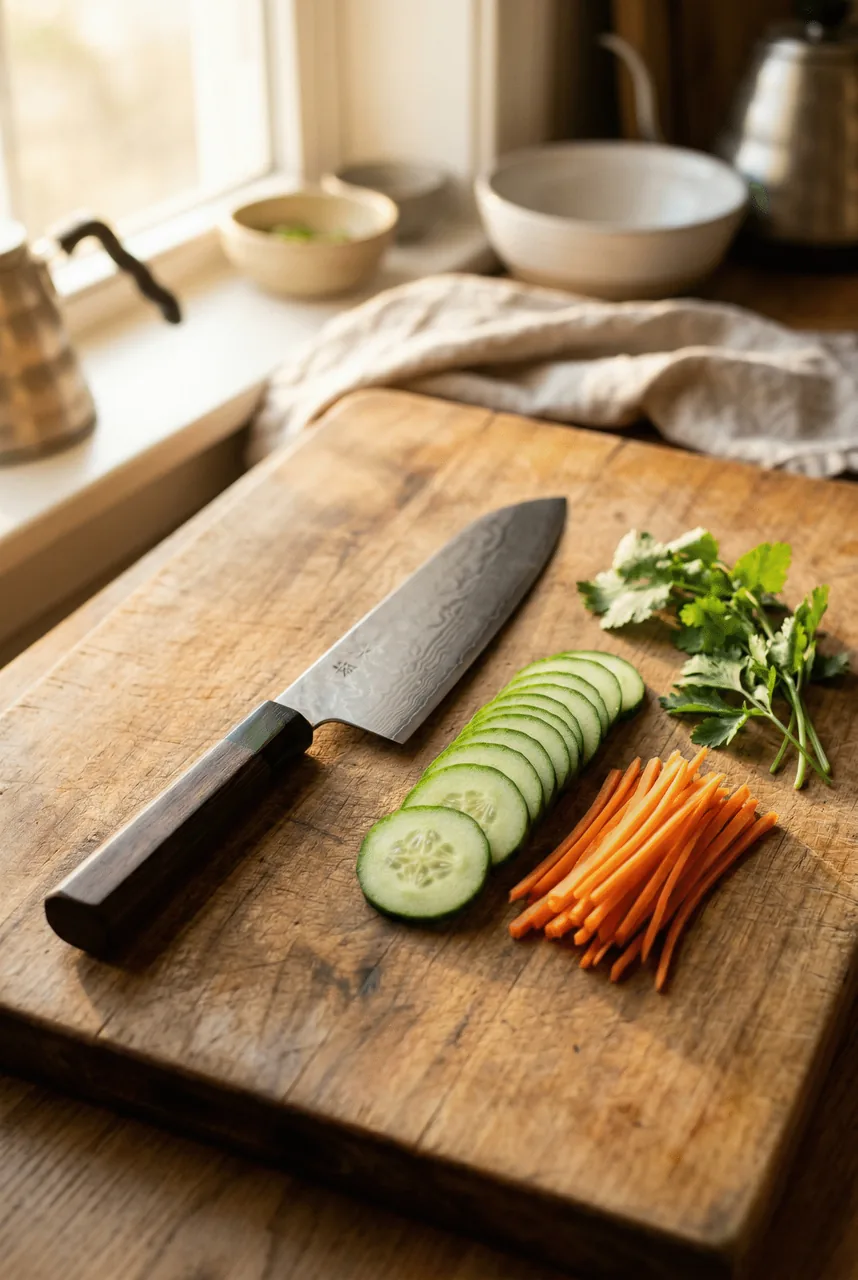
The santoku is the most versatile knife in Japanese home cooking, and these five picks cover every
realistic budget from $45 to $200.
Start with the Tojiro DP if you want the most knife for the least money. Choose
GLOBAL G-46 if design and low-maintenance matter. Move to Misono UX10
when you're ready to buy a knife for life.
Whichever you choose: learn to use a whetstone. The knife is only half the equation — the edge
you put on it is the other half.
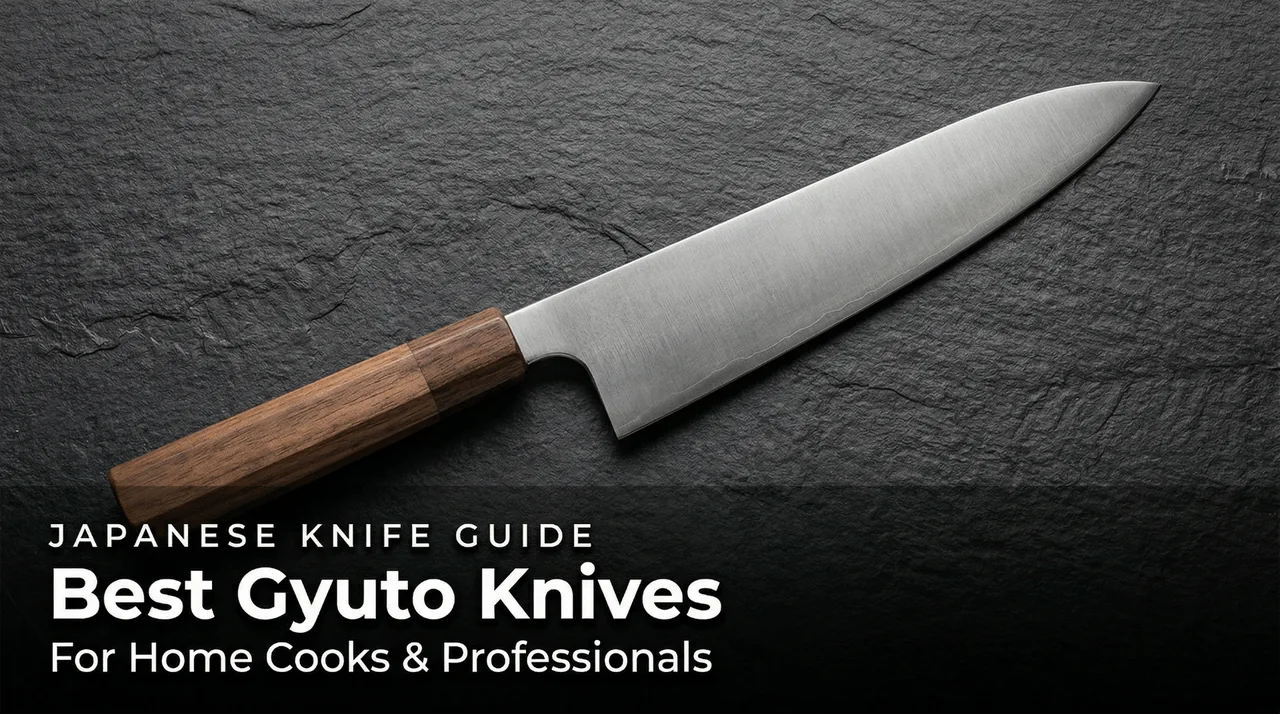
Best Japanese Gyuto Knives for Home Cooks
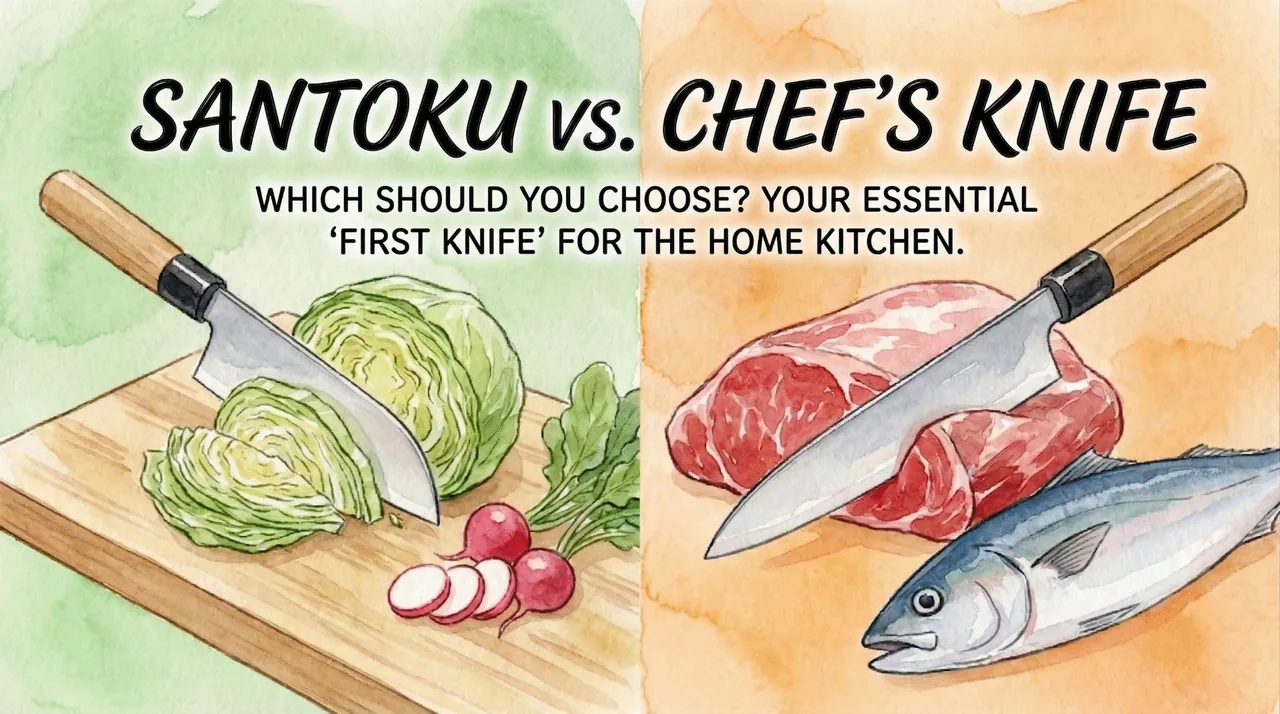
Santoku vs. Gyuto: Which Japanese Knife Should You Buy?