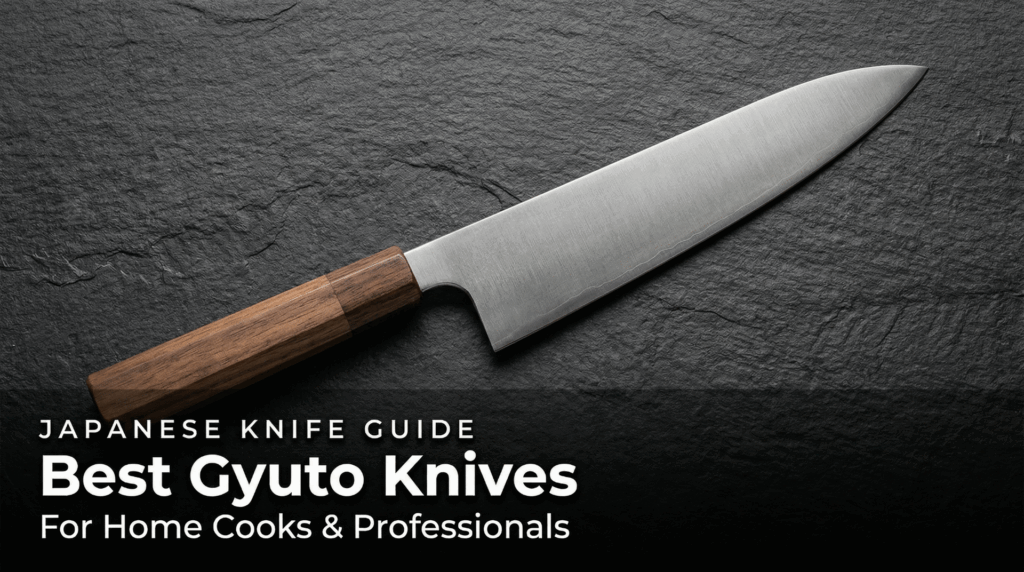
The best Japanese gyuto for most home cooks is the Tojiro DP Gyuto (210mm) at around $85
— VG10 core steel, the same sharpness professionals use, and a length that handles everything from
mincing herbs to slicing a whole roast.
If you already cook with a Western chef's knife and want to step up to Japanese steel, the gyuto is
the natural upgrade — same technique, dramatically better edge. Jump to our top picks,
or read on for the full breakdown of why gyuto outperforms every Western chef's knife at its price point.
Quick Reference: Best Japanese Gyuto Knives at a Glance
| Knife | Steel | Best For | Price |
|---|---|---|---|
| Tojiro DP Gyuto 210mm | VG10 core, HRC 60 | Best overall value — professional sharpness under $90 | ~$85 |
| GLOBAL G-2 (20cm) | Cromova 18, HRC 56–58 | Best design — seamless, low-maintenance, globally trusted | ~$130 |
| Misono UX10 Gyuto 210mm | Swedish Sandvik, HRC 59–60 | Best for serious cooks — the knife working professionals use | ~$220 |
| Yaxell Ran Gyuto 200mm | VG10, 69-layer Damascus | Best Damascus — performance and visual impact combined | ~$170 |
| Masamoto AT Gyuto 210mm | Hyper-molybdenum stainless (AT steel), HRC 59–60 | Best professional grade — Tokyo craftsmanship, exceptional balance | ~$150 |
Gyuto vs. Santoku: Which Is Right for You?
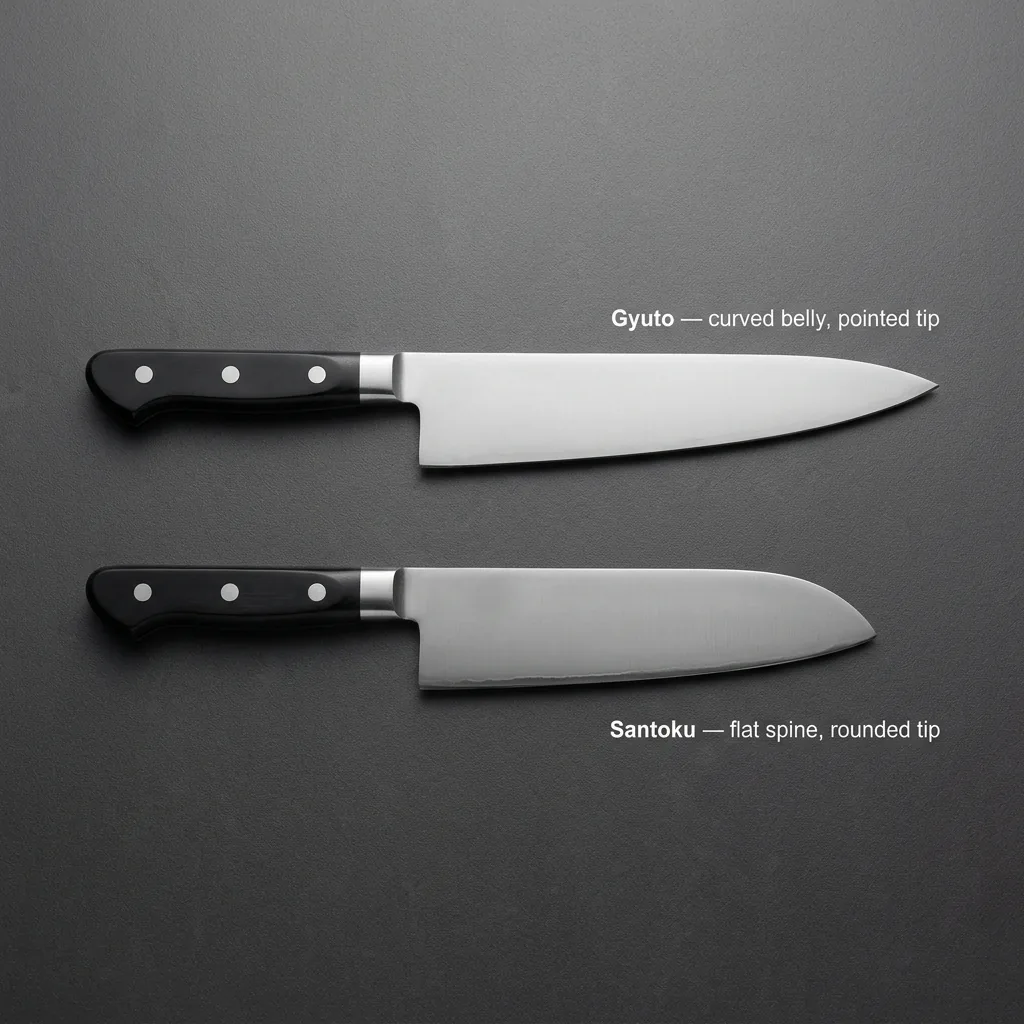
Both the gyuto and santoku are Japanese all-purpose knives — but they have different strengths based on cutting technique.
Choose a Gyuto if you:
- Already use a Western chef's knife and want to keep the same rocking technique
- Regularly work with large cuts of meat, whole poultry, or big vegetables
- Want more length — gyutos run 200–240mm vs. santoku's 165–180mm
- Do a lot of pull-slicing (sashimi, roast carving, fine julienne)
- Want one knife to handle everything a professional kitchen requires
Choose a Santoku if you:
- Prefer push-cuts — the flat blade contacts the board fully on each stroke
- Do mostly vegetable, fish, and smaller protein prep at home
- Want a lighter, shorter knife that's easier to control
- Are new to Japanese knives and want the most familiar shape
How to Choose: Size, Steel, and Balance
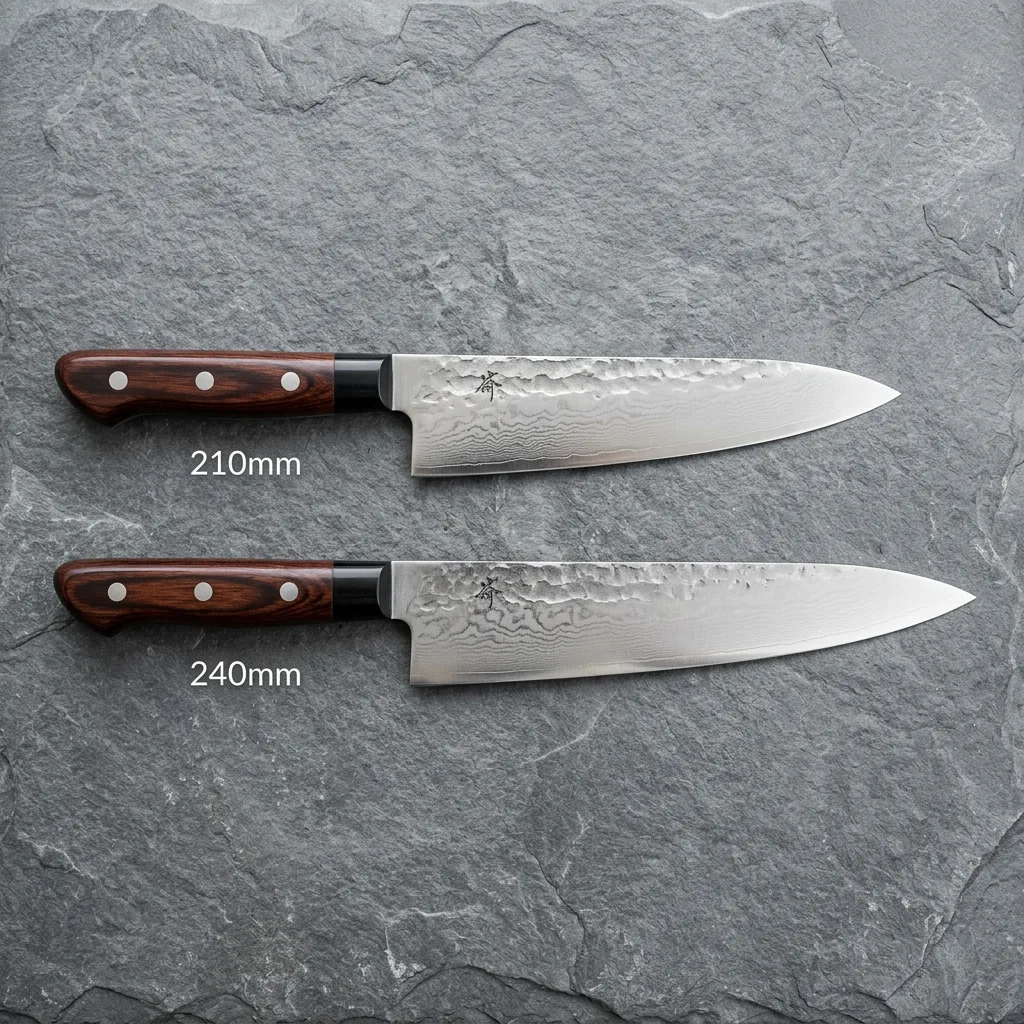
1. Blade Length: 210mm or 240mm?
- 210mm (8.2 inch)
- The most versatile home kitchen size. Long enough to handle a full chicken breast or large onion in a single slice, short enough to be precise. Start here if unsure. All five picks below are available in 210mm.
- 240mm (9.4 inch)
- Professional standard in Japanese restaurant kitchens. Better for large roasts, whole fish, and high-volume prep. Requires more board space and slightly more arm control. Choose this if you cook at scale or want the full professional experience.
2. Steel: What the Hardness Numbers Mean
Japanese gyuto steel runs significantly harder than Western chef's knives. Here's what that means practically:
| Steel Type | HRC | Edge Retention | Who It's For |
|---|---|---|---|
| Cromova 18 (GLOBAL) | 56–58 | Good | Low-maintenance home cooks |
| Swedish Sandvik (Misono) | 59–60 | Very good | Serious cooks, professionals |
| VG10 (Tojiro, Yaxell) | 60–61 | Excellent | Best price-to-performance |
| AT Steel (Masamoto) | 59–60 | Excellent | Professional cooks, serious home chefs |
3. Balance: Where the Weight Sits
A gyuto's longer blade makes balance more noticeable than with a santoku. Professionals prefer balance at the pinch grip point — where your index finger and thumb grip the spine at the bolster. This lets the knife feel weightless during extended prep. GLOBAL achieves this with a sand-filled handle; Misono uses a nickel silver bolster. When trying a gyuto in-store, pinch the blade at the spine and see if the knife balances horizontally — that's the test.
Top 5 Japanese Gyuto Knives Available Internationally
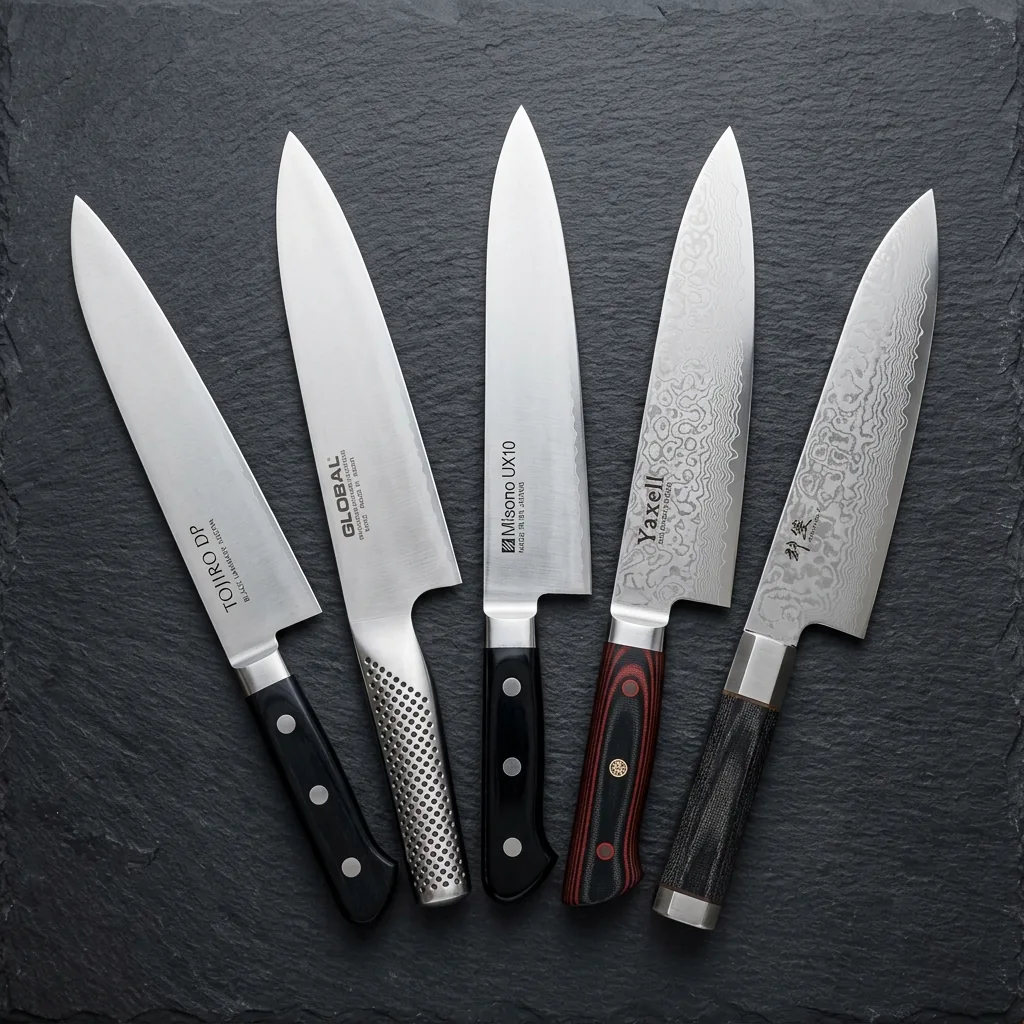
#1 Best Value — Tojiro DP Gyuto (210mm)
The Tojiro DP Gyuto is the most consistently recommended Japanese chef's knife for first-time buyers across every serious knife community. VG10 core steel at HRC 60 gives you an edge that outlasts anything in the same price category from Western makers. The laminated construction — hard core, softer outer layers — prevents the brittleness that pure hard steel can show. This is the knife that professional cooks use at home when they want something that just works.
- Steel
- VG10 cobalt alloy core with stainless outer layers (DP Series), HRC 60
- Length
- 210mm blade (240mm also available)
- Made in
- Tsubame-Sanjo, Niigata
- Handle
- Western-style black laminate, full tang, three rivets
- Price
- ~$85
Perfect for: Anyone upgrading from a Western chef's knife for the first time. Sharpen it once and you'll understand immediately why Japanese steel matters.
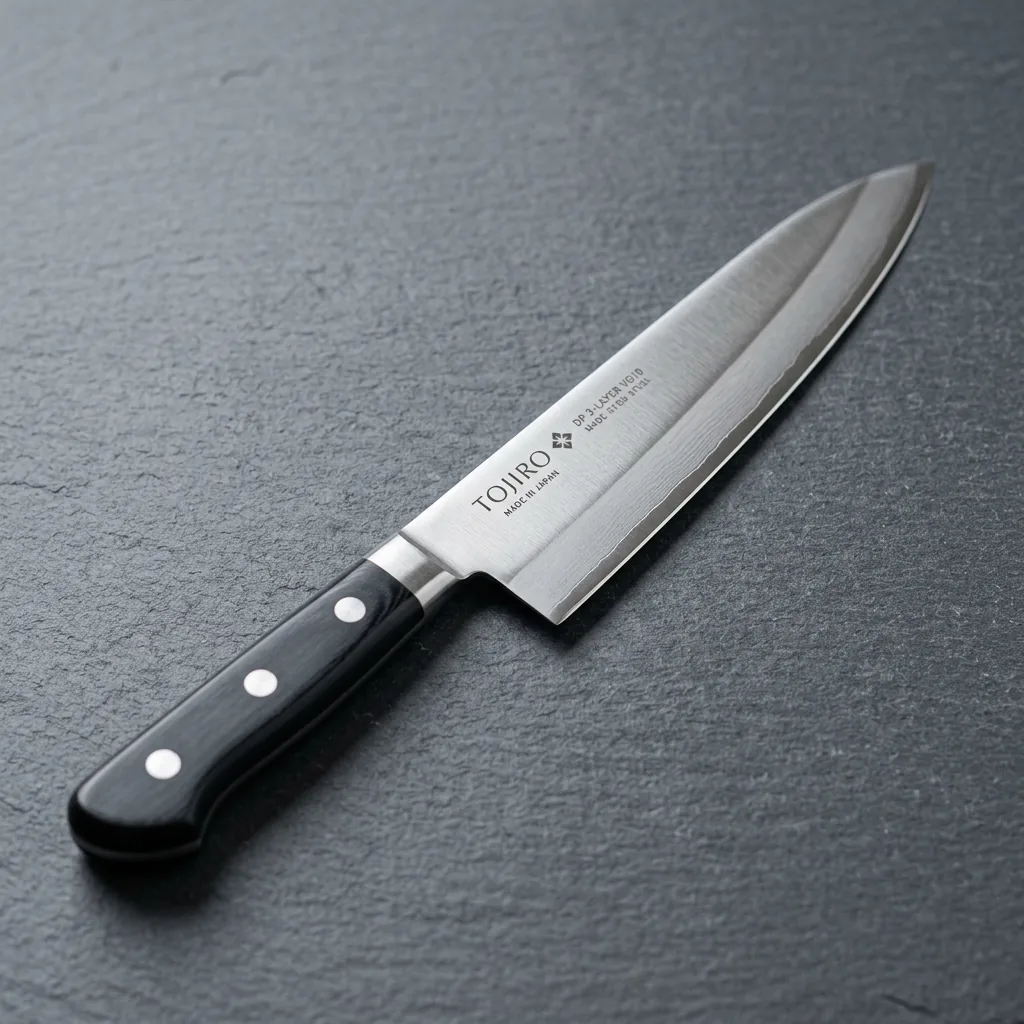
#2 Best Design — GLOBAL G-2 Chef's Knife (20cm)
The GLOBAL G-2 is the knife that put Japanese chef's knives on Western kitchen counters. First released in 1985, its all-stainless seamless construction was radical — no handle joint to trap bacteria, no seams, no rivets. The sand-filled hollow handle achieves perfect balance at the pinch point. It's the most common Japanese gyuto in professional kitchens outside Japan, which says something about both its practicality and its staying power.
- Steel
- Cromova 18 stainless (proprietary alloy), HRC 56–58
- Length
- 20cm blade
- Made in
- Tsubame-Sanjo, Niigata
- Handle
- Seamless all-stainless, sand-filled for balance, dimpled grip
- Price
- ~$130
Perfect for: Home cooks who want the lowest maintenance option — no special care, dishwasher-tolerant (hand wash still recommended), and immediately recognizable as a premium knife.
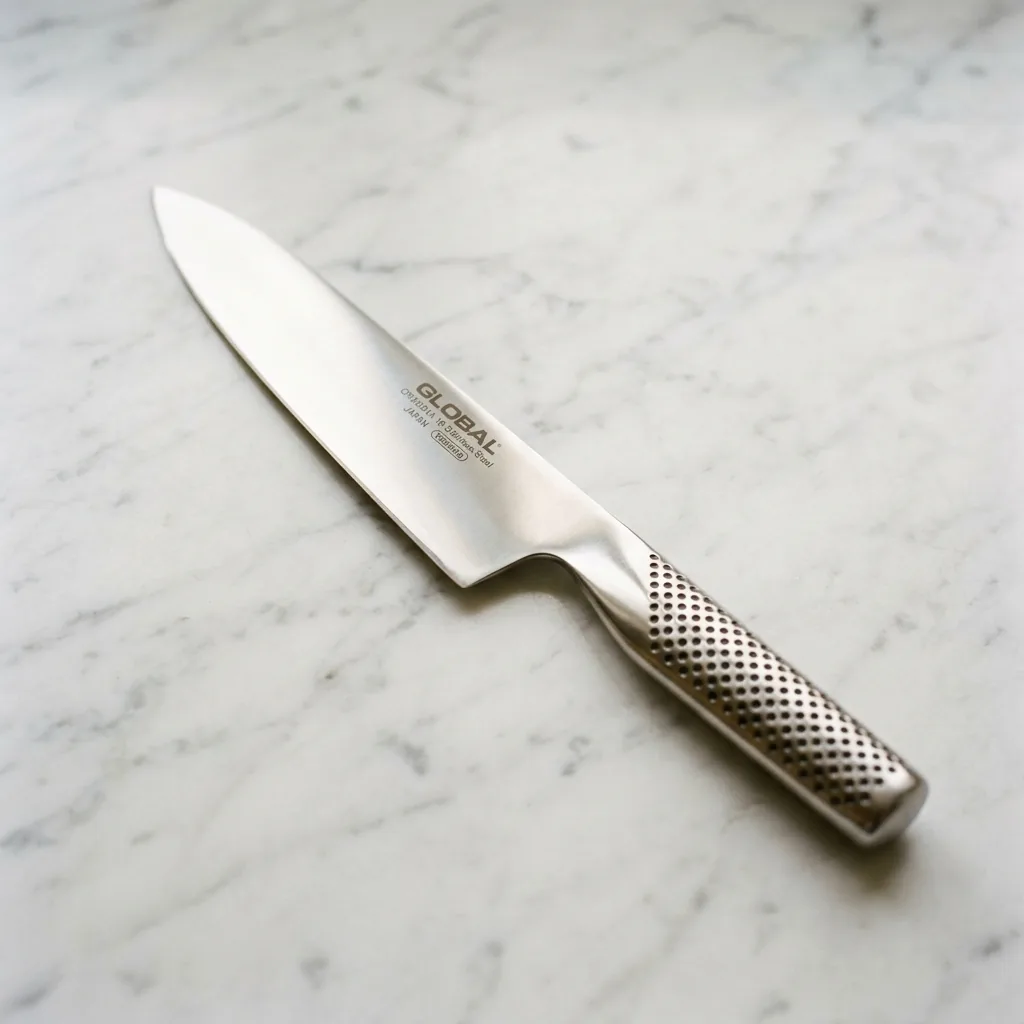
#3 Best for Serious Cooks — Misono UX10 Gyuto (210mm)
If you ask working professional chefs in Japan what gyuto they use, Misono UX10 comes up more than any other answer. Swedish Sandvik stainless steel achieves sharpness and edge retention comparable to carbon steel without the rust vulnerability. The nickel silver bolster balances the knife precisely at the pinch grip. This is a 20-year knife — buy it once, learn to sharpen it properly, and it will outlast every other tool in your kitchen.
- Steel
- Swedish Sandvik stainless, HRC 59–60
- Length
- 210mm blade (multiple lengths available)
- Made in
- Seki, Gifu
- Handle
- Full-tang Western with nickel silver bolster
- Price
- ~$220
Perfect for: Cooks who have already used a good knife and know what they want — a serious upgrade to something they'll never replace.
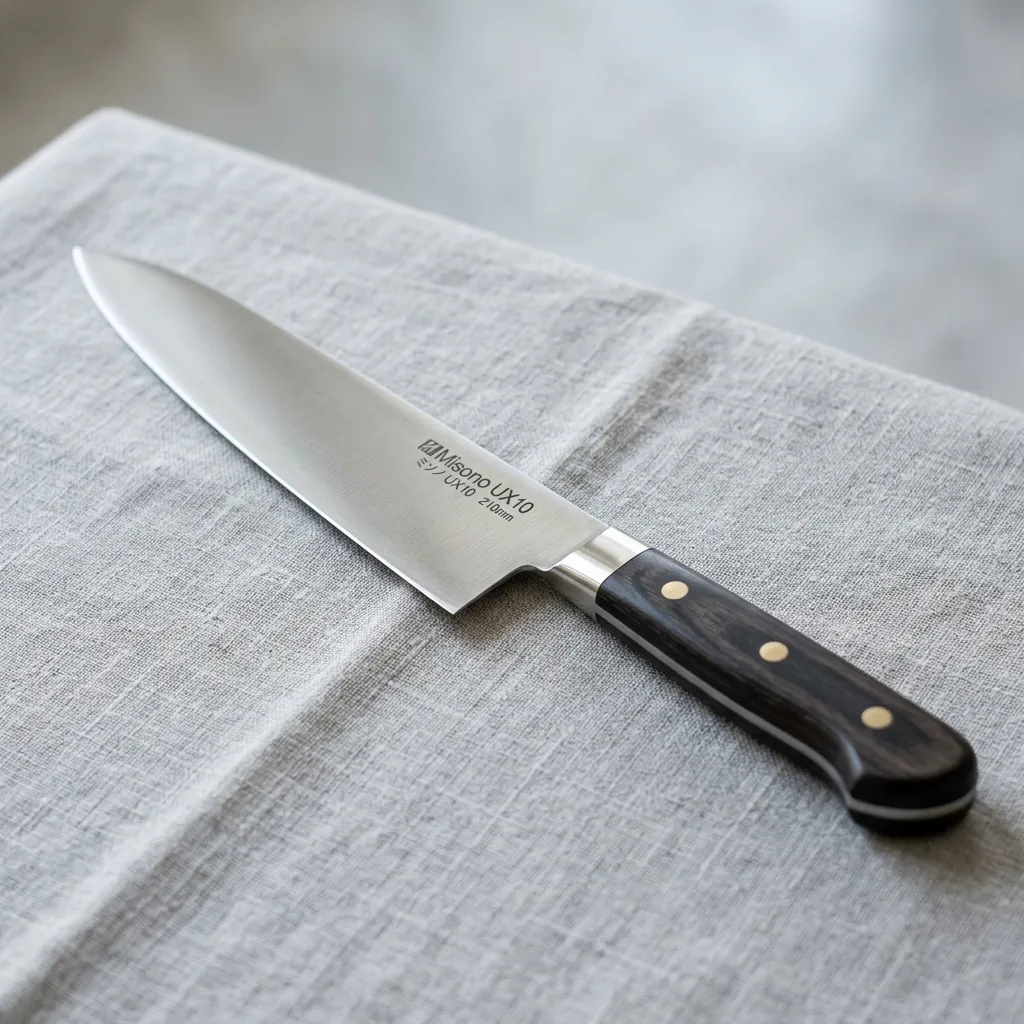
#4 Best Damascus — Yaxell Ran Gyuto (200mm)
Yaxell's Ran series takes the Damascus formula to the gyuto: 69 layers of folded steel around a VG10 core, HRC 61, with a canvas micarta handle that doesn't slip even when wet. The wave pattern across the blade isn't cosmetic — the soft outer layers protect the hard cutting core from chipping under lateral stress. This is the knife that looks like display art and cuts like a professional tool. Both the cooking and the presentation are covered.
- Steel
- VG10 core with 69-layer Damascus stainless, HRC 61
- Length
- 200mm blade (other lengths available)
- Made in
- Seki, Gifu
- Handle
- Black canvas micarta with red accent spacers at bolster
- Price
- ~$170
Perfect for: Food-enthusiast households and anyone who wants high performance and a knife that holds its own visually in any kitchen.
#5 Best Professional Grade — Masamoto AT Gyuto (210mm)
Masamoto has been making professional kitchen knives in Tokyo since 1866 — the knife supplier of choice for kaiseki and sushi restaurants across Japan for generations. The AT series uses hyper-molybdenum stainless steel at HRC 59–60, hand-finished to a razor edge in their Tokyo workshop. The pakkawood handle is full-tang and weighted for professional all-day use. This is the knife that Japanese professional cooks actually buy when they want a workhorse Western-style blade that won't let them down over a decade of daily service.
- Steel
- Hyper-molybdenum stainless (AT steel), HRC 59–60
- Length
- 210mm blade (8.3")
- Made in
- Tokyo
- Handle
- Full-tang pakkawood, Western style
- Price
- ~$150
Perfect for: Serious home cooks who want a Japanese professional-grade gyuto with a century-long pedigree, at a price below the Misono tier.
How to Maintain a Gyuto: Sharpening the Curved Tip
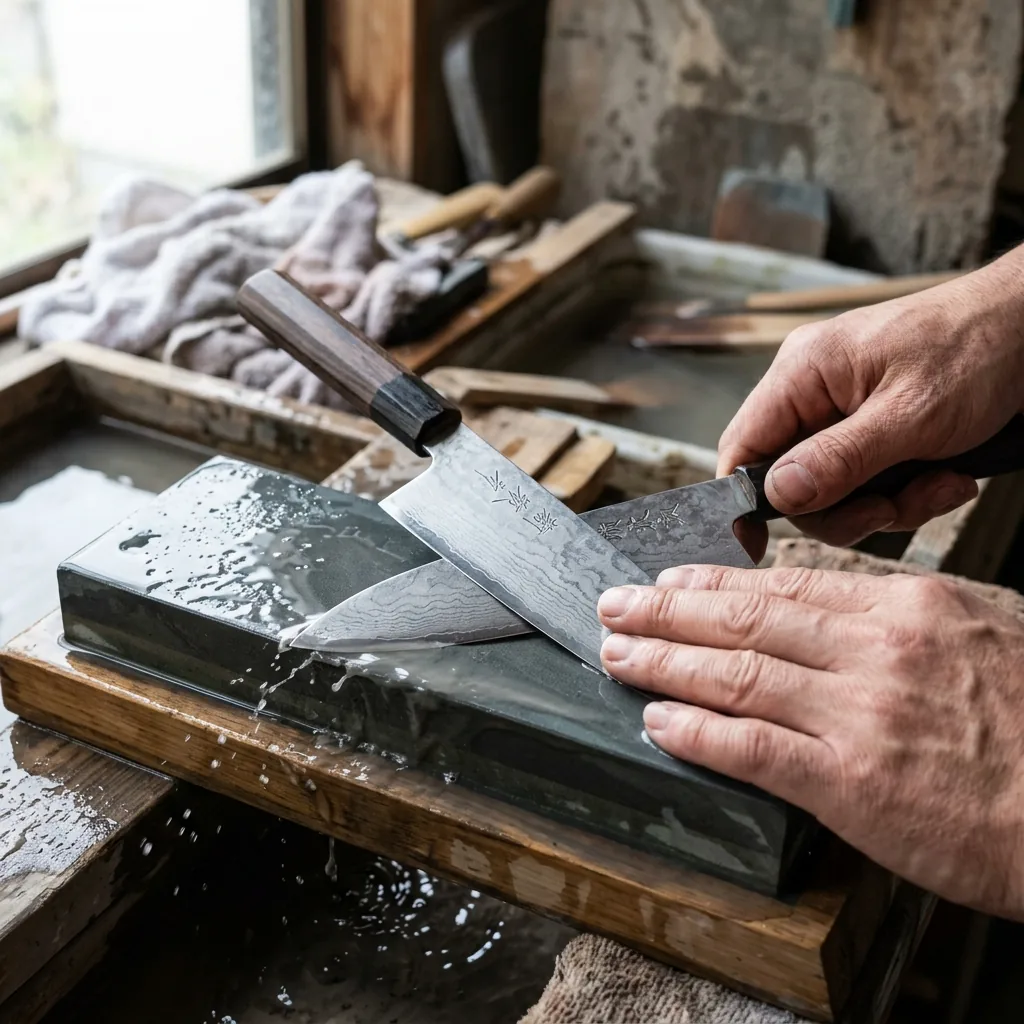
Sharpening a Gyuto: Follow the Curve
The key difference between sharpening a gyuto and a santoku is the curved belly and pointed tip. As you stroke the blade across the whetstone from heel to tip, you need to gradually raise the handle — rotating your wrist — so the curved section stays in contact with the stone at a consistent 15° angle. If you keep the handle level the whole way, only the flat middle section sharpens; the tip stays dull.
Use a 1000/3000 grit combination whetstone for regular maintenance. Sharpen at 15° (lower than a Western knife's 20°). After sharpening, strop on leather or a cork block to remove the wire edge.
Daily Care: The Professional Habit
- Wash immediately after use — especially after meat and fish. Don't leave acidic or salty food on the blade.
- Hand-dry completely before storing. Any moisture left in a block or on a magnetic strip will cause micro-oxidation over time.
- No dishwashers — the heat dulls fine edges; detergent is corrosive to high-grade steel.
- Use a ceramic honing rod between full sharpenings — a few strokes before each session keeps the edge aligned without removing metal.
FAQ
Can a gyuto fillet fish?
Yes — a gyuto handles fish fillets and pull-cut sashimi well. What it cannot do is break down whole fish through bones, which requires a deba (heavy single-bevel Japanese cleaver). For everyday fish prep including skinning and filleting boneless cuts, a 210mm gyuto is adequate. If you work with whole fish regularly, pair your gyuto with a deba.
210mm or 240mm — which should I buy?
210mm for most home cooks; 240mm if you cook at volume or have a large cutting board. The 210mm fits standard home kitchen boards and handles everything from mincing to carving. The 240mm gives you more blade to work with per stroke — better for large roasts, whole chickens, and long vegetable slices — but it needs more space to maneuver. If you're unsure, 210mm is the lower-risk starting point.
Is a gyuto better than a Western chef's knife?
For most tasks, yes — if you're willing to learn to maintain it. A Japanese gyuto at HRC 60+ holds its edge 2–3x longer than a typical German chef's knife at HRC 54–57, and when properly sharpened, takes a finer edge than any Western equivalent at the same price. The trade-off: harder steel is more brittle — don't use it on frozen food or bones, and don't use a honing steel (use ceramic). If you're prepared to sharpen on a whetstone, the gyuto outperforms Western knives at every price point.
Can I use a gyuto with the same technique as my Western chef's knife?
Yes — this is one of the gyuto's advantages over the santoku. The rocking technique you already use with a Western chef's knife transfers directly to a gyuto. The curved belly supports the same forward-rock motion. The main adjustment is sharpening angle: sharpen at 15° (not 20°) to maintain the Japanese edge geometry.
What's the difference between a gyuto and a sujihiki?
Both are Japanese slicing knives, but shaped differently. A gyuto has a curved belly and is designed for general cooking — chopping, dicing, slicing. A sujihiki (slicer) has a longer, thinner, flatter blade designed specifically for slicing boneless proteins like roast beef or sashimi in a single pull-cut stroke. A gyuto is your main knife; a sujihiki is a specialty tool you add later if you do a lot of carving.
How often do I need to sharpen a Japanese gyuto?
With regular home use (cooking 4–5 times a week), a VG10 gyuto needs full whetstone sharpening every 2–3 months. An AT steel gyuto (like the Masamoto) can go 4–6 months. Between full sharpenings, maintain the edge with a ceramic honing rod before each use — this realigns the edge without removing steel. The tomato test works here too: if your gyuto can slice a ripe tomato with zero pressure on the skin, the edge is still good.
Final Thoughts: The Gyuto Is the Most Capable Knife in Your Kitchen
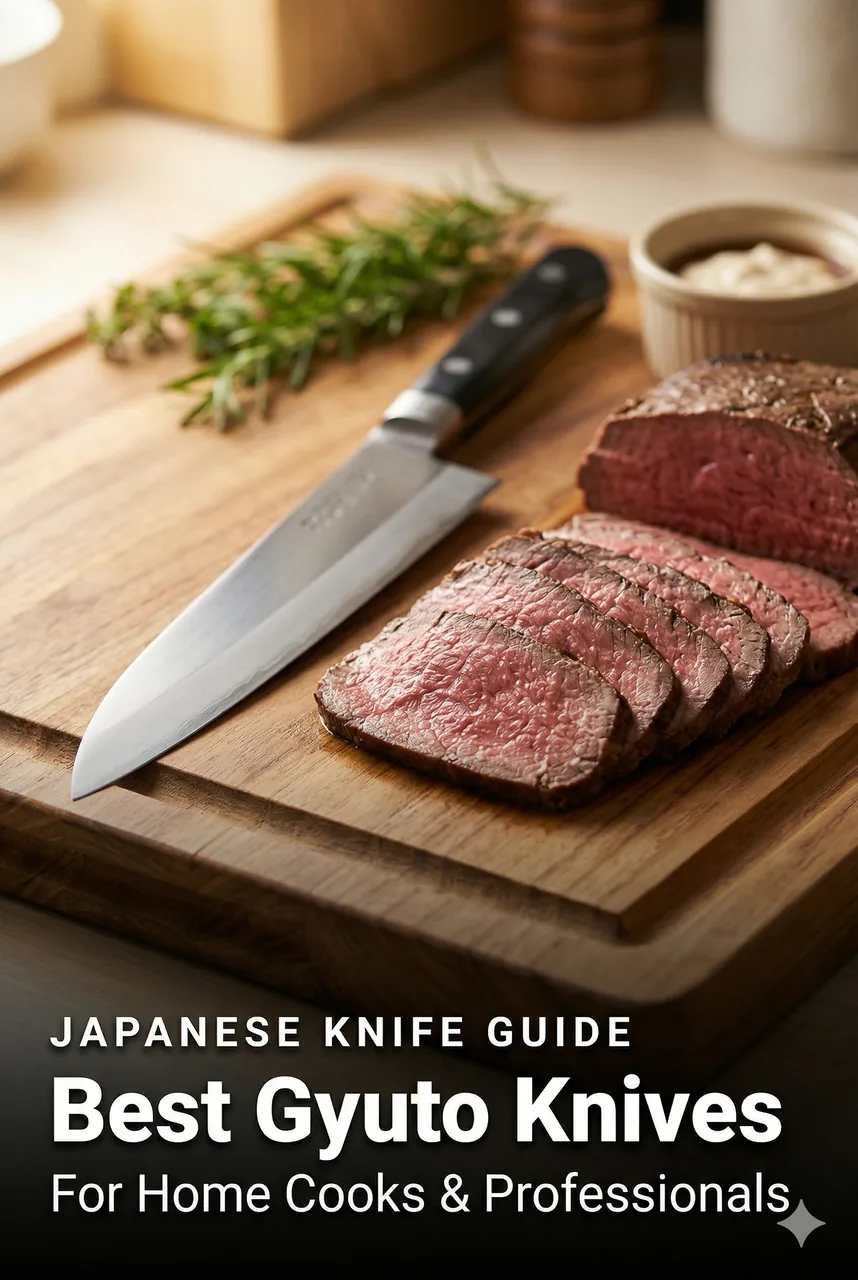
A gyuto is the one knife that can do everything — from breaking down a whole chicken to
paper-thin sashimi slices to precise herb mince.
Start with the Tojiro DP 210mm if you want professional quality at a justifiable
price. Move to Misono UX10 when you're ready to invest in the knife that working
professionals actually reach for. Choose Masamoto AT Gyuto when you want the professional-grade
craftsmanship that Tokyo's oldest knife maker has refined since 1866.
Whichever you choose: learn the whetstone. The knife matters — but the person behind it matters more.
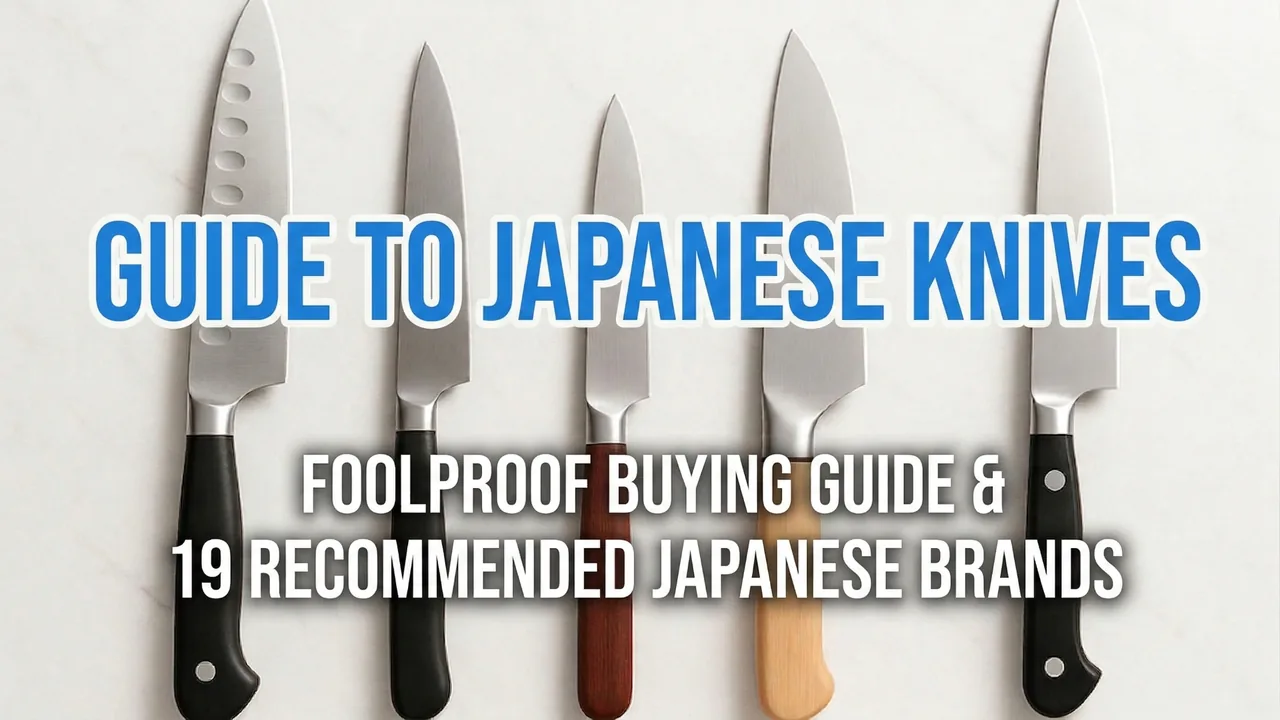
Best Japanese Santoku Knives: Top Picks for Every Budget
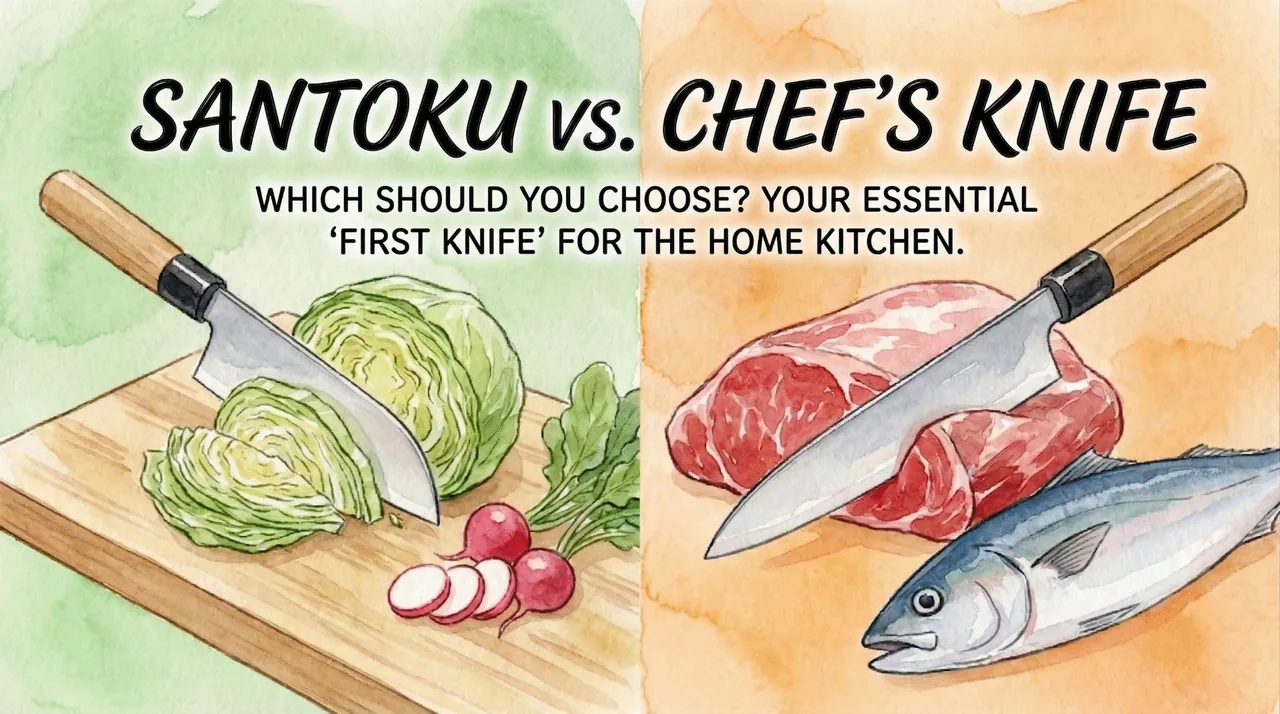
Santoku vs. Gyuto: Which Japanese Knife Should You Buy?