TSUCHINAO SHIKKI
Echizen lacquerware from Sabae, Fukui — urushi tools made for everyday life.
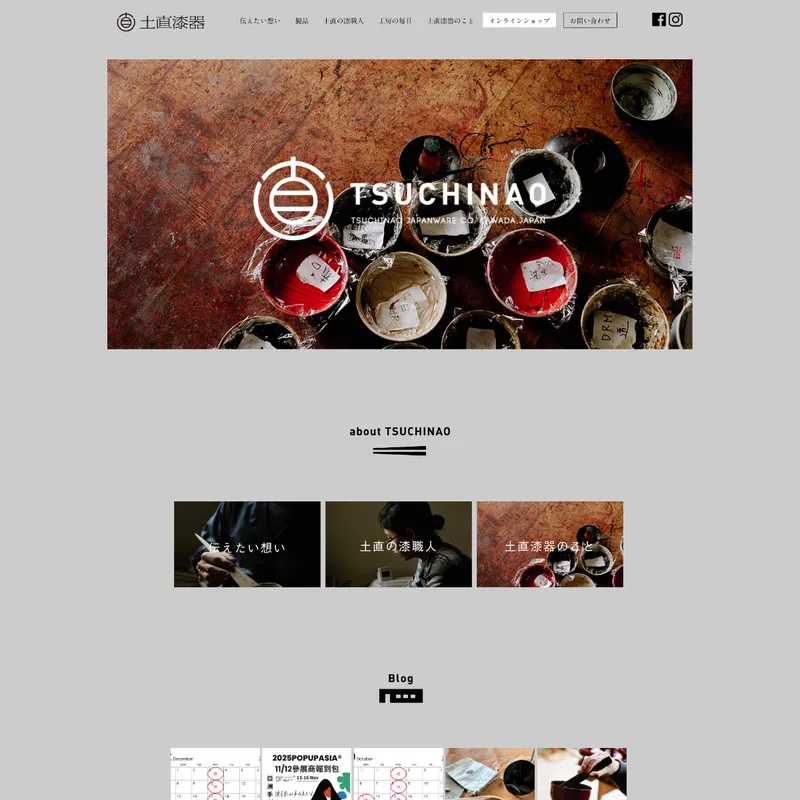
Based in Kawada (Sabae City, Fukui), Tsuchinao Shikki crafts and sells Echizen lacquerware. From bowls and chopsticks to portable tumblers, bottles, and card cases, the workshop keeps expanding what "urushi" can be in modern daily life.
Why We Love It
Lacquerware tends to be seen as "something for special occasions," but Tsuchinao Shikki excels at finding the everyday distance. From "Mainichi no Owan" (Everyday Bowl) that accompanies your first urushi piece, to the robust KENRO collection that handles even the dishwasher, and sealed tumblers and bottles — the brand expands the joy of "using urushi as it matures" into many life scenes. At the Sabae directly managed store, you can also confirm the feel, weight, and luster of each piece with your own senses.

PROFILE About the Company / Workshop
Tsuchinao Shikki is based in Kawada, Sabae City, Fukui — an area known for Echizen lacquerware, where processes such as base-making, lacquering, and decoration became highly specialized over time. At Tsuchinao Shikki, finishing processes other than the wooden base (undercoating, middle coating, top coating, and maki-e) are carried out in the same factory, enabling detailed communication as each piece is built up layer by layer.
The corporation was established in July 1980, with capital of JPY 10,000,000. It manufactures and sells lacquerware, mainly bowls and related tableware, with a 15-person team. Tsuchinao Shikki blends veteran techniques with younger ideas and design sensibility to meet modern needs while honoring tradition.
Local lore traces the origins of Echizen lacquerware back around 1,500 years to the 6th century. A lacquer artisan in Katayama is said to have repaired a crown with urushi and presented a black-lacquer bowl, leading the future Emperor Keitai (then a prince) to encourage lacquerware making in the area.
Echizen also had many lacquer tappers, and the region developed into a production area known both for elegance and toughness. Over time, techniques such as maki-e decoration were introduced, product types diversified, and "Kawada-nuri" expanded its reach — including professional-use lacquerware for inns and restaurants — eventually becoming widely loved as Echizen lacquerware.
Chairman Nao Tsuchida entered the lacquer path at age 15 in 1953, became independent in 1962, and later founded the company. He remains an active craftsman in the workshop, continuing to focus on the quality of the brushwork and layers that define urushi finish.
For many people, the gateway product is "Mainichi no Owan" (Everyday Bowl). Made with sturdy zelkova (keyaki) wood and finished in three colors (tame, black, and vermilion), it is not suitable for microwaves or dishwashers, but it can be washed with ordinary detergent and a sponge. With time, the lacquer surface "matures," adding another layer of enjoyment to everyday use.
The lineup extends from practical collections like KENRO to poetic pieces such as sake cups that reveal a full moon and crescent inside when poured. There are also series like "Kurumu," designed to sit naturally on both Japanese and Western tables. Beyond the table, Tsuchinao Shikki keeps exploring urushi in modern tools — portable tumblers and bottles, and the VYAC card case that brings craftsmanship into daily carry.
On July 5, 2020, Tsuchinao Shikki opened its first directly managed store in Sabae. The first floor is a shop displaying bowls, chopsticks, tumblers, bottles, and card cases, including store-only items and collaborations. The second floor serves as a workshop space for demonstrations, hands-on experiences, and a place for creative exchange — making the craft feel close and tangible.
A workshop where key finishing processes happen under one roof
Kawada is known for its highly specialized, division-of-labor production system in Echizen lacquerware. Tsuchinao Shikki brings together all processes other than the wooden base — undercoating, middle coating, top coating, and maki-e decoration — within the same factory, maintaining close communication among artisans.
A small team with certified expertise
The workshop has 15 staff members, including 12 craftspeople. It also has certified artisans such as a first-class skilled worker and a traditional craftsperson, alongside younger makers and women involved in production.
KENRO: durability designed for daily routines
The KENRO collection emphasizes practical durability, including suitability for dishwashers and hot water, while keeping the depth and character of urushi finish.
Urushi you can carry
Beyond tableware, the workshop develops items like mobile cases as well as portable products such as URUSHI MOBILE TUMBLER / UMBRELLA BOTTLE and the VYAC card case — bringing urushi into everyday carry.
LINKS Official Links / Social Media
- Official Website https://www.tsuchinao.com/
- Online Shop https://www.rakuten.ne.jp/gold/tsuchinao-sikki/
- Contact Form https://www.tsuchinao.com/contact
- Concept https://www.tsuchinao.com/concept
- Artisans https://www.tsuchinao.com/workers
- About / Echizen Lacquerware https://www.tsuchinao.com/about
- History https://www.tsuchinao.com/history