
What makes a home drinking session truly good isn't the brand of sake — it's the tsumami (the bites that go with it).
Convenience store snacks do the job. But occasionally, order in something made by a craftsman — a proper Japanese chinmi (delicacy) — and see what changes.
The umami that builds with each bite.
The way a single slice of karasumi makes a whole cup of sake disappear.
This guide covers the best Japanese tsumami and chinmi available by mail order, plus the sake cups, tumblers, and small dishes that turn your living room into a proper bar.
Quick Reference: Tsumami Types & Best Drink Pairings
| Type | Examples | Best With | Storage |
|---|---|---|---|
| Seafood Chinmi | Karasumi, shiokara, squid okizuke | Sake (cold or hot) | Refrigerated |
| Smoked & Charcoal-Grilled | Smoked cheese, charcoal chicken | Beer, whisky | Room temp / refrigerated |
| Canned & Jarred | Oil sardines, braised pork | Wine, beer | Room temperature |
| Dried & Nuts | Surume squid, bean snacks | Beer, shochu | Room temperature |
1. How to Choose the Right Tsumami for Your Drink
"Tsumami" covers a wide range — what works depends entirely on what you're drinking.
These pairings are the foundation for making good choices when you order.
① Sake (Cold or Hot) → Seafood & Fermented
For sake, seafood-based chinmi is the reliable pairing.
The salt and oceanic intensity of karasumi, shiokara, and dried fish draw out sake's sweetness and depth. These are bites meant to be taken slowly — a little at a time, held on the tongue.
② Beer & Highball → Fat & Smoke
The carbonation and refreshing quality of beer and highball calls for richness — fat and smoke that the bubbles can cut through.
Charcoal chicken, smoked nuts, sausage — anything bold and defined works. The stronger the flavor, the better the contrast.

③ For Gifts: Individual-Pack Assortments
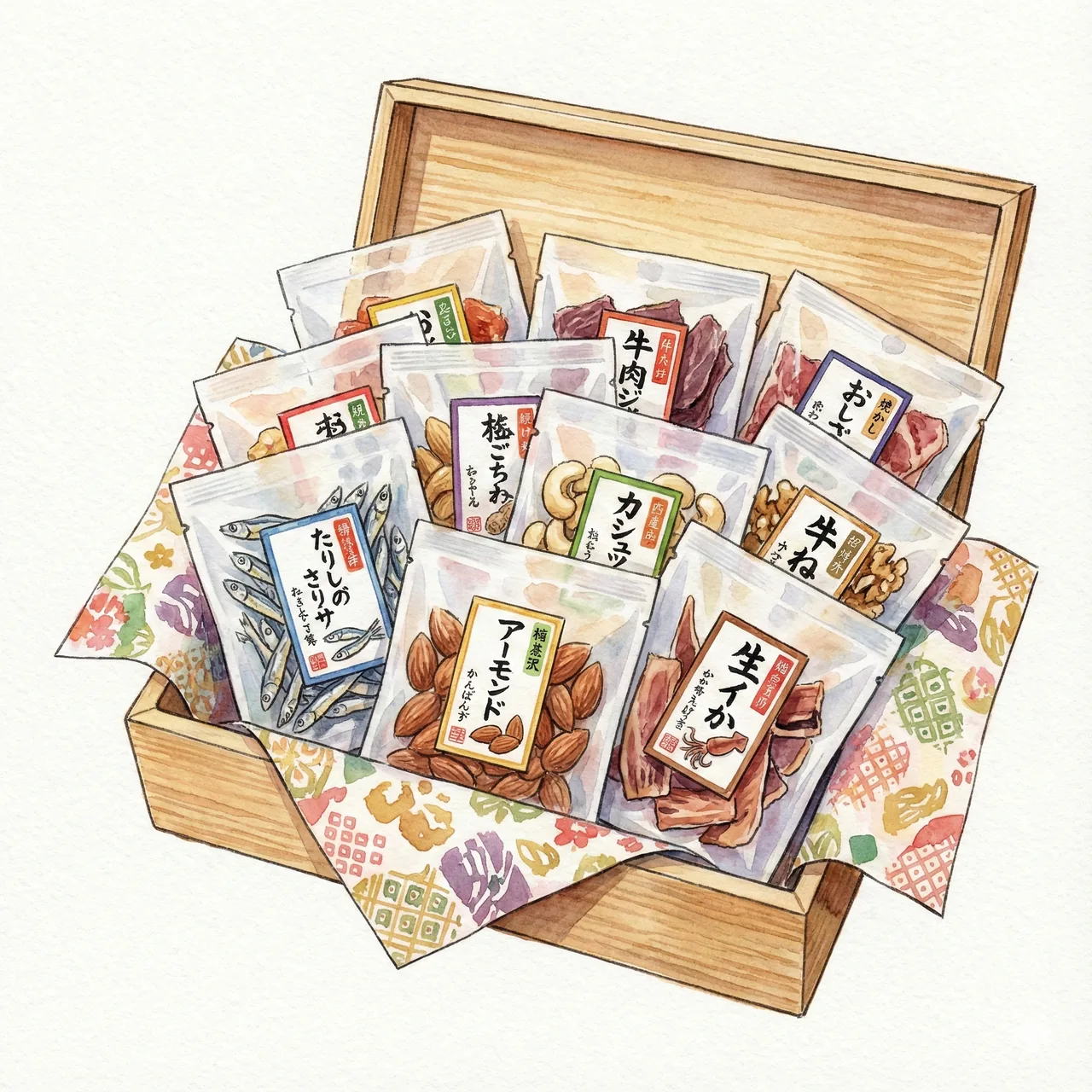
When ordering tsumami as a gift, the safest choice is a variety set — several different flavors in small individual bags, so the recipient can discover what they like without committing to a full portion of anything.
Room-temperature-stable options are especially considerate: they don't take up refrigerator space.
2. Best Japanese Snacks & Chinmi: 7 Mail-Order Picks for 2025
Selected from across Japan — the tsumami that make serious drinkers weep with gratitude.
Equally excellent as a self-reward or a gift for anyone who appreciates their drink.
#1 — Japanese Karasumi (Mullet Roe) — Sliced
The king of chinmi. One slice finishes a whole cup of sake.
Karasumi — dried, salt-cured mullet roe — has a rich, dense, almost creamy texture and a concentrated umami that builds with every bite. This is one of Japan's three great chinmi (along with konowata and uni shiokara), and it earns the title. Pre-sliced versions make the delicacy accessible without paying for the whole lobe.
Storage: Refrigerated (or room temperature depending on product)
#2 — Niigata Salmon Shiokara / Sweet Shrimp Shiokara
Silky, sweet, and savory. Just as good over hot rice as it is with sake.
Fatty salmon and sweet shrimp (ama-ebi) cured in salt-koji — a Niigata specialty with a velvety texture and a salt-sweet-umami balance that pairs brilliantly with cold sake. Pour it over steamed rice at the end of the night, and it becomes something else entirely.
Storage: Refrigerated
#3 — Smoke-Ace / Charcoal Chicken & Smoked Set (Miyazaki)
Open the package and the smoke hits you immediately. Beer doesn't stand a chance.
Miyazaki's famous charcoal-grilled chicken — jidori with the snap and smoky char of an actual charcoal fire — paired with properly smoked accompaniments. Opening this at home triggers the full izakaya experience. The definitive choice for beer and highball nights.
Storage: Refrigerated
#4 — Cream Cheese Miso-Zuke / Kazunoko Cheese
Fermentation meets fermentation. Surprisingly popular with wine drinkers too.
Rich cream cheese marinated in a proprietary miso — a Japanese-Western fusion that sounds unusual until you taste it. The salt of the miso and the depth of the cheese merge into something that works remarkably well with sake, white wine, and sparkling wine alike. The elegant packaging makes it an easy and impressive gift.
#5 — Hotaru-Ika (Firefly Squid) — Dried or Okizuke (Toyama)
Toast the dried squid with a lighter. The innards melt and the aroma explodes.
With dried hotaru-ika, the ritual is part of the experience: hold the squid near a lighter flame for a few seconds just before eating, and the innards (wata) turn molten, releasing a wave of fragrance. Paired with hot sake sipped slowly on a cold evening, this is one of Japan's great winter pleasures. No further upgrade required.
#6 — Yamagata Wagyu Corned Beef / Premium Salami
Nothing like canned corned beef. This is wagyu fat that melts on the tongue.
Wagyu and premium salami at this level are in a different category from the canned versions you know. The fat carries sweetness, the texture is dense and satisfying — ideal with red wine or whisky on the rocks. Let it sit at room temperature briefly before serving, and the fat opens up completely.
#7 — Gogyofuku (Kobe) / Chinmi Assortment "Ippai no Chingoku"
The joy of choosing. A Kobe chinmi gift set with a twist.
Small individual bags — "black pepper cheese crackers," "long-aged salami," unusual takes on classic formats — packed in a set that makes every evening slightly different. The packaging is polished enough for year-end gifts and thank-you presents. The reliable pick when you want something thoughtful and unexpected.
3. Upgrade Your Tsumami: Sake Cups, Tumblers & Small Plates
Once you have great tsumami, the vessel matters.
The difference between eating from a bag and serving on a proper small plate is the difference between having a snack and having a drinking session.
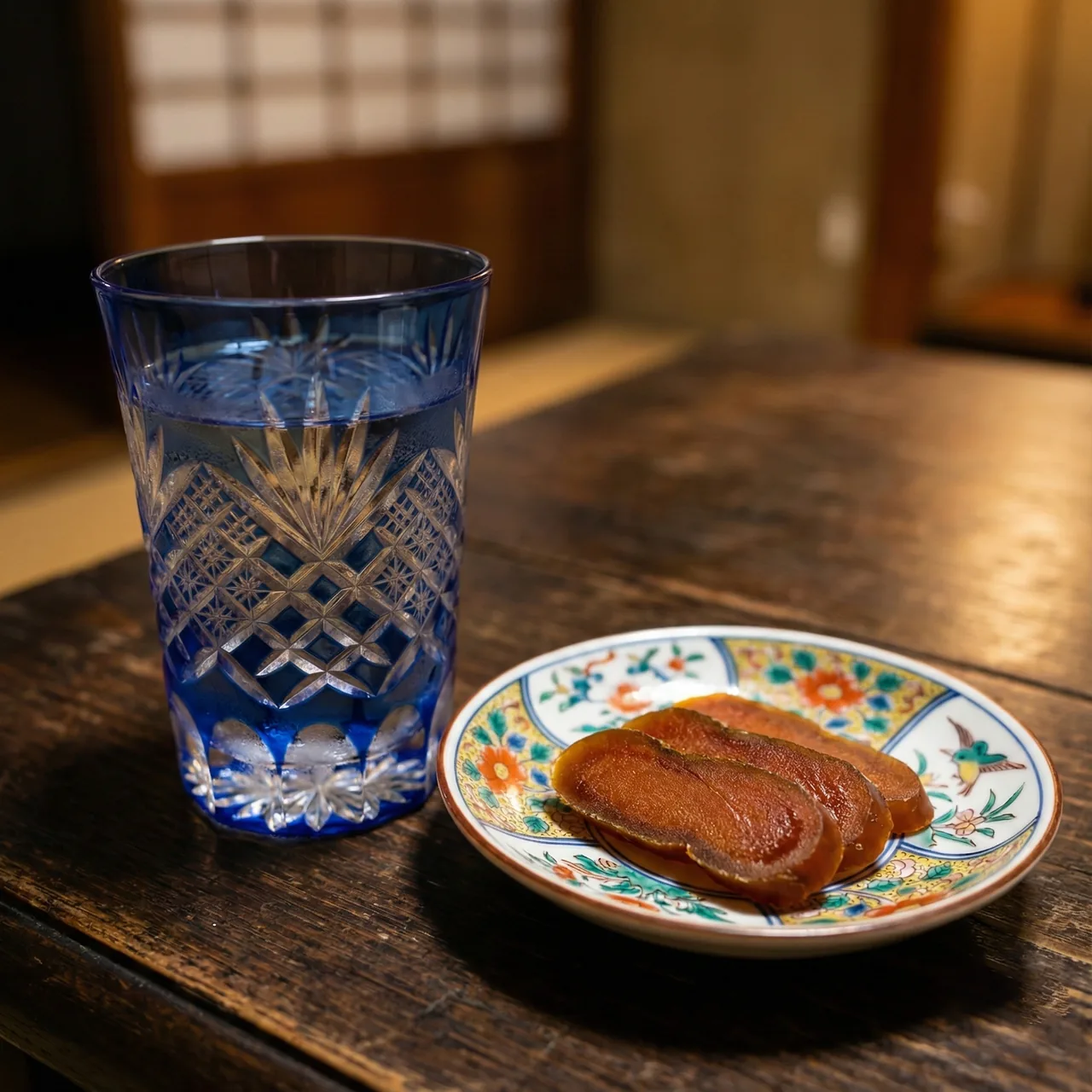
Sake × Chinmi → Kiriko Cut Glass & Small Plates (Mamezara)
Cold sake served in a beautiful kiriko glass. Karasumi or shiokara placed on a small mamezara (豆皿) — a coin-sized ceramic dish from Kutani-yaki or Arita-yaki.
The visual richness sharpens the palate. Small plates from Kutani or Arita are also collectable in their own right — each meal becomes a small ceremony.
Related: Edo Kiriko vs. Satsuma Kiriko — Japan's Cut Glass Brands, Compared
Beer × Smoked → Tin Tumbler
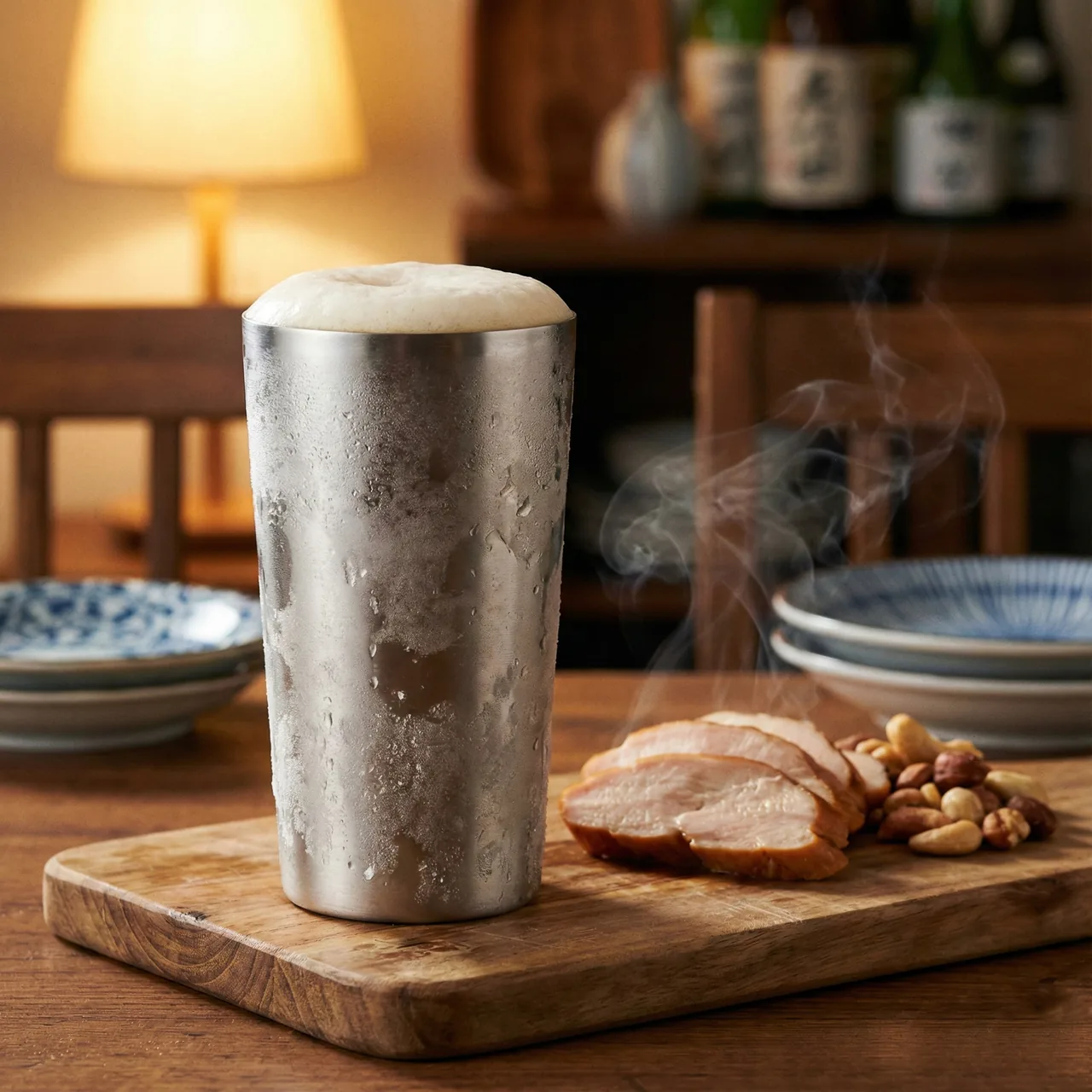
Tin's ionic properties smooth the flavor of beer while keeping it ice-cold longer than a glass.
Rich, fatty smoked snacks and charcoal chicken become more refreshing when washed down with beer from a tin tumbler — the cold cuts through the fat cleanly. The combination works far better than it sounds.
Related: Tin & Titanium Tumblers — 6 Best Picks for Dramatically Better Beer
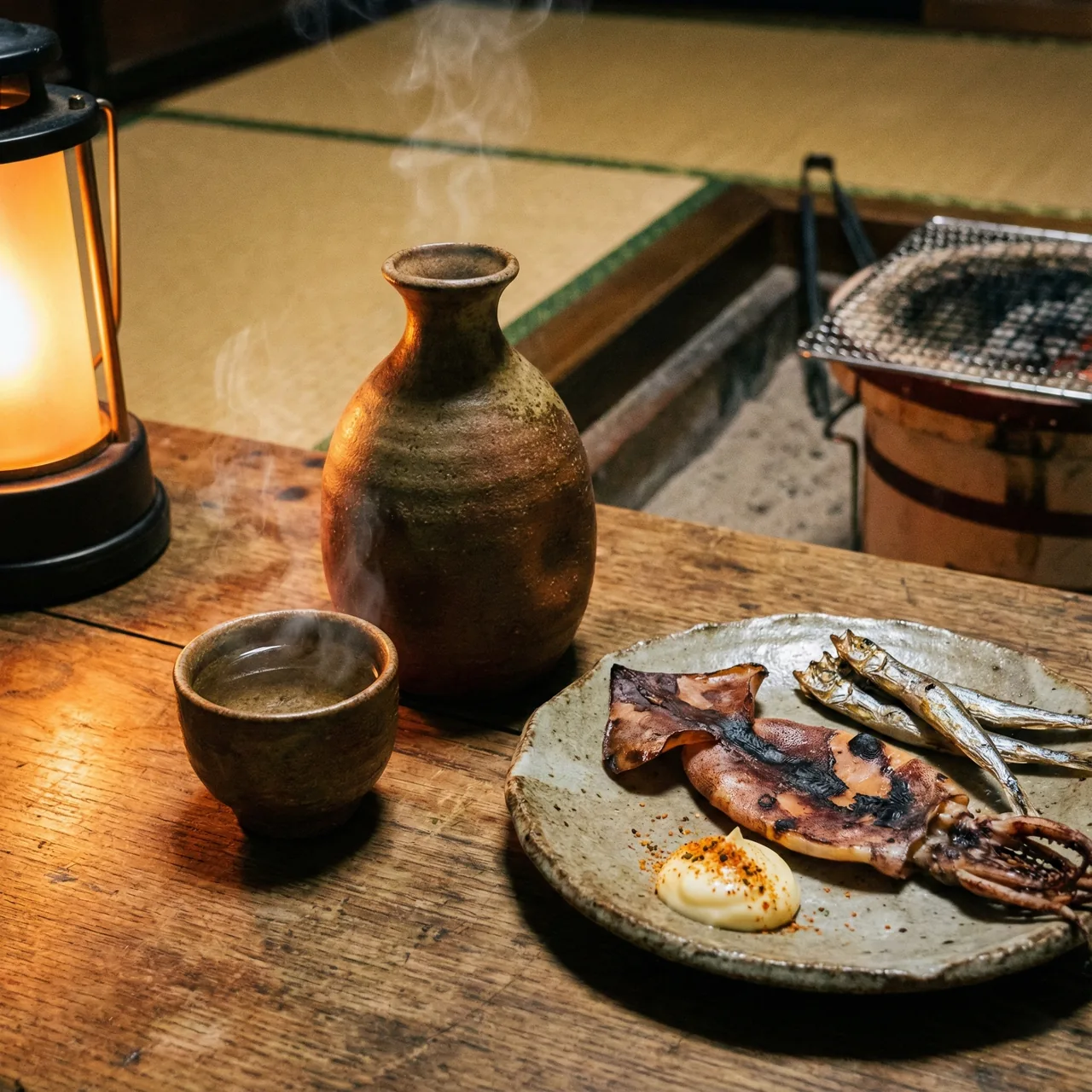
Hot Sake × Dried Fish → Guinomi Cup & Tokkuri Carafe
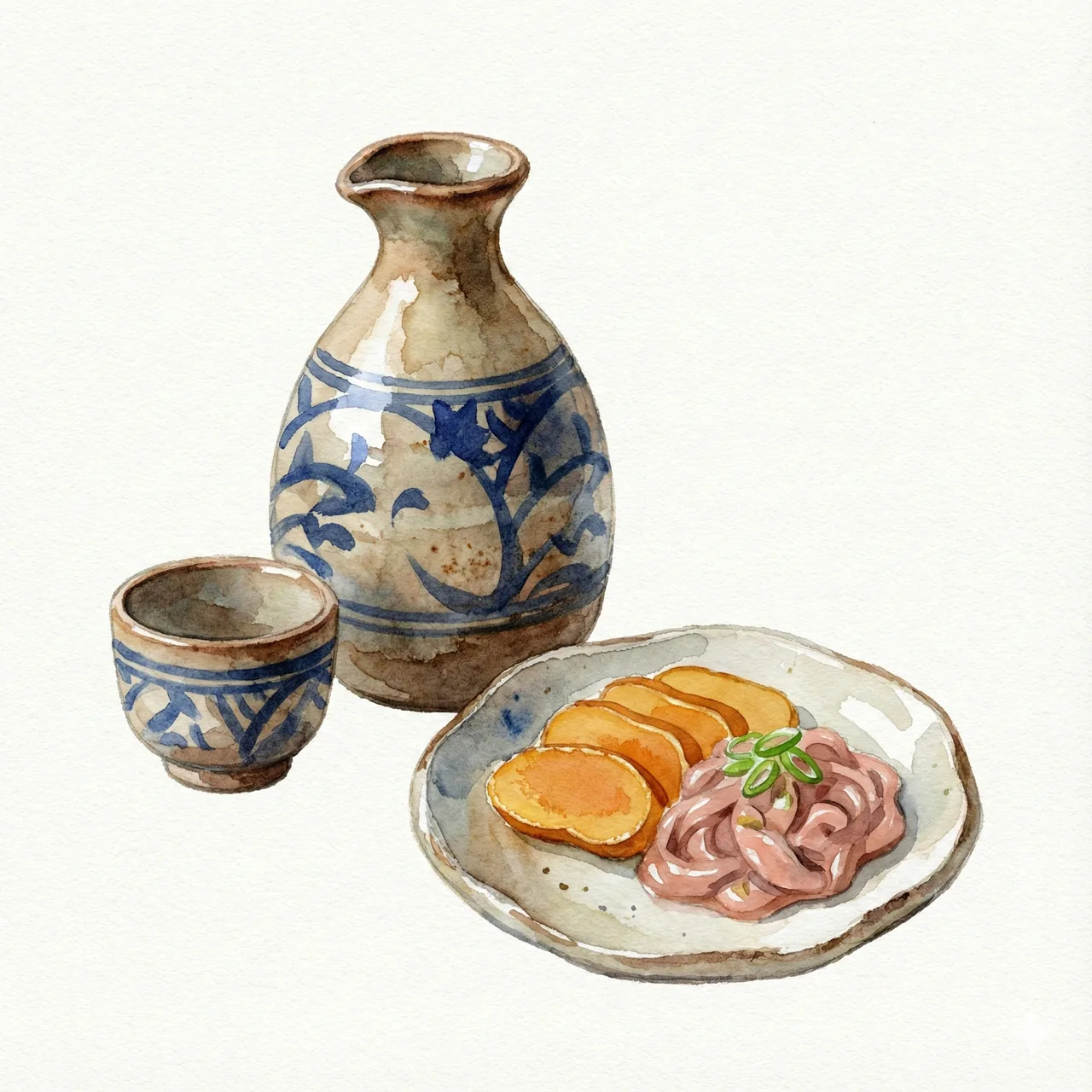
On a cold night, heat sake slowly in a water bath and pour into a ceramic guinomi (ぐい呑み).
An earthenware cup with a rough, natural texture brings out the simple depth of dried fish and surume. The lip feel of a pottery cup is something glassware simply cannot replicate — warm, organic, completely right.
Related: Japanese Sake & Beer Vessels — 10 Best Japanese-Made Picks for 2025
4. Frequently Asked Questions
How long do these products keep?
Shelf life varies significantly. Dried and smoked products often keep 1–3 months from production. Fresh chinmi like shiokara and okizuke may be refrigerator-stable for only 1–2 weeks. Always check the product listing for specific dates before ordering.
Are any of these shelf-stable at room temperature?
Yes — canned products, some jarred items, and retort-pouch charcoal chicken are room-temperature stable. These are especially practical choices: they don't require refrigerator space, making them easier to receive as gifts and simpler to stock for yourself.
What if I'm buying for someone who doesn't drink alcohol?
Choose tsumami that double as "gohan no tomo" (rice accompaniments). Shiokara, tsukudani (sweet simmered seafood), kakuni (braised pork), and corned beef all work beautifully over hot rice — making them enjoyable for non-drinkers and children alike, not just the person with a glass in hand.
What's the difference between "chinmi" and "tsumami"?
There's no strict boundary, but chinmi typically refers to rare, specially processed delicacies — karasumi (dried mullet roe), konowata (sea cucumber innards), uni shiokara — items with rarity and artisanal depth.
Tsumami is the broader, everyday word for anything you eat alongside a drink.
When ordering online, both terms are often used interchangeably — but chinmi tends to carry a higher sense of occasion and makes a stronger gift statement.
How do I make home drinking feel more like a proper bar?
Start with the vessel. Swapping a plastic cup for a tin tumbler or kiriko glass immediately changes the atmosphere — not just the flavor.
Then plate the tsumami. Serving from a bag is convenient; arranging a small portion on a mamezara or small ceramic plate is the difference between snacking and having a real drinking session. The visual shift is immediate and its effect on enjoyment is surprisingly large.
5. Final Thoughts: Tonight, Drink It the Right Way
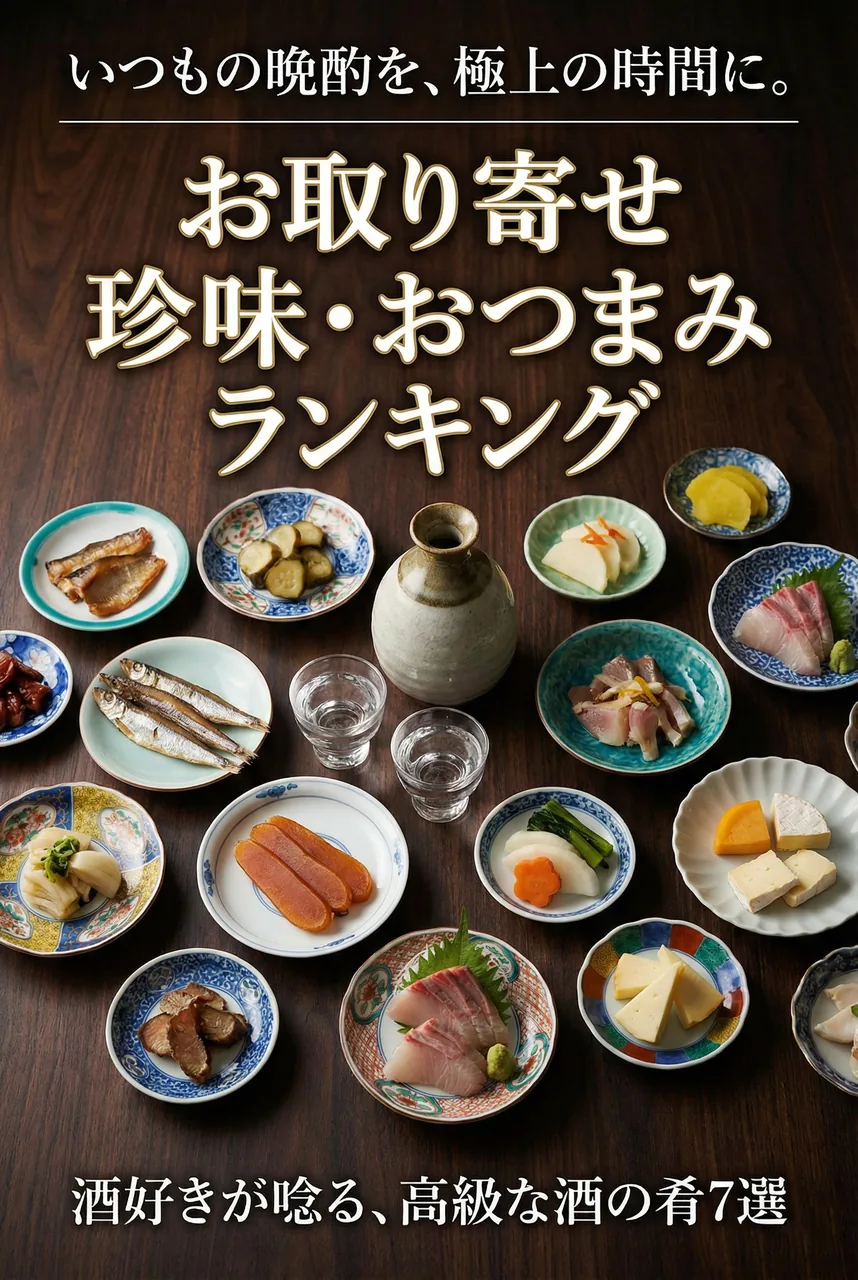
At the end of a long day — phone down, drink in hand, a small plate of something extraordinary in front of you.
That quiet hour is one of the genuine pleasures available to adults.
With the right tsumami and a cup worth using, your living room becomes the best bar in the city.
What are you drinking tonight?

Japanese Sake Temperature Guide: Kan (Hot) vs. Hiya (Cold)

Japanese Craft Beer: Best Regional Breweries & Mail-Order Picks