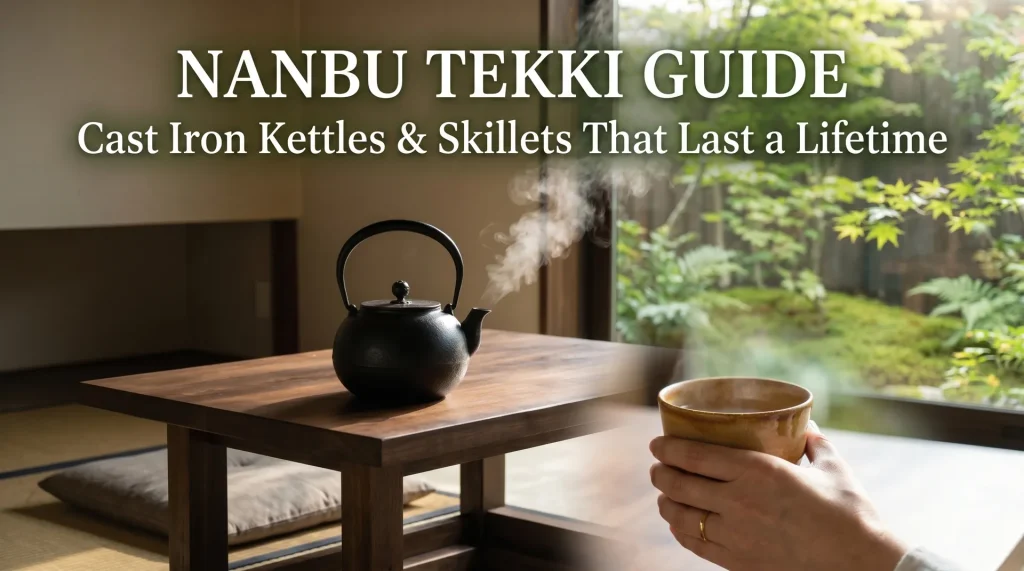
Nanbu tekki is the cast ironware of Iwate Prefecture in northern Japan — teapots, kettles, frying
pans and casseroles, sand-cast one at a time in Morioka and Oshu, using methods largely unchanged for some 400
years. It is what most Japanese cast iron cookware sold abroad actually is.
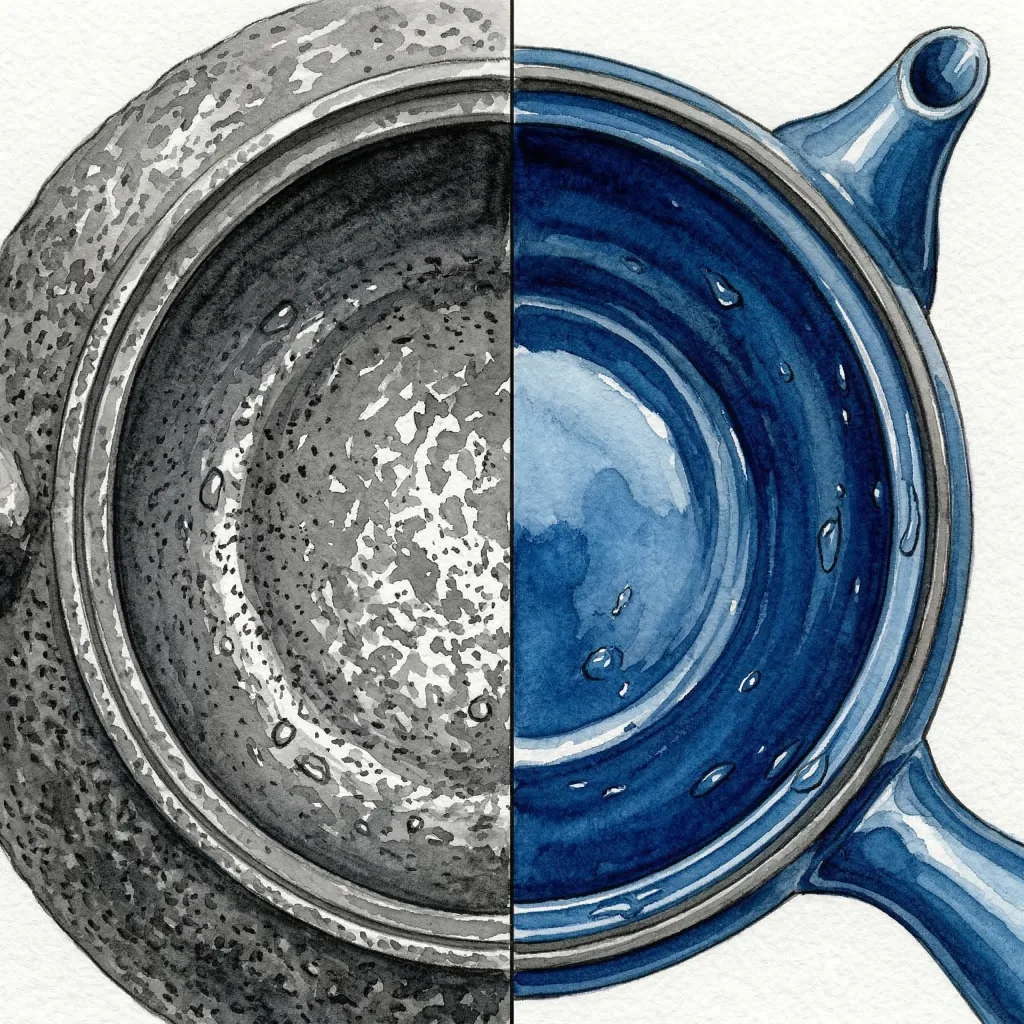
"What's the difference between a tetsubin kettle and a cast iron teapot?" The lining. A
tetsubin is bare iron inside and goes on the heat to boil water — that exposed iron is what softens
the water and releases trace iron into it. A cast iron teapot is enamel-lined and only holds
already-boiled water while tea steeps. Same foundries, same craft, different jobs.
"It's good for iron intake, but the maintenance sounds like a headache…" In practice the whole
routine is: empty it, and dry it with residual heat. That's it. Never scrub the inside, never store it wet.
This guide covers everything: the history and the health benefits, how to choose the right piece, and the simple
care that turns nanbu tekki into a companion for life.
Quick Reference: 5 Recommended Nanbu Tekki Pieces
| Product | Signature Feature | Best For | Details |
|---|---|---|---|
| OIGEN Tetsubin Kettle | Bare iron interior, classic "arare" pattern | Boiling water, getting a natural iron supplement | Details↓ |
| IWACHU Iron Teapot | Enamel interior, rust-proof, gold/black design | Steeping and serving tea at the table | Details↓ |
| OIGEN Sukiyaki Pan | Thick cast iron with wooden lid | Searing meat, sukiyaki, and crispy gyoza | Details↓ |
| IWACHU 6.5" Skillet | Compact and highly versatile | Frying eggs, small sides, stove-to-table use | Details↓ |
| IWACHU Tamagoyaki Pan | Rectangular shape, excellent heat retention | Making perfect, fluffy Japanese rolled omelettes | Details↓ |
1. What Is Nanbu Tekki? The Roots of a 400-Year Craft
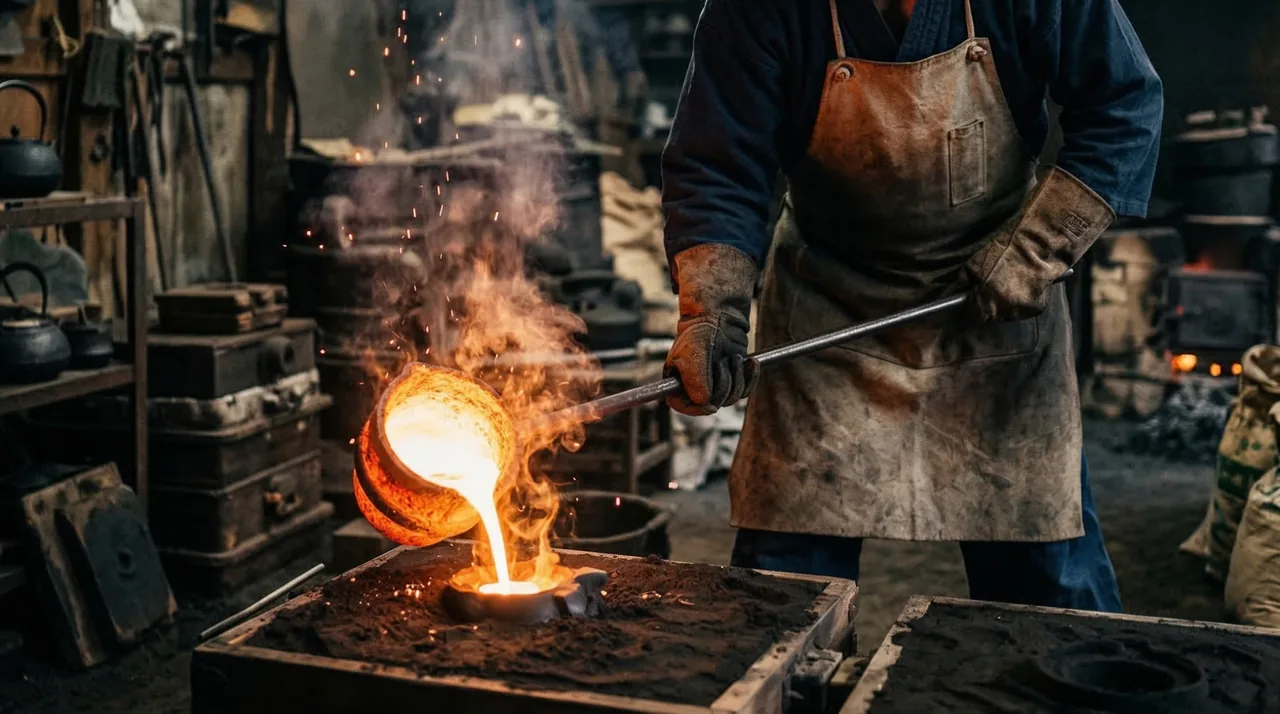
Nanbu Tekki is the collective name for cast ironware produced in two cities in Iwate Prefecture: Morioka and Oshu (Mizusawa). In 1975, it became one of the first crafts designated as a Japanese Traditional Craft by the national government.
The two cities trace their origins separately.
Morioka's ironware tradition began when the lord of the Nanbu domain invited a master kettle-maker from Kyoto to
produce tea ceremony kettles during the Edo period. The Oshu (Mizusawa) tradition, by contrast, dates to the late
Heian period, when the Oshu Fujiwara clan brought foundry craftsmen from Omi Province (present-day Shiga) — and
developed primarily around everyday tools and agricultural implements.
Today, these two traditions have merged under the single brand of "Nanbu Tekki," producing a wide range of modern pieces: tetsubin kettles, teapots, frying pans, Dutch ovens, wind chimes, and more.
2. 3 Reasons People Choose Nanbu Tekki
Why do people choose heavy cast iron that requires some care, when lighter alternatives exist? Because iron offers benefits that no other material can replicate.
① Softer Water — and Iron Naturally Added
Boiling water in an uncoated Nanbu Tekki tetsubin removes residual chlorine and makes the water noticeably softer
and rounder in taste. Additionally, a small amount of ferrous iron (二価鉄, divalent iron) — the
form most readily absorbed by the body — dissolves into the water.
Boiling your morning hot water, tea, or miso soup in a Nanbu Tekki piece is one of the simplest ways to address
iron deficiency, which is common among modern adults.
② Exceptional Heat Retention — Better Cooking Results
Cast iron is thick and dense — once it absorbs heat, it holds it. When you add cold meat or vegetables to a hot
cast iron pan, the surface temperature barely drops. That means ingredients are seared rather than steamed —
surfaces caramelise, juices stay inside.
For achieving crisp outside, juicy inside results, nothing competes with cast iron.
③ A Lifelong Tool That Grows with Use
A non-stick Teflon pan looks its best the day you buy it and gradually degrades. Nanbu Tekki is the opposite.
With continued use, iron pans become seasoned — darkening with absorbed oil and increasingly non-stick. Tetsubin
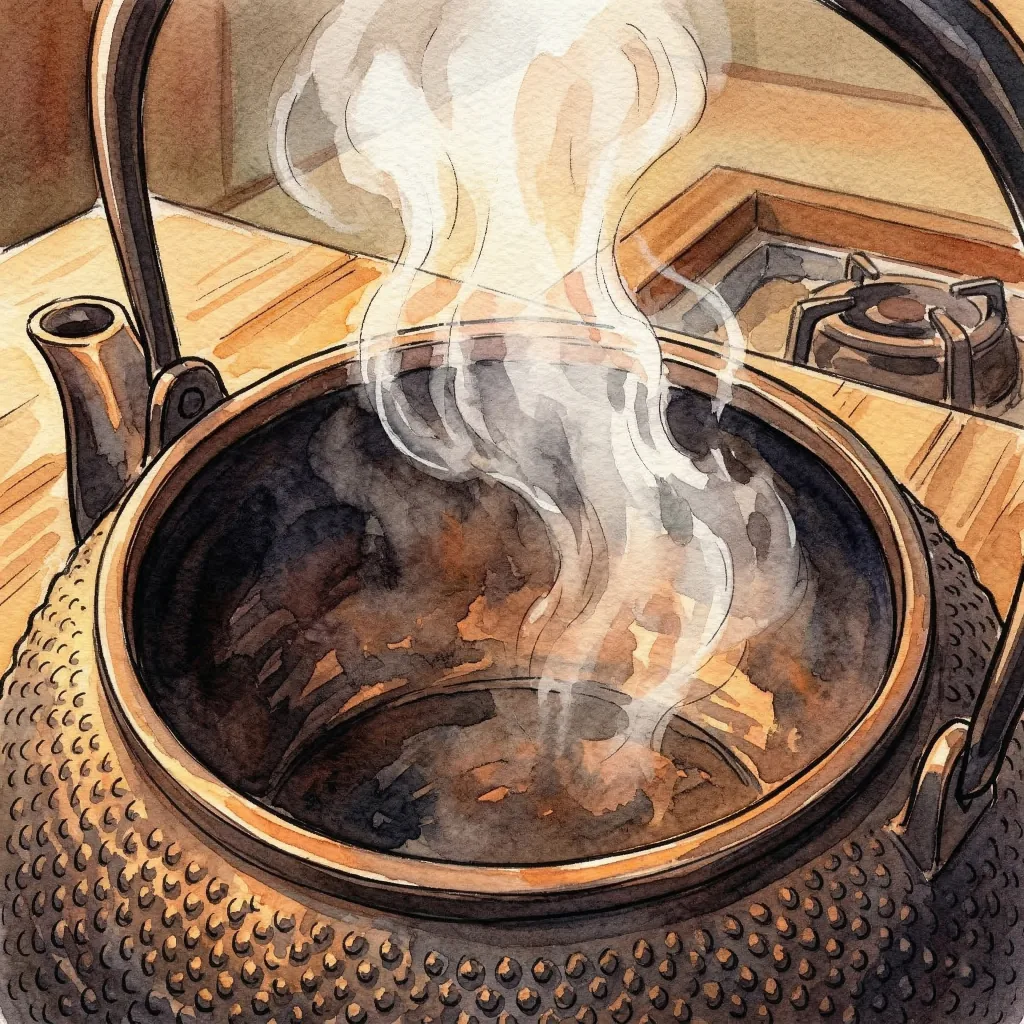
kettles develop a white mineral layer (yumoku) on the interior that actually protects against rust over time.
Properly cared for, these pieces can pass from parent to child, from child to grandchild — the ultimate
sustainable tool.
3. Choosing the Right Piece: Kettle, Teapot, or Frying Pan?
The most common confusion when buying Nanbu Tekki is the difference between a tetsubin (kettle) and a tetsu kyusu (cast iron teapot). Choose based on what you actually want to do.
Tetsubin (For Boiling Water)
Purpose: boiling water / absorbing iron
Used directly on a flame or IH hob. The interior is bare iron — this is where the iron supplement benefit comes
from. Common sizes are 1–1.5 litres, though more manageable 0.8-litre sizes are now popular.
Note: A tetsubin is not for steeping tea directly — it is a
water-boiling vessel only.
Ready to pick one? We compare
the 7 best Japanese cast iron teapot and
kettle brands — OIGEN, Iwachu, Suzuki Morihisa and more — in a separate guide.
Japanese Tea Gift Sets: Gyokuro, Uji Matcha & How to Choose
Tetsu Kyusu — Cast Iron Teapot (For Steeping Tea)
Purpose: keeping tea warm / table presentation
Used for steeping tea, the interior is typically coated with enamel (a glass-like glaze) to
prevent tea staining.
It cannot go on a flame (it will crack). Because the iron is coated, there is no iron supplement
effect. In return: no rust risk, very easy to clean, and excellent heat retention for keeping tea
warm at the table.
Cast Iron Frying Pan & Dutch Oven (For Cooking)
Cooking vessels are where Nanbu Tekki's heat retention really shows. Thicker and heavier than stamped iron skillets, their temperature holds steadily when cold ingredients are added — ideal for searing meat and producing restaurant-quality results at home. Stylish grill pans that go from stove to table are also popular.
Tsubame Camp Gear: Titanium & Stainless Cookware from Japan's Metalcraft Capital
4. Simple Care: How to Look After Nanbu Tekki
"Iron rusts — sounds like trouble." The rules are actually very simple.
For a Tetsubin: "Empty It and Dry with Residual Heat"
Leaving water sitting in a tetsubin is the single biggest mistake. After use, pour out the remaining water
immediately, remove the lid, and let the tetsubin's own residual heat evaporate any moisture from the interior.
Never touch the interior with bare hands or scrub it with a brush — the mineral coating that protects against rust
builds up naturally over time, and you want to preserve it.
If yours has already rusted, that is fixable — see our
tetsubin care and rust removal guide.
For Frying Pans & Pots: "No Soap — Season with Oil"
Dish soap strips the oil film that gives cast iron its non-stick character. After cooking, rinse with hot water and scrub with a stiff brush while the pan is still warm. Dry completely over heat on the stove, then wipe a thin layer of cooking oil over the surface with a paper towel. That's it.
Tsubame Camp Gear: Titanium & Stainless Cookware from Japan's Metalcraft Capital
5. 5 Recommended Nanbu Tekki Pieces for Your Kitchen
From traditional water kettles to modern frying pans, here are five of the best Nanbu Tekki cast iron pieces available from Iwate's top historic studios: OIGEN and IWACHU.
OIGEN Tetsubin Kettle Maromi Arare — The Traditional Iron Kettle
Founded in 1852, OIGEN produces some of the finest traditional cast ironware in Japan. This classic tetsubin features the iconic "arare" (hailstone) pattern that increases surface area for better heat retention. Crucially, the interior is bare iron—meaning boiling water in this kettle will naturally infuse it with highly bioavailable iron and create a softer, rounder taste for your tea.
- Maker
- OIGEN (founded 1852, Oshu City)
- Signature
- Bare iron interior for water softening and iron supplement
- Best for
- Boiling daily water; growing a traditional iron kettle over decades
IWACHU Japanese Iron Teapot — Beautiful & Rust-Proof
IWACHU is Morioka's largest Nanbu Tekki producer and the studio responsible for making cast iron teapots famous worldwide. Unlike a tetsubin, this teapot features an enamel-coated interior. While it won't provide an iron supplement, it is completely rust-proof, easy to wash, and holds heat exceptionally well, keeping your tea warm at the table for a long time.
- Maker
- IWACHU (founded 1902, Morioka)
- Signature
- Enamel-coated interior; stunning gold and black exterior
- Best for
- Steeping tea; beautiful table presentation without rust worries
OIGEN Sukiyaki & Dumplings Iron Pan — Heavy-Duty Searing
A thick, heavy-walled cast iron pan that excels at maintaining a steady temperature even when cold ingredients are added. Originally designed for making Japanese sukiyaki, its high sides and accompanying wooden lid make it perfect for searing thick steaks, braising, or steaming crispy-bottomed gyoza dumplings. The bare iron surface becomes increasingly non-stick as you season it over time.
- Maker
- OIGEN
- Signature
- Thick cast iron walls; traditional wooden drop-lid included
- Best for
- Searing meat, sukiyaki, and growing a natural non-stick surface
IWACHU Cast Iron Pan (6.5 inch) — The Versatile Daily Skillet
A compact skillet that showcases the smooth casting quality of IWACHU. At 6.5 inches, it is the perfect size for frying a couple of eggs, sautéing side dishes, or making a single-serving pancake. Because it's cast iron, you can take it straight from the stovetop to the oven, and its beautiful finish means it looks great served directly on the dining table.
- Maker
- IWACHU
- Signature
- Compact size; exceptional heat retention
- Best for
- Frying eggs, small sides; taking directly from stove to table
IWACHU Tamagoyaki Omelette Pan — For Perfect Rolled Eggs
Making a fluffy Japanese rolled omelette (tamagoyaki) requires steady, even heat so the egg cooks gently without browning too quickly. This rectangular cast iron pan from IWACHU provides exactly that. The sturdy wooden handle stays cool to the touch, and the sloped front edge makes it easy to roll and flip the egg layers like a professional chef.
- Maker
- IWACHU
- Signature
- Rectangular shape; stays-cool wooden handle
- Best for
- Making perfectly fluffy, even Japanese rolled omelettes
6. Frequently Asked Questions
Does Nanbu Tekki work on IH induction cooktops?
Generally yes — as long as the base is flat and thick enough to trigger the sensor.
Small-based pieces like teapots may not register. Also, IH heats rapidly — always start at the lowest setting
and increase gradually. Jumping straight to high heat can warp or crack the iron. Always confirm "IH-compatible"
in the product description before buying.
Isn't it too heavy to use?
Yes, it's heavy — but the weight is why it works so well.
The thickness that makes cast iron heavy is precisely what stores heat and makes water softer and food better.
For frying pans, cast iron isn't suited to tossing techniques — it excels at placing on the hob and letting it
work quietly. Think searing, not stir-frying.
If I let it rust, is it ruined?
Not at all. Rust can be dealt with.
If the water in a tetsubin turns red, boil green tea leaves in it (tannin cooking) — the tannic acid converts
red rust into stable black rust. For frying pans, scrub the rust away with a stiff brush, re-season with oil,
and it's back in service.
Is the rust in the water harmful?
No — it's completely harmless.
The red discolouration in tetsubin water is simply oxidised iron — safe to drink. However, as rust progresses,
the water may taste metallic and become visually unappealing. If the taste changes, perform the tannin cooking
treatment described above.
Could I get too much iron from using it daily?
No — the amount that dissolves through normal daily use is far below any concern threshold.
The ferrous iron that leaches from Nanbu Tekki is highly bioavailable, but the quantity per use is tiny. Most
modern adults are deficient in iron, and this is actually an ideal way to address that gradually through habit.
(If you've been advised by a doctor to restrict iron intake, check with them first.)
What are the absolute rules — what should I never do?
Two things: "don't touch/scrub the interior" and "don't leave water or food sitting in it."
Scrubbing the inside of a tetsubin with a brush or detergent removes the mineral coating that builds up
naturally to protect against rust. Leaving moisture inside after use leads to rapid rusting.
The one rule to internalise: "Empty it immediately, and dry with residual heat."
Which brand does Shohei Ohtani use?
Oitomi (及富) in Oshu City, Iwate — specifically the vivid blue "Miyabi (Blue)" tetsubin.
After Ohtani was seen with the piece, orders flooded in from around the world.
See Oitomi's studio page and
representative products →
Final Thoughts: The Iron Companion That Grows with You
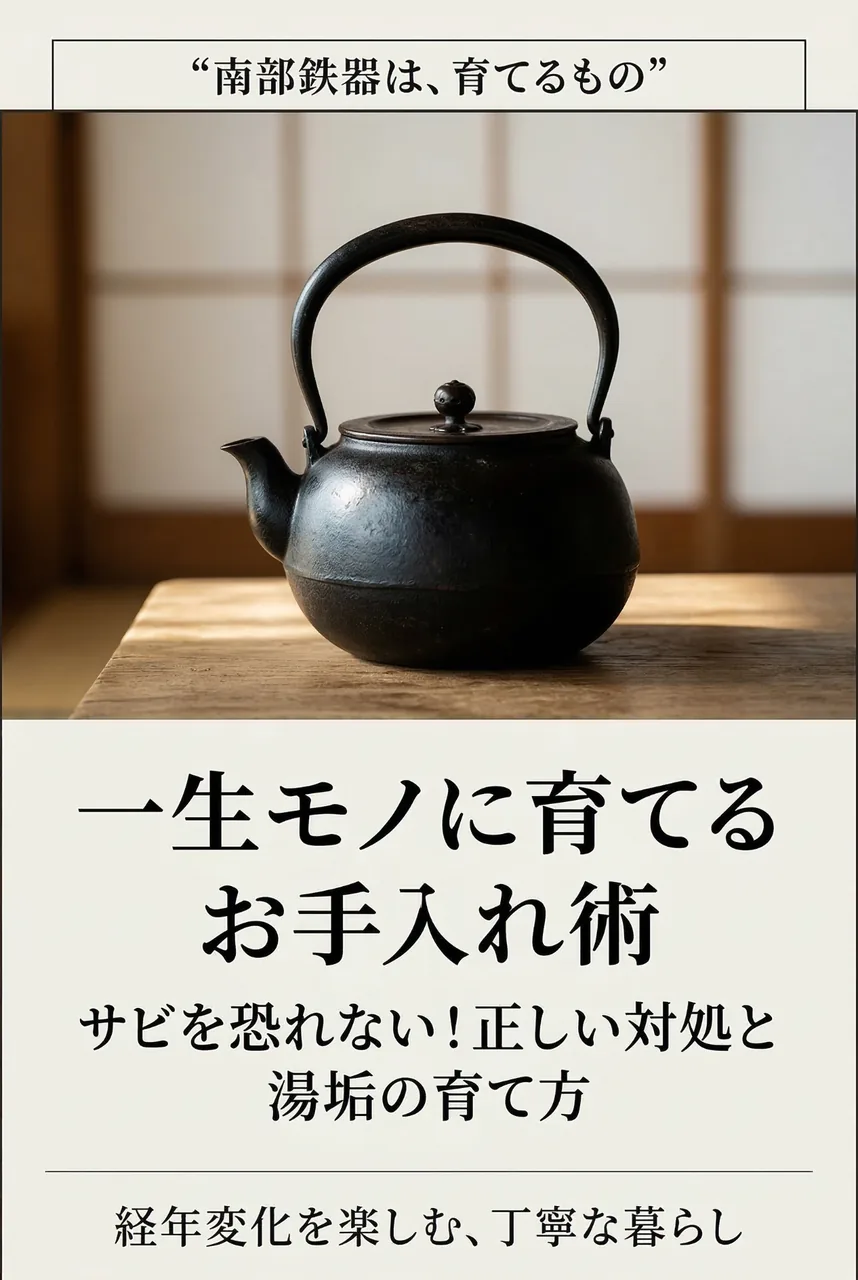
Nanbu Tekki is not about convenience. It's heavy and requires attention.
But the time you invest in caring for it — the wiping dry after each use, the slow seasoning of the pan — is
time your home becomes a little more deliberate, a little more considered.
A tetsubin or frying pan that has absorbed years of use, now gleaming darkly, carries your kitchen's history in
its surface. It belongs entirely to you — and to whoever comes after.
Use this guide to find the piece that will become your iron companion.
Japanese Tea Gift Sets: Gyokuro, Uji Matcha & How to Choose

Tsubame Camp Gear: Titanium & Stainless Cookware from Japan's Metalcraft Capital