The seven Japanese cast iron teapot and kettle brands worth buying are OIGEN, Iwachu, Suzuki Morihisa,
Kanchu, Kamasada, Oitomi and Kunzan — all made in Iwate Prefecture, the home of nanbu tekki
ironware.
First, the distinction that decides which one you actually want. A cast iron teapot is enamel-lined
inside and used to steep tea that has already been brewed with hot water. A tetsubin is an uncoated
iron kettle you put straight on the heat to boil the water itself. Only the uncoated tetsubin changes how the water
tastes — and only the enamel-lined teapot is safe to leave tea sitting in. Buy the wrong one and it will disappoint
you for reasons that have nothing to do with quality.
Tap water boiled in a tetsubin tastes better than convenience store mineral water. It sounds like
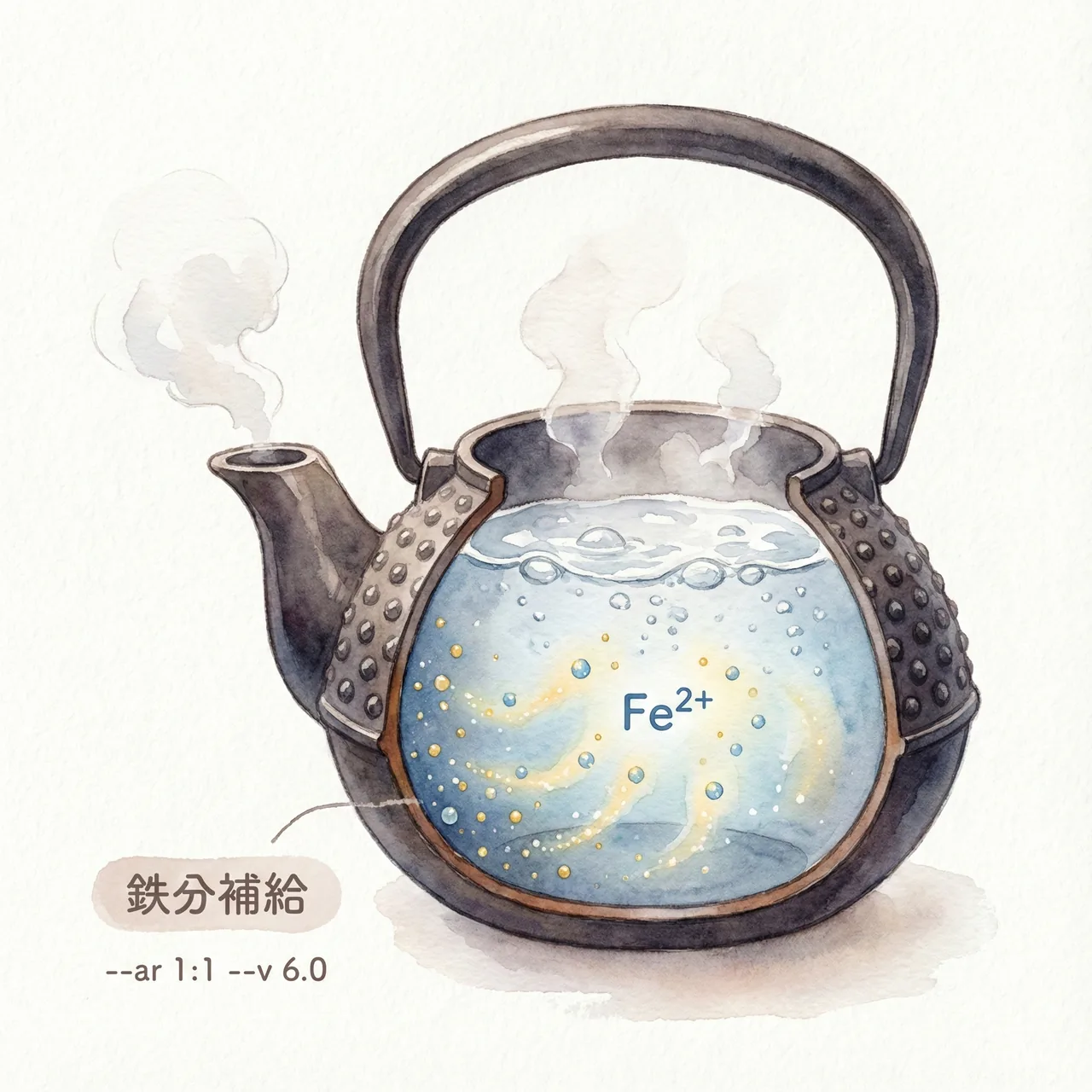
an exaggeration. It isn't. Trace amounts of ferrous iron (Fe²⁺) dissolve into the water as it heats, removing
chlorine and creating a noticeably smoother, rounder taste. The same iron that makes the kettle heavy is what makes
the water delicious.
"But rust sounds like a nightmare to deal with…"
Actually, a tetsubin is one of the most forgiving cast iron tools you can own. Surface rust is expected, manageable,
and often stops on its own as mineral scale builds up. Choose the right one, and it becomes a companion for
life.
This guide compares all 7 brands — ranked and reviewed to make your morning boiling ritual
something to look forward to.
1. Why Cast Iron Makes Water Taste Better
Why bother with a heavy iron kettle when a lightweight stainless or electric kettle does the same job?
Because they don't do the same job — not in terms of what comes out of the spout.
Dissolved Ferrous Iron Softens the Water
When water heats inside a tetsubin, small amounts of ferrous iron (Fe²⁺) — the form most easily
absorbed by the human body — dissolve into it.
This reacts with and removes the chlorine present in tap water, which is the main source of that flat, slightly
chemical aftertaste.
The result is a noticeably softer, rounder water — closer in character to high-quality natural spring water.
Historically, tetsubin have also been recommended for people prone to iron deficiency, as the naturally released
iron is in a bioavailable form.
2. Teapot or Kettle? The Enamel Lining Decides
Not every product sold as a "tetsubin" is actually a tetsubin in the functional sense.
Before you buy, confirm these two things.
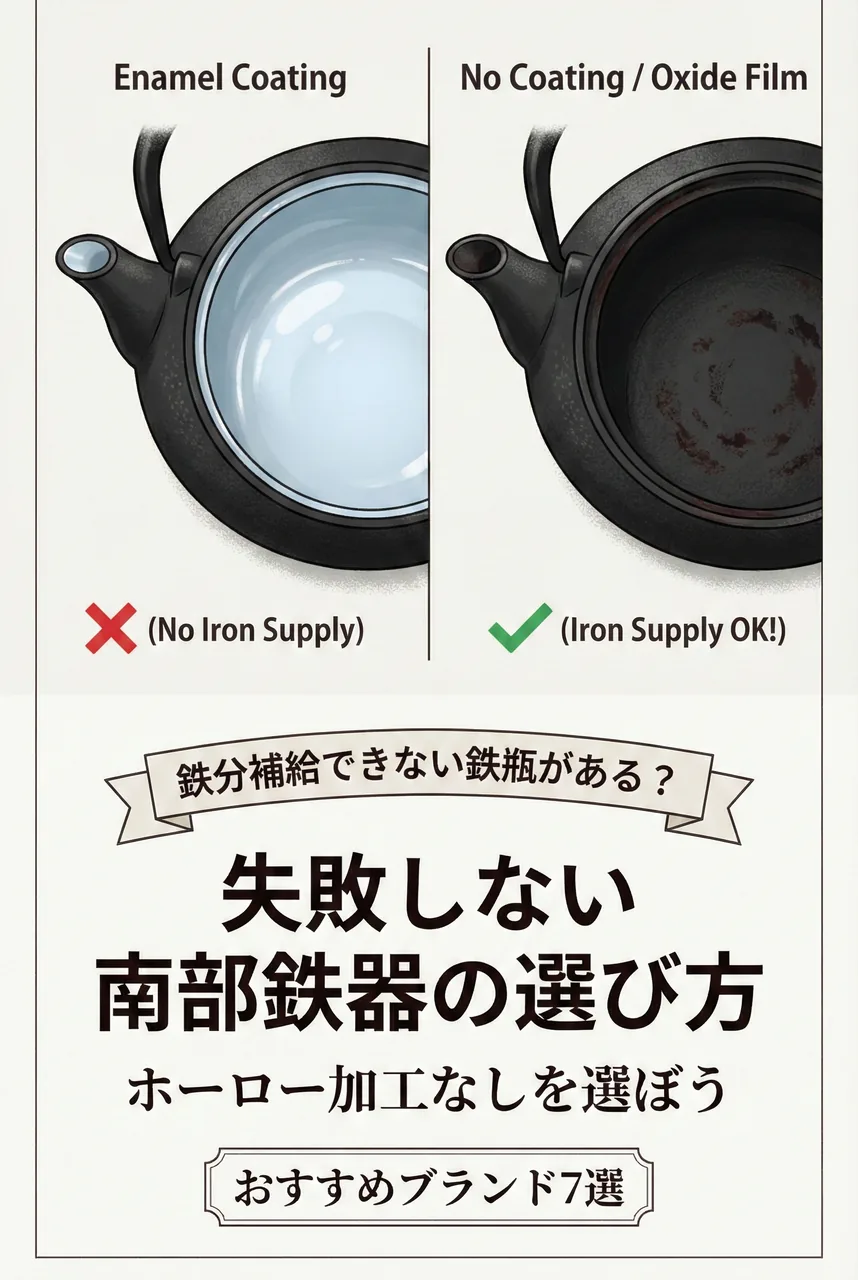
① For Iron Supplementation: Choose Uncoated Interior (No Enamel)
This is the most critical point.
Budget tetsubin and decorative "kyusu-style" cast iron pots are often coated inside with enamel
(glass-based glaze).
Enamel prevents rust — but it also prevents any iron from dissolving into the water. You get zero of the
taste or health benefits.
If you want the full effect of a tetsubin, look specifically for an interior finished with kama-yaki
(traditional oxidized iron coating) — with bare iron exposed to the water.
② IH or Gas? Check the Base Diameter
If you want to use Nambu ironware on an induction cooktop, choose a model with a flat base and a diameter
of at least 12cm.
Traditional tetsubin with arare (hailstone) texturing all the way across the base may not be recognized by the IH
sensor.
The safest option is to buy a model explicitly labeled "IH compatible."
3. The 7 Best Japanese Cast Iron Teapot & Kettle Brands
Curated from the two major production centers in Iwate Prefecture — Morioka and Oshu (Mizusawa) — these are the makers whose work is built to outlast you.
[No.1] OIGEN (Oigen Foundry) / Kangetsu Arare — The Modern Innovator from Oshu
The brand that brought Nambu ironware into the modern home without compromising
tradition.
Founded in 1852 (Kaei 5). OIGEN preserves the classic arare (hailstone) pattern while solving the practical
challenges of modern life: IH-compatible flat bases, foldable handles, and ergonomic pour spouts.
The interior uses the traditional kama-yaki oxidation finish, so iron supplementation and taste
improvement are fully intact.
If you're unsure where to start, OIGEN is the answer.
OIGEN Tetsubin Kettle Maromi Arare — Made in Oshu, Iwate
The flagship tetsubin from OIGEN, a Nambu ironware foundry established in 1852. Traditional arare (hailstone) pattern, uncoated kama-yaki interior for full iron supplementation and water-softening effect. IH and direct flame compatible. 1.2L capacity.
View on Amazon[No.2] IWACHU (Iwasho) / Kiyosue-saku — The World's Best-Known Nambu Brand
Internationally, "IWACHU" is Nambu ironware — and for good reason.
Based in Morioka, with a vast factory complex (the Iwachu Iron Museum), IWACHU is the largest producer in the
region. Their colorful enameled kyusu pots became a sensation in French tea shops, but their core tetsubin
line is equally impressive.
The Kiyosue-saku series, made by certified traditional craft artisans, pours with extraordinary
precision — the act of pouring itself becomes graceful.
Iwachu Iron Kettle Type 7 Arare — IH Compatible, Uncoated, 0.9L
Classic Nambu ironware tetsubin from Iwachu, Morioka's largest traditional ironware workshop. Uncoated kama-yaki interior — no enamel — for full iron supplementation and water improvement. Flat base for IH compatibility. The benchmark against which other tetsubin are measured.
View on Amazon[No.3] Suzuki Morihisa Studio — 400 Years of Unbroken Heritage
Once appointed official ironmaster to the feudal lord — a legacy that still defines the
work.
Suzuki Morihisa is arguably the most historically significant workshop in the Nambu tradition. Their
sabiero (rust-color) finish — achieved with a proprietary ohaguro solution — produces a
deep, reddish-brown tone that no other maker can replicate.
The price reflects what it is: a wearable piece of Japanese art that has lost none of its practicality.
Picking one up is an experience in itself.
Iwachu 11722 Kettlebaum Iron Kettle — IH Compatible, 1.1L
Suzuki Morihisa Studio works are sold through specialist galleries (Tea Dealers, AREA New York). For an authentic Morioka-made Nambu ironware tetsubin on Amazon, this Iwachu Kettlebaum is the closest premium option — uncoated interior, IH-compatible flat base, 1.1L capacity. Made in Iwate Prefecture.
View on Amazon[No.4] Kanchu / Egg — Minimalism Taken to the Extreme
A tetsubin designed for today's dining table, not a museum display case.
Created by artist Kiyomi Iwashimizu. Every unnecessary surface detail has been removed — the result is an
egg-shaped silhouette in matte black that sits perfectly in a Scandinavian or modern Japanese interior.
Even the lid design is integrated so seamlessly it almost disappears. A growing favorite among younger buyers
who want both function and a genuine design object.
OIGEN Cast Iron Teapot Shinonome — Modern Silhouette, 1L
The Kanchu egg-form tetsubin is available through Japanese craft specialists. For a minimalist Nambu ironware piece on Amazon, OIGEN's Shinonome series has the same stripped-down aesthetic — clean surfaces, quiet presence, made in Oshu, Iwate. A design-forward cast iron piece for a modern interior.
View on Amazon[No.5] Kamasada / Aki no Mi — A Craft Classic
The universality of Finnish design, expressed through Japanese ironcraft.
Designed by Miyako Nobuho, the third-generation head of this Morioka workshop. Traditional technique meets a
form that is simultaneously timeless and contemporary — warm, simple, unhurried.
Production numbers are deliberately small; stock sells out almost immediately after each batch. Sometimes
called the "phantom tetsubin" for its scarcity.
Oitomi Nambu Ironware Tetsubin Shinonome — 0.5L
Kamasada's Aki no Mi kettle sells out quickly and ships primarily through Japanese domestic retailers. Oitomi is another historic Oshu foundry (established 1848) with a similarly traditional craft approach — this compact dual-use tetsubin is their entry to Amazon.com. Made in Mizusawa, Oshu, Iwate.
View on Amazon[No.6] Oitomi / Nambu Hoshodo — Animals and Nature in Iron
Playful motifs — swallows, dragonflies, dragons — that make ironware feel personal.
A historic foundry in Mizusawa, Oshu. Beyond the traditional arare, Oitomi is known for artistic tetsubin
featuring birds, insects, and mythological figures worked into the surface.
They have also made strong strides in online retail, offering beginner-friendly compact sizes at accessible
price points — a good first serious tetsubin for someone not yet ready to commit to a more expensive piece.
Iwachu Azure Dragonfly Cast Iron Teapot — Nambu Ironware
Oitomi's signature dragonfly and swallow boiling kettles are available at oitomi.com. For a nature-motif Nambu ironware piece on Amazon, Iwachu's Azure Dragonfly teapot captures the same spirit — delicate motif work from Morioka's most internationally recognized ironware workshop.
View on Amazon[No.7] Kunzan Studio — Iron Made Gentle
Every detail designed around the person who will actually use it.
Led by traditional craft artisan Sasaki Kazuo. The work is rooted in first principles: clean pour, comfortable
grip, total reliability as a daily tool.
The forms tend toward a plump, rounded warmth that is easy to love. You might pick one of these up and feel
immediately like you've always owned it.
Iwachu Iron Kettle Type 7 Arare — IH Compatible, Uncoated, 0.9L
Kunzan Studio pieces are sold through gallery channels and Japanese craft specialists. For a daily-use Nambu ironware tetsubin on Amazon with the same design philosophy — comfortable, reliable, built for life — Iwachu's Type 7 Arare is the closest match. Uncoated interior, IH compatible, made in Morioka.
View on Amazon4. Visiting OIGEN in Oshu City: The Heartland of Nambu Iron
A Factory Shop That Shows You the Life, Not Just the Product
Oshu City in Iwate Prefecture — specifically the Mizusawa district — is one of the two major production centers
for Nambu ironware.
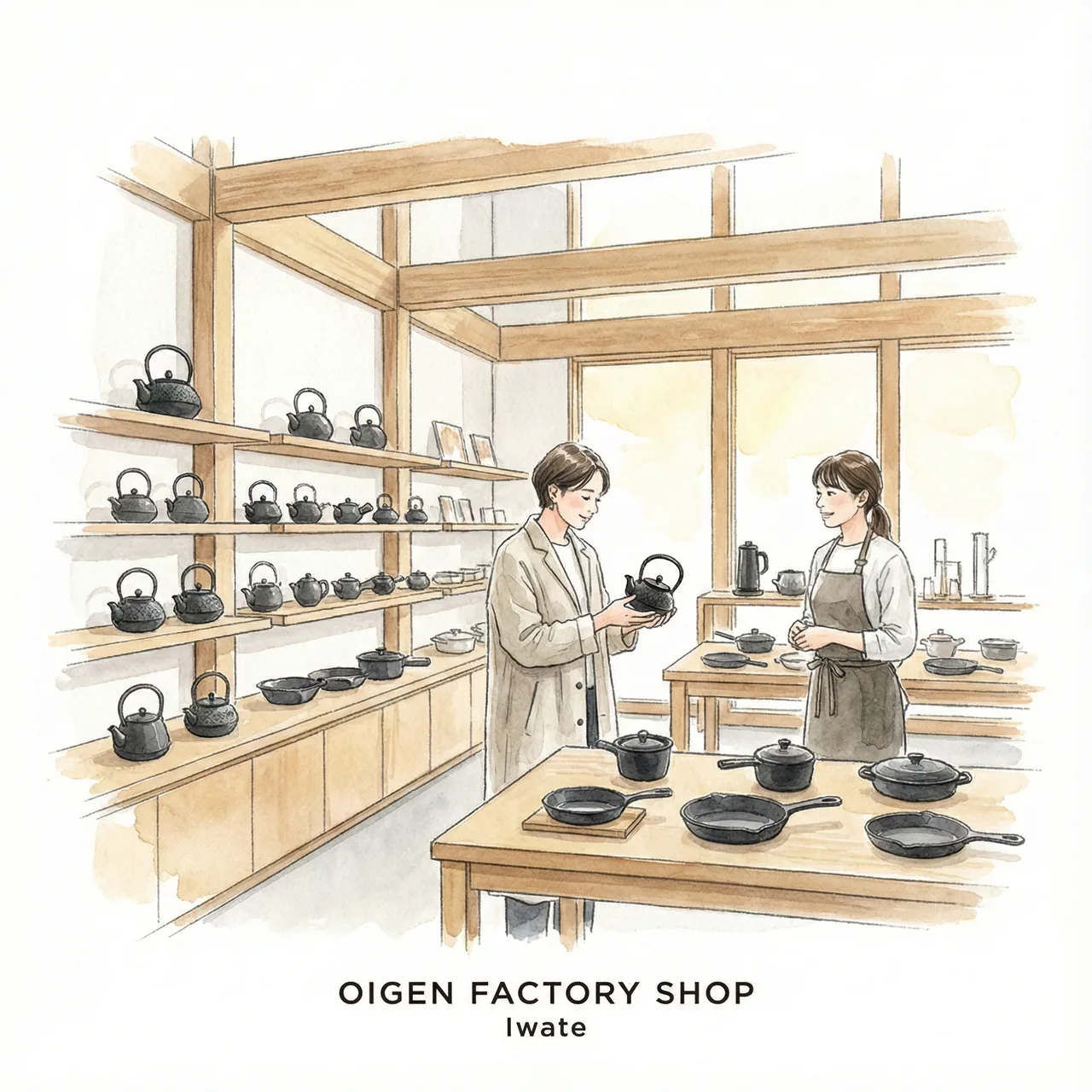
The OIGEN FACTORY SHOP, adjacent to the foundry itself, is not just a retail space. It's a
place to understand what this craft actually means as a way of living.
What makes the visit worthwhile:
· You can taste hot water boiled in a tetsubin on-site — the difference from tap water is immediately
noticeable.
· Being next to a working foundry means you may hear or smell the casting process firsthand.
· Limited-edition pieces and specialty products — including the cult-favorite "Tamipan" cast iron bread pan —
are available to handle in person.
If you're choosing a lifelong object, experiencing the origin is worth the trip.
5. Frequently Asked Questions: Teapots, Rust, IH & Lifespan
Is a Japanese cast iron teapot the same as a tetsubin?
No — and the difference is the lining, not the shape.
A cast iron teapot (the kind usually sold overseas in bright colours) is lined inside with
enamel. You pour already-boiled water into it and steep tea. It cannot go on a burner, and it adds nothing to the
water.
A tetsubin is uncoated inside and goes directly on the heat to boil the water itself. That bare
iron is the entire point — it is what softens the water and releases trace iron.
Both are made by the same Iwate foundries, and both are genuine nanbu tekki. They simply do different
jobs. If you want better-tasting water, you want the tetsubin.
Can I brew tea leaves directly inside a tetsubin?
Better not to.
Tannins in tea react with the bare iron interior, dulling the colour and flavour of the tea and staining the
kettle. Leaving liquid standing inside is also the fastest way to invite rust.
The traditional method is the practical one: boil the water in the tetsubin, steep the tea in a separate
pot — a ceramic kyusu, or an enamel-lined cast iron teapot from the same maker.
My tetsubin has rusted. Is it finished?
No — rust in a tetsubin is not a death sentence.
If the interior has gone red but the boiled water is still clear and tasteless (no metallic flavor), you can
continue using it without any intervention.
In Nambu ironware, rust is part of the process — not the enemy. With continued use, mineral scale (yuaka) forms a
white protective layer over the iron, and the rusting naturally slows and stops.
If the water does turn reddish, simmer a tea bag (green tea) inside the kettle — the tannins bind with the iron
and stabilize the surface. For the full method, see our
tetsubin care and rust removal guide.
Can I use a tetsubin on an induction (IH) cooktop?
Yes — but use restraint with the heat.
IH delivers more concentrated heat to the base than a gas flame. Using it on high can warp or crack the bottom
over time.
Always start on low and go no higher than medium. Buy a model explicitly rated for IH use, with a
flat base.
How long does a tetsubin last?
With proper care, 50 to 100 years is realistic.
It is genuinely common in Japan for a tetsubin to pass from grandmother to granddaughter still in full use.
The two things that end a tetsubin's life prematurely: boiling dry (never leave it on heat with no water)
and thermal shock (never pour cold water into a hot kettle). Avoid those two and the kettle will very
likely outlive you.
6. Final Thoughts: Growing a Tetsubin
Fill it with water. Set it on the heat. Listen to the low hiss as it warms.
Wait.
In a world optimized for instant delivery, that waiting — that quiet ritual — may be the most luxurious thing
left.
When you take the first sip and think "that's unusually good," something has shifted.
A new tetsubin has a certain pristine quality. But a tetsubin that's been used for years — coated in mineral
scale, darkened with use — has something that cannot be purchased in any shop.
It has a history. Yours.
Start growing yours today.