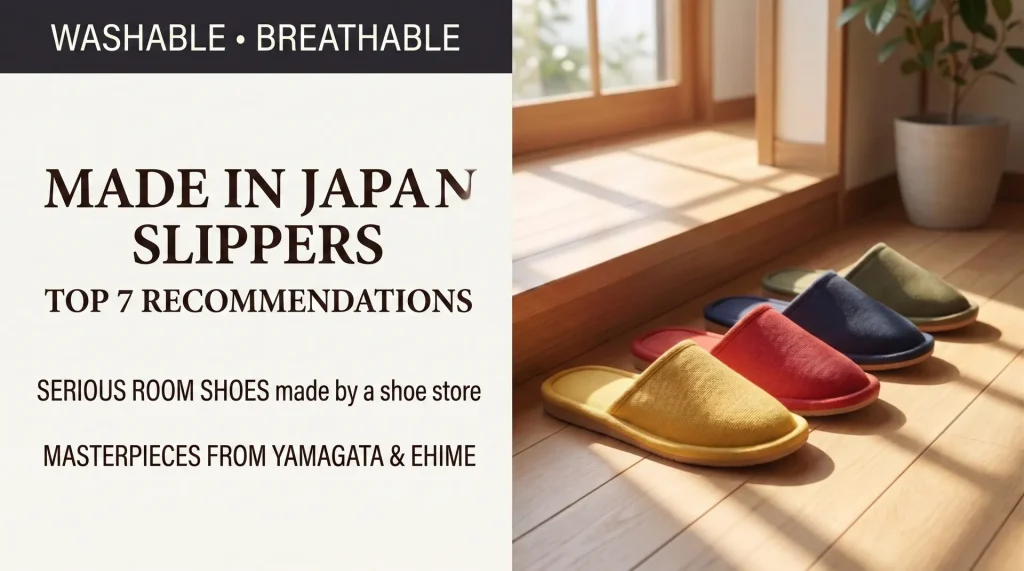
If you spend a lot of time at home, your slippers are not a throwaway item — they are shoes. Choose them like shoes.
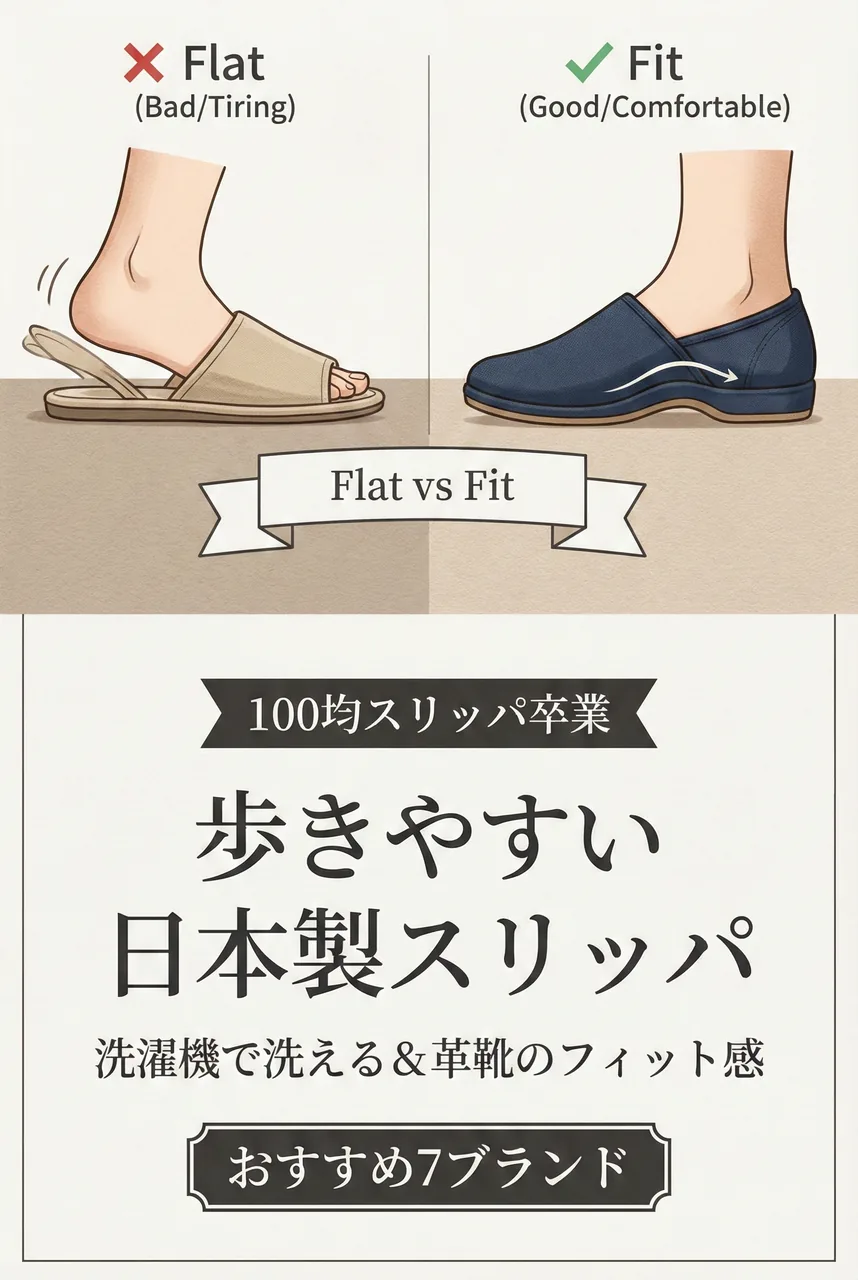
Cheap slippers have thin soles that slap against the floor and force your feet into unnatural positions, leaving you tired by evening.
Japanese-made room shoes are a different category entirely.
Built on proper shoe lasts — the same wooden forms used for leather shoes — they wrap the foot with a three-dimensional fit. You can wear them all day without thinking about your feet.
This guide covers seven Japanese-made room slippers that you will not want to take off: washable canvas, break-in leather, moisture-wicking igusa (rush grass), and more.
Quick Reference: Room Slippers by Material
| Material | Features | Washable | Price Range |
|---|---|---|---|
| Igusa (rush grass) | Moisture-wicking, deodorizing, cooling | Hand wash | $15–$30 |
| Cotton / canvas | Soft, breathable, fast-drying | Machine wash OK | $20–$50 |
| Wool | Warm, moisture-regulating, ideal for winter | Hand wash only | $30–$80 |
| Bamboo fiber | Cooling, antibacterial, summer-ready | Wipe clean | $20–$40 |
1. Washable or "Character-building"? Choose by Material
Material is the most important factor in choosing a room slipper.
Match the choice to your lifestyle and you will never need to compromise.
① Washable — natural fiber (cotton, linen, washi paper)
Best for: people who sweat easily, summer use, hygiene-first households
Canvas (heavy cotton), linen, and washi paper yarns are highly absorbent and breathe well — no sweaty feet.
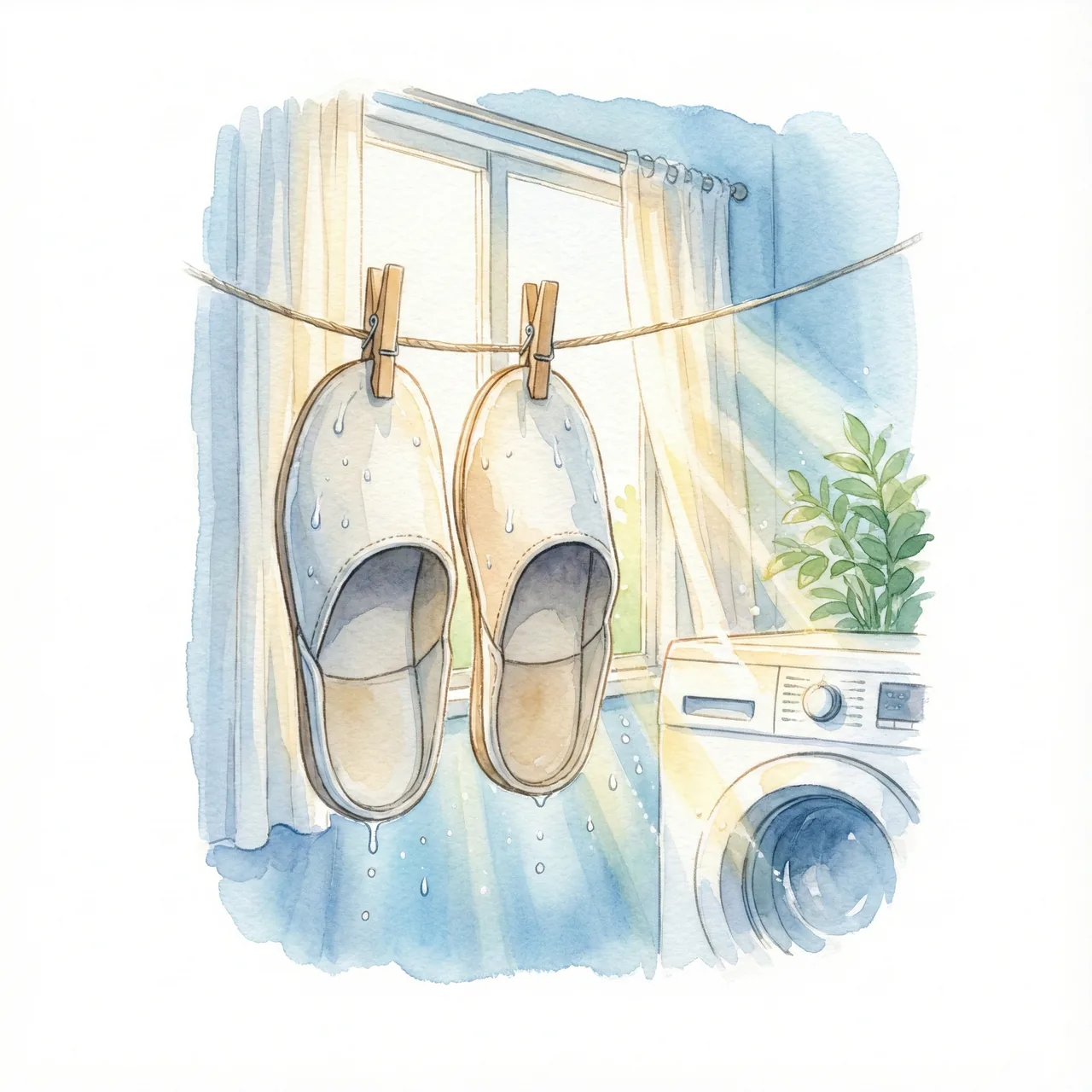
The biggest advantage: you can throw them in the washing machine.
When they get dirty or start to smell, a quick laundry cycle resets them to fresh.
② Character-building — leather
Best for: people with cold feet, winter use, interior-focused households
Leather room shoes mold to the shape of your foot over time — eventually becoming uniquely yours.
They are warmer than natural fiber and look as refined as living room furniture.
With proper care, a good pair lasts 5–10 years.
2. 7 Japanese Room Slippers Worth Every Yen
No heel slap. No foot fatigue. No noise on the floor.
These Japanese brands know what a home deserves.
[No.1] ABE HOME SHOES — Canvas Babouche, Yamagata
100 years of slippers. Machine-washable and nearly indestructible.
Abe Sangyo, based in Kahoku-cho, Yamagata — Japan's slipper capital — has been perfecting the craft for a century. Their signature babouche style uses heavy No. 8 canvas: wear it as a slip-on slipper or flip the heel up for a room shoe. Machine-wash it with the laundry and it comes back looking like new.
Seven colorways make it tempting to buy a matching set for the whole household.
[No.2] Reela — Leather Sabot, Ehime
A room shoe that feels like a second skin.
Made by a sandal craftsman in Ehime, Reela uses the same wooden shoe lasts as proper leather shoes to form a three-dimensional fit. The moment you slide your foot in, the difference from a flat slipper is obvious.
Wear it for a year and the leather will carry every crease from your stride — a slipper that becomes entirely your own.
[No.3] merippa — Sumida, Tokyo
Halfway between a slipper and a sock — reversible and travel-ready.
Made in Sumida, Tokyo, merippa uses a padded knit construction with a stretchy ribbed heel that holds the foot gently without pressure.
The standout feature: it is reversible. Flip it inside-out when one side gets dirty — two clean surfaces per pair. Roll it into a ball for travel. Machine-washable too.
[No.4] SASAWASHI — Natural Antibacterial Power
Designed for bare feet. Made from kumazasa bamboo-grass washi paper yarn.
SASAWASHI fabric is woven from washi paper threads infused with kumazasa (dwarf bamboo), a plant renowned in Japan for its antibacterial and deodorizing properties. Sweat and bacteria cannot coexist — no smell, even after a long day.
The slightly crisp texture on bare skin after a shower is, frankly, addictive. Especially recommended for anyone whose feet tend to run hot.
[No.5] SANAX — Ergonomic Excellence
Supplied to the Imperial Household. Built to eliminate fatigue.
Founded in 1979, SANAX produces premium slippers with an insole architecture engineered around the arch of the human foot — significantly reducing the load on the lower back during long standing hours.
Quality cowhide leather and a non-slip sole finish the package. A pair at the entrance impresses guests before a word is spoken.
[No.6] Nanasho Slippers — Tokyo Craftwork, Silent on Any Floor
40 years in Tokyo's shitamachi. Built to be silent.
Skilled craftspeople use a technique called tsuri-komi — pulling the upper fabric over the last and setting it by hand — to produce each pair one at a time.
The thick felt and suede-like sole absorbs the impact of every step: no slapping, no noise on hardwood floors. For apartment living where foot noise matters, this is the most thoughtful choice.
[No.7] Pansy — Unbeatable Everyday Function
The Osaka brand that parents and healthcare workers swear by.
Pansy hand-knits each slipper on a dedicated form so the construction stretches and moves with the foot. The sole is equipped with anti-slip texture — safe on wooden stairs as well as flat floors.
The design is understated, but if safety and ease of use are your top priorities, nothing else comes close.
3. Inside the ABE HOME SHOES Factory in Yamagata
A pilgrimage to Japan's slipper capital
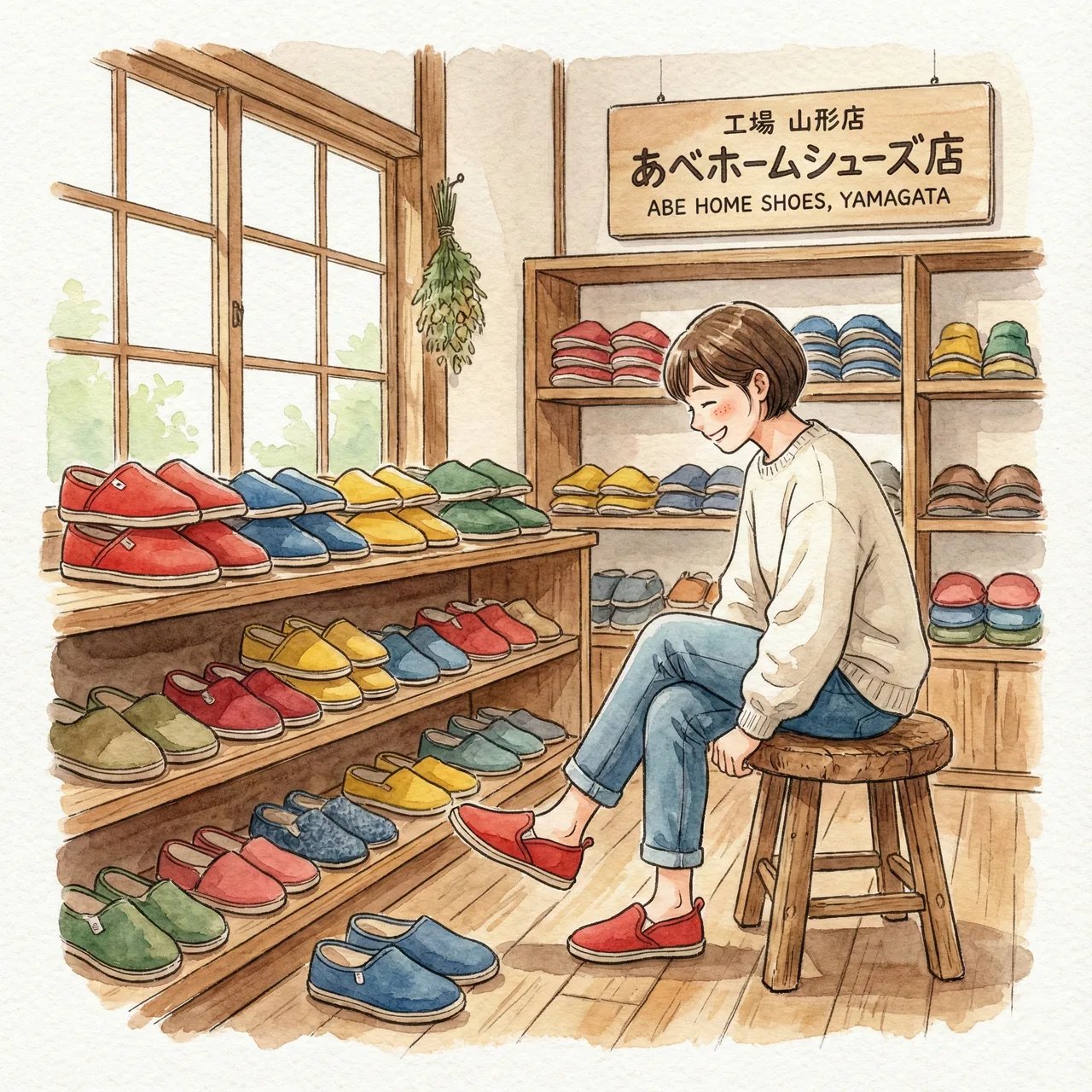
Kahoku-cho in Yamagata Prefecture produces roughly 40% of all slippers made in Japan — earning the town the unofficial title of "Slipper Capital."
At the heart of it is Abe Sangyo (ABE HOME SHOES), whose factory shop lets you try on the full line-up before buying.
What makes the visit special:
· The shop is attached to the factory — you buy directly from the people who made the slipper.
· Rare and limited lines like "KINU HAKI" (silk-lined) sell out online instantly but may be available here.
· The town's beloved pastime, "slipper table tennis" (played in slippers, naturally), is part of the local culture.
If you are traveling through the Tohoku region, a detour to Kahoku-cho is worth every minute.
4. Care by Material: Can You Machine Wash?
① Canvas and natural fiber (ABE HOME SHOES, merippa, etc.)
Machine wash is fine.
Use a laundry net to protect the shape.
When drying, reshape by hand before hanging and air-dry in the shade — do not tumble dry. Let the interior dry out fully or mildew will form inside.
② Leather and faux leather (Reela, SANAX, etc.)
Do not wet-wash.
Wipe with a dry cloth for everyday maintenance.
For deeper cleaning, apply a small amount of leather cleaner and buff off with a cloth.
Waxed and polished leathers can be re-conditioned as they age — scratches gradually become part of the character rather than damage.
You might also like:
Great slippers deserve great socks underneath.
▶ Japanese Socks: 10 Pairs That Don't Slip, Smell, or Wear Out
5. Frequently Asked Questions
How many pairs should I own?
Two to three pairs per person is ideal.
Rotating between two identical pairs means one is always dry — important for washable slippers that need a full day to dry.
For guests, keep one or two pairs in a neutral color (white or light grey) near the entrance.
How do I choose a non-slip slipper for hardwood floors?
Look for a sole with rubber or EVA foam construction.
Igusa and plain fabric soles can slide on polished wood — especially on stairs.
A sole with a dot-pattern rubber grip significantly reduces fall risk and makes the slipper safer in any room of the house.
How should I size room slippers?
The right fit leaves the heel just slightly exposed at the back.
A slipper that is too large will flap with each step, causing fatigue.
Size charts vary by brand — always check the recommended shoe size range before ordering.
Wide-foot wearers should look for models labeled "wide fit" or "EEE width."
How do I make slippers last longer?
Rotate left and right regularly, and air them out after use.
The dominant foot wears down faster — switching left and right every week evening out the wear.
Igusa and fabric slippers are damaged by humidity: store them upright in a ventilated spot rather than in a box when not in use.
Should I wash slippers every day?
Once or twice a week is a reasonable target.
Daily washing accelerates material wear. Wash when visibly dirty or at seasonal change-overs.
For non-washable types, a deodorizing spray or a sprinkle of baking soda inside is effective maintenance between washes.
The igusa smell is quite strong at first — is there a way to reduce it?
Sun-drying for 1–2 hours is the most effective solution.
The grassy scent of fresh igusa fades naturally over the first few days to weeks of use.
If it bothers you, place the slippers in direct sunlight — the scent dissipates quickly with UV exposure.
Many people come to love the smell as part of the experience, similar to a tatami room.
6. Final Thoughts: Better Footwear, Better Home Life
Kicking off your shoes at the door and stepping into a proper pair of slippers: that small moment is Japan's daily decompression ritual.
A quality pair of Japanese room shoes costs $30–$60.
That sounds like a lot for slippers — until you realize you are wearing them for hours every day, on every surface in your home.
That investment comes back to you in lighter feet, quieter floors, and a home that feels genuinely comfortable from the moment you walk in.
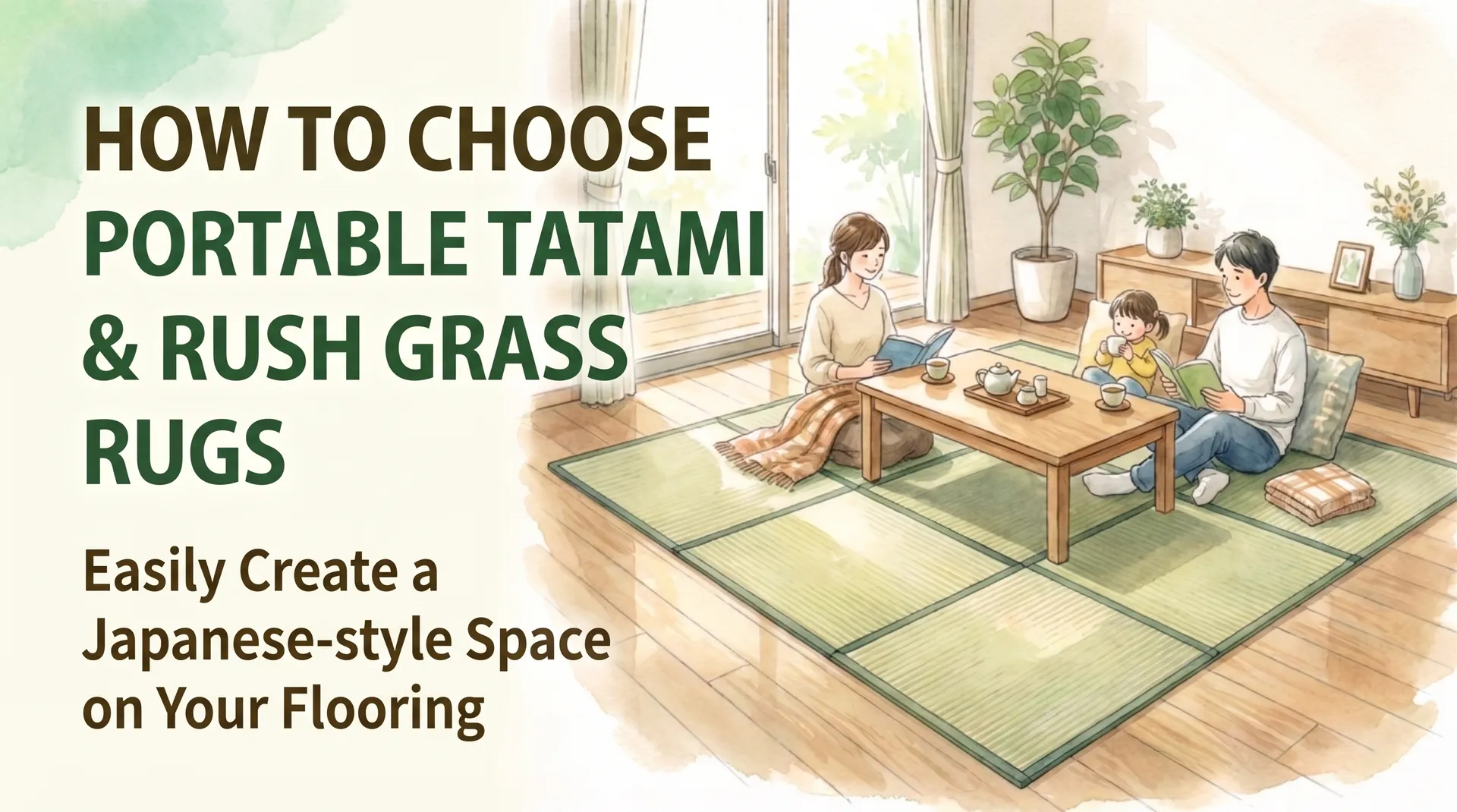
Igusa Tatami: Add Japanese Floor Living to Any Room
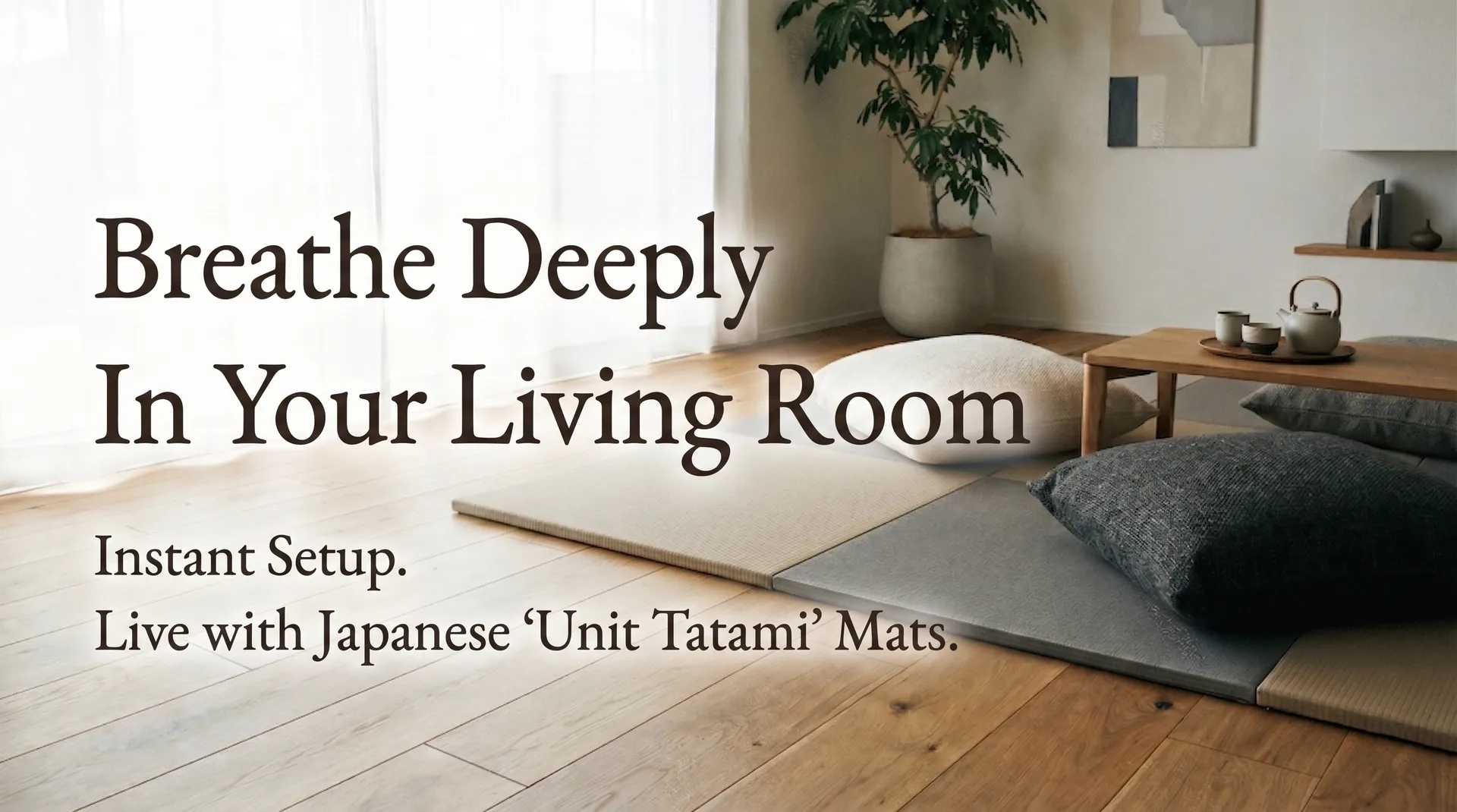
Tatami Rugs: Bring a Touch of Wabi-sabi to Modern Floors