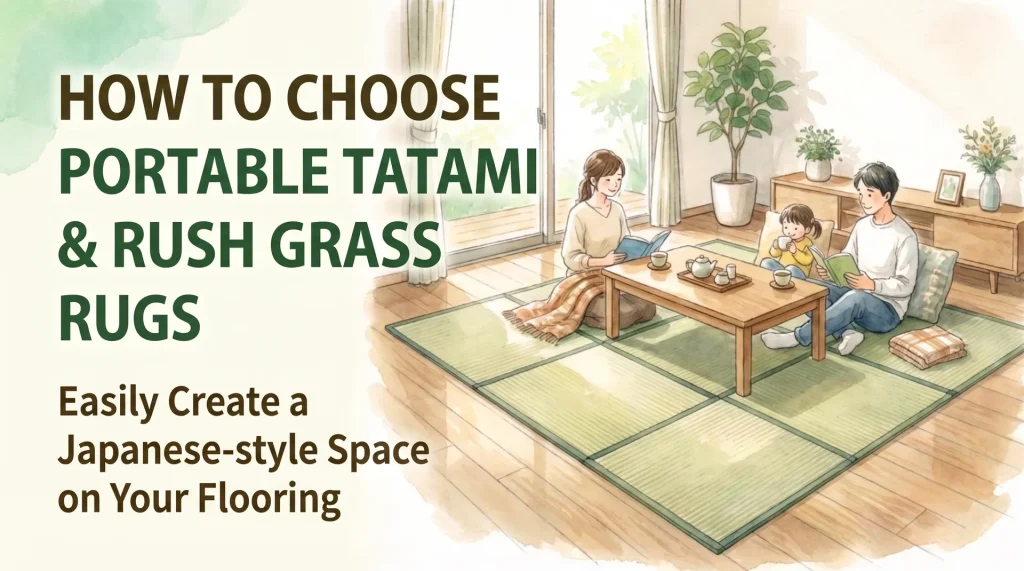
"My hardwood floor is sticky in summer and freezing in winter…"
"I need a comfortable play area for the kids, or somewhere to just lie down…"
These problems can be solved without renovation, thanks to Japan's oki-datami (置き畳) and igusa rugs.
These aren't ordinary floor coverings.
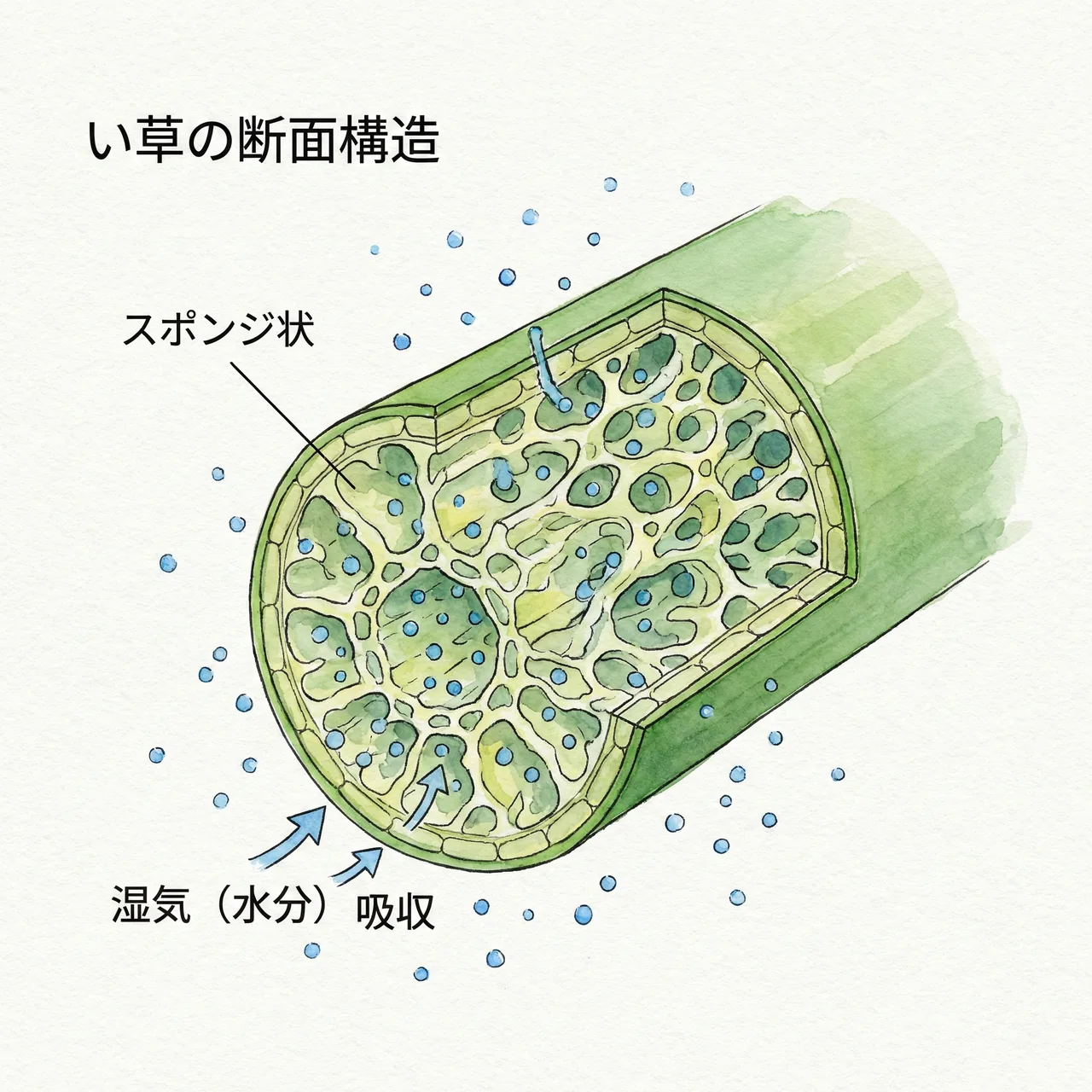
Natural igusa (rush grass) is a moisture-regulating material with roughly 2.5 times the humidity absorption
of cotton — and it naturally deodorizes the air at the same time.
The thicker oki-datami (unit tatami mats) also provide meaningful cushioning and sound damping, making them an
effective solution for apartment noise concerns.
This guide covers the difference between domestic (Kumamoto-grown) and imported igusa, how to choose a design that
works in a modern interior, and the maintenance practices that will keep your mats clean and mold-free for years.
Quick Reference: Igusa Origin & Quality at a Glance
| Origin | Characteristics | Quality Rating | Price Range |
|---|---|---|---|
| Kumamoto-grown | Thick, long, dense — exceptional durability | JIS highest grade | Higher (¥5,000+/mat) |
| Chinese-grown | Thinner, softer; inconsistent quality | Often ungraded / budget tier | Lower (¥1,000+/mat) |
| Standard igusa | Good everyday quality | JIS Grade 3–5 | Mid-range |
| Premium (named varieties) | Designated strains like Hinomidori; rich fragrance | JIS Grade 1–2 | Premium (¥10,000+/mat) |
1. What Igusa Does That Hardwood Can't: Humidity, Odor & Air Quality
Igusa is sometimes called "nature's air conditioner" — a functional description, not just a marketing phrase.
Moisture Absorption 2.5× That of Cotton
The interior of an igusa stalk is sponge-like, with a structure that draws in moisture efficiently.
During Japan's humid rainy season, igusa absorbs the excess moisture that makes rooms feel sticky. In dry winter
months, it releases that stored moisture back into the air — acting as a passive humidity buffer.
Lying down on igusa in summer doesn't feel damp or hot against your skin — the mat breathes.
Natural Odor Absorption and Air Purification
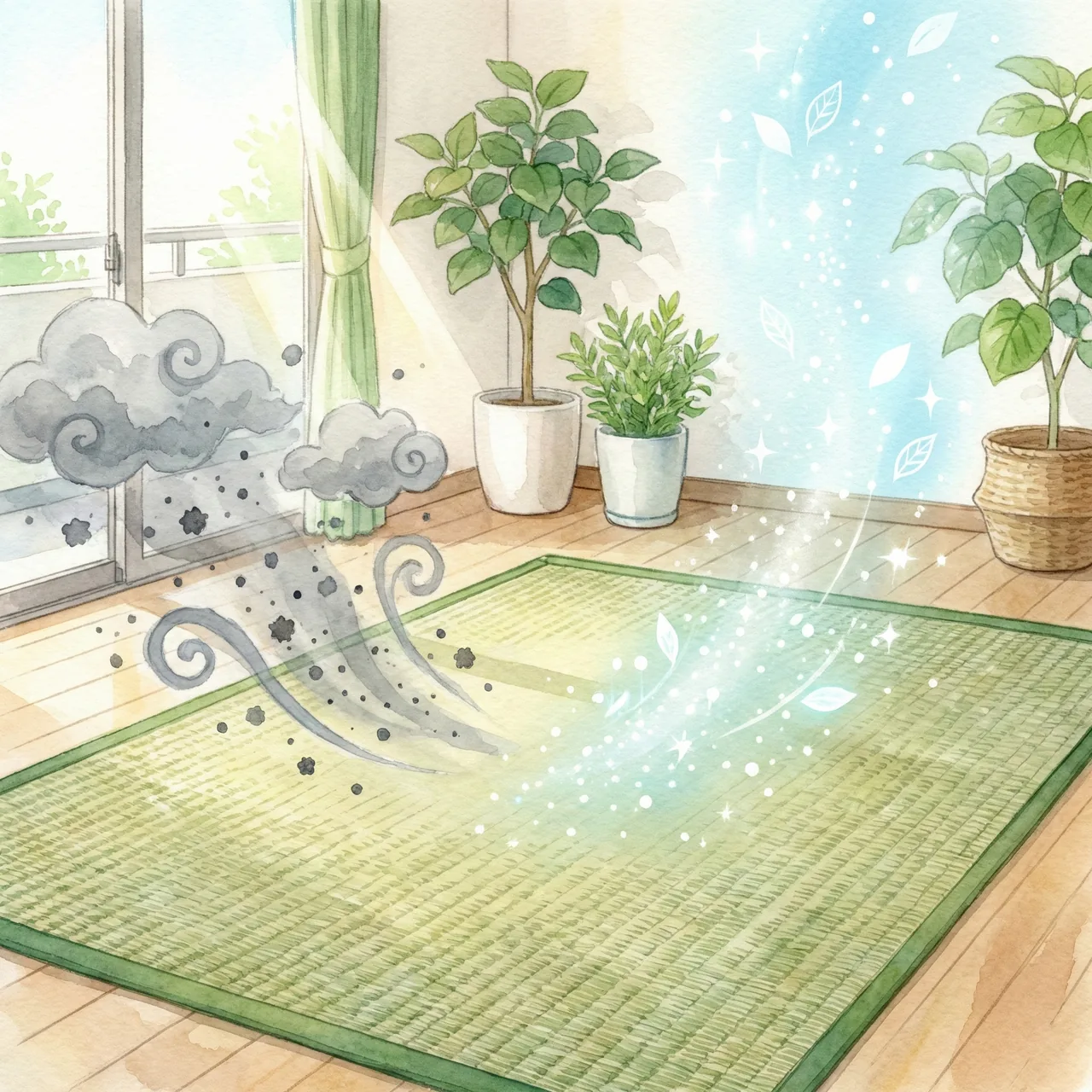
Igusa has a documented ability to adsorb and break down airborne chemicals — including sweat odor compounds and
formaldehyde (associated with sick building syndrome).
The grassy fragrance of fresh igusa also contains phytoncides — the same compounds found in forest air, known
for their calming, parasympathetic effect on the nervous system.
Simply laying an igusa mat in a room changes the quality of the air you breathe.
2. Kumamoto-Grown vs. Imported: What "Mud-Dyeing" Has to Do with It
What separates the ¥1,000 mat at the hardware store from a ¥10,000 Japanese-made one?
If you want it to last, Kumamoto-grown igusa — which accounts for over 90% of Japan's domestic
production — is the clear choice.
Thick Skin, Dense Core — Stays Springy Under Foot Traffic
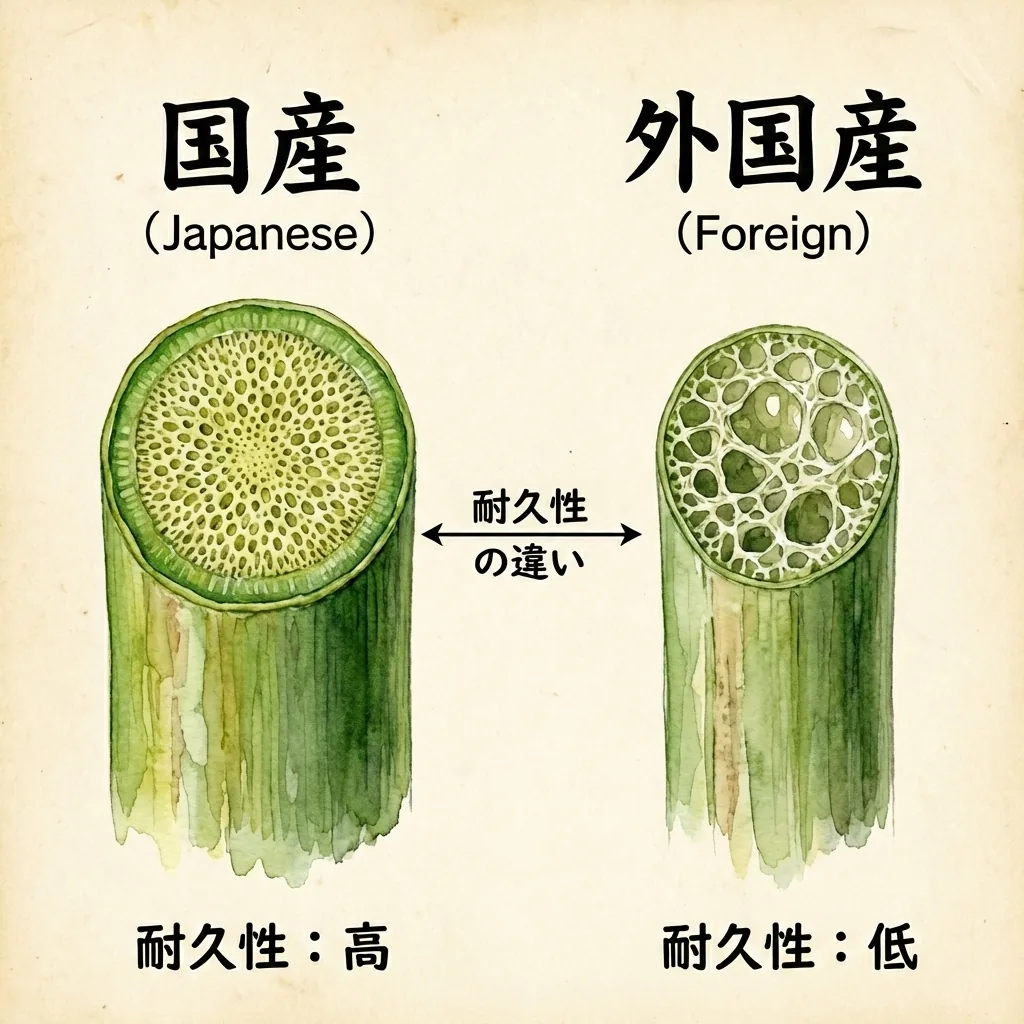
Domestic igusa grows with a thicker outer skin and a denser interior than imported varieties.
This means it retains its springiness under repeated pressure, resists the "flat spots" and fraying that cheaper
mats develop quickly, and develops a beautiful golden-amber color (toffee-like patina) as it ages.
Imported igusa tends to thin out and fray within a year or two of regular use.
The "Mud-Dyeing" (Dorozome) Process
High-quality Japanese igusa is submerged in special clay mud immediately after harvesting — a traditional
process called dorozome.
This coats the surface of each stalk with a mineral film that reduces UV discoloration and is responsible for
the characteristic earthy fragrance of fresh tatami.
Note: when you first unpack a quality igusa mat, you may notice a slight dusty or earthy residue — this is the
residue of the dorozome process, not a defect. A dry wipe resolves it immediately.

3. Oki-Datami vs. Igusa Rug: Choosing by Purpose
The right choice comes down to thickness — and what you want it to do.
Oki-Datami (Unit Tatami Mats) — 1.5cm or thicker
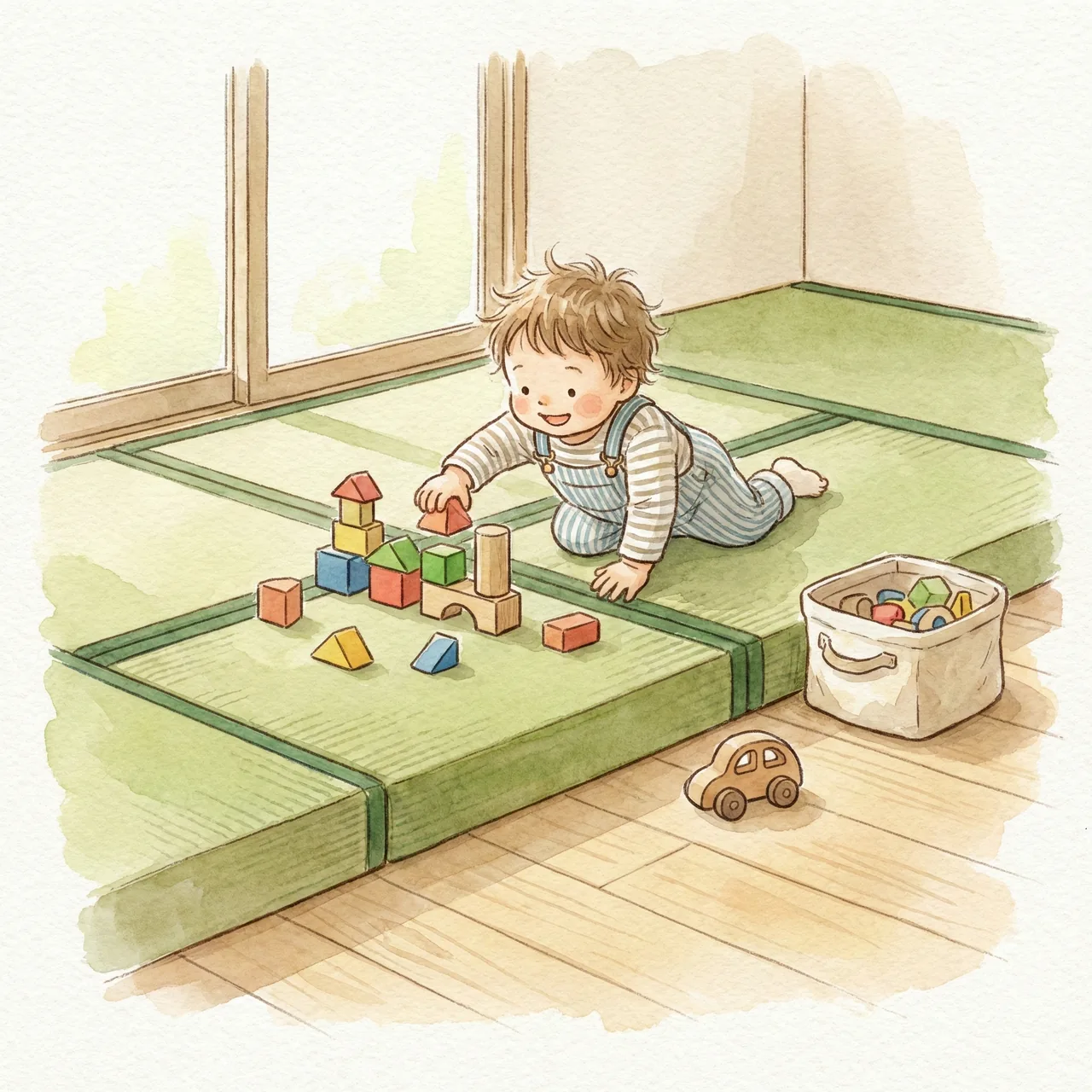
Best for: children's play areas, nap zones, floor noise reduction.
Built with a structural core, oki-datami provides meaningful cushioning — safe for toddlers who fall,
comfortable for adults who sleep on the floor.
The thickness absorbs and dampens footstep noise, making these a practical choice in apartments where downstairs
neighbors are a concern.
Lay them on any floor surface and connect them; you get an instant Japanese-style raised floor area (koagari)
without any construction.
Igusa Rug (Flat-Woven) — Thin Profile
Best for: seasonal refreshing, under dining tables, easy storage.
Works like a conventional rug — thin, light, and flexible.
Many versions have a foam or urethane backing that provides light underfoot cushioning.
The biggest advantage: when summer ends, roll it up and tuck it away. Some types fold flat enough to fit in a
closet shelf.

4. Design Options: Bordered (Traditional) vs. Borderless (Ryukyu Style)
The presence or absence of an edge border dramatically changes the look of the mat in your room.
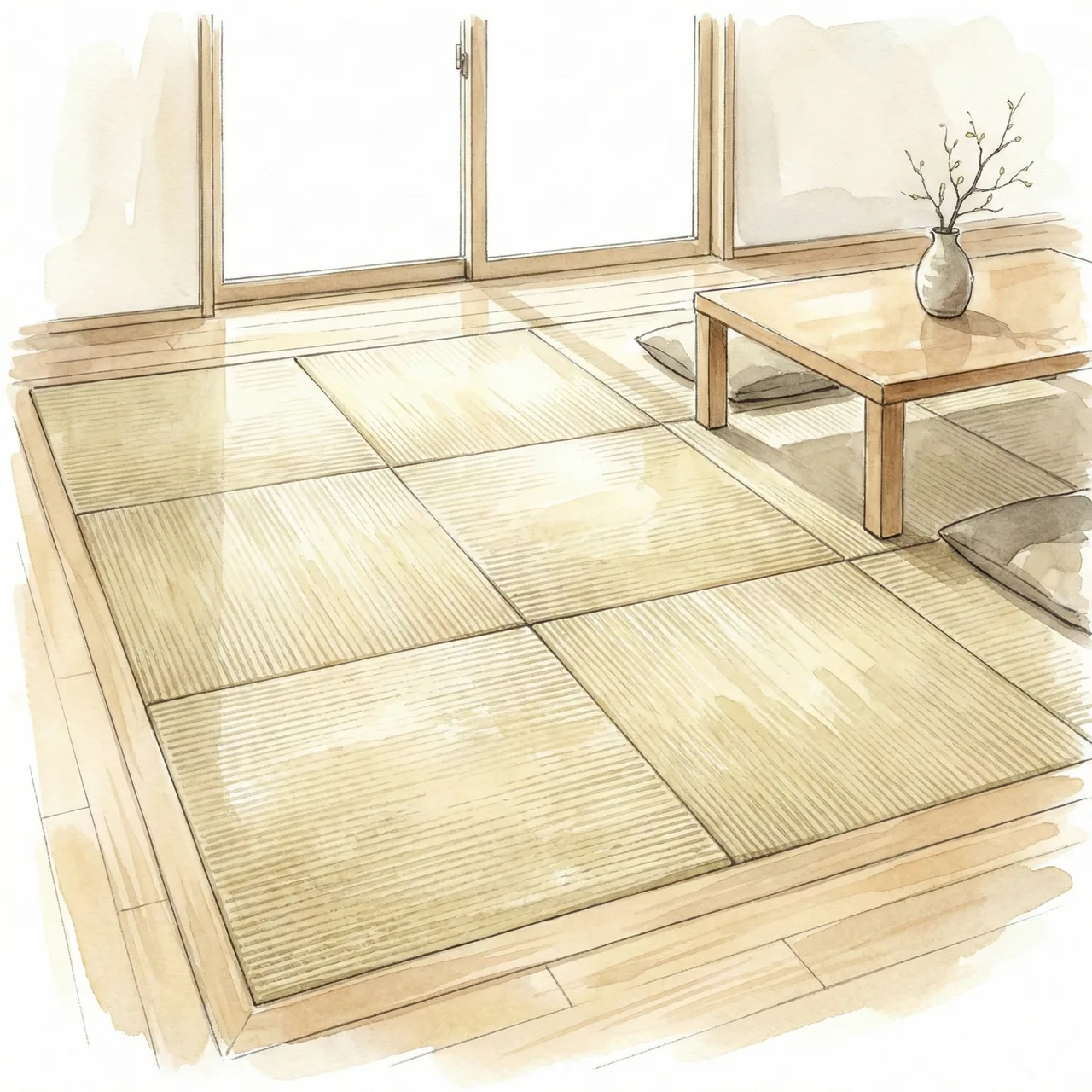
Borderless / Ryukyu Style — The Checkerboard Effect
The most popular style in contemporary Japanese interiors. Square half-mat units, laid alternately at 90°
angles, catch light differently on each mat — creating a subtle checkerboard pattern through
optical contrast alone, with no color difference required.
Visually light and modern; works with Scandinavian furniture and minimal interiors as comfortably as with
traditional decor.
The borderless edge also makes individual mats easier to rearrange.
Bordered Style — Traditional Definition
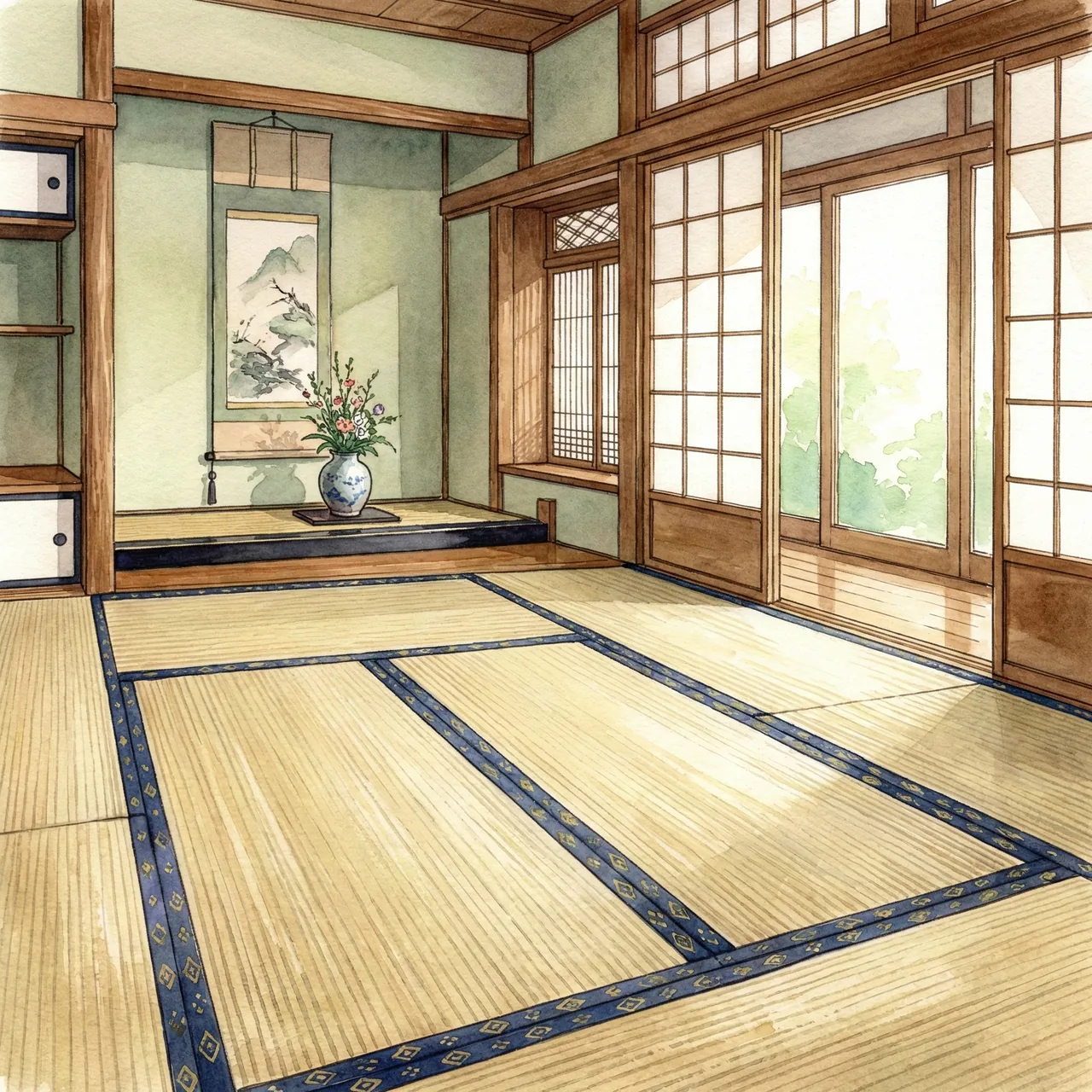
The classic look of a traditional Japanese room. The fabric border (heri) frames each mat and can define the
overall tone of the space — dark borders create formality, lighter ones feel softer.
The border also protects the mat's corners from fraying, improving durability.
Generally slightly less expensive than borderless mats of equivalent quality.
5. Care & Mold Prevention: Vacuuming Along the Grain
Igusa is a living natural material. The right care keeps it healthy for years.
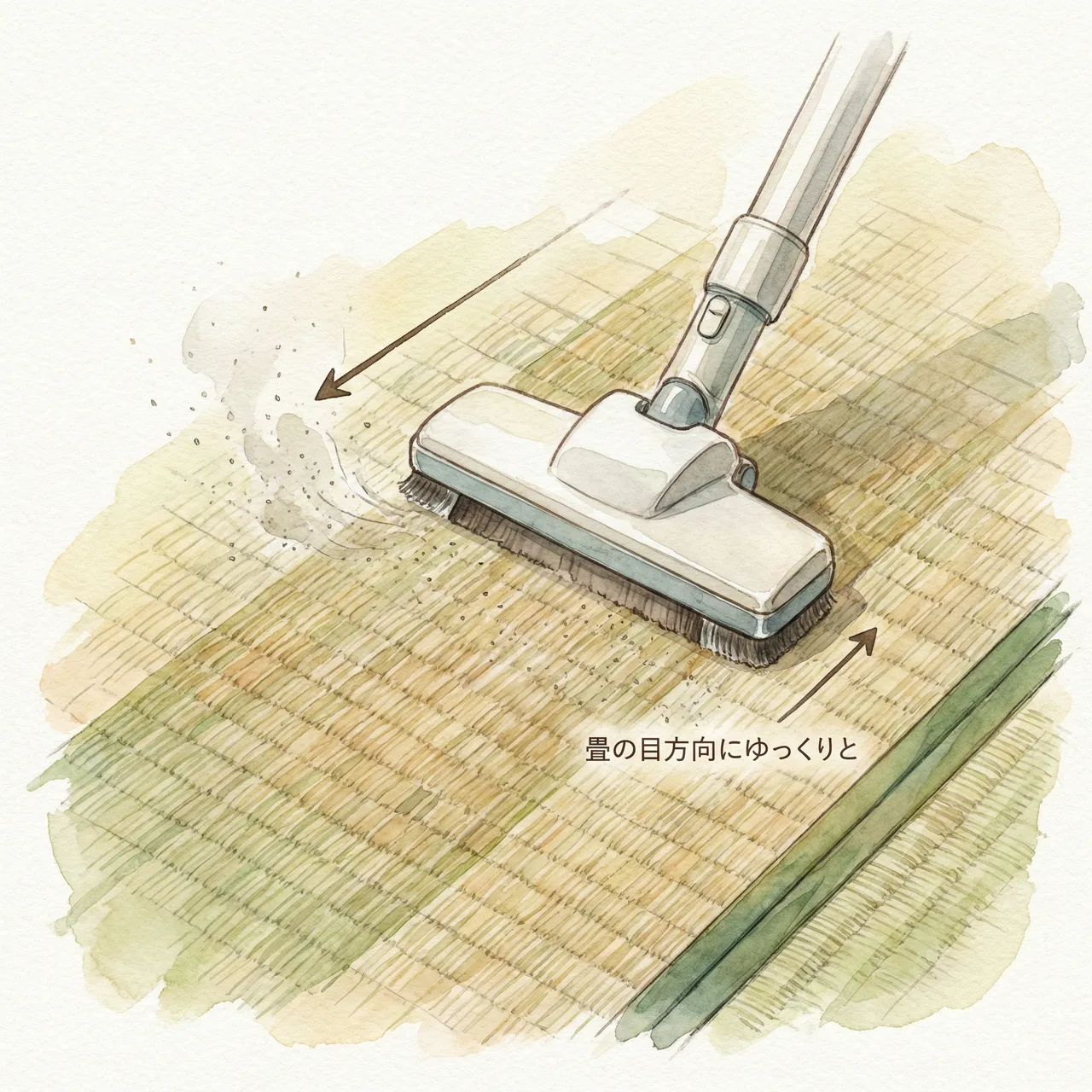
Vacuum Along the Grain — Never Wet-Mop
Wet mopping is the primary cause of igusa mold — avoid it entirely.
For regular cleaning, run a vacuum slowly along the direction of the igusa weave (not across it). Spend 40–60
seconds per mat section to pull out trapped dust and mites from within the weave.
For surface dirt, use a dry cloth — press, don't scrub.
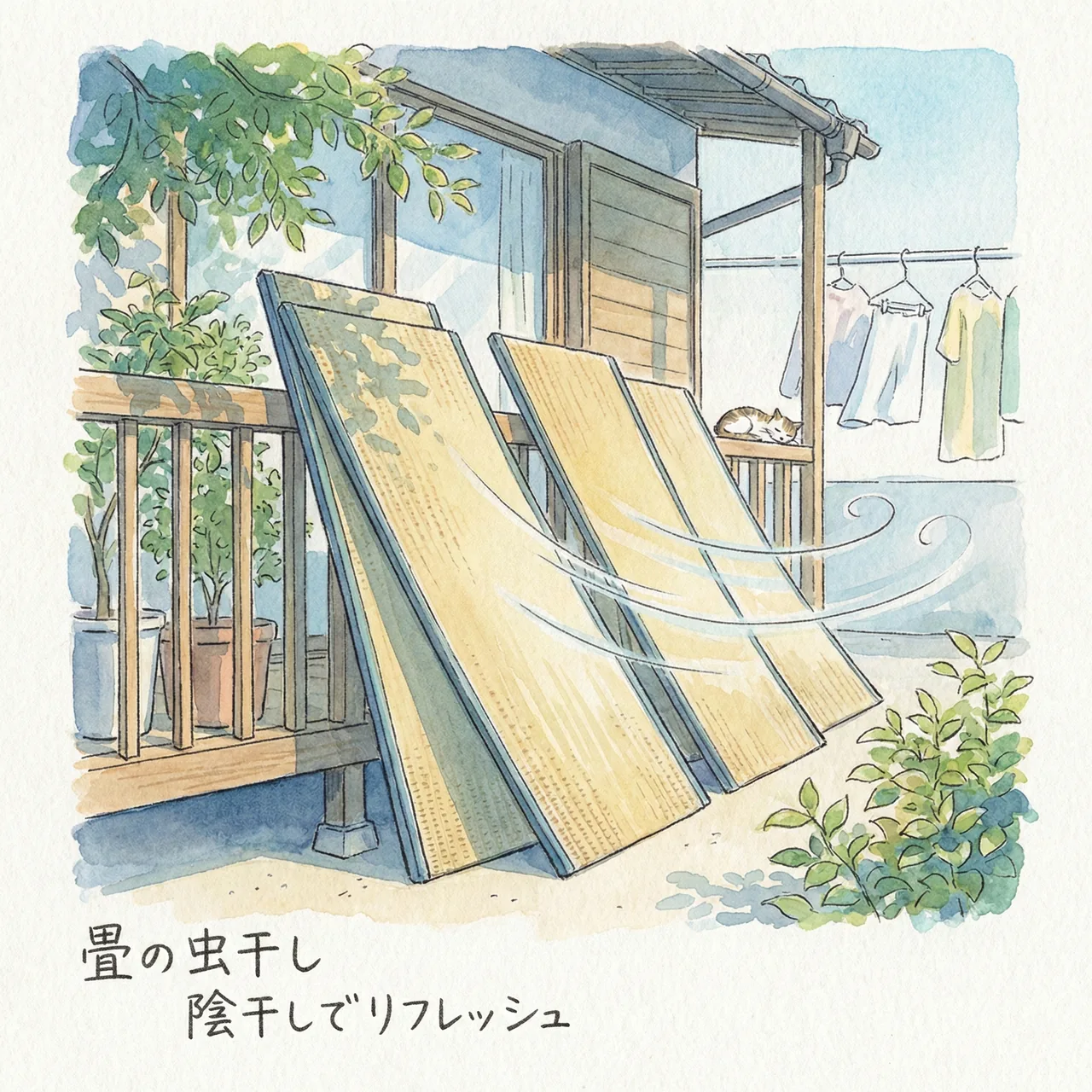
Air Out Monthly in the Shade
One of the advantages of oki-datami is that they can be lifted and moved easily.
Once or twice a month on a dry day, stand them up in a well-ventilated spot for a few hours to release
accumulated moisture.
Keep out of direct sunlight during airing — UV exposure accelerates fading and weakens the fibers.
6. Keeping Mats in Place: Anti-Slip and Storage Tips
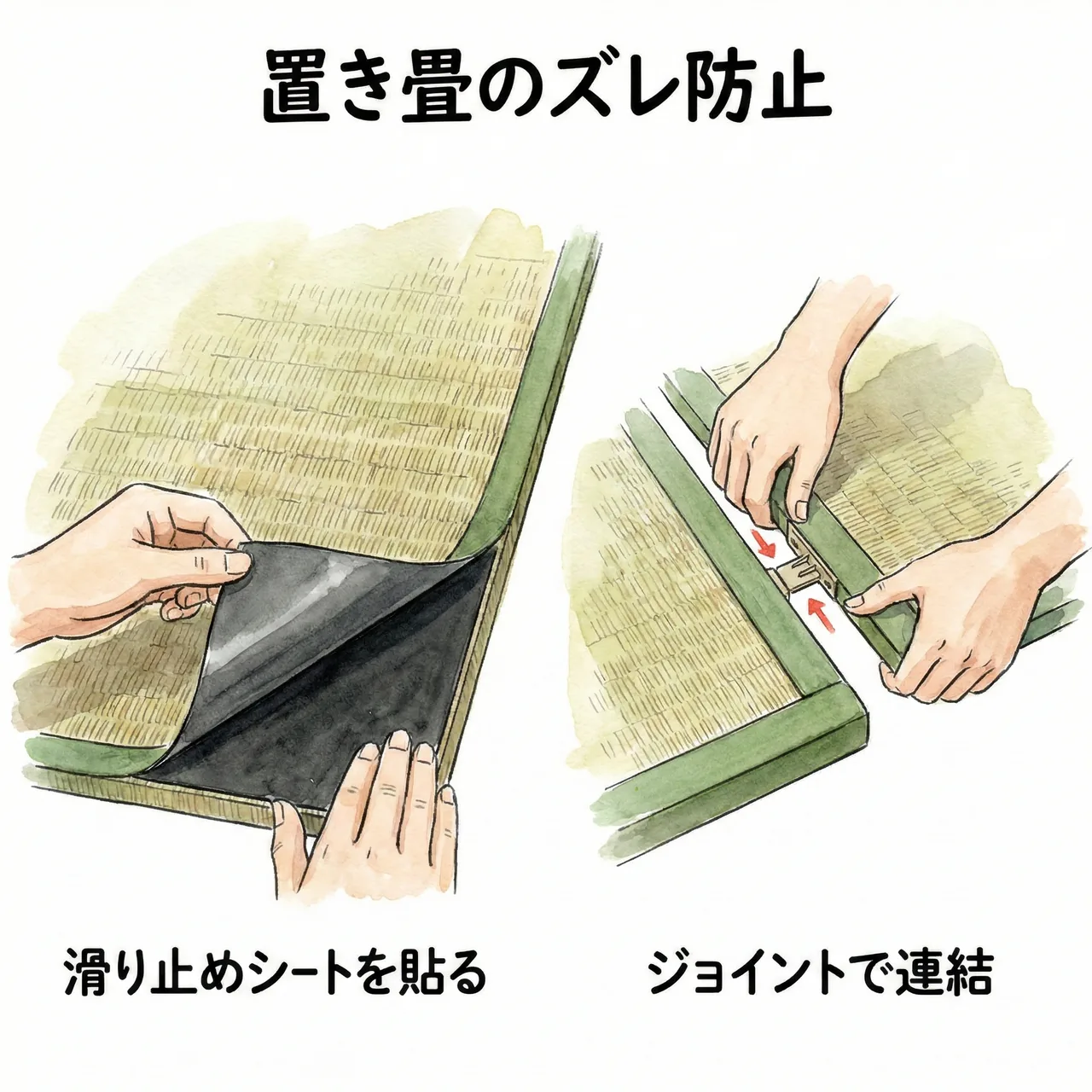
The main frustration with mats on smooth hardwood is slipping underfoot.
Use Connectors and Rubber Grip Sheets
Most oki-datami units include locking connectors or a non-slip backing already built in.
If your floor is particularly smooth and the mat still shifts, a sheet of rubber non-slip mesh (the kind sold
for cabinet lining) placed between the mat and floor is inexpensive and highly effective.
In households with children running around, this is a must-have addition.
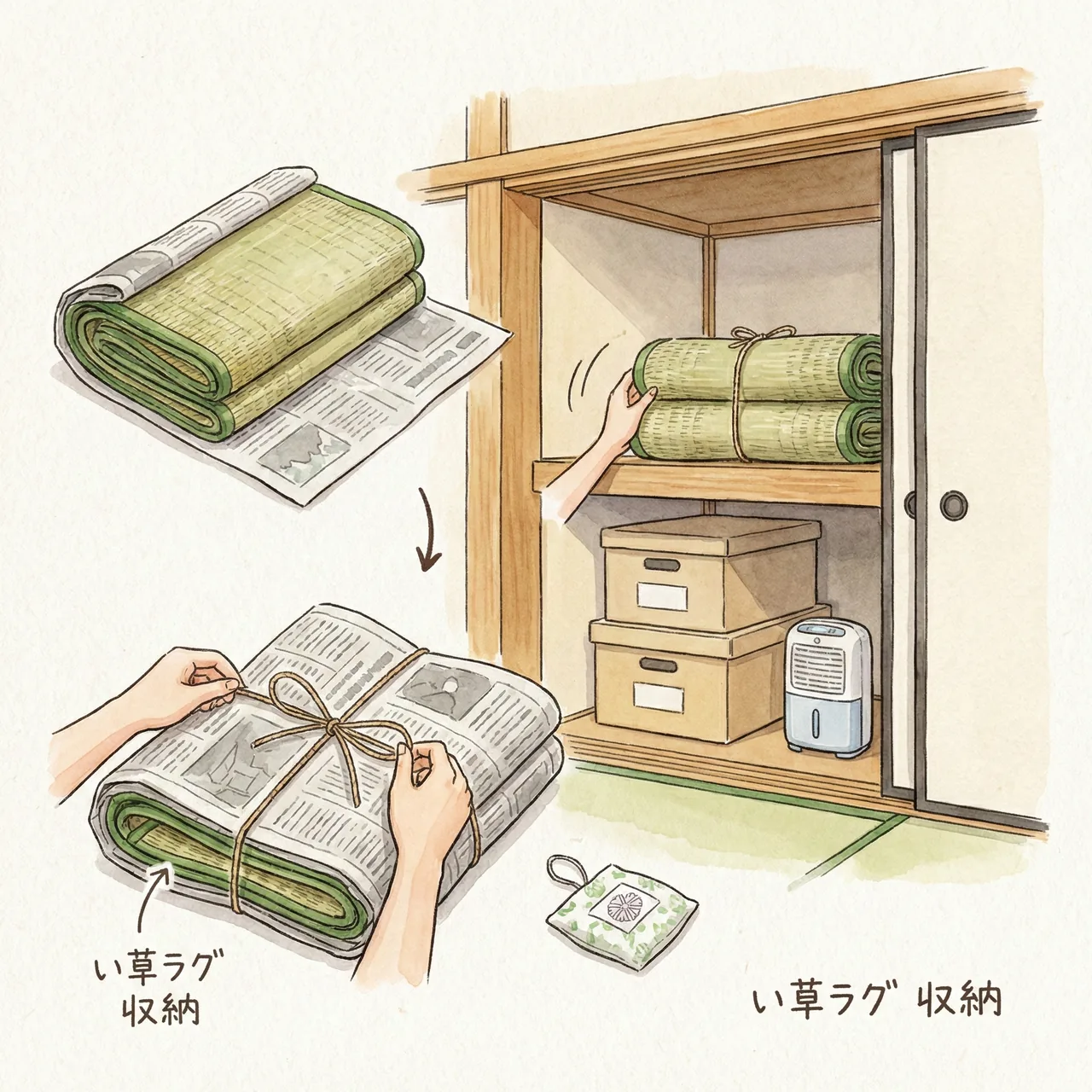
Off-Season Storage
Before storing for winter (or summer), air the mats thoroughly until completely dry.
Wrap in old newspaper, which absorbs residual moisture and reduces humidity in storage.
Never seal in plastic bags — trapping moisture inside is the fastest way to grow mold.
7. Recommended Japanese Igusa Brands
Trusted domestic manufacturers you can buy from with confidence.
Ikehiko Corporation (Fukuoka, Chikugo)
One of Japan's largest igusa mat manufacturers.
Ikehiko sources premium Kumamoto-grown igusa and offers a wide lineup spanning modern designs to traditional
styles.
Their signature "Hinoki Essence Treated" series adds antibacterial and deodorizing properties from Japanese
cypress extract — particularly popular with families with young children.
Denim-fabric-edged igusa rugs and other contemporary collaborations make Ikehiko a good choice for buyers who
want igusa to fit a non-traditional interior.
Hagihara (Okayama, Kurashiki)
Founded 1892 — the makers behind the prestigious "Kakegawa-ori" weave.
Kurashiki is another of Japan's storied igusa weaving towns. Hagihara, established in the Meiji era, is
renowned for the "Kakegawa-ori" technique — a dense, high-tension weaving method using premium domestic igusa
that produces a noticeably springy, cushioned feel underfoot.
The resulting mats are exceptionally durable and have a slightly raised texture that feels luxurious.
Hagihara's modern-traditional design range — mixing clean geometric patterns with igusa's natural color —
makes them a natural fit for contemporary living rooms.
Kouhin (Hiroshima)
Over 100 years in operation — tatami specialists shipping directly from their own
factory.
Hugely popular in Japan's online marketplace, Kouhin specializes in oki-datami made exclusively from
Yatsushiro-grown igusa (Kumamoto Prefecture), with traceable provenance documentation for each mat — you know
exactly which farmer grew the grass you're walking on.
Manufacturing in-house and shipping direct keeps prices competitive for what is genuinely premium quality.
If you want the authentic igusa fragrance and don't want to compromise on origin, Kouhin is the most
consistent choice.
8. Frequently Asked Questions
I'm worried about dust mites and mold. What's the prevention?
Humidity management and regular vacuuming are everything.
Dust mites thrive on moisture and organic material (dust, dead skin). Ventilate on dry days, vacuum regularly to
remove their food source, and air the mats monthly — and they won't be able to establish themselves.
If you want extra protection, look for mats treated with anti-mite or antibacterial coatings.
The igusa smell is very strong right out of the box. Is that normal?
Completely normal — and it settles down within 1–2 weeks.
The strong scent when you first open the packaging is the natural combination of fresh igusa and the residue of
the dorozome (mud-dyeing) process. It's a sign of quality.
Keep the room ventilated during the first week and the fragrance will soften to a pleasant, subtle grassy note.
I spilled something on the mat. What should I do?
Act immediately: press a dry cloth to absorb the liquid, then use a hair dryer on a cool setting to finish
drying.
Do not rub — press and lift. Time is critical with igusa because the fibers absorb moisture quickly.
Once the moisture is removed, keep drying until no damp feeling remains.
For colored spills, gently wipe with a tightly wrung damp cloth after absorption, then dry completely.
Can I put heavy furniture on it?
Heavy furniture will cause indentations — distribute the weight.
Place protective pads or a flat board under furniture legs to spread the load and prevent permanent compression
marks.
Mild indentations can sometimes be improved by laying a damp cloth over the dent and steaming it lightly — the
fibers absorb moisture and may swell back up.
How long will an igusa mat last?
3–5 years with regular care is a reasonable expectation.
Signs it's time to replace: noticeable surface fraying, significant UV discoloration, or a musty smell that
doesn't resolve with airing.
For flat igusa rugs, reversible types can extend effective life by using both sides.
Should I choose an igusa rug or oki-datami?
For easy, seasonal use: igusa rug. For a serious tatami-style zone: oki-datami.
Igusa rugs are lightweight, foldable, and in some cases washable — low commitment and easy to try.
Oki-datami has more cushioning and insulation, provides better noise damping, and gives you a defined
Japanese-style floor area. If you want to recreate the feeling of a traditional tatami room in a modern apartment,
oki-datami is the right choice.
Final Thoughts: The Luxury of Bare Feet on Natural Grass
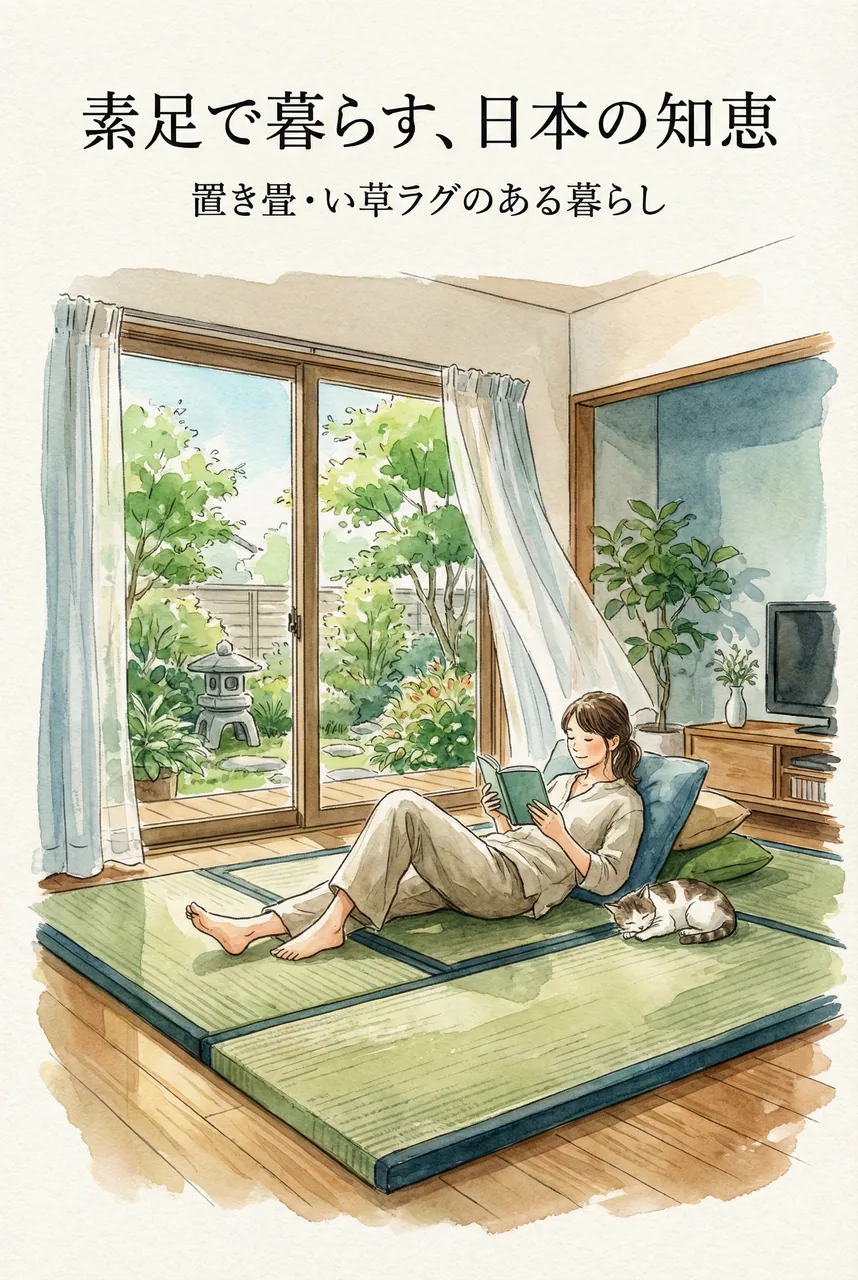
There's a reason Japanese people feel an immediate sense of calm when they step onto tatami — the texture
underfoot, the faint green fragrance, the specific firmness that is unlike any other floor surface.
A single half-mat of igusa on your hardwood floor is enough to create a place where the air is a little
different. A corner to exhale in.
Start small. See if it changes the feeling of the room.

Tatami Rug Guide: Bring a Tatami Feel to Any Floor

Japanese Noren & Sudare: Divide Space and Stay Cool in Summer