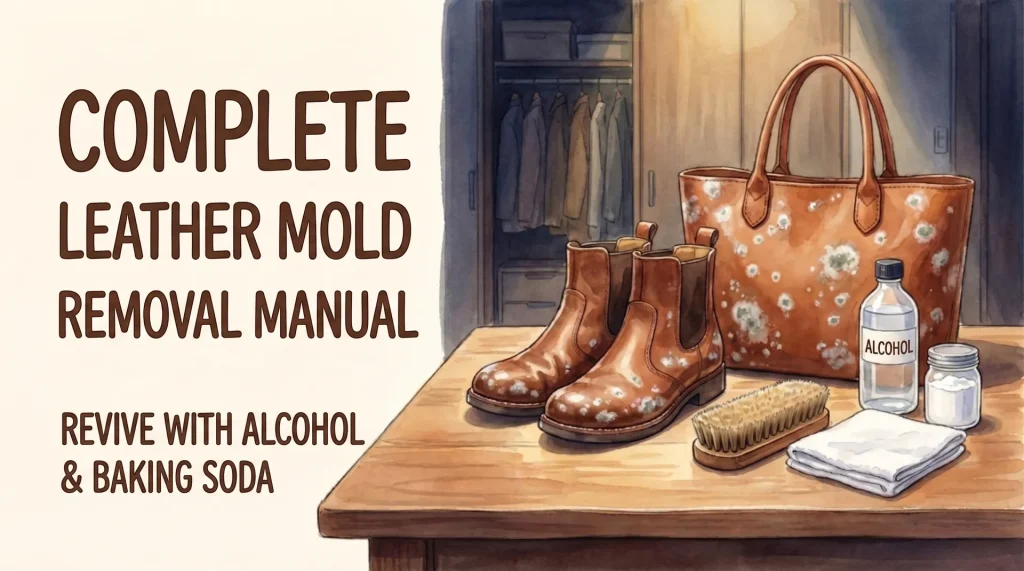
"I pulled my bag out of the closet after months and it was covered in white..."
"My leather shoes in the shoe cabinet have a fuzzy mold growing on them..."
Finding mold on a beloved leather item is genuinely distressing.
But whatever you do, do not wipe it with a damp cloth.
Adding moisture activates mold and accelerates the damage significantly.
The good news: early-stage leather mold can be removed completely using the right technique, leaving the leather restored to like-new condition.
This guide covers how to tell mold from natural bloom, the correct use of alcohol and specialist cleaners, a baking soda deodorizing trick, and the storage habits that keep mold from ever coming back.
Before you give up and throw it out — try this first.
Quick Reference: Leather Mold at a Glance
| Symptom | Assessment | Treatment |
|---|---|---|
| White powder on surface | Test with a hair dryer — if it melts, it's "bloom" (natural wax), harmless | Buff with a dry cloth only |
| Light white fuzzy mold | Surface level only; roots are shallow | Brush outdoors → dry wipe → apply conditioner |
| Black / blue mold (severe) | Has penetrated the leather fibers | Sanitize with rubbing alcohol or mold-specific spray |
| Musty smell remains | Invisible mold still active inside | Seal with baking soda pack for several days |
1. White Powder: Mold or Natural "Bloom"? How to Tell
Not every white powder on leather is mold.
Quality leather contains natural waxes and oils that can surface and oxidize over time, creating a white haze on the surface. This phenomenon is called "bloom" (or spew) — and it's completely harmless.
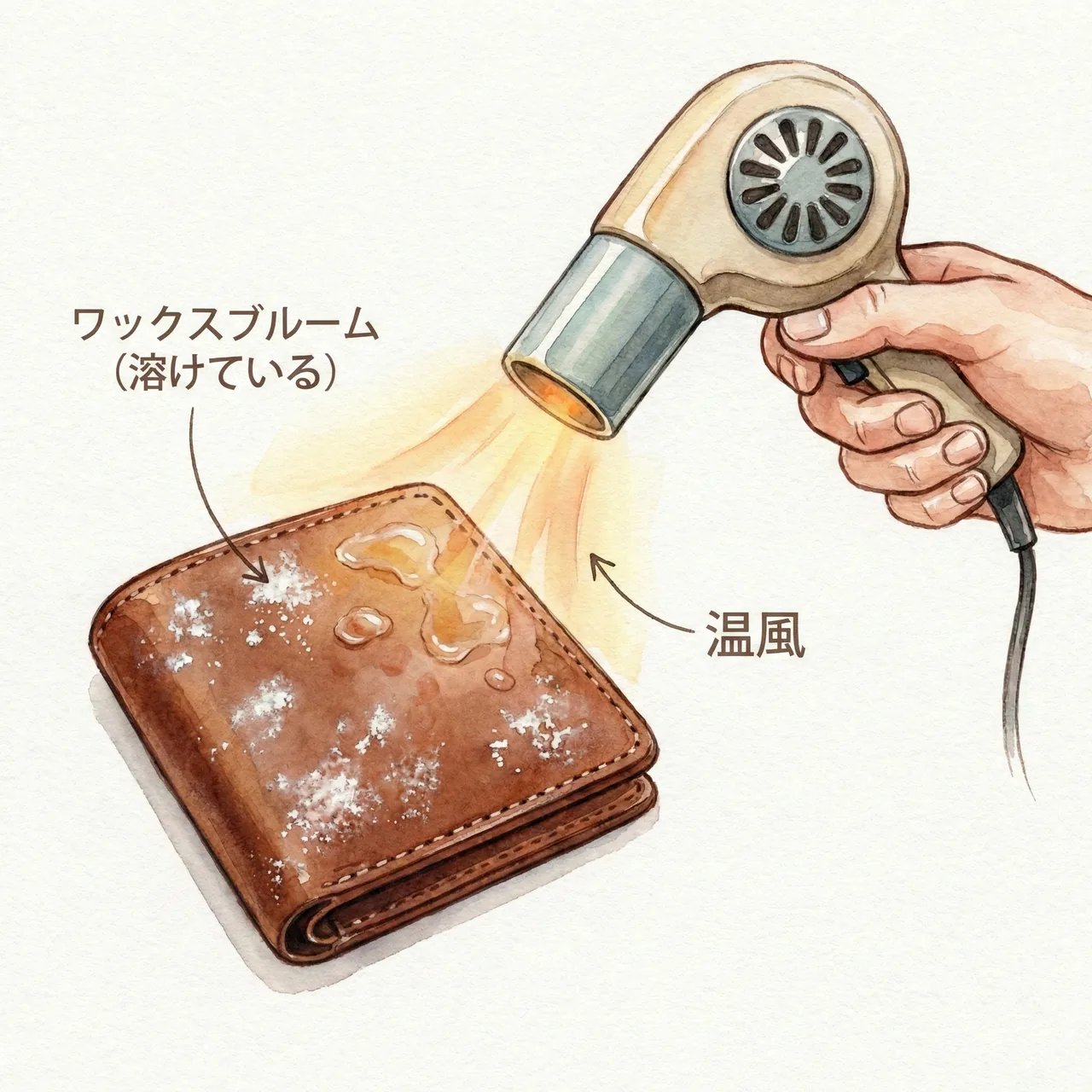
The hair dryer test
The simplest way to tell them apart is heat.
Hold a hair dryer a few inches from the white area and apply warm air for a few seconds.
● It melts and becomes transparent → "Bloom" (natural oil/wax).
Simply buff with a dry cloth to work it back into the leather — the surface will look restored and develop a nice sheen.
● No change, or the texture is fuzzy → Mold.
Proceed with the removal steps below.
2. What Causes Mold — and the Two Mistakes That Make It Worse
The instinctive reactions to finding mold on leather are unfortunately often the wrong ones.
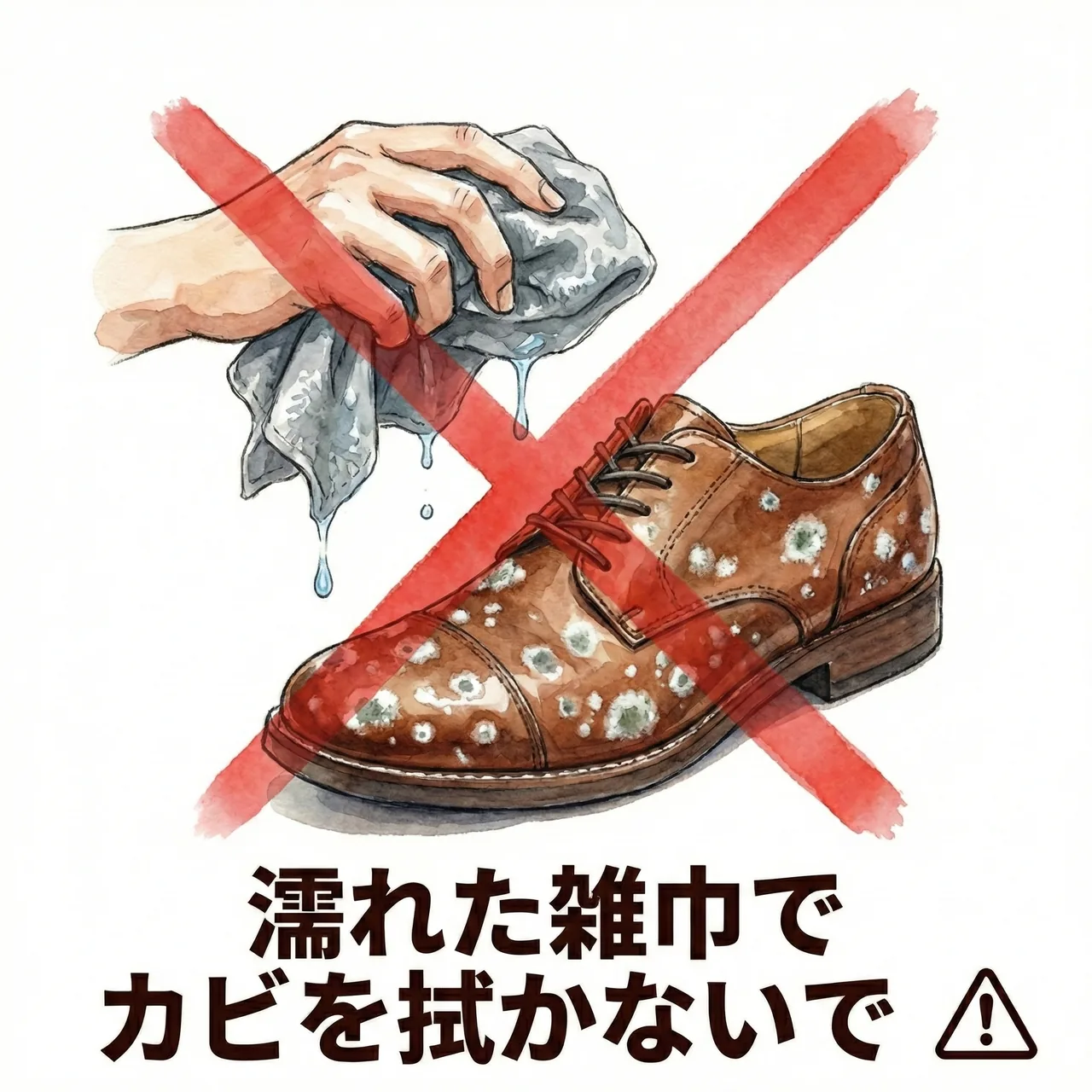
Moisture is mold's best friend — never use a wet cloth
"It's a stain, so I'll wipe it off with water" — this is exactly backwards.
Applying water gives mold more moisture to grow with, accelerating the spread dramatically.
For the same reason, washing leather in a sink or bathtub (without a specialist leather-safe cleaner) is high-risk. Use alcohol or antibacterial products instead of water to treat mold.
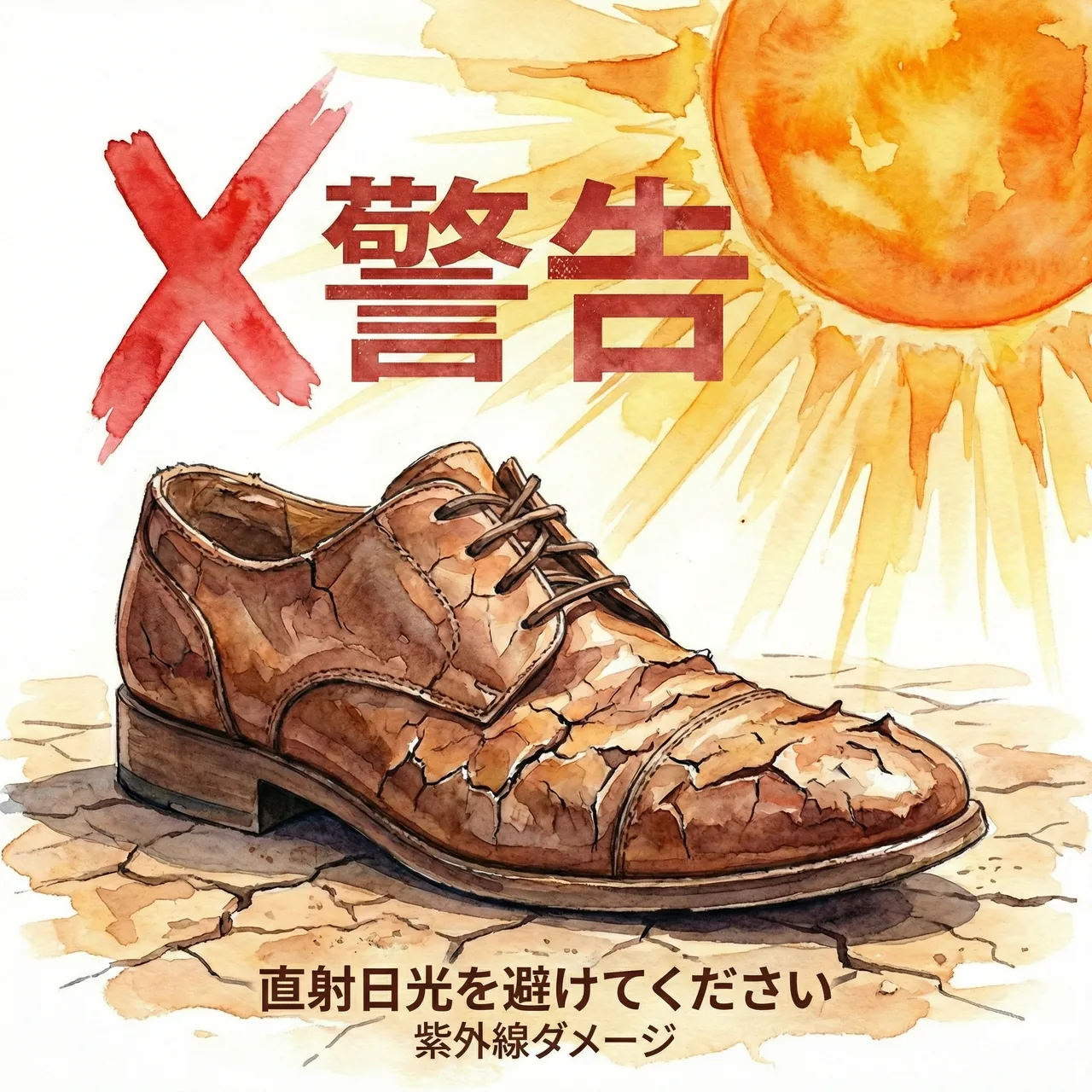
UV light destroys leather — never dry in direct sunlight
"Sunlight disinfects!" — also wrong for leather.
Leather is made from protein, just like human skin — but unlike skin, it can't self-repair after sun damage.
Intense UV radiation breaks down the fiber structure, making leather stiff, brittle, and prone to cracking.
Always dry leather in a shaded, well-ventilated spot.
3. Mild White Mold: Brush and Dry Wipe
If it's a light dusting of white mold — powdery or slightly fuzzy but still just on the surface — the roots haven't penetrated deeply and physical removal is sufficient.
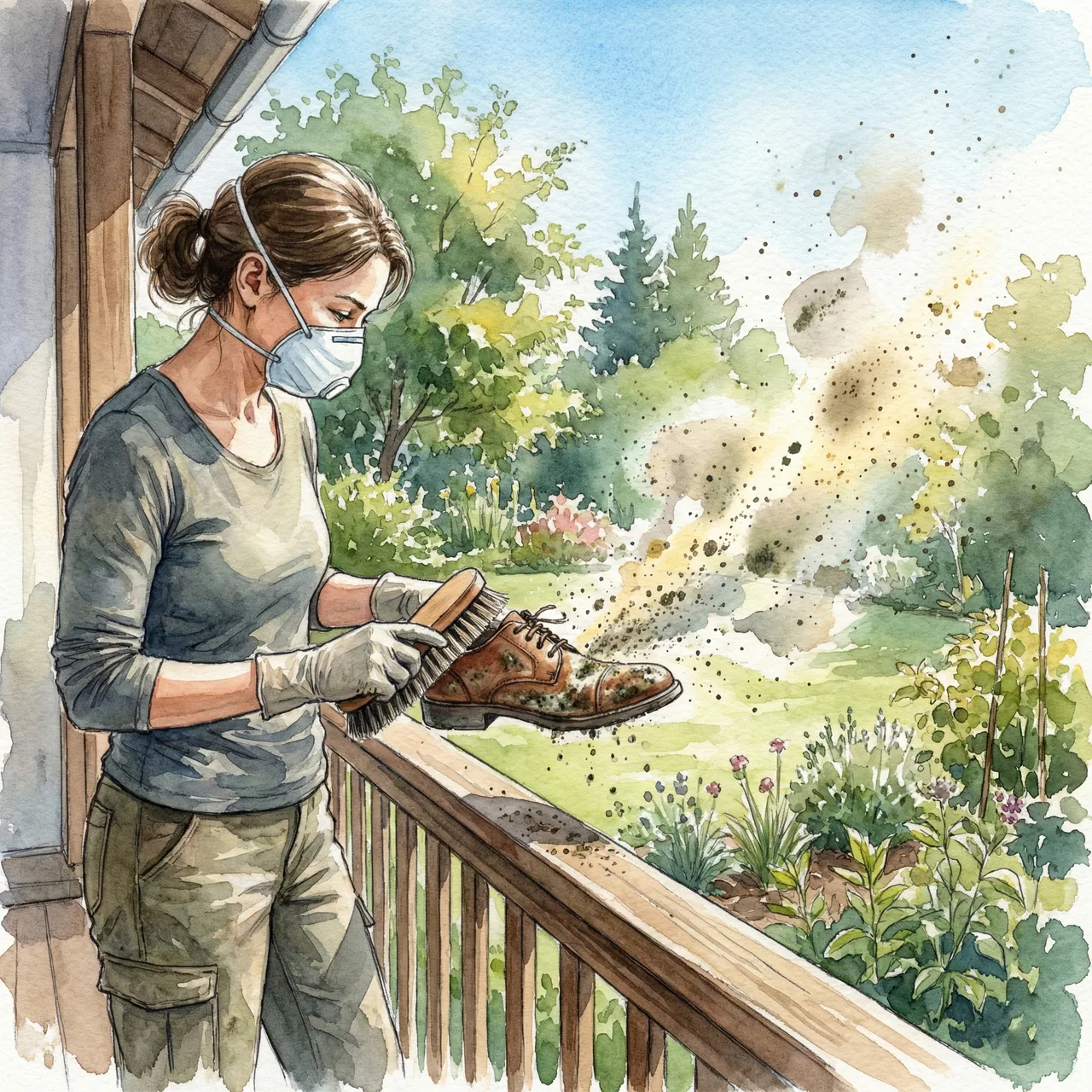
Work outdoors — mold spores spread when disturbed
Brushing mold inside releases spores into the air, which can settle on other furniture, clothing, and bags nearby.
Always work outdoors (on a balcony or in the garden), wearing a mask.
Use an old brush or cloth to sweep the mold from the surface.
(Dispose of the brush and cloth afterward, or sterilize with boiling water.)
Dry wipe, then apply leather conditioner
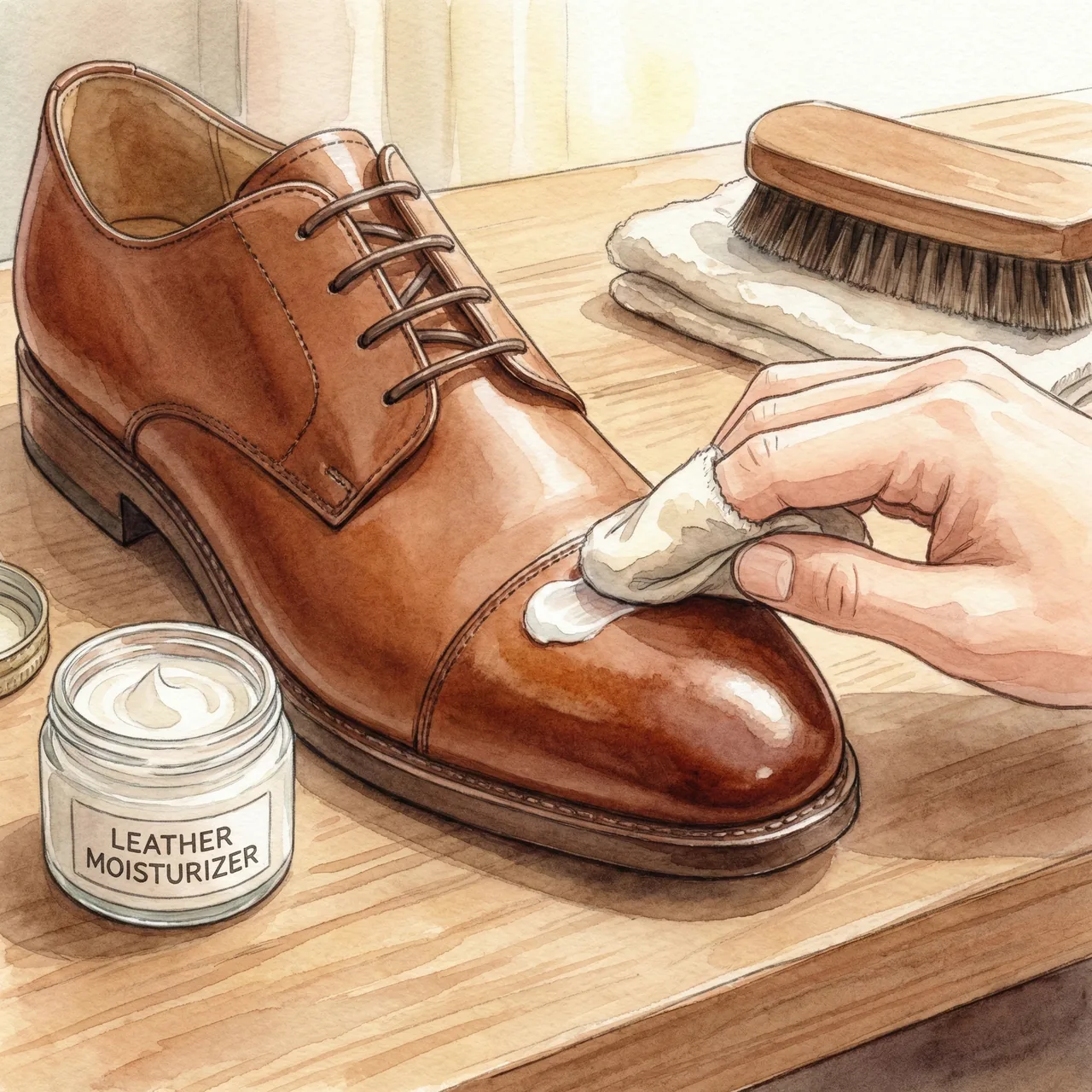
Once you've brushed the surface mold away, use a clean dry cloth to wipe the entire item gently.
Mold consumes the leather's oils as it grows, so follow up with a thin coat of delicate leather cream or conditioner to restore moisture and protect the surface.
4. Severe Black or Blue Mold: Rubbing Alcohol and Specialist Cleaner
When mold has penetrated into the leather fibers — black or blue discoloration, or a persistent smell — sanitizing is required.
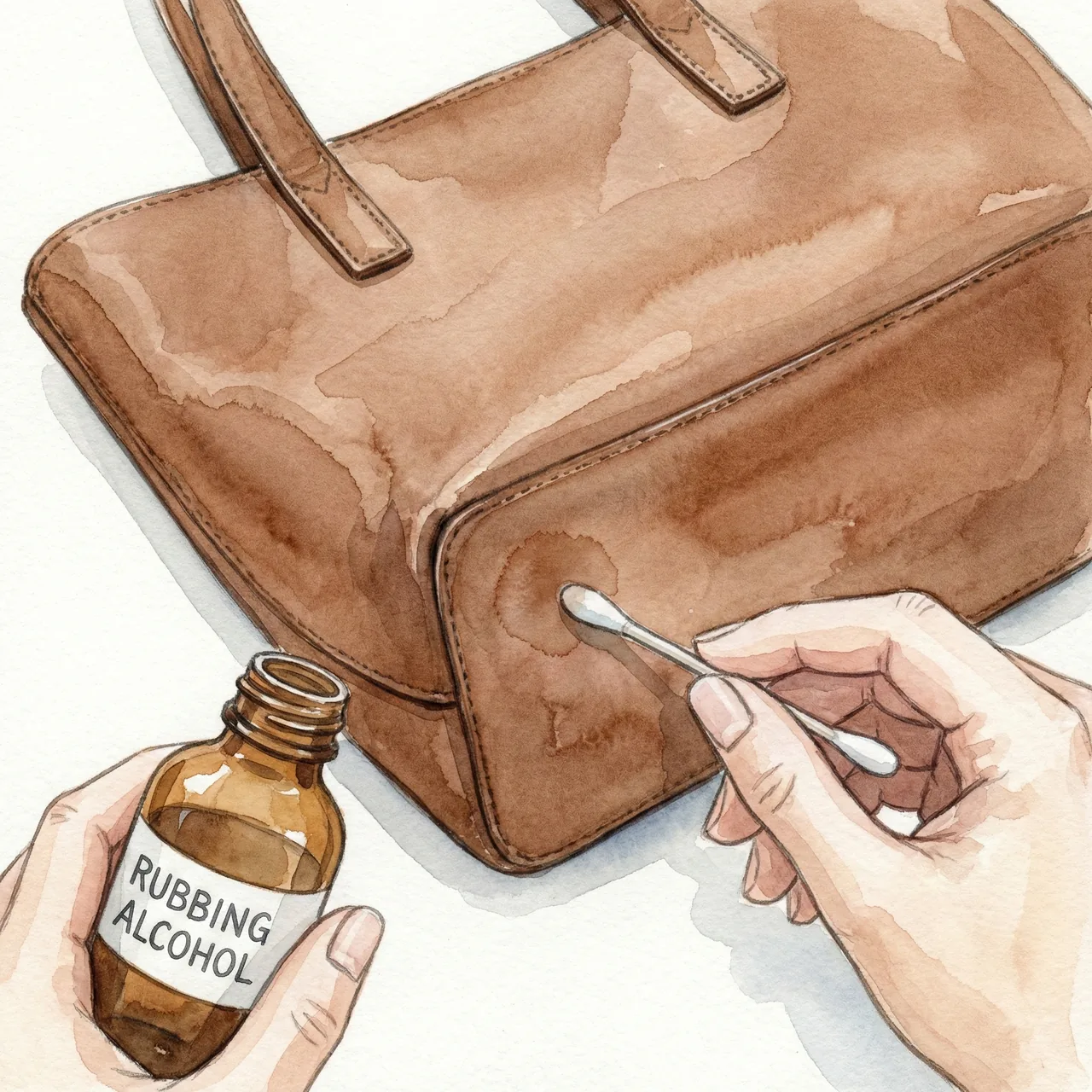
Always patch-test alcohol before applying broadly
Rubbing alcohol (70–80% ethanol), available at pharmacies, effectively kills mold.
However, alcohol can cause color loss or staining on some leather finishes.
Before treating the visible mold, dab a cotton swab with alcohol and test an inconspicuous spot. If the color holds after a minute, proceed.
Dampen a clean cloth (not dripping) with alcohol and gently press-blot the mold — don't rub, which spreads spores.
[Tokyo] Columbus — "Leather Cure Mold Mist"
A specialist treatment from Japan's leading shoe care brand — designed for exactly this.
Columbus, Japan's top shoe cream brand, developed this mold-removal spray specifically for leather. The antimicrobial agents are also used in food and cosmetics — effective against mold while minimizing damage to the leather surface.
Unlike plain alcohol, it disrupts the mold's membrane structure without harsh bleaching or drying.
It also functions as a preventive spray after treatment — a must-have item before the rainy season.
5. Eliminating That Musty Smell: The Baking Soda Method
The surface looks clean — but there's still that telltale musty odor when you bring it close. That means invisible mold is still active inside. Baking soda is your answer.
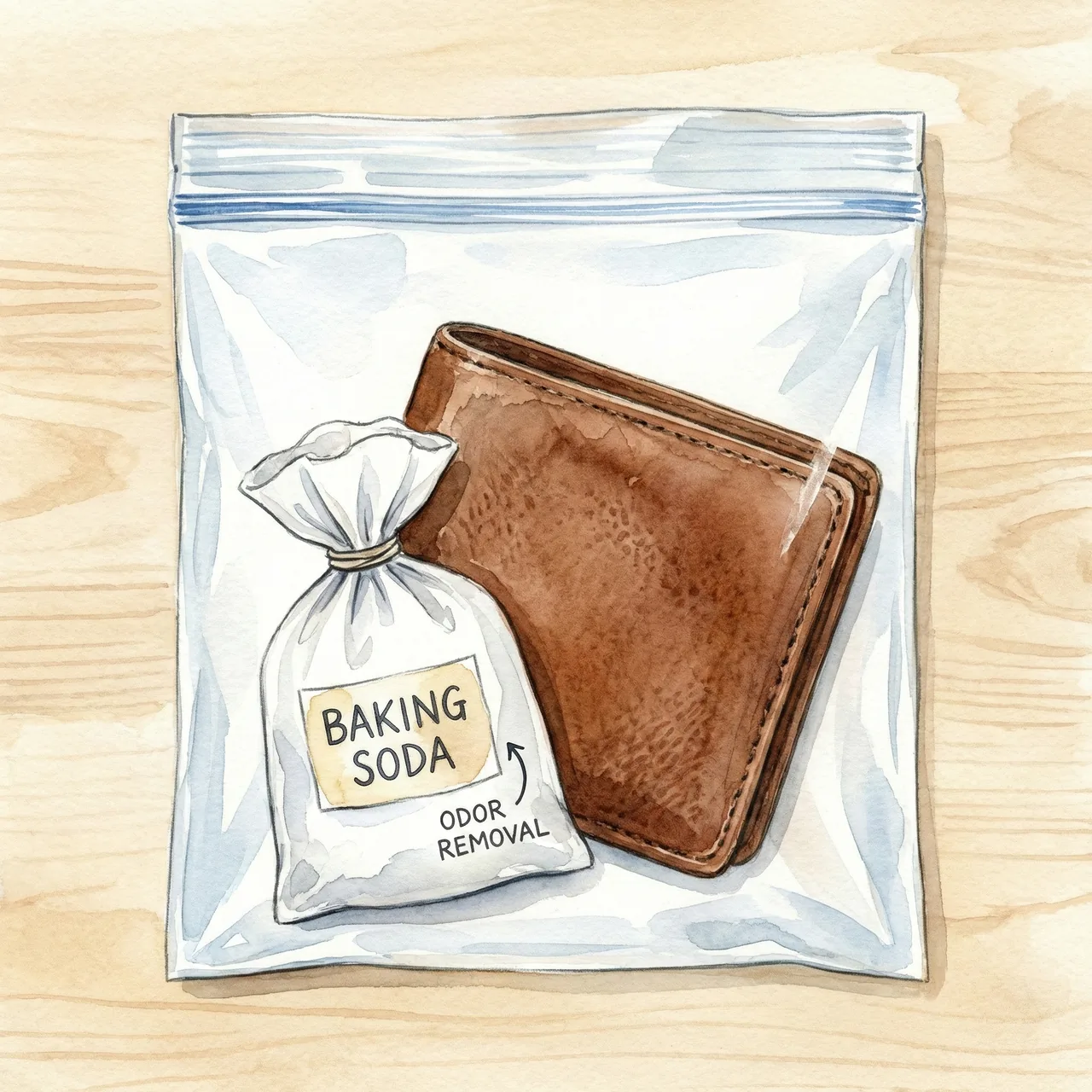
Seal with baking soda and let it absorb
Baking soda is a powerful deodorizer.
1. Add several tablespoons of baking soda to a non-woven fabric bag (a tea filter or dashi bag works perfectly).
2. Place the bag and the leather item together inside a large sealable plastic bag (a zip-lock style).
3. Seal tightly and leave for several days to a week.
The baking soda will absorb the musty odor from the enclosed space.
※ Make sure the baking soda powder doesn't directly contact the leather surface.
6. Prevention and Storage: Ventilation and Avoiding Over-conditioning
After successfully removing mold, preventing its return is the priority.
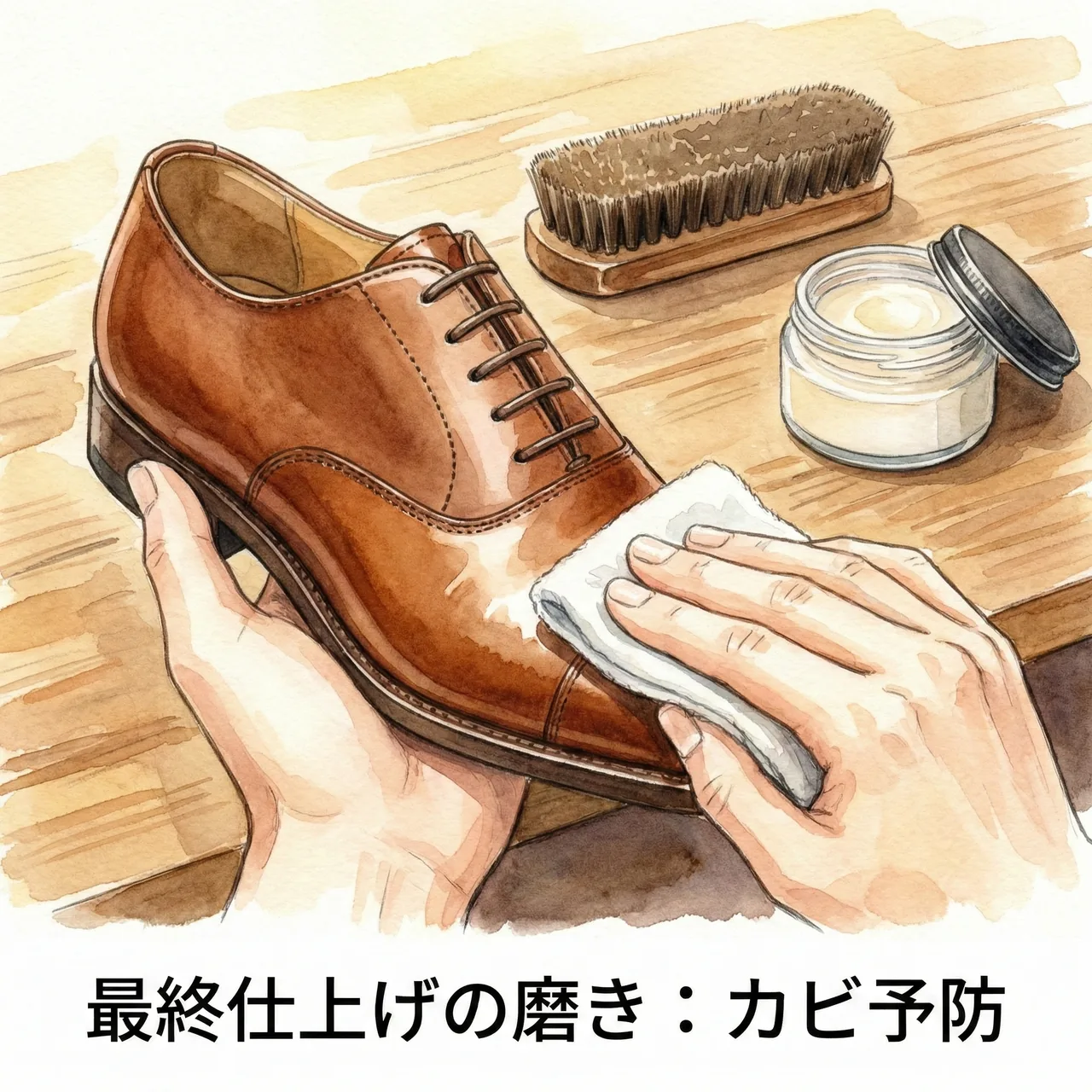
Too much conditioner feeds mold — always buff off the excess
Out of care for your leather goods, are you applying oil or cream frequently? Excess oil — especially combined with accumulated dust — becomes a perfect food source for mold.
After applying any conditioner, always buff the entire surface with a clean dry cloth to remove all excess. This is non-negotiable.
[Shimane] Izumo Carbon — "Sumi8" (Charcoal Humidity Control)
Semi-permanent Japanese humidity control charcoal — a revolution for shoe cabinets and closets.
Developed by a construction company in Shimane Prefecture, Sumi8 regulates humidity rather than just absorbing it — so unlike disposable dehumidifier packs, it never needs replacing.
When humidity is high, it absorbs. When the air is dry, it releases. This intelligent regulation maintains the ideal moisture balance for leather goods in any storage space.
A mini-size version designed to go directly inside leather shoes is also popular.
7. Frequently Asked Questions
Can mold spread to other leather items stored nearby?
Yes — there's a real risk of cross-contamination.
Mold spores drift through the air and settle on surrounding surfaces.
As soon as you find a moldy item, isolate it immediately. Check everything else stored in the same space, air it out in a well-ventilated spot, and disinfect the storage area itself with alcohol.
What about mold on suede (napped leather)?
The basic approach is the same, but you cannot apply conditioner cream to suede.
1. Use a wire brush or suede brush to work the mold loose from the nap.
2. Apply alcohol or a mold mist spray and press-blot with a cloth.
3. Dry in a shaded, ventilated spot.
4. Finish with a suede-specific nourishing spray and brush the nap back into shape.
When should I take it to a professional cleaner?
When the mold has eaten into the leather and caused discoloration — that's a job for a specialist.
Surface mold is manageable at home. But if mold has decomposed the leather fiber itself, leaving bleached patches or color changes, color restoration (re-dyeing) is needed.
Don't try to force it — take it to a leather specialist cleaning service.
What are the rules for long-term leather storage?
Three principles: airflow, low humidity, darkness.
1. Clean the leather and apply a light coat of conditioner before storing.
2. Store in a non-woven fabric bag (never plastic — sealed plastic creates the perfect mold incubator).
3. Include a humidity-control item (dehumidifier pack or Sumi8 charcoal) and air it out regularly.
Complete sealing is the fastest route to destroying leather. Let air in at least once a month.
Does a leather-specific anti-mold spray actually work?
Yes — especially effective as a preventive treatment before the rainy season.
Columbus's "Leather Cure Mold Mist" and similar specialist sprays can be used both reactively and preventively.
A single spray application in May (before the rainy season begins) significantly improves your odds of getting through summer mold-free.
After spraying, allow to dry fully and buff off any residue with a dry cloth.
Final Thoughts: Try the Care Before You Give Up.
When people find mold on a leather item, many assume it's ruined and throw it away.
But leather is a remarkably tough material at its core.
Remove the surface mold, and underneath it, the leather is almost always in far better shape than it looks.
An item you've cleaned and nursed back from mold tends to feel more precious than it did before. Don't let humidity win — take care of your leather companions, and they'll last for decades.
Leather Shoe Care Guide | From Daily Cleaning to Mirror Shine
Japanese Leather Wallet Guide | Tochigi vs. Himeji Leather Explained