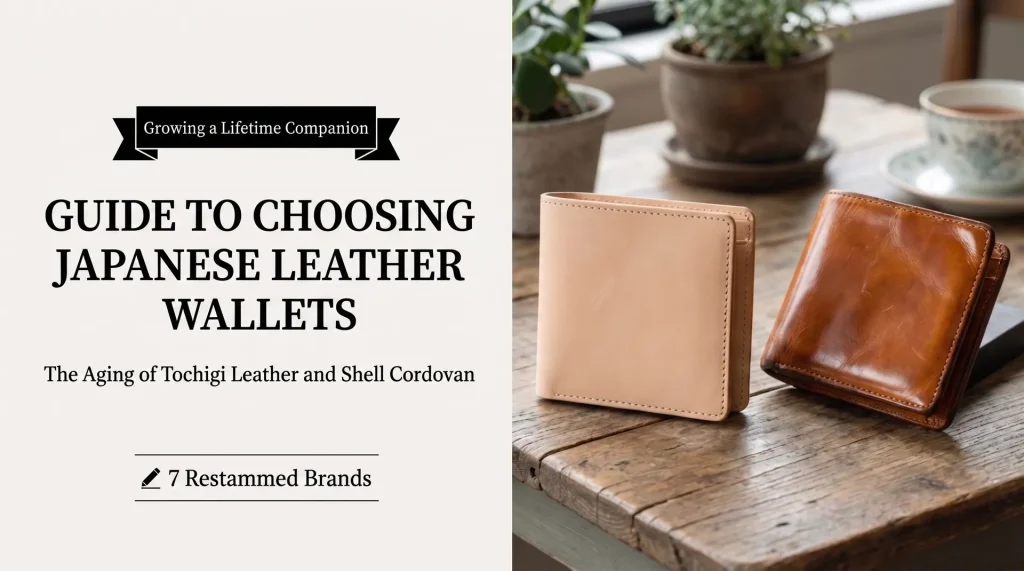
The seven Japanese leather wallet brands most worth buying are GANZO, WILD SWANS, CYPRIS, Tsuchiya Kaban,
PORCO ROSSO, Hender Scheme, and yuhaku — craftsman-run brands working with vegetable-tanned cordovan,
bridle, and Tochigi Leather that age beautifully instead of wearing out.
In other words: stop paying for a logo.
Most luxury wallets from overseas brands are coated with pigment to prevent surface scratches. They look their best
the day you buy them — and slowly deteriorate from there.
Japanese leather wallets work the opposite way.
Tochigi Leather and cordovan, tanned with plant tannins, start life unfinished.
As you use them, they deepen in colour and develop a patina — aging into something that belongs
entirely to you.
This guide introduces 7 Japanese wallet brands built by craftsmen — pieces you'll still love in ten years.
Quick Reference: 7 Japanese Wallet Brands at a Glance
| Brand | Leather Type | Best For | Price Range | Details |
|---|---|---|---|---|
| GANZO | Cordovan, bridle leather | One serious wallet for life | ¥60,000+ | Details↓ |
| CYPRIS | Shirasagi leather, cordovan | Outstanding quality-to-price ratio | ¥20,000–50,000 | Details↓ |
| Tsuchiya Kaban | Veg-tan (nude) leather | Warm, organic aging character | ¥20,000–40,000 | Details↓ |
| PORCO ROSSO | Tochigi Leather | Rugged, every scratch becomes character | ¥30,000–50,000 | Details↓ |
| Hender Scheme | Natural nude leather | Fashion-forward, cream-to-amber aging | ¥30,000–50,000 | Details↓ |
| yuhaku | Hand-dyed gradient leather | Art-collector aesthetic, one-of-a-kind colour | ¥30,000–60,000 | Details↓ |
| WILD SWANS | Thick bridle leather | Maximum durability; rewards patience | ¥50,000+ | Details↓ |
1. Why Japanese Leather? Tochigi Leather & Cordovan
The real value of a Japanese wallet isn't just in the stitching. It's in the leather itself — and Japan produces two of the world's finest.
Tochigi Leather — The World's Finest Vegetable-Tanned Cowhide
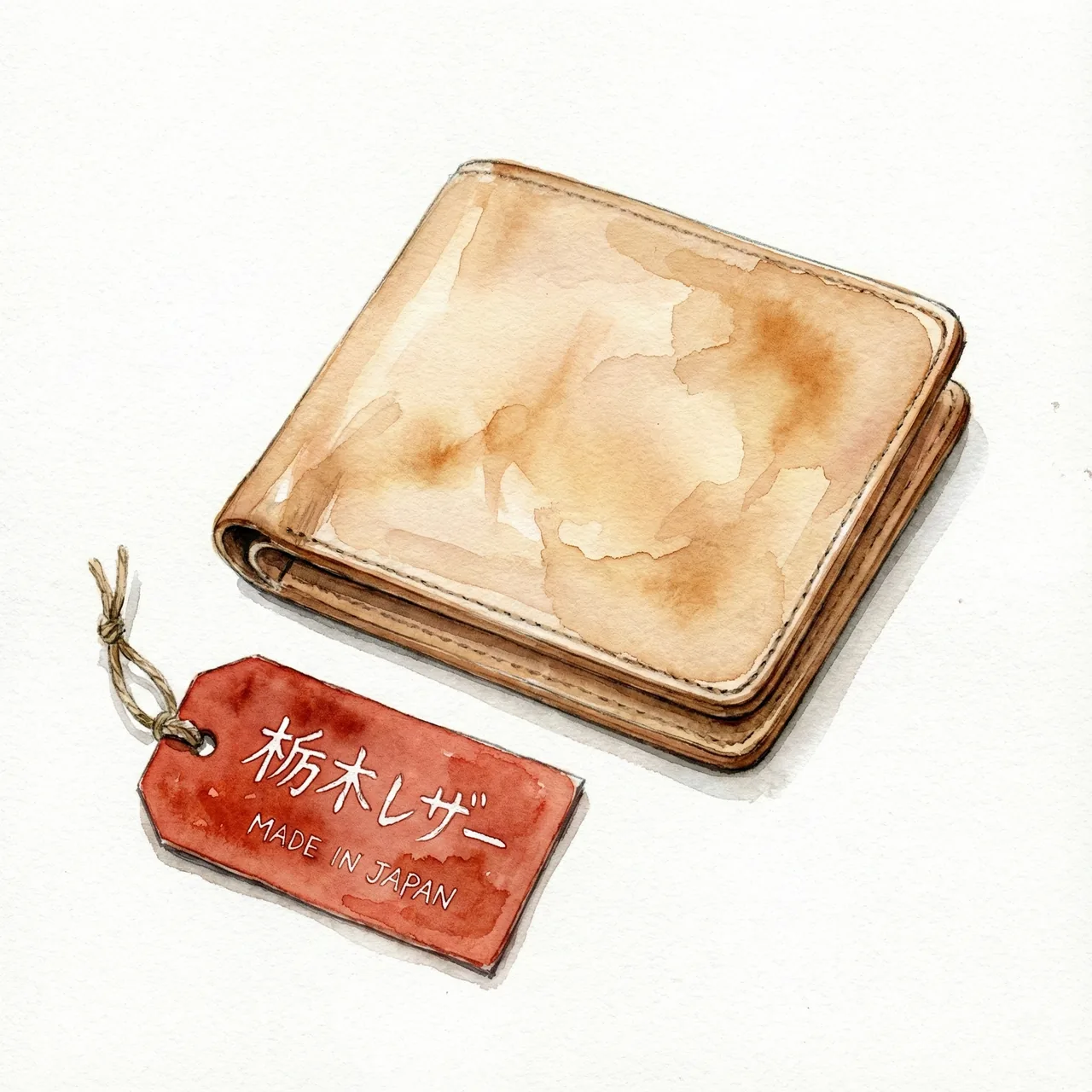
Made in Tochigi Prefecture using a traditional pit-tank vegetable tanning process that takes months and involves
over 20 stages.
The result is extraordinarily durable leather that starts matte and gradually transforms into a deep amber
colour with a lustrous, almost glassy sheen.
The red tag is the proof of authenticity.
Cordovan — "The Diamond of Leather"
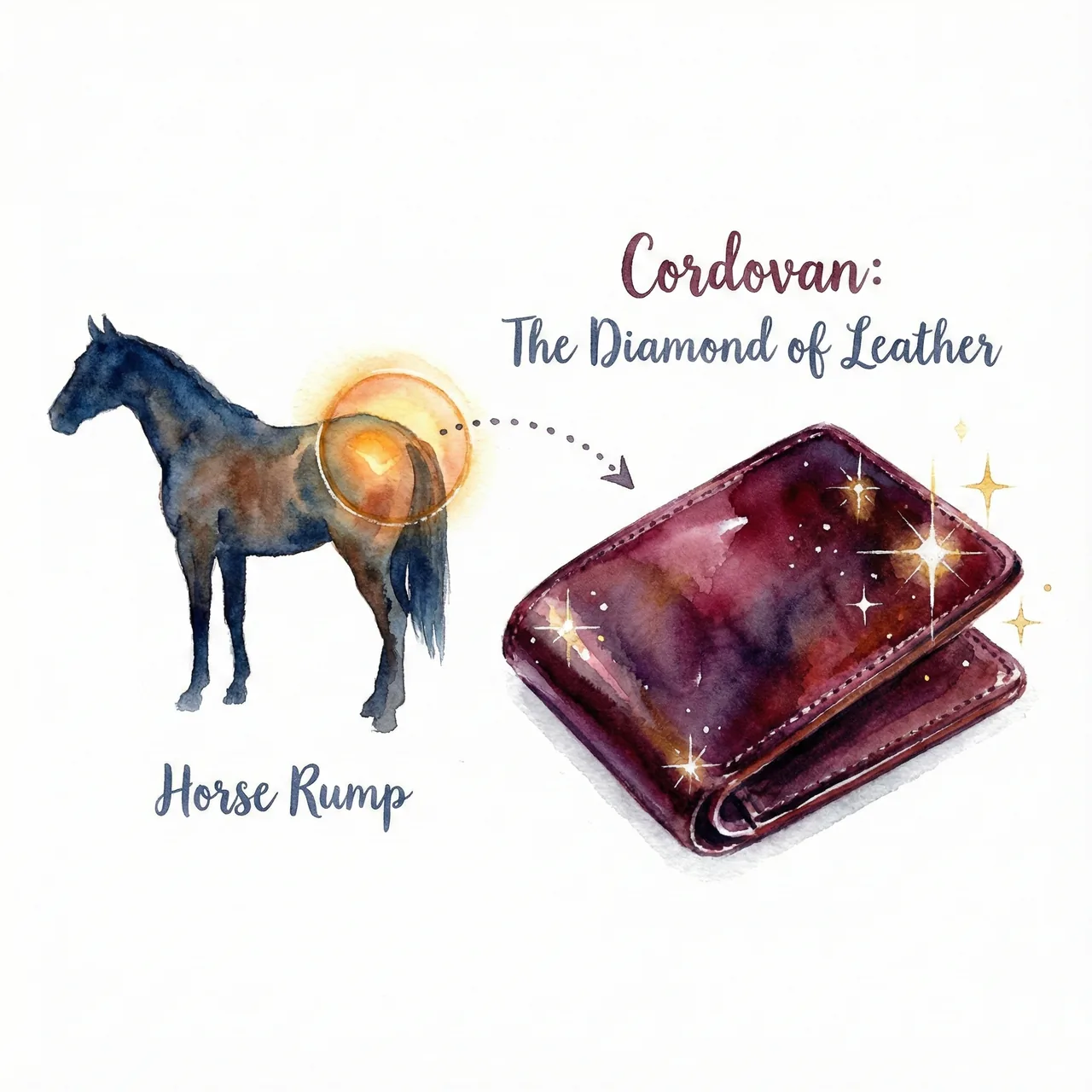
Cordovan is cut from a specific layer in the rump of a horse hide, and only a small usable area exists per
animal — making it extremely scarce.
Only a handful of tanneries in the world produce it at the highest level; Japan's Shinki Hikaku (Hyogo
Prefecture) is among the global elite.
Its hallmarks: a jewel-like translucent sheen and a tensile strength reported to be three times that of cowhide
— earning it the nickname "the diamond of leather."
Did you know: Cordovan isn't technically "leather skin"
Cordovan doesn't come from the surface of the hide at all. It's a dense membrane called the "shell," hidden inside the rump of the hide — tanners shave the outer layers away to reveal it. Each horse yields only two small shells, roughly enough for two or three wallets. That's why a cordovan wallet costs what it does, and why it develops a glow that grained leather physically cannot.
2. Choosing a Shape: Long, Bifold, or L-Zip
The right shape depends on your lifestyle and how you pay.
Are you primarily cash or cashless?
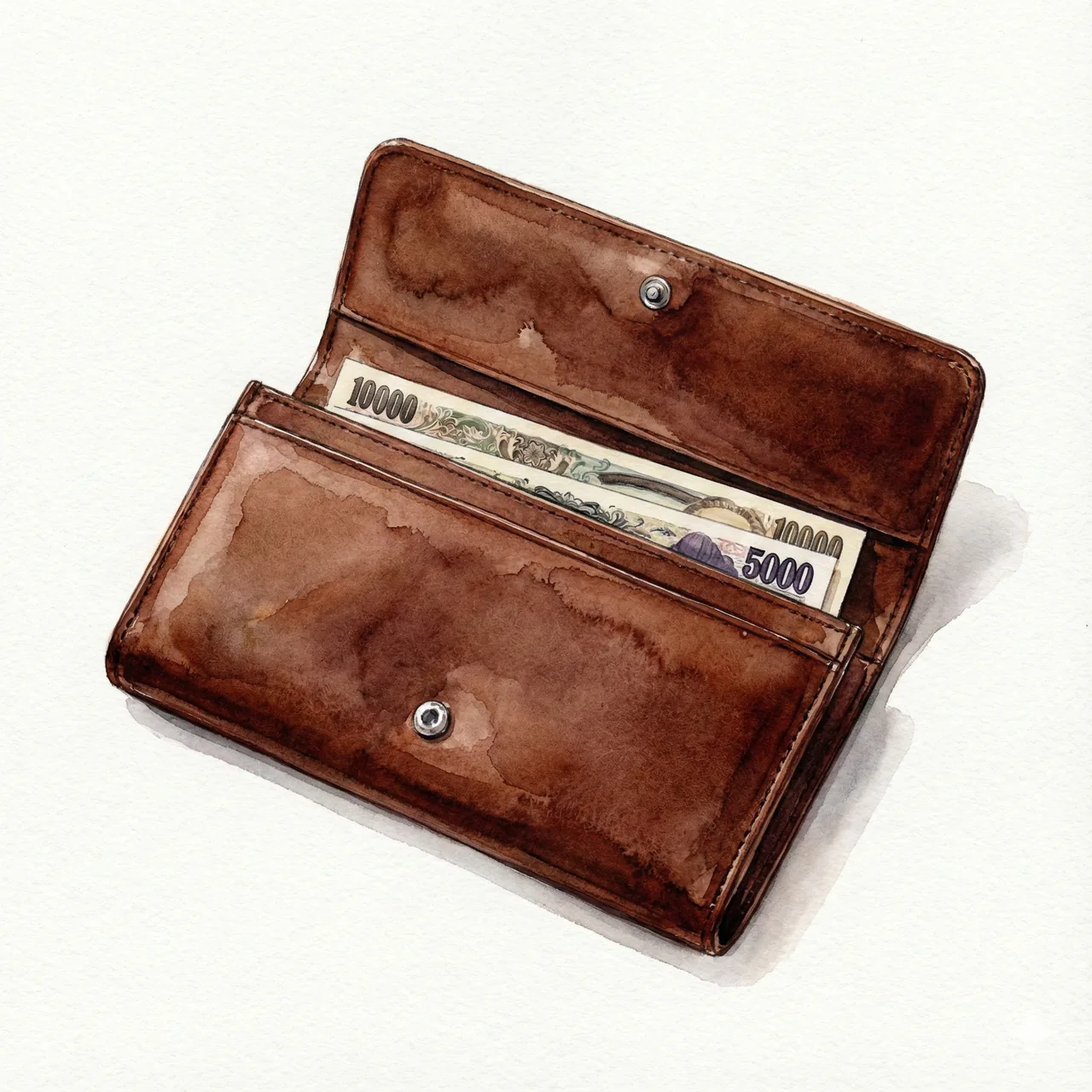
① Long Wallet (flap or zip-around)
Best for: cash users, receipt-keepers, anyone who values a deliberate payment gesture
Banknotes lie flat without folding, keeping your money and the wallet's shape pristine.
The large leather surface also gives you the best canvas for watching the aging develop.
② Bifold Wallet
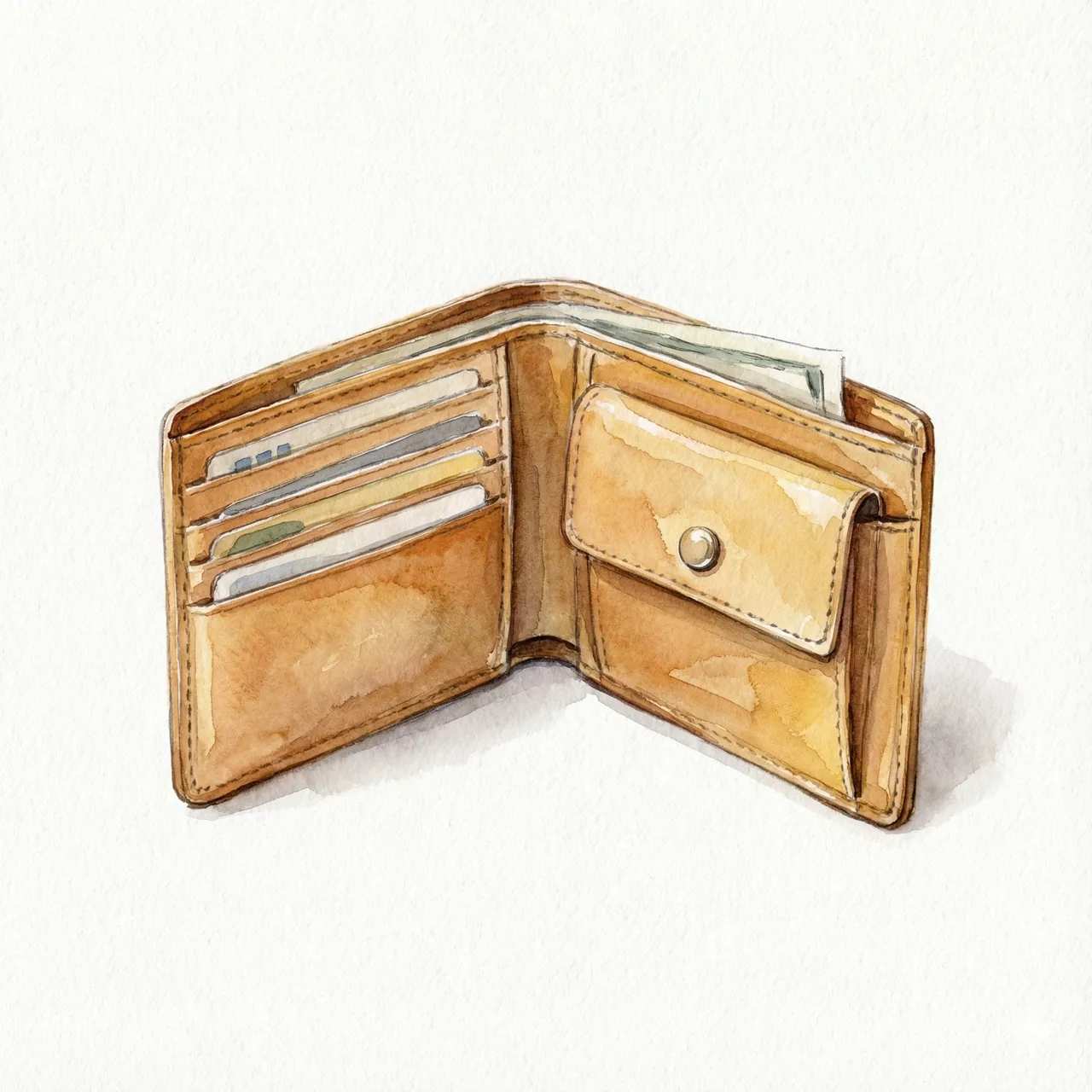
Best for: pocket carriers, those who want versatility
The most standard form. Carries everything you need without bulk.
Avoid the back trouser pocket — repeated sitting distorts the shape over time. A bag or front pocket is kinder
to the leather.
③ L-Zip / Compact Wallet
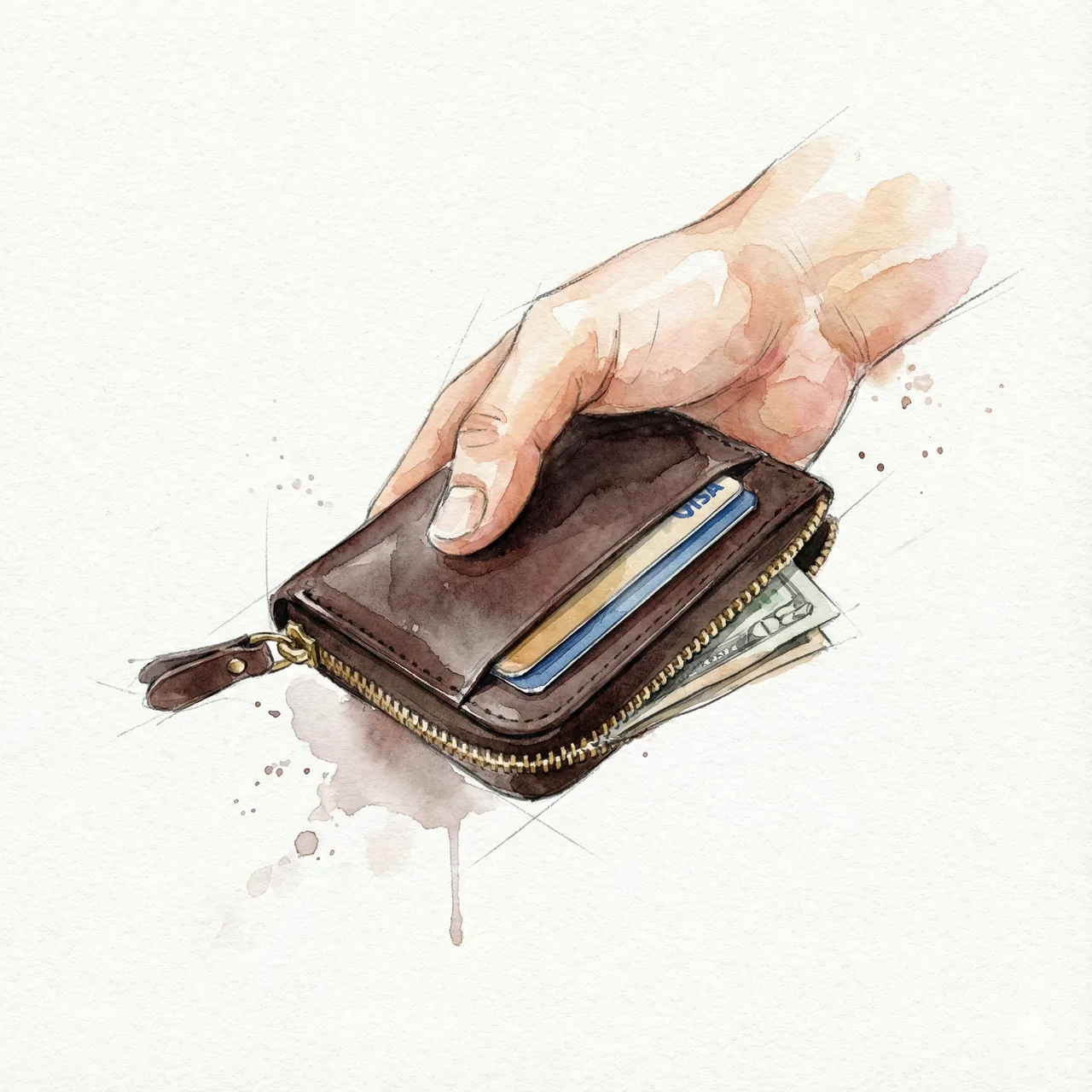
Best for: cashless users, minimalists
Currently the fastest-growing category.
Slim and compact while still fitting the essentials — a few notes, coins, and cards. Tsuchiya Kaban's L-zip in
nude leather is considered a modern classic of the form.
3. Budget Guide: What You Get at Each Price Tier
"How much should I spend?" is the first barrier in buying a quality wallet.
Within the Japanese leather market, price tiers translate directly to leather grade, construction method, and how
much artisan handwork went in.
Entry Tier (under ¥30,000) — Your First Real Leather Wallet
Vegetable-tanned leather at controlled cost — quality is genuine, and aging is enjoyable. CYPRIS consistently wins department store buyer awards yet sits comfortably at this tier, making it stand out on value. Tsuchiya Kaban's small leather goods also start here, with simple, functional designs that hold up for years.
Mid Tier (¥30,000–¥60,000) — Where Aging Becomes Serious
This is where the experience deepens. Leather thickness increases, and the edge finishing (koba) precision rises noticeably. PORCO ROSSO uses only Tochigi Leather — their wallets are deliberately rugged, and scratches only make them better. yuhaku's hand-dyed gradients and Hender Scheme's nude leather both offer genuinely unique identities at this price. Ideal for anyone who doesn't want a wallet that looks like everyone else's.
High-End Tier (¥60,000+) — An Investment for Life
If you're buying once and never again, this is the tier. GANZO's cordovan wallets have edge finishing that's genuinely artistic, and their repair service ensures the piece lives as long as you do. WILD SWANS uses thick leather with a distinctive streamlined silhouette — it may take years to break in fully, but the wallet that emerges, perfectly shaped to your hand, is incomparable.
The Sweet Spot for a First Real Leather Wallet
If you're buying your first Japanese leather wallet, ¥30,000–¥40,000 is the practical starting
point.
You'll feel the quality difference immediately, and if you discover it's not quite right for your habits, the
financial regret is manageable.
The typical progression among leather wallet enthusiasts: first wallet at ¥30,000–40,000, second and third at
increasingly ambitious levels.
4. 7 Recommended Japanese Wallet Brands
From among Japan's many leather wallet makers, these seven stand apart in leather quality and craftsmanship.
No.1 — GANZO: Japan's Pinnacle
When you want the real thing and will not compromise. A luxury brand with over a century of heritage. GANZO's mastery of cordovan and bridle leather is unmatched — and the koba (edge) finishing on their pieces is genuinely at the level of fine art. The price is high. But with GANZO's repair service, these wallets are built to be used and maintained for an entire lifetime.
- Leather
- Cordovan and bridle leather
- Known for
- Artistic koba (edge) finishing; lifetime repair service
- Best for
- One serious wallet for life; those who won't compromise on quality
No.2 — CYPRIS: Exceptional Value & Craft
Department store buyer award winner — over 10 consecutive years. CYPRIS is the closest rival to GANZO in technical quality at a more accessible price point. Their signature "kikuyose" (chrysanthemum gather) stitching produces wallets that are thin yet highly durable. Their proprietary Shirasagi leather develops a beautiful uneven patina as it ages.
- Leather
- Shirasagi proprietary leather; cordovan options
- Known for
- Kikuyose stitching; department store award winner 10+ years running
- Best for
- Outstanding quality-to-price ratio; a first serious Japanese wallet
No.3 — Tsuchiya Kaban: Warm, Trustworthy Leather
A beloved brand that started by making schoolbags. Simple, unpretentious, and warm in character — that is Tsuchiya Kaban's identity. Their L-zip and other small leather goods in nude leather start stiff and gradually soften into the exact shape of your hand — a quiet, intimate kind of ownership.
- Leather
- Veg-tan nude leather
- Known for
- Schoolbag heritage; warm, approachable design; L-zip compact wallet
- Best for
- Those who want organic aging character with a trustworthy brand behind it
View the Tsuchiya Kaban brand profile
Visit Official Site →No.4 — PORCO ROSSO: Tochigi Leather Specialists
A Fukuoka-based brand that uses only Tochigi Leather — no exceptions. Thick hides sewn with heavy thread produce wallets that are extraordinarily robust. Scratches don't diminish PORCO ROSSO wallets — they become part of the story. Something worth handing to your child in 20 years. This is the definitive "grow it" wallet.
- Based in
- Fukuoka
- Leather
- Tochigi Leather only — thick, heavily sewn hides
- Best for
- Rugged daily use; every scratch becomes character; multi-decade ownership
View the PORCO ROSSO brand profile
Visit Official Site →No.5 — Hender Scheme: Modern Nude Leather
Hender Scheme fuses Asakusa's traditional leather craft with a sharp contemporary design sensibility. Their wallets often use completely undyed natural nude leather — cream at purchase, deepening slowly to rich amber over years of use. Among style-conscious buyers, the aging process is as much the point as the finished object.
- Based in
- Asakusa, Tokyo
- Leather
- Natural undyed nude leather — cream to amber aging
- Best for
- Fashion-forward buyers; those who want the aging to be a personal project
View the Hender Scheme brand profile
Visit Official Site →No.6 — yuhaku: Hand-Dyed Gradients
yuhaku's signature is leather dyed entirely by hand — deep gradients in blues, wine reds, and purples that upend the assumption that wallets must be brown or black. Each piece is a one-of-one artwork. For those who want something that simply doesn't look like anything else.
- Based in
- Osaka
- Leather
- Hand-dyed gradient leather — each piece unique
- Best for
- Art-collector aesthetic; those who want one-of-a-kind colour
No.7 — WILD SWANS: Indestructible Curved Form
WILD SWANS' streamlined silhouette and thick koba (edge) finishing are immediately recognisable. The leather is dense and stiff — the first few months may feel demanding — but once it has conformed to your hand, the fit and durability are world-class. Built toward a goal of never needing to be replaced.
- Leather
- Thick bridle leather; distinctive streamlined silhouette
- Known for
- Maximum durability; koba finishing; rewards patience during break-in
- Best for
- Those committed to a wallet that forms perfectly to their hand over years
View the WILD SWANS brand profile
Visit Official Site →5. The Science of Aging Well: Care & Patina
Did you know: Tochigi Leather still tans in open pits
At the Tochigi Leather tannery, hides aren't tumbled through quick chemical drums. They're submerged in long rows of concrete pits filled with progressively stronger mimosa-bark tannin, moving from pit to pit over weeks — a method most of the world abandoned decades ago because it's slow and expensive. That slowness is the whole point: tannins bond deep into the fiber, which is why the leather can darken and glow for years instead of cracking. When you see the red Tochigi tag, that's what you're paying for.
The Basics: Dry Cloth and a Brush
You might assume you need to apply cream regularly — but new leather already contains abundant natural oils.
Aggressive conditioning early on does more harm than good.
Daily care:
· Touch it with your bare hands daily (your skin's oils naturally condition it)
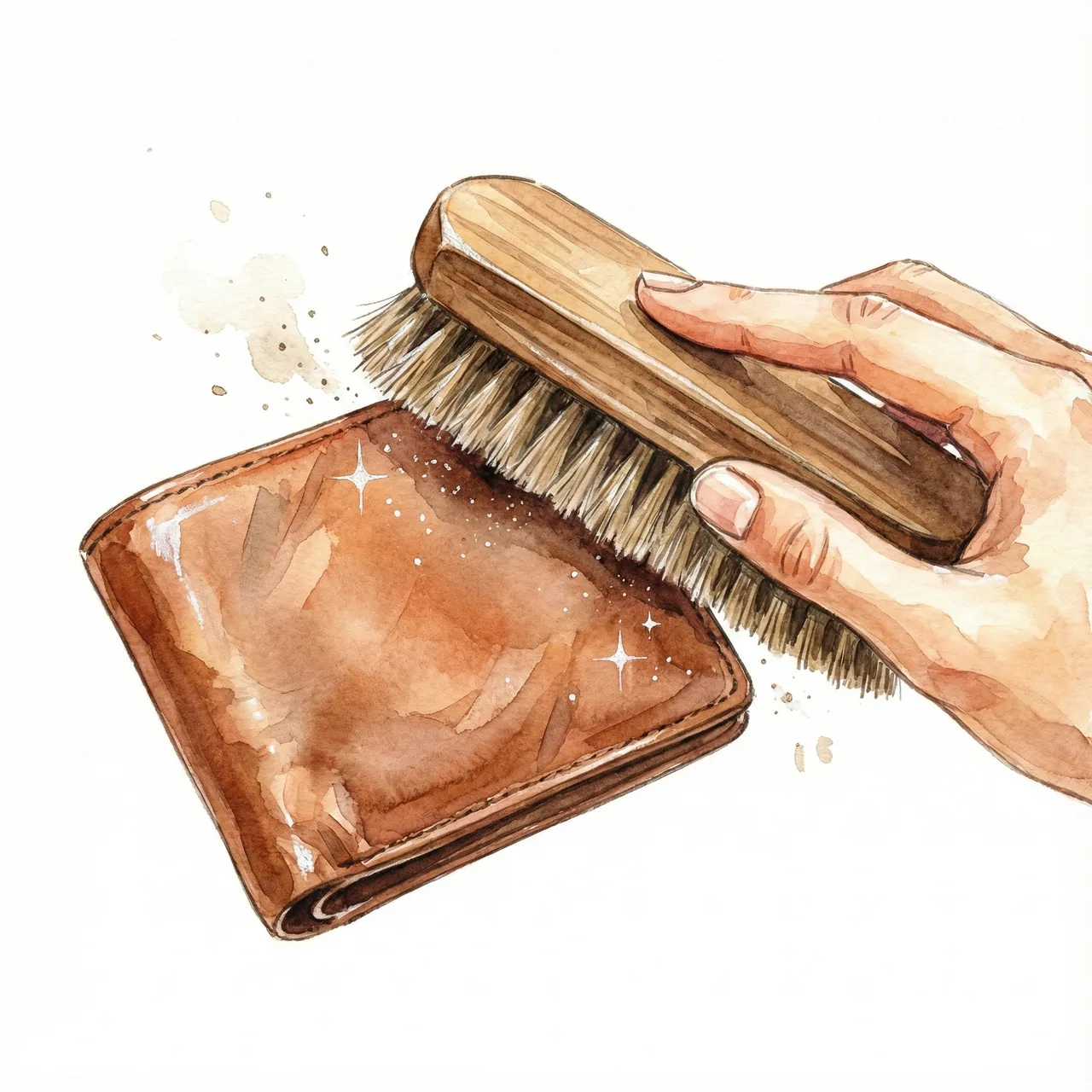
· Once a week: dust with a horsehair brush
· Once a month: buff with a dry soft cloth
Reach for conditioning cream only when the leather feels noticeably dry. Over-application causes staining and
can encourage mould.
Why the Colour Changes: The Chemistry of Patina
Tochigi Leather and nude leather deepen to amber because the tannins in the leather react with UV light,
skin oils, and oxygen — a genuine chemical transformation that cannot happen with pigment-coated
leather.
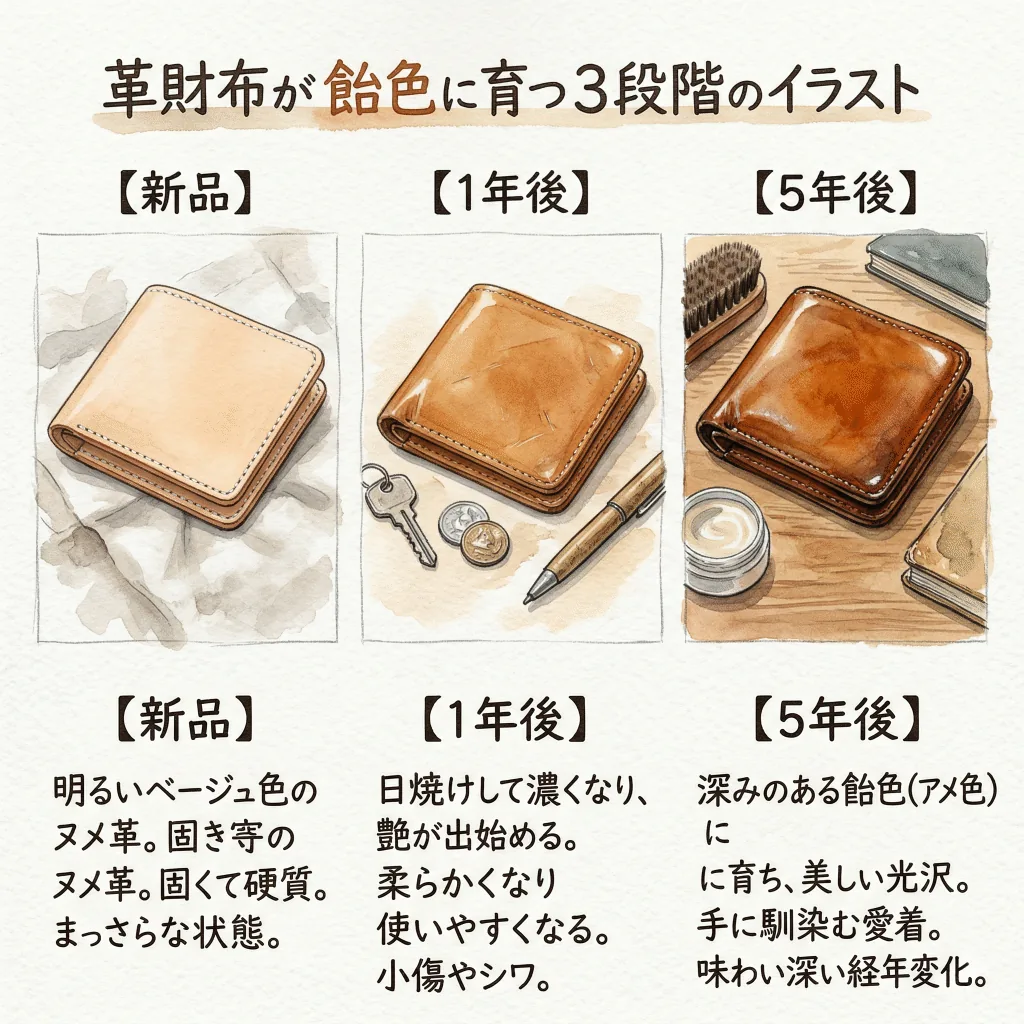
Aging in three stages:
① 0–3 months: The surface softens slightly, first wear marks and impressions appear
② 3 months–1 year: The leather gradually warms in colour; areas of frequent contact develop
their own shine
③ Year 1+: A deep, even lustre settles across the whole piece — unmistakably yours
Cordovan behaves differently: its patina develops as a jewel-like transparency. White scuffs appear under
pressure, but rubbing firmly with a cloth makes them disappear — this is a cordovan
characteristic, not a defect.
5 Things That Damage Leather Aging
✕ Leaving it wet: Water causes staining. Blot immediately with a dry cloth and air-dry in the
shade.
✕ Using a hair dryer: Rapid drying causes cracking. Always air-dry naturally.
✕ Over-conditioning: Excess cream causes staining and mould. Twice a year is enough.
✕ Drying in direct sunlight: UV exposure without moisture causes uneven bleaching. Use shade with
airflow.
✕ Back-pocket carry: Body heat and sitting pressure accelerates distortion. Use a bag or front
pocket.
Repairs & Maintenance
Most Japanese leather wallet brands offer paid repair services — koba re-coating, zip replacement, and more. GANZO and WILD SWANS are particularly well-known for their aftercare support. The culture here is not "throw it away when it breaks" but "repair it and carry it further."
6. Frequently Asked Questions
Is veg-tan leather really that sensitive to rain?
Yes — plant-tannin leather is water-sensitive, and water left to sit causes permanent staining and distortion. The fix is simple: blot immediately (don't rub), reshape, and air-dry in the shade. Once fully dry, a light brushing usually minimises any remaining marks. A protective spray before the rainy season adds a layer of insurance.
My new wallet won't open easily. How do I break it in?
That stiffness is a sign of quality. Tannin-tanned leather is at its most rigid when new — it softens with use. The best way to break it in is simply to handle it daily. Deliberately opening and closing it also helps. Avoid forcing it open, which can stress the stitching. Tsuchiya Kaban and PORCO ROSSO pieces in particular need a few months of patient use — but what they become after six months is remarkable.
Which leather cream should I use, and how often?
The reliable standard is Collonil 1909 Supreme Cream Deluxe (plant-oil formula) — safe for Tochigi Leather and cordovan alike. Frequency: twice a year is enough for dry-climate use. Daily handling already conditions the leather naturally. Apply only a rice-grain-sized amount, spread thinly — over-application causes staining rather than protection.
What's the real difference between Japanese leather and a European luxury brand?
The core difference is tanning method and whether the leather ages.
Most European luxury brands use chrome tanning (fast, industrial) and coat the surface with pigment — the wallet
looks its best new and deteriorates from there.
Japanese leather like Tochigi uses vegetable tanning (months-long, artisanal) with no surface coating — so the
leather absorbs and responds to use, deepening in colour and character over years.
The question is: are you paying for the logo, or for the leather?
My wallet has bulged from too many cards. Can it be fixed?
Leather is flexible — removing the excess cards and placing the wallet flat under a weight for a few days
usually restores a reasonable shape. Full recovery isn't always possible, but many owners consider the slight
rounding part of the wallet's personality.
To prevent it: keep cards to a maximum of 3–4. If you genuinely need to carry more, a separate
card case protects both the cards and the wallet's form.
What is the best Japanese wallet brand?
For most buyers, GANZO is the benchmark — but "best" depends on what you value.
GANZO for uncompromising cordovan and construction, CYPRIS for hand-finished refinement, and the younger
factory-direct brands for the best price-to-craftsmanship ratio. All seven brands in this guide use Japanese
tanneries and domestic workshops, so there is no wrong answer — section 4 compares them by budget and
personality so you can match one to yours.
7. Final Thoughts: The Era of the Wallet You Grow
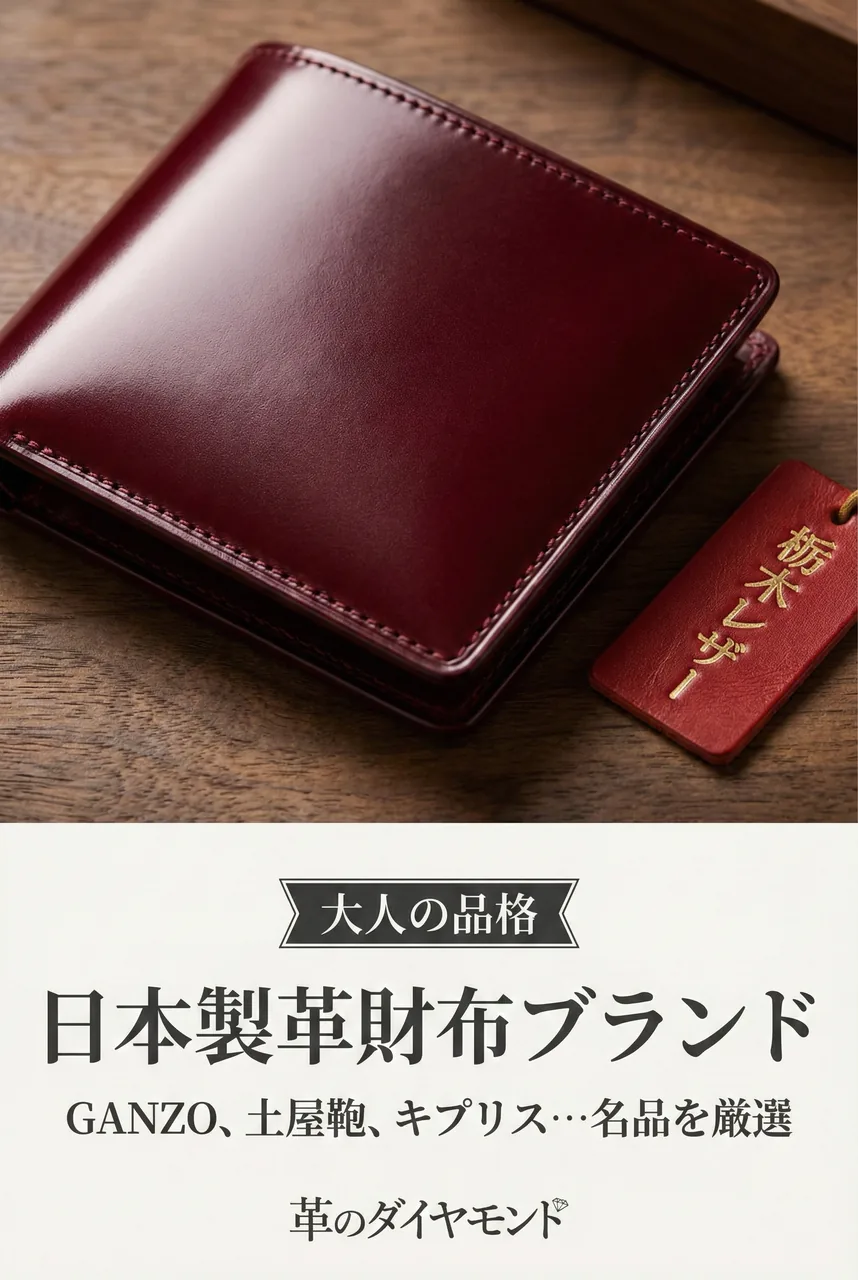
A Japanese leather wallet is not at its best when you buy it.
It becomes better with every day of use — each scratch, each pocket worn in — slowly and genuinely transforming
into something that is entirely yours.
Three years from now. Five years from now.
Looking at your wallet and thinking "the colour has really come through beautifully" — that is a satisfaction no
logo can give you.
Find the brand from this list that speaks to you, and start the relationship.
Japanese Selvedge Denim: 5 Okayama Brands That Age with You
Japanese Leather Guide: Tochigi, Himeji & Cordovan Explained