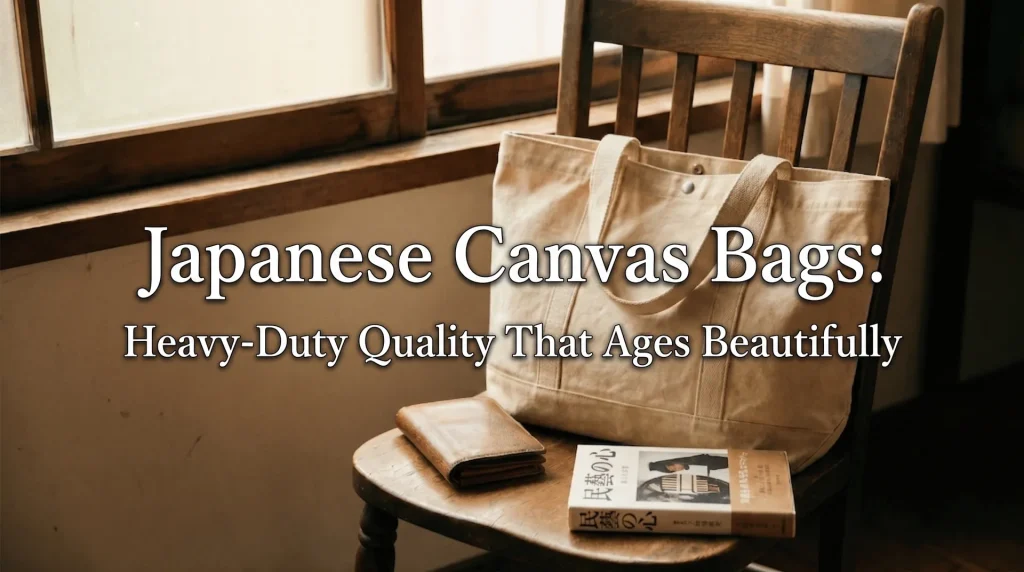
Tired of bags that look their best the day you buy them and go downhill from there?
If you want something that gets better with age — the way a great pair of jeans does — you want a Japanese canvas (hanpu)
bag.
Canvas (hanpu) is a densely woven cotton cloth — tough enough to be used on truck covers and tents. Brand new, it
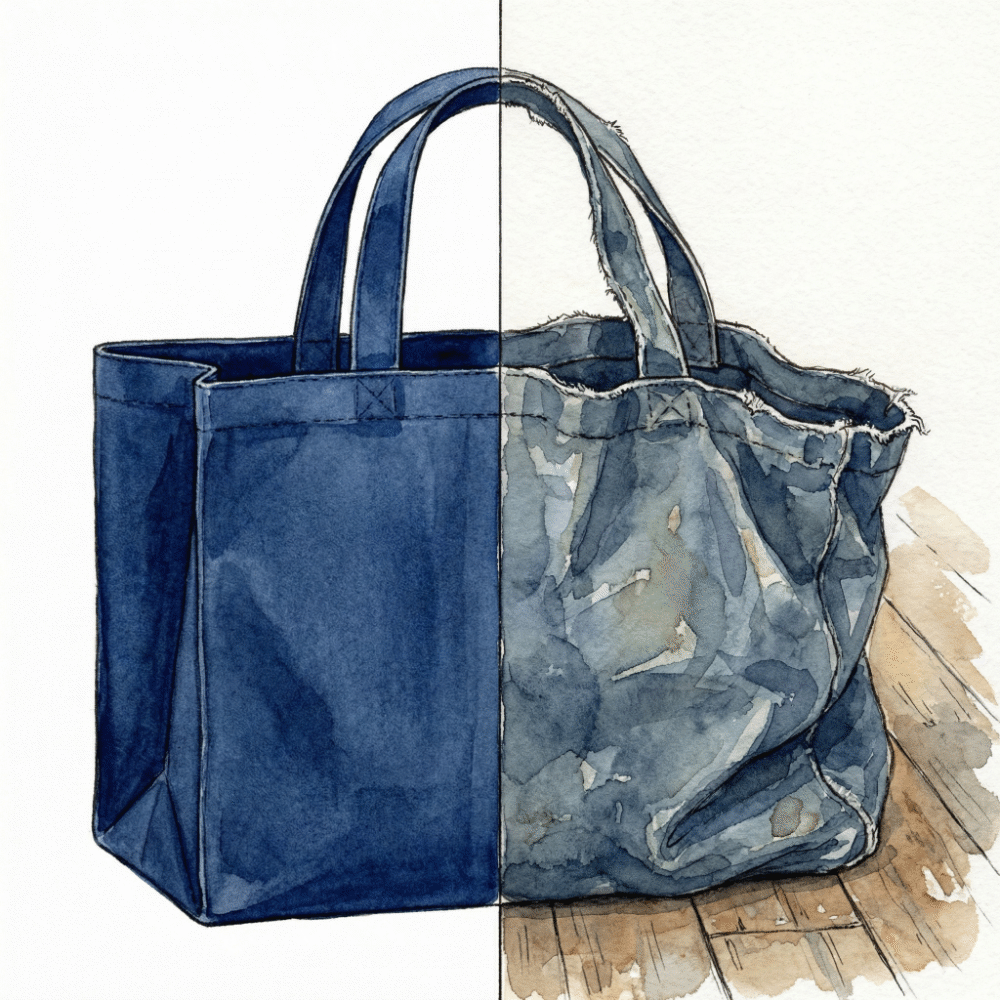
feels stiff and almost boardlike. But with daily use, the fibers gradually loosen, conform to your body, and develop
a soft, lived-in character that's yours alone.
That broken-in look, with its subtle fading and natural wear marks, is precisely the point.
This guide introduces Japanese canvas bag makers — from Asakusa's Inujirushi to Kyoto's Ichizawa Shinzaburo — whose
bags are built to be repaired and carried for a lifetime.
Quick Reference: Canvas Bag Types at a Glance
| Type | Initial Feel | Best For | Key Feature |
|---|---|---|---|
| Natural canvas | Stiff, structured | Long-term aging | Develops unique character with use |
| Paraffin-waxed canvas | Very stiff, water-resistant | Outdoor, daily heavy use | Wax cracks create chalk marks (vintage look) |
| Bio-washed canvas | Soft, broken-in feel | Immediate comfort, daily carry | Enzyme-washed for vintage softness from day one |
| Printed canvas | Varies | Personality and visual interest | Ichizawa's patterned "Shinzaburo bags" |
1. What Makes Canvas Special: Aging and Character Over Time
Canvas is a heavy-duty plain-weave cloth made from tightly twisted cotton or linen threads.
Starts Stiff, Becomes Yours
A quality new canvas bag is stiff enough to stand on its own. With daily use, the weight of your belongings and
contact with your body gradually loosen the fibers — the bag softens, shapes itself around you, and develops
subtle fading and wear marks in all the places you touch most.
The color fades gradually, and distinctive lighter areas (similar to denim "whiskers") emerge over time.
This process of breaking in and shaping is the whole point — something synthetic materials can't replicate.
2. Three Production Regions: Kyoto, Asakusa, and Kurashiki
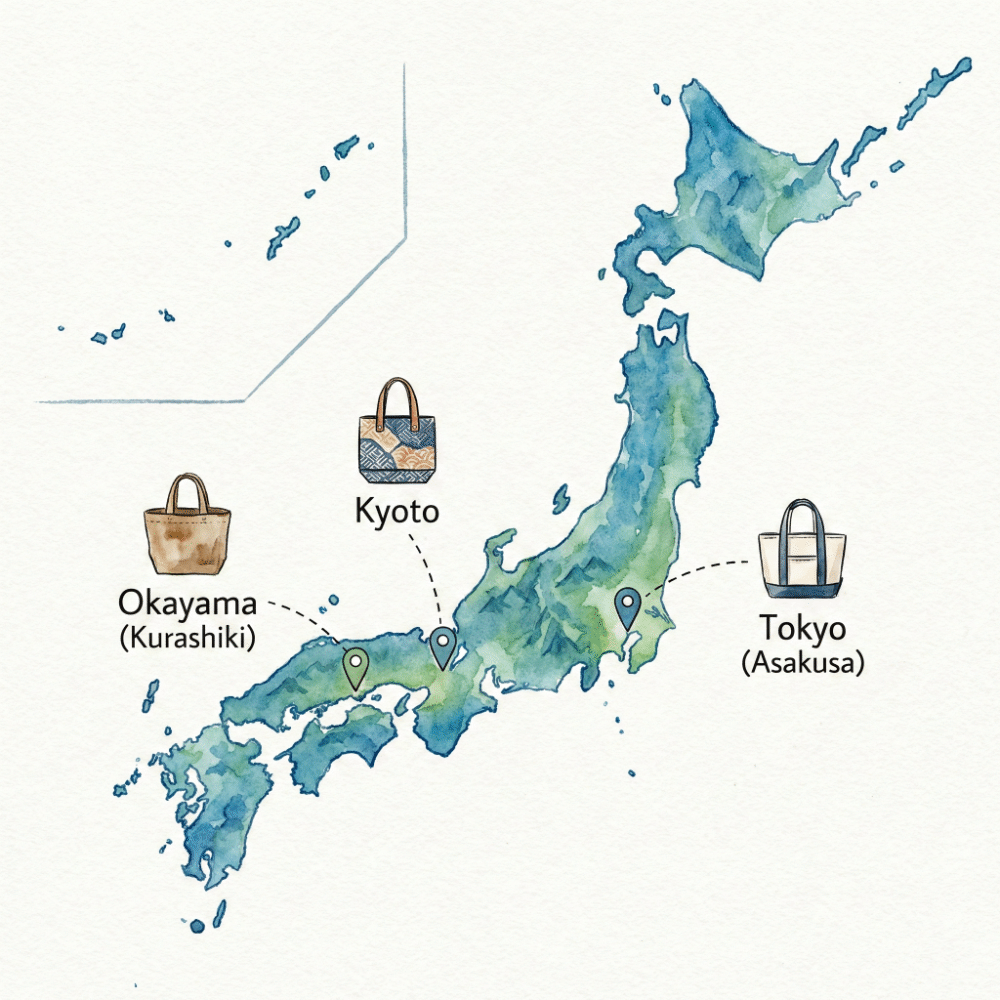
Japan's canvas bag tradition has three distinct centers, each with its own character.
Each Region Has Its Own Approach
- Kurashiki (Okayama): Produces roughly 70% of Japan's canvas fabric. Strong industrial roots — durable, utilitarian cloth that supplies both fashion and industrial uses.
- Kyoto: Refined craftsmanship and considered design. A deep repair culture — bags made here are built to be fixed, not replaced.
- Asakusa (Tokyo): Old Edo-style workshop spirit. Function-first construction with a streetwise, slightly irreverent aesthetic.
The weave, finish, and construction differ by region — discovering your preference is part of the pleasure.
3. Brand 1 — Inujirushi Kaban (犬印鞄製作所): Asakusa's Rugged Icon
A down-to-earth workshop brand from Asakusa, Tokyo — built on the philosophy of solid, honest construction.
Inujirushi Kaban Seisakusho — The Dog-Mark Canvas Tote
Built from thick No. 6 paraffin-waxed canvas, Inujirushi bags start almost boardlike and gradually soften into one of the most durable daily carries available. The iconic dog-mark logo has been registered since 1953. Iconic products include an A4-capable tote and a classic knob-clasp rucksack with timeless retro appeal.
- Material / Type
- No. 6 cotton canvas (paraffin wax treated)
- Made in
- Asakusa, Tokyo, Japan
- Best for
- Daily carry, aging into character, heavy use
- Price range
- $30–$80
4. Brand 2 — Ichizawa Shinzaburo Hanpu (一澤信三郎帆布): Three Generations of Repairs
The definitive Kyoto canvas bag maker — over 100 years old, with fans around the world.
Ichizawa Shinzaburo Hanpu — Kyoto Handmade Canvas
Every bag is handmade by Kyoto craftspeople. "We make it. We repair it." — if they made it, they will fix it, no matter how old. Many customers carry these bags across three generations. The range spans simple timeless totes to patterned "Shinzaburo bags" in a variety of canvas prints. Not available on Amazon — purchase direct from Kyoto or authorized importers.
- Material / Type
- Natural cotton canvas (handmade)
- Made in
- Kyoto, Japan
- Best for
- Lifetime carry, repair culture, heirloom quality
- Price range
- $60–$200+
5. Brand 3 — Suda Hanpu (須田帆布): Soft from Day One
The philosophy here: use it hard, wash it whenever you want. A bag for daily life, not the shelf.
Suda Hanp — Bio-Washed Canvas Tote
Based in Tsukuba, Ibaraki, Suda Hanpu enzyme-washes their canvas (bio-wash) — breaking down surface fibers the way years of use normally would. The result is a bag that feels already broken-in from day one, with a natural, slightly faded character. Distinctive color options and city-scaled sizes make it an easygoing daily companion.
- Material / Type
- Bio-washed cotton canvas
- Made in
- Tsukuba, Ibaraki, Japan
- Best for
- Immediate comfort, daily city carry, washable use
- Price range
- $40–$100
6. Care Guide: Why You Shouldn't Machine-Wash Canvas
Canvas is tough — but it takes a specific kind of care. The washing machine is your enemy here.
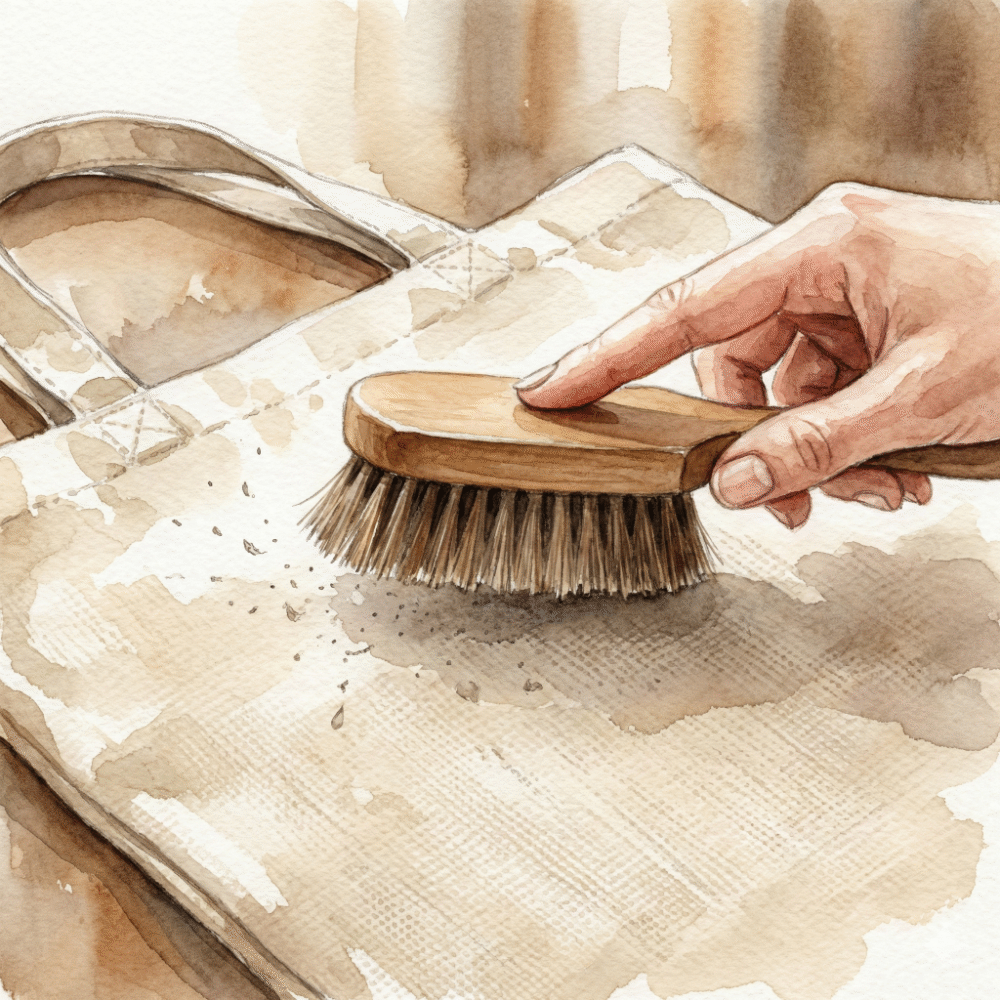
Start with a Brush and an Eraser
Machine washing causes significant shape distortion and heavy color bleeding. Avoid it.
For regular maintenance, a quick brush-down with a garment brush after use is enough to remove dust and surface
dirt.
For light scuffs and marks, try gently rubbing with a plastic eraser — it works surprisingly often.
For more stubborn spots, dilute neutral detergent in water, apply to a brush, and gently dab (don't scrub) the
affected area only.
7. Frequently Asked Questions
Will the color bleed onto my clothes?
Yes — especially dark colors, particularly when new.
Natural-fiber canvas dyes are susceptible to bleeding from friction or moisture. Avoid pairing a new dark canvas
bag with white or light-colored clothing until it's had some use.
But like denim, color transfer and gradual fading are part of the experience — the "patina" of a well-carried bag.
What is paraffin (wax) treatment?
A water-resistant finish achieved by impregnating the canvas with wax.
New waxed canvas is hard and slightly slippery. Over time the wax cracks, creating white crease lines called
"chalk marks" — these are normal and desirable, giving the bag a distinctive vintage look.
If you want to smooth them out and restore some water resistance, a warm iron over the surface will melt the wax
back into the fabric.
Can I use it in the rain?
Yes, but a waterproofing spray is recommended.
Canvas is naturally somewhat water-resistant once the fibers swell when wet, but it's not waterproof. After
getting wet, empty the bag and leave it open in a ventilated area to dry completely — damp canvas can develop
mold.
How long will it last?
With normal use, well over 10 years — potentially a lifetime.
The canvas itself is extremely durable. Handles and corner reinforcements are usually the first things to wear.
With a maker like Ichizawa Shinzaburo who offers ongoing repairs, there's no functional reason it can't outlast
you.
What do the canvas numbers (号, go) mean?
Lower numbers mean thicker canvas. Bags typically use No. 6 to No. 9.
· No. 4: Extremely thick and rigid. Used for large self-standing totes.
· No. 6–8: Most common range. Good balance of durability and usability.
· No. 11: Thin and lightweight. Used for inner lining or small pouches.
Final Thoughts: A Bag Worth Breaking In
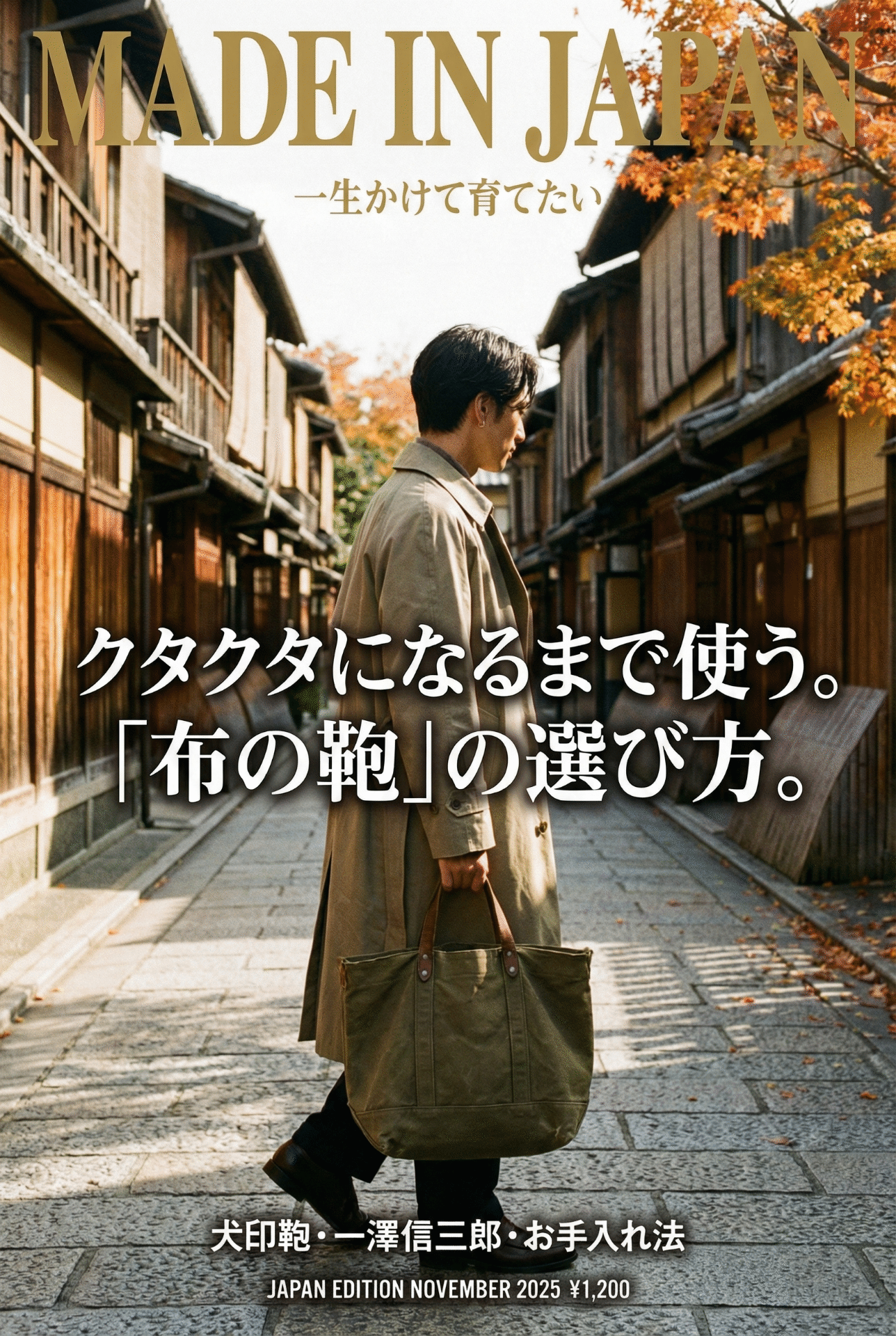
A Japanese canvas bag isn't cheap — but it's not meant to be consumed and replaced.
It's a partner. Something that gets harder to part with as the years go by, because it gradually becomes yours
and no one else's.
The stiffness of the first week becomes the softness of the first year. The color bleeds a little, then settles.
Wear marks appear in the places you grip it most.
Eventually it's repaired — a handle replaced, a seam re-stitched — and carries on.
That's the idea. Find the one you want to carry for the next decade, and start breaking it in.
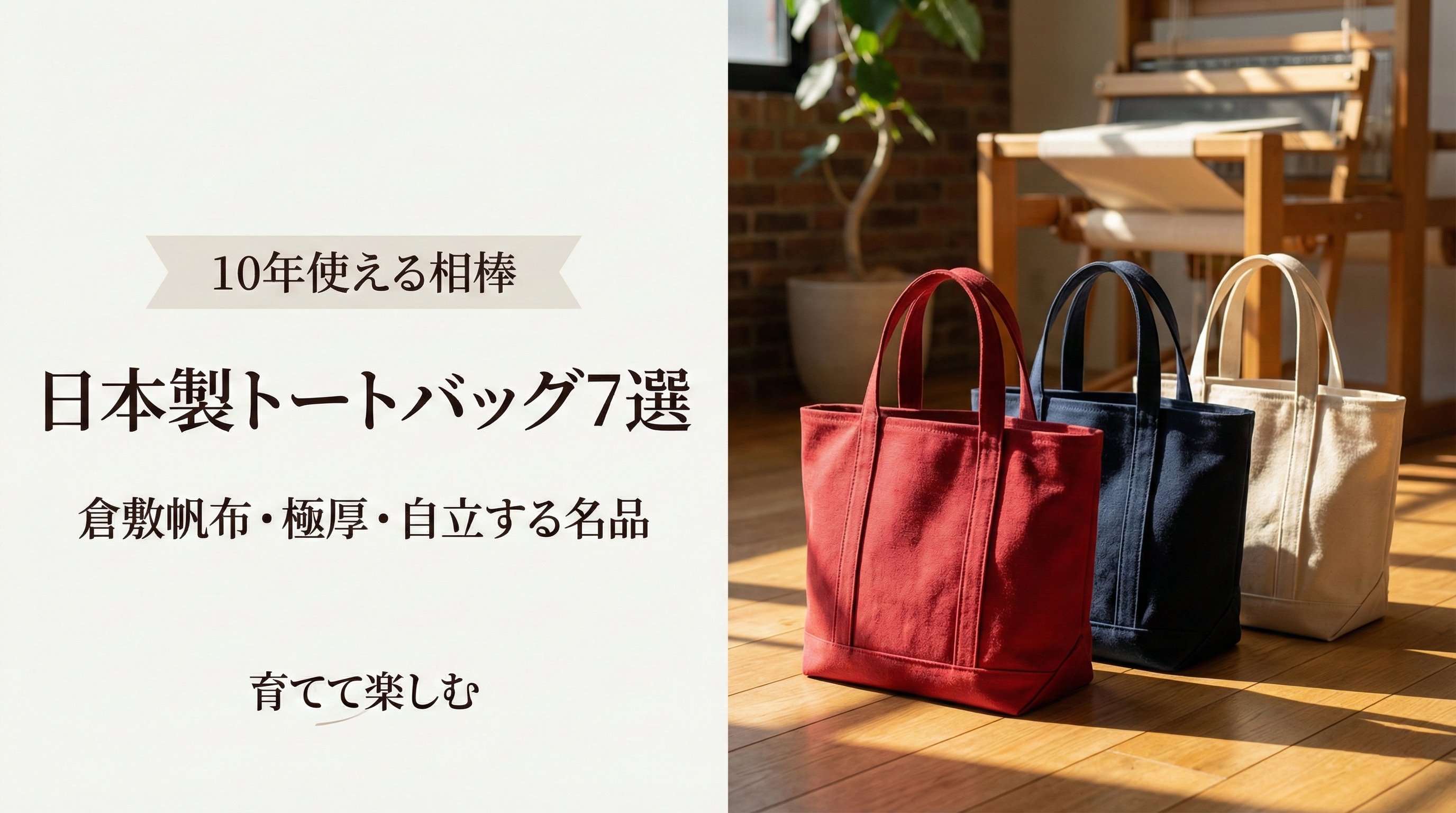
Japanese Tote Bags: Brands, Materials & What to Look For
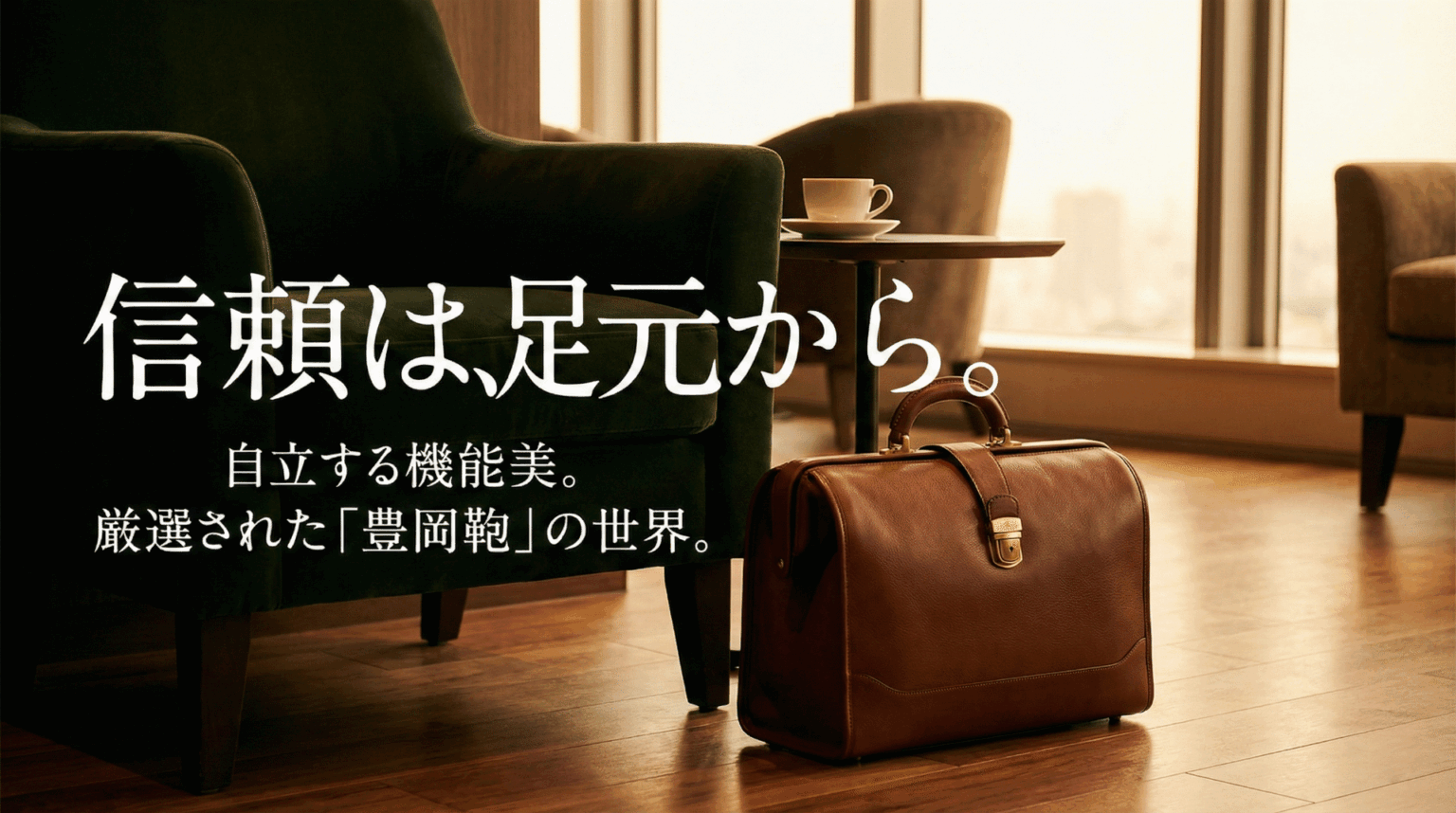
Toyooka Bags: Japan's Bag Capital and Its Best Brands