
Is your favorite jacket hanging on a thin black plastic hanger from the dry cleaner — or worse, a wire one?
The number-one cause of shortened garment life is shape damage from the wrong hanger.
The human shoulder is three-dimensional. Cheap hangers are flat. That mismatch creates protruding shoulder bumps and collar distortion that no amount of ironing can fix once it's set in.
This guide focuses on Japan's only dedicated wooden hanger manufacturer, NAKATA HANGER (中田工芸), and explains how to choose the right hanger for every garment you own.
Feature series: This article is part of the "Japanese-Made Household Essentials" series.
Quick Reference: Hanger Materials at a Glance
| Material | Key Features | Best For | Price Range |
|---|---|---|---|
| Wood (beech) | Moisture absorption, anti-static, 3D shoulder curve | Suits, coats, jackets | $10–$35 / piece |
| Aluminum | Lightweight, rust-resistant, space-saving | Shirts, lightweight garments | $2–$6 / piece |
| Stainless steel | Extremely durable, hygienic, outdoor-safe | Laundry (all types) | $4–$15 / piece |
| Paulownia (kiri) | Lightweight, humidity-regulating, insect-deterrent | Kimono, delicate fabrics | $6–$25 / piece |
1. Why Wooden Hangers? Moisture Absorption and Static Prevention
Luxury hotels and high-end boutiques use wooden hangers for reasons that go well beyond aesthetics.
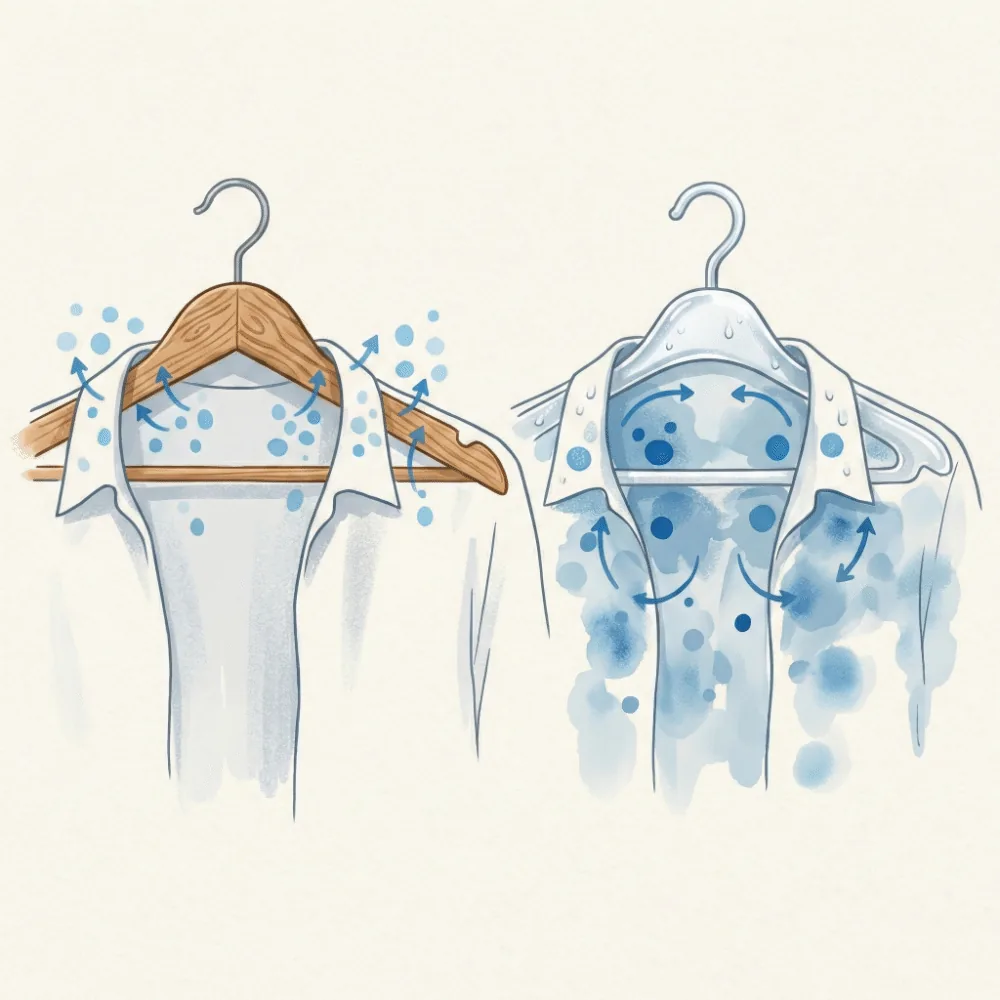
Wood breathes — absorbing garment moisture and resisting mold
Clothes worn for a day absorb significant moisture from perspiration.
Plastic hangers trap that moisture against the fabric. Wood — especially unfinished or oil-finished wood — absorbs and releases moisture (a process called hygroscopic regulation), reducing the risk of mold and odor.
Wood doesn't generate static electricity
In winter, pulling a garment off a plastic hanger can generate a static charge that attracts lint and makes the fabric cling.
Wood is a natural insulator that doesn't build static — less dust, less cling, less annoyance.
2. Japan's Only Specialist: NAKATA HANGER — Curved from Solid Beech
Nakata Kogei (中田工芸) in Toyooka, Hyogo Prefecture — founded in 1946, Japan's only dedicated wooden hanger manufacturer.
NAKATA HANGER — Men's Suit Hanger
The "volume" is different. An ergonomic curve carved from solid wood.
The defining feature is the smooth curve from neck to shoulder tip, and the thickness at the shoulder point.
This is not bent wood — each hanger is carved by craftspeople from a thick slab of solid European beech.
The resulting shape faithfully reproduces the three-dimensional arc of a human shoulder. The moment you hang a jacket on it, you can see the garment settle back into its intended silhouette and wrinkles naturally release.
NAKATA HANGER supplies hangers to many of Japan's finest hotels and luxury brand boutiques — the same craftsmanship available for your own closet.
3. Choosing by Thickness: Suits vs. Shirts Need Different Support
Are you hanging all your clothes on the same hanger? Different garments need different shoulder support.
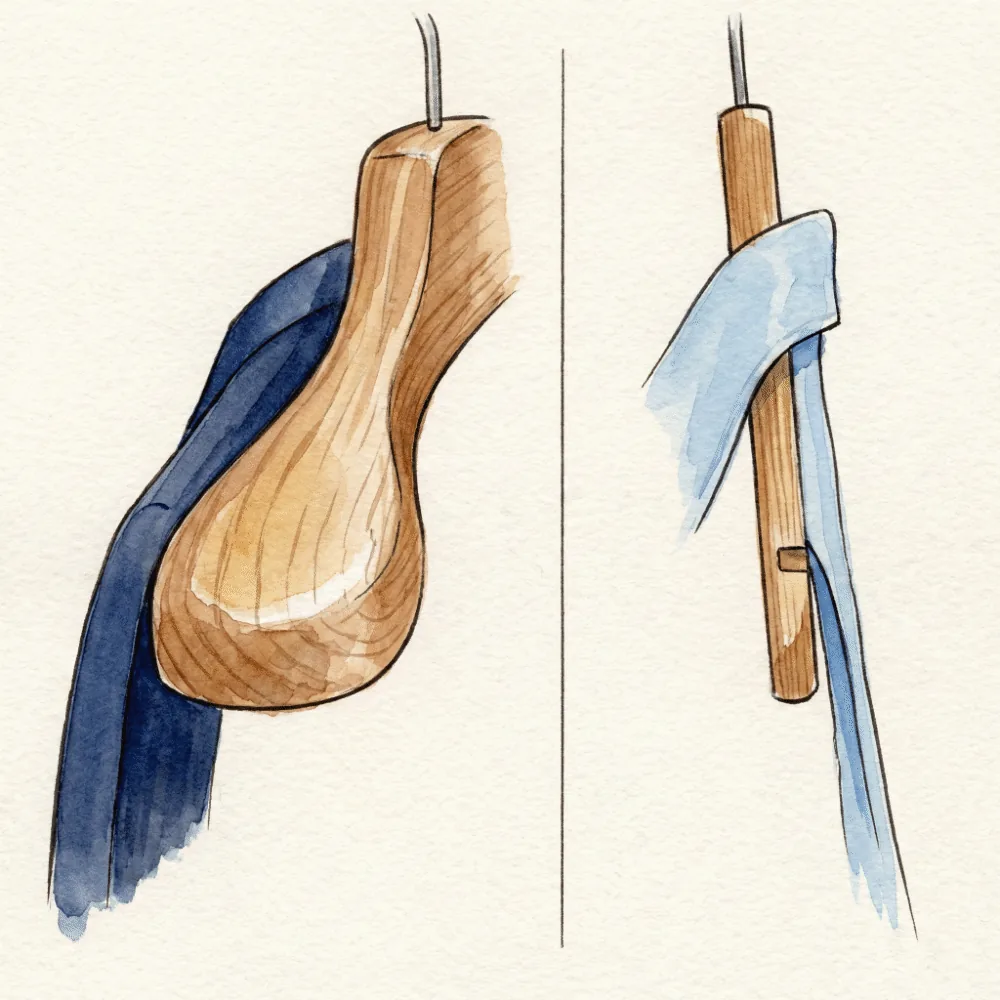
Jackets and coats: 1.5 inches (4 cm) or more to protect the shoulder
Heavy outerwear concentrates its weight on a single narrow line if the hanger is too thin — the shoulder seam bears all the stress and eventually distorts.
A hanger with 1.5–2 inches (4–5 cm) of thickness at the shoulder point spreads that load across an area, preserving the silhouette under the garment's own weight.
Shirts and blouses: 0.6–0.8 inches (1.5–2 cm) for fit without collar distortion
Shirts don't need the heavy-duty support of outerwear, but wire hangers are too narrow — they distort collar seams over time.
A shirt hanger of moderate thickness (0.6–0.8 in / 1.5–2 cm) with a slight forward tilt at the neck keeps collar shape intact while staying slim enough for tightly packed wardrobes.
4. Shoulder Width Matters Too: How to Measure Your Jacket
Even the best hanger is useless if the width is wrong.
Ideal hanger width: jacket shoulder width minus 0.8–1.6 inches (2–4 cm)
A hanger that's too wide pushes the sleeve cap up and forward — "tent shoulders." A hanger that's too narrow lets the shoulder seam drop inward, causing folds.
How to measure:
1. Lay the jacket flat on its back and measure the straight-line distance between the left and right shoulder seam points.
2. Subtract 0.8–1.6 inches (2–4 cm) from that measurement — the result is the ideal hanger width.
Typical guide: men's hangers are around 16.5–17 inches (42–43 cm); women's around 15 inches (38 cm).
5. Trouser and Skirt Hangers: The Felt Bar That Leaves No Clip Marks
Trousers that slip off the bar, or skirts with permanent clip marks — there's a better solution.
NAKATA HANGER — Bottom Hanger (Trouser/Skirt)
Flocked felt grips the fabric across a surface — no marks, no slipping.
The inside of NAKATA HANGER's trouser bar is lined with a special flocked (velvet-like) felt material.
This means strong spring tension can hold the garment firmly without concentrating pressure at two clip points — no crease, no mark, no sliding.
Hanging trousers along the center crease (seam line) lets gravity gently pull out any wrinkles while they hang — reducing ironing time.
6. A Lifelong Gift: Personalized Engraved Hangers
In Japanese, "hanger" has a pun connection to luck (掛ける — "to hang" / "to attach good fortune"). Quality hangers make surprisingly meaningful gifts.
New job gifts and wedding favors — with a name laser-engraved into the wood
People rarely buy themselves a premium hanger — which is exactly why receiving one feels special.
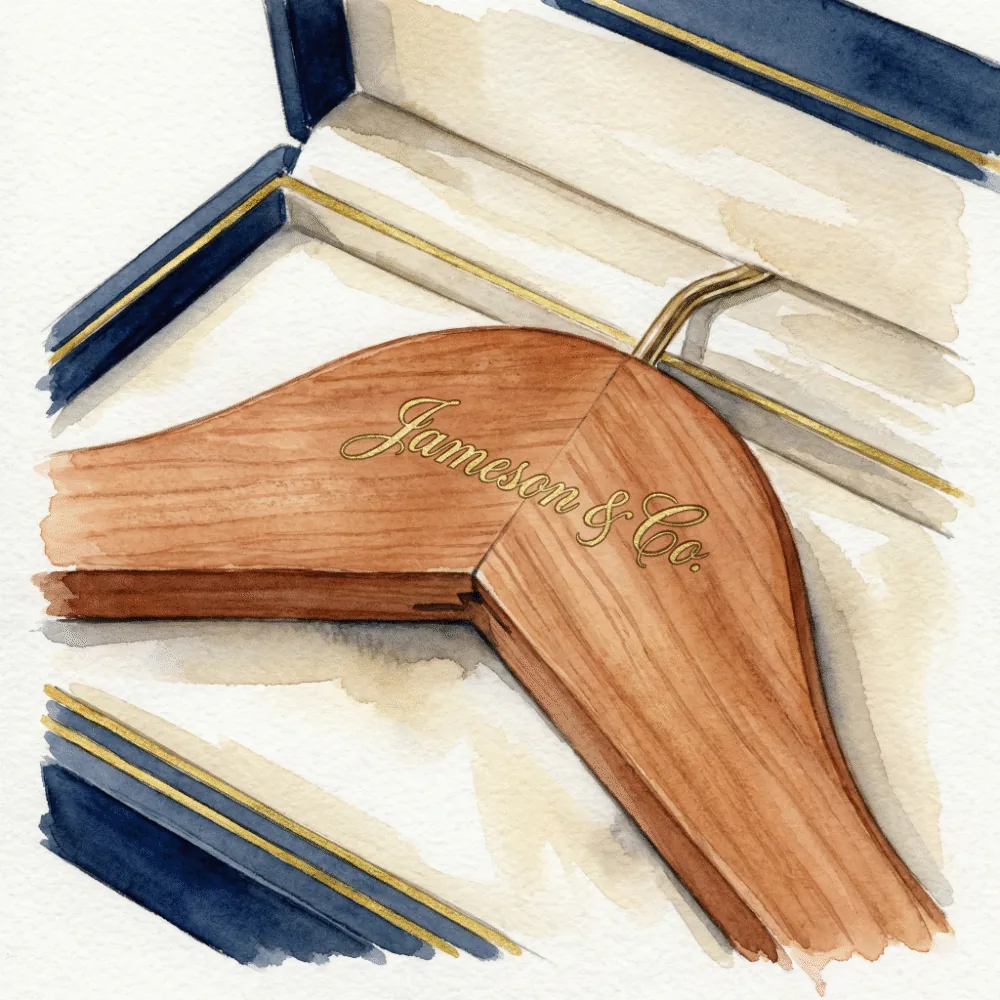
NAKATA HANGER offers laser engraving directly onto the wood — a name, initials, or a short message.
Increasingly popular as new-hire congratulation gifts and as personalized wedding favors (each guest's initials on their own hanger). The message: "may your clothes — and your future — hold their shape."
7. Care and Lifespan: Never Hang Wet Clothes on Wood
A wooden hanger is essentially a lifetime purchase — as long as you avoid one thing.
Never hang wet clothes — the wood warps and the finish cracks
Wood's biggest enemy is excess water.
Hanging freshly washed clothes causes the hanger to absorb too much moisture, leading to warping and finish cracking over time.
Always hang dry clothes only. Regular maintenance is nothing more than a dry cloth wipe to remove dust — no products needed.
8. Frequently Asked Questions
Should I keep using dry-cleaner hangers for storage?
No — replace them immediately.
Dry-cleaner hangers are designed for transport only — from the shop to your home. They're too thin and flat to support garment shape for any length of time.
Shoulder deformation sets in quickly. And the plastic bag traps humidity — remove it the moment you get home.
What's the actual difference between NAKATA HANGER and a cheap wooden hanger?
The thickness and the precision of the shoulder curve.
Budget wooden hangers are typically thin flat boards with a shallow curve — they don't replicate the three-dimensional arc of a human shoulder.
Surface finishing is also inferior: rough wood fibers can snag jacket linings. NAKATA HANGER's products are hand-polished to a silk-smooth finish that won't catch delicate fabrics.
How many should I start with?
Start with your most-worn outerwear and work from there.
You don't need to replace every hanger in your closet at once.
Pick your winter coats and the suits or jackets you reach for most — the "first team" garments you can't afford to let distort. Even a handful of quality hangers transforms what a closet looks and feels like.
What about cedar hangers for moth prevention?
Cedar has pest-deterrent properties but unfinished cedar can stain light fabrics.
Red cedar's natural oils repel insects and smell pleasant, but unfinished cedar can leach those oils onto fabric — a real risk with white shirts.
For precious garments, a finished beech hanger (like NAKATA HANGER) with a separate cedar block or sachet nearby is the safer combination.
How should I store knitwear (sweaters)?
Never hang knitwear — fold and store flat.
Even the best hanger will cause knitwear to stretch under its own weight, distorting the neckline and shoulders permanently.
If you absolutely must hang a knit, fold it over a wide padded bar rather than placing the neck over a hook.
Will the wood finish transfer to my clothes?
Finished hangers are safe; unfinished cedar carries some risk.
NAKATA HANGER's products use urethane or oil finishes that are fully cured and stable — safe for all fabrics including white and delicate textiles.
Unfinished cedar or raw wood hangers can transfer resin (sap) to fabric, particularly lighter-colored garments. Always check the finish before hanging anything precious.
Final Thoughts: Not Just Hanging Clothes — Letting Them Rest
There's a saying: "Good shoes will take you to good places."
A good hanger, in the same spirit, protects your clothes until the next time they're called upon.
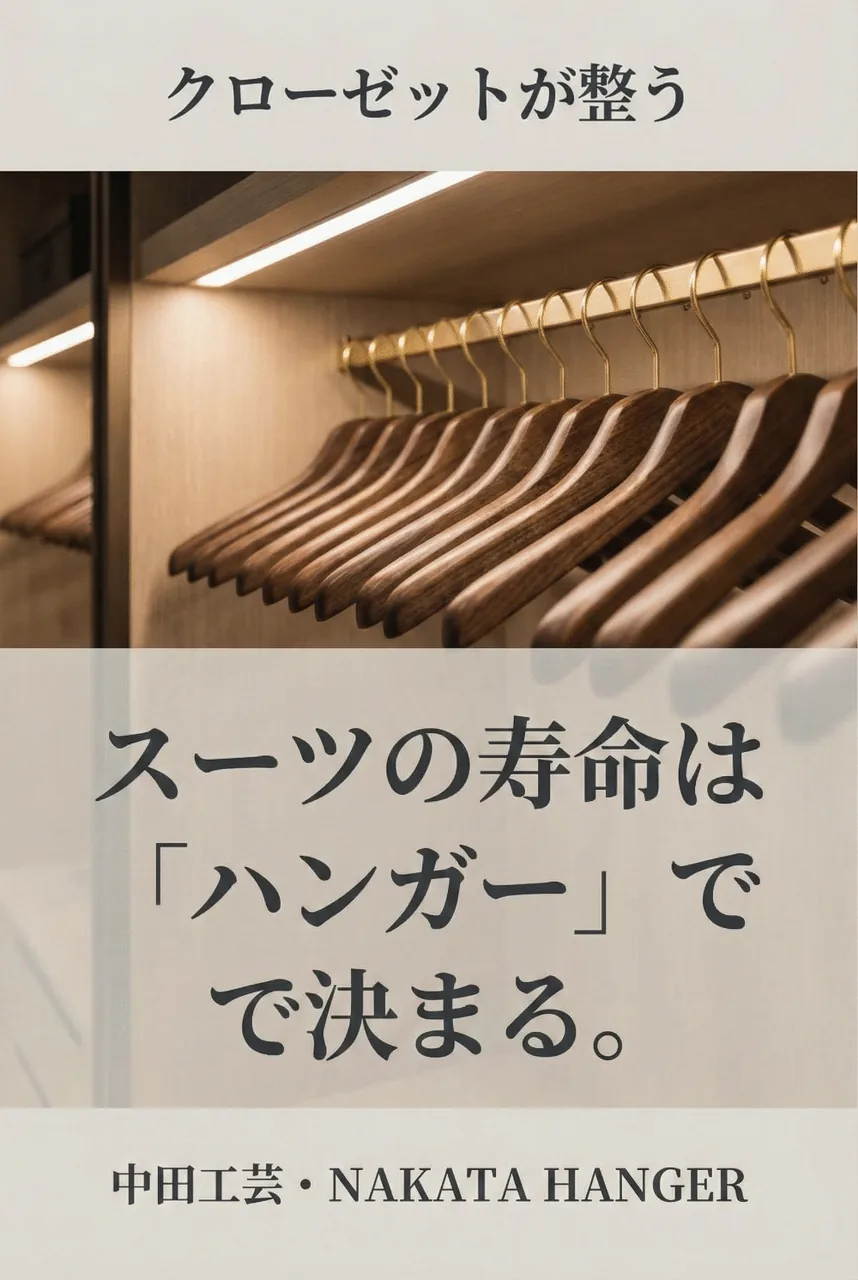
A suit or coat that worked hard all day deserves to rest on something shaped like a shoulder — warm, solid, and supportive — not on a piece of flat plastic or wire.
Taking care of your clothes is, in a small way, taking care of yourself.
Start with one hanger for your most important coat. See what changes.


Japanese Laundry Detergent Guide: Keep Your Clothes Looking New Longer

Japanese Blankets & Duvets Guide: Nishikawa and Other Legacy Makers