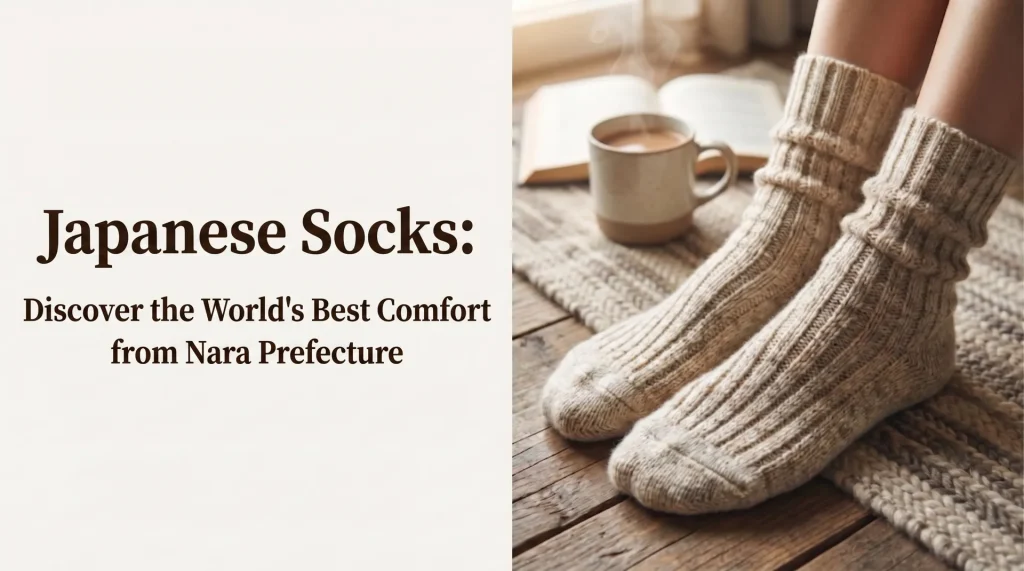
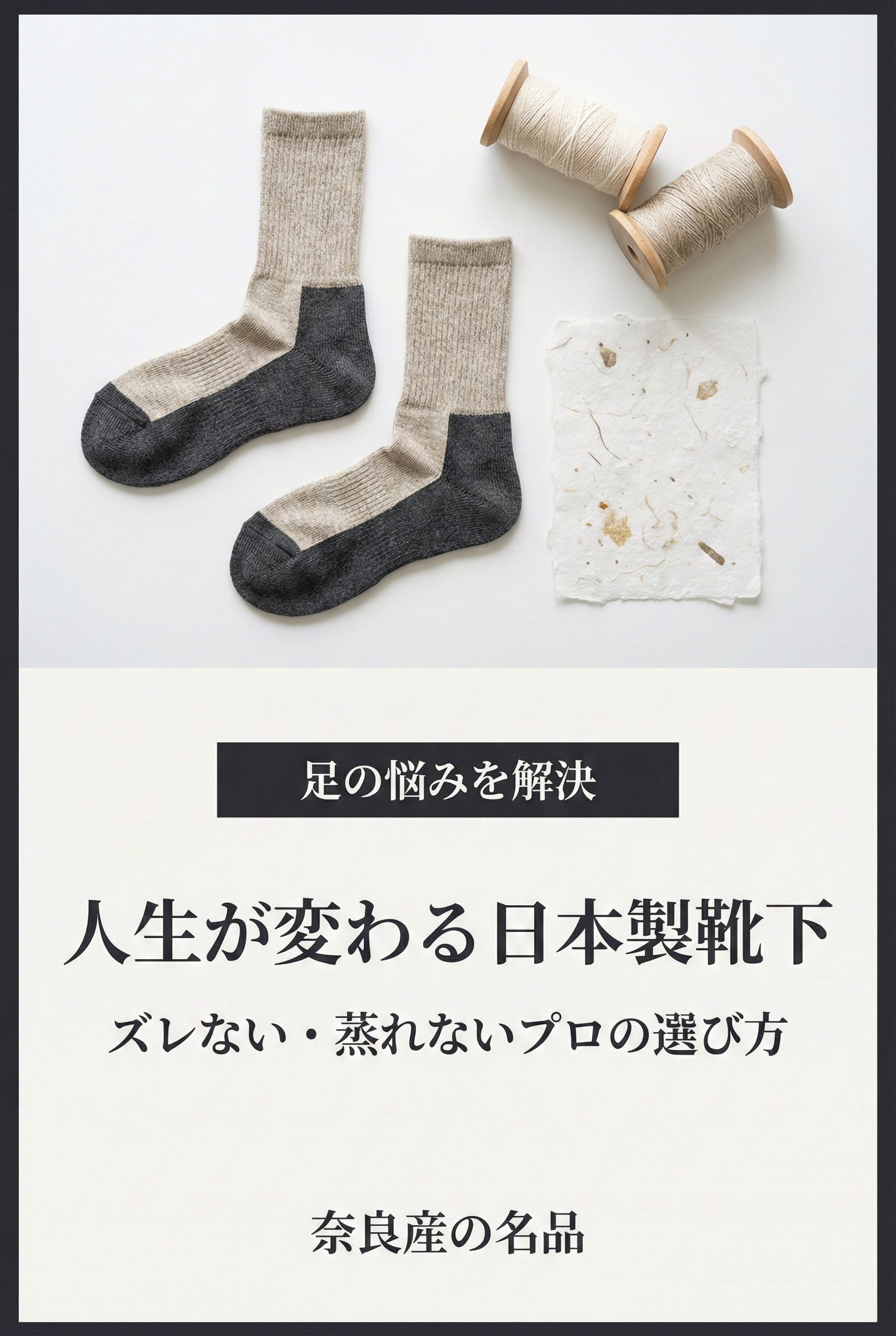
Socks are the most underrated upgrade in a wardrobe.
A single pair of well-made Japanese socks — around $12–15 — eliminates foot fatigue, in-shoe
moisture, and odour in a way that cheaper socks simply cannot. The difference isn't subtle after
a full day of walking or commuting.
Japan has a sock-making capital: Nara Prefecture, particularly the town of
Koryo-cho, which has produced over 60% of Japan's socks since the Meiji era. The combination
of machinery, technique, and material sourcing concentrated there is unmatched anywhere else.
This guide covers the materials worth knowing, ten brands across business, casual, and
functional categories, and one simple washing habit that doubles sock lifespan.
Quick Reference: Japanese Sock Materials at a Glance
| Material | Best for | Key quality |
|---|---|---|
| Washi yarn (和紙) | Summer, leather shoes | Dries fast, naturally deodorising, crisp feel |
| Sea Island cotton | Formal occasions, best-dress | Cashmere-like softness, natural sheen |
| Cotton (standard) | Daily business wear | Durable, washable, consistent comfort |
| Wool/cotton double face | Casual, boots, autumn/winter | Warm, non-itchy, substantial weight |
| Organic cotton | Sensitive skin, gifting | Undyed or low-impact dyed, hand-knitted texture |
| Kumazasa washi (笹和紙) | Odour problems, high sweat | Antibacterial from bamboo grass, extreme absorbency |
1. Why Nara? The Material Making Waves Now
Koryo-cho in Nara Prefecture has made socks since the Meiji era (1868–1912). The concentration of machinery, expertise, and specialty yarn suppliers there is why the best Japanese sock brands are almost all made in this one area.
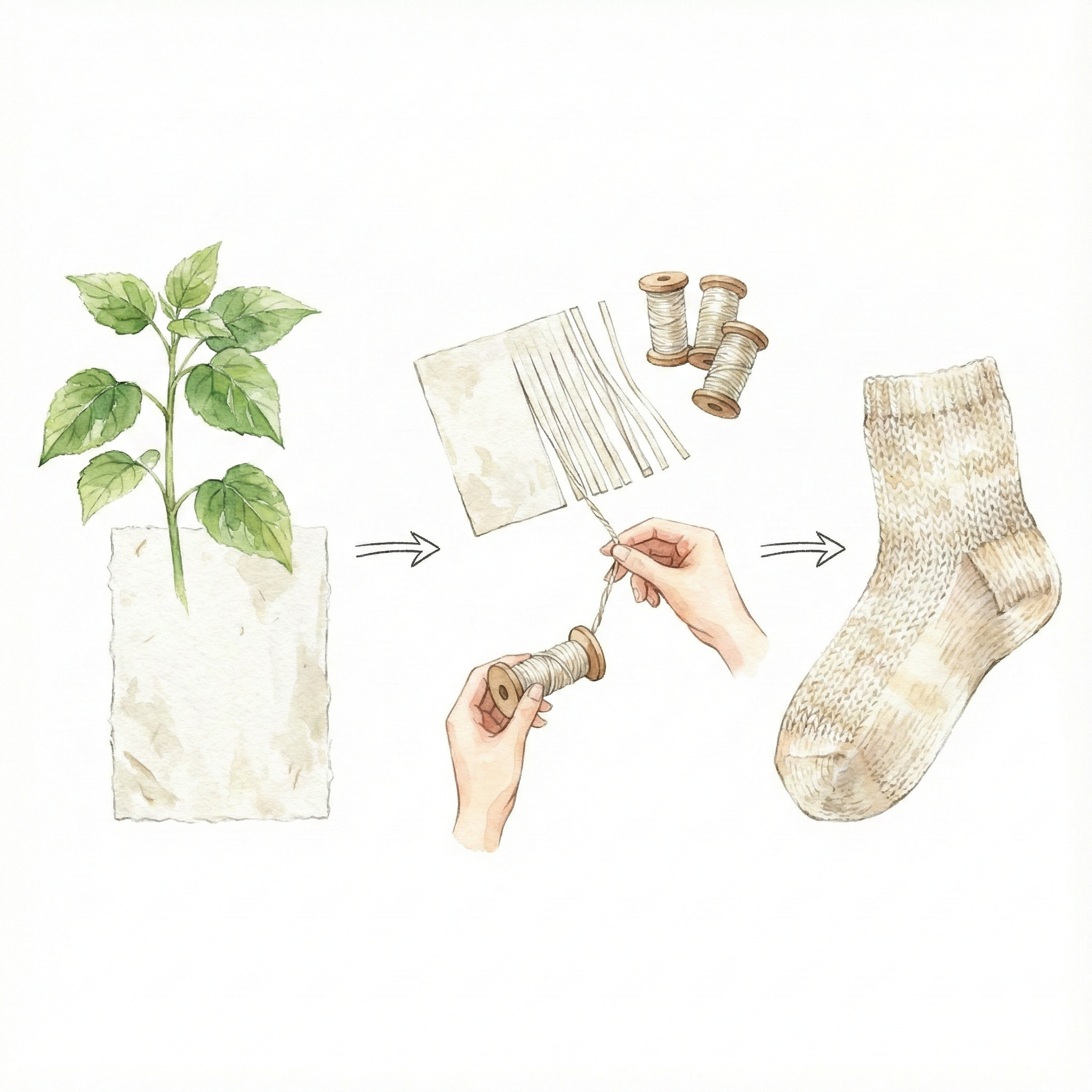
Washi yarn: Japan's traditional paper turned into thread
The current standout material is yarn spun from washi (Japanese paper). It sounds unlikely, but
the properties are genuinely different from cotton:
· Moisture wicks and dries several times faster than cotton
· A slightly crisp, cool texture that doesn't trap heat — no in-shoe stuffiness even in
summer
· Natural deodorising properties from the paper fibres
For anyone who wears leather shoes all day or experiences foot odour problems, washi-yarn socks
are a material-level fix rather than a workaround.
2. Business Socks — 3 Picks for Suit Wearers
For suit-wearing, the standard is over-the-calf (OTC) length — long enough that no skin shows when seated. These three don't slip.
HALISON — OEM Maker for Luxury Department Stores
The sock that stays up all day without circulation-cutting compression.
HALISON supplies OEM socks to high-end department stores and luxury brands — their name rarely
appears on the label, but their quality does. Their over-the-calf business line uses a knit
structure that adheres to the calf rather than gripping it. After a full day of walking,
they're still in position. Around $12–15 per pair — exceptional value for the quality.
- Based in
- Nara, Japan
- Known for
- OEM supplier to luxury department stores; calf-adhering knit
- Best for
- All-day business wear, over-the-calf length
Tabio MEN — Japan's Most Recognisable Sock Brand
The reliable national standard.
Tabio (known for its retail chain "Kutsushita-ya") makes the business OTC line that most
Japanese professionals reach for. The toe seam is flat-linked — no ridge inside the shoe.
Durability, fit, and price are the most balanced of any brand in this category.
- Based in
- Nara, Japan
- Known for
- Flat-linked toe seam; balanced durability, fit, and price
- Best for
- Daily business wear, suit commuters
GLEN CLYDE — Sea Island Cotton, 100%
The sock you wear to important meetings.
Sea Island cotton (grown only in a few Caribbean islands) is the finest natural cotton fibre
available — cashmere-soft, with a faint natural lustre. GLEN CLYDE uses it at 100%. Toe and
heel reinforcement is solid despite the fine material. The sock to reach for when
presentation matters.
- Based in
- Nara, Japan
- Known for
- 100% Sea Island cotton; cashmere-soft hand with natural sheen
- Best for
- Formal occasions, important meetings, best-dress situations
3. Casual Socks — 4 Picks for Everyday Wear
Socks that pair with sneakers, sandals, and boots — and look deliberate doing it.
ROTOTO — Thick, Warm, Made on Vintage Machines
Concept: "a consumable you can love for life."
ROTOTO is made in a Nara factory using old knitting machines no longer in production — the
tension and structure they create cannot be replicated on modern equipment. The double-face
sock (wool outside, cotton inside) is their landmark product: warm without any
wool-against-skin itch. Pairs perfectly with Birkenstock sandals or work boots.
- Based in
- Nara, Japan
- Known for
- Vintage machine knitting; double-face wool/cotton construction
- Best for
- Casual wear, boots, autumn/winter layering
CHICSTOCKS — Clean Lines, Gift-Ready Design
The sock as a visible part of the outfit.
CHICSTOCKS designs around the idea that socks should be seen. A side-stripe icon flashes
between shoe and trouser hem. An elastic panel on the instep prevents the sock rotating
inside the shoe — a small feature that becomes essential once you've used it.
- Based in
- Nara, Japan
- Known for
- Side-stripe design; elastic instep panel prevents rotation
- Best for
- Visible sock styling, outfit-conscious dressing
decka quality socks — Five Times the Yarn
Built like outerwear, worn on feet.
decka uses approximately five times the yarn of a standard sock per pair. The result is a
heavy, densely structured sock with a look closer to knitwear than hosiery. Rugged in
appearance but surprisingly soft underfoot — and extremely durable.
- Based in
- Nara, Japan
- Known for
- 5× yarn density; heavy structured construction
- Best for
- Durable everyday wear, statement casual look
YAHAE — 100 Years Old, Organic from the Start
Founded 1921 in Koryo-cho. Sustainable before sustainable was a category.
YAHAE uses organic cotton — often undyed, letting the natural fibre colour show — and knits
on vintage machines for the same textural qualities as ROTOTO. The result is a thick, warm
sock with the feel of something handmade. A strong choice for gifting, particularly to people
who care about materials.
- Based in
- Koryo-cho, Nara (est. 1921)
- Known for
- Organic cotton, often undyed; vintage machine knitting
- Best for
- Sensitive skin, gifting, material-conscious buyers
4. Functional Socks — 3 Picks for Specific Problems
These socks are designed around a specific anatomical or performance requirement.
RANGL — L-shaped for the Actual Shape of a Foot
No squeeze. No slip. Knitted at a right angle.
A foot's natural resting angle is roughly 90 degrees — but conventional socks are knitted
straight (tubular). RANGL knits the sock with an L-shaped structure that matches foot anatomy
from the start, so no bunching at the ankle and no circulation-cutting grip band. Particularly
useful for people with ankle swelling or who stand all day.
- Based in
- Nara, Japan
- Known for
- L-shaped anatomical knit structure; no grip band
- Best for
- Ankle swelling, all-day standing, circulation sensitivity
R×L — Left-Right Asymmetric for Athletes & Walkers
Trusted by Japanese runners and cyclists.
R×L knits the left and right sock differently to match the actual asymmetric shape of human
feet. The fit is glove-like — no dead space, no bunching. Reduces fatigue in standing jobs
and long-distance walking as well as sport.
- Based in
- Nara, Japan
- Known for
- Left-right asymmetric knit for anatomical fit
- Best for
- Running, cycling, long-distance walking, standing jobs
SASAWASHI — Kumazasa Bamboo Grass + Washi
The sock for persistent foot odour.
SASAWASHI combines washi yarn with kumazasa (sasa bamboo grass), which has documented natural
antibacterial properties. The material wicks aggressively and the antibacterial effect works
at the fibre level — not a coating that washes off. Users report smoother heel skin as a side
effect of regular wear.
- Based in
- Japan
- Known for
- Kumazasa bamboo grass + washi yarn; fibre-level antibacterial
- Best for
- Persistent foot odour, high perspiration, sensitive skin
5. The Inside-Out Washing Habit That Doubles Sock Life
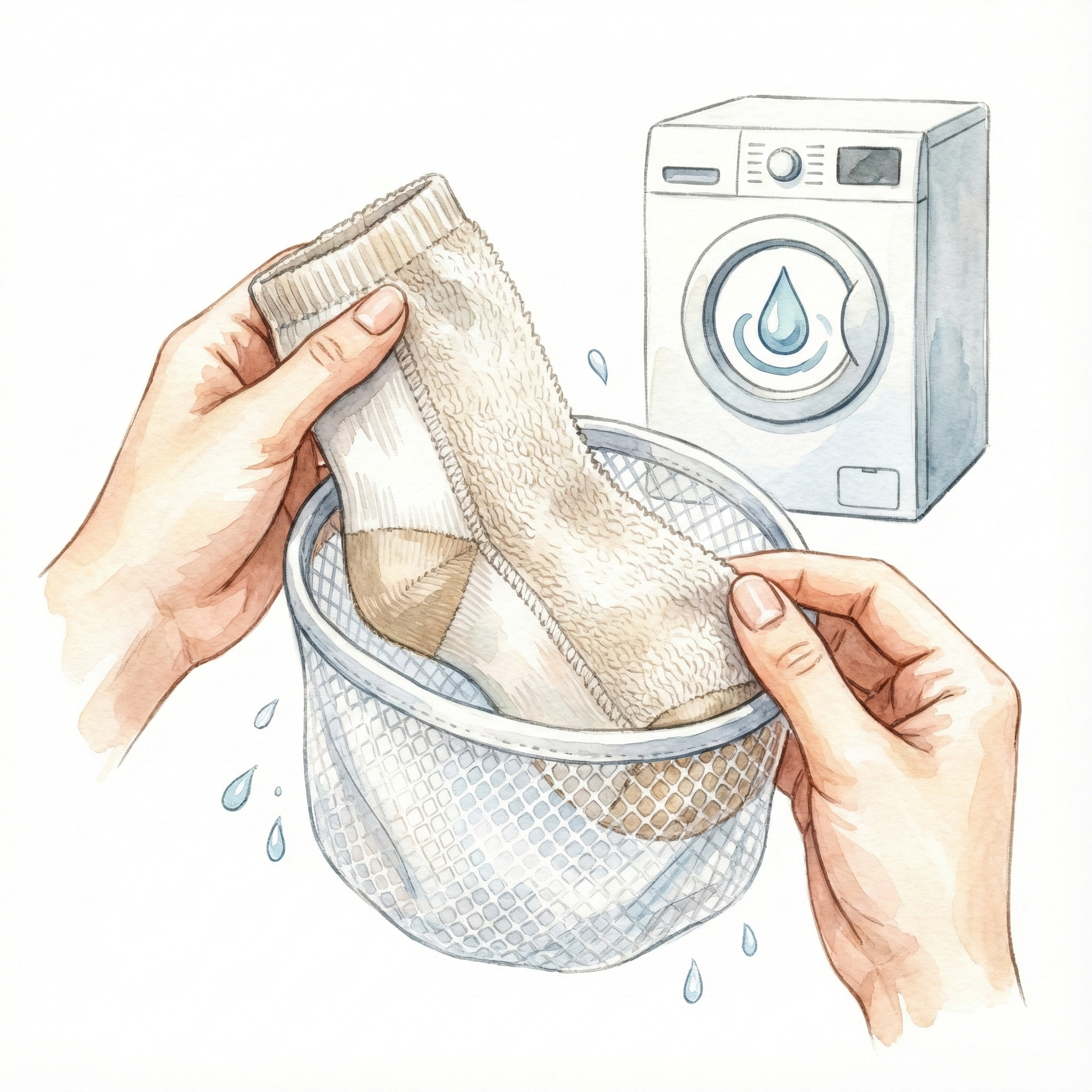
Wash them inside out — always
The inside of a sock is where foot oils, dead skin, and odour-causing bacteria accumulate.
Washing them right-side out doesn't reach this layer effectively.
Benefits of inside-out washing:
1. The inner layer — where dirt actually is — gets direct water and detergent contact.
Odour prevention improves significantly.
2. The outer surface fibres aren't abraded against the machine drum.
Pilling is dramatically reduced.
This one habit extends the usable life of good socks by a factor of two or more.
Final Thoughts: Feet First
Good socks carry a full day's worth of use without announcing themselves. No slipping.
No moisture building up. No odour by evening. That invisibility — the absence of the
problem — is exactly what you're buying.
Start with HALISON for business and ROTOTO for weekends. Add washi-yarn socks if summer
foot comfort is a priority. Once you've worn them for a season, the three-pack from the
supermarket won't be an option anymore.
Japanese Sneakers: Kurume Vulcanized and 7 Brands Worth Knowing
Japanese Leather Wallets: Tochigi, Bridle, and Cordovan