
This summer, swap the green coil for a brown one — 100% natural pyrethrum.
If the strong scent of conventional mosquito coils ever made your throat itch or gave you a headache, the culprit was the synthetic compound, not the plant itself.
Japanese-made coils derived from 100% natural pyrethrum (除虫菊, jochugiku) burn with a gentle, almost incense-like fragrance — plant-based from start to finish.
And then there is the holder. A kayaributa (蚊遣り豚) — the iconic pig-shaped ceramic coil holder — or a heavy Nanbu ironware vessel, or a brass piece that develops an antique finish over time.
This guide covers three natural coils worth buying and four beautiful Japanese holders to display them in.
1. "Brown" Is the Sign: Natural Pyrethrum vs. Synthetic
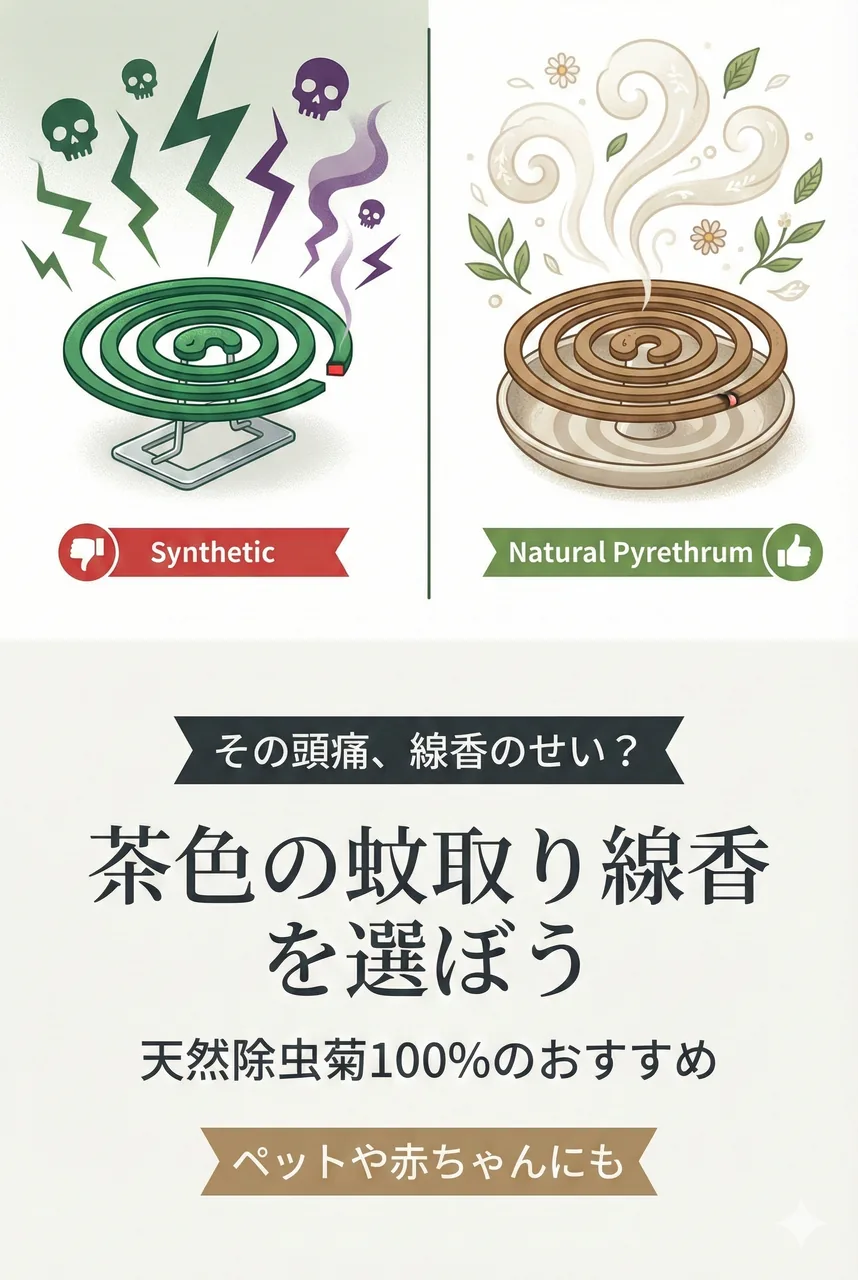
There are two distinct types of mosquito coil on the market.
Flip the box over and read the ingredient list — that is the fastest way to know which you have.
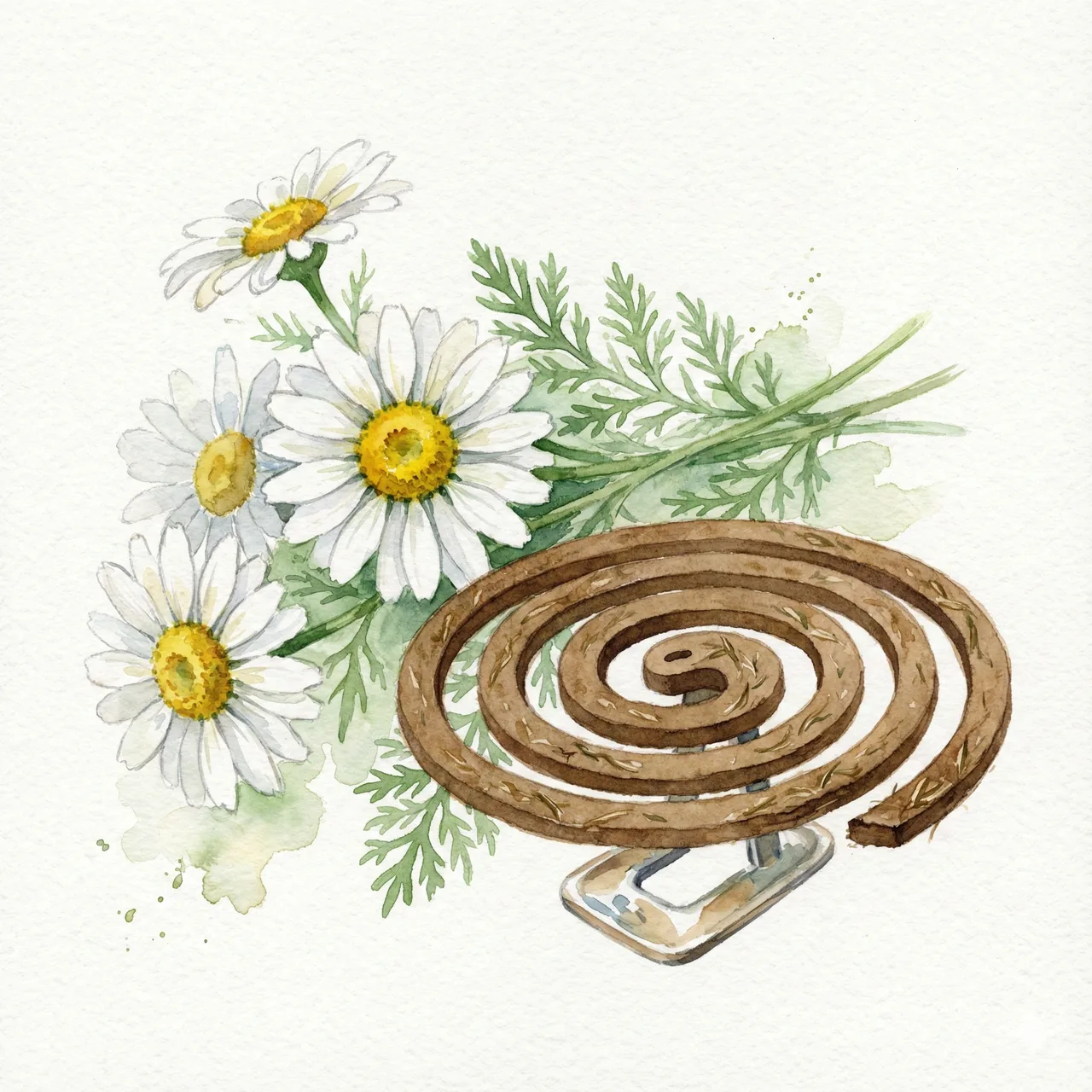
① Natural pyrethrum (pyrethrin)
Color: brown (no artificial dye)
Made from the dried flowers of Chrysanthemum cinerariifolium (white pyrethrum daisy), a plant used in Japan since the Meiji era.
The smoke is mild and far less irritating to eyes and throat.
The repellent effect is gentler than synthetic versions, but the coil is generally considered safe in households with babies and pets.
② Synthetic pyrethroid
Color: green (with added dye) or other colors
A laboratory-synthesized compound that mimics natural pyrethrin chemistry.
More potent and faster-acting, but people with chemical sensitivities or those in poorly ventilated spaces may find the smoke more irritating.
2. 7 Japanese Mosquito Coils & Holders Worth Buying
Coils to burn and vessels to hold them.
Together, a complete Japanese summer ritual.
▼ Natural Mosquito Coils
[No.1] Rinnesha — Kikuska-senko, the Gentlest Coil
Repel, don't kill — made entirely from plants.
Rinnesha's coils use Hokkaido peppermint and Wakayama pyrethrum flowers as active ingredients — no synthetic compounds of any kind. The long burn is closer to incense than pest control, and the room air never feels heavy.
A consistent bestseller among families with young children.
[No.2] KINCHO — Back to the Original Recipe
130 years ago, this is what KINCHO smelled like.
KINCHO invented the mosquito coil. Their natural pyrethrum line is a return to that original formula — 100% plant-based with vegetable-derived binders to minimize smoke irritation.
The faint grassy scent brings to mind watermelon on a veranda and the sound of wind chimes — the definitive smell of Japanese summer.
[No.3] LION Chemical — Traditional Natural Pyrethrum, Wakayama
Founded 1885 — one of the world's first mosquito coil makers.
Made in Arida City, Wakayama — a longtime center of pyrethrum cultivation — these no-dye, no-fragrance coils are the honest craft version: long burn, low smoke irritation, and a jumbo size for outdoor use in the garden or at camp.
Buying a full summer's supply in one order is a cost-effective approach.
▼ Japanese Mosquito Coil Holders
[No.4] Banko-yaki Kayaributa — Loved for 60+ Years, Yokkaichi, Mie
The icon of the Japanese summer — why a pig? Nobody is quite sure.
The kayaributa (mosquito-repelling pig) has stood watch over Japanese households since the 1940s. Made from heat-resistant Banko-yaki clay in Yokkaichi, Mie, it deepens in color as the season progresses — each coil leaving a faint ring of smoke that tells the story of summers past.
Modern versions in matte black, grey, and polka-dot patterns fit contemporary interiors with ease.
[No.5] OIGEN — Nanbu Tekki Iron Coil Holder, Iwate
The weight of Iwate iron, the silence of a proper object.
Nanbu ironware from Iwate Prefecture is among the most celebrated metalwork in Japan. OIGEN's mosquito coil holder carries that tradition into summer — substantial enough to never topple in the wind, with a rough cast surface that makes the rising smoke look more beautiful than it has any right to.
At home in a Western living room as much as a tatami room.
[No.6] Nousaku — Tin Coil Holder, Takaoka, Toyama
Silver that softens with age.
Nousaku (能作) is Takaoka's most internationally recognized casting house, known above all for 100% tin casting. Their tin mosquito coil holder starts life as bright silver, then deepens over time into a soft pewter tone — a surface that reads as understated luxury in any room.
The minimal form and generous weight place it firmly in the "objects worth keeping" category.
[No.7] Portable Coil Tray — For the Garden and Campsite
A necessity for anyone who gardens or camps.
A lightweight coil tray designed to hang from a belt loop or bag strap — keeping the coil burning while your hands stay free for weeding, grilling, or hiking.
Modern versions use rock wool (glass fiber) to grip the coil securely and prevent it from extinguishing in wind. A thoughtful small gift for anyone who spends time outdoors.
3. Making Your Own Kayaributa in Mie: A Pottery Experience
Create the one pig in the world that is yours
Yokkaichi City in Mie Prefecture is the birthplace of the kayaributa. Several Banko-yaki studios and pottery schools here offer summer experiences where you can make your own.
What to expect:
· Full hand-building courses where you form the pig from raw clay, and easier paint-your-own sessions on pre-fired bisque.
· A pig with your chosen expression and pattern will have a place in your home for decades — impossible to throw away.
Nearby, the BANKO archive design museum traces the full design history of Banko-yaki and is worth an hour of any itinerary.

Frequently Asked Questions: Babies, Pets & Safety
Is it safe to use around babies or during pregnancy?
The 100% natural pyrethrum coils introduced in this guide contain no synthetic chemicals, which makes them significantly gentler than conventional coils.
That said, any smoke can be irritating in an unventilated room. Use the coil in a space with some airflow, keep it away from the immediate vicinity of a crib, and if the baby shows any sign of discomfort, move the coil further away or outdoors.
We have dogs and cats — is a mosquito coil safe for them?
Mammals (dogs, cats, humans) can metabolize and eliminate pyrethrin compounds without harm — they are generally considered safe for households with dogs and cats.
Important exception: insects, fish, and reptiles.
Mosquitoes, beetles, goldfish, tropical fish, and reptiles share insect-like physiologies and can be severely harmed or killed by pyrethrin. Do not burn a coil in the same room as an aquarium, terrarium, or insect habitat.
5. Final Thoughts: A Japanese Summer
Air conditioning is efficient, but it seals out everything — the evening breeze, the sound of the garden, the smell of the season.
Opening the windows, listening to wind chimes, and letting the scent of a natural pyrethrum coil fill the room: this is the Japanese way to survive summer with something approaching elegance.
A natural coil and an honest ceramic or iron holder.
This summer, let your eyes and nose enjoy the season together.