Fluffy towels
come down to four things. That's it.
① Use less detergent (reduce residue)
② Add one extra rinse cycle (zero slippery residue)
③ Skip fabric softener (better absorbency and lasting fluff)
④ Dry quickly (prevents musty smell too)
"My towels go stiff no matter what I do." "They smell when I dry them indoors." "New towels are soft, but mine get
scratchy within weeks."
All common. All fixable.
This guide covers natural (additive-free, plant-derived) laundry products you can order online,
plus specific washing routines for both indoor drying and outdoor drying — nothing left out.
1. The 4 Core Principles for Fluffy Towels
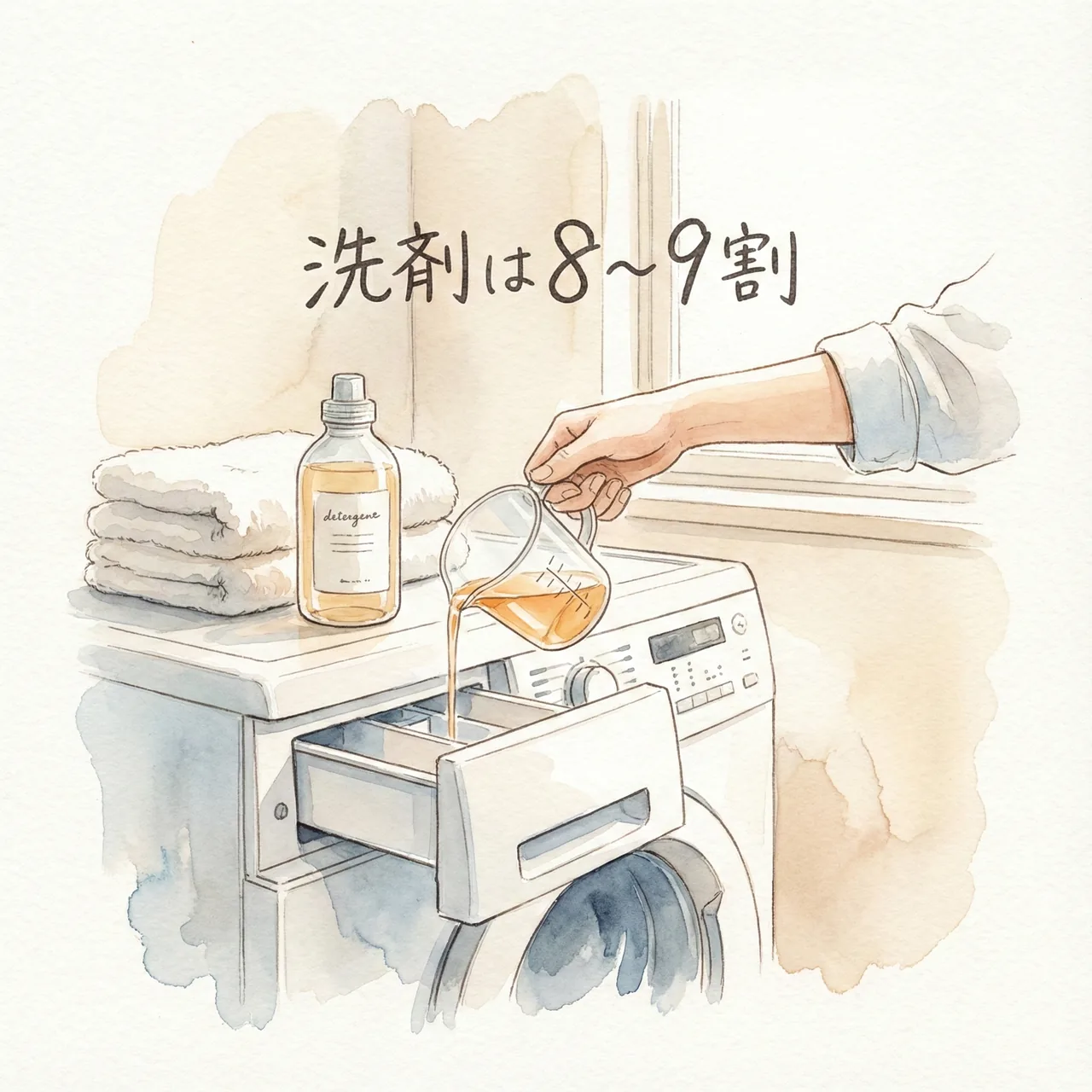
Principle 1: Use Less Detergent Than You Think
Towel stiffness is often caused by detergent residue — not the towel itself.
Liquid detergents in particular are prone to leaving a coating inside the pile loops if you use too much, which
gradually makes the fabric feel stiffer and heavier.
Start with 80–90% of the
manufacturer's recommended amount. That adjustment alone often makes a noticeable
difference.
Principle 2: Add One Extra Rinse Cycle
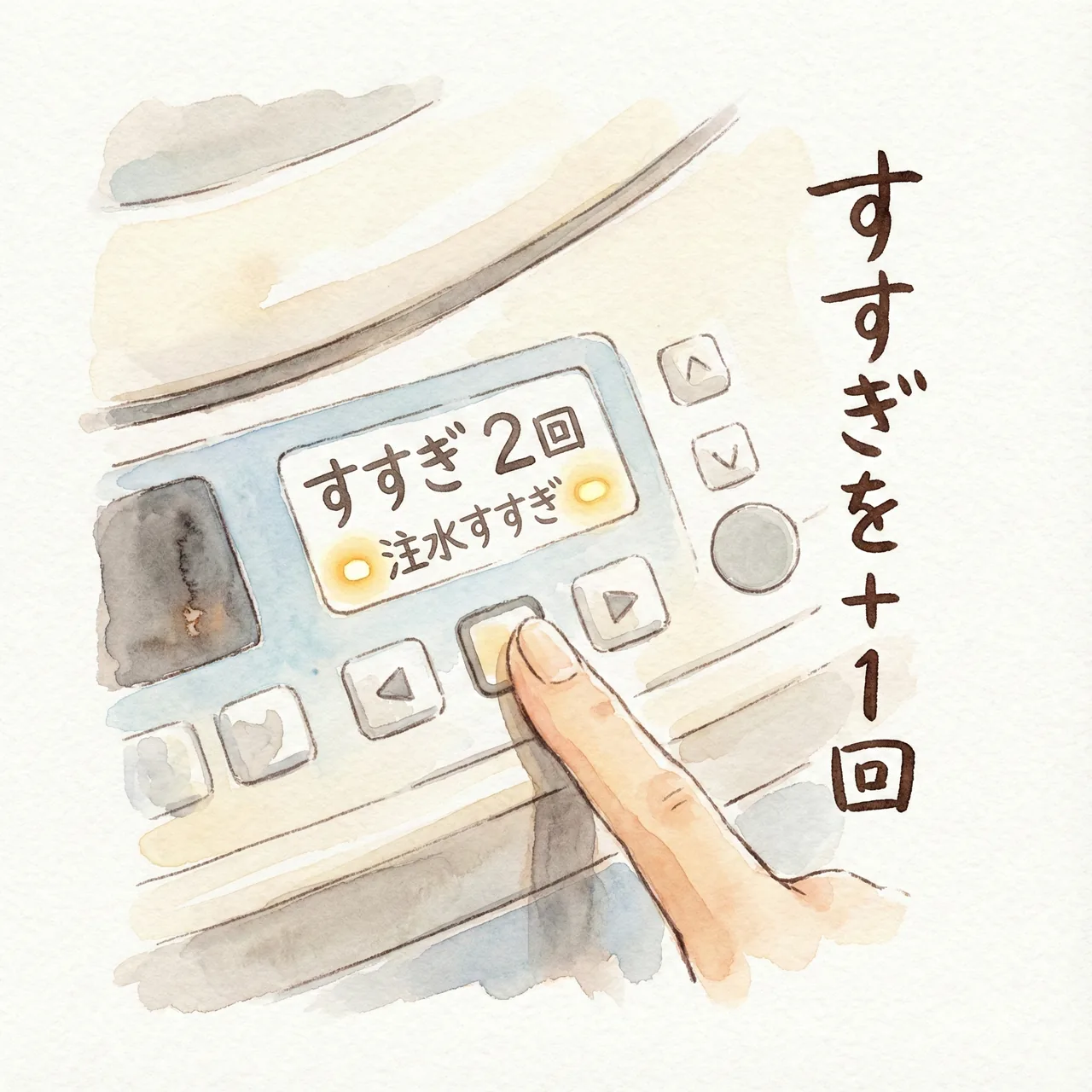
An extra rinse is the single most effective thing most people can do for their towels.
If your towels feel stiff or lose absorbency, the first fix to try is simply increasing your rinse
count.
If you can wash towels separately, it's easy to set the machine to a towel-specific "extra rinse" mode and leave
it there.
Principle 3: Skip Fabric Softener for Towels
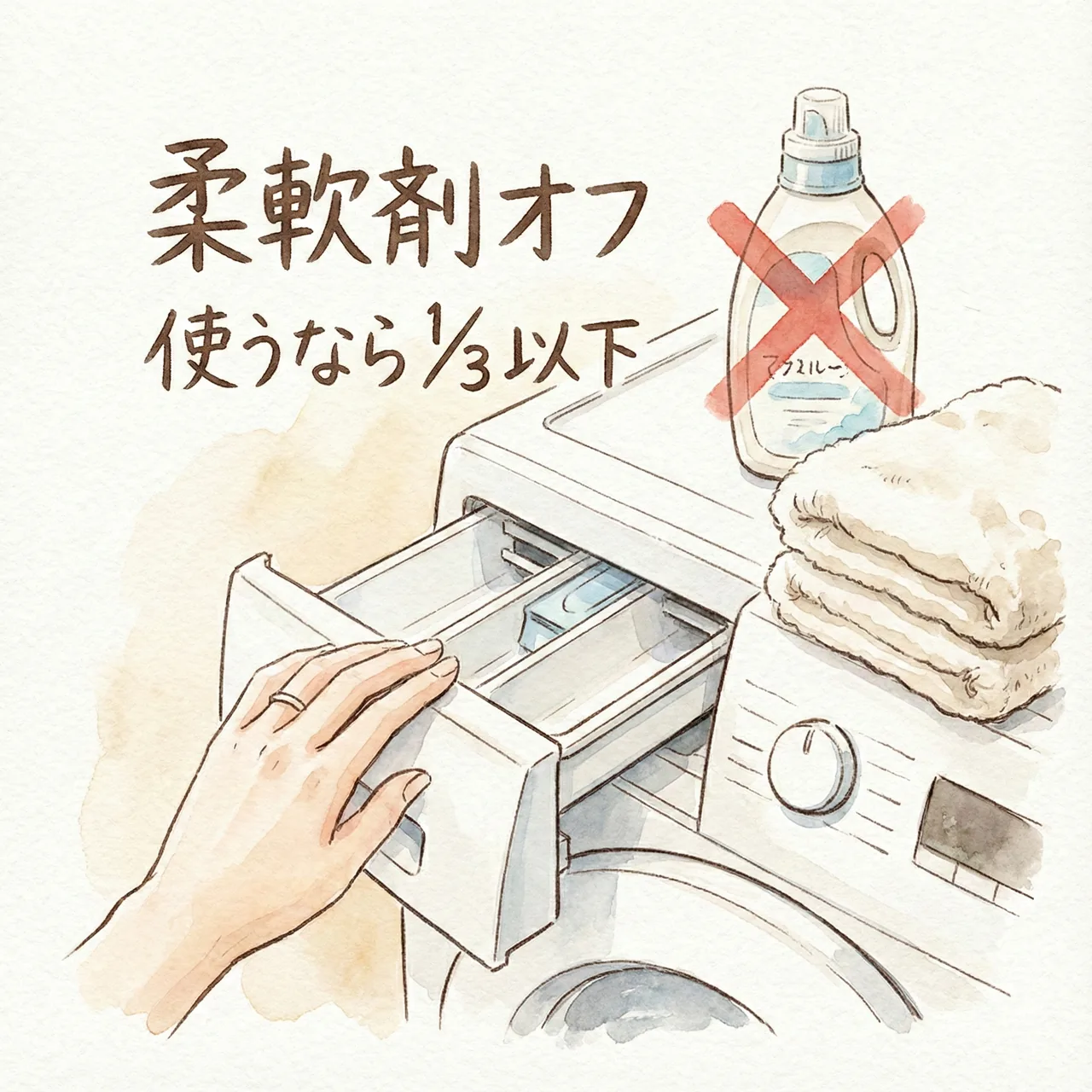
Fabric softener coats the fiber surface, which creates an instant soft sensation — but reduces
absorbency over time and can ultimately contribute to stiffness as it builds up.
If you feel you need it, try one-third of the recommended dose or less — just enough to notice
the effect without the buildup.
The fastest starting point
80–90% detergent + 1 extra
rinse + no softener
A large proportion of stiff towels will recover with just these three changes.
If that's not enough, proceed to the cause analysis below — then move to the recommended products (oxygen bleach,
citric acid rinse).
2. Why Towels Go Stiff: The 3 Main Causes
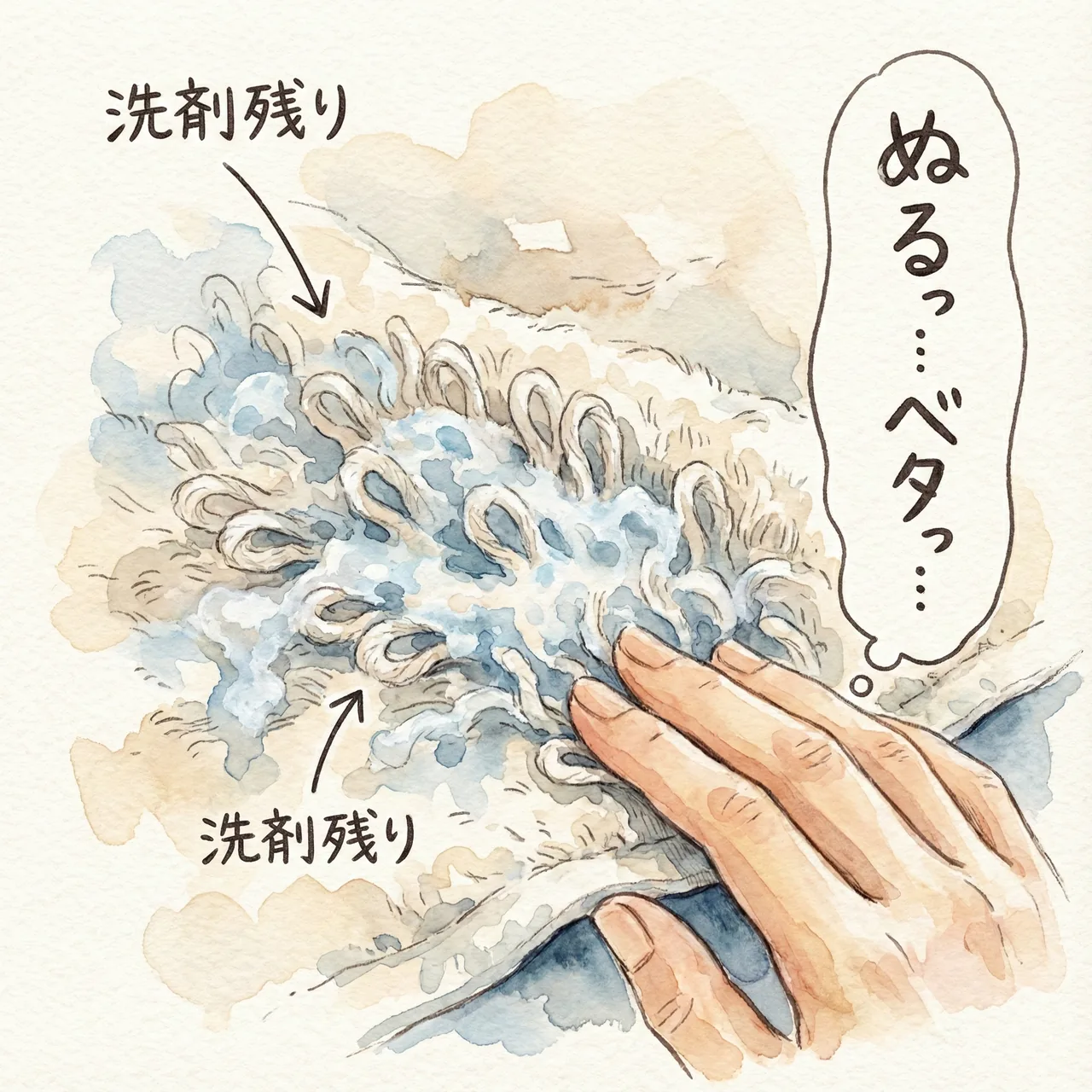
Cause 1: Detergent or Softener Residue
The most common cause. Terry towels have a looped pile structure that traps product residue more readily than
flat fabrics.
If your towels feel slightly slippery or sticky to the touch, residue is the culprit.
Solution: increase rinse cycles first.
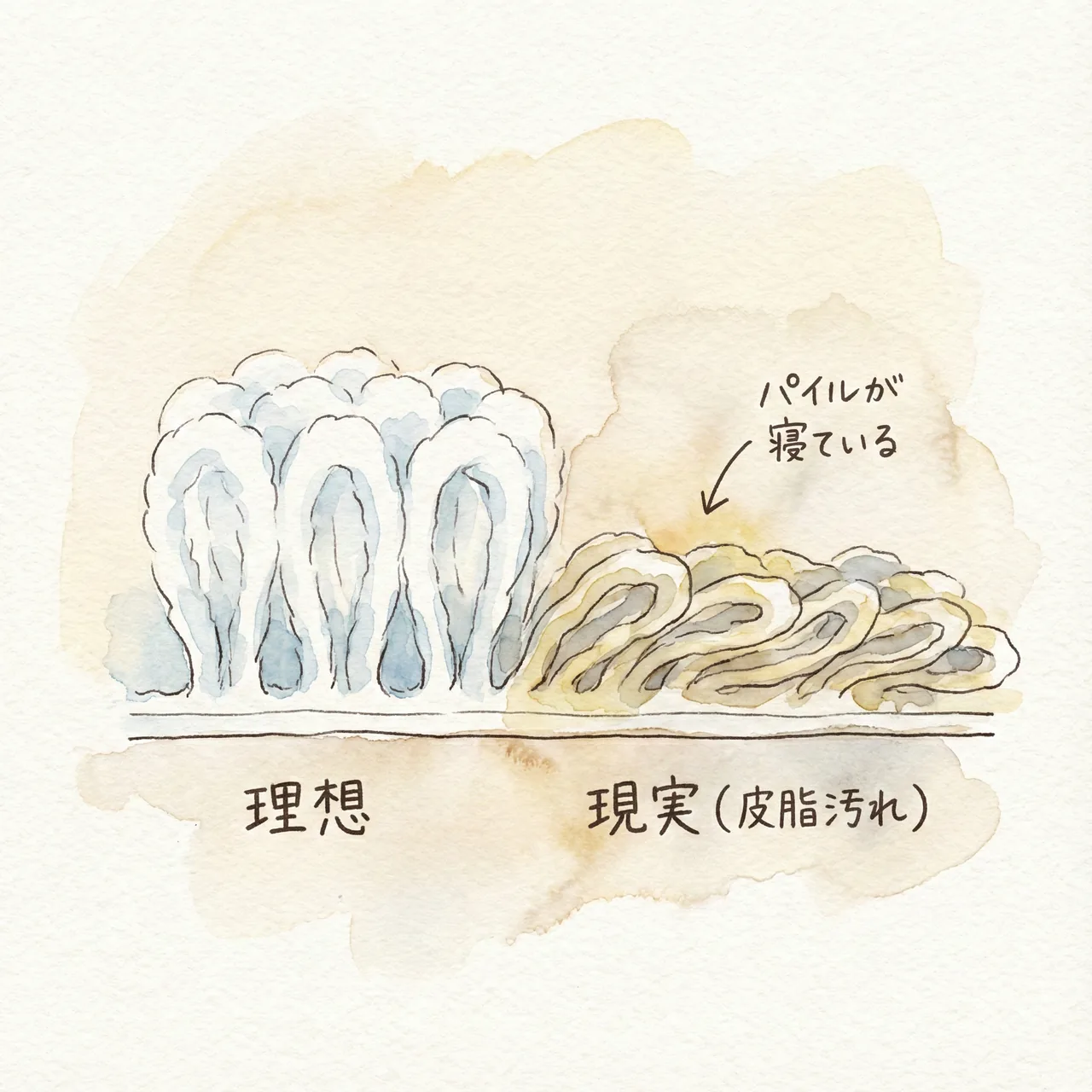
Cause 2: Sebum Buildup — Flattening the Pile
Towels used on faces and bodies accumulate sebum (skin oil) gradually with every use.
As sebum builds up, it weighs down and flattens the pile loops — which is what produces that "no fluff" feeling
even after washing.
This type needs a monthly reset with oxygen-based bleach (sodium percarbonate) — explained in
the product section.
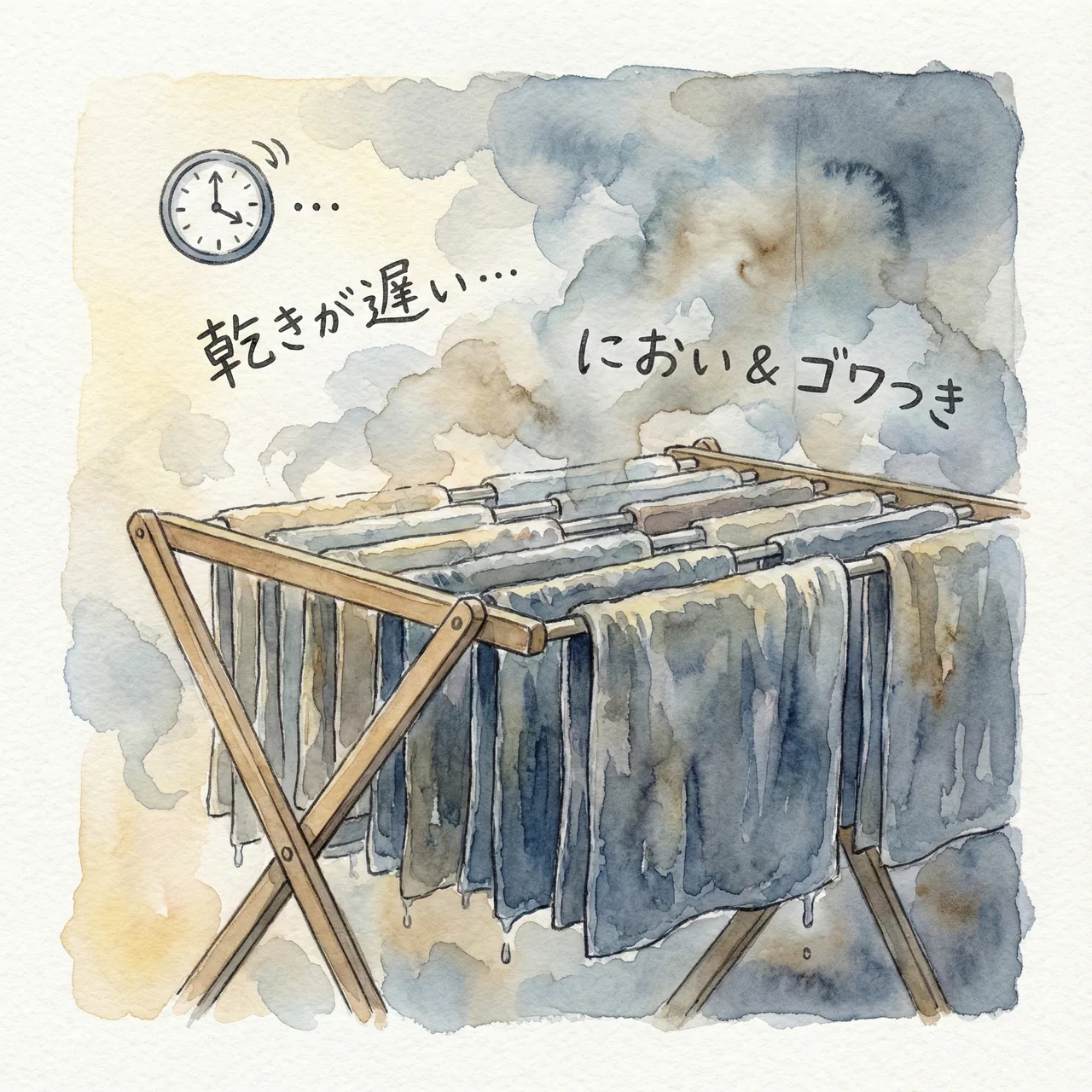
Cause 3: Slow Drying — Stiffness and Odor Together
When towels take a long time to dry indoors, the damp environment allows bacteria to multiply — producing that
musty smell — and the pile loops dry in a flattened, compressed state.
Fluffiness isn't just about washing. How you dry matters just as much.
The product and drying sections below address this directly.
3. 5 Natural Laundry Products for Fluffy Towels
Selected for three criteria: available online, naturally derived or additive-free, and genuinely good for
towels.
The structure is one main detergent + two supporting products — a combination that keeps towels
consistently good.
Start with one main detergent +
two supporting products and towel quality stabilizes quickly.
Quick Guide: 5 Natural Laundry Products at a Glance
| Product | Type | Best For | Frequency | Details |
|---|---|---|---|---|
| Shabon-dama Snowl | Soap-based detergent | Additive-free fluffiness, no softener needed | Every wash (primary) | Details ↓ |
| MIYOSHI | Additive-free soap | Budget-friendly entry into natural washing | Every wash (primary) | Details ↓ |
| SONETT | Natural wash | For those who want a hint of fragrance | Every wash (primary) | Details ↓ |
| Sodium Percarbonate | Oxygen-based bleach | Monthly reset for odor and yellowing | Monthly (supporting) | Details ↓ |
| Citric Acid | Citric acid rinse | Tackles stiffness after soap-based washing | As needed (finishing) | Details ↓ |
[No.1] Shabon-dama Snowl (Soap-Based Laundry Detergent)
The go-to additive-free soap for anyone who wants fluffy towels without fabric softener.
Clean, fragrance-light wash that leaves towels smelling like nothing — which turns out to be a very good smell
once you get used to it.
Soap-based detergents can leave a white residue depending on water hardness and technique, so add one
extra rinse and consider the citric acid finish below to prevent any soap-curd
buildup.
Shabondama Snowl Natural Laundry Soap — Additive-Free
Pure soap-based laundry detergent with zero additives — no fragrance, no surfactants, no optical brighteners. The go-to for fluffy towels without any fabric softener. Also available directly from the official Shabondama global store (global.shabon.com).
View on Official Store[No.2] MIYOSHI (Additive-Free Laundry Soap)
The practical starting point for going natural without spending more than necessary.
"I want to try soap-based washing but not blow the budget" — this is the right answer.
Same fundamental principles apply: measured amounts, adequate rinsing, and
citric acid finishing when needed. Reliable results at a realistic price.
See the MIYOSHI Soap brand page
MIYOSHI Additive-Free Laundry Soap — Made in Japan
Pure soap formula with no synthetic additives, no fragrance, no enzymes. The practical entry point into natural washing — the same principles as Shabon-dama at a realistic price. Use with an extra rinse cycle for best results.
View on Official Store[No.3] SONETT (Natural Wash)
For those who want natural laundry that still feels like a sensory experience.
"Unscented feels flat, but strong fragrance is too much" — SONETT occupies the right middle ground.
Use as your everyday detergent, and on months when sebum buildup or odor becomes noticeable, run a sodium
percarbonate soak to reset the towels back to fresh.
Sonett Organic Laundry Liquid Sensitive — 68 fl oz
Certified organic plant-based laundry liquid from Germany — no enzymes, no preservatives, no synthetic fragrance. The fragrance-free Sensitive line is ideal for towels. 68 fl oz / 2L bottle for everyday use.
View on Amazon[No.4] Sodium Percarbonate (Oxygen-Based Bleach)
The monthly reset that fixes towels when nothing else seems to work.
Changed detergents and still no improvement? Persistent room-dry odor? The problem is almost certainly accumulated
sebum.
The method: soak in warm water (around 40°C) with sodium percarbonate once a month before washing
as usual. Using warmer water increases the effectiveness significantly.
※ Check fabric care labels — not all materials can handle oxygen bleach.
Ecoxall 99.9% Pure Sodium Percarbonate — 5 lb
Pure sodium percarbonate powder — no fillers, no fragrance. Dissolve in warm water (~40°C) and soak towels monthly to break down sebum buildup and remove odor-causing bacteria. Color-safe when used as directed. 5 lb bag.
View on Amazon[No.5] Citric Acid (or Citric Acid Rinse)
The final fix for anyone using soap-based detergent who still gets stiff towels
Soap-based detergents can leave soap scum (curd) in certain water conditions, making towels feel rough. The cause
is alkaline residue from the soap.
The solution: citric acid in
the final rinse. The acid neutralizes soap residue and the change in texture is often
dramatic.
A pre-measured rinse product makes this effortless to add to your routine.
Spicy World Pure Citric Acid — 2 lb, Food Grade
100% pure food-grade citric acid. Add 1–2 tablespoons to the final rinse cycle to neutralize soap-curd buildup and restore softness — especially effective when using soap-based detergents. A natural, fragrance-free alternative to fabric softener.
View on Amazon
The minimum product set that wins
Primary: Snowl, MIYOSHI, or SONETT (pick one)
Supporting: Sodium percarbonate (monthly odor/yellowing reset) + citric acid (soap residue
fix)
This 1 primary + 2 supporting combination is the most realistic natural laundry setup for
consistently good results.
What Happened When I Quit Fabric Softener
I used to feel like I needed fabric softener — the towels felt wrong without it. After trying the soap-washing
approach (no softener), my thinking changed.
What actually happened:
① I discovered what "no smell" actually smells like
The first wash felt underwhelming — less scent, hard to notice a difference. But after a few cycles with less
detergent and no softener, something shifted. On sunny days, the towels would come in smelling of warmth and
cotton. Burying your face in them felt genuinely calming. Absorbency improved dramatically.
② A "ruined" towel came back with percarbonate
This was the bigger surprise. A bath towel I'd written off as a cleaning rag — yellowed, vaguely musty, beyond
help — went into a 45°C percarbonate soak overnight. It came out white and fluffy. That result is hard to
forget.
Results vary by household, but "less detergent + extra rinse" is worth trying before you give up on a towel.
4. Indoor Drying: How to Wash for Fluffiness and Odor Control
The Key to Indoor Drying: Shorten the Time to Dry
Indoor towel odor is usually not a detergent problem — it's a drying time problem. The slower the towel dries, the
more bacteria multiply in the damp pile.
Here's the indoor drying recipe that works with a natural approach.
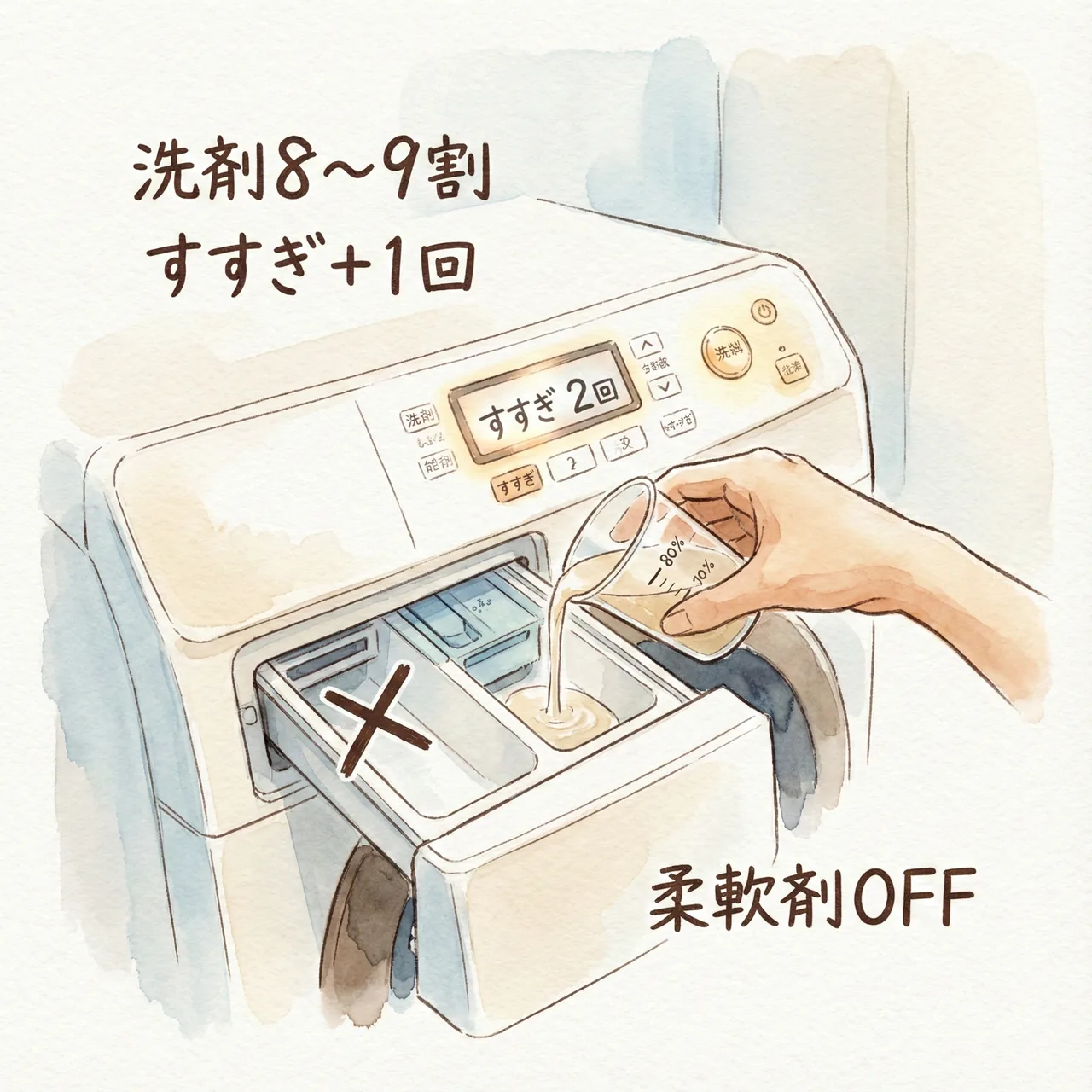
Indoor Recipe 1: 80–90% Detergent + 1 Extra Rinse
The first priority is minimizing detergent residue.
If you can wash towels separately, it's easier to run them with towel-optimized settings.
· Detergent: 80–90% of recommended dose
· Rinse: +1 cycle (ideally 2 total)
· Fabric softener: off (or minimal)
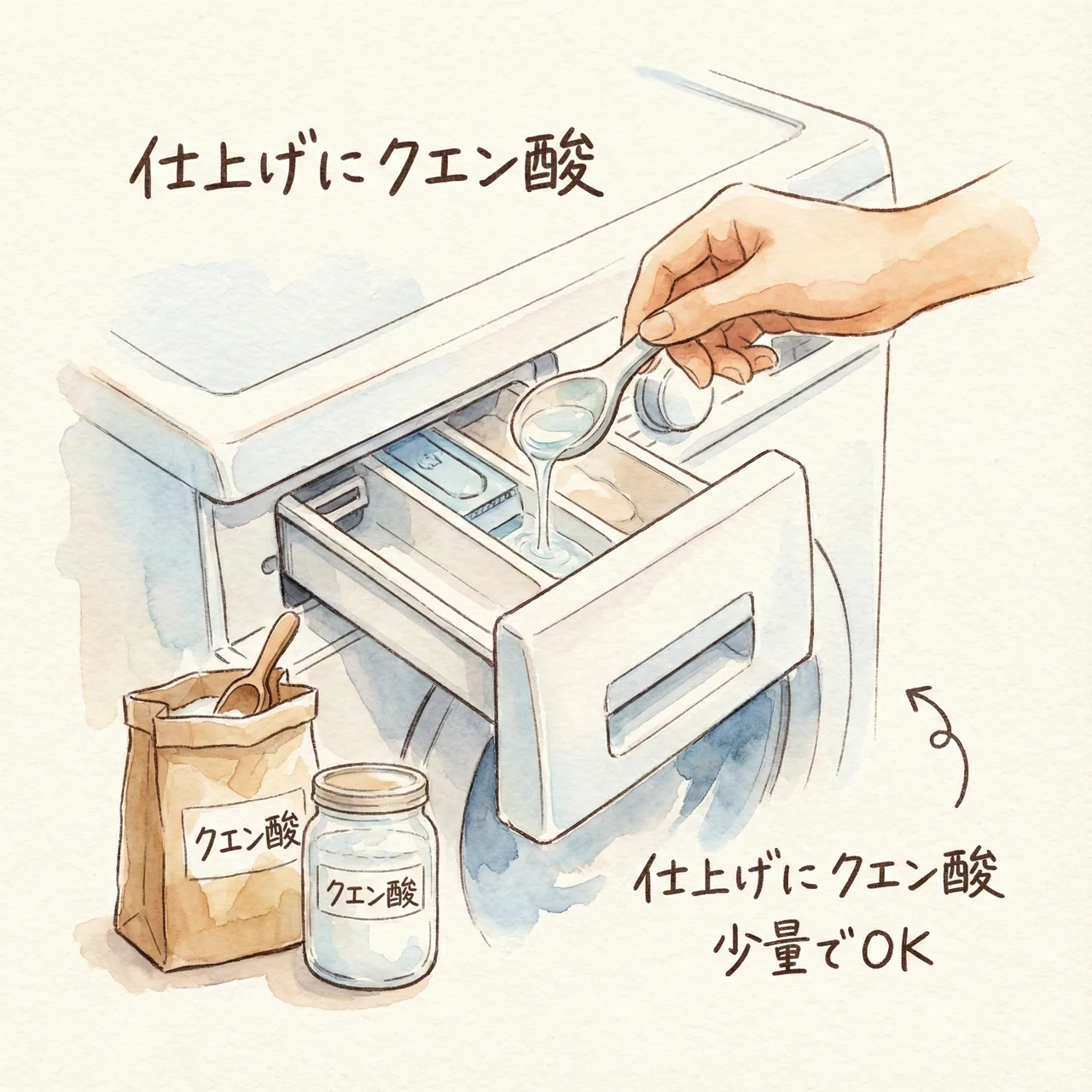
Indoor Recipe 2: Use Citric Acid as Final Rinse (Soap Users)
If you use soap-based detergent and towels still feel stiff, a citric acid rinse in the final
cycle often solves it.
· Citric acid powder: dissolve a small amount in water, pour into softener compartment
· Rinse product: use as instructed on label
Start with less than you think — too much can leave a faint smell.
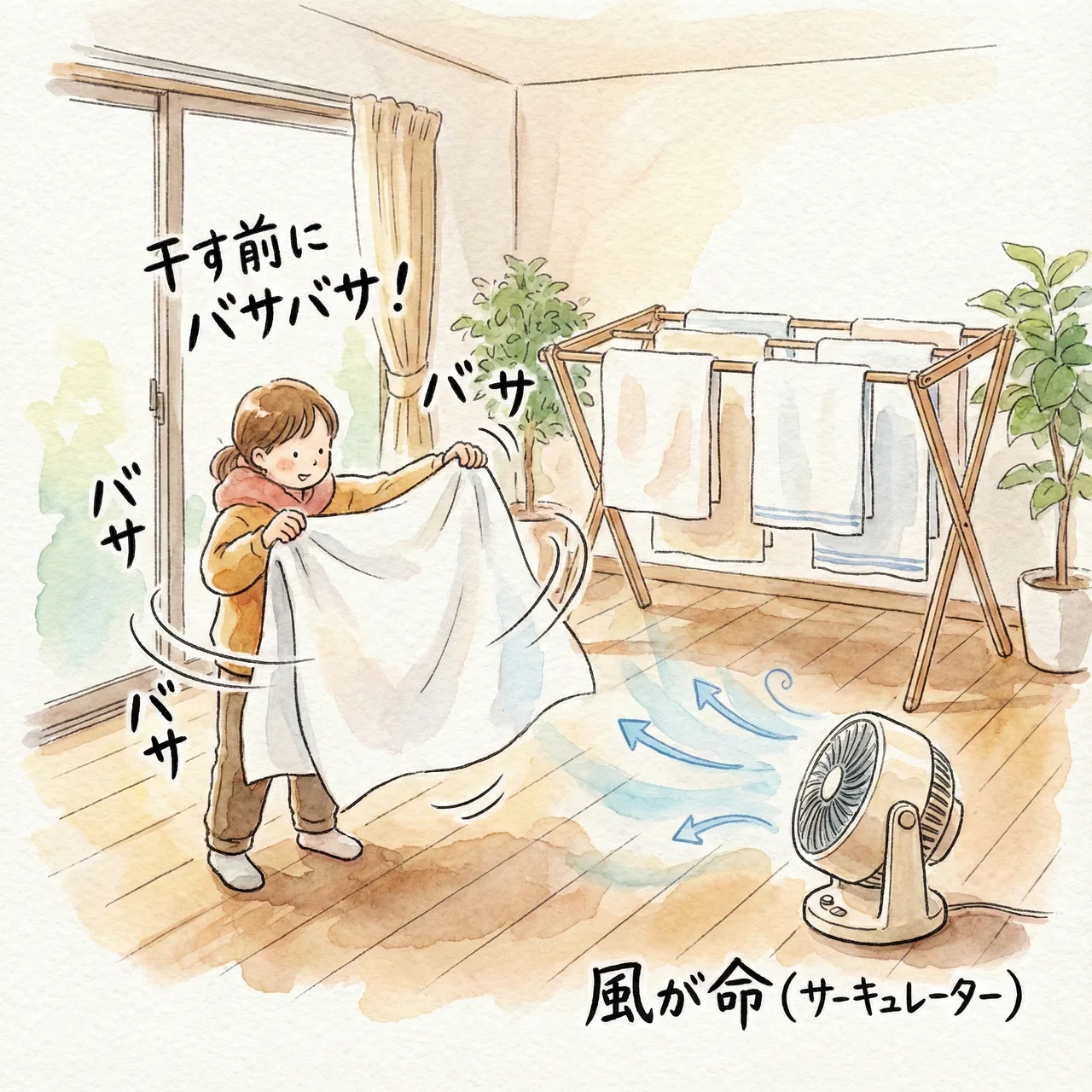
Indoor Recipe 3: Shake Vigorously Before Hanging + Airflow
Shake each towel hard 10–20 times before hanging — this loosens the pile and helps it dry in a
more upright position.
Airflow is everything for indoor drying: a circulator fan or air conditioning makes a dramatic difference.
· Leave space between towels
· Direct airflow onto the towels (dehumidifier mode or fan)
· For thick towels, use a cylindrical hang or accordion fold to create air channels
The best indoor drying trick (weekly or monthly)
Sodium percarbonate soak →
normal wash
Towels that "won't come back" despite technique changes almost always have sebum buildup.
A short soak in warm water (~40°C) with percarbonate before washing tends to clear it effectively.
5. Outdoor Drying: How to Maximize Softness and Feel
Outdoor Drying Is About Preventing Stiffness, Not Odor
Outdoor drying solves the "slow drying" problem automatically, so odor is rarely an issue.
The outdoor challenge is stiffness — caused by detergent residue and compressed pile loops. The
strategy shifts accordingly.
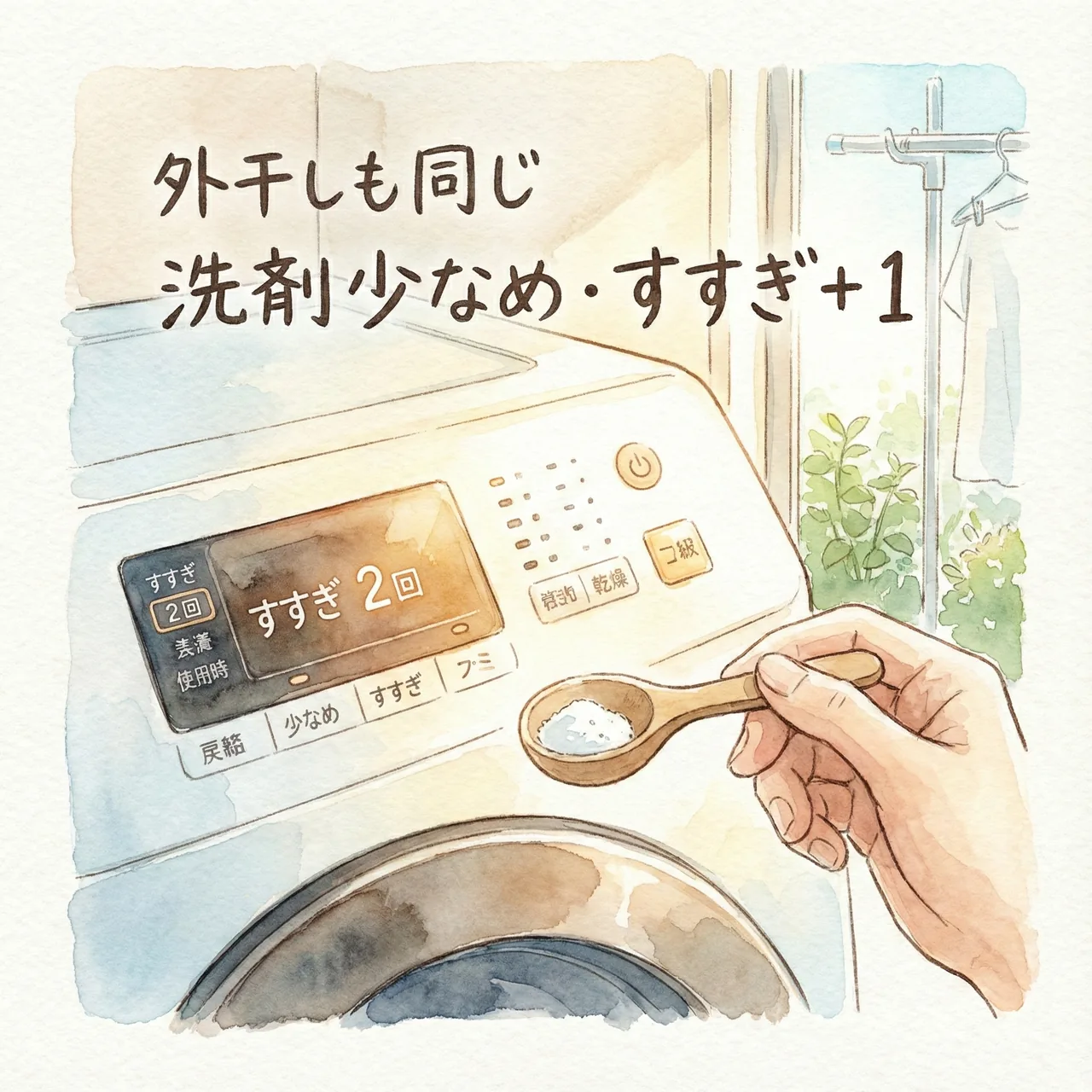
Outdoor Recipe 1: Less Detergent + Extra Rinse (Same Foundation)
The base principles don't change outdoors.
If your outdoor-dried towels are still stiff, less detergent is still the first variable to
address.
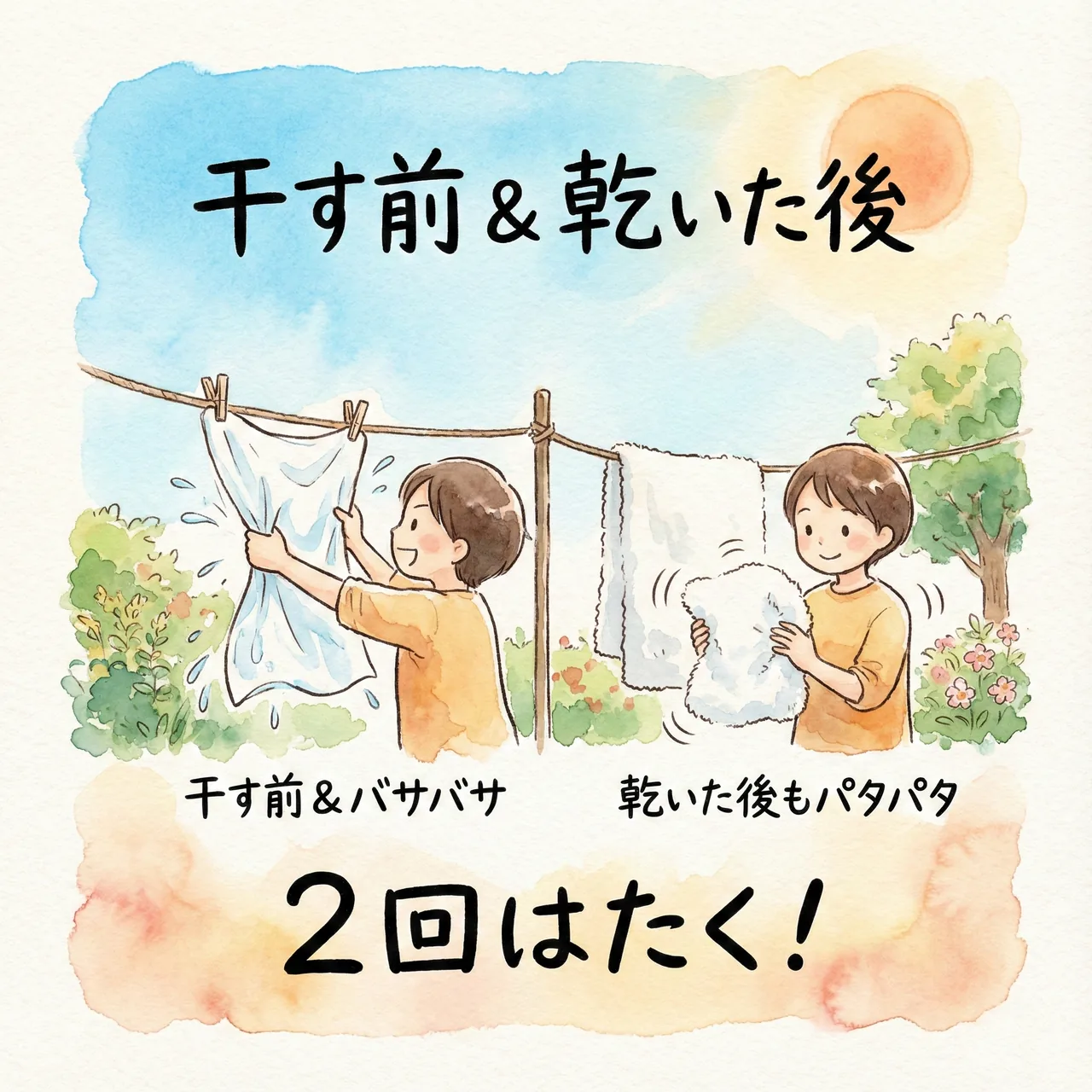
Outdoor Recipe 2: Shake Before Hanging — and After Taking Down
For outdoor-dried softness, shake the towel hard before hanging to raise the pile, then give it
another light shake after taking it down once dry.
That second shake lifts any pile that compressed during drying and makes a perceptible difference in feel.
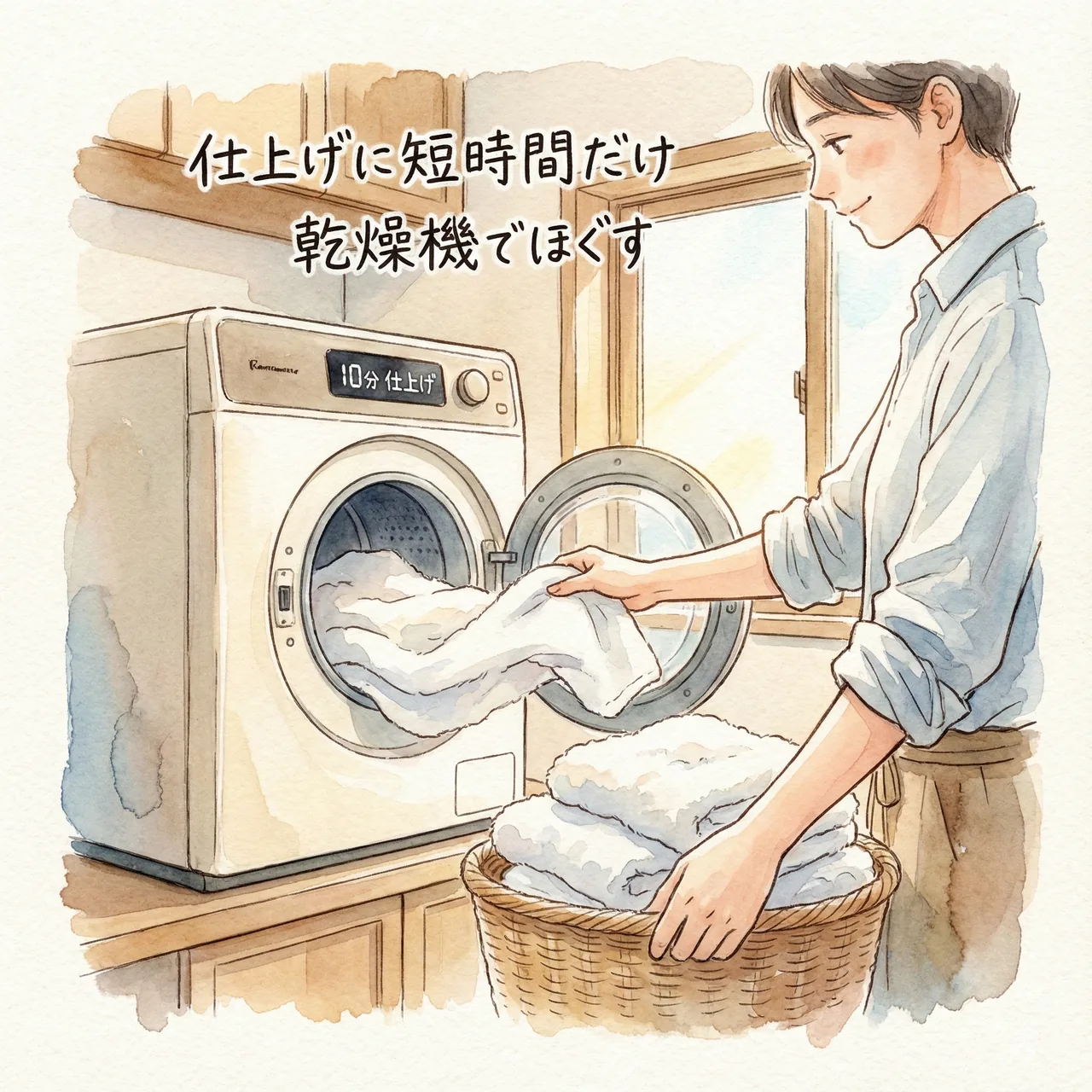
Outdoor Recipe 3: A Short Dryer Tumble as a Finishing Step
If you have a dryer, a brief tumble at the end — just a few minutes — works surprisingly well to fluff up towels
without fully drying them in the machine.
The goal isn't to dry; it's to shake the pile loose at the end of the process.
6. Water Type Uncertainty? Adjustment Tips That Work Anywhere
White Powdery Residue or Graying? Suspect Soap Curd
Even if you don't know whether your water is hard or soft, you can diagnose by symptoms.
Whitish powder on towels, or gradual graying — these often relate to soap residue interacting with minerals in the
water.
Recommended adjustment order:
① Add rinse cycles
② Recheck detergent amount (both too much AND too little can cause issues)
③ Add citric acid as a final rinse
Slippery Feel or Poor Absorbency? Suspect Fabric Softener Overuse
A slick, slightly oily feel and noticeably reduced absorbency are classic signs of fabric softener buildup.
Stop using softener temporarily and wash with extra rinses — the towel usually recovers.
The answer that works regardless of water type
Extra rinse + citric acid +
monthly percarbonate
These three together cover most variation in water hardness and climate. Towels stabilize.
7. Frequently Asked Questions: Softener, Dryers & Replacement
Should I really stop using fabric softener on towels?
For better long-term fluffiness and absorbency, yes — skip softener on towels as a starting
point.
The coating that creates instant softness also gradually reduces how well the towel absorbs water.
If you feel you must use it, try one-third of the recommended amount or less.
Should I do a percarbonate soak every time I wash?
No — it's a reset tool, not an every-wash product.
Use it weekly to monthly depending on how often your towels need a refresh.
The right trigger is: "the smell isn't going away" or "yellowing is getting noticeable."
No dryer — what's the single most important indoor drying tip?
Airflow.
A circulator fan or desk fan directed at the towels, with space between each one, speeds drying significantly and
prevents both odor and pile compression.
A vigorous shake before hanging adds the pile lift that the dryer tumble would otherwise provide.
When should I replace a towel?
If stiffness comes from product residue or sebum buildup, washing technique can genuinely restore it.
If the pile is physically crushed flat, threads are breaking, or absorbency has dropped significantly even after a
percarbonate reset — that's when replacement makes sense.
Note: towel material and weave structure also affect how much the washing technique can help. If a new towel is in
order, look for single-ply (muslin) or high-twist woven options which tend to maintain fluffiness longer.
8. Final Thoughts: The Fastest Path to Fluffy Towels
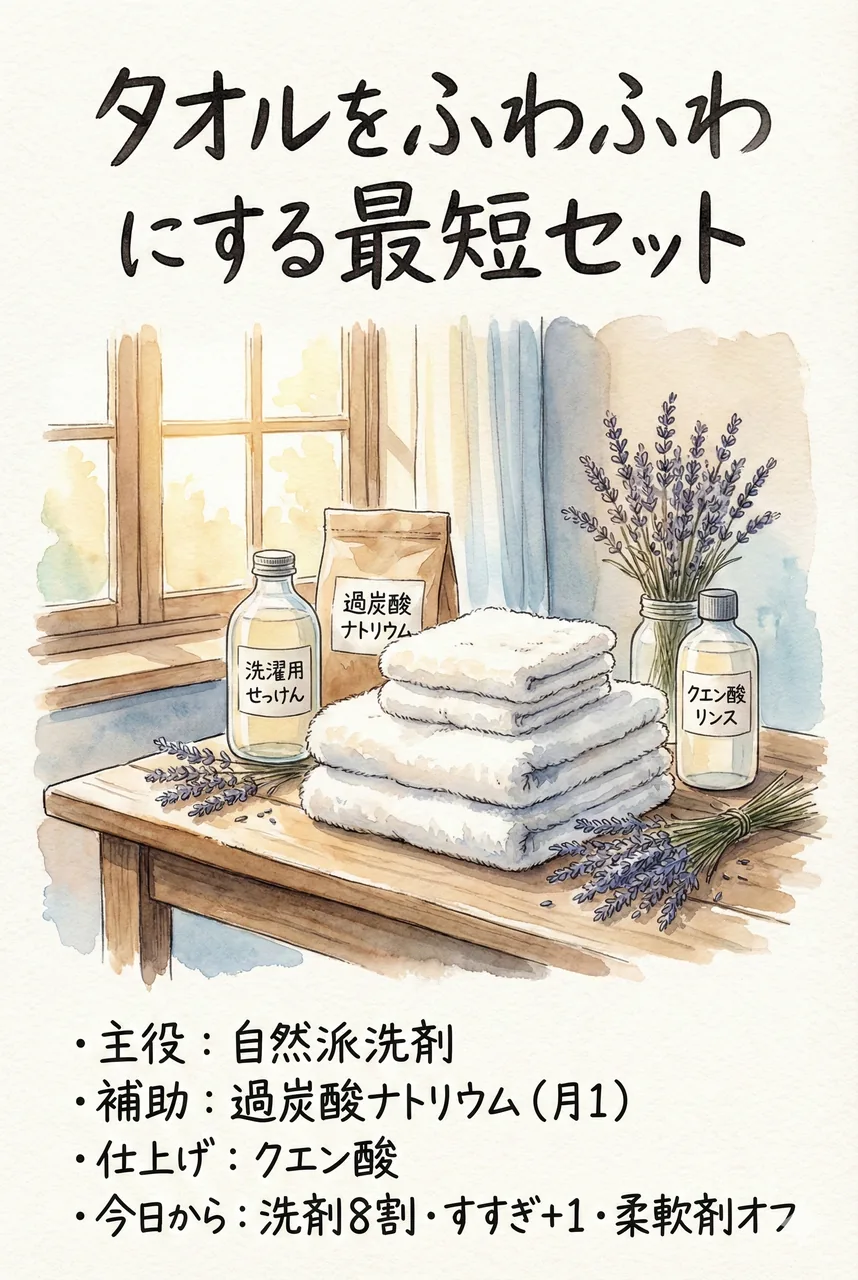
Keeping towels fluffy isn't complicated.
The goal is less residue and faster drying. Those two principles, consistently
applied, outperform any product on its own.
The fastest starting kit (when in doubt):
· Primary: Snowl, MIYOSHI, or SONETT (choose one)
· Supporting: sodium percarbonate (monthly reset)
· Finishing: citric acid (soap residue correction)
You can start today with just: 80–90% detergent + 1 extra rinse + no
softener.
That's it. See what happens after three washes.