Brand new, your towels were impossibly soft. After a few washes, they're stiff as cardboard.
After drying indoors, there's that musty smell you just can't get rid of.
Sound familiar?
The culprit is often fabric softener you've been adding with good intentions — or the way
front-loading washing machines handle delicate pile fabric.
Towels aren't softened by detergent. They're softened by air.
This guide walks you through a simple "towel ritual" — using nothing but the products already in your laundry room —
to restore that hotel-quality fluffiness, plus recovery techniques for towels that seem beyond saving.
1. Why Do Towels Go Stiff? The 3 Main Causes
Stiff towels aren't always a sign of age. In many cases, everyday laundry habits are quietly shortening your towels' life — and ruining their texture.
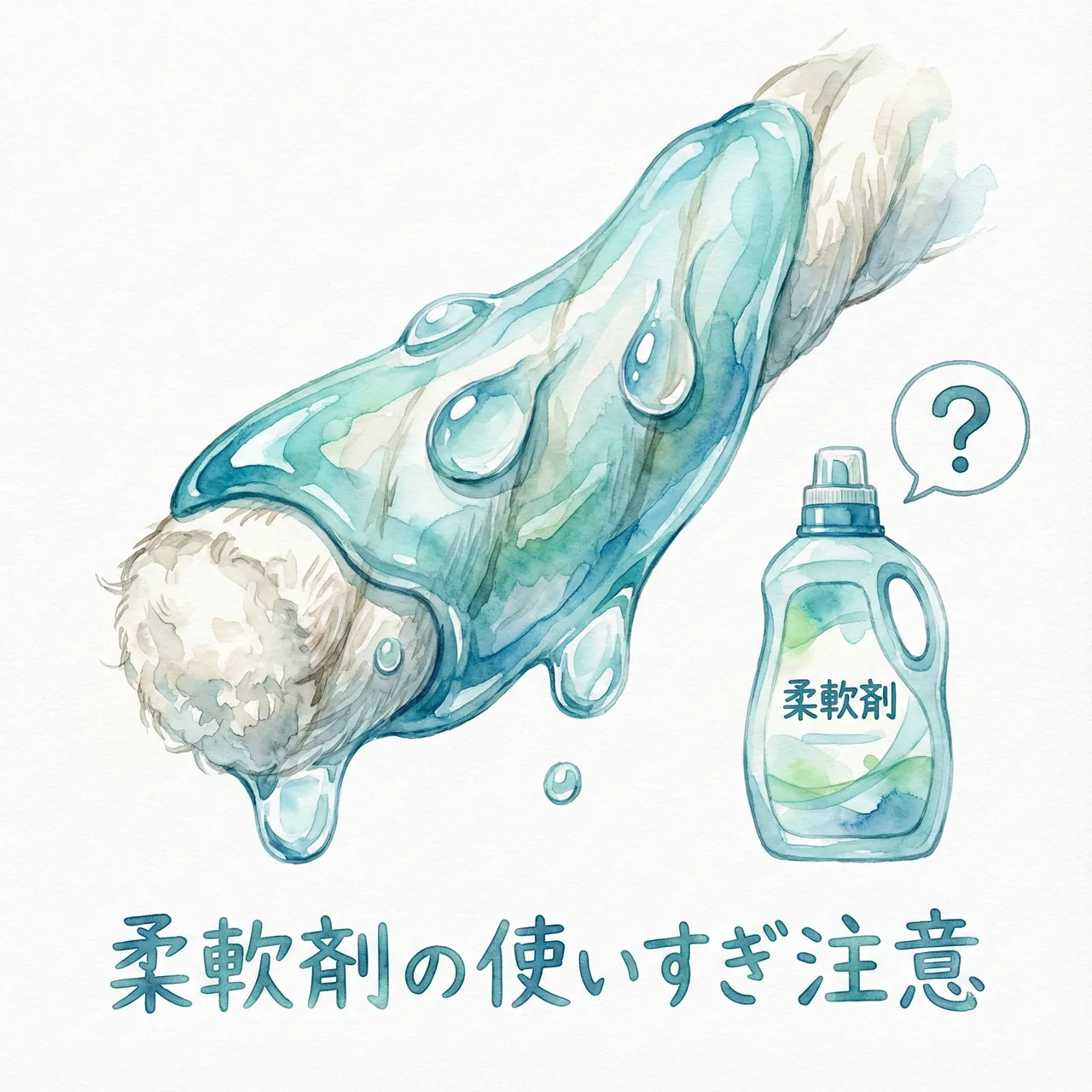
① Too Much Fabric Softener (Over-Coating)
Fabric softener works by coating fabric fibers in a thin layer of oil to make them feel smooth.
Use too much, however, and the fibers become sealed shut — like wax on wood — making them
water-repellent (the coating blocks absorption) and impossible to clean properly.
The result: fibers fuse together and the towel ends up rough and stiff to the touch.
② The "Tumble-Beating" Action of Front-Loading Machines
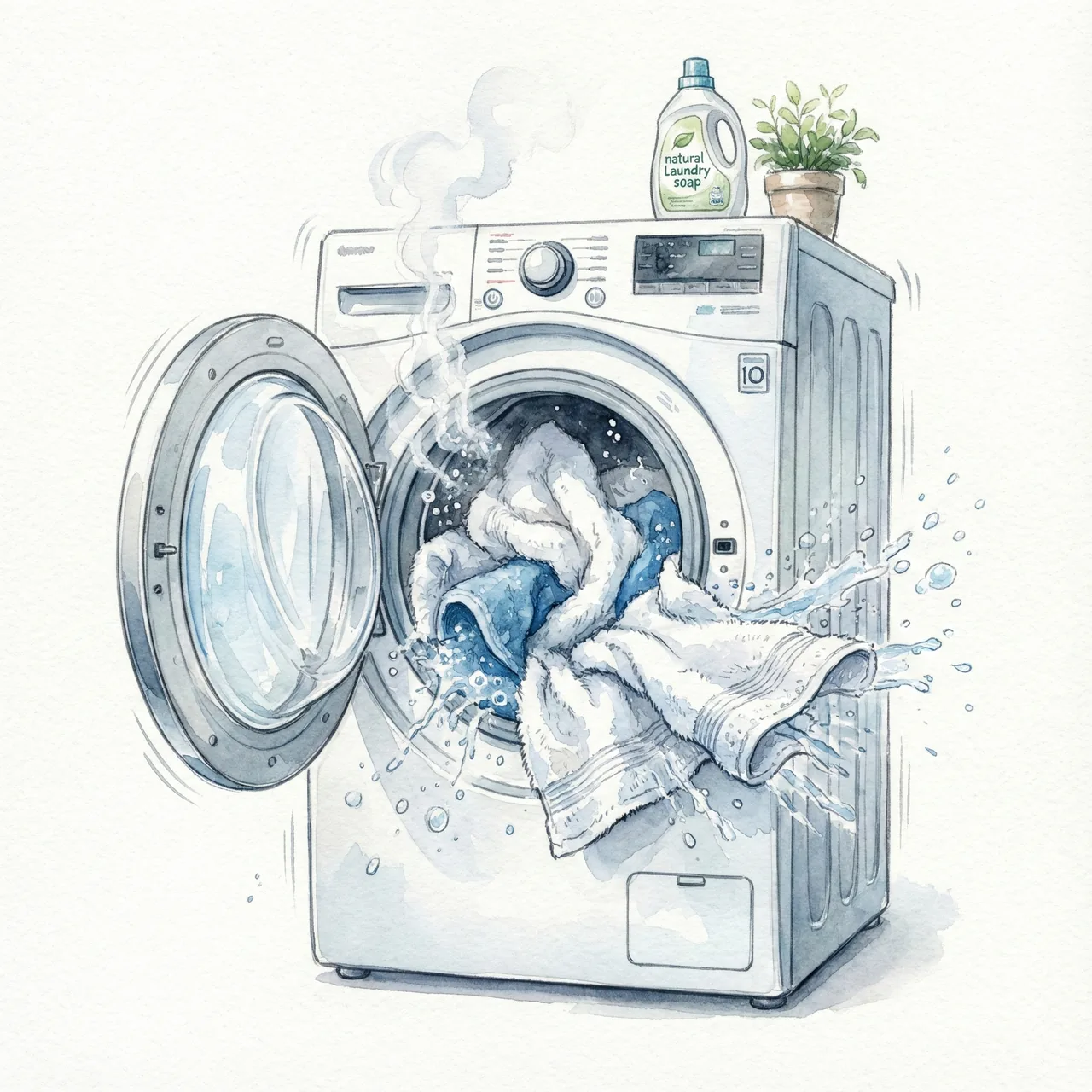
Front-loaders are great for saving water, but they're hard on towels. Instead of soaking and agitating fabric gently, they lift and drop it repeatedly — which flattens the pile loops and crushes them flat. That's the main reason your towels come out crispy when they dry.
③ Overloading the Drum
If you pack the drum to capacity, towels can't move freely in the water. Not only do they come out less clean — the constant friction between tightly packed items damages the pile and hardens the fibers.
2. Washing: Put the Fabric Softener Away — Water Volume Is Everything
You don't need expensive detergent. The key is more water and less of the things you've been adding.
Let Them "Swim" in Plenty of Water
Keep laundry loads to 70% of the drum's capacity or less.
If your machine lets you choose water volume, set it to "large" or "high." When towels have room to move freely in
the water, the pile loosens, dirt floats away, and fibers recover their natural loft.
Fabric Softener: Use It Sparingly — or Not at All
For new towels, or towels that have lost their absorbency, skip the fabric softener entirely.
The secret to lasting fluffiness: only add softener — and no more than half the recommended
amount — when your towel genuinely feels rough. Routine use is the enemy.
Tip: Use a Laundry Net for Precious Towels
Zippers and bra hooks are a towel's worst enemy. To prevent pile snags and pulls, put your best towels in a
fine-mesh laundry bag before washing.
3. Drying: The Most Important Step — The "Pile-Raising" Ritual
Are you pulling your towels out of the washing machine and hanging them straight on a rack?
Take five extra seconds to do this one thing first — and your towels will come out noticeably thicker and fluffier.
The "10 Snap" Method to Raise the Pile
After spin-drying, centrifugal force has pushed the pile flat against the towel.
1. Hold both short ends of the towel firmly.
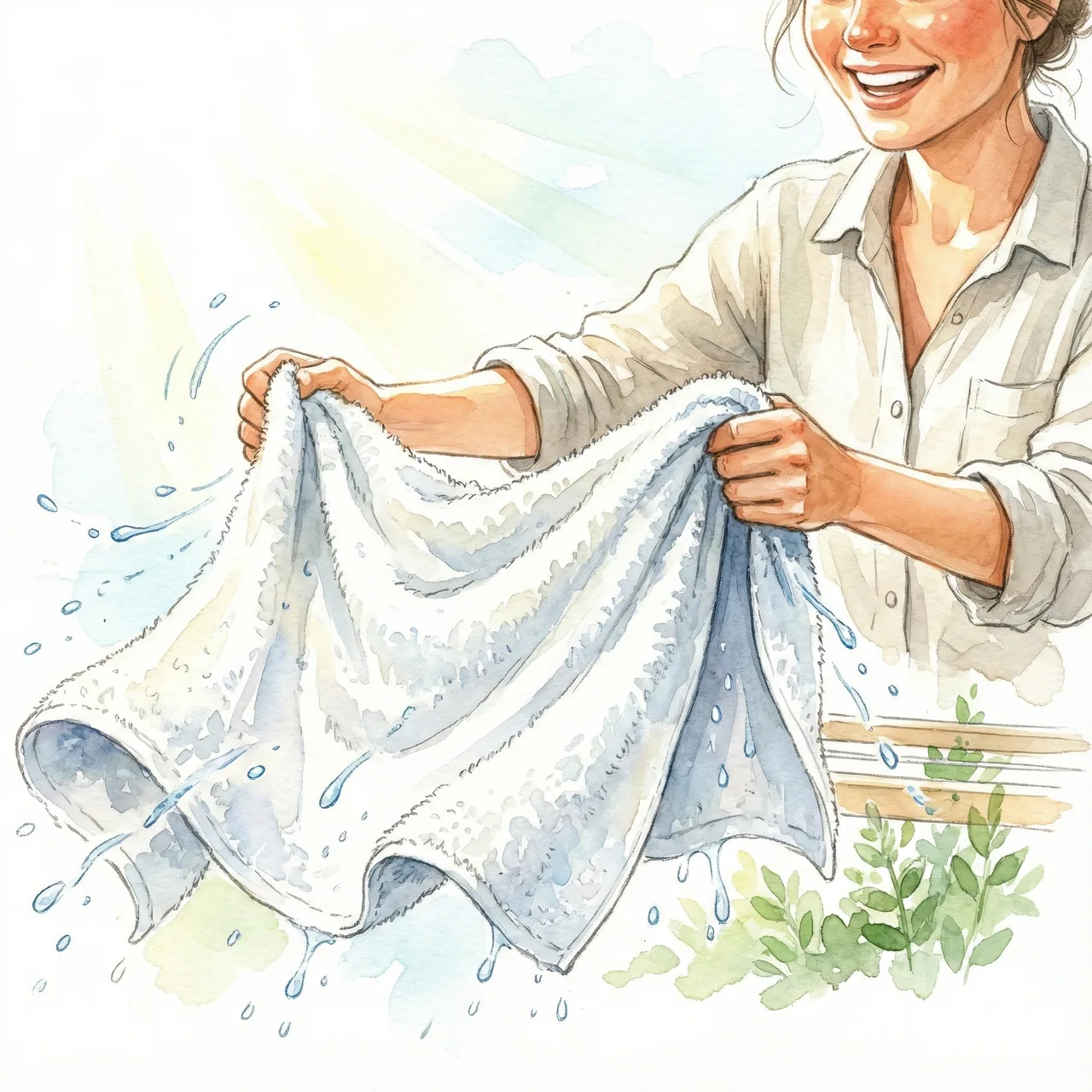
2. Snap it out sharply — 10 to 20 times — until you can hear it crack in the air.
That's it. Air rushes into the gaps between the fibers, and the pile that was flattened against the fabric
stands back up.
Dry in the Shade with Good Airflow
Direct sunlight (UV rays) dries fibers too aggressively and hardens them.
A shaded spot with good airflow is ideal. For indoor drying, point a fan or air circulator directly at the
towels — the goal is to dry them as quickly as possible.
4. Front-Loaders & Dryers: The 30-Minute Fix
For front-loader users, or for towels that have come out stiff after line-drying — here's the recovery method.
The Trick: 10–20 Minutes in the Tumble Dryer After Line-Drying
Hang your towels outside to dry as usual. Once they're completely dry, put them in the tumble dryer for
just 10–20 minutes.
The warm air and gentle tumbling action loosens up the fibers that stiffened during air-drying — the results are
surprisingly soft.
Use the "timed dry" setting rather than auto-dry for this.
The Laundromat Option
Once every few months, take a batch of towels to a laundromat and run them in a large gas-heated commercial
dryer.
The powerful heat and the wide drum send dust and buildup flying out of the fibers, restoring a volume and
softness that home machines can't quite match.
5. Revival Techniques: Tackling Odors and Discoloration
Before you throw them out — try this first.
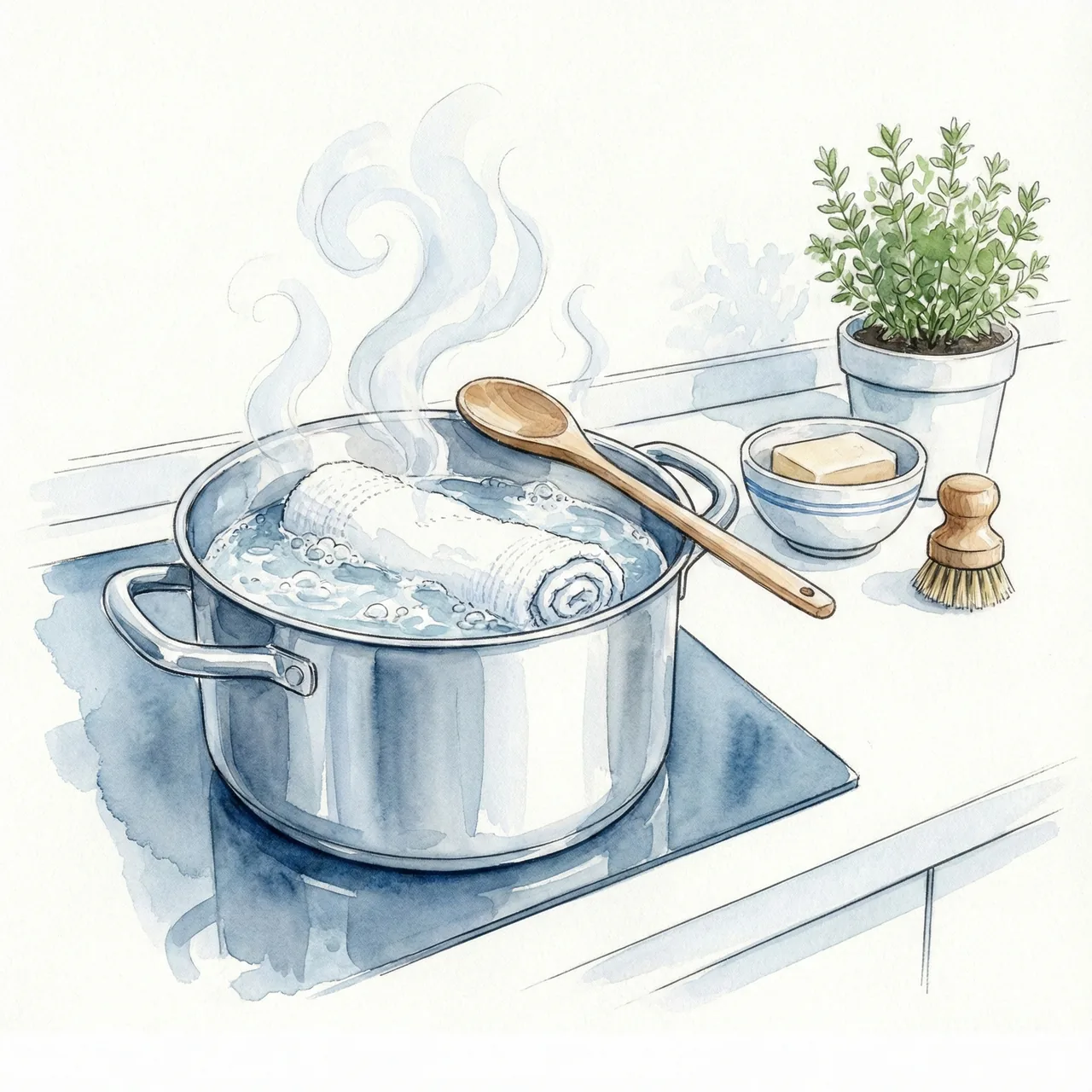
For Stubborn Odors: Boil-Washing
That musty indoor-drying smell comes from bacteria. Bacteria can't survive heat — so boiling is the most
effective treatment.
1. Bring a large pot of water to a boil, then dissolve powdered laundry detergent (or oxygen bleach) in it.
2. Add the towel and simmer on low heat for 5–10 minutes.
3. Rinse with water, then spin-dry and air-dry as normal.
Note: This method is for 100% cotton towels only. Polyester blends may warp or shrink under
heat.
Instead of Fabric Softener: Vinegar Rinse
During the rinse cycle, add about half a cup of plain white vinegar (distilled grain
vinegar).
Vinegar neutralizes alkaline detergent residue left in the fibers, naturally restoring softness. It also has mild
antibacterial properties. Once the towel dries, the vinegar smell disappears completely.
If Nothing Works — It's Time to Replace Them
When a towel is worn so thin you can see through it, or tears on contact, it's reached the end of its life.
As a general guide, hotel towels are replaced after about 30 washes. For home use, that translates to roughly
six months to a year.
Old towels make great cleaning rags — and replacing them with a quality Japanese towel is one
of the most straightforward quality-of-life upgrades you can make at home.
6. Frequently Asked Questions
Am I really not supposed to use fabric softener at all?
It's not that you can't — it's that using it every wash causes problems. Save it for when a towel genuinely feels
rough, and use no more than half the recommended amount.
If you love fragrance but want to protect your towels, try scent beads or fragrance sachets that don't contain
softening agents (oil coatings) — you get the scent without the buildup.
How do I stop towels from smelling when I dry them indoors?
The smell comes from bacteria that multiply when towels take too long to dry. The rule: point a fan or air
circulator directly at your towels and aim to have them fully dry within 5 hours.
Switching to a laundry detergent formulated for indoor drying (antibacterial type) also makes a significant
difference.
A loop of pile has come out of my towel — what should I do?
Whatever you do, don't pull it. Simply snip the protruding loop off at the base with scissors.
Because towels are woven fabric, cutting a single loose loop won't create a hole or cause unraveling around it —
you're safe to trim it cleanly.
7. In Summary: Towels Are Fluffed by Air
The secret to hotel-soft towels isn't an expensive detergent. It's plenty of water and
the air you trap in the pile.
· Skip the fabric softener
· Snap the towel out 10 times before hanging
Start with these two habits today — and get back the joy of burying your face in a freshly laundered towel after
a bath.