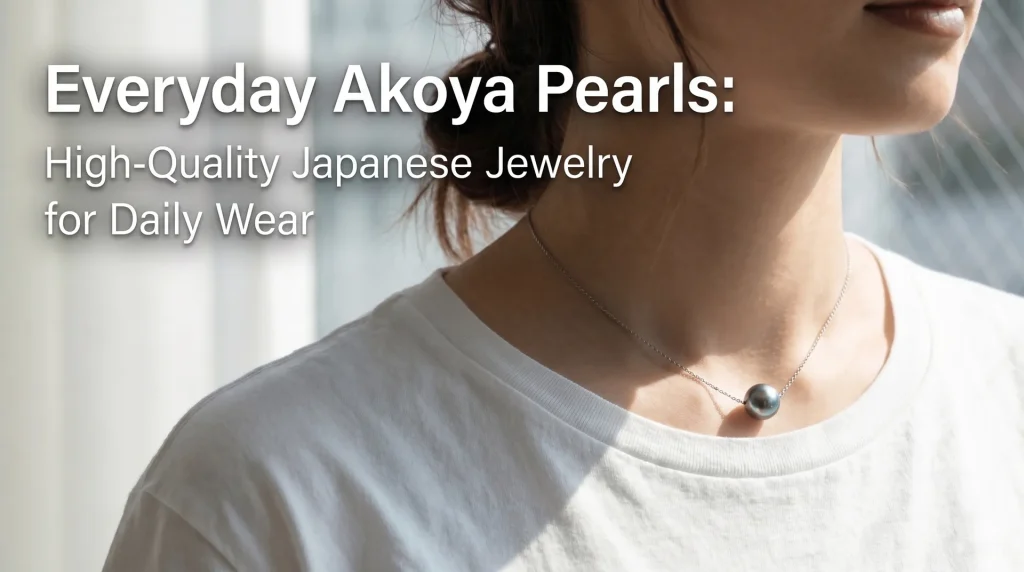
The pearl necklace in your drawer — is it only coming out for weddings and funerals?
Japan's Akoya pearls have become a quiet street-style staple. Women in Paris and Tokyo who know their accessories
are pairing real pearls with
white T-shirts and denim, letting that deep, almost liquid glow do the work no costume jewelry
can replicate.
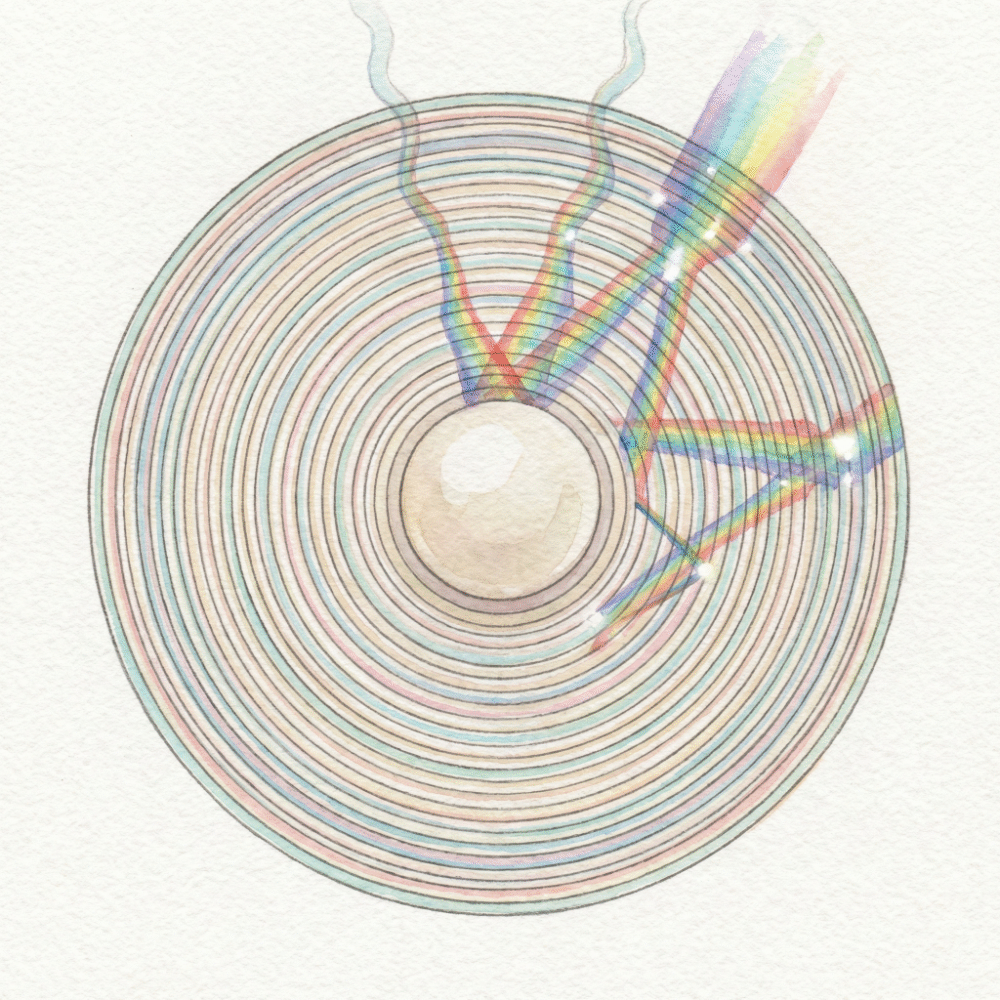
The secret is the teri — a mirror-like inner radiance built from over 1,000 layers of nacre. It lifts a
casual outfit and brightens skin in a way freshwater pearls simply cannot match. Once you see it, leaving yours in a
box feels like a waste.
This guide covers where Japan's best Akoya pearls come from (Ise-Shima and Uwajima), which styles work best for
everyday wear, and the simple care habits that keep them glowing for decades.
Quick Reference: Akoya Pearls at a Glance
| Style | Shape | Vibe | Best worn with |
|---|---|---|---|
| Single-pearl drop | Round, 8 mm+ | Modern, versatile | T-shirts, layered chains |
| Baroque | Irregular | Artistic, relaxed | Denim, casual knitwear |
| Choker strand | Round, uniform | Chic, elevated | Blouses, smart casual |
| Opera strand (hana-dama) | Round, graded | Formal, classic | Evening wear, ceremonies |
1. The Brilliance Only Akoya Can Offer: Japan's Aurora Effect
Pearl quality is not a single thing — it's defined by the type of pearl, the environment it grew in, and the time taken to cultivate it. Akoya pearls occupy a specific tier that mass-market freshwater pearls cannot reach.
1,000+ Layers That Create a Mirror Glow
Inexpensive freshwater pearls have no nucleus — the entire bead is made of nacre, which produces a soft, matte
shine.
Japan's Akoya pearls are built differently. A round nucleus is inserted into the oyster, which then coats it
with over 1,000 ultra-thin layers of nacre across 1–2 years of careful cultivation.
This precise, densely-packed layering reflects and diffracts light in a phenomenon Japanese jewelers call
teri — a deep, mirror-like brilliance that appears to radiate from inside the pearl
itself.
Hold an Akoya pearl close and you can see your own face reflected back. That optical quality is what separates
genuine Japanese Akoya from everything else.
2. Two Origins, Two Characters: Ise-Shima vs. Uwajima
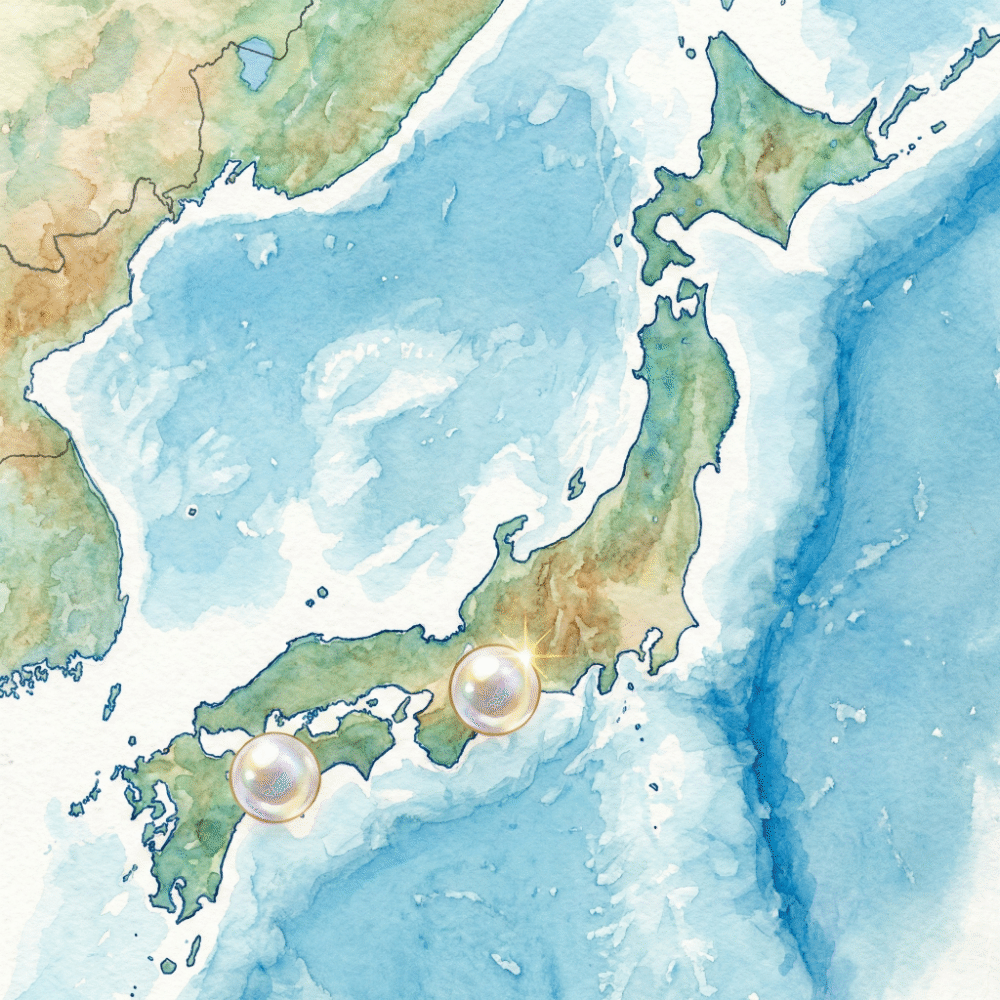
Japan has two world-class Akoya pearl producing regions. Each produces pearls with a distinct character — knowing the difference makes choosing much easier.
Where Cultured Pearls Were Born: Ise-Shima, Mie Prefecture
Mikimoto Kokichi achieved the world's first cultured pearl in these waters. The cooler bay temperatures slow
nacre growth, producing fine, tightly-packed layers that give Ise-Shima pearls their characteristic delicate
pink-to-white tone and exceptional transparency.
The finest examples earn the designation hana-dama (花珠) — the highest quality grade in
Japanese pearl certification, requiring top marks across all five grading criteria: nacre thickness, luster,
surface, shape, and finish.
Japan's Highest-Volume Producer: Uwajima, Ehime Prefecture
The sheltered rias inlets of Uwajima provide nutrient-rich water that supports prolific pearl farming — Uwajima
produces more Akoya pearls by volume than any other region in Japan.
The warmer, food-rich environment encourages thicker nacre growth, resulting in larger pearls with a deep,
creamy luster that leans toward cream and rose. Uwajima is also known for koshi-mono
(越し物) — pearls cultivated longer than the standard period to maximize nacre thickness and depth.
3. Everyday Styling: Single-Pearl Drop and Baroque
A formal strand of matched Akoya pearls can feel heavy for daily wear. Two styles that bridge the gap between ceremony and coffee shop:
The Most Versatile Style: Single Pearl on a Chain
Threading one Akoya pearl onto a gold or silver chain removes all the ceremonial weight of a full strand while
keeping every bit of the luster.
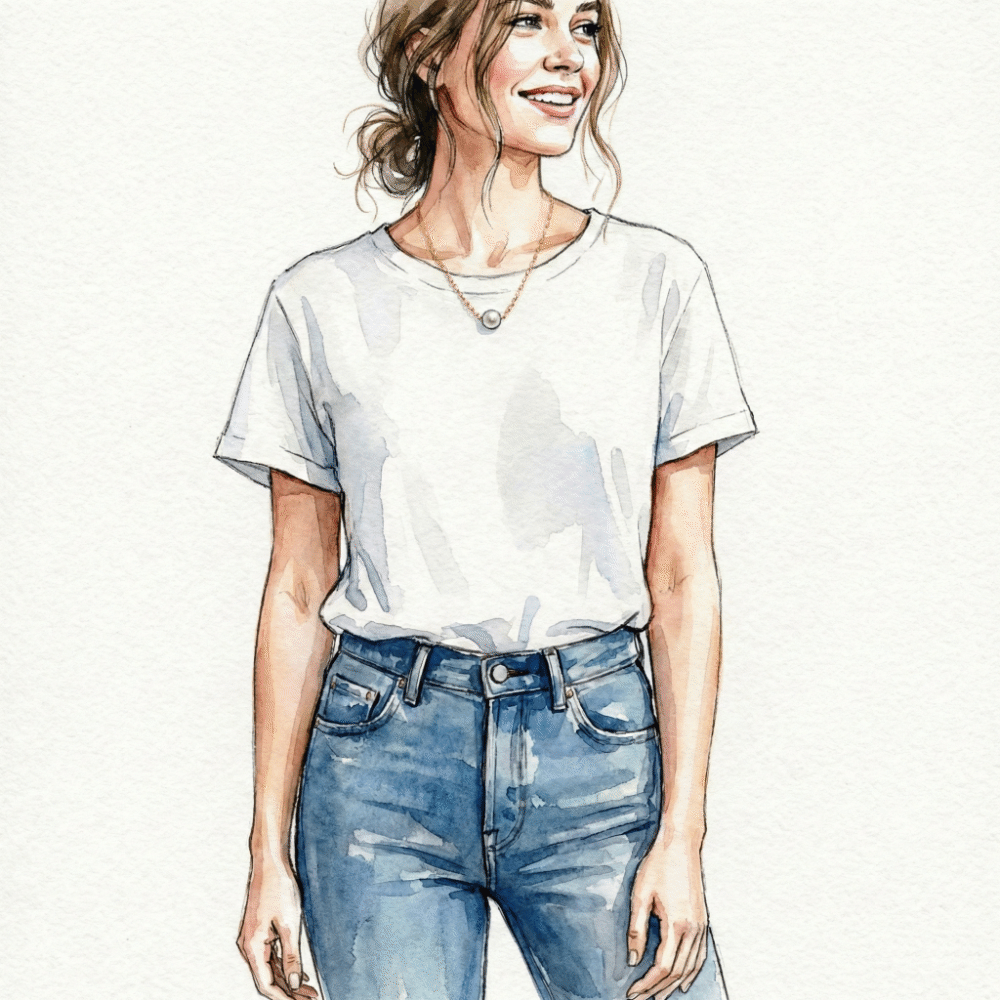
Peek it out from a T-shirt neckline, layer it with thinner chains, or wear it solo against a plain knit — any of
these work without overthinking.
Opt for 8 mm or larger if you want the pearl to hold its presence against casual fabrics.
For Character: Baroque Pearls
Baroque (from the Portuguese for "irregular") describes pearls that formed without rounding into a sphere. No two baroque pearls are identical. Their asymmetric form scatters light in complex, almost painterly ways — and because they look deliberately imperfect rather than formal, they sit naturally with denim and relaxed knitwear without any styling effort.
4. Recommended Brands: Direct-Source Quality
Pearl pricing is largely a function of how many hands it passes through — every intermediary between oyster farm and customer adds margin. For the same nacre quality, direct-source shops offer significantly better value.
Japanese Akoya Cultured Pearl Necklace Set — AAA Grade, 14K Gold
AAA-grade Japanese Akoya pearls on a 14K white gold chain — the classic combination for everyday
elegance.
This set pairs a 7.5–8 mm Japanese Akoya cultured pearl necklace with matching earrings on 14K white gold
settings. The AAA grade indicates top-tier nacre quality: thick, even layering that produces the deep
teri glow that separates real Akoya pearls from freshwater alternatives. The neutral white gold keeps the
look versatile — as appropriate with a linen blouse as with evening wear.
For a first real pearl purchase or a meaningful gift, this is the quality level that justifies the investment.
- Pearl type
- Japanese Akoya cultured pearl
- Pearl size
- 7.5–8 mm
- Grade
- AAA (top nacre quality)
- Setting
- 14K white gold
- Price range
- $80–$150
5. What Never to Do: Sweat and Acid Are Pearl's Enemies
Pearls are organic gemstones — created by a living animal and far more chemically vulnerable than mineral gems like diamonds. Three sources of damage account for the vast majority of teri loss.
Acid Dissolves the Surface Layer
Nacre is primarily calcium carbonate. Acid contact triggers a chemical reaction that dissolves the surface —
slowly at first, then noticeably.
Three enemies to avoid:
1. Sweat: Mildly acidic. Left to dry on pearls repeatedly, it gradually dulls the teri. Wipe
down after wearing.
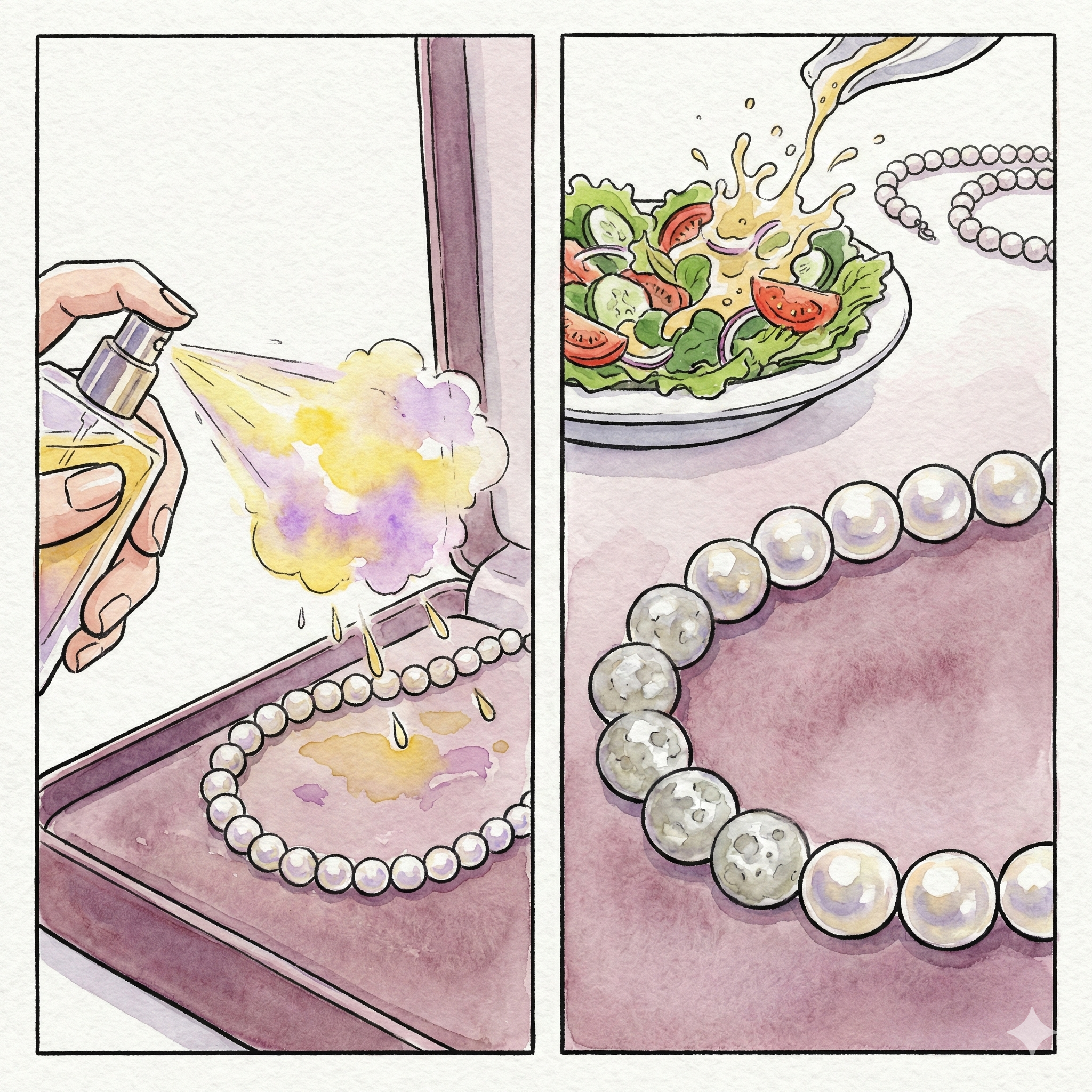
2. Food (dressings, citrus, vinegar): If any splashes onto your pearls during a meal, wipe it
off immediately — don't wait until you get home.
3. Cosmetics (hairspray, perfume): Always put pearls on last when getting dressed.
Never spray perfume directly onto skin that's already wearing pearls.
6. Care Guide: The After-Wear Wipe and Restringing
Day-to-day pearl care is simpler than it sounds. One habit covers most of it.
Build the Habit: Wipe Before You Store
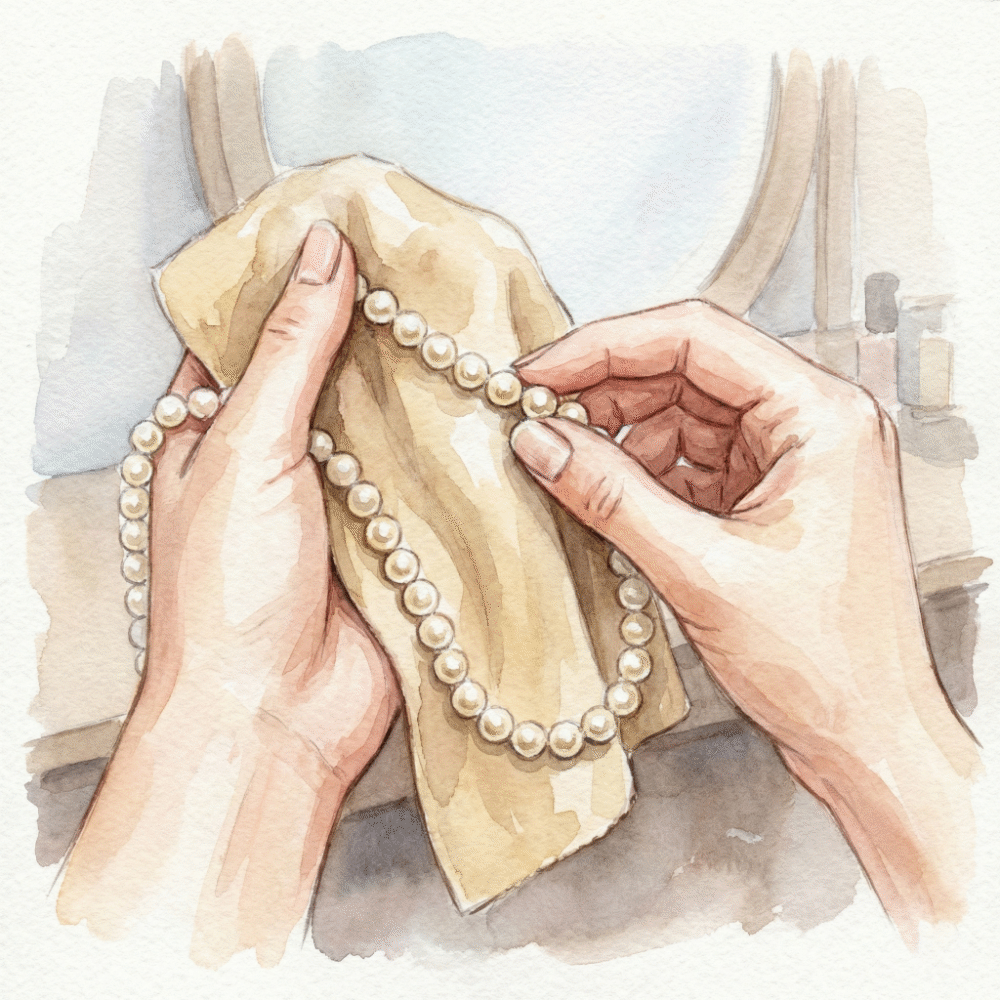
After a full day of wearing, pearls carry invisible traces of skin oil and perspiration. Before putting them
away, wipe each pearl gently with a soft cloth.
A dedicated pearl cloth — the shinju teri cloth type — contains mild conditioning agents that restore
surface brilliance with every wipe. It takes ten seconds and keeps the teri alive for years.
Restringing timeline:
Pearl strands are strung on silk or nylon thread, which stretches and weakens with use. When you notice gaps
forming between pearls, the thread has given up — that's your signal. Plan for restringing every 2–3 years at
the shop where you bought them. Most pearl jewelers offer this as a routine service.
7. Frequently Asked Questions
My pearls have turned yellow. Can they be restored?
Unfortunately, yellowed pearls cannot be reversed.
The discoloration — called ohen — results from protein degradation in the nacre layers over time and from
UV exposure. Prevention is the only option: store pearls in a closed box away from sunlight and fluorescent light.
Never leave them out on a dresser or display shelf.
Can I wear my formal strand every day?
Absolutely — please do.
That said, a full formal strand can feel stiff against a T-shirt or casual top. To modernize it, try wearing it at
choker length, or layer it with a thin silver chain for a more contemporary mix. Pearls are meant to be worn, not
stored.
Can I store pearls alongside mothballs?
Absolutely not — avoid entirely.
Mothball chemicals (naphthalene and similar compounds) volatilize in storage and can permanently damage the nacre
surface. Even in a drawer that holds mothballs nearby, the fumes cause luster loss over time. Store pearls in a
dedicated jewelry box, physically separated from any moth-repellent products.
What is a hana-dama pearl?
Hana-dama (花珠) is the highest quality designation for Japanese Akoya pearls.
To qualify, a pearl must receive top marks across five criteria: nacre thickness, luster (teri), surface
cleanliness, shape, and finish. Only a small percentage of each harvest reaches this grade. If you are investing
in a formal strand intended for decades of use, look for one that comes with a hana-dama certificate from a
recognized grading body.
Can I wear pearls in the bath or hot springs?
Always remove them first.
Hot water, the chlorine in tap water, bath salts, and the sulfur and acidity of onsen (hot spring) water are all
harmful to nacre. Exposure causes irreversible discoloration and permanent luster loss. Make removing your pearls
part of the same routine as removing your watch.
Final Thoughts: Wear Real Pearls Every Day
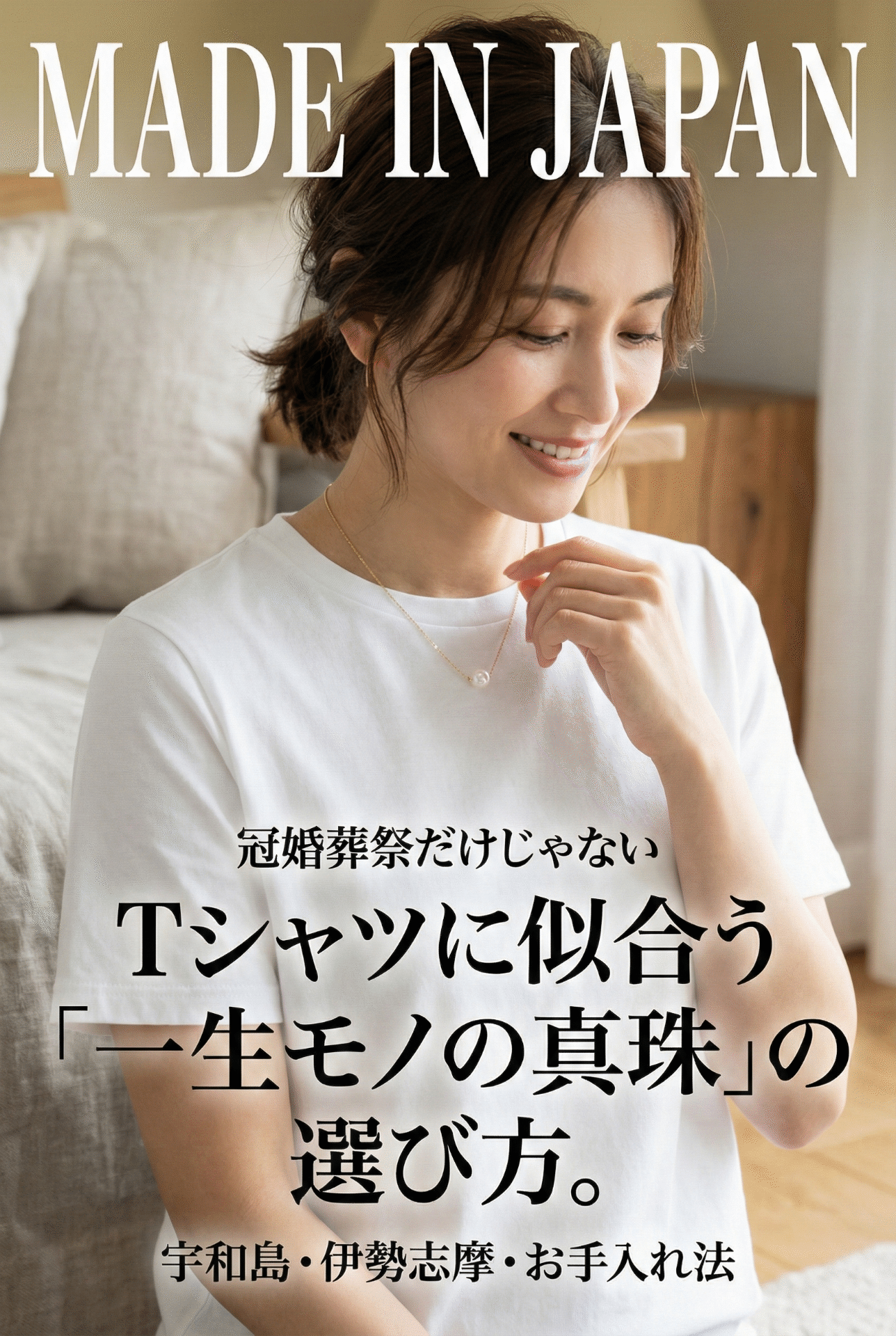
Costume jewelry is perfectly reasonable when you are young and experimenting. But as skin matures, real Akoya
pearls offer something no imitation can replicate: a natural luminosity — call it the reflector effect
— that softens the face and elevates the simplest outfit.
A well-worn T-shirt. A pair of jeans. One real pearl on a fine chain. That is the whole look.
Japan's Akoya pearls were never meant to spend their lives in a drawer. They exist to be worn — at breakfast, on
a walk, at a coffee shop with a friend. Pull them out. Their glow will follow you.

Kumano Makeup Brushes: 3 to Start With & 4 Studios to Know

Japanese Leather Goods: Brands Built to Age Beautifully