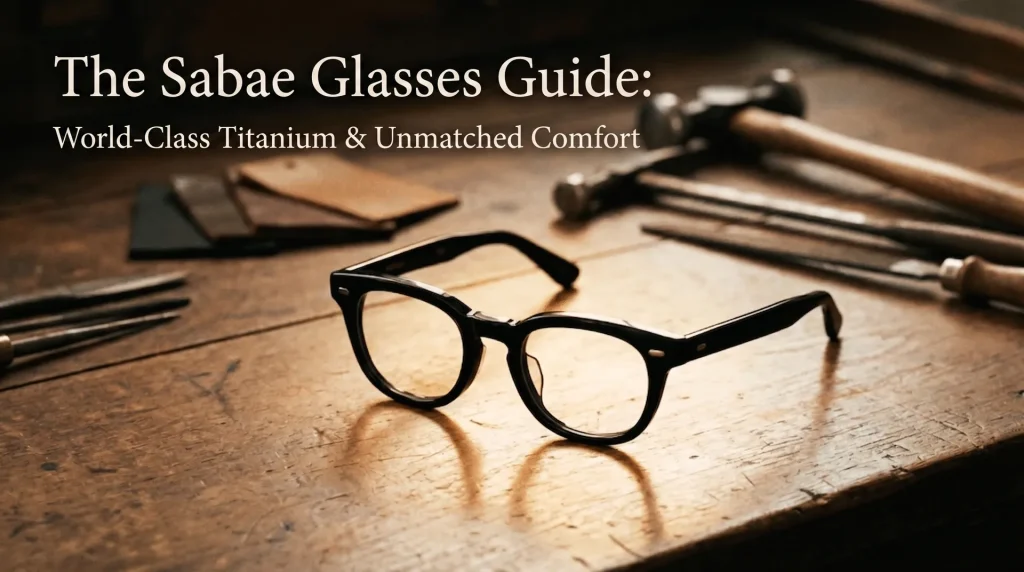
Of everything you wear every day, what stays on your face the longest?
Not a shirt, not shoes — for most people, it's glasses.
Which makes it worth asking: are you choosing them based on price alone? "My ears ache by evening." "The nose pads
leave marks that won't fade." "The screws work loose after a month." These are not problems with your face — they
are problems with the frame.
Sabae City, Fukui Prefecture.
This small city accounts for over
96% of Japan's domestic eyeglass frames — and it's where collectors, opticians, and discerning
wearers worldwide go when they want the real thing.
This guide covers what makes Sabae frames feel like they disappear on your face, which materials suit which wearer,
and two brands worth choosing for life.
Quick Reference: Sabae Frames at a Glance
| Celluloid | Titanium | |
|---|---|---|
| Material | Plant-derived plastic | Medical-grade metal |
| Weight | Light | Ultra-light |
| Surface finish | Deep, wet-look gloss | Sleek metallic sheen |
| Allergy risk | Low | Near zero |
| Best for | Classic, vintage styles | All-day comfort wear |
1. Why Sabae Rules the World: 96% of Japan's Frames, Made Here
Alongside Italy and China, Sabae is recognized as one of the world's three major eyeglass producing regions — but in terms of craft precision, it stands apart.
200+ Steps, Each Done by a Different Specialist
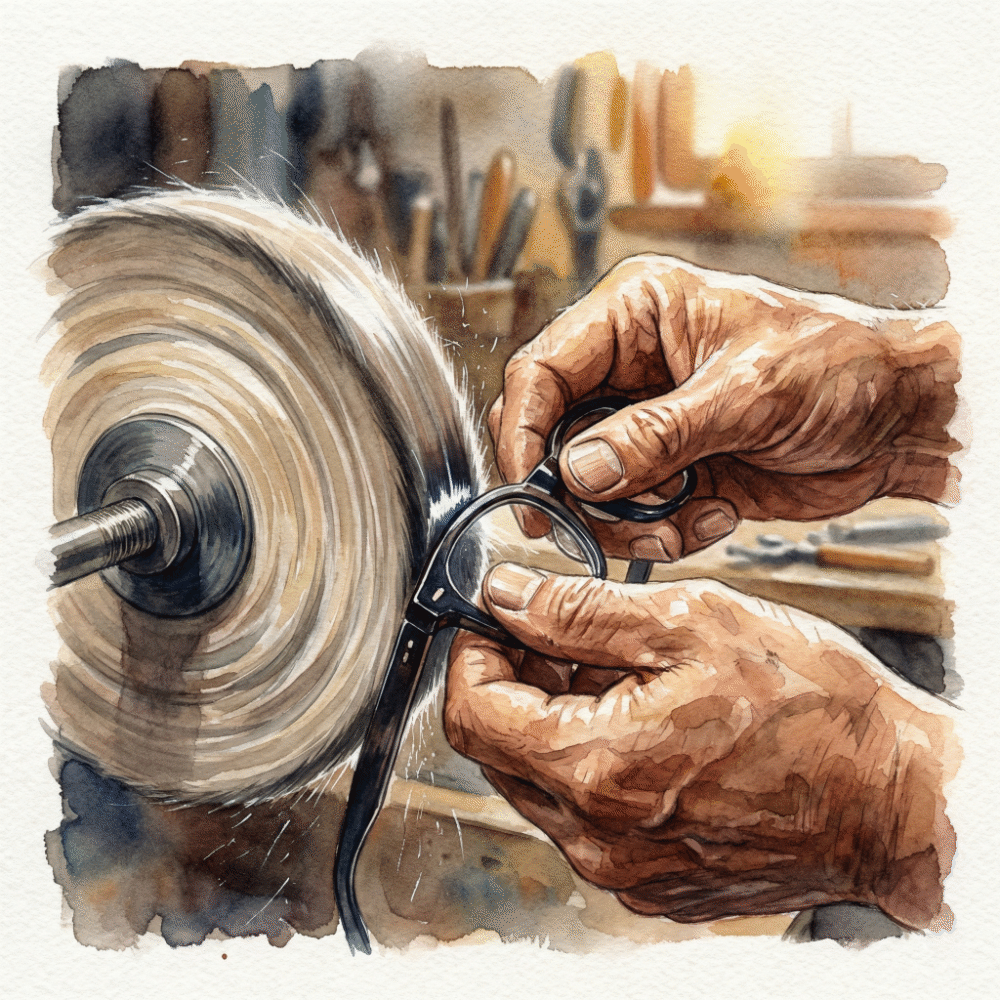
Sabae works on a division-of-labor model. One workshop presses metal. Another polishes. Another handles plating.
A single pair of glasses passes through over 200 distinct steps, each performed by craftspeople who do only that
step — all day, every day, for years.
This concentrated specialization is what produces frames with tolerances tight enough that they sit perfectly
straight on your face without adjustment, and stay there. It is craftsmanship organized like a relay race, with
no weak leg.
2. Choosing by Material: Celluloid's Depth vs. Titanium's Lightness
Two materials define what Sabae does better than anyone else. Knowing the difference makes choosing straightforward.
Depth and Resilience: Celluloid
Unlike common acetate, celluloid is harder and more elastic — it holds a thin frame shape without internal wire
reinforcement, allowing for beautifully fine silhouettes.
It is highly flammable and difficult to work with, which is why mass-market production abandoned it decades ago.
But celluloid hand-polished by a Sabae craftsperson produces a deep, wet-look gloss that no
other plastic can replicate. Once you've seen it, other frames look flat by comparison.

A World First: Titanium Frames, Invented in Sabae
Sabae was the first place in the world to put titanium into an eyeglass frame — in the 1980s. The material is
lightweight, rustproof, and has an extremely low allergy rate (it is the same metal used in surgical
implants).
Wearing titanium Sabae frames for a full day, you stop noticing them — no pressure behind the ears, no marks on
the nose. That sensation is why the SABAE name spread globally. Titanium mastery, originating here, is still the
benchmark.
3. The Fit Difference: Designed to Cradle the Head, Not Just Hook the Ear
The defining difference between a Sabae frame and a mass-market one is not the logo — it's weight distribution.
Temple Curvature That Spreads the Load
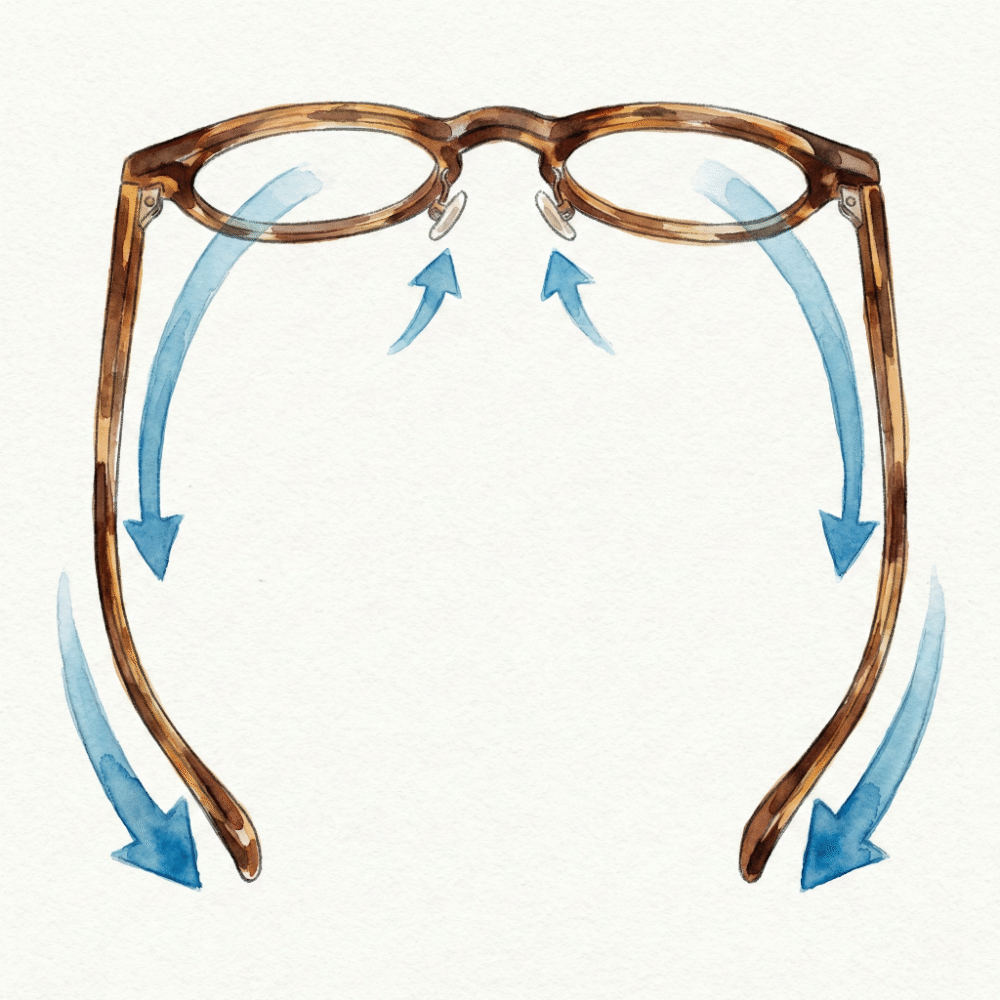
Cheap frames hook onto the ear and let the nose take the rest. Sabae frames work differently: the temple arms
are engineered to follow the natural curve of the skull, wrapping around gently rather than gripping hard.
The temple tip (the section behind the ear, called the modan) is also weighted and angled to shift the
balance point rearward, taking load off the nose bridge.
The result is that a Sabae frame feels lighter than its actual weight — and does not slip when you move. Fitting
it to your specific face shape amplifies this further.
4. Brand 1: Charmant — Sabae's Titanium Pioneer
Charmant, headquartered in Sabae, is one of the brands most responsible for putting Fukui-made titanium frames on the global map. They are widely respected among opticians for consistently high quality and material precision.
Charmant Line Art Eyeglasses — The Ultimate in Flexible Comfort
Sabae-made pure titanium frames featuring Charmant's proprietary "Excellence Titan" alloy.
The "Line Art" series is Charmant's flagship luxury line, developed over 8 years in collaboration with Tohoku
University. The temple arms are constructed from multiple laser-welded filaments of Excellence Titan—a highly
flexible, shape-memory material. This creates a frame that feels incredibly light and wraps the head softly
without pressure, almost as if it is floating on your face.
Pure titanium means zero nickel content, making it perfect for those with metal allergies.
- Material
- Excellence Titan (proprietary memory alloy)
- Made in
- Sabae, Fukui, Japan
- Best for
- All-day comfort; metal allergy sensitivity; elegant rimless styling
5. Brand 2: MATSUDA — Legendary Heritage and Luxury
Founded in 1967, Matsuda is one of the most celebrated names in luxury eyewear globally, crafted entirely in Sabae. They are renowned for their intricate engravings and fusion of classic architecture with modern design.
MATSUDA M3030-AS Polarized Sunglasses — Intricate Craftsmanship
A masterpiece of Sabae craftsmanship, featuring signature Matsuda filigree detailing.
Matsuda frames are heavily sought after by collectors and Hollywood costume designers alike (famously worn in
Terminator 2 and Iron Man 3). The M3030 model showcases everything that makes Matsuda exceptional: medical-grade
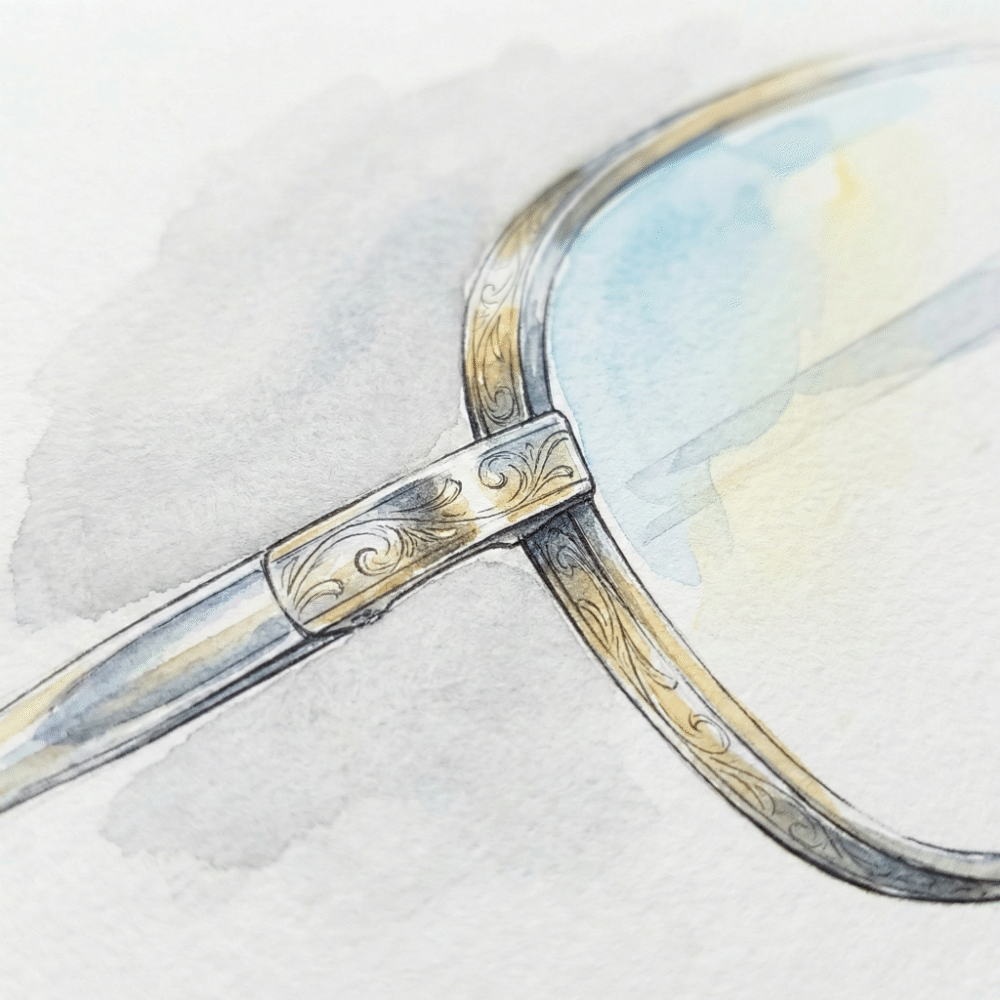
titanium construction, hand-carved acetate, and insanely detailed "M" logo filigree engraving on the rims and side
shields.
Each frame takes over 250 steps to complete by hand in their Fukui workshops. It is not just a pair of sunglasses;
it is a piece of wearable art.
- Material
- Titanium and Japanese Acetate
- Made in
- Sabae, Fukui, Japan
- Best for
- Luxury styling; collectors; those who appreciate intricate metalwork
6. Care Guide: Preventing Frame Whitening
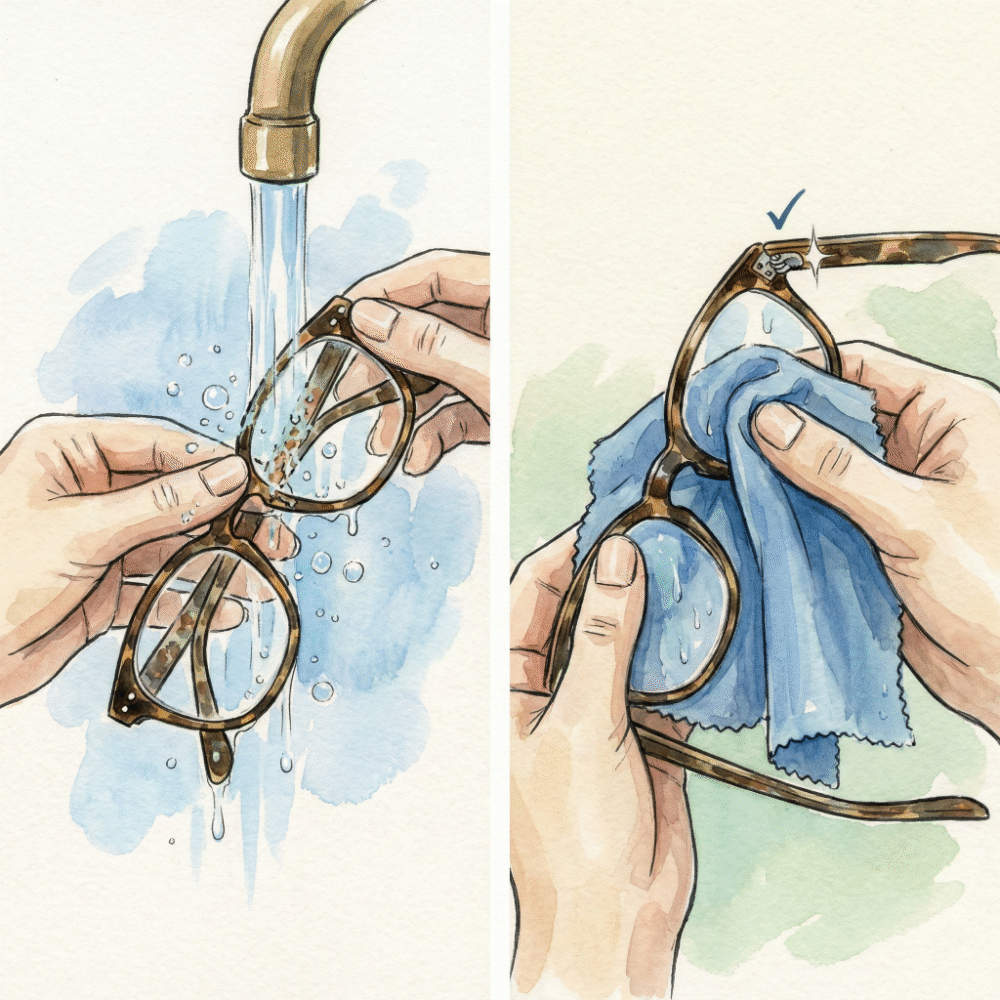
Notice a white haze on the temple arms of your plastic frames? That is one of the most common problems — and the most preventable.
The Cause Is Hair Product and Sweat — Rinse Daily
Frame whitening happens when hair styling products and skin oils soak into the plastic and dry there repeatedly
over time. Once white, it cannot be reversed at home — but preventing it is simple.
When you get home, rinse the frame under water to wash off sweat, then wipe dry with a microfiber
cloth. That is the entire routine. Done consistently, it extends the gloss for years.
If whitening has already set in, bring the frame back to where you bought it. Most Sabae brand boutiques can
restore the original sheen with a buff-polish — often at no charge.
7. Frequently Asked Questions
I bought frames online. Where do I get lenses fitted?
Most optical chains will fit lenses into frames you bring in.
Major chains accept "lens-only" orders for customer-supplied frames (typically ¥5,000–¥10,000 for standard
lenses). Call ahead to confirm, as some shops decline unusually shaped or structured frames. Alternatively,
independent opticians are often more accommodating and can match the frame adjustment quality that Sabae frames
deserve.
Celluloid or acetate — which is better?
Celluloid for depth and hardness; acetate for color variety and availability.
Celluloid is rarer, harder, and produces that distinctive deep wet-gloss — but it is sensitive to alcohol (hand
sanitizer can cloud it) and whitens more easily if neglected. Acetate is the current mainstream for good reason.
That said, if you want a classic black or tortoiseshell frame and can commit to regular care, celluloid's look and
feel is worth experiencing firsthand.
Is professional fitting really that important?
Yes — fitting accounts for half of what a frame can do for you.
Even the best Sabae frame off a shelf is just a heavy, generic object until it is adjusted to your face. Sabae
frames are built to be fitted — the temple arms are engineered to bend and hold, the nose pads are adjustable, and
the balance is tunable. Buy from a shop that includes fitting, and return for re-adjustment whenever the frame
starts to slip. It is a free service at most Sabae brand boutiques.
I have a metal allergy. Are there safe options?
Yes — choose an all-titanium frame.
Titanium is used in surgical implants because it is among the lowest-allergy metals available. The risk comes from
budget frames where the base metal under the plating contains nickel. A genuine all-titanium Sabae frame from a
reputable brand eliminates that risk. Confirm "pure titanium" or "β-titanium" in the product specifications rather
than just "titanium-colored."
How long will a Sabae frame last?
Ten years or more with proper care — potentially a lifetime.
Plastic components do age, but Sabae frames are designed to be repaired: buff-polished, re-hinged, and re-templed.
Swap in new lenses every few years as your prescription changes, and the frame itself can remain your companion
indefinitely. That is what "lifetime glasses" actually means here — not a guarantee, but a realistic outcome for
someone who cares for them.
Final Thoughts: A Frame That Becomes Part of Your Face

Glasses are not just a vision correction tool. From the moment you put them on in the morning to when you set
them down at night, they frame how you see the world and how others see you.
A Sabae frame, hand-passed through 200 specialist workshops, carries something mass-production cannot replicate:
the accumulated precision of craftspeople who have done one thing, and only that one thing, extraordinarily well
for decades.
That precision translates to a frame that disappears on your face — no pressure, no slipping, no awareness. And
when you catch your reflection, something quiet and confident looks back.
Japanese Leather Wallets: 7 Brands That Age Beautifully
Akoya Pearl Jewelry: Uwajima & Ise-Shima for Everyday Wear