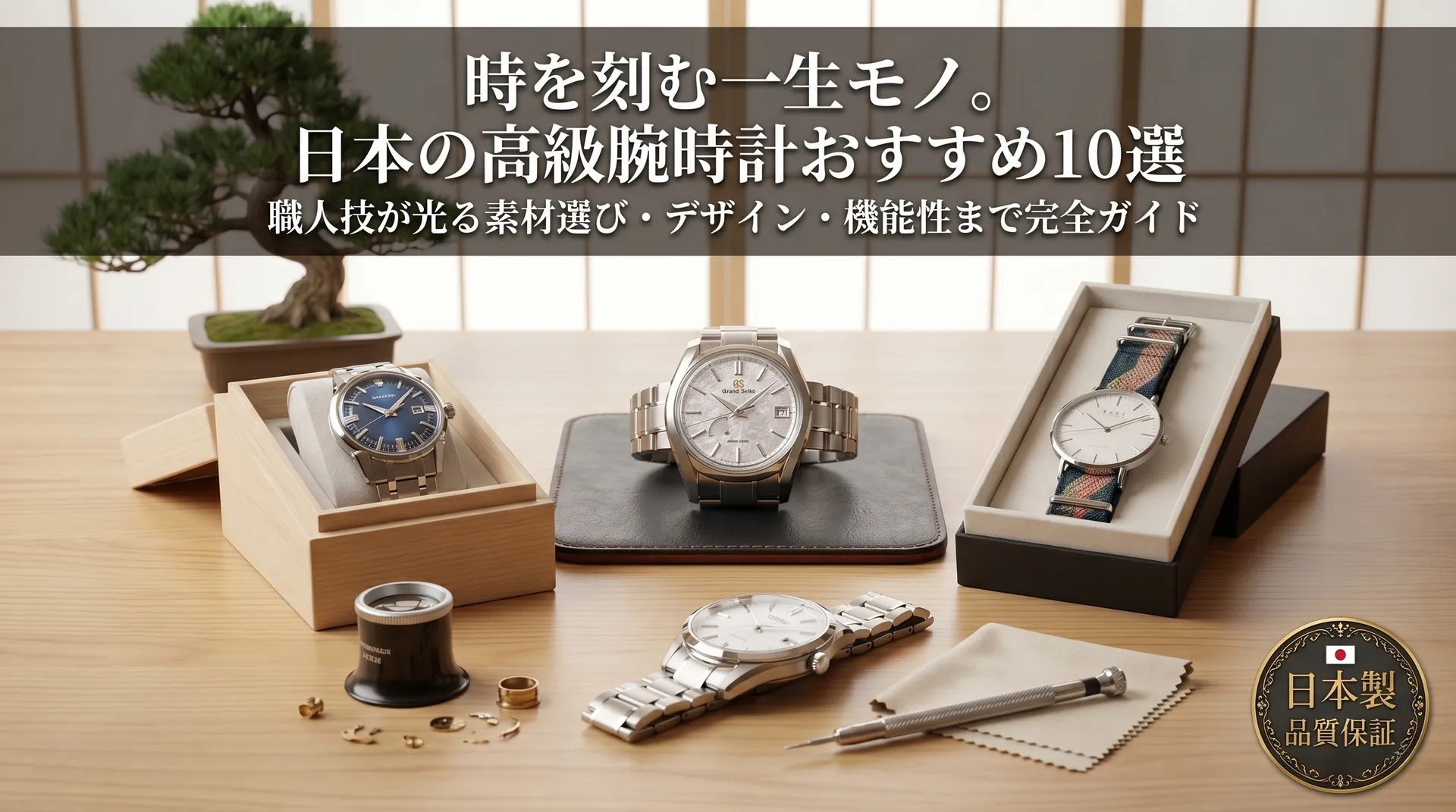
"I've reached an age where I want a watch I can call a lifetime piece."
"Swiss luxury brands are great, but somehow I've started paying attention to Japanese watches."
In an era when your phone tells the time precisely, we still wear watches — not as mere
timekeeping tools, but as a deeply personal art object that expresses values and aesthetic sense.
The history and tradition of Swiss watchmaking is remarkable. But on precision,
practicality, and the play of light and shadow across a dial, Japanese watchmakers
command fervent admiration worldwide. This guide covers how to choose a Japanese watch you won't
regret, and the brands worth passing down through generations.
Quick Reference: Major Japanese Watch Brands at a Glance
| Brand | Strength | Best for |
|---|---|---|
| Grand Seiko | World-class practical watch; precision + Zaratsu-polished beauty | Lifetime piece; formal business |
| The CITIZEN | ±1 sec/year ultra-precision Eco-Drive; washi-paper dials | Precision-focused business; zero maintenance |
| ORIENT STAR | Mechanical specialist; skeleton dials showing the movement | Mechanical entry; playful suit style |
| Maker's Watch Knot | Kichijoji-born; high-quality made-in-Japan, 10,000+ custom combos | Personal design; pair watches; business casual |
1. Why Adults Return to Japanese Watches: Precision & Aesthetics
Many people associate watches with "Swiss made." Yet the more serious a watch enthusiast becomes, the deeper their respect grows for Japanese watches — Grand Seiko in particular. Why?
Perfect the practical, and you arrive at beauty
At the foundation of Japanese watchmaking is "accurate, legible, lasting" — ultimate practicality. Take the hands: the hands of a high-end Japanese watch are free of distortion even under a microscope, polished as sharp as a diamond (this is Zaratsu polishing). As a result, they catch and reflect even the faintest light, glinting so you can read the time even in dim conditions — a "demonstrated beauty."
The "Quartz Shock" that upended the global watch industry
In 1969, Seiko released the world's first quartz (battery-powered) wristwatch, the Astron. Mechanical watches of the era typically drifted several seconds a day; quartz drifted only a few seconds per month — a revolutionary leap. This Japanese invention struck the Swiss watch industry so hard it briefly faced the threat of collapse. In watchmaking, this is known as the "Quartz Shock."
2. The Four Major Makers Driving Japanese Watchmaking
Japan's watch industry is led by four giant makers, each with a strong identity. Understanding each one brings the perfect watch for you into focus.
1. SEIKO — The mainstream of watchmaking
Overwhelming technical capability, serving as official Olympic timekeeper and the face of Japanese watchmaking. From the top-tier Grand Seiko (now an independent brand) to the Prospex diver line, Seiko boasts world-class quality across every genre.
2. CITIZEN — The evolving watch for citizens
Strengths in user-focused high technology: light-powered "Eco-Drive," and lightweight, hypoallergenic "Super Titanium." When it comes to practicality, nothing surpasses it.
3. CASIO — Master of toughness and digital
Created the G-SHOCK and shattered the assumption that watches are fragile. Today, high-end metal models like the MR-G and Oceanus — with smartphone connectivity and radio-solar charging — command fervent fans worldwide.
4. ORIENT — Devotion to the beloved mechanical
Even through the height of the quartz era, Orient stubbornly continued making mechanical watches, earning enthusiast loyalty. Now under Epson, the "Orient Star" line makes beautiful watches — where you can see the mainspring's movement through the dial — at fair prices.
3. How to Choose: Mechanical vs Quartz vs the Third Mechanism
As important as design is the choice of the watch's heart — the movement.
Cherishing time vs managing time
Mechanical (automatic / hand-wound):
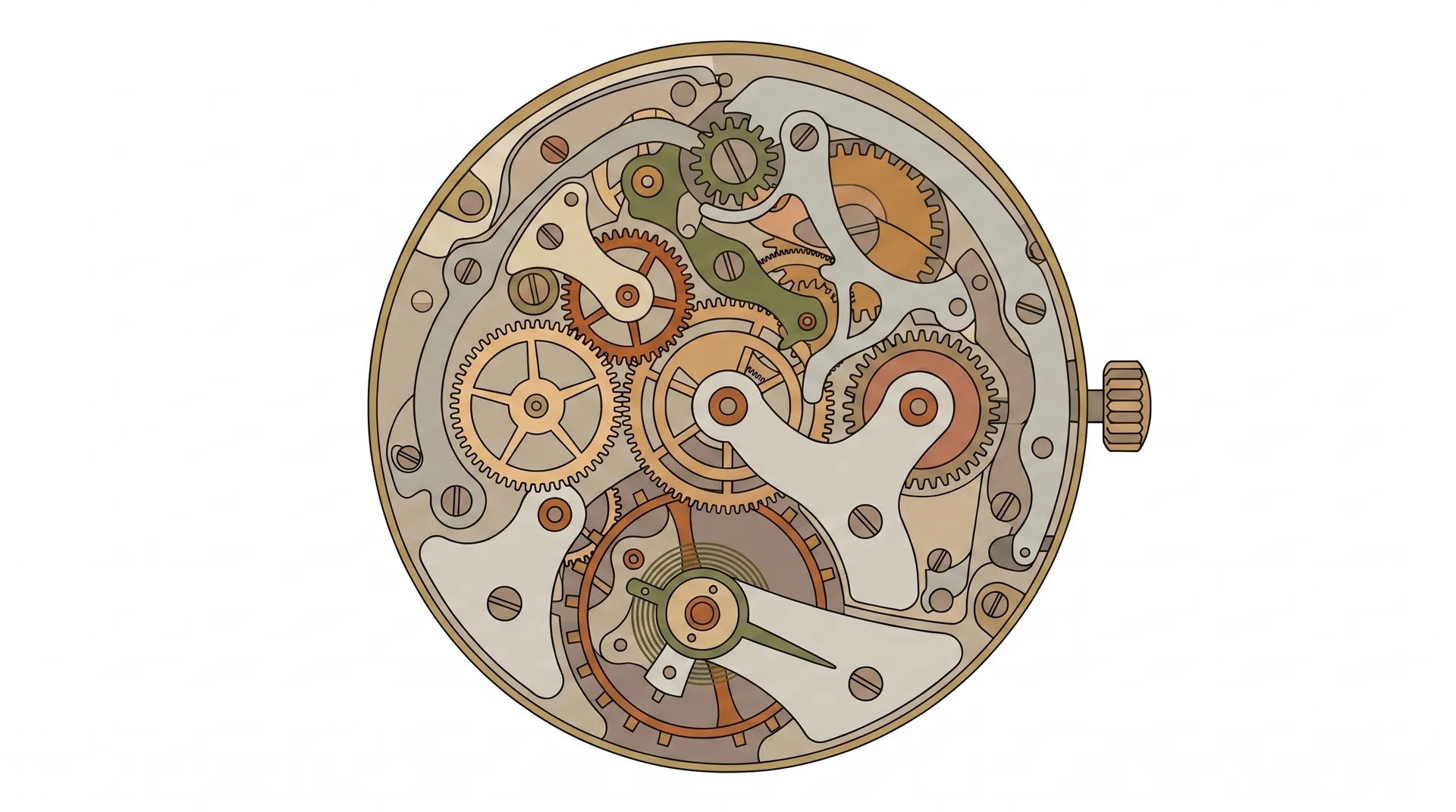
Runs on the unwinding force of a mainspring, no battery. It stops if left unworn, and needs
an "overhaul" (disassembly and cleaning) every few years. But because it takes care, it
develops attachment — repaired over the years, it becomes a "lifetime piece to pass to your
children."
Quartz (battery / solar):
Battery-driven and extremely accurate. A solar-radio model like Eco-Drive "never stops, never
drifts." Ideal for the business professional who wants accurate time without any fuss.
Japan's miracle: "Spring Drive"
Some Grand Seiko models carry the "third mechanism" called Spring Drive. It uses a mechanical mainspring to drive a quartz (IC) regulator — achieving quartz-level accuracy with no battery, a dream mechanism only Seiko of Japan can make. Its defining feature: the second hand doesn't tick — it glides silently and smoothly in a continuous sweep.
4. Lifetime Companions: 3 High-Class Japanese Watches
First, the top-tier brand models worth choosing for a promotion, a milestone, or a major life occasion.
Grand Seiko — Heritage Collection SBGA211 "Snowflake"
The signature Grand Seiko, praised even by Swiss watch fans as "flawless." Across a dial that captures the texture of snow drifted over the mountains of Shinshu like washi paper, a blue-steel second hand glides silently and smoothly. The case and bracelet use "Bright Titanium" — about 30% lighter than stainless steel and hypoallergenic. There is no place on earth where wearing this would be inappropriate, from business to formal ceremony. Spring Drive Caliber 9R65, 72-hour power reserve. Available on Amazon.com.
- Movement
- Spring Drive 9R65, 72hr reserve
- Case
- 41mm Bright Titanium
- Best for
- Lifetime piece; formal business; milestone purchase
The CITIZEN — Washi-Paper Dial Eco-Drive
While an ordinary watch drifts a few seconds per day, The CITIZEN boasts the astonishing accuracy of just five seconds per year (±5 sec/year). Most notable: to allow light to pass through for the Eco-Drive solar mechanism, the dial uses Tosa washi paper. The warm texture of washi shows different expressions depending on the viewing angle. "Never stops, never drifts, beautiful" — a watch standing at the summit of Japanese practicalism.
- Movement
- Eco-Drive (light-powered), ±5 sec/year
- Dial
- Tosa washi paper
- Best for
- Precision-focused business; zero-maintenance ownership
ORIENT STAR — Contemporary Modern Skeleton
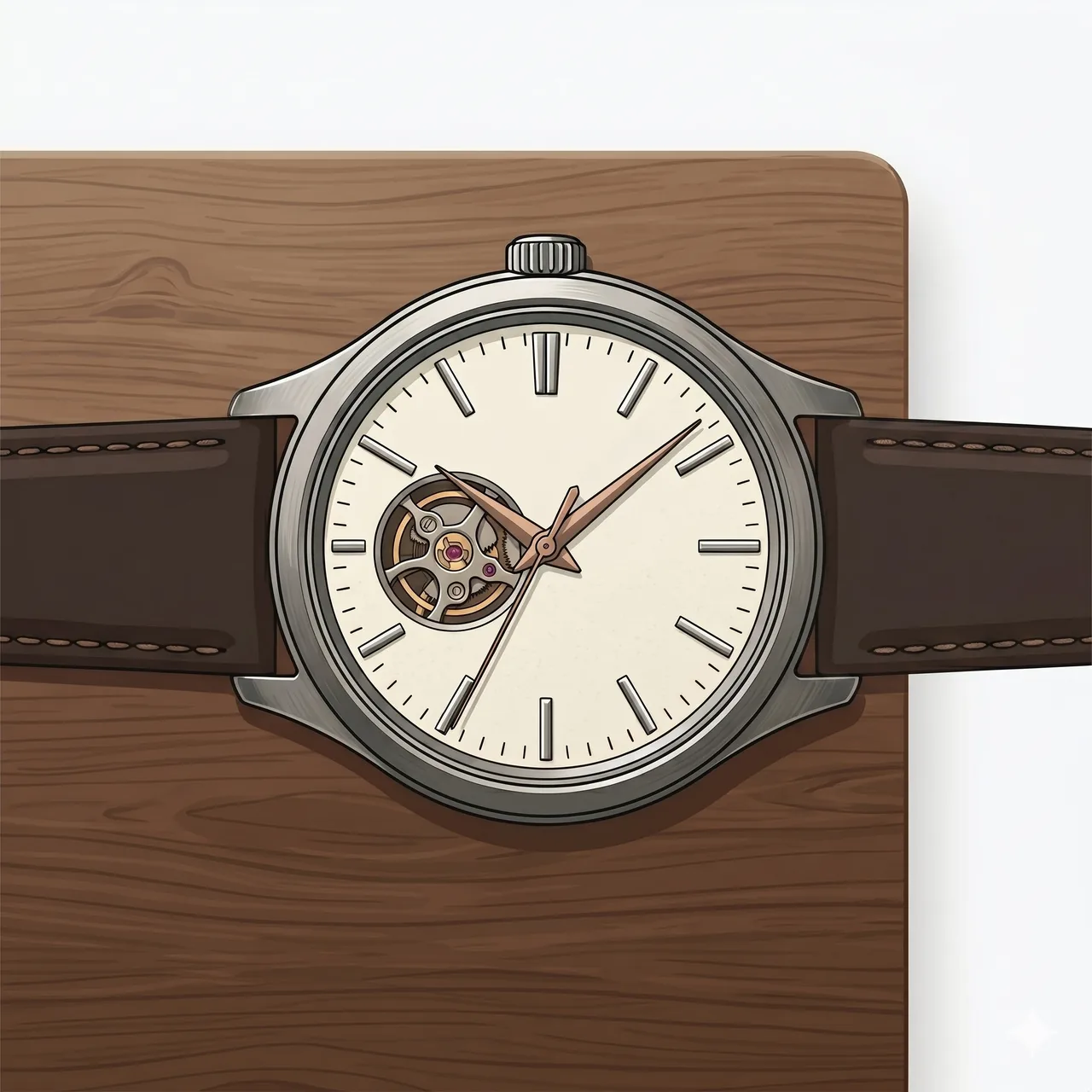
The dial is cut away at the 9 o'clock position (open heart), letting you watch the balance wheel — the watch's beating heart — directly. It includes a 50-hour power reserve indicator, so you can see at a glance how much longer it will run. If you want a mechanical watch with an in-house movement for under ¥100,000 (around $700), it's no exaggeration to say Orient Star is the only choice.
- Movement
- Mechanical, in-house, 50hr reserve, open-heart skeleton
- Best for
- Mechanical entry; visible movement; value at the price
5. Express Yourself: 2 Custom-Order Japanese Watches
For those who want a personal design distinct from everyone else, these rising Japanese brands have gained momentum in recent years.
Maker's Watch Knot — AT-38 Automatic
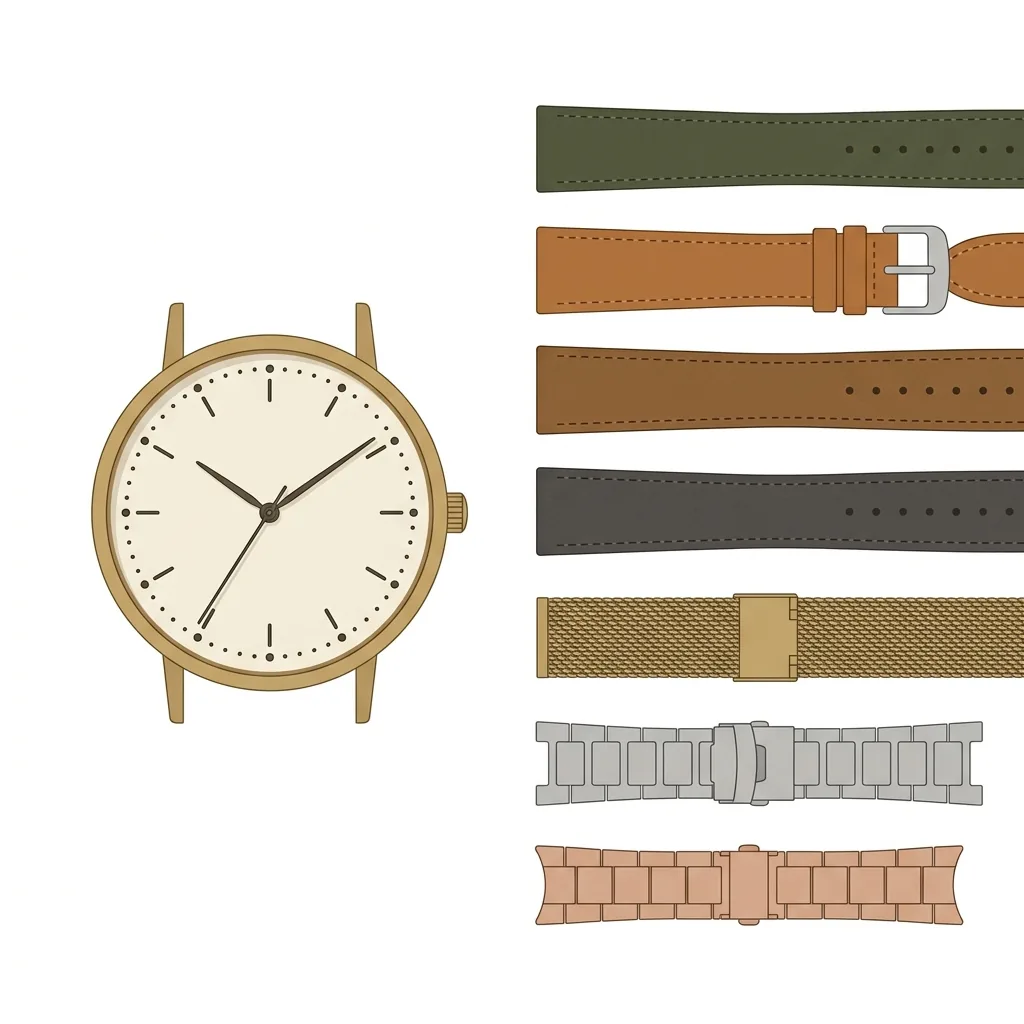
Born in Kichijoji, Tokyo, Knot uses sapphire crystal and high-quality Japanese movements while cutting out distribution waste to achieve remarkably low prices. The AT-38 is a fully domestically-produced mechanical model — every step from case manufacturing to assembly done in Japan. Straps made from Japanese traditional crafts — Tochigi leather, Kyoto kumihimo braid — can be swapped with one touch, no tools, so you can enjoy changing watches like changing clothes.
- Movement
- Mechanical, fully made in Japan
- Custom
- 10,000+ case/strap combinations; tool-free strap swap
- Best for
- Personal design; pair watches; business casual
KUOE — OLD SMITH / Classic Watch
A Kyoto-born brand characterised by small cases (35mm diameter) reminiscent of 1960s antique watches and classical dial designs. In an era of large watches, the size sits neatly on the wrist and can be shared between men and women. It carries a Seiko movement, so the reassurance of a current Japanese mechanism inside is a welcome point.
- Movement
- Seiko movement
- Case
- Small (35mm), antique-inspired classic design
- Best for
- Vintage style; unisex sharing; classical aesthetic
6. Weekend Wrist: 2 Tough, Playful Japanese Watches
Japanese classics built for toughness — perfect for the outdoors, sports, and casual weekend dressing.
CASIO G-SHOCK — MT-G / MR-G Series
The G-SHOCK has a strong plastic-resin image, but the upper MT-G and flagship MR-G models are luxurious affairs using ample metal. Assembled at Casio's advanced Yamagata factory, they carry the weighty shine of metal while retaining the shock resistance to survive being dropped. Bluetooth connectivity auto-corrects the time from your phone — a gadget appeal packed with the latest technology. The "adult G-SHOCK you can wear with a suit." Available on Amazon.com.
- Made in
- Yamagata factory, Japan
- Features
- Metal construction; shock resistant; Bluetooth time sync; Tough Solar
- Best for
- Adult who wants G-SHOCK with a suit; gadget lovers; durability
SEIKO PROSPEX — 1965 Mechanical Diver's Reissue
The "1965 Heritage" line faithfully recreates Seiko's first diver's watch (the 1965 62MAS) with modern technology. The reissue carries the original's rounded case shape and highly legible dial design. With 200m diving-spec water resistance, it has genuine diver toughness, yet its slim silhouette pairs easily with both suits and denim — without the bulk typical of diver's watches. The satisfaction of wearing a piece of watch history combined with everyday usability across any scene. Available on Amazon.com.
- Movement
- Mechanical automatic, made in Japan
- Water resistance
- 200m diving spec
- Best for
- Diver's watch heritage; versatile suit-to-denim use
7. Frequently Asked Questions
How often does a mechanical watch need an overhaul?
Generally every 3–5 years. As the lubricating oils inside the watch degrade or dry out, parts wear against each other, reducing accuracy or causing it to stop. Even if it appears to be running fine, sending it in for periodic service (like a car inspection) is what lets you keep it for life. Cost varies by brand, roughly ¥30,000–100,000 ($200–700).
Will a mechanical watch stop if I don't wear it daily?
It will stop — and that's the normal behaviour of a mechanical. An automatic winds its mainspring via a rotor that spins with your arm's movement. Left off the wrist, it stops after about 40–70 hours (depending on the model). Winding the crown by hand, setting the time, and starting it again is part of the appeal. (If you dislike it stopping, a winder box keeps it running.)
Quartz or mechanical — which makes a better gift?
It depends on the recipient's personality and lifestyle. Someone who enjoys the "hobby" aspects — watch maintenance, tinkering — and wants to use one thing for a long time will appreciate a mechanical. A busy professional focused on practicality who doesn't want the hassle of setting the time is best served by a quartz (solar-radio).
What does "watch out for magnetism" mean when storing a watch?
Don't place the watch near your phone or computer. If the metal parts inside the watch become magnetised, accuracy can be significantly thrown off. The safe rule is to store it at least 5cm away from speakers, tablets, phones, and magnetic necklaces.
Can I wear a leather-strap watch in summer?
Not particularly recommended — metal or rubber straps are better for summer. Leather straps degrade faster and develop odours when they absorb sweat. For a watch with easily swappable straps like Knot, switching to a metal mesh strap for the summer months — changing straps with the seasons — is a great approach.
Should I buy from an authorised dealer, or grey-market online?
For a lifetime piece like Grand Seiko, an authorised dealer is overwhelmingly recommended. Authorised purchases often include extended warranty service or overhaul discounts. More than that, the "purchase experience" itself — hearing the watch's story directly, feeling its weight on your own wrist — deepens your attachment to it many times over.
Final Thoughts: A "Personal Micro-Universe" Quietly Marking Time on Your Wrist
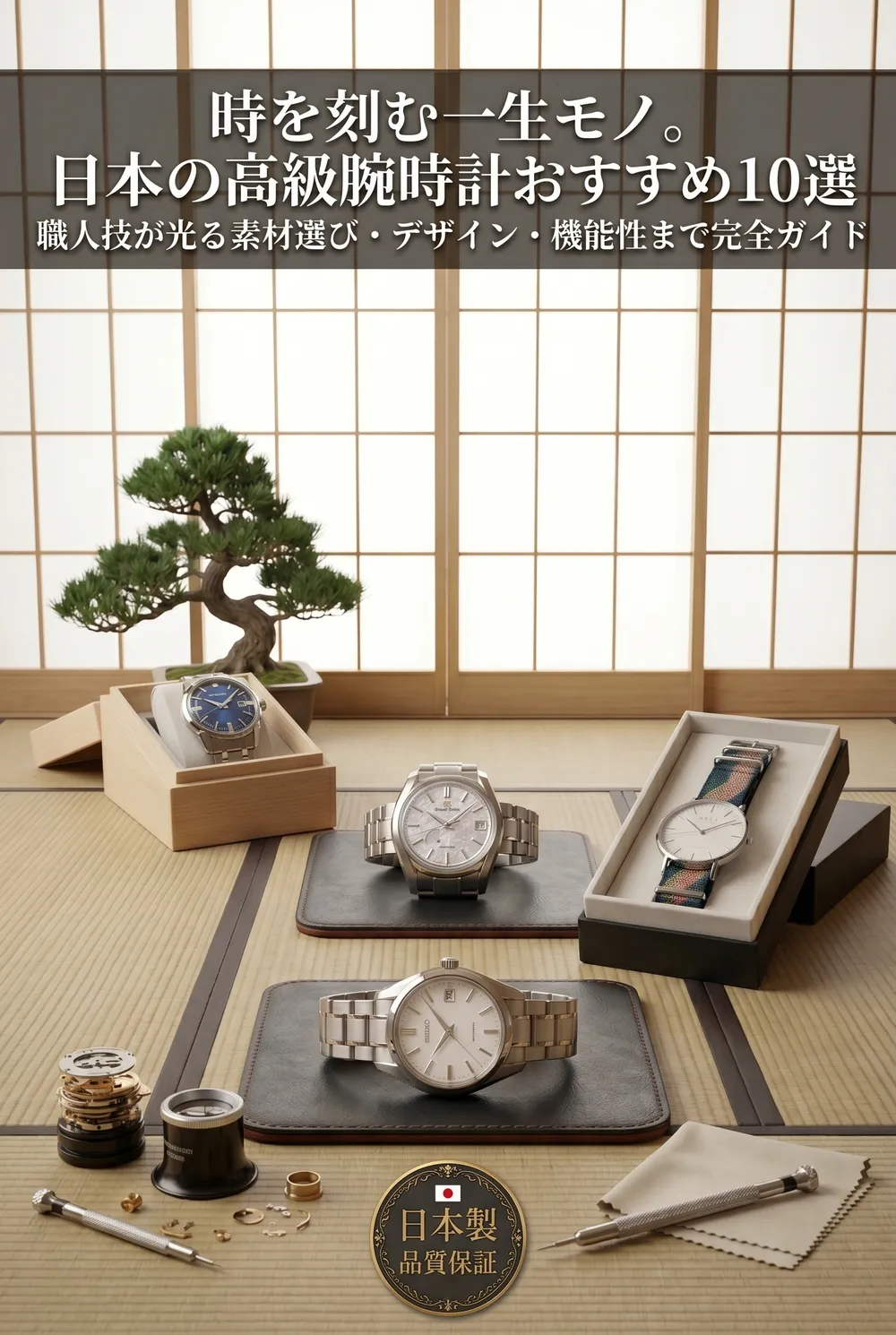
A watch is a companion that marks your history alongside you.
The reassurance you feel glancing at your wrist before a high-stakes presentation. The
relaxed pleasure of watching the hands move on a day off with someone you love. Inside the
small case that Japanese craftspeople have polished with their souls lies a "micro-universe
of technology and aesthetics" without a single compromise.
For your next watch, choose a Made in Japan piece you'd want to age alongside for decades.
It will surely become something precious to pass on to the next generation.

Japanese Leather Goods: HUKURO, FUJITAKA & Brands That Age Beautifully

Japanese Leather Key Cases: Craftsmanship for Everyday Carry