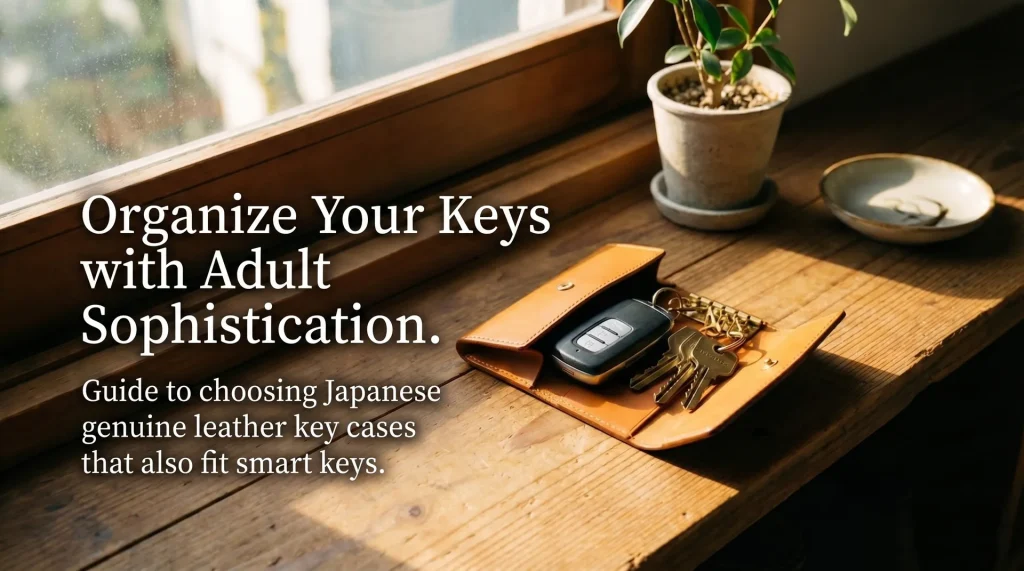
House key, car smart key, parents' spare, office locker key — the ring keeps growing.
If managing all of it feels like noise in your pocket, a new home or a new car is the perfect reason to start fresh with something better.
A key case is the leather accessory that ages faster and more visibly than almost anything else — because you handle it every single day.
This guide covers the things that actually matter when choosing one: smart key compatibility, leather types, Japanese brand recommendations, and how to keep it looking good for decades.
1. Smart Key Compatibility | The First Thing to Check
Traditional slim key cases were designed for flat metal keys. Modern car smart keys are a different problem entirely.
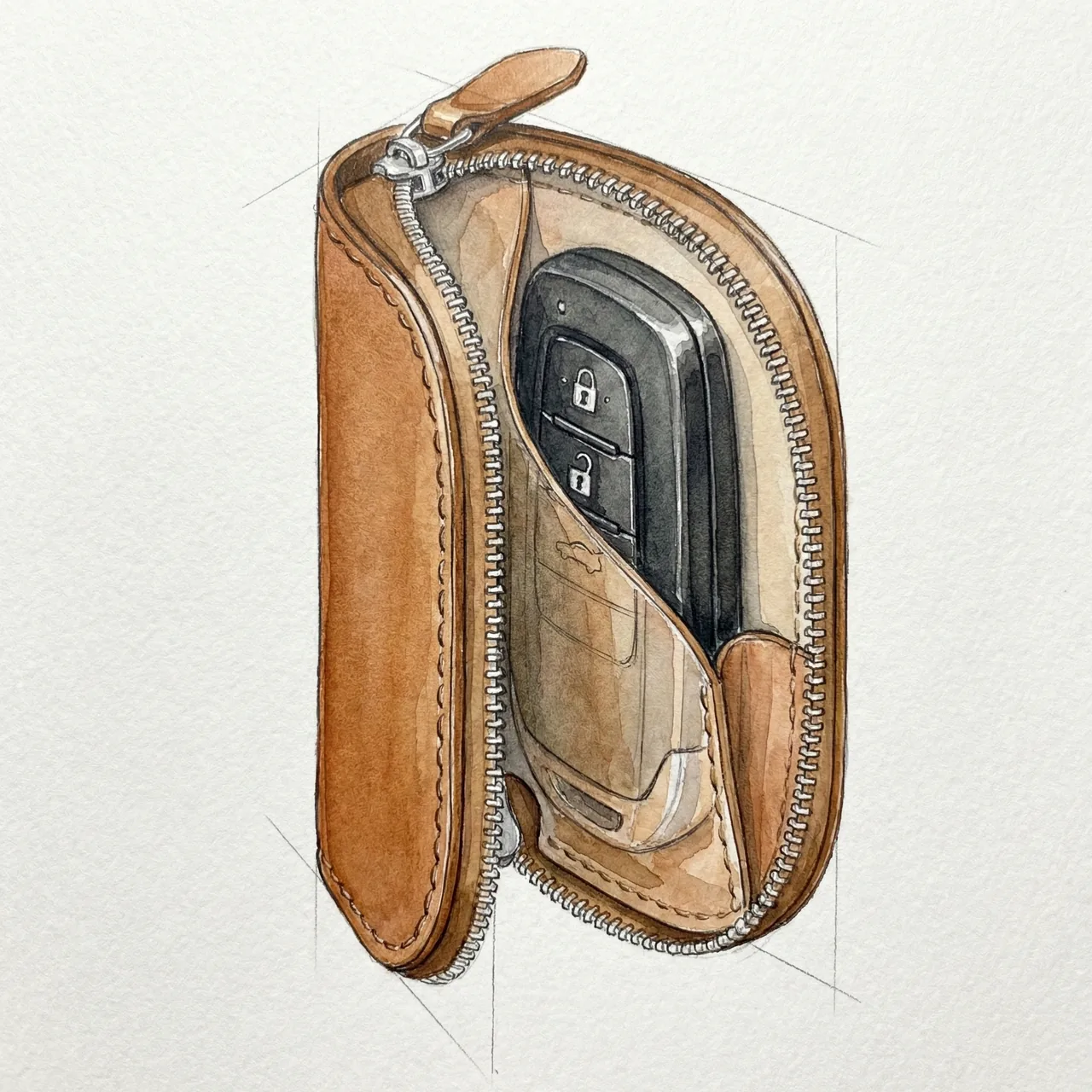
Smart keys are thick. The round-zip case is the answer
A typical car smart key is 1.5–2 cm thick. Getting that into a traditional accordion-style key case is a struggle or an impossibility.
For smart keys, the round-zip case (a pouch sealed by a zipper running around three sides) is the gold standard.
The generous gusset accommodates the smart key's bulk, and separate hooks protect other keys from scratching the smart key's surface.
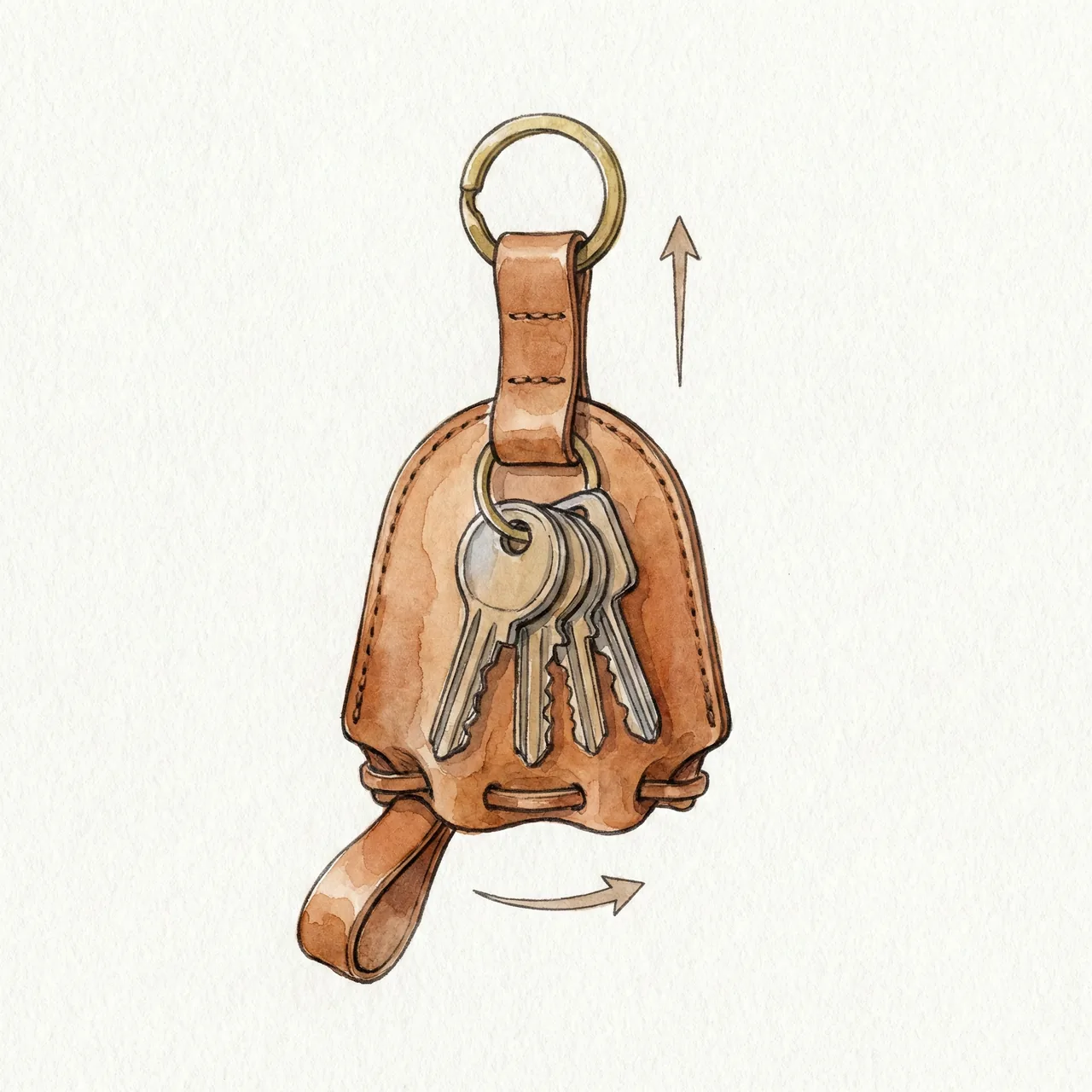
Carrying just two or three keys? Go screw-type or bell-type for a minimal carry
If your keyring is just home and bike, a traditional case may be unnecessary bulk.
The screw-type (KeySmart-style) stacks keys between two plates held by a screw — silent, flat, and almost invisible in a pocket.
The bell-type retracts keys inside a bell-shaped leather housing — also silent, and considerably more elegant than any keyring.
2. Key Case vs. Key Ring vs. Key Cover | Choosing by Lifestyle
Before choosing a specific product, decide how you actually want to carry your keys. The right format depends on how you live.
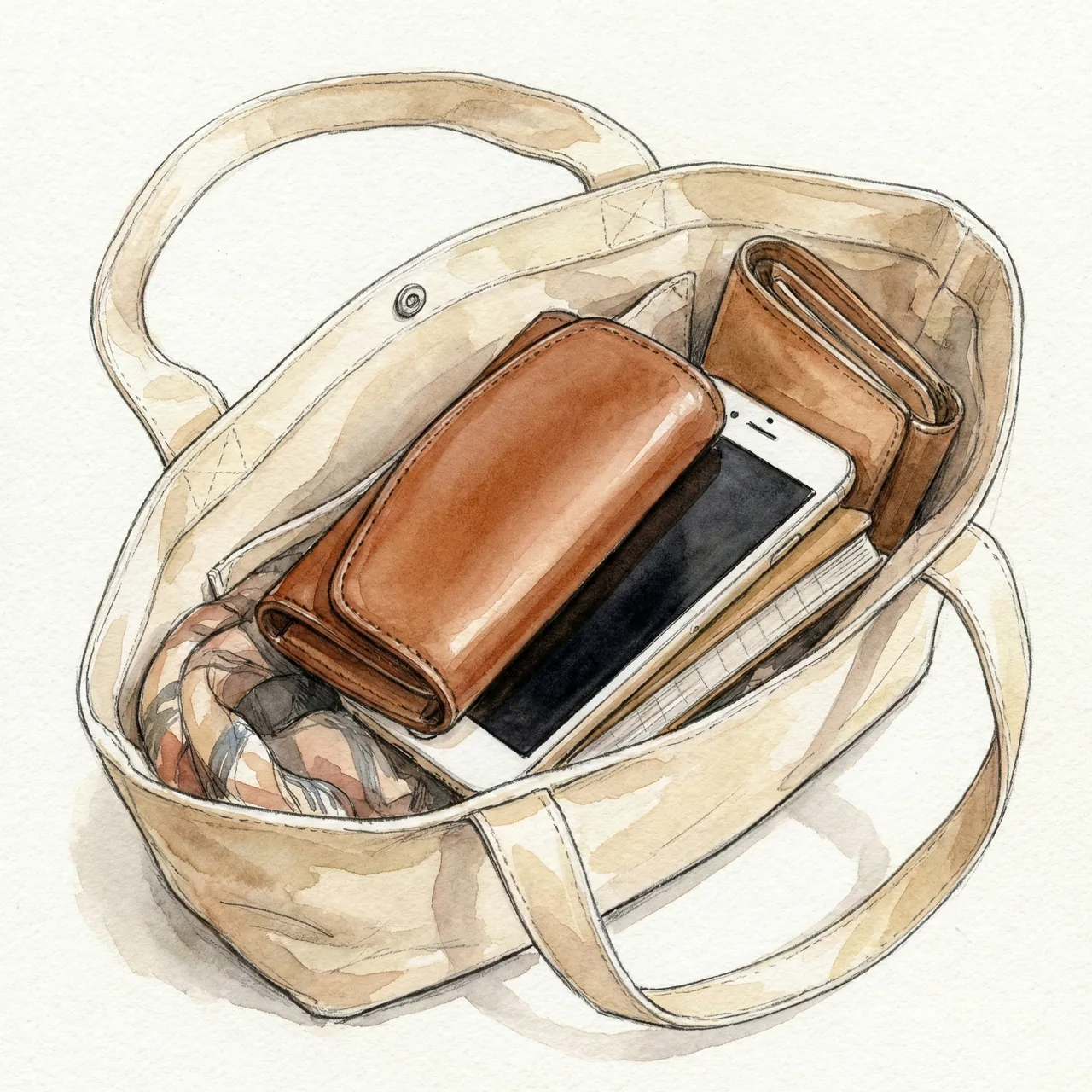
[Key Case] Best for: protecting what's in your bag
Benefits: Keys don't scratch your phone or wallet. No jangling sound when the bag moves.
Best for: Anyone who carries many keys, or who keeps their keys loose in a bag.
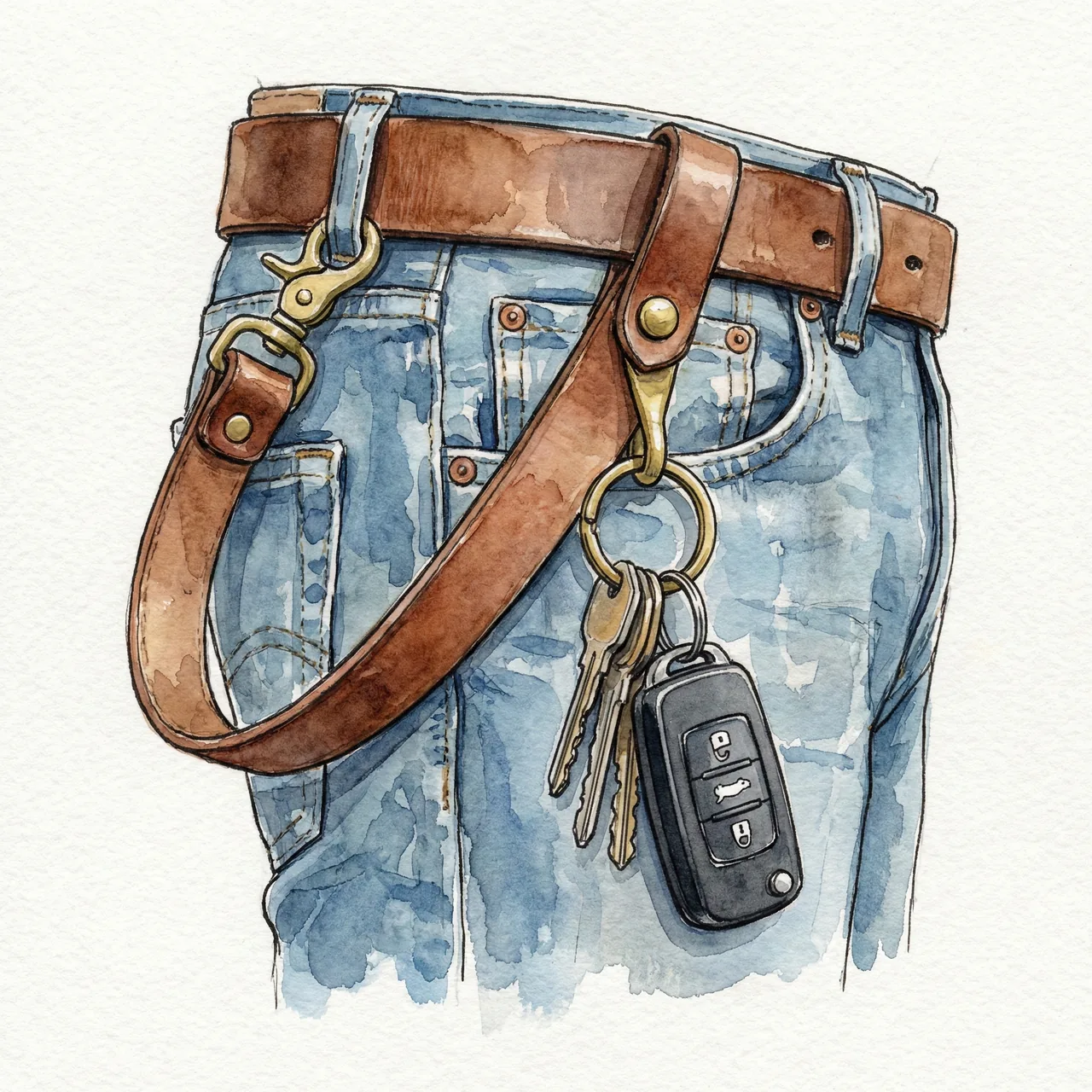
[Key Ring / Holder] Best for: fast access and style
Benefits: One motion to use any key. Clips to a belt loop as a fashion accent.
Best for: People who drive frequently, or who wear denim and want an accessory with presence.
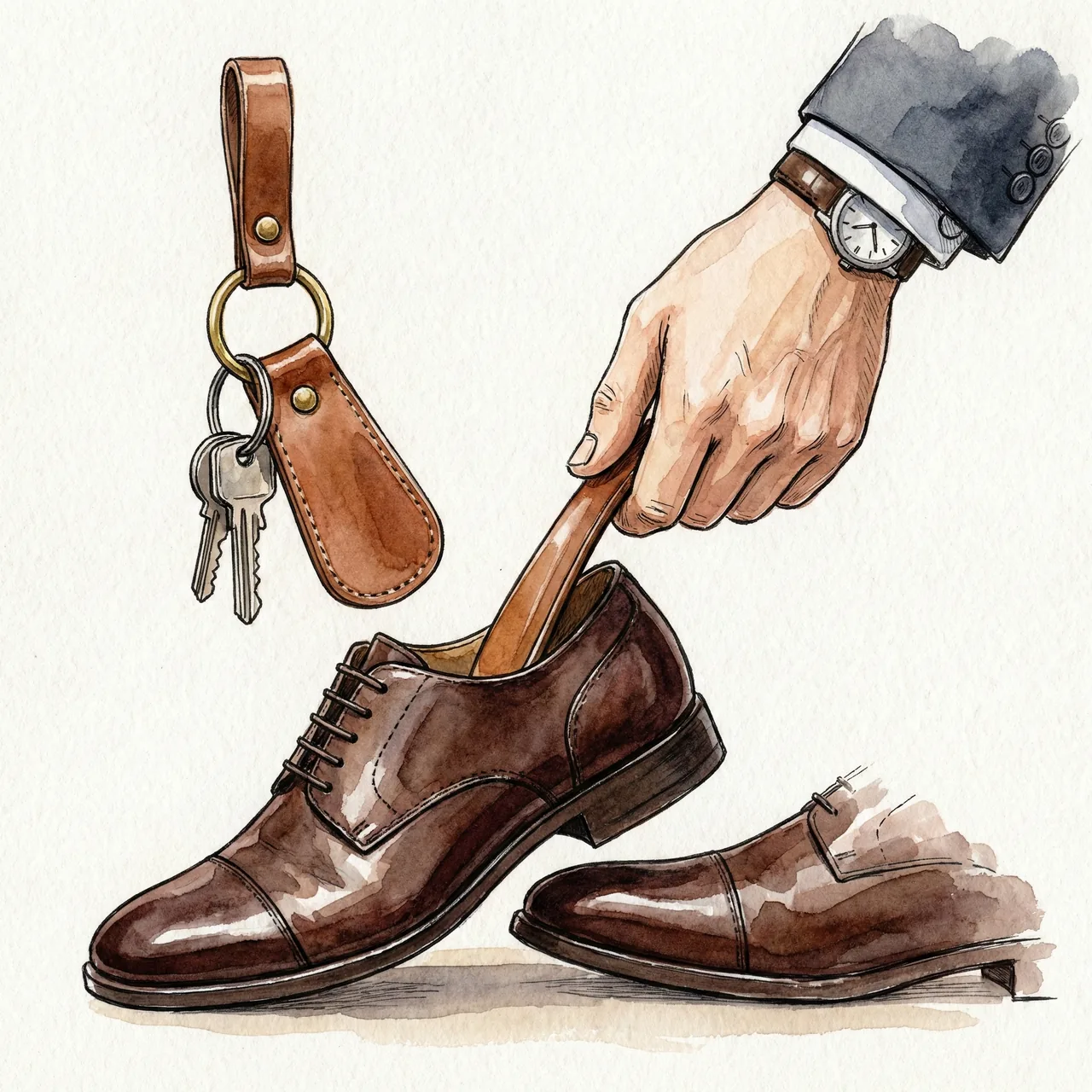
[Shoehorn + Key] Best for: the detail-oriented professional
Benefits: A leather shoe horn with an integrated key ring — two tools in one.
Best for: Business professionals who remove dress shoes at client sites frequently. Also one of the most consistently well-received gift choices.
3. Leather Types | Tochigi Nude Leather vs. Bridle Leather
A key case faces the harshest conditions of any leather accessory — constant friction, hand sweat, occasional rain. The leather you choose determines how it ages.
Tochigi / Himeji nude leather | Japan's "growing leather" — starts stiff, ends beautiful
Vegetable-tanned nude leather (nube-gawa) starts life firm and slightly rough. Daily handling softens it gradually, and sun and oil deepen its color from pale tan toward a rich amber.
Because a key case is in your hands multiple times a day, you'll see this transformation happen faster here than with a wallet — the color change is visible within months.
Scratches absorb into the surface over time rather than standing out, which makes this leather ideal for hard use.
Bridle leather | Made for horse tack — extraordinary durability, deep eventual shine
Originally developed for horse harnesses, bridle leather is impregnated with wax during tanning, which gives it a characteristic white surface bloom (called "bloom"). As friction rubs that wax in, the leather develops a deep, almost lacquer-like gloss.
It resists water and soiling far better than untreated leather, making it the right choice for people who carry their keys in an outside pocket in all weather.

4. 3 Recommended Japanese Leather Key Case Brands
Three brands that have earned their reputations through genuine craft — each with a different character.
PORTER (Yoshida Kaban) — DOUBLE Series
Japan's master bag maker, and their leather is every bit as serious as their nylon.
Yoshida Kaban's PORTER brand is built on the motto "one stitch, one soul" — obsessive attention to construction quality that you can feel in every product.
Their key case range is unusually broad: grained goatskin with distinctive texture, softly rounded PLUME models in bag-sewn genuine leather, and dual-zipper designs for two smart keys.
Every model prioritizes usability — these are tools designed to be used, not displayed.
Hender Scheme — key flock
Natural nude leather at its most minimal — made to be worn, not stored.
Based in Asakusa, Tokyo, Hender Scheme works exclusively with natural leather in its most unprocessed state.
Their "key flock" — a hook-style key carrier that clips to a belt loop — is a rare product: it takes something as mundane as a keychain and makes it genuinely interesting.
The leather is undyed, so it responds to UV exposure, hand oils, and time in a uniquely personal way. Sun it for a few days before first use to start the aging process.
CORBO. — SLATE / Curious Series
The brand that figured out the smart key problem first.
Founded in 1998 in Jingumae, Tokyo, CORBO. has spent decades making leather goods for people who care about the craft.
Their Curious series key case is three-dimensionally formed specifically around smart key dimensions — it doesn't just hold a smart key, it was designed for one. Car enthusiasts consistently call it the "final answer" for smart key storage.
Italian oil leather and domestic Japanese cowhide, with edge (koba) finishing handled meticulously by hand. Built to outlast the car.
5. Extra Functions | Card Pockets and Coin Compartments
The right extra feature can turn a key case into the only thing you need for a short outing.
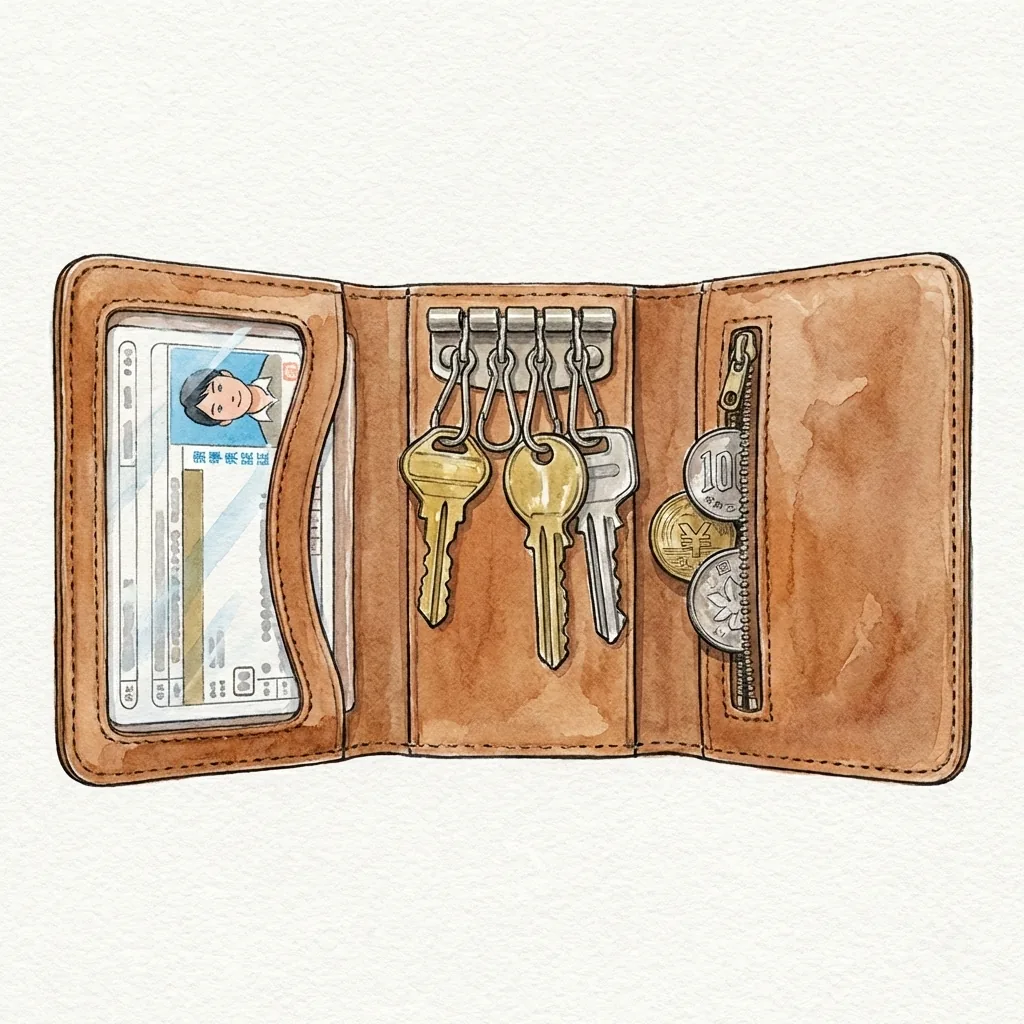
A card slot means your driver's license lives with your car key — always
A rear card pocket fits your driver's license, an ETC toll card, or a transit IC card.
Since getting in the car already requires the key, keeping your license in the same case eliminates the "forgot my license" scenario entirely.
A coin pocket handles parking meters and vending machines without opening a wallet
Coin-and-key cases with a zippered coin compartment are useful for quick, cash-only situations: coin parking lots, vending machines, toll booths.
For people who drive regularly, this removes the friction of fishing through a full wallet for change.
6. Care | Protecting the Leather from Metal Powder
Key cases have a specific enemy that wallets don't: metal powder from key friction.
Why key cases darken inside — and how to prevent it
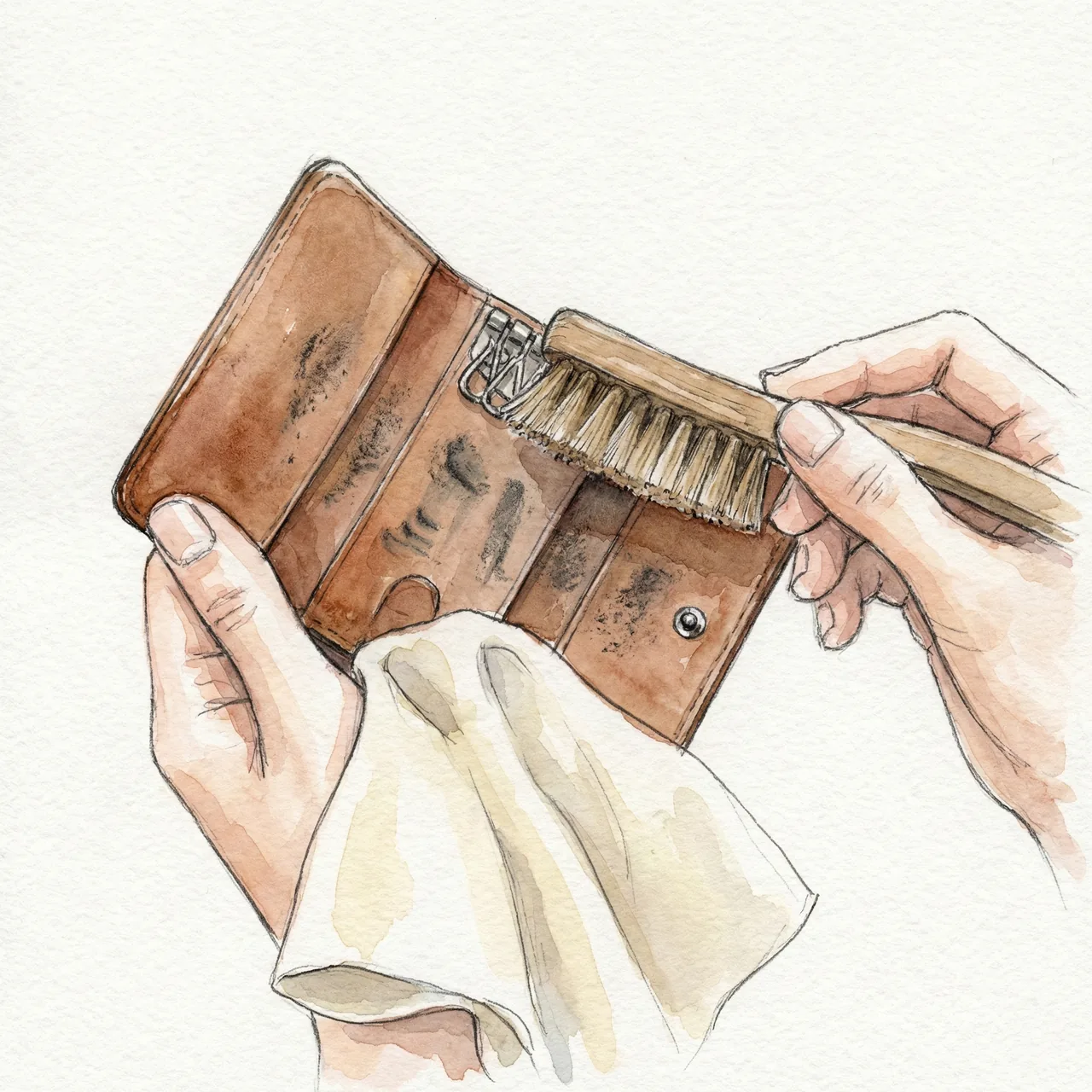
Keys rubbing against each other constantly shed microscopic metal particles. These particles settle into the leather's interior and cause dark staining that looks like dirt but doesn't wipe away easily.
Once a month, remove the keys, brush the interior with a soft brush, and wipe with a firmly wrung damp cloth. That's all it takes to maintain the color and prevent buildup from becoming permanent.
7. Frequently Asked Questions
We have two cars. Can I fit two smart keys in one case?
A double-zipper case is the right solution.
Pouch-style key cases with two separate zipper pockets (one on each side) let each smart key live in its own compartment without touching the other.
Forcing two smart keys into a single pocket strains the zipper and is a reliable way to break it early.
What's a reasonable budget for a Japanese leather key case as a gift?
¥8,000–¥15,000 is the target range for genuine Japanese leather.
That's less than a wallet, but still something most people consider a splurge when buying for themselves — which makes it an ideal gift. It fits naturally for housewarming presents, job-start gifts, or new-car celebrations.
How many hooks do I actually need — 4-hook or 6-hook?
For most people, 4 hooks is enough.
Home, parents', bike lock, office locker — 3 to 4 keys covers the average person's needs.
6-hook cases are wider, which can feel bulky for smaller hands. If you're adding a smart key, note that smart keys usually attach to a ring rather than a hook, so hook count matters less than you'd expect.
Can I press the button on my smart key while it's inside the case?
For round-zip cases, you'll generally need to open the zipper to press any buttons.
That said, most modern cars with proximity sensing (keyless entry) unlock when you simply approach the door — the key never leaves your pocket or bag.
If you need to press buttons frequently, look for a case with a button-position embossment or a clear-window panel designed for that purpose.
What if a hook breaks? Can Japanese key cases be repaired?
Yes — most reputable Japanese brands offer hardware replacement.
The hook (carabiner-style clasp called a nasu-kan) is the part most likely to fail from metal fatigue over years of use. Brands like CORBO. and Yoshida Kaban will replace just the hardware for a few thousand yen, leaving the leather body — which may have years of beautiful aging — completely intact.
That repairability is a large part of what makes these "lifetime" pieces rather than disposable accessories.
Final Thoughts: Something You Touch Every Day
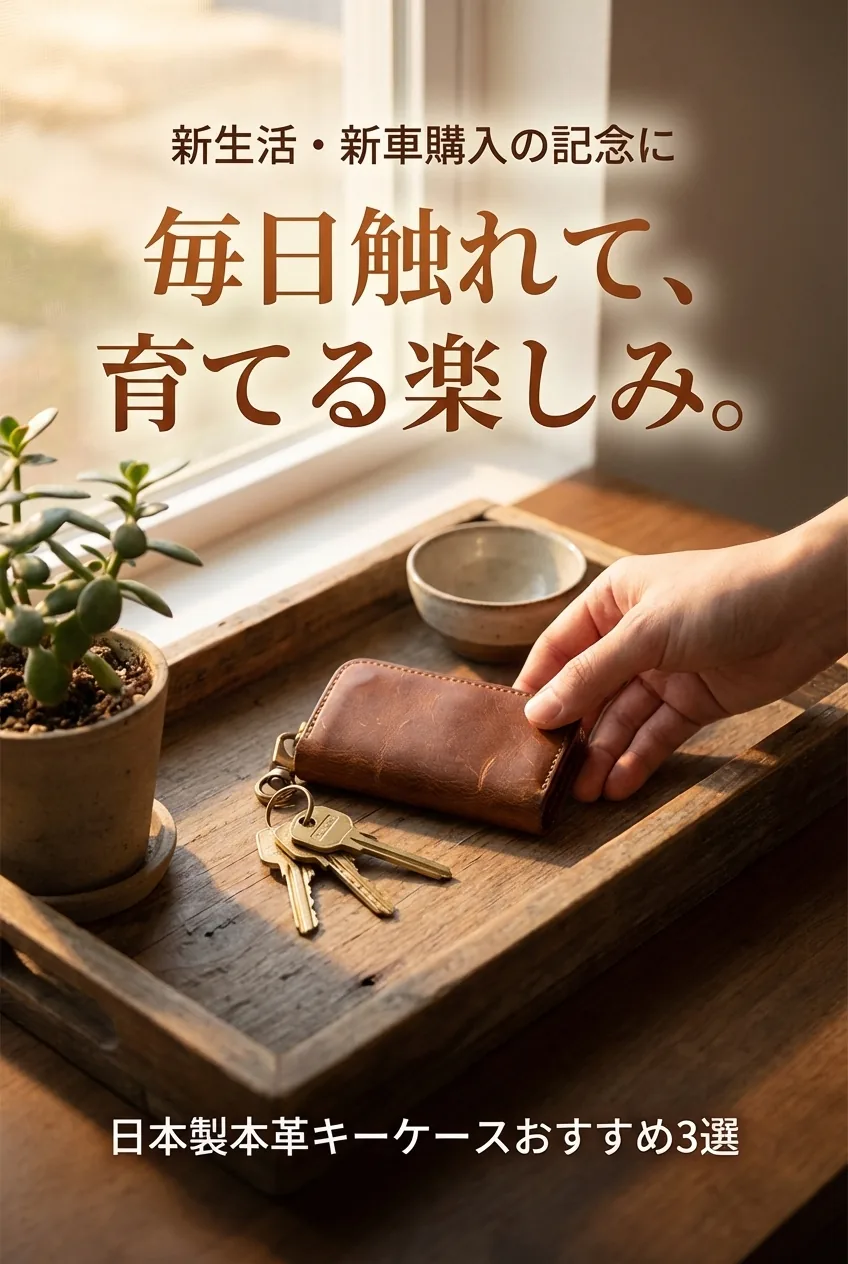
You pick it up when you leave. You set it down when you return.
No other leather accessory gets more daily contact than a key case. That's exactly what makes it age so beautifully — and what makes choosing the right one worth the thought.
A well-made Japanese leather key case will remember the shape of your grip, deepen in color with every year, and still be going strong when you hand it off to someone who asks where it came from.
Take your time picking one. It's worth it.